
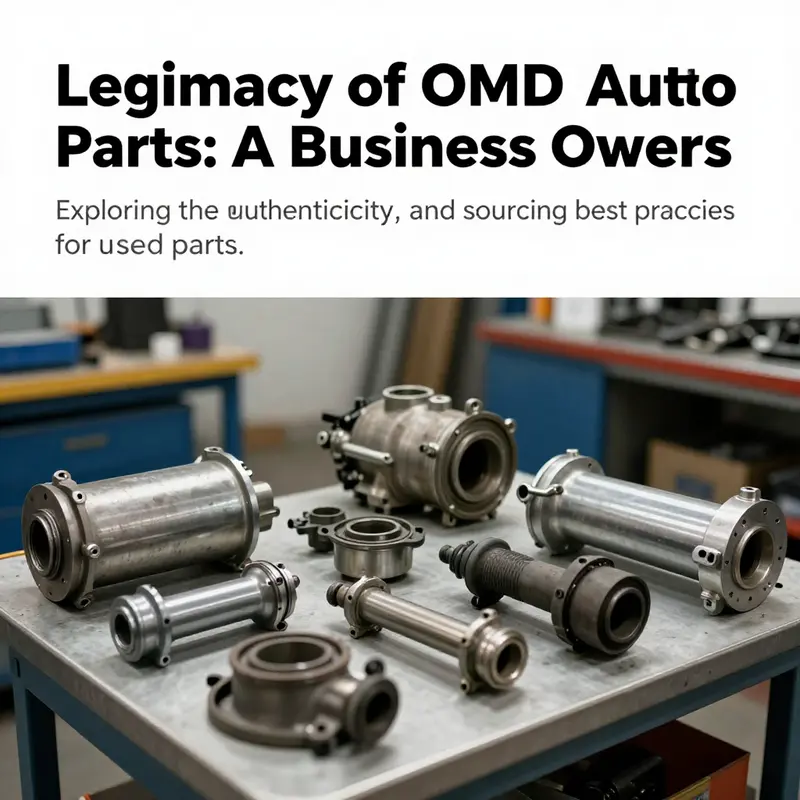
In today’s competitive automotive industry, understanding the nuances of OEM used auto parts is crucial for business owners aiming to maintain quality while managing costs. The market for these parts has been growing, but with it comes the challenge of ensuring legitimacy and safety. This article provides an in-depth exploration of the authenticity verification processes, the condition and wear of parts, the importance of supplier credibility, and best practices in sourcing to ensure that OEM used auto parts remain a viable and reliable option for vehicle maintenance and repair. Each chapter will guide you through the complexities of this topic, equipping you with the knowledge to make informed decisions for your business.
OEM Used Parts: How to Tell When They’re Truly Legitimate

When a repair bill arrives, choosing a replacement part often comes down to a single question: is a used OEM part a safe, smart choice? The short answer is yes — but only when the part’s origin, condition, and documentation are verified. This chapter walks through the practical rules that distinguish reliable, genuine used OEM parts from risky substitutes. It focuses on what to ask, what to inspect, and when to walk away.
A legitimate used OEM part starts with traceability. Genuine OEM components were manufactured to the original design specifications. When they are removed from a vehicle, that part should come with a clear chain of custody. Ask for the source vehicle’s identifier and a history of that vehicle. Mileage, maintenance records, and accident history reveal whether the part endured normal use or extreme stress. A part removed from a low-mileage, well-maintained vehicle will usually outvalue the same part taken from a heavily used or damaged car.
Part numbers and fitment details form the technical backbone of verification. Manufacturers stamp or label critical components with unique identifiers. Request these numbers and compare them to the number specified for your vehicle’s model and year. A matching part number is not a guarantee, but it’s a strong indicator that the component was designed for your vehicle. When possible, have the seller provide close-up photos of the numbers and any manufacturing stamps. If a part lacks visible identification, treat it as suspect.
Condition matters as much as authenticity. Every used component has wear, and that wear affects remaining life. For mechanical parts, examine contact surfaces, threads, and housings for signs of fatigue, corrosion, or heat damage. For electrical parts, inspect connectors, insulation, and printed circuit boards. Ask whether standardized diagnostics were used during inspection. Reputable suppliers often run components through bench tests or computer diagnostics to confirm function. Request a summary of those test results.
Supplier credibility is the human factor. Trustworthy dismantlers and resellers follow documented processes. They document removal, test parts, and store components properly. They often operate out of licensed facilities and provide written warranties or return policies. Certifications such as ISO 9001 signal that a supplier adheres to formal quality management practices. For electronic components, compliance with directives like RoHS indicates proper handling and materials control. While a certification alone does not guarantee every part, it raises the baseline reliability of the supplier.
Industrial sourcing channels influence both availability and risk. Certain regions and clusters specialize in automotive components and salvage operations. That specialization increases supply, reduces cost, and can improve access to low-mileage parts. But it also opens the door to mislabeling and grey-market mixing. A part marketed as OEM may in fact be a genuine aftermarket substitute, a re-manufactured item, or a counterfeit. Insist on documentation that ties the part back to a dismantled vehicle and a certified facility.
Safety-critical components deserve special consideration. Brakes, suspension elements, steering components, airbag modules, fuel system parts, and items that directly affect vehicle control should be handled conservatively. Even minimal wear can influence performance and safety. When considering used options for these systems, prioritize parts with verifiable low mileage, recent testing, and a warranty. In many cases, buying new genuine parts or certified remanufactured items makes more sense for these components.
For body panels, trim, and many drivetrain elements, used OEM parts can be both cost-effective and reliable. Exterior panels, interior trim, and non-structural components typically have longer useful lives even after removal. Engines, transmissions, and other major assemblies can also be worthwhile when they come with clear testing records, compression and leak-down data, and documented run time. Look for sellers who provide a limited warranty and a return window for major assemblies.
Counterfeits and misrepresentations are real threats. Warning signs include prices that seem too low, vague answers about origin, and sellers who refuse to provide photos or part numbers. Counterfeits can closely mimic the look of genuine parts but often fail under load or after exposure. Ask pointed questions: where was the part removed, was it inspected, what tests were performed, and can the seller provide proof of the vehicle’s identity? If the seller cannot answer, you should be cautious.
Documentation is your strongest defense. Request a paper or digital trail that includes the vehicle identifier, part number, condition report, and any test results. A clear invoice that lists the dismantling facility and contact information adds accountability. When possible, obtain a warranty in writing. Even a limited warranty demonstrates the seller’s willingness to stand behind the part.
Installation and independent testing close the loop. After fitting a used OEM part, subject the vehicle to a diagnostic check relevant to the replaced component. Confirm sensors, error codes, and control modules register correctly. For drivetrain and electrical systems, a post-installation test under normal load conditions is recommended. If any irregularities appear, address them immediately under warranty.
Cost-versus-risk calculations guide decisions. Used OEM parts can save substantial money and preserve original fit and finish. For cosmetic pieces and many mechanical parts, the savings outweigh the risks. For systems tied to safety or complex electronics, the calculus often favors new or certified remanufactured parts. Factor in the seller’s warranty length, the ease of return, and the clarity of documentation when estimating the true value.
A practical checklist helps buyers act decisively. Before purchase, confirm the part number and ask for detailed photos. Verify the source vehicle’s identifier and records. Request inspection and test summaries. Confirm the seller’s return policy and warranty. Ask whether the part was stored and shipped under appropriate conditions. Finally, trust your instincts; if anything feels unclear, pause and verify.
If you want deeper technical context on component specifications, tolerances, and installation requirements, consult authoritative service and technical documentation. These resources clarify design intent and performance thresholds, and they can prevent incorrect substitutions that compromise reliability. For detailed technical reference, see this technical documentation: https://www.bmw.com/en/technical-documentation.html
Used OEM parts are legitimate when they arrive with traceability, testing, and transparent sourcing. Treat each purchase as a small project. Verify identifiers, inspect condition, demand documentation, and weigh safety implications. When these steps are followed, a used OEM part can restore performance, preserve original fit, and save money without compromising safety or durability. For additional real-world examples of used components and listings, consider reviewing a listing for a genuine JDM low-mileage engine available from a specialized source: https://mitsubishiautopartsshop.com/genuine-jdm-low-mileage-1995-1999-jdm-mitsubishi-4g63t-2-0l-dohc-turbo-engine-evo-7-bolt-eclipse-talon-awd-automatic-transmission-and-ecu-attached/
By focusing on traceability, condition, supplier credibility, and documentation, you can confidently decide when a used OEM part is truly legitimate and suitable for your vehicle.
Beyond the Label: Verifying Authentic OEM Used Auto Parts for Safe, Reliable Replacements
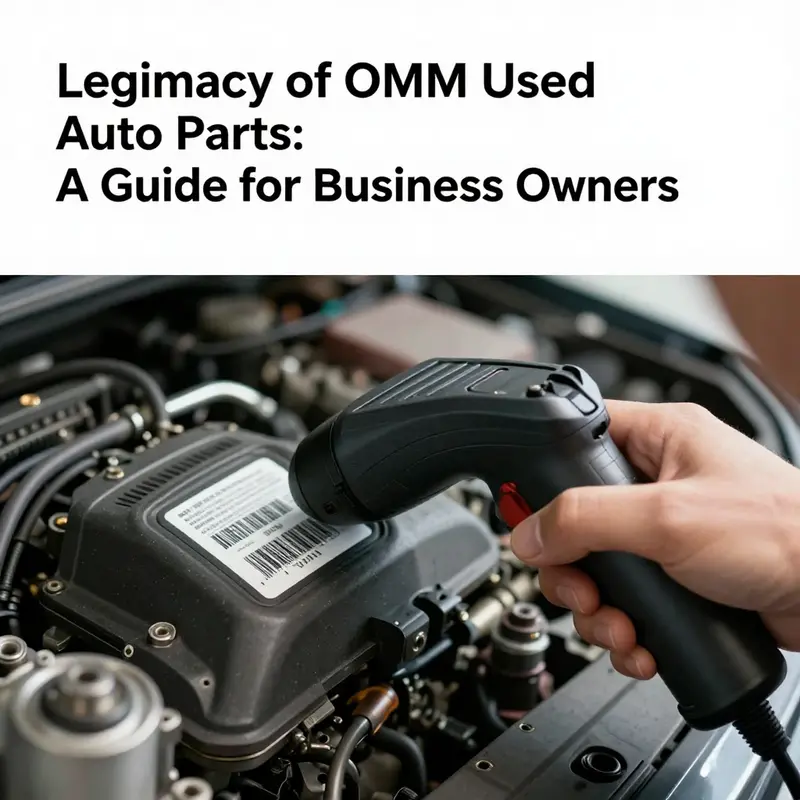
When a car needs a component replaced, the choice between new and used OEM parts often comes down to trust and practicality. OEM parts—those manufactured by the same company that built the original vehicle, designed to exact specifications for a particular model and year—carry an implicit promise. If they are sourced properly, a used OEM part can restore the vehicle’s original fit, finish, and performance without compromising safety. Yet that promise is not automatic. The word OEM on a tag or listing does not guarantee authenticity, and in a market where parts circulate through salvage yards, wholesalers, and cross-border suppliers, verification becomes an essential first act, not a mere afterthought. The factors that determine legitimacy are straightforward but demanding: documentation, traceability, and a supplier’s credibility, all anchored by careful physical and technical checks. In the end, used OEM parts are legitimate when a buyer can verify origin, condition, and compatibility with the vehicle in question.\n\nAuthenticity starts with identification. The part’s serial number, manufacturing date code, and official part number should align with the vehicle’s VIN and the manufacturer’s catalog. This is not a decorative exercise; it is the backbone of trust. A correct part number connected to a recognizable VIN reduces the risk of mismatches that could compromise performance or safety. For components that control critical systems—such as braking assemblies, powertrain components, or electronic modules—a mismatch can be more than inconvenient. It can be dangerous. In practice, a buyer should demand cross-checks against the manufacturer’s official database, ensuring that the part’s identifiers correspond to the specific model and production year. The process benefits from digital verification tools that many manufacturers now maintain, offering real-time confirmation of part numbers and production records.\n\nBeyond the numbers, traceability documents matter. Reputable suppliers often supply certificates of origin, test reports, and, where feasible, digital verification links that cross-check the part against production records. These documents provide a transparent audit trail from the plant to the repair shop. In this regard, a robust supplier will offer batch traceability, inspection reports, and, in some cases, video audits of inventory. Such records build confidence that the part did not simply wear the OEM label by chance but genuinely originated from the original equipment maker and is suitable as a direct replacement. A buyer should treat traceability as a gateway to accountability, insisting that every component be paired with verifiable proof of origin and a clear history of handling since it left the factory floor.\n\nThe condition of a used OEM part is the second pillar of legitimacy. A part may be technically genuine, but its prior service life matters. Thorough wear assessment is essential, especially for non-resilient or safety-critical components. Used parts carry mileage and prior maintenance histories that influence remaining life. Visual inspection plays a critical role: genuine OEM parts typically exhibit precise tolerances, high-grade materials, and consistent finishes. Counterfeit or reconditioned items may reveal telltale flaws—machining roughness, labeling inconsistencies, or logos that do not match the manufacturer’s standard. When physically inspecting used components, look for wear patterns consistent with actual mileage and usage, and beware signs of tampering—uncharacteristic wear in non-stressed areas, unusual fittings, or altered surfaces. A partner who can provide inspection notes and, if possible, wear analysis reports makes a significant difference in forecasting how much useful life a used part will offer.\n\nNo verification can rely on appearance alone. The credibility of the supplier is a decisive factor that often governs the outcome. In today’s global market, suppliers with established quality systems and recognized certifications display greater reliability. For example, suppliers associated with IATF 16949 or similar quality-management standards tend to maintain tighter process controls, traceability, and issue-resolution mechanisms. The geography of supply matters too. Regions with well-developed automotive ecosystems can provide more transparent sourcing, better inspection practices, and more reliable logistics. A prudent buyer seeks suppliers who can demonstrate end-to-end transparency—from raw material sourcing through finished goods inspection and final shipment. In practice, this means asking for batch records, supplier audits, and, where feasible, video documentation of the inventory being inspected before dispatch. A credible supplier will not only offer proof of origin but will also accommodate verifications and audits, and may even host partnerships with authorized distributors who have direct lines to OEMs.\n\nIndependent verification services can further shield buyers from risk. Engaging third-party verifiers or working with authorized distributors who maintain direct relationships with OEMs adds a layer of protection. Market platforms that provide verified supplier badges, inspection reports, and professional risk assessments can help buyers distinguish between parts that are genuinely OEM and those that merely carry the label. When such verification services are paired with supplier-provided documentation, the likelihood of receiving a counterfeit or misrepresented component declines substantially. In practice, a buyer might combine these verifications with a live cross-check of the part against the vehicle’s VIN and official databases, ensuring that the component is the precise match for the make, model, and year in question.\n\nThe ultimate test is whether the part performs as intended within the vehicle. Even a genuine part will disappoint if it has been damaged in transit, improperly stored, or inadequately inspected. For high-stakes systems such as brakes, steering, airbag electronics, and fuel delivery, performance cannot be assumed from appearance or provenance alone. That is why many buyers prefer parts with some form of performance verification, whether through lab testing or a documented field assessment. A careful evaluation should integrate the part’s identification data, traceability records, observed wear, and the supplier’s credibility, then weigh these factors against the vehicle’s requirements and the repair’s criticality. If a doubt remains about any of these aspects, delaying installation until a more thorough verification is possible is a prudent choice.\n\nWhen this process is well-executed, the purchase of used OEM parts becomes a reasoned, standards-driven decision rather than a gamble. The goal is not to chase the cheapest option, but to secure a replacement that preserves the vehicle’s original behavior and safety margins. This is especially true for models with sensitive electronics or advanced driver-assistance systems, where compatibility and software alignment can hinge on exact part specifications. The practical upshot is clear: genuine OEM used parts are legitimate when sourced from trustworthy suppliers who provide verifiable proof of origin, condition, and compatibility. For buyers who want a concrete external reference on how manufacturers confirm authenticity, the BMW Genuine Parts Verification Tool offers a model of how a responsible OEM ecosystem supports buyers in making trustworthy decisions: https://www.bmw.com/en/owners/support/genuine-parts-verification.html
Gauging Wear, Verifying Truth: How Wear Determines the Legitimacy of OEM Used Auto Parts
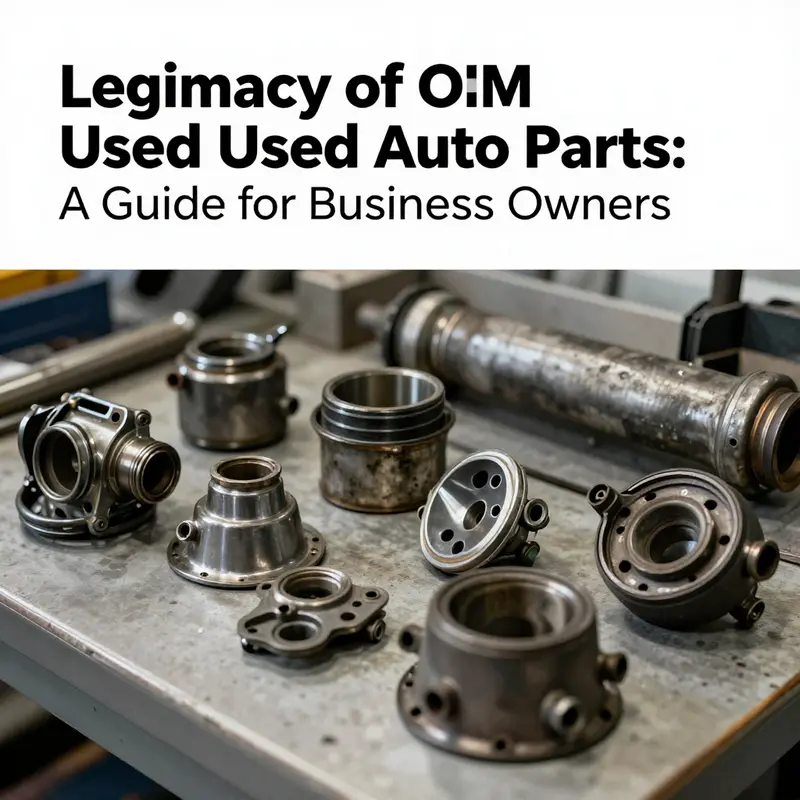
The legitimacy of OEM used auto parts hinges on wear, provenance, and evidence. Used OEM components offer exact fit and reliable performance because they were built to the same specifications as new parts. Yet wear, fatigue, and prior maintenance can tilt the promise toward risk or reassurance. When a part has spent its life in a road-going vehicle, its surface finishes and material integrity bear the marks of real-world use. The question of legitimacy becomes a question of provenance, condition, and verifiable records. A genuine OEM part that has been properly traced and inspected can match a new unit at a fraction of the price. But a part that has been misrepresented or insufficiently tested may fail when it matters most. This is why wear and condition deserve careful attention, especially for critical systems where safety matters. The chain from vehicle to salvage yard, to supplier, to buyer, must maintain traceability that proves origin, model compatibility, and service history. The idea that “OEM” guarantees quality is appealing but not automatic. Authenticity verification, a clear record of provenance, and thoughtful assessment of wear are essential to turning used OEM parts into trustworthy replacements.
In practice, wear patterns tell a nuanced story. Engine components like pistons and camshafts wear from revolutions, heat cycles, and lubricant history. Even when surfaces look fine, microscopic scoring or micro-cracks can reduce efficiency or cause failures. Transmission components show heat-related fatigue after many starts and stops. They may display glazing, warping, or chipping that compromises engagement. Structural and mounting components often survive cosmetic wear but can harbor hidden cracks from repeated stress. Electronic and sensor assemblies wear differently; solder joints can weaken, connectors may corrode, and boards drift from factory tolerances as they age. All wear patterns influence performance and the remaining life of a replacement part.
For buyers seeking assurance, inspection and testing matter as much as source. Reputable suppliers perform evaluations and offer warranties reflecting confidence in remaining life. A typical process starts with a visual inspection for cracks or corrosion, checks part numbers against VIN and model year, and measures against manufacturer specs. Functional testing is common for components that can be tested off the vehicle. For parts that cannot be bench-tested, trusted sellers provide documented testing performed prior to disassembly and traceable records linking the part to its original vehicle. The credibility of the supplier is the second line of defense. Traceability, quality-system standards, and clear warranty terms add protection for the buyer. In markets with counterfeit parts, provenance matters as much as the physical part itself. Buyers should demand VIN verification, matching part numbers, and a traceability chain.
The seller’s credibility also matters. Salvage yards with established processes often provide more consistent quality than anonymous marketplaces. They typically maintain a catalog linking each part to a known donor vehicle, preserving model, year, mileage, and service history. Reputable suppliers may offer warranties that extend beyond a basic policy. Even brief warranties can signal confidence in condition and provide a window for testing after installation. Warranties are not a substitute for due diligence. Buyers should perform checks and be prepared to return a part if a hidden defect emerges during initial use. A clear provenance, credible inspection, and reasonable warranty form a robust foundation for legitimacy.
For DIY mechanics, the economics of used OEM parts are compelling but require judgment. The cost savings can be substantial, but the decision should be guided by the part’s function. Critical systems such as braking, suspension, fuel delivery, or engine management demand higher scrutiny. In these areas, even minor wear can translate into safety risks. A practical approach is to limit used OEM purchases to components with lower risk of failure and to pair them with a thorough on-car inspection. When possible, compare the used part to a known good reference and document measurements or findings. A careful buyer also keeps a record of where the part came from, the donor vehicle history, and testing results. This record becomes a resource for future maintenance and resale value.
In the broader frame of legitimacy, sourcing narrative matters as much as wear. The reliable path combines transparent provenance, rigorous assessment, and verifiable compatibility. A buyer who cross-checks the part against the vehicle VIN and manufacturer specs gains confidence that the replacement will perform as intended. The combination of compatibility, traceability, and demonstrated condition turns a used item into a trustworthy replacement. For readers seeking context on authenticity and condition, external resources can provide broader perspectives on how wear is evaluated in the market for used OEM parts. A credible supplier channel emphasizes traceability, ISO 9001 alignment, and documentation of origin, with a policy to stand behind the part’s compatibility and performance. In practice, a focused guide on authenticity in OEM parts reinforces the message: verify origin, confirm part numbers, and request traceability before purchase. The wear narrative is about ensuring the part will reliably restore function, maintain safety, and extend the vehicle’s life as intended by its original manufacturers.
Trust on the Bench: How Supplier Credibility Shapes Legitimacy in the OEM Used Auto Parts Market
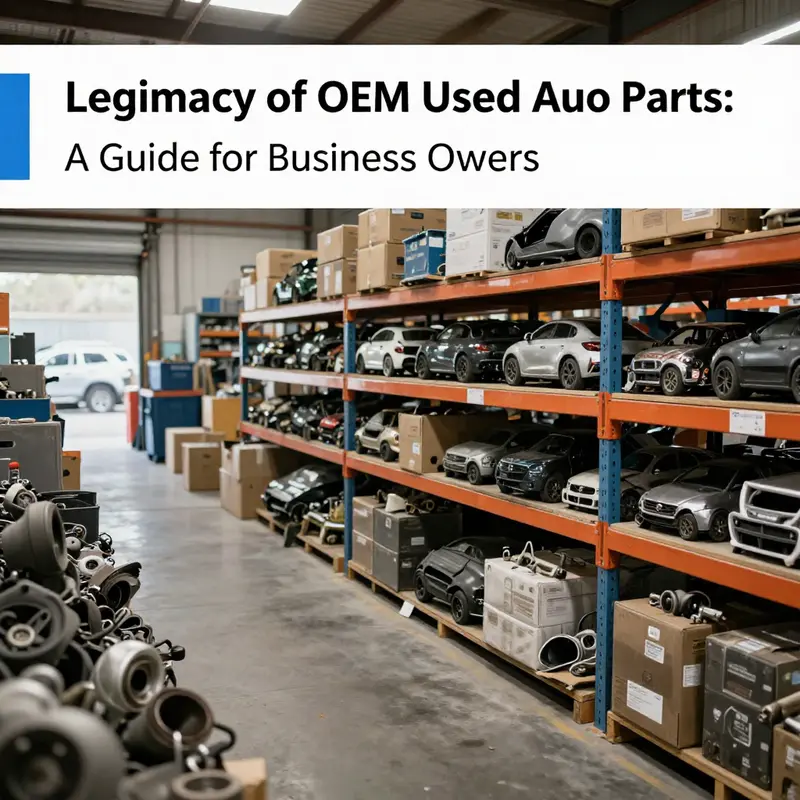
In the world of used OEM auto parts, credibility is not a luxury; it is the condition for safety and value. Buyers navigate a landscape where cost savings can quickly become risk if the seller cannot prove origin, condition, and fit. The central question—whether a part is legitimate—revolves around the credibility of the supplier. A trustworthy supplier does more than offer a price; they provide a verified chain of custody, documented testing, and transparent provenance that links every component back to its source and to the vehicle it once served. When a part leaves a vehicle in a salvage yard or a dismantling operation, it begins a journey that either upholds the promise of OEM accuracy or exposes the buyer to counterfeit claims, mislabeling, or questionable lifespans. The difference lies in the supplier’s willingness and ability to prove origin, condition, and compatibility through data-rich proof points.
Authenticity verification sits at the forefront of legitimate sourcing. Buyers should insist on documentation that can be mapped to a vehicle identification number (VIN), a precise part number, and traceability records that cover the part’s entire life cycle. A genuine OEM part is defined not only by its maker but by a verifiable lineage: the original part, its removal event, the testing it underwent, and the inspection standards it met before it reaches the buyer. This is especially important for critical systems where safety margins matter—brakes, steering components, suspension elements, and certain electronics. A small discrepancy in a label or a mismatched part number can translate into a failure mode in the field, so the buyer’s due diligence cannot be overly cautious.
Quality assurance in this market is a system, not a single certificate. Reputable suppliers build and maintain robust quality management systems that align with international standards. ISO 9001 certification, for instance, signals a formal, auditable commitment to process consistency, traceability, and continual improvement. It is not a guarantee of perfection, but it does provide a framework for evaluating a supplier’s capabilities across sourcing, dismantling, testing, packaging, and shipping. In tandem with ISO 9001, independent testing and documentation—covering aspects such as thermal resistance for cooling components or pressure tolerance for certain pumps and valves—give buyers tangible, objective data to assess performance expectations. When these elements are present, the odds of receiving a part that matches the original specification rise meaningfully.
Beyond quality management, credible suppliers often operate within a tightly integrated ecosystem that supports traceability at scale. Dismantling yards, testing facilities, bonded warehouses, and logistics hubs form a network where parts are tracked as they move from one node to the next. This connectivity matters because it enables rapid inventory aggregation without sacrificing accountability. The proximity of suppliers to major ports and logistics corridors—where verification, inspection, and customs processes intersect—also matters. A transparent operation can provide export and import documentation that confirms regulatory compliance and supports international distribution. In practice, this means a supplier can demonstrate that a part shipped to a customer in another region carried an auditable record from dismantling to delivery, with every link verifiable against a central data system.
Another pillar of supplier credibility is the ability to align with global regulatory expectations. In the OEM used parts space, standards such as CE marking for electronic components and DOT certifications for certain safety-related parts are meaningful indicators of compliance. These markings reflect a supplier’s commitment to meeting cross-border safety and performance requirements, which is especially relevant for buyers who ship components across continents. A supplier that can show both internal certification marks and external conformity assessments badges the credibility of its catalog and reduces the buyer’s verification burden. When combined with traceability documentation, these certifications contribute to a robust evidentiary package that supports a legitimate purchase rather than a speculative one.
For buyers, credibility also encompasses evidence of performance through data-driven assurance. Strategic sourcing guidance from industry stalwarts emphasizes verifiable performance metrics, transparent operational data, and long-term reliability. In practice, this means requesting comprehensive test reports that address critical operating envelopes. For engine and cooling system components, this could include test data on thermal resistance, vibration tolerance, and pressure endurance. Such reports help buyers understand whether a used OEM part will perform within the vehicle’s required specifications over a meaningful lifespan. The more a supplier can quantify, the more confident a buyer can be that the part will not only “fit” but also perform safely and reliably after installation.
The credibility calculus is not purely domestic. In major manufacturing hubs, particularly in large, export-oriented regions, reputable suppliers have built reputations by maintaining ISO 9001-certified quality management systems, offering traceable documentation, and ensuring compliance with global regulatory requirements. The best-known market signals come from those suppliers who provide end-to-end traceability, including raw material origin, dismantling event records, testing outcomes, and complete shipment documentation. This level of transparency does wonders for trust, especially for buyers who must justify procurement decisions to compliance teams or customers who demand accountability for every component installed in their vehicles. It also helps suppliers differentiate themselves in a crowded market where price shocks can tempt unscrupulous practices.
Skepticism toward used OEM parts is healthy. Counterfeit or mislabeled items can slip into supply chains that lack rigorous verification. The risk is highest for parts with critical safety and performance implications. Buyers should therefore approach sourcing as a risk management exercise: evaluate supplier credentials, corroborate with third-party audits, and insist on data-backed proof of origin and condition. Third-party audits are especially valuable because they provide an independent lens on a supplier’s operations, testing protocols, and documentation practices. When combined with export compliance checks and a culture of transparency, audits become a meaningful predictor of long-term reliability rather than a one-off assurance.
In the end, credibility in the OEM used parts market hinges on a transparent, auditable, and scalable operation. Data-driven assurance, strong quality systems, and regulatory alignment together create a reliable environment where legitimate used OEM parts can deliver the same fit, finish, and performance as new components—at a fraction of the cost. Buyers gain assurance not from a single promise but from a consistent pattern of proof across the supply chain. And suppliers who invest in that proof—who make traceability, testing, and compliance visible and verifiable—build trust that endures beyond a single transaction. It is this trust that transforms used OEM parts from a gamble into a legitimate, value-driven option for vehicle owners seeking sustainable, safe, and standards-compliant replacements.
For readers seeking additional, industry-validated context about credible sourcing and long-term reliability, consider the broader strategic insights from leading mobility and sourcing research, which emphasize performance data, operational transparency, and regulatory alignment as the backbone of supplier credibility in this market. External resources offer deeper perspectives on the standards and practices that drive trust in an increasingly global supply chain.
Tracing Trust in Salvage: How to Source OEM Used Auto Parts Legally and Safely

The legitimacy of OEM used auto parts rests on a careful balance between authenticity, traceability, and practical safety. OEM parts come from the same manufacturers that built the original vehicles, engineered to fit exactly and to perform under the same design standards. When these components are removed during repairs, or recovered through recycling programs, they carry the promise of genuine fit and reliable performance. Yet that promise only holds if the source is trustworthy and the handling preserves the part’s provenance. Counterfeits exist, and mislabeling is a real risk in the market for used components. The core question, then, is not simply whether a part is labeled OEM, but whether it can be verified, audited, and integrated into a vehicle with transparent documentation. In this sense, legitimacy is a function of process as much as it is of product.
To approach OEM used parts with confidence, one must begin with the supplier. A legitimate supplier does not merely sell parts; they curate a chain of custody. That chain starts with the vehicle’s history. A clear title history and proof that the donor vehicle was legally scrapped are essential. Different states and regions regulate dismantling and removal procedures to varying degrees, and those regulations shape the legitimacy of the parts that enter the market. The most reliable suppliers explicitly confirm that each part originated from a legally processed vehicle, and they are willing to share the vehicle’s VIN, the relevant part number, and the documentation that ties them together. In practice, this means a repository of records that can withstand scrutiny if a buyer or a regulator asks for it. The presence of VIN verification and part-number matching is not optional; it is the minimum verification that separates legitimate OEM used parts from mislabeled or stolen components.
Documentation is the backbone of trust. A robust supplier provides comprehensive records: the VINs of the donor vehicle, the date and method of scrapping, prior ownership details where legally permissible, and the specific part numbers that correspond to the exact model and year. This level of traceability is not only about compliance; it directly informs safety. For a brake caliper, a fuel pump, or an electronic control unit, knowing the part’s history—how it was used, how it was tested, and whether any reconditioning occurred—helps buyers assess residual life and risk. When such documentation exists, buyers can validate compatibility with their vehicle’s VIN and confirm that the replacement will restore the original performance rather than introduce unknown variables.
But documentation is meaningful only when it aligns with recognized standards. Compliance with industry norms—such as those advanced by automotive recycling associations and quality management systems—signals more than a snapshot of provenance. It indicates that the supplier adheres to consistent testing, inspection, and handling procedures. Standards help ensure that what arrives on a shop bench is not a gamble but a part that has been validated for safety and reliability. The value of these standards compounds over time, contributing to a more predictable market where repair shops and individuals alike can source parts with confidence rather than fear. While standards frameworks vary by jurisdiction, the overarching principle remains constant: traceability, verifiability, and quality assurance must anchor every transaction.
Transparency in operations is another critical dimension. A supplier who openly describes their sourcing, dismantling, and testing processes invites trust. They should be able to explain how parts are tested for functionality and fit, what tests are performed on critical systems, and what guarantees accompany the parts. For buyers, this reduces the cognitive load of sifting through competing claims and disparate documentation. When suppliers provide a clear, end-to-end explanation of how parts are sourced and validated, it becomes possible for a shop or a consumer to assess risk without specialized expertise. The prudent buyer also looks for a policy on returns and warranties tied to verified origin. A legitimate OEM used-part program often offers some form of assurance that the part will perform to expected standards for a defined period, reflecting confidence in the supplier’s internal quality checks.
A multidimensional assessment approach helps buyers balance cost with risk. Pricing is important, but it should not be the sole criterion. Technical capability matters: can the supplier confirm that they have the exact model, year, and trim level that matches the donor vehicle? Are there guarantees about the moment of part removal, the absence of damage that would affect safety, and the compatibility with the buyer’s VIN or part-number specifications? The integrity of the supply chain matters too. A transparent supplier maintains clear records of each transaction, tracks batch histories, and can demonstrate how a part moved from donor to end user while preserving its documentation trail. These factors collectively reduce the odds of inadvertently purchasing a compromised component or one that has been misrepresented as OEM.
Sustainability sits beside safety in the decision-making matrix. Sourcing OEM used parts supports environmental goals by extending the life of components and reducing waste. Yet sustainable sourcing is not a license to bend rules. Ethical practices, including verification of origin and avoidance of stolen parts, are essential to truly sustainable procurement. In practice, sustainable sourcing means choosing partners with verifiable scrapping records, robust traceability, and a demonstrated commitment to lawful, ethical handling of vehicles. When buyers align with such suppliers, they reinforce a marketplace that values both safety and stewardship, where the downstream impact of each replacement is considered alongside the immediate fit and function.
For the buyer, the practical path to legitimacy combines a few concrete steps with a mindset oriented toward long-term reliability. First, insist on VIN verification and part-number matching. This is not mere paperwork; it is a functional test of compatibility and lineage. Second, request the donor vehicle’s legal scrapping proof and the supplier’s traceability records. Third, seek evidence of testing and certification that align with recognized industry standards. Fourth, evaluate the supplier’s operational transparency and quality assurance practices. Fifth, consider the ecological and ethical dimensions of the supplier’s sourcing practices and compliance with applicable laws. Taken together, these steps form a practical rubric that can guide decisions in a market where the label OEM carries weight but does not guarantee safety or legality on its own.
The broader takeaway is that OEM used parts can be legitimate and a valuable option for repairs, provided the purchase is anchored in verifiable provenance, documented testing, and credible supplier practices. When these elements converge, a part’s origin matters less as a badge and more as a documented chain of custody that confirms safety, compatibility, and performance. For readers seeking broader guidance on verifying legitimacy and ensuring compliance, consider resources that emphasize ISO 9001 compliance and traceability in OEM-level consistency, as well as guides that outline practical steps for buying used car parts wholesale. An external resource that offers a thorough framework for evaluating used parts can be a helpful reference point: https://www.carinterior.com/how-to-buy-used-car-parts-wholesale-a-complete-guide. And for readers looking to see an example of rigorous part documentation in action, a representative listing from a reputable sources network highlights how detailed donor histories and matching records support trustworthy sourcing. To explore a concrete example in this space, see one illustrative listing that emphasizes aligned part history and exact model matching here: mitsubishi-evolution-evo-4-9-shock-block-short-motor-engine-complete-4g63-1000b075. This combination of provenance, testing, and transparency makes the case that OEM used parts deserve a careful, informed approach rather than a blanket dismissal or uncritical acceptance.
By integrating VIN-level verification, documented donor histories, adherence to standards, operational transparency, and a principled stance on ethics and sustainability, buyers can navigate the OEM used-parts landscape with greater confidence. The result is not just a safer repair but a more trustworthy marketplace where authenticity is proven through records as much as through designation. As the sector evolves, those who insist on rigorous provenance and verifiable performance will shape a future in which legitimate OEM used parts are recognized not as a compromise but as a deliberate, quality-informed choice that aligns safety, legality, and environmental responsibility with practical repair needs.
Final thoughts
As the demand for affordable and quality auto repairs continues to rise, OEM used auto parts present a legitimate option when sourced appropriately. Business owners must prioritize authenticity verification, understand the implications of the condition and wear of parts, and carefully select credible suppliers. By following the best practices outlined in this article, you can confidently incorporate OEM used auto parts into your operations, ensuring reliability and safety for your customers. The right approach to sourcing not only protects your business but also fosters trust with your clients, solidifying your reputation in the automotive market.