
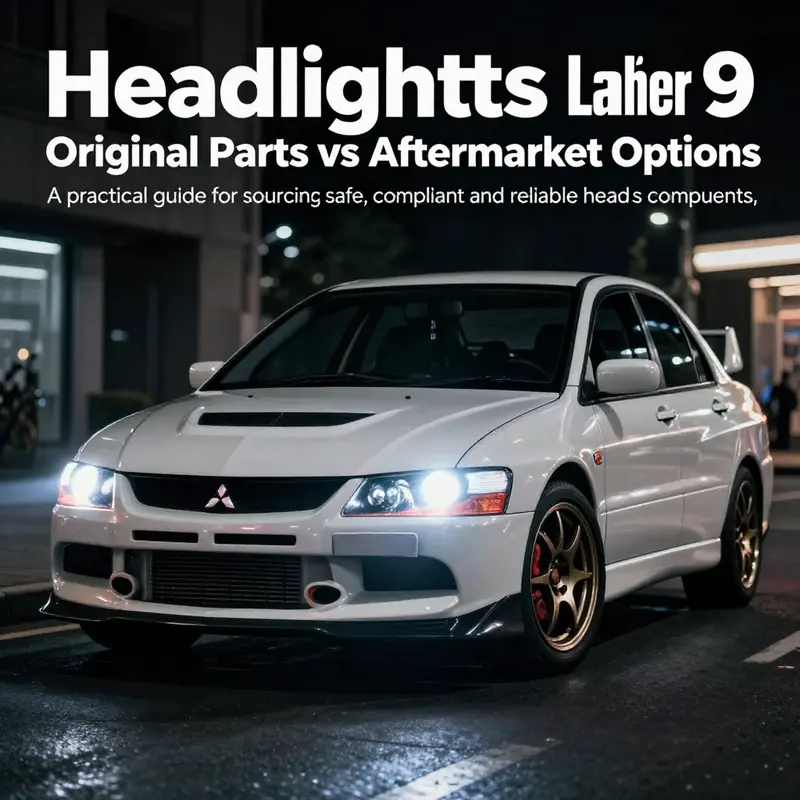
In the automotive parts business, the headlights of the Mitsubishi Lancer Evolution IX are critical for safety and brand perception. Understanding the differences between original parts and aftermarket options helps you guide customers and manage quality expectations. This article outlines the key considerations for Evo 9 headlights, including material choices, safety standards, and reliable sourcing.
Shining Truths: OEM vs. Aftermarket Headlights for the Lancer Evolution IX (CT9A) and the Quiet Art of Illumination
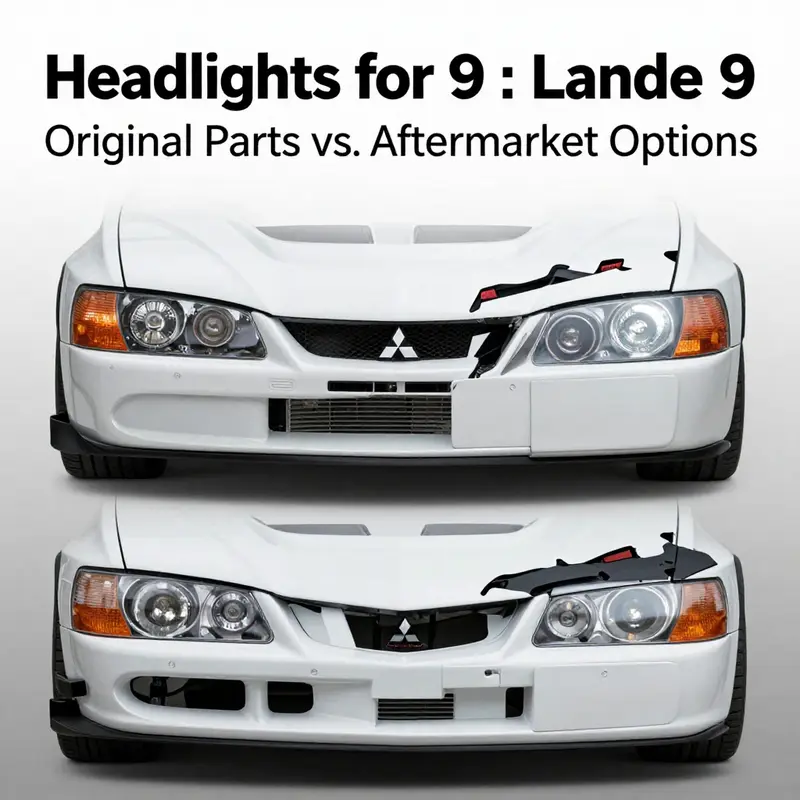
Headlights are more than just bulbs and lenses on a Lancer Evolution IX. They are a rare blend of function and form that can redefine a car’s character without changing its footprint on the road. For the CT9A, the decision between OEM headlights and aftermarket alternatives is not merely about price. It is a choice about fitment accuracy, beam quality, safety, and the way the car communicates its intent to other road users. In a world where carbon fiber and fiberglass materials are increasingly used to shave weight and sharpen aesthetics, the headlights themselves have become a canvas for engineers and designers who want light to do more than simply illuminate the lane ahead. What begins as a practical upgrade quickly becomes a statement about how closely a driver wishes to align with factory performance or to pursue a more individualized, modern look that still respects the vehicle’s original architecture. The exploration of options, therefore, begins with an understanding of what OEM headlights bring to the table and what aftermarket products promise to deliver, all while remaining mindful of the CT9A’s distinctive engineering footprint and the regulatory frame that governs road usage.
OEM headlights for the Lancer Evolution IX are typically produced to Mitsubishi’s exact factory specifications or by authorized suppliers who have a sanctioned relationship with the original manufacturer. The standout advantage of these parts is fitment confidence. When you slide a genuine part into its housing, you are not left guessing about whether mounting tabs will align or whether the beam pattern will point where intended. This is especially important for a car like the Evolution IX, where the headlight assembly is not only a light source but a precise beam control device that helps define the front-end silhouette. The precise alignment of the headlights contributes to safe nighttime visibility and reduces glare for oncoming drivers. In many cases, OEM CT9A headlights maintain compatibility with the car’s existing sensors, wiring harnesses, and lighting controls without needing extensive reconfiguration. This reduces the risk of electrical faults or mismatched beam patterns that can arise when parts are out of spec.
From a practical standpoint, OEM headlights are anchored in tested safety and quality standards. They come with a pedigree that reassures owners about durability and long-term performance. The preponderance of OEM options also means that these parts are more likely to retain resale value, as original equipment is often considered more authentic by enthusiasts who prize factory performance. Of course, this comes at a price. Genuine headlights tend to command higher prices than many aftermarket kits, reflecting their manufacturing quality, guaranteed fitment, and the assurance that they will work with the vehicle’s existing systems. For many CT9A owners, this investment is a straightforward choice: preserve the factory lighting experience, protect the integrity of the electrical system, and ensure that the car’s front-end styling remains faithful to Mitsubishi’s original design intent. The trade-off is a cost premium that some builders are unwilling to absorb, especially when there are compelling aftermarket options that promise similar or improved performance at a lower price.
Aftermarket headlights, by contrast, introduce a spectrum of design language that can alter the Lancer Evolution IX’s visual impact while promising practical gains in brightness, efficiency, and customization. The most common lumen-focused enhancements come through LED or HID technology, which can yield a brighter, crisper beam than stock halogen units. When well executed, aftermarket headlights also offer more modern styling cues—a sharper cutoff, a deeper lens, or a sculpted housing that emphasizes the aggressive lines of the CT9A’s face. This is where the aftermarket narrative becomes most appealing: a chance to modernize the car’s lighting without replacing the entire front end. Enthusiasts who chase a more contemporary look often gravitate toward packages that incorporate integrated turn signals, robust heat management, and improved durability. The caveat is that with this customization comes a wider variance in quality. Not every aftermarket headlight is built to the same standard, and the CT9A’s electrical system can be sensitive to mismatched components. In some cases, cheaper kits may rely on subpar plastics, inconsistent sealing, or inferior reflective surfaces that degrade light output over time. The result can be a headlight that looks promising in pictures but underperforms in real-world nighttime driving, or one that fails to align as precisely as the factory design intended.
To navigate this complexity, buyers often evaluate three core dimensions: fitment, beam quality, and regulatory compliance. Fitment goes beyond mere mounting accuracy. It includes how the housing interfaces with the CT9A’s fender liners, hood line, and bumper clearance. Beam quality refers to the pattern that projects onto the road—an even spread, a defined cutoff, and minimal scatter that can blind an oncoming driver if the unit is misaligned or poorly built. Regulatory compliance is a critical factor, because headlights must meet standards such as E-mark or DOT requirements depending on the market. These standards address not only the brightness and beam pattern but also durability under road conditions, weather exposure, and electrical safety. A well-made aftermarket headlight can deliver exceptional aesthetics and improved brightness while staying within legal bounds; a lower-cost option, however, may look impressive in a showroom but fail to meet road-use rules or deliver consistently reliable illumination over time.
An authentic, replacement approach exists within the category of genuine, replacement CT9A headlights that preserve the original design while allowing owners to refresh aging components. These genuine replacements are often listed on marketplaces with part numbers that mirror the factory catalog’s identification system. For the Evolution IX, examples of these listings emphasize complete lamp units that arrive as body shells, excluding bulbs, ballasts, and burners. This detail matters because it allows owners to reuse their existing light bulbs and ballast components if they wish to maintain a familiar electrical setup. The practical advantage is a straightforward swap that minimizes downtime and helps maintain the intended color temperature and light quality the car originally delivered. For collectors and long-term owners, this approach can feel like a reliable middle ground—retaining the valuable factory alignment and optical characteristics while replacing the worn housing with new components.
Beyond the realm of factory parts, there is a broader conversation about how materials influence headlight performance and weight, especially when carbon fiber and fiberglass are involved. Some manufacturers market headlight housings that feature carbon fiber or fiberglass shells designed to reduce weight and evoke a motorsport aesthetic. The technical reality is nuanced. Carbon fiber, when used in the outer shell, can reduce mass and contribute to a more aggressive, sport-oriented appearance. Yet the headlight is also a sealed optical system that generates heat, and the materials must manage temperature effectively to prevent lens deformation or seal failure. Reputable suppliers who produce carbon fiber or fiberglass CT9A headlight shells typically pair these materials with engineering-grade plastics for the lens and with reflective surfaces that match or exceed factory performance. The promise is a lighter, more aggressive look with potentially improved durability in the event of minor impacts, but only if the build quality is solid and the installation is done with careful attention to seal integrity and mounting tolerances.
The material question dovetails with the practical reality of road legality. Many certified products on the market assert that they comply with road-use regulations and safety standards. This is not just about the color temperature or lumen output; it includes how well the unit is sealed against moisture, how reliably the connectors seat, and how steady the electrical current remains under varying engine loads. When carbon fiber or fiberglass housings are involved, owners should seek products with proper documentation showing that the materials and finishes have passed the necessary environmental and safety tests. The CT9A’s front-end design rewards a careful blend of form and function. The right headlight can sharpen the car’s stance, improve nighttime visibility, and maintain the integrity of the car’s original aesthetic—without sacrificing the practicalities of everyday use or the vehicle’s keyboard of lighting controls.
In the broader context of sourcing, a reputable path often includes comparing OEM parts with aftermarket options that explicitly state compatibility with the CT9A platform. The CT9A-specific design has its peculiarities: mounting points that must align with the frame rails, a particular shape for the projector or reflector, and a specific way the housing integrates with the grille and bumper assembly. The aftermarket market, aware of these constraints, frequently offers CT9A-tailored kits that declare fitment for Evolution IX, while some universal or misfit options can tempt buyers with lower prices but risk misalignment or non-compliance. The best practice is to confirm explicit CT9A compatibility in product descriptions, verify that the kit includes necessary mounting hardware, and inquire about the supplier’s return policy in case the beam pattern needs adjustment after installation. A thoughtful buyer will also inquire about whether the product is designed for headlight-level alignment checks in the shop or the roadside, because the CT9A’s optics rely on precise positioning to achieve the intended light distribution.
As a pathway to alignment and authenticity, enthusiasts sometimes pursue a balanced package that includes both authentic aesthetics and modern performance. For those who want to preserve the vehicle’s original design while upgrading the lighting experience, the option to install a set of genuine CT9A headlights—as complete lamp units with body shells, minus bulbs and ballasts—can be particularly appealing. This approach provides a pathway to refresh the appearance and restore the original beam geometry without altering the electrical architecture or the car’s hallmark lighting signature. It is a careful dance between preserving factory integrity and embracing a refreshed, potentially brighter illumination that remains within the boundaries of safety and legality. In this sense, the decision is not a binary choice between OEM and aftermarket; it is about choosing the degree of fidelity to the factory system while recognizing that lighting technology has progressed since the Evolution IX rolled off the line.
For readers who are drawn to the idea of authentic factory-grade aesthetics, there are sources that highlight the appeal of genuine components in the evolution of Lancer IX lighting. The emphasis on factory alignment, verified beam patterns, and the certainty of correct electrical interfacing resonates with those who value long-term performance and resale confidence. At the same time, there is room for a more personalized approach, where owners select aftermarket headlights that align with their goals for brightness, color temperature, and styling cues. The CT9A platform, with its tight tolerances and distinctive lines, rewards thoughtful selection and a careful installation process. A well-chosen headlight setup can enhance nighttime visibility, reduce fatigue, and preserve the car’s aggressive silhouette, all while maintaining compliance with road regulations. In the final analysis, the right choice depends on how much weight a driver places on factory fidelity, upgrade potential, and the long-term reliability of the lighting system.
For those seeking an example of a high-credence, authentic route, consider that some CT9A headlights are marketed as original equipment and sold as complete lamp units with the body only. This configuration provides a faithful reproduction of the factory look, while giving owners the opportunity to re-use existing bulbs, ballast, and drivers that are known to perform well with the CT9A’s electrical environment. The decision to purchase this route should be informed by the vehicle’s current condition, the expected life of the current ballast and bulbs, and the ease with which the new housing can be mounted without disturbing adjacent components during installation. A careful buyer will measure the fitment, verify the seal integrity around the lens, and ensure the new unit does not introduce any rattles or misalignment that could affect performance over time. In the end, whether one chooses OEM or aftermarket, the CT9A remains a car that rewards precision and care in its lighting system as much as in its engine and chassis.
To explore authentic options beyond the core OEM and aftermarket dichotomy, see one example of an authentic JDM Evo 9 MR taillights approach that complements the CT9A’s headlight package. This path is about harmonizing the front and rear lighting cues to maintain a coherent identity on the road. A practical path is to investigate reputable sources that provide CT9A-specific lighting solutions and to read reviews from owners who have undertaken similar upgrades. One such resource that readers may consult for a sense of authenticity and completeness is the page dedicated to Authentic JDM Evo 9 MR taillights, which illustrates how genuine styling elements can align with a broader lighting strategy across the vehicle. For more details, the product page can be found here: Authentic JDM Evo 9 MR taillights.
The reality of choosing Lancer Evolution IX headlights is that there is no single right answer. It is a decision shaped by priorities: the desire to preserve the original factory feel and performance, the urge to experiment with newer lighting technology, the respect for road laws, and the practicalities of budget and availability. The CT9A’s headlight system is a key factor in both perception and safety. Regardless of the path chosen, the goal remains constant: to illuminate the road ahead with precision, to project a car that communicates its intent clearly to others, and to honor the vehicle’s heritage while embracing the possibilities of modern design. With careful consideration of fit, performance, and compliance, an Evolution IX owner can realize a lighting upgrade that feels seamless, authentic, and just as thrilling on a dark highway as it does on a sunlit morning drive. And while the choice between OEM and aftermarket may differ from one driver to the next, the common thread remains unwavering: good headlights are essential to the driving experience, not merely a cosmetic accessory.
External resource for reference on OEM CT9A headlights: https://www.ebay.com/itm/Mitsubishi-Lancer-Evolution-7-9-MR-OEM-Headlights-Set-Left-Right-CT9A/
Lancer Evo 9 Headlights: Materials, Compliance, and the Quiet Power of Safe Performance Lighting
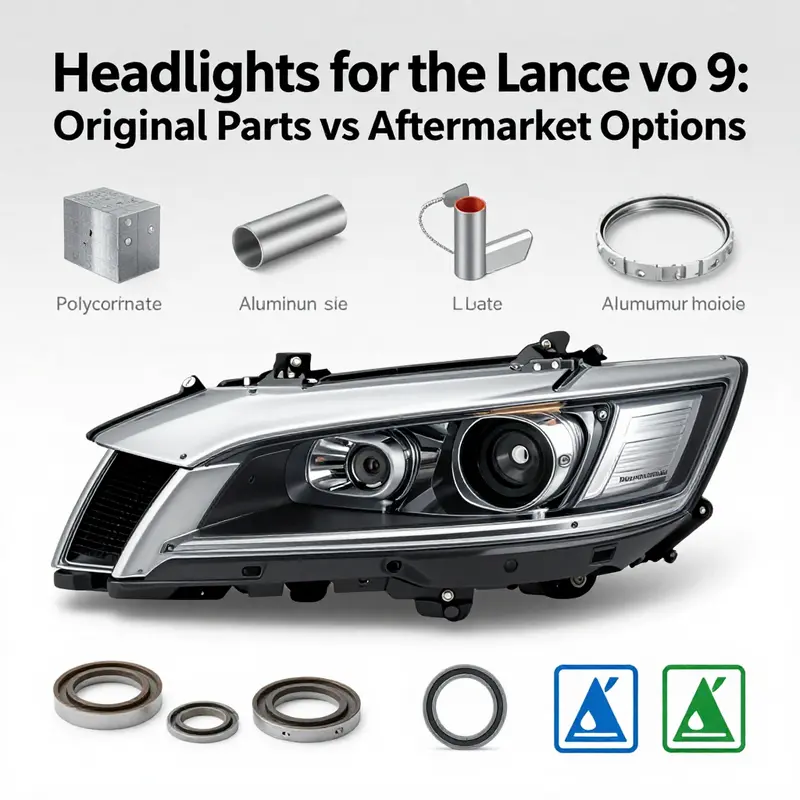
The headlights on the Lancer Evolution IX carry more than a practical purpose; they are a statement of engineering intent, a blend of form and function that can influence handling, aerodynamics, and even the perception of speed. When you gaze into the square or round cutouts of the Evo 9’s front end, you’re also looking at a window into the choices made about materials, manufacturing quality, and regulatory responsibility. In this chapter, the discussion centers on two intertwined threads: the materials used for headlight assemblies and the safety standards that regulate their performance on public roads. The conversation doesn’t merely catalog components; it explains why certain materials and tests matter for owners who want both performance and legality from their lighting upgrades. The choice of materials—particularly carbon fiber and fiberglass composites—has become a defining feature of modern aftermarket headlight options for performance-focused Lancer models. These composites can deliver a meaningful reduction in weight, which, while modest in a headlight, contributes to overall vehicle efficiency and responsiveness when summed with other lightweight components. Carbon fiber, with its high strength-to-weight ratio, offers a rigidity that can support precise beam alignment and durable mounting, helping maintain the intended light distribution even under harsher driving dynamics. Fiberglass, while heavier than carbon fiber, provides excellent impact resistance and an ability to shape complex, aerodynamically sensitive housings without sacrificing structural integrity. In practice, the resulting headlights are often designed as a cradle for the optics that direct illumination. The lens material remains a separate consideration; polycarbonate or PMMA lenses, with protective coatings to resist UV degradation, are standard choices. The lens must resist micro-scratching and hazing that can dull brightness and alter beam color, a feature especially important when the underlying reflector or projector system is tuned for a specific color temperature. The interaction between the housing material and the lens is what determines how well the light can be shaped, aimed, and projected down the road. For Evo IX owners, this means that a headlight that uses carbon fiber or fiberglass while preserving a secure seal against moisture will outperform a cheaper, non-certified alternative in not only brightness but also longevity. The lightweight nature of carbon fiber, in particular, can contribute to a small but meaningful reduction in the unsprung mass in the vicinity of the front corners, helping to keep suspension behavior predictable under hard cornering. This is not to say that weight alone dictates performance; rather, it is the cumulative effect of material choices on heat dissipation, structural rigidity, and alignment stability. A well-engineered composite housing helps maintain the integrity of the light source and the optics through heat cycles that are inevitable as the car is driven at higher speeds or in demanding conditions. The headlight assembly, then, becomes a microcosm of a broader design philosophy: use advanced materials to reduce weight where it matters, ensure durability where threats to the enclosure exist, and guarantee that every component works in concert to deliver a safe, legal, and visually compelling result. Beyond the material choice, the manufacturing process matters just as much. Certified manufacturers, producing headlight components under controlled conditions, bring a level of quality assurance that translates into consistent performance and predictable lifespan. That is where standards such as ISO 9001 and TS 16949 come into play. They are not just abstract certificates; they represent a systematic approach to design, process control, and supplier management that reduces the risk of defects that could compromise beam pattern, color fidelity, or sealing integrity. When a headlight is advertised as compliant with OEM/OES standards, it signals that the product has undergone rigorous checks that align with the expectations of regulatory bodies and professional workshops. It is important to recognize that a well-made headlight is not merely about appearance. The color temperature, typically measured in kelvin, influences how the light interacts with road surfaces and how the human eye perceives objects at night. A product that pushes the color temperature toward extreme blue—often marketed as “super bright” or “extreme blue”—may be visually striking but can also infringe on safety guidelines and traffic regulations in many jurisdictions. The practical implication is simple: legality depends on corroborated documentation, not claims of brightness alone. In this regard, the documentation accompanying a headlight set matters as much as the product’s physical construction. A DOT or ECE certification mark is not a cosmetic addition; it is a signal that the beam pattern, brightness levels, glare control, and color temperature have been tested under conditions that mirror real-world driving. For Evo IX users, this translates into a predictable light throw that illuminates the path ahead without glaring oncoming drivers. It also means that the headlight will generally be accepted by law enforcement and inspections, reducing the risk of fines or the need for removal after a roadside check. The interplay between material science and regulatory compliance creates a practical pathway for enthusiasts who want to upgrade without sacrificing legality. The chapter results in a straightforward recommendation: prioritize headlight assemblies built from high-quality composites, and verify that the product carries recognized safety certifications. The decision is not about chasing the most aggressive visual effect, but about balancing aesthetics, performance, and safety in a way that respects the rules of the road. The consequence of neglecting certification can be more than a failed inspection; it can be a heightened glare for other drivers and a reduction in nighttime visibility due to misaligned optics or poor thermal management. In composite housings, ensuring stable alignment over time is crucial, because slight shifts in beam direction can cause glare or insufficient illumination at critical distances. Carbon fiber and fiberglass lend themselves to precise molding and reinforcement strategies that help prevent such shifts, provided the manufacturing process adheres to tight tolerances. This is why the specification sheet, often overlooked by casual buyers, is a vital component of any purchase decision. A well-documented headlight assembly will list the lens material, the type of mounting hardware, the sealing method, and the expected service life under typical operating conditions. For Evo IX drivers who value both form and function, this documentation is a navigator, guiding them toward products that perform consistently on the road rather than merely in a showroom. The practical takeaway from the materials and standards discussion is straightforward. When choosing replacements or upgrades for Evo IX headlights, seek products that (1) use robust composite housings with proven durability, (2) utilize lenses resistant to UV damage and scratching, and (3) carry DOT or ECE certification to assure compliant beam patterns and safe operation. In essence, the right combination of materials and testing turns a potential eye-catching modification into a reliable, road-legal enhancement. While the Evo IX era drew to a close with the model’s performance pedigree, the principles of materials science and safety regulation it helped popularize continue to shape contemporary headlight design for Lancer models and beyond. For readers who want to explore a broader discussion of related headlight design considerations and how they translate across generations, an example reference on Evo X headlight design provides a useful comparative context. See the resource on Evo X headlights design for reference: headlights-for-lancer-evo-x-2007-2017-audi-design-version-2.
In addition to these design and regulatory considerations, the process of evaluating headlight options often benefits from a broader perspective on safety standards and consumer expectations. The international framework that governs headlight performance, including the beam pattern accuracy and glare reduction, is designed to protect all road users. In practice, this means that a headlight assembly must be tested for alignment accuracy, photometric performance, and color stability across the temperature ranges typical of night driving. Light sources, lenses, and reflectors are all subjected to quality control that ensures the final product meets the minimum thresholds for road use. When these criteria are met, the result is a lighting system that not only provides adequate forward visibility but also contributes to safer driving conditions by minimizing glare and ensuring a consistent light footprint on the roadway. From a maintenance standpoint, the materials chosen—carbon fiber and fiberglass composites—also deserve attention during routine checks. The exterior housing should resist moisture ingress, while the lens seal should remain intact after exposure to road salt, rain, and mud. A compromised seal can lead to fogging or moisture inside the housing, which degrades light output and shortens the life of internal components. In many cases, owners find that the best long-term strategy involves periodic inspection of seals, lens clarity, and mounting integrity, especially after aggressive driving or off-road use. While Evo IXs are celebrated for their performance heritage, the eventual aim of any upgrade should be a balanced outcome: a headlight that looks the part, performs reliably, and remains within the boundaries of road legality. The materials and safety standards discussion is not merely a checklist; it is a practical framework for thoughtful decision-making. It helps owners avoid the trap of chasing the brightest possible light at the expense of beam quality, glare control, or regulatory compliance. If there is a broader takeaway, it is that the most durable, satisfying headlight upgrades arise from a disciplined combination of material science, rigorous testing, and transparent documentation. In this sense, the Evo IX’s headlights become a model for other enthusiasts who aspire to blend aesthetics with safety, performance with responsibility, and style with compliance. For readers seeking a broader context on related headlight topics while maintaining a focus on the Evo lineage, the linked Evo X headlights resource provides a useful comparative touchstone for design language and safety expectations across generations. See the Evo X reference here: headlights-for-lancer-evo-x-2007-2017-audi-design-version-2.
As a final note, when advancing with any headlight upgrade for the Evo IX, approach the project as a holistic endeavor. The selection of materials, the verification of safety certifications, and the alignment with road-use standards form a single, cohesive chain. Each link in that chain reinforces the others: high-quality composite housings support durable, reliably aimed beam patterns; proper certifications assure legal operation and safety; and thoughtful installation practices preserve alignment through the inevitable stresses of real-world driving. In the end, the Evo IX headlight upgrade becomes more than an aesthetic enhancement. It becomes an exercise in responsible performance, a careful balance between the desire for sharper, more targeted illumination and the obligation to protect fellow road users. The result is a lighting system that honors the automobile’s legacy while embracing the standards that keep it on the road, night after night, mile after mile. For readers who want to explore the nuanced relationship between headlight materials and regulatory expectations further, the external safety resource cited earlier provides additional context and detail about the regulatory landscape that governs modern automotive lighting. External reference: https://www.dmv.org/.
Bright Paths, Strong Foundations: Sourcing Quality Headlights for the Lancer Evolution IX
The headlights of a car are more than mere lamps; they are a link between design intent, safety, and the daily reality of night driving. For the Mitsubishi Lancer Evolution IX, a generation that thrives on poised handling and a driver’s connection to the road, the choice of headlight upgrade or replacement becomes a decision that touches weight, balance, thermal performance, and even the way the car communicates its attitude at a standstill. When approaching this topic, it helps to picture the task not as a single parts purchase, but as a short course in automotive sourcing, where the goal is to reconcile the dream of a brighter, more focused beam with the practicalities of manufacture, compliance, and long-term reliability. In this light, selecting headlights for the Evo IX moves from a cosmetic impulse into a carefully choreographed process that borrows lessons from broader automotive supply chains and translates them into a bespoke outcome for a car that rewards precise tuning and disciplined maintenance.
First, the material question sits at the core of any meaningful headlight upgrade. Car headlights are not just light boxes; they are assemblies that must survive years of vibration, temperature swings, and exposure to road debris. Modern options often emphasize lighter weight and advanced optics, leveraging materials such as carbon fiber and reinforced composites to reduce unsprung mass and improve the visual feel of the car in motion. In practice, carbon fiber reinforced housings or facings can contribute to a lighter front end and a sportier silhouette, while carefully engineered fiberglass components may offer a balance between rigidity and cost. What matters most is that the chosen material meets both the performance targets and the regulatory thresholds that govern daylight and night-time visibility, alongside the structural integrity needed to resist impact, heat, and humidity over many driving seasons. When a buyer looks at these materials, the first questions should be about certification and compliance: do the parts come from certified manufacturers, and do they meet the standards applicable to road use in the buyer’s market? The answers must extend beyond a glossy finish and into measured performance data and factory documentation.
The sourcing narrative for Evo IX headlights naturally leads to the geographic hubs where modern automotive components are engineered, prototyped, and produced at scale. Guangdong Province, with its dense network of electronics and automotive component manufacturers around Guangzhou, stands out as a strategic base. The region’s strength lies in its vertically integrated capabilities: suppliers that can move from concept to prototype to small-batch production with rapid feedback loops. Proximity to major international ports in Shenzhen and Hong Kong further strengthens the logistics backbone, enabling the timely import of LEDs, projectors, lenses, and precision-engineered heat sinks. This is the kind of ecosystem that shortens lead times and reduces the risk of supply disruptions, factors that matter deeply when a project depends on precise optical alignment, reliable thermal management, and compatibility with the Evo IX’s wiring and vehicle control modules.
Complementing Guangdong’s electronics and light-engineering strength are the manufacturing clusters in Zhejiang and Jiangsu. Zhejiang is renowned for CNC machining and alloy fabrication, essential for the smooth, accurate enclosures that protect high-precision LED modules and projector assemblies. Jiangsu, with its die-casting and sheet metal forming prowess, provides durable housings and brackets that can stand up to road vibrations and the heat produced by powerful light sources. For a buyer assessing headlight upgrades, these regional strengths translate into a pipeline where complex geometries can be realized with tight tolerances, ensuring that the seal between the lens and housing remains robust across years of front-end flexing and temperature cycling. The manufacturing network across these provinces helps to manage both form and function—how the light is shaped and directed, and how the assembly withstands the environmental realities of road use.
Even with the right materials and a supportive production base, the value of a headlight upgrade hinges on performance data that translates into real-world visibility. LED and projector-style designs deliver more precise beam control than traditional halogen setups, offering a more focused hotspot on the road and improved peripheral illumination. But the practical benefits depend on how well the beam pattern is matched to the Evo IX’s front fascia and headlight housing, and how the system manages heat generated by high-output light sources. Thermal management is not a luxury; it is a prerequisite for long life and stable performance. A credible supplier will present explicit specifications on heat dissipation techniques, such as integrated heat sinks, active cooling elements, and materials with favorable thermal conductivity. They will also provide beam pattern data that demonstrates compliance with local traffic regulations and aligns with the user’s goal of improved nighttime visibility without excessive glare to oncoming traffic.
Alongside performance comes a critical regulatory dimension. For any road-legal headlight component, compliance signals that the part has been assessed for safety and reliability. Internationally, markers such as E-mark, DOT, or similar certification marks indicate that a product has undergone testing for photometric performance, electrical safety, and environmental durability. A legitimate upgrade project cannot ignore these requirements, particularly in markets where enforcement is relatively strict or where inspection regimes are value-driven by safety concerns. For buyers, this means that a supplier who provides clear documentation—catalogues with photometric curves, temperature and humidity testing results, and documented wiring harness compatibility—reduces the risk of later retrofit headaches. In the Evo IX context, where the car’s electrical architecture carries its own coding and ground references, having a wiring harness map and compatibility notes is as important as a luminous beam file. It is not enough to install brighter lamps; the system must integrate cleanly with the vehicle’s lighting logic and fail-safes.
These considerations naturally lead to procurement discipline. B2B buyers who aim for high-quality headlights in the Evo IX segment should seek suppliers with established ISO certifications and robust supply chains. They should request technical specifications that illuminate every dimension of the product: material composition, surface hardness, resistance to UV light and environmental exposure, lens curvature, and the optic design that shapes the beam. They should demand documented thermal management features and performance data across representative ambient temperatures. Above all, they should insist on confirmation of compatibility with the Evo IX’s wiring harness and side-marker integration, because even small mismatches can translate into flicker, dead channels, or misdirected light that compromises safety rather than enhancing it.
In this sourcing narrative, the choice between a carbon-fiber aesthetic and a more conventional housing becomes a question of the buyer’s priorities. If the objective is a light assembly with a lighter overall mass and a sportier silhouette, carbon-fiber-based components may be appealing, provided they are engineered to maintain structural integrity and optical alignment under load. If durability and cost containment take precedence, a high-quality fiberglass composite or a reinforced polymer housing, engineered with precise tolerances and reinforced mounting points, can deliver a resilient solution without sacrificing optical performance. Either path requires a disciplined approach to engineering documentation and supplier verification. The buyer should not accept marketing claims at face value; instead, they should request a fully documented design review, including tolerances, fastener geometries, and alignment procedures, along with field-test data that demonstrates how the assembly holds its calibration after a defined mileage or a number of heat cycles.
A practical implication of the sourcing approach is how buyers leverage online marketplaces and supplier certifications to access capable manufacturers. Platforms with strong verification processes can connect buyers with suppliers that not only claim capability but demonstrate it through ISO certificates, traceable component materials, and transparent craftsmanship. In the broader context of Evo IX headlights, the objective is to identify vertically integrated suppliers who can deliver a complete solution—from LED chips and projector lenses to the mechanical housings and harnesses that connect to the car’s electrical system. The integration of all these elements matters as much as the brightness of a lamp: a bright beam is of little value if it cannot be consistently aligned and maintained in tolerance or if it introduces electrical noise or heat-induced degradation.
To ground these reflections in a practical reference point without moving away from the bigger picture, consider a concrete catalog page that demonstrates how these concepts translate into a product listing. For a sense of how a broader headlight option might be framed within a catalog ecosystem, you can review the page titled headlights for Lancer Evo X 2007-2017 Audi design version 2, which illustrates a design language that emphasizes integrated optics and modular housing. The page illustrates how a supplier communicates beam patterns, mounting compatibility, and regulatory compliance in a way that is accessible to procurement teams evaluating a potential upgrade for the Evo IX. While the Evo X is a different generation with its own nuances, the underlying principles—clear photometric data, robust mounting geometry, and documented compliance—remain directly applicable to the Evo IX when selecting an upgrade package. For context, the page can be accessed here: headlights for Lancer Evo X 2007-2017 Audi design version 2.
Alongside the engineering and compliance considerations, there is a cultural and historical layer to the Evo IX headlights that buyers often overlook. The Evolution X family of parts has driven a broader conversation about how owners perceive the relationship between external appearance and internal performance. A generation earlier, Evo IX owners learned to value components that align with the car’s DNA: compact dimensions, precise fit, and a lighting system that respects the car’s philosophy of responsive, balanced performance. The Evo IX’s owner community tends to appreciate upgrades that enhance visibility without altering the vehicle’s fundamental character. In this sense, the sourcing process becomes a careful negotiation between modern illumination technology and the car’s established ergonomics. It is rare to find a one-size-fits-all solution; more often, the best choice is a carefully tuned set of headlights whose beam pattern and mounting geometry are tailored to the Evo IX’s front end, preserving the car’s lines while giving the driver greater confidence after dusk.
This approach also shapes expectations around installation and long-term serviceability. A well-sourced headlight upgrade should be compatible with standard automotive tools and common maintenance procedures. It should not force owners to adopt proprietary service methods or specialized calibration routines that would lock them into a single supplier. The long-view test is simple: after installation, does the beam remain aligned through seasonal temperature cycles? Do the lenses resist fogging and moisture ingress? Are the connectors and wiring harnesses robust enough to resist the wear that comes with frequent vibration and road salt exposure? A credible supplier will not only provide the product but also a support ecosystem: warranty terms, handling instructions, and access to replacement components should any component wear or accident damage necessitate field maintenance. In the Evo IX context, where the platform’s fans and drivers alike value predictable, repeatable behavior, these support elements are as important as the initial performance numbers.
As buyers navigate these considerations, it becomes helpful to balance the desire for an enhanced lighting experience with a clear sense of risk and reward. The potential upside is a brighter, more focused beam that improves detection distance and reaction time—a safety-oriented evolution that aligns with the driving ethos of a performance-oriented sedan. The potential downside is the mismatch risk: an ill-fitting housing, a beam that is too narrow or poorly directed, or a heat management system that fails under sustained use. The responsible way to pursue the upgrade, then, is to frame the decision within a program of careful evaluation, documentation, and testing. Request a sample build with photometric data, verify that the housing geometry matches the Evo IX’s mounting points, and insist on a documented plan for calibration, including acceptable tolerances for tilt, yaw, and vertical alignment. In this way, the upgrade becomes not a gamble, but a controlled enhancement that respects the car’s original intent while offering tangible gains in nighttime safety and driving satisfaction.
In sum, sourcing high-quality headlights for the Lancer Evolution IX requires a layered understanding of materials, manufacturing capability, and regulatory compliance, all anchored in a well-structured procurement process. It is about identifying reliable suppliers in well-established automotive clusters, such as those in southern China and its neighboring industrial belts, then validating a product through technical specifications, beam data, and compatibility with the vehicle’s electrical and mechanical architecture. It is about balancing weight savings with durability, optics with fit, and performance with serviceability. It is about following a disciplined path from concept to certified component, ensuring that the headlight upgrade not only illuminates the road more clearly but also integrates gracefully with the Evo IX’s character and the owner’s long-term plans for the car. For readers who want a concrete starting point in the catalog space, the Evo IX headlight upgrade conversation can be anchored by the broader headlights category that demonstrates how modern optics are packaged and sold, while keeping the specific needs of the Evo IX front and center. This approach allows for a thoughtful, compliant, and ultimately satisfying upgrade that respects the car’s heritage while embracing the possibilities of contemporary lighting technology.
External resource for further exploration: https://www.alibaba.com/product-detail/Upgrade-your-vehicle-with-our-evo-9-headlight-options_1600538799309.html
Final thoughts
Understanding the importance of headlights for the Mitsubishi Lancer Evo IX is essential for business owners in the automotive sector. The differences between original and aftermarket options can profoundly affect performance, safety, and aesthetics. Furthermore, the material compositions and adherence to safety standards are crucial for the reliability and legality of the products offered to customers. By sourcing quality components online, business owners can ensure that they meet customer expectations while expanding their market offerings. Ultimately, investing in high-quality lighting solutions can improve customer satisfaction and enhance brand reputation.