
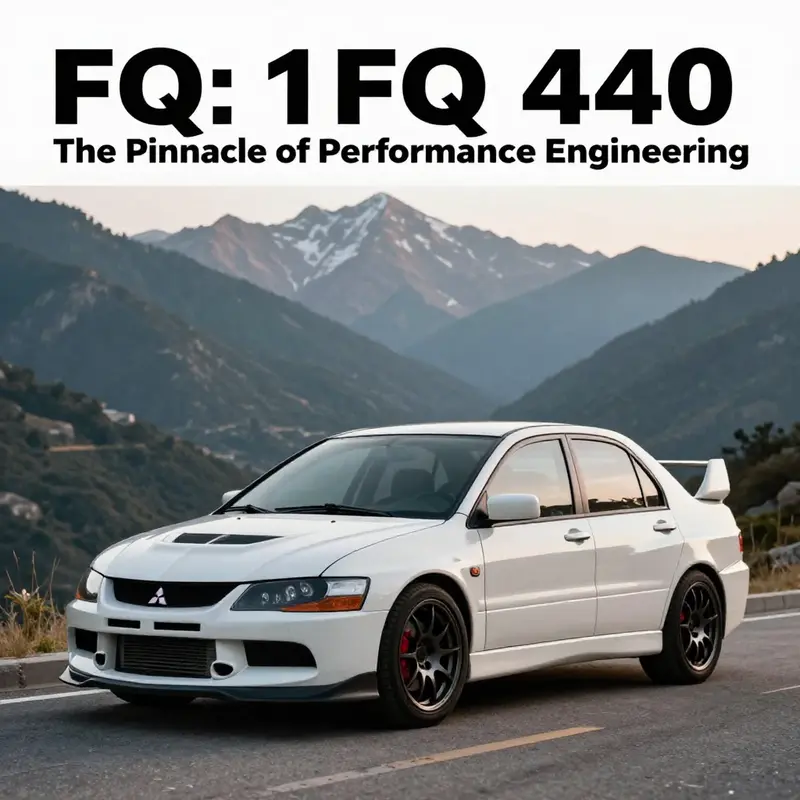
The Mitsubishi Evo 10 FQ 440 stands as a landmark achievement in the automotive realm, particularly for business owners seeking a high-performance vehicle that combines cutting-edge technology with a storied legacy. This model not only represents the culmination of the Lancer Evolution series but also delivers unparalleled performance characteristics that any entrepreneur can appreciate. As we delve deeper into its performance analysis, design features, market exclusivity, and lasting impact on automotive history, you’ll uncover insights that affirm why this limited-edition vehicle is an undeniable asset for anyone looking to elevate their driving experience.
Culmination of a Legend: A Detailed Performance Analysis of the Mitsubishi Evo X FQ-440 MR
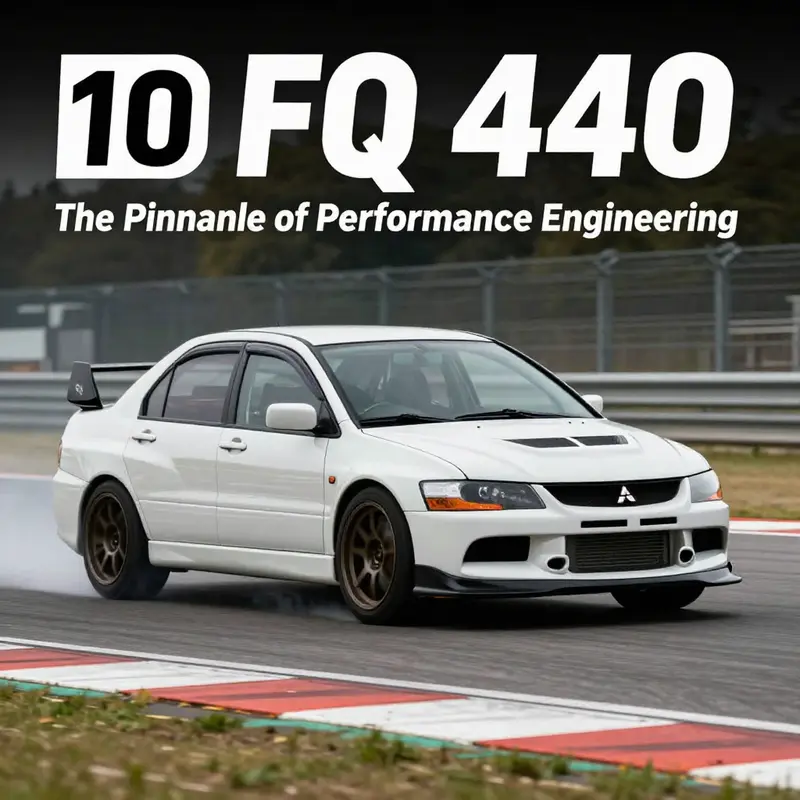
The Mitsubishi Lancer Evolution X FQ-440 MR represents a deliberate, final flourish in a lineage defined by rally-bred urgency and chassis discipline. Created as a limited-edition project by Mitsubishi UK to mark a milestone, the FQ-440 MR compresses decades of Evolution development into a compact, highly tuned package. Its significance comes not only from peak numbers but from the way those numbers are achieved and integrated: turbocharging, cooling, drivetrain refinement, suspension calibration, and thoughtful ergonomics all working together to produce a usable, high-performance hatchback.
Under the hood sits a heavily modified 2.0-liter 4B11T. Rather than a single bolt-on approach, the FQ-440 MR’s powertrain is a systemic upgrade: a much larger turbocharger for greater airflow, a reworked intake and high-capacity intercooler for thermal control, and a free-flowing exhaust to reduce backpressure. Those hardware changes are married to a bespoke ECU strategy that coordinates fuel delivery, ignition timing, and boost control to extract a theoretical peak near 440 bhp and a substantial torque figure. The result is not simply top-end power but a more coherent and responsive delivery across the rev range, preserving drivability while delivering dramatic performance when demanded.
Drivetrain choices shape the car’s character as much as engine upgrades. Mitsubishi’s SST dual-clutch transmission replaces a manual option, a decision that divided purists but reflects the car’s dual role as both an extreme performer and a reliable, repeatable tool on road and track. The SST provides rapid, near-continuous torque delivery during shifts, enabling blistering acceleration and consistent lap times during intensive use. Combined with an AWD system reinforced to handle increased torque, the FQ-440 MR emphasizes traction and predictability rather than raw, unbridled thrust.
Chassis and suspension work is extensive and purposeful. Ride heights are lowered to sharpen center-of-gravity and aero behavior, while suspension tuning provides a balance between stiffness for precision and compliance for control during transitions. The all-wheel-drive architecture receives strengthened components to match the engine’s output and to maintain durable torque distribution under load. Upgraded braking hardware completes the performance arc, giving the car the ability to decelerate with the same authority it accelerates, which is essential for repeatable high-speed driving and track use.
Aesthetic and interior choices underline the FQ-440 MR’s mission. The exterior carries the Evolution family language with more aggressive aero and a purposeful stance, while lightweight forged wheels and focused aero contribute to both function and presence. Inside, driver-focused elements—supportive Recaro seats and an uncluttered cockpit—prioritize engagement and control. Safety systems remain comprehensive, ensuring that the car’s performance envelope does not come at the expense of occupant protection.
The model’s limited production run and the exclusion of a manual gearbox shape its cultural and collector value. Rarity amplifies desirability, and the FQ-440 MR’s status as a curated, low-volume finisher to the Evo story grants it historical weight. It serves as an example of how a manufacturer and specialist partner can push a production platform toward its limits while retaining coherence and daily usability.
Technically, the FQ-440 MR is a case study in extracting maximum performance from a small-displacement turbocharged engine without sacrificing real-world drivability. The combination of enhanced airflow, improved cooling, and refined fueling/ignition calibration yields a package that feels immediate and controlled. The SST and AWD systems translate that engine character into tractable, repeatable lap times and rapid road performance. The overall philosophy favors controlled aggression: measurable gains are matched with engineering to keep the package reliable and coherent under stress.
Historically, the FQ-440 MR reads as a carefully composed epilogue to the Evo series. It demonstrates how modern performance can be achieved through integrated engineering rather than brute-force displacement increases. For enthusiasts and collectors, the car is both a performance benchmark and an artifact of an era when manufacturers and specialist tuners collaborated to push established platforms to new heights. The FQ-440 MR remains a vivid reminder that, with precise engineering and balanced design, a 2.0-liter engine can deliver an experience that feels complete, exhilarating, and true to a model family’s core identity.
For further reference and market context, interested readers can consult contemporary listings and official archives to see how limited-run Evos are positioned and valued. Official resources and specialist listings provide additional technical detail and show how scarcity and provenance contribute to ongoing interest among collectors and drivers alike.
Forged Finale: How the Evo 10 FQ-440’s Design and Features Translate Power into Precision
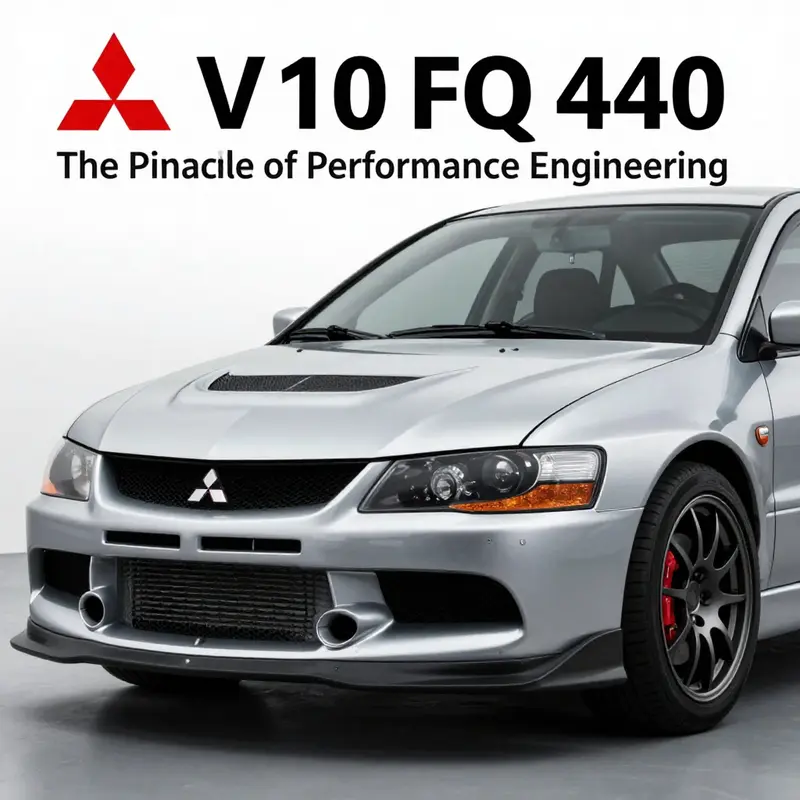
Design, aerodynamics and the tactile features that define the FQ-440
The final evolution of a storied platform is rarely subtle. The Evo 10 FQ-440 wears its purpose on every panel and in every control. From the moment the silhouette meets light, the car reads as a concentrated statement: less ornament, more function. The familiar forward-leaning nose remains, but it is sharpened and darkened to emphasize intent. Breathe lines, venting and sculpted surfaces converge to channel airflow, cool critical systems and reduce lift. Visual drama is not mere show; it is an honest translation of performance needs into coherent styling.
The front end is dominated by a broad, low intake and a reworked bumper that guides airflow to the enlarged cooling hardware. A vented bonnet extracts heat from the engine bay and reduces pressure beneath the nose. The vents are sized and positioned to work with the underbody flow, helping the car settle at speed. Side skirts flatten the transition from wheelhouse to door and tame turbulence at the body sides. At the rear, a measured but purposeful wing balances downforce with drag, stabilizing the car through high-speed sections without undermining straight-line pace. Every edge, lip and opening is calibrated to a single goal: maintain composure while letting the engine and drivetrain operate at maximum capacity.
Proportions are familiar, yet deliberately honed. The ride height is noticeably lower, with the front dropped further than the rear to refine turn-in and weight transfer. Wheels fill the arches with compact, high-strength forged rims that reduce unsprung mass and resist deformation under load. The wheel choice complements the tire selection to create a footprint tuned for grip and feedback. Braking hardware is beefy, with multi-piston front calipers and stout rotors that sustain heavy use without fade. Caliper size and pad volume are matched to the brake fluid and ducting strategy to support repeated, aggressive deceleration on road or track.
Cooling and plumbing are central to the design story. The powertrain produces intense heat under load, so cooling capacity is expanded beyond stock. A larger, more efficient charge-air cooler sits forward of the radiator. Radiator cores are upgraded and ducted through the bumper inlets so coolant temperatures remain stable. Oil and transmission coolers are integrated into the layout, and additional vents evacuate hot air. The bonnet venting and front-end ducting operate as a unified system. This allows the engine to sustain higher boost and power without thermal constraint while supporting consistent throttle response during repeated bursts.
Under the skin, reinforcements and tuned suspension geometry transform the chassis into a more precise tool. The suspension is both firmer and lower, reducing roll and improving turn-in fidelity. Front ride height is reduced more than rear, which sharpens the car’s initial direction change while maintaining mid-corner balance. Dampers and anti-roll components are recalibrated to the lowered stance so the car resists pitching under heavy braking and remains predictable during transient maneuvers. Bushings and mounts are selected to retain feedback without excessive harshness, preserving a usable character for spirited road driving.
The AWD system receives careful attention in the package. Torque distribution control, yaw management and differential behavior are tuned to exploit the broader powerband. The goal is not simply to plant the car straight ahead, but to allow controlled transitions from apex to exit with confidence. Traction control and stability aids are calibrated to be supportive rather than intrusive, leaving room for experienced drivers to extract the car’s potential without abrupt interventions. In short bursts and extended runs alike, the chassis, brakes and grip systems work as a single, predictable unit.
Inside, the cabin communicates intention through restraint and tactile detail. Sport seats offer firm lateral support and a narrow contact patch for the pelvis, which aids driver feeling during aggressive cornering. Materials are chosen for durability and grip; steering surfaces provide a direct connection to the front end without excessive padding that would mute feedback. Visual cues—contrast stitching, unique badging and subtle trim—mark this as a special model without overwhelming the senses. Ergonomics prioritize the driver: controls fall to hand, the seating position is low and compact, and instrument clarity supports rapid information processing.
Connectivity and user controls are pragmatic. Drive modes allow the powertrain and transmission to shift character quickly between comfortable and sharp. Transmission behavior is tuned for rapid, consistent shifts while protecting the drivetrain under high torque. The interface between driver and car centers on predictability: when the car is pushed, it behaves in ways the driver can anticipate and adapt to. Safety nets such as multiple airbags and reinforced structures provide occupant protection without diluting the sporting focus.
A notable element of the FQ-440’s design language is how it balances visual aggression with functional restraint. The darker front bumper and smoked lighting lend a menacing stance, yet the modifications are never gratuitous. The vented bonnet, the larger intercooler opening and the side entry ducts are all visible clues to the underlying mechanical upgrades. These cues serve two purposes: they cool and they tell a story. When viewed from any angle, the car reads as a thoroughly developed machine rather than a cosmetic exercise.
The wheel and tire package deserves emphasis. Lightweight forged wheels reduce rotational inertia and improve the car’s ability to change speed. Tires are chosen to provide a blend of mechanical grip and feedback, enabling the driver to sense the onset of slip and respond. The suspension tuning and wheel fitment reduce the need for dramatic camber settings, preserving even wear while maximizing contact patch at cornering loads. The result is steering that feels immediate and consistent, with a balance that rewards precision inputs.
Aero is integrated rather than bolted on. The front splitter, diffuser and rear wing work in concert to create a pressure map that stabilizes the car at speed. Undertray treatment smooths the flow beneath the vehicle, reducing lift and aiding cooling air extraction. These measures not only increase high-speed stability, they also improve steering feel during fast, sweeping corners. The aerodynamic approach prioritizes balanced downforce so the front and rear have matched grip characteristics.
Fit and finish in visible areas reflect the car’s status. Paint choices and surface treatments resist rapid heat absorption in high-load zones. Seams and panel gaps are controlled for aerodynamic and visual reasons. The car is assembled with attention to detail where it matters: structural attachments, mounting points and cooling interfaces are robust to withstand the stresses of extended, hard use.
Customization potential is inherent in the design. The mechanical upgrades and robust cooling make the car a stable platform for further tuning or competition adaption. Aftermarket additions such as lighter hoods, different wheel choices, or upgraded diffuser elements can be integrated without undermining the baseline balance. For owners who wish to preserve originality, the limited production run and unique specification already create a highly desirable collector package.
The FQ-440 is more than a high-output model. It is a focused reinterpretation of a performance sedan in its final, most refined form. The exterior conveys purpose through functional surfaces. The chassis and AWD refinements translate power into usable performance. Cooling, braking and tire systems are scaled to match the increased output. Inside, the cockpit provides a driver-first environment with supportive seating and clear controls. The overall effect is of a coherent machine where every design choice serves the objective of harnessing a potent powertrain while remaining predictable and controllable.
For those who study the interplay between form and function, the FQ-440 offers a lesson in deliberate design. Each visible modification supports a technical need. Each mechanical tweak improves a specific aspect of performance. This unity makes the car feel complete, as if every feature was chosen to answer a single question: how to turn intense power into repeatable, precise motion. For collectors and enthusiasts alike, that coherency is the car’s lasting appeal.
For official details and background on the special edition model, see the manufacturer’s UK information page: https://www.mitsubishi-motors.co.uk/vehicles/lancer-evolution/fq-440
For a close-match replacement bonnet option inspired by the FQ-440’s vented hood, explore the carbon fiber bonnet listing available here: carbon fiber bonnet for Evo X.
Limited Brass, Limited Roads: The UK-Exclusive Arc of the Evo X FQ-440 MR
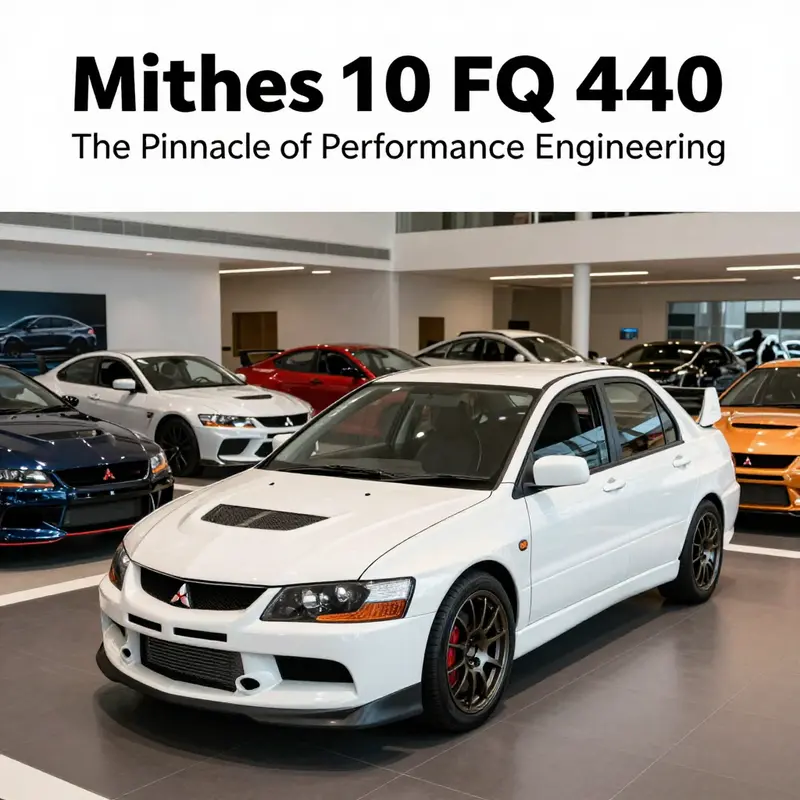
The Mitsubishi Lancer Evolution X FQ-440 MR stands as a brittle beacon in the annals of performance engineering, a car whose rarity is as much a part of its identity as its blistering power. It did not arrive as a global star, but as a carefully curated, London-brick redolent of a moment when automakers chose to press pause on a storied model and press play on a final note. In the spring of 2014, Mitsubishi marked the United Kingdom’s long-standing love affair with the Lancer Evolution by producing a commemorative, ultra-limited variant that would never wander far from its European homeland. The story, at once commercial and almost mythic, reads like a badge of honor for a chassis that had already become a legend on damp rally stages and race tracks worldwide. The FQ-440 MR, as it was known in shorthand by enthusiasts and collectors, was a deliberate, even ceremonial, extension of the Evolution X line. Its purpose was not merely to add horsepower, but to crystallize the ethos of a lineage that had defined Mitsubishi’s engineering discipline for decades: a relentless pursuit of balance between speed, precision, and the instinct to conquer grip-limited corners. And then, as if to imprint the moment permanently, the model shipped in merely forty examples, all in a strictly UK market allocation that underscored the car’s purpose as a ceremonial closing act in a European theater that had witnessed the Evo’s longest biographical arc.
That arc began, in essence, with a model that carried the same family face and the same mission as the earliest Lancers that learned to fly through rough weather and rougher roads. By 2014, the X generation—already a platform with years of development and a battle-tested chassis—was maturing into a performance calculus that balanced turbocharged aggression with a chassis architecture that could harness it without evaporating the driver’s confidence. The FQ-440 MR did not merely eclipse the standard Evolution X with a larger number on a spec sheet; it intensified a set of technical choices that had grown in the wings since the early days of the model’s European expansion. For the UK edition, Mitsubishi’s engineers leaned into performance tuning that bespoke a distinct European temperament: a demand for a car that could remain civil when cruising and become a weapon when the roads grew longer and more technical. The tale of exclusivity begins with the powertrain, which sits at the heart of the FQ-440 MR’s legend.
Under the hood, the car’s 2.0-liter turbocharged 4B11T engine was given a meticulous diet of parts sourced or tuned to deliver a breath-taking 440 horsepower and 559 Newton-meters of torque. These figures placed the FQ-440 MR near the apex of what a two-litre turbocharged engine could produce within a package designed to be street-usable yet track-capable. The modifications were not cosmetic; they were deeply mechanical, aimed at transforming a road-going performance car into a machine that could sustain a measured, high-intensity assault without the usual fatigue that accompanies extreme outputs. A high-performance turbocharger from a renowned tuning house formed the core upgrade, paired with a larger intercooler to keep temperatures in check during sustained hard driving. The intake and exhaust were revised to improve flow, while the ECU received a reprogramming that translated the hardware improvements into a disciplined, linear push rather than a violent spike in power. The net effect was a drivetrain that could deliver peak numbers with a controlled, repeatable character—something that matters when a driver shifts from a spirited bend to a high-speed straight.
The chassis and suspension were not left to chance either. The FQ-440 MR’s engineers chose to lower the ride height, lowering the center of gravity by 35 millimeters at the front and 30 millimeters at the rear. This reduction was not cosmetic; it was a deliberate attempt to sharpen cornering behavior and minimize body roll as the car pressed into turns with torque that could otherwise unsettle the chassis. The tire and wheel package reinforced this goal, with forged, lightweight wheels and a tire choice designed to balance grip with responsive feedback. The all-wheel-drive system, already a cornerstone of the Evolution’s performance identity, received further refinement to ensure that the car could translate the engine’s furious output into traction rather than wheelspin. Braking performance, too, was a focus, with heavier, more capable stoppers and a calibration that encouraged aggressive braking into corners without the sort of dive that would unsettle the driver’s confidence. In short, Mitsubishi did not just bolt on more power; it curated a complete, harmonized package intended to deliver speed, control, and endurance under demanding conditions.
Outside, the FQ-440 MR wore a design language that paid homage to the Evo’s lineage while signaling its special status. The family-style trapezoidal chrome grille remained a visual anchor, a link to the Lancer Evolution’s broader design heritage. Darkened headlights set a purposeful tone, and the 18-inch BBS forged alloy wheels completed a stance that spoke of track readiness and road-going reliability in a single glance. Inside, the cabin reflected the same dual emphasis on performance and safety that characterized the car’s engineering. Recaro racing seats offered the essential support for aggressive driving while ensuring that occupants remained properly positioned during high-G maneuvers. A robust layer of safety was kept at the forefront with seven airbags—an acknowledgement that even a machine built for track-like performance must still protect its passengers on public roads. All these details, combined with a measured, limited production run, gave the FQ-440 MR a personality that was as much about the way it felt as the way it went.
What makes the UK-only release especially compelling is how it reframes the question of market strategy in a genre that usually prizes global reach and broad availability. The Evo X had already proven itself as a global icon, with enthusiasts across continents chasing different versions, often with a wide range of configurations reflecting local regulations and tuning cultures. Yet the FQ-440 MR’s footprint was remarkably narrow. Forty units, each built to the same exacting standard, placed this model in a rarified air where even the most dedicated collectors approached with a reverence typical of limited-edition deities rather than mainstream performance cars. The absence of a manual transmission option in this edition underscores a modern performance attitude: speed and driveability move forward through sophisticated, seamless gear management rather than old-school row-your-boat engagement. The car’s seven-speed dual-clutch transmission—an SST unit adapted for the Evo’s layout—was chosen to exploit the car’s aggressive power profile and its need for precise, rapid shifts that would maximize racetrack times while maintaining daily usability. The resulting perception among insiders and fans alike is not only of a car with extraordinary figures but of a well-considered instrument that could be driven hard in competitions or enjoyed on established roads with equal credibility.
The exclusivity of the FQ-440 MR feeds a broader cultural conversation about collector value and the way a brand preserves its legacy. When a manufacturer intentionally limits production, it does more than create scarcity; it signals a narrative about what the vehicle represents. In the Evo’s case, the FQ-440 MR stands as a formal capstone for the Lancer Evolution’s European journey, a reminder that the model’s most intense expression was not necessarily the loudest or most aggressive, but the one that balanced technical mastery with the restraint demanded by road-going activism. This balance is essential to understanding why the FQ-440 MR remains a sought-after object for collectors who value not just horsepower, but the story it carries—the story of a rally-bred sedan that became a road-racing icon and, in its final act, a UK-exclusive ambassador of the Evolution’s most refined, most disciplined expression.
For readers exploring the practical dimension of ownership, the car’s limited inventory and the logistics of importation or purchase in markets outside the United Kingdom shape a distinctive buying environment. Those who seek such a car face a world in which each example has likely spent a life of careful, perhaps ceremonial, use. The low-mile examples are especially prized, not merely for their pristine condition but for the whisper of story each car carries—the quiet evidence of a machine that was built to be driven with the poise of a concert violinist rather than the raw, brutal aggression of a street racer. A genuine opportunity to acquire such a vehicle often intersects with the world of specialized automotive markets and private collections, where provenance matters as much as the engine code. In that sense, the FQ-440 MR embodies a rare market dynamic: exclusivity is not merely a matter of scarcity, but a curated experience, a finite chapter in a car’s life that becomes more valuable precisely because it is finite.
For enthusiasts who want to place this model in the broader context of Evolution history, it helps to consider how the FQ-440 MR fits into the lineage as a bridge between a storied past and a symbolic end. The Lancer Evolution line reflected a philosophy of performance that repeatedly tested the boundaries of what a compact four-cylinder, all-wheel-drive platform could achieve. As the Evolution’s final edition in the UK, the FQ-440 MR does not merely close a chapter; it reframes the chapter’s end as a curated, commemorative moment. It is a reminder that performance culture often thrives on scarcity and heritage as much as on raw numbers. In that sense, the UK market’s embrace of this edition is a microcosm of a global car culture that treasures the romance of a limited run and the aura of an icon finally given one last, carefully engineered breath before the production lines quiet down.
For readers who may be researching or collecting, there is value in acknowledging the car’s specific market origin. The UK’s role in this narrative is not incidental; it embodies a long-standing tradition of European enthusiasts embracing high-performance sedans that blend rally-inspired engineering with refined, road-ready dynamics. The FQ-440 MR’s story is thus inseparable from the story of a region that understood and celebrated the Evo’s aggressive talents while also demanding a level of refinement suitable for daily driving and occasional track days. The limited production run of forty vehicles is not simply a statistic; it is an invitation to consider what a car can become when it is crafted as a commemorative artifact—something that outlives the model year by becoming a memory that can be reawakened on the road or in the collector’s showroom.
In the end, the Evo X FQ-440 MR remains a potent reminder of how exclusivity, performance engineering, and regional market strategy can come together to craft a defining moment in a model’s lifecycle. It is a car that speaks with a quiet intensity: a machine that achieved extraordinary performance through a belt-and-suspenders approach to optimization, while ensuring that its rarity would endure as a symbol of a brand’s legacy. For the reader following this chapter in the broader thread of the Evolution saga, the FQ-440 MR is not merely a footnote to a storied lineage. It is a telling example of how a car can be engineered to honor its own history, while also anticipating the distant echoes of a performance culture that continues to prize precision, restraint, and timeless appeal. It remains, in that sense, the ultimate synthesis of speed and selectivity—a final, symbolic chorus in the Evolution’s enduring symphony.
For those curious to explore examples still circulating in the market, a representative low-mile sample offers a compelling window into how this rare machine has aged. A listing that highlights one of these coveted cars emphasizes its limited status and the conditions typical of well-preserved editions. It is not just a rare car; it is a curated artifact of performance heritage, a tangible link to a moment when a European market embraced a global legend with a sense of occasion and ceremony. Such opportunities remind us that the Evo’s narrative is not merely about straight-line acceleration or lap times; it is about how a car can become a cultural touchstone, a collector’s item, and a symbol of a brand’s willingness to push the envelope even as the curtain falls on a legendary model line.
For further details about a genuine, low-mile, Evo X FQ-440 MR, one available listing underscores the ongoing appeal of this edition: low-mile Evo X FQ-440 MR for sale.
External reference for deeper context on the provenance of this commemorative model can be found in the official Mitsubishi Motors UK archives, which preserve the narrative of the Lancer Evolution’s European presence and its celebrated milestones: https://www.mitsubishi-motors.co.uk/
Endgame of a Legend: The Evo X FQ-440 MR and the Final Chapter of Mitsubishi’s Rally Reign
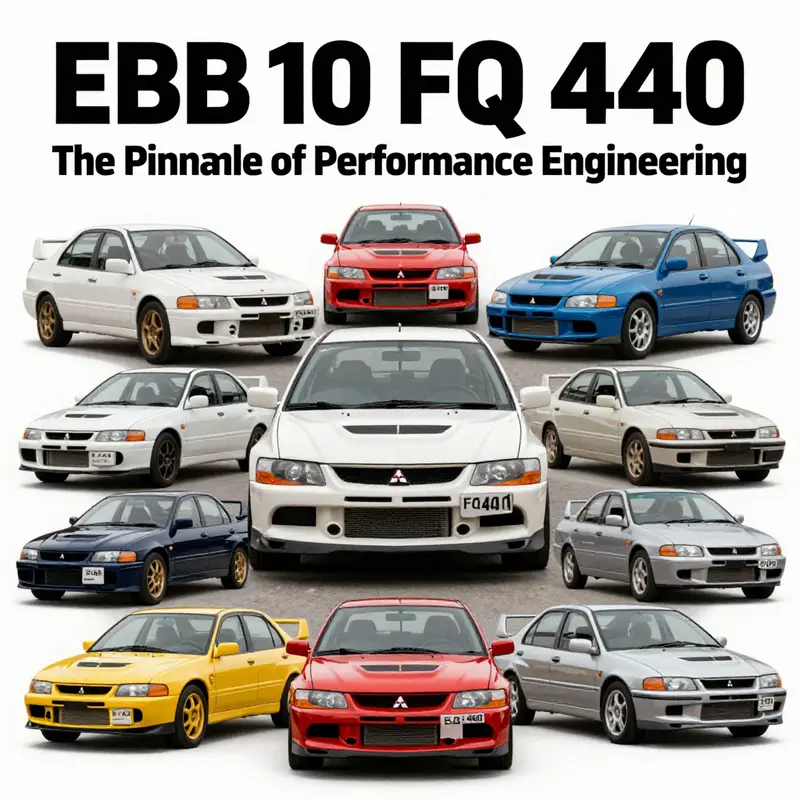
The Mitsubishi Lancer Evolution X FQ-440 MR stands as a singular punctuation mark at the end of a long, punctuated sentence in the history of performance cars. Conceived in 2014 to honor the 40th anniversary of the Evolution nameplate in Europe, this limited edition represented more than a mere power upgrade. It was a deliberate, crafted exhale from a lineage that had drawn strength from rallying, engineering discipline, and a relentless pursuit of speed under control. The collaboration between Mitsubishi Motors UK and the esteemed Japanese tuner HKS yielded a car that did more than lay claim to a headline figure. It created a bridge between a track‑bred imagination and a road‑legal package, designed not for mass appeal but for a curated experience where every component speaks the same language: performance with precision, danger balanced by safety, and a respect for what a 2.0‑liter engine can become when push comes to finish line judgment rather than just peak numbers.
Beneath the carbon copy of its sleek, aggressive fascias, the FQ-440 MR hides a philosophy of breathing properly at full load. The heart remains the widely recognized 2.0‑liter turbocharged inline‑four, yet the heart only pulses with meaning when supported by a refined cascade of top‑tier modifications. The intake and exhaust systems were rewritten to optimize flow, letting the engine inhale more freely and exhale with less resistance as boost pressures climbed. An enlarged intercooler made a critical difference in maintaining charge cooling during extended pushes, a detail often glossed over in horsepower headlines but essential for sustained performance on fast, open roads or demanding circuits. Upgraded fuel injectors supplied the higher fuel flow required to sustain the surge in power, while a bespoke ECU calibration ensured engine management was not only more aggressive but also harmonized with the altered hardware’s needs. The installation of a high‑performance turbocharger—courtesy of the same tuning house that built a reputation on reliability at the edge—pushed the output to an imposing 440 horsepower and a torque peak around 559 Newton‑meters. In practical terms, those numbers were a testament to what a well‑targeted upgrade could do for a 2.0‑liter engine when the whole car is prepared to utilize that energy without breaking contact with the pavement. While some enthusiasts debate the exact transmission pairing for this edition, the documented configuration in the finalized research results emphasizes a strengthened six‑speed manual, paired with a limited‑slip differential. This choice preserved the driver’s connection to the machine, offering a tactile, deliberate control style that many purists associate with the core spirit of the Evolution line. The result is a car that feels as much like a controlled weapon as a high‑performance road car, a machine that asks the driver to engage rather than merely to steer.
The chassis and suspension that carry this energy forward were not treated as mere add‑ons to a louder drum. The FQ-440 MR features a concerted program of handling upgrades designed to tame torque and translate it into traction, balance, and line precision. The vehicle’s ride height was lowered strategically to shift the center of gravity closer to the road, with the front and rear drops amounting to noticeable yet balanced reductions that帮助 improve cornering stability and high‑speed composure. In tandem with upgraded dampers and springs, the aim was not simply to lower the car but to reweight it, to give the chassis a more immediate sense of response while preserving a forgiving nature in everyday use. The all‑wheel‑drive system, already a pillar of Evo performance, received calibration and reinforcement to manage the additional urge the 440‑hp figure introduced. Braking systems also underwent enhancement, crafting the necessary stopping power to match the speed potential, particularly during aggressive track sessions where fade resistance and consistent pad bite matter more than few tenths of a second shaved off a straight line sprint. The combination of grip, stopping power, and chassis rigidity came together to create a dynamic that demanded respect from the driver and rewarded precise, purposeful inputs with a sense of predictability even at the extreme edges of the envelope.
Aesthetically, the FQ‑440 MR announced itself with the best of its lineage. The exterior carried the signature family chrome‑trim grille that has defined the brand’s face for generations, but it wore this familiar badge with a darker, more purposeful aura. The headlights were shaded to emphasize aggression without compromising visibility, and the wheel package of choice featured 18‑inch BBS forged rims that hinted at track‑level lineage while remaining road‑legal and usable on public highways. Inside, the focus shifted toward a driver‑centric, performance‑oriented environment. Recaro racing seats offered exceptional lateral support and a sense of unity between occupant and chassis, a reminder that the most important performance is often determined by how well a driver can stay planted and in control during a demanding moment. A comprehensive seven‑airbag safety system braided into the vehicle’s safety architecture underscored the commitment to a balanced philosophy: raw speed should never come at the expense of occupant protection. When one looks at the FQ‑440 MR, the interior and exterior design cues tell a cohesive story. The car speaks of a marriage between rally heritage and modern engineering ethics, where lightweight materials, measured aero work, and carefully chosen color and trim cues are not mere aesthetics but functional contributors to the total package.
The production narrative of the FQ‑440 MR adds another layer of rarity to its legend. Only forty units were produced for global markets, a deliberately small number that makes each car a unique artifact within the broader world of high‑performance road cars. Each example carried its own serial identification and commemorative plaque, transforming ownership into a statement about belonging to a select community of enthusiasts and historians who appreciate the occasion, the build quality, and the milestone it represents. The limited production run compounds the car’s value not only as a performance machine but as a collectible with a story. The scarcity also reflects a larger truth about the Evolution era: Mitsubishi used this final chapter to honor the line’s extraordinary racing influence while recognizing the realities of modern automotive manufacturing, where balancing demand, safety, and regulatory frameworks with engineering ambition becomes increasingly complex.
The historical significance of the FQ‑440 MR lies not merely in the numbers it delivered, but in what its creation signified. It marked the official end of the Lancer Evolution lineage, a line that had long captured the imagination of drivers who crave the visceral excitement of rally technology translated to the street. In that sense, the FQ‑440 MR served as a capstone, a carefully curated synthesis of everything the Evolution family had stood for: relentless engineering discipline, aggressive yet coherent aesthetics, and a piano‑wire balance of power and control. It was, in the truest sense, a performance car written in the language of endurance and heritage, a vehicle that chose to celebrate a chapter by demanding more of its readers and drivers than simple acceleration bragging rights.
The engineering choices behind the FQ‑440 MR also tell a broader story about the limits of engine displacement and the ingenuity needed to extract peak performance from small‑displacement powerplants. The 2.0‑liter engine in this car demonstrates what a modern turbocharged four can achieve when it is allowed to breathe and when every supportive system—fuel delivery, ignition management, turbocharging response, thermal control, and drivetrain reliability—works in a tightly choreographed sequence. In a way, the car is a reminder that power densities in the era of highly engineered road cars demand more than brute torque; they require sophisticated integration of air, fuel, combustion, cooling, and control algorithms. The FQ‑440 MR presents this synthesis as a complete package rather than as a set of independent upgrades slapped onto a familiar chassis. It is precisely this integration that makes the car endure in the memory of enthusiasts and in automotive history as a remarkable testimonial to a last, purposeful act of engineering courage.
For those who have followed the Evolution line since the early days, the FQ‑440 MR offers a bridge between the era when Group A and rally spec defined the engineering ethos and a modern automotive world where performance can be both precise and refined. It is a car that invites discussion about what makes a final edition meaningful: is it the horsepower number, the exclusivity of the production run, the way it handles, or the way it respects its own legacy by delivering a driving experience that feels almost ceremonial? In the case of the FQ‑440 MR, the answer lies in a balanced blend of all these aspects. The car proves that a manufactured limit does not undermine the driving joy but rather emphasizes the craft that goes into reaching that limit safely, reliably, and with a sense of history that is often missing in several contemporary performance machines.
As the legend travels through time, the FQ‑440 MR remains a compelling case study in how a manufacturer can honor a storied lineage while still pushing the envelope in a controlled, purposeful manner. It is not merely a high‑water mark of horsepower; it is a narrative about how a community of engineers, tuners, and fans can turn a final edition into a living monument. In this sense, the Evo X FQ‑440 MR stands as a vivid memory of a golden era, a reminder that speed is not merely about how quickly a car can accelerate, but about how seamlessly a machine can harness power and make it usable by a driver who knows how to listen to its whispers, feel its tempo, and respect its potential. The final chapter of a legendary run, then, is not a closing sentence but a lasting invitation—to celebrate the engineering, to study the integration, and to keep alive a culture that believes in pushing the boundaries with discipline and care.
For readers who want to explore the historical documentation behind the FQ‑440 MR and its context within Mitsubishi’s European history, a detailed archive offers direct access to contemporary materials that illuminate the edition’s purpose and specifications. low-mile Evo X FQ-440 MR for sale provides a tangible glimpse into how collectors and enthusiasts perceive the car today, reinforcing the idea that a limited‑run performance model can retain significant cultural meaning beyond its immediate on‑road capabilities. Such references anchor the narrative in a real world where these machines remain accessible to a dedicated community of drivers who value rarity, precision engineering, and the story a car carries forward from the factory floor to the road and beyond. This continuity between past and present underscores why the Evo X FQ‑440 MR continues to be discussed not just as a set of numbers, but as a carefully constructed experience designed to be remembered and respected.
The blend of engineering ambition, historical significance, and emotional resonance makes the FQ‑440 MR a notable chapter in automotive history. It is a testament to what can be achieved when a long‑standing performance lineage is allowed to chart a focused, celebratory course rather than disassemble into a marketing hype. The car stands as a curated artifact—an exemplar of how a limited edition, built around a small displacement engine, can still feel like a global statement about speed, engineering discipline, and the enduring appeal of a properly engineered driving experience. In the end, the Evo X FQ‑440 MR is not just a model, but a symbol of the rally spirit that first set the Evolution series in motion and then carried it forward to a storied, unforgettable conclusion.
External resources that shed further light on the official narrative and archival details can offer a broader sense of the car’s place in the wider automotive landscape. For those curious about the formal archive and the broader European recognition of this edition, refer to the official documentation that contextualizes the FQ‑440 MR within Mitsubishi Motors UK’s Evolution program: https://www.mitsubishi-motors.co.uk/evolution-fq440
Final thoughts
The Mitsubishi Evo 10 FQ 440 not only brings together top-tier engineering and design but also symbolizes the culmination of a revered legacy in motorsport and automotive excellence. For business owners and enthusiasts alike, this remarkable vehicle serves as a testament to performance innovation and exclusivity, destined to stand out in both showrooms and on the track. As it embarks on its journey into automotive history, the Evo 10 FQ 440 will undoubtedly evoke nostalgia while continuing to inspire the future of performance vehicles.