
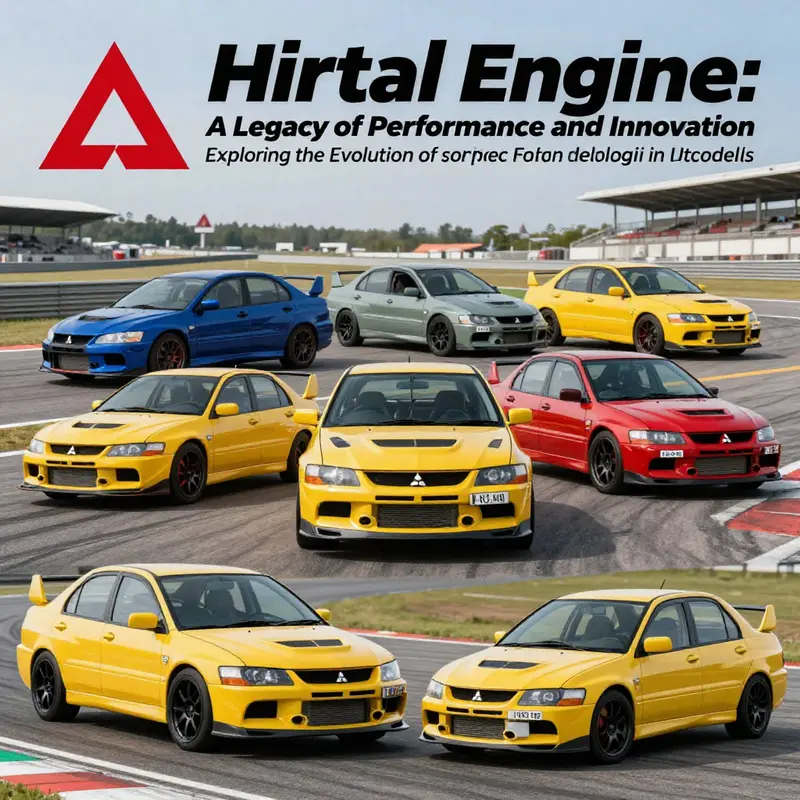
The Mitsubishi Lancer Evolution series stands as a testament to high-performance engineering in the automotive world. Central to every Evolution model is its engine, which has consistently evolved to meet the challenges of motorsport, particularly in the World Rally Championship (WRC). This article delves into the core engine models, beginning with the legendary 4G63, and tracks its advancements through various generations. By exploring early developments, mid-term innovations, and recent technological advancements, business owners can gain insight into how these engines have shaped Mitsubishi’s reputation for speed, reliability, and performance. Each chapter will provide a detailed look at the enhancements and innovations that have contributed to the Evolution’s legacy, underscoring its importance in the realm of high-performance vehicles.
Turbocharged Core, Endless Evolution: Tracing the 4G63T and the Evolution Engine’s Leap Toward the 4B11T Era
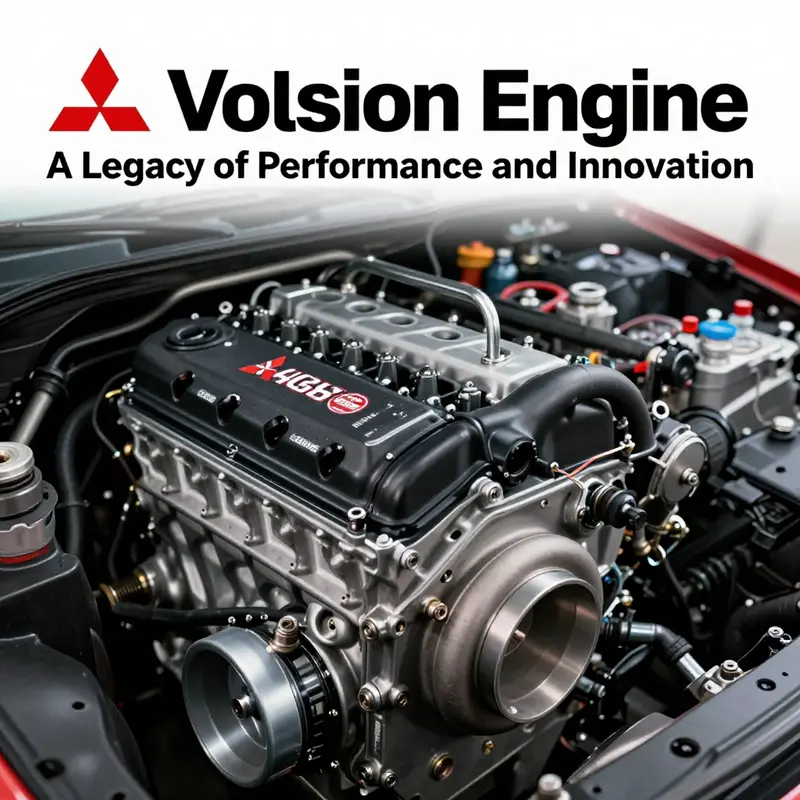
The Mitsubishi Lancer Evolution’s engine has always been more than a powerplant; it is the beating heart of a philosophy that married brutal torque with a precise, rally-bred sense of balance. Across generations, the core engine that defined the early EVO lineage was the 4G63T, a turbocharged inline-four designed to deliver usable muscle at the throttle while staying reliable enough to endure the punishing demands of World Rally Championship competition. At its inception, the engine paired a long-stroke architecture with a robust iron block and a double overhead cam setup, a combination forged to keep big horsepower within reach while preserving durability in high-stress conditions. It was not merely about peak numbers; it was about the kind of broad, tractable power that let a driver push a car to the edge and still bring it back to a near repeatable rhythm on a long stretch of gravel and asphalt alike. In that sense, the 4G63T was not just the EVO’s celebration of speed. It was the factory’s answer to the rally’s demands for a drivetrain that could be punished and still deliver, turn after turn, mile after mile.
From the moment the EVO project moved from concept to production, the 4G63T’s architecture served as a flexible platform for continual refinement. The early EVO I and EVO II models exemplified a push toward higher peak output without sacrificing reliability. In those first years, Mitsubishi shifted to a larger displacement within the same family by tuning the 2.0-liter block for more aggressive boost and more aggressive intake and exhaust flow. The result was a horsepower figure that crept toward the 250-horsepower mark and steadily climbed into the mid-260s as air management and exhaust efficiency improved. The core idea remained unchanged: the engine needed to spool up quickly, deliver strong mid-range torque, and retain a predictable, usable response that fans could feel at the wheel, especially when testing the car’s limits on a stage where throttle input and churning torque were the art of control.
As the Evolution lineup progressed into the mid-1990s, the engine’s character matured. The Evolution III, introduced in 1995, marked a pivotal step with a compression ratio raised to 9.0:1 and the installation of a larger TD05H-16G6-7 turbocharger. This combination pushed output toward 270 horsepower, with torque around 31.5 kg·m (309 Nm). The increase in compression, paired with turbocharger growth, broadened the engine’s usable band, giving the EVO a surge that carried into corners and down straights with a sense of urgency. It was a period when subtle upgrades—improved intake flow, refined exhaust routing, and tuned engine management—translated into meaningful, trackable performance gains rather than a single peak number. The engine began to reveal its true nature: a high-boost, long-stroke four that could be tuned to deliver more than raw power, while maintaining the kind of durability rally teams could count on under extreme conditions.
The Evolution VII, a milestone for many enthusiasts, brought further sophistication. With power pegged higher at about 280 ps (around 276 horsepower) and torque peaking in the 39.0 kg·m region, the 4G63T’s boost path became more aggressive through the turbocharger evolution to the TD05HR-16G6-9.8T. Mitsubishi also leaned into electronic differentiation and chassis integration. The car’s performance was not simply a function of the engine; it was a product of how power was delivered and how the drivetrain managed that power in real time. For the first time, high-end versions of the EVO began embodying electronic control strategies that would redefine how a rally-inspired car could be tamed on tarmac as well as gravel. The Active Center Differential (ACD) and, in some models, active yaw control technologies began to form part of the EVO’s engine-to-wheel story, providing a more nuanced grip and torque vectoring dynamic that allowed the engine’s torque to be deployed with surgical precision.
The late-1990s and early-2000s brought the EVO VIII and the EVO X era, a period of consolidation and then transformation. By the time of EVO VIII, the engine still offered around 280 horsepower, but the supporting technology advanced in meaningful ways. Cooling became more aggressive, intake and intercooling improvements multiplied the engine’s effective density, and the car’s overall electronics matured. The result was not merely a higher number; it was a more responsive engine with improved drag reduction and heat management. From the ninth generation’s vantage point, Mitsubishi’s engineers had a clearer map of how to extract reliable performance from a turbocharged four, and they used that map to push the engine’s potential further up the rev band and through the torque peak with better control.
A turning point came with EVO X, where the 4G63T platform finally gave way to a broader reengineering of the EVO’s powertrain. The EVO X marked a paradigm shift in how Mitsubishi approached the heart of its performance machine. The 4G63T’s long-stroke layout and iron-block durability continued to influence the performance culture, but the new iteration moved toward a more compact, efficient 2.0-liter platform designed to meet evolving emissions regulations and fuel economy demands while preserving a high level of performance. This transition culminated in the introduction of a new engine family—the 4B11T—an engine conceived around a modern, turbocharged four that integrated tighter tolerances, improved combustion efficiency, and more sophisticated engine management. The result was not merely more power; it was broader engine response, more tractable torque delivery, and a packaging strategy that allowed improved cooling, a leaner burn, and better emissions compliance. The 4B11T signified a shift from the high-torque, endurance-friendly spirit of the 4G63T toward a more versatile, modern performance engine that could anchor a new generation of all-wheel-drive dynamics and chassis control.
The 4G63T’s legacy is inseparable from its testing ground on rally stages and homologation for production cars. Its long-stroke geometry and robust block allowed for durability under intense boost while making the power band friendly enough for daily driving in many environments. The engine’s tuning potential is almost legendary: stock units could be coaxed beyond 300 horsepower with carefully tuned boost, fuel, and airflow, and properly built engines could exceed four digits with purpose-built components and aggressive mapping. As a result, the 4G63T earned a reputation among enthusiasts as a straightforward, almost tank-like platform—reliable, forgiving, and immensely tunable. That reputation isn’t just a marketing blip; it reflects a real engineering ethos: design for strength, then design for tunability, then design for control. When communities talk about the EVO’s engine codes, they’re really talking about a philosophy that blended mechanical ruggedness with a rigor for refinement that could withstand the pressure of the world’s most demanding events.
The evolution from the 4G63T to the 4B11T is not simply a chart of horsepower figures. It is a narrative of engineering choices shaped by shifting priorities: power density, cooling efficiency, fuel economy, and emissions. The 4G63T’s era was defined by a tactile sense of power that a driver could feel through the seat and the steering wheel, particularly when boost came on and the intake air brightened with temperature changes at altitude and humidity. The 4B11T era, conversely, reflects a modern engineering discipline—the art of delivering more with less, of packaging performance in a way that scales across a wider range of conditions while meeting contemporary standards. Yet, within the EVO’s DNA, both engines share a lineage: the relentless pursuit of faster times, smarter torque management, and an uncanny ability to turn mechanical energy into decisive, usable acceleration. The chapter of the 4G63T may be written in the margins of a rally log, but its influence remains embedded in every modern Mitsubishi performance engine and in the way enthusiasts view the brand’s engineering philosophy.
For those who want to explore more about the transition and the deeper technical details behind the 4B11T’s design, a closer look at the billet-block option provides a concrete lens into how modern performance engines are built today. The pathway from a rugged 2.0-liter turbocharged inline-four to a more refined, efficient powerplant speaks to a broader narrative about engineering resilience meeting regulatory realities. The narrative highlights that the Evolution era was never merely about chasing horsepower; it was about cultivating an engine culture that could adapt, endure, and excel across different eras of automotive performance.
External resource: Mitsubishi Motors Technical Archive offers detailed historical context and specification data for the Evolution engines, including the 4G63T’s development arc and the transition to newer platforms, accessible at https://www.mitsubishimotors.com/technical-archive
Internal link note: To understand how modern engine blocks can influence performance, you can explore the 4B11T billet block page for a concrete example of contemporary engine-building approaches: https://mitsubishiautopartsshop.com/4b11t-billet-block/
Forging the Rally Heart: How the 4G63 Took Shape in EVO I and EVO II
Forging the Rally Heart: How the 4G63 Took Shape in EVO I and EVO II
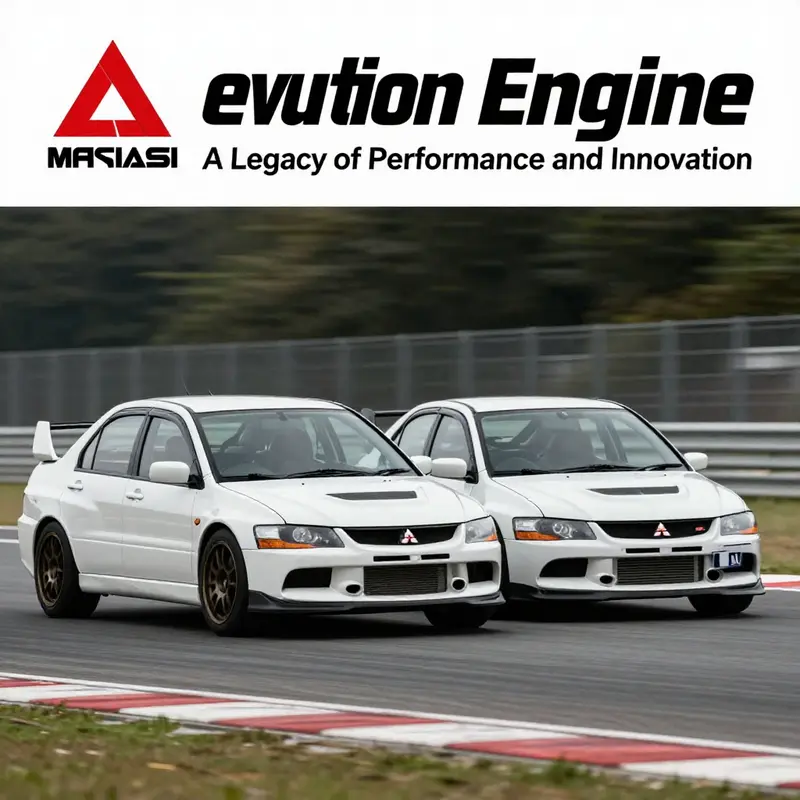
From its first public appearance, the Lancer Evolution wore its intent on the sleeve: a road-going replica of a rally car. The heart of that intent was the 2.0-liter DOHC 16-valve turbocharged 4G63 engine. In the early generations, engineers focused on extracting maximum usable power while keeping mass low and response sharp. The result was a car that felt like a competition machine, even on public roads.
The debut model introduced in 1992 was more than a trimmed-down sport sedan. It was conceived to challenge rally-spec cars while remaining road legal. To achieve that, Mitsubishi transplanted the 4G63 into a lighter, more focused package than the base model Lancer GSR. That move replaced the GSR’s 1.8-liter engine and brought a compact, torquey turbo unit that delivered strong midrange thrust. With 195 horsepower on tap and a pared-down weight, the standard Evo achieved an outstanding power-to-weight ratio of 4.96 kg per horsepower. The RS variant pushed that further by shedding convenience items such as electric windows and ABS to reach 4.68 kg per horsepower. Those numbers mattered: in rallying and high-performance street driving, power density often dictates the car’s character more than peak numbers alone.
The 4G63’s appeal lay in its simple but robust architecture. The DOHC layout and four valves per cylinder gave the engine good breathing potential. The turbocharger supplied the extra air needed for high specific output. Engineers concentrated on improving how the cylinder charged and how quickly the turbo responded. Those goals guided the earliest performance upgrades.
After the first release, feedback was clear: the Evo was fast, but its handling needed sharpening to match its engine. The EVO II, released in January 1994, addressed that critique with a holistic approach. Engineers did not simply bolt on more power. They tuned the 4G63, the transmission, the differential, and the suspension in concert to create a much more controllable and competitive package.
Key engine changes on the EVO II were deceptively straightforward yet effective. Exhaust plumbing was revised to reduce backpressure. Even modest gains in flow created measurable improvements in turbo spool and top-end power. Equally important was the increase in valve lift from 9.0 mm to 9.5 mm. That small change boosted cylinder filling at higher engine speeds. Better filling meant stronger power delivery across the rev range and improved throttle response. Together, exhaust refinement and higher valve lift raised the engine’s output to 260 horsepower, a significant jump that turned the Evo II into a true performance weapon for its class.
Power is only valuable if it can be delivered cleanly. To harness the 4G63’s increased output, the EVO II received transmission and driveline upgrades. The gearbox adopted denser ratios for first and second gears, promoting brisk launches and sharper acceleration out of slow corners. Third and fourth gears gained a dual-cone synchronizer system, which offered smoother, faster shifts under load. Those transmission tweaks reduced drivetrain shock during hard use, preserving momentum and giving drivers confidence during aggressive down- and upshifts.
Traction and torque distribution also evolved. A 1.5-way mechanical limited-slip differential (LSD) was fitted to the drivetrain, improving front-to-rear torque transfer under acceleration. The 1.5-way configuration provided partial lock under lift-off, helping stabilize the nose during trail-braking and mid-corner transitions. That behavior was a major step toward the balanced handling that rally drivers require when hustling on loose surfaces.
Suspension and chassis refinements completed the package. Engineers widened the front and rear tracks and stiffened anti-roll bars to minimize body roll and maintain tire contact under hard lateral loads. Spring and damper rates were tuned to harmonize with the stiffer bars and the heavier duty drivetrain. These changes produced a car that felt planted and predictable at the limit. The EVO II began to match its engine’s ferocity with a chassis that would accept — and exploit — that power.
Cooling and thermal management, often overlooked by casual observers, played a supporting role in the Evo I/II story. Early high-performance turbo engines are sensitive to intake air temperature and under-hood heat. The first Evolutions used enlarged front openings and hood vents to improve airflow to both engine and brakes. While later generations would dramatically expand intercooler size and airflow management, the early focus ensured that the 4G63 could sustain repeated hard runs without severe power loss.
Beyond the measurable upgrades, the EVO II marked a shift in engineering philosophy. Where the first model proved a concept — fast and light — the second validated it. Mitsubishi’s team accepted that raw horsepower needed to be matched by control and user confidence. That mindset produced an engine calibration and driveline that behaved predictably across a wide range of conditions. The modifications also kept mechanical sympathy central: the 4G63 remained durable and serviceable, qualities critical for both rally teams and enthusiastic private owners.
The EVO II’s enhancements left another, quieter legacy. The mechanical solutions and tuning lessons learned during this era formed the blueprint for subsequent Evolution engines. Refining airflow through modest valvetrain and exhaust changes, improving transmission shift quality, and adapting limited-slip technology to improve balance and predictability all became recurring themes in the series. Each later generation would iterate on these lessons, squeezing more performance from the same basic engine layout while improving drivability and reliability.
For enthusiasts and technicians who maintain or restore early Evolutions, the 4G63 stands as both a historical artifact and a practical platform. Availability of core components and the engine’s adaptability made it a favorite for modification and competition. For those seeking period-correct or replacement units, listings for original engines can still be found, such as the JDM 4G63T engine listing that documents how these units remain valued by collectors and racers.
The EVO I and EVO II era crystallized the relationship between engine, chassis, and driver intent. The 4G63 provided the pulse, but it was the careful tuning of supporting systems that allowed that pulse to be used effectively. The result was a small, intense car that not only answered the question of whether a road-going rally replica could exist, but also set a technical foundation. Later evolutions would expand on that foundation, yet the core lessons from the first two models continued to influence the series for years.
Midterm Mastery: How EVO III–VII Tuned the 4G63 into a Rally-Bred Powerhouse

The midterm stretch from Evolution III through Evolution VII marks the moment the 4G63T stopped being just a strong engine and became a legend. During these years Mitsubishi pushed incrementally but decisively, combining mechanical robustness, smarter airflow, and electronic controls. The result was a powerplant that delivered high peak numbers while feeling livelier, more tractable, and more durable on road and rally stages.
Early in this run, the 4G63T’s evolution focused on getting more usable power rather than only chasing headline figures. Engineers improved turbocharger sizing and housings to tame lag and broaden the torque curve. Intake manifolds were reshaped to favor mid-range delivery. These changes meant drivers experienced stronger responses at lower rpm, even when official peak horsepower figures hovered around regulatory limits. For a rally-derived car that needed immediate driveability out of corners, that mid-range grunt mattered as much as top-end power.
Cooling and charge-air density were addressed as fundamentals, not luxuries. Turbocharged engines produce far more heat, and consistent thermal management was essential for repeatable performance. Mitsubishi widened ducts and revised bumper openings to feed more air. Intercooling capacity was steadily improved across these models to reduce intake charge temperatures and increase air density. Lower intake temperatures translated into more efficient combustion and more consistent power delivery. Each generation refined ducting, heat rejection, and intercooler placement to keep boost pressures useful over longer competition runs.
Chassis and drivetrain upgrades were developed around the engine improvements so the car’s behavior matched the power delivery. The adoption of limited-slip differentials, both mechanical and later electronically augmented, made traction predictable. The active center differential introduced dynamic torque split between front and rear axles, allowing the car to balance understeer and oversteer with minimal driver input. When combined with rear torque management, the car could rotate into corners cleanly while still providing drive on exit. These systems worked in concert with the engine’s torque curve, turning available power into lap-time gains rather than wheelspin.
Suspension hardening and wider tracks were more than cosmetic upgrades. They allowed the EVOs to exploit revised power delivery without sacrificing stability. Wider fenders accommodated broader tires and larger brakes, which meant the cars could transfer increased torque to the pavement and scrub speed when needed. Forged wheels and revised suspension geometry reduced unsprung mass and improved responsiveness. The cars retained balance even as peak outputs climbed, because chassis changes ensured handling and braking kept pace with engine upgrades.
Attention to the engine’s internals and peripheral hardware kept reliability high even as performance rose. Strengthened crankshafts, upgraded housings, and more robust turbo components reduced failure modes under high stress. Cylinder head flow and cam profiles were refined to improve volumetric efficiency, smoothing power delivery and enhancing throttle response. Even where peak horsepower was constrained by regulations, the engine felt stronger across the usable rev range because of those careful mechanical choices.
Transmission and final-drive choices complemented the stronger, broader engine. Shorter ratios and, in some markets, more closely stepped six-speed gearboxes allowed the car to stay in the optimal torque band. Whether shifting through quick synchromesh gears on a strip or swapping ratios in tight rally sections, the gearbox was tuned to keep the engine in its strongest range. Drivetrain geometry and differential hardware were tuned to reduce parasitic loss and deliver torque cleanly to each wheel.
Braking and aero were also part of the performance equation. Larger vented rotors and improved caliper designs helped control thermal fade during heavy use. Aerodynamic refinements balanced cooling needs with downforce, stabilizing the car at speed while still channeling air for intercoolers and brakes. Even cosmetic changes, like revised bumpers and vents, were driven by performance goals rather than style alone. The philosophy was simple: every external change had to support an internal improvement.
Electronics moved from passive management to active control during this era. Engine management systems became more capable at optimizing ignition timing, fuel delivery, and boost control. But more importantly, vehicle dynamics systems—most notably the active center differential and the later active yaw control—paired with the engine’s calibration to make the car feel more predictable. The interplay between software and hardware refined throttle response and traction control logic, offering drivers confidence to push harder in a wider range of conditions.
These mechanical and electronic improvements also shaped maintenance and tuning culture. Owners and teams recognized a reliable base that responded well to modest upgrades. Upgraded intercoolers, refined turbo housings, and conservative ECU remaps could yield strong gains with predictable reliability. That predictability made the midterm EVOs favorites for both privateer rally teams and track-day enthusiasts. A healthy 4G63T could be tuned for increased boost or higher-flow fueling with clear expectations about durability, provided the supporting systems were upgraded in kind.
A defining trait of this era was incremental, integrated advancement. Changes were rarely isolated. A new turbo required attention to intercooler capacity, exhaust routing, and engine mapping. Suspension tweaks demanded different brake bias and tire specifications. Mitsubishi did not simply bolt on larger parts; engineers recalibrated the entire system to extract usable, reliable performance. This systems-level thinking is what turned power increases into tangible driving improvements.
The midterm Evolution models therefore represent a crucial chapter in the 4G63T story. They proved the engine could be both potent and tractable. They showed that a production engine, with careful development, could deliver rally-grade performance without fragility. Through targeted improvements to airflow, cooling, internals, and control systems, the 4G63T matured into a platform that balanced power, responsiveness, and reliability in real-world use.
For anyone exploring period-correct upgrades or planning a restoration, understanding these integrated changes is essential. The right intercooler, matched turbo hardware, and appropriate electronic calibration make the biggest difference. Enthusiasts often seek a reliable donor engine; one such option is the genuine JDM low-mileage 4G63T engine, which can provide a strong foundation for rebuilds and upgrades (genuine JDM low-mileage 4G63T engine).
Those midterm EVOs transformed a capable engine into a template for performance. The approach combined mechanical improvement, smarter cooling, and electronic finesse. Each generation learned from the last and added durable gains. The outcome was a 4G63T that not only made headlines for power figures but earned lasting respect for how it delivered that power on road and rally alike.
Shifting Gears: Evolution VIII to X and the Rise of a Unified Performance Platform

Between Evolution VIII and Evolution X, Mitsubishi undertook a deliberate rethinking of how a performance engine could drive a compact sedan into a new era of capability. The VIII generation, rolling out in the early 2000s, refined a proven formula and pushed the chassis to its limits with a turbocharged four that delivered around 280 horsepower. It was more than raw power; it was a holistic upgrade in how the engine paired with the rest of the car. The 2.0-liter turbocharged unit remained the core, but the tuning emphasized linear torque delivery and sustained response, so the car felt quick not just at peak RPM but across a broad band during spirited driving. The result was a package that rewarded precision and discipline in equal measure, where throttle, steering, and braking formed a cohesive loop rather than a collection of independent components begging to be pushed harder.
A defining leap for Evolution VIII came with the introduction of a performance-oriented MR variant, a step never before seen in the lineage. This iteration rolled out a six-speed manual gearbox, which gave drivers closer, more usable ratios and a sense of direct engagement on track days. Chassis work followed suit with a substantial upgrade in braking performance, a more capable suspension setup, and larger wheels that shaved unsprung weight and sharpened steering response. Aerodynamics were revised to improve airflow and downforce, giving the car a more planted feel at speed. Behind the scenes, the electronic control systems grew increasingly sophisticated. A central differential could bias torque between the front and rear axles, while a refined approach to yaw stability helped the car stay balanced during aggressive cornering. Together, these changes elevated the VIII from a potent machine to one that could be driven with surgical precision on a closed circuit or a winding road.
The transition into Evolution X marked a deeper architectural shift. The model line moved onto a new platform designed to accommodate modern powertrains and a broader spectrum of everyday usability. The engine itself became a major step forward in efficiency and packaging, with a new turbocharged two-liter layout that was lighter and more responsive than before. In standard form, the X produced well over the previous generation’s figures, and the most extreme variants pushed power toward the four-hundred-horsepower mark. The chassis philosophy also changed: weight reduction and structural rigidity were pursued through careful use of lighter materials and a tighter overall design, resulting in a body that could resist flex while delivering a more agile feel. The new platform did not merely host a different engine; it redefined how the car carried its power. An innovative twin-clutch transmission replaced the traditional manual in certain configurations, delivering faster shift times and improved efficiency. The all-wheel-drive system evolved into a more integrated package that combined torque vectoring, stability control, and brake vectoring within a single, dynamically adaptive control scheme. This meant the car could adapt its balance on the fly, enabling confident cornering and a wider envelope of technique for the driver to explore.
In practice, the Evolution X’s engineering strategy spoke to a broader philosophy: to maximize performance not by chasing higher peak numbers alone, but by harmonizing power, grip, and control through a coherent system. A lighter, stiffer chassis allowed the engine’s output to reach the road with less loss to inertia, while improved cooling and intake efficiency kept turbo performance consistent even during longer, hotter sessions. The turbocharged powertrain could sustain strong output without the heat-induced fade that had become a limiting factor on earlier generations. The result was a sedan capable of presenting most of its performance in a coherent, controllable arc rather than in sharp, unpredictable surges. Drivers could push harder with the confidence that the electronics would help maintain stability and grip, turning corner entries, mid-corner balance, and exit traction into a smooth, connected sequence rather than a series of improvisations.
What stands out about the VIII-to-X transition is less about isolated horsepower gains and more about how the entire vehicle architecture was redesigned to work as a single, integrated system. In Evolution VIII, power was translated through a chassis and electronics package that emphasized aggression and immediacy. Evolution X reframed that energy around weight, rigidity, and refined control logic, which in turn allowed more complex tuning strategies and safer high-speed performance. Aerodynamics no longer served merely as a cosmetic enhancement but acted as a functional partner to the revised powertrain and chassis. The car’s cooling strategy grew in sophistication as well, with dedicated airflow paths and cooling capacity capable of maintaining performance during sustained high-load driving.
From a historical perspective, these steps reflect a deliberate shift from iterative upgrades to a more holistic platform philosophy. The VIII era demonstrated how a refined engine and a tuned drivetrain could deliver compelling performance when paired with a balanced chassis and thoughtful electronic control. The X era built on that foundation by introducing a new architecture that could exploit the same underlying principles at a higher level of integration. It was a maturation of engineering craft: a recognition that making a car faster on paper is not enough if that speed cannot be controlled, harnessed, and translated into repeatable, tangible performance on the road or on the track. The result was a generation of a compact performance sedan that could be driven hard, yet remain livable, making it a benchmark not just for Mitsubishi, but for the broader dialogue around how turbocharged performance can coexist with reliability and daily usability.
For enthusiasts tracing the lineage, the Evolution VIII-to-X story offers practical cues about how the era’s engineering choices influenced tuning and modification culture. The newer platform opened space for aggressive aero and chassis components without destabilizing the overall balance, while the engine and cooling improvements created a broader, more manageable window for power gains that could be realized with street tires and real-world roads. In this sense, the Evolution X stands as a milestone: a car that takes the core strengths of its predecessor, reinterprets them through a modern framework, and delivers a cohesive driving experience that is at once thrilling and accessible. The chapter of the engine’s evolution thus reads as a continuous thread through engineering discipline, one that prioritizes integration, reliability, and precision just as much as speed.
For those who want to glimpse a tangible facet of the X era’s ecosystem, the aftermarket landscape began to reflect the new platform’s logic. Components designed for this generation could exploit the refined chassis and the integrated torque management to deliver meaningful performance without sacrificing daily practicality. If you are exploring the mechanical lineage of the Lancer Evolution, the evo-x-halfcut provides a window into how era-specific hardware began to push the boundaries of what a compact performance sedan could achieve, even in modified form. See mitsubishiautopartsshop.com for evo-x-halfcut details.
External resource: Mitsubishi Motors Europe’s official overview of the Lancer Evolution family provides historical context and technical context for the Evolution VIII and Evolution X at mitsubishimotors.eu.
The Pulse of Performance: How Mitsubishi’s Evolution Engine Evolved Through Management Precision and Cooling Mastery
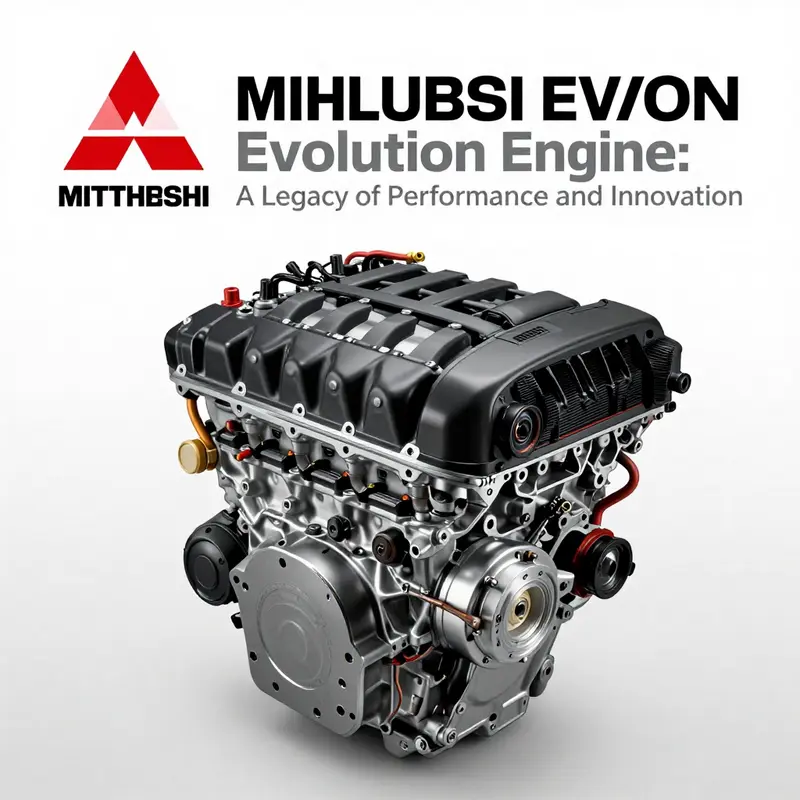
The Mitsubishi Lancer Evolution engine is more than a powerplant; it is a living chronicle of engineering ambition forged in the crucible of rally competition. At its heart sits the 4G63T turbocharged inline-four, a compact powerhouse that began life as a relatively modest 2.0-liter unit and, through successive generations, grew into a benchmark for high-performance mass production. Across the Evolution lineage, Mitsubishi stitched together a philosophy that prized relentless refinement of three intertwined pillars: power delivery, electronic command, and thermal stewardship. This triad did not merely push numbers higher; it shaped how the engine behaved at the edge of friction, under the strain of high-gear tension, and in the heat of aggressive driving where the line between triumph and disappointment is measured in milliseconds.
From the outset, the core platform married a cast-iron block with an aluminum cylinder head, a choice that balanced the durability required in turbocharged competition with the weight considerations that governed chassis dynamics. The EVO I carried a 2.0-liter DOHC 16-valve turbocharged 4G63 engine, delivering around 195 horsepower. It was a bold start, not yet a headline in the horsepower wars but a compact architecture that could be tuned, cooled, and managed with surgical precision. In EVO II, Mitsubishi pushed the envelope by venturing into tweaks that might seem modest on paper but carried real, tangible benefits on the road and on gravel. By optimizing exhaust manifold pressure and increasing valve lift—from 9.0 mm to 9.5 mm—the engine breathed easier and responded more eagerly. The result was a jump to about 260 horsepower, a leap that underscored the relationship between breathing room in the intake system and the turbo’s ability to deliver torque when drivers asked for it most.
As the Evolution line progressed into the mid-era peak years, the engineering dialogue shifted toward balancing higher boost with an ever-tighter control strategy. EVO III through EVO VII saw Mitsubishi narrow the gap between turbo spooling and throttle input by revising the compression ratio to a more favorable 9.0:1 and deploying the larger TD05H-16G6-7 turbocharger. This combination coaxed a steadier, more immediate surge of power, with EVO III achieving about 270 horsepower and the series inching toward a more complete package of performance and reliability. The seventh generation, EVO VII, marked a notable milestone not only in peak output but in the sophistication of the drivetrain’s electronics. A turbocharged torque curve began to reveal its true potential, with a factory specification around 280 ps at 6,500 rpm and torque peaking near 39.0 kgm at roughly 3,500 rpm. The turbo unit—TD05HR-16G6-9.8T—exemplified a design intent: the ability to deliver meaningful power across a broad rev range while keeping knock and heat in check through smarter management.
Technological evolution did not stop there; it accelerated as engineers looked to minimize turbo lag and maximize response. EVO VIII carried the familiarity of the 280 horsepower benchmark but set the stage for a more radical shift in the EVO X era. The eighth generation kept the performance plateau intact, while the ninth generation introduced a clean break from the earlier 4G63-based lineage with a new 2.0-liter 4B11T turbocharged engine platform. This was not just a revision; it was a platform development aimed at higher efficiency, better thermal control, and more adaptive engine management. The 4B11T’s introduction marked a transition toward a more integrated approach to airflow, fueling, and boost control, ensuring the engine could sustain track-level demands without compromising reliability during daily driving. The result was a foundation capable of unlocking further gains through refining the ancillary systems, especially those that govern heat management and electronic coordination.
A crucial thread in this narrative is the introduction and maturation of MIVEC, Mitsubishi’s variable valve timing technology. Beginning with the seventh and continuing through the eighth generation, MIVEC offered a refined balance: improved torque at lower rpm to chase quicker throttle response, paired with robust high-end power as revs climb. In practical terms, MIVEC helped mitigate turbo lag by shaping valve timing to align with boost pressure, throttle position, and engine speed. The net effect was a broader, more usable torque band, so drivers could pull smoothly through corners and pull decisively on straights. This technology did not merely increase horsepower numbers in isolation; it altered the engine’s character across the entire rpm spectrum, delivering a stronger, more confident feel at the apex of acceleration and a more linear progression through the gears.
Behind the scenes, the evolution of engine management sits as a parallel story of advancement. Early Evolution models relied on comparatively straightforward mechanical controls, but as the series matured, electronic control units grew increasingly capable. Real-time monitoring of intake temperature and pressure, coolant and oil temperatures, and knock detection became standard practice. The ECU could later modulate fuel delivery, ignition timing, and turbo boost with a level of precision that previously belonged to race tuning rooms. The result was not only higher peak power but improved drivability under load, better fuel efficiency when cruising, and more consistent performance during long stints on track days. In essence, Mitsubishi was building an engine that could adapt to a variety of operating environments without losing its nerve when pushed to the limit.
Another pillar in this saga is cooling, a field where the Evolution’s engineers demonstrated a relentless commitment to extracting heat as efficiently as possible. The modern turbocharged engine only reveals its full potential when it can shed heat quickly and consistently. The Lancer Evolution family embraces a design language that emphasizes airflow as much as horsepower. Large front bumper openings and engine hood vents are not mere visual statements; they are functional features that facilitate the movement of air through the engine bay, cooling intercoolers, radiators, and transmission components. A high-capacity radiator, paired with effective fans, ensures coolant temperatures stay within ideal ranges even when the car is being driven aggressively over extended periods. By the eighth generation, Mitsubishi adopted a large-capacity top-mounted intercooler (TMIC) design in many configurations, enabling more efficient cooling of the intake air after compression. Cooler intake air is denser air, and denser air translates into more efficient combustion and more predictable power delivery. In practice, this cooling strategy often translated into a practical horsepower benefit, with an observable gain that ranges from roughly 20 to 50 horsepower under demanding conditions, depending on tuning, boost targets, and ambient temperatures.
Engineering fusion in the Evolution engine is evident in how management and cooling complement each other. The electronic systems that manage fuel, air, and timing must be matched to a thermal system that can tolerate the added torque and heat of sustained hard driving. When these two systems operate in harmony, the engine remains not only fast but trustworthy. This trust is what has allowed the Evolution line to endure as a benchmark among performance cars: a high-output, turbocharged four that can be driven on a daily basis yet is capable of phase-locked, high-intensity performance on a circuit. The active central differential and yaw control technologies that appeared in the later EVO VII era are a clear example of how engine management extended beyond the cylinder head and into the chassis dynamics, enabling the power produced by the engine to be deployed more effectively to the road. The result is a vehicle that can be both feather-light in its handling and ferociously quick in straight-line acceleration, depending on the moment and the driver’s intent.
In sum, the Evolution engine story is not simply one of escalating horsepower. It is a narrative of continuous improvement in three interwoven domains: the engine’s fundamental power platform, the relentless refinement of electronic management, and the pursuit of cooling efficiency that keeps performance honest under pressure. From the early 4G63T variants through MIVEC-enhanced configurations and into the second generation’s newer platform strategies, Mitsubishi demonstrated that true performance derives from a holistic engineering approach. The engine became a mirror of the brand’s rally heritage: a compact, robust, and highly adaptable unit that could be tuned for speed, refined for reliability, and calibrated to deliver a coherent and engaging driving experience across roads, tracks, and every scenario in between.
Internal link reference: In EVO X, the shift toward a more integrated, high-efficiency platform included developments such as the 4B11T turbo engine and its associated hard points, as seen in related design and performance discussions within specialist parts resources, including the detailed exploration of the 4B11T billet block linked here: 4b11t-billet-block. 4b11t-billet-block
External resource: For a broader official perspective on Mitsubishi’s engineering philosophy and the company’s approach to performance development, the Mitsubishi Motors Official Site provides foundational context and historical framing that complements the Evolution engine narrative. https://www.mitsubishi-motors.com/en/
Final thoughts
In summary, the Mitsubishi Lancer Evolution series has set a benchmark in high-performance automotive engineering. The advancement of its engine, particularly the evolution of the 4G63 and its successors, highlights Mitsubishi’s commitment to integrating innovative technologies that enhance performance and reliability. From early models that laid the groundwork to modern iterations that push the boundaries of engineering, the Evolution remains a milestone in the survival of performance-focused design. Business owners, especially those in automotive and motorsport sectors, can draw valuable lessons from Mitsubishi’s approach to engineering excellence, continuous improvements, and adaptation to evolving market demands.