

The Mitsubishi Galant epitomizes the evolution of the mid-size sedan, blending history with innovation. Launched in 1969, the Galant’s impressive lifecycle lasted over four decades, making it a notable player in the automotive industry. This article delves into its historical significance, technological advancements, market impact, societal influence, and the aesthetics of its design and performance. By understanding the Galant’s multifaceted legacy, business owners can appreciate not only the vehicle’s impact on the automotive market but also its relevance in today’s business environment.
Mitsubishi Galant: A Chronicle of Design, Drive, and Development
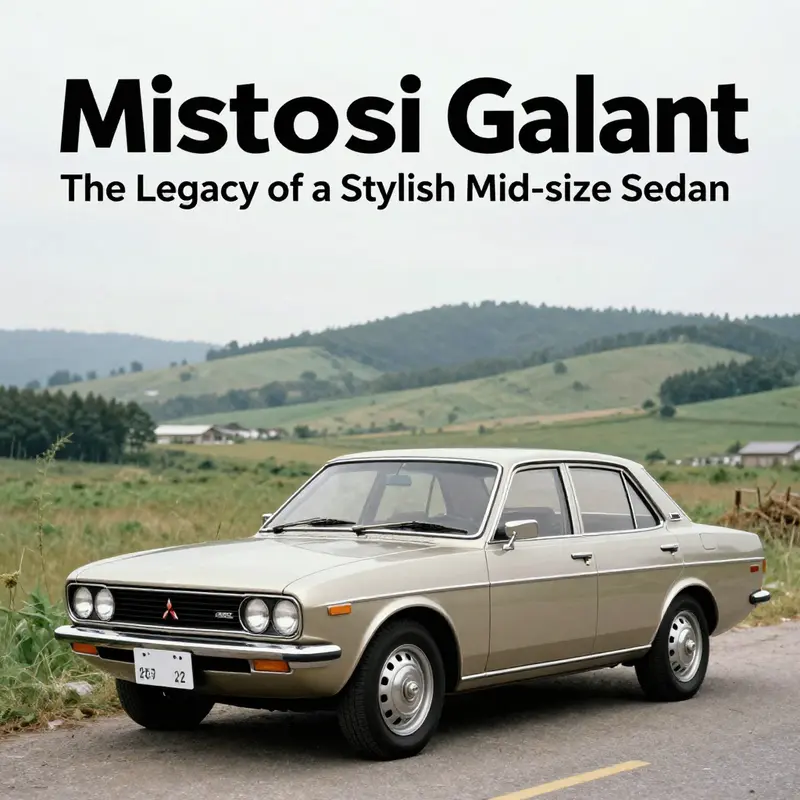
The Mitsubishi Galant, a name that has echoed through decades of automotive history, is more than a model line. It is a lens on how a Japanese manufacturer balanced reliability, practicality, and a spirited edge in a rapidly changing market. From its debut in 1969, at a moment when the global auto industry was reimagining the mid-size segment, the Galant established a tradition that would shape Mitsubishi’s approach to engineering, design, and technology for more than four decades. The early Galants began as compact offerings capable of ferrying families with a straightforward, almost understated efficiency. Yet underneath their clean silhouettes and sensible packaging, a determination to push the boundaries of performance and sophistication was quietly taking shape. As the years rolled on, the Galant evolved into a true mid-size sedan, a flagship in many markets, and a proving ground for features that would later become standard on more mainstream competitors.
The story of the Galant is, in many ways, a story of platform and philosophy. The model’s lineage mirrors a broader shift in the automotive world: a move away from rear-wheel drive towards front-wheel drive as the default layout for practical everyday driving. This transition did not happen by accident. It was driven by a convergence of needs—improved interior space, better packaging efficiency, and evolving consumer expectations for fuel economy and ease of use. Mitsubishi’s response, beginning with the fifth generation in the late 1980s, was to embrace a front-drive platform that could still deliver engaging dynamics when pushed. The design language accompanying this shift signaled a new era of identity: a Galant that wore its Miata-like responsiveness with a sterner, more purposeful face and chassis that could blend comfort with a sporty soul.
Within this arc, the Galant’s design language became a clear differentiator. Its distinctive “shark-nose” front fascia and the later, more aerodynamic lines gave it a presence that was at once unmistakable and contemporary. The silhouette evolved from boxier, utilitarian forms to sleeker, more sculpted profiles that reflected the changing tastes of motorists in Asia, North America, and Europe. But the Galant never sacrificed function for flair. The running gear, the interior layout, and the attention to cabin ergonomics carried a sense of Mitsubishi’s engineering ethos: capable performance, refined comfort, and a driver-focused experience that rewarded attentive handling and confident acceleration.
Under the hood, the Galant’s development tracked a serious commitment to performance when it mattered most. The marquee moment for many enthusiasts arrived with the high-performance variants of the later generations. The Galant VR-4, born from a platform that could be tuned for serious pace, showcased a 2.5-liter twin-turbocharged engine delivering as much as 280 horsepower and the all-wheel-drive system that helped translate power into actionable traction. In this configuration, the Galant challenged the conventional wisdom of the time: that front-wheel drive could not deliver the kind of road-holding and balance that enthusiasts expected from a high-performance car. The VR-4’s success was not merely a matter of speed. It was an assertion that a family sedan could double as a capable sports sedan when properly engineered, with a sophisticated suspension, precise steering, and a drivetrain that could harness torque with confidence.
Beyond the high-performance variants, the Galant’s generational cadence reveals a broader investment in technology intended to improve everyday driving. The mid-to-late 1990s saw Mitsubishi introduce innovations such as electronically controlled transmissions and more advanced engine management. The INVECS-II intelligent shift system, for example, represented a step toward marrying the ease of an automatic with the responsiveness of a manual, giving drivers a nuanced and adaptive experience that could adjust to their style and conditions. Direct injection, often grouped under the GDI umbrella in various Mitsubishi engines, spoke to a wider industry trend toward cleaner combustion and improved efficiency without sacrificing power. These technological threads—smart transmissions, refined engine management, and a willingness to explore turbocharged power on a family sedan—helped the Galant remain relevant as market demands evolved.
The Galant’s lifecycle, spanning 1969 to 2012 and encompassing nine generations, is a microcosm of Mitsubishi’s broader strategic rhythms. Early generations leaned into the compact and practical attributes that defined the era’s mainstream sedans. In later years, the Galant became a symbol of the company’s willingness to gamble on new configurations and powertrains, even as the mid-size sedan segment grew more crowded with capable rivals. It is no small feat that the Galant managed to stay on the road in a market that increasingly favored front-wheel-drive architectures with front-wheel-drive efficiency, yet still offered versions that celebrated drivetrain complexity and dynamic four-wheel arrangements for those who sought a more muscular statement. The production numbers—exceeding half a million and ultimately surpassing a figure in the multiple millions—are a testament to the model’s global appeal and Mitsubishi’s ability to scale a platform across continents while maintaining a sense of identity.
In the marketplace, the Galant’s trajectory was not uniformly triumphant. The model’s journey into China, where Southeast Auto (a local partner) began assembling and marketing a localized version in 2006, highlights the complexities of adapting a global product to a regional market with unique consumer expectations and competitive dynamics. The China-market Galant, known locally under a distinct name, faced stiff competition from well-entrenched midsize sedans that prioritized a different balance of space, refinement, and brand perception. The challenges were not only about styling or powertrains; they were about meeting a perceived value proposition in a market that valued certain attributes differently from other regions. Nevertheless, this localization effort marked a significant moment in the Galant’s long arc: it demonstrated Mitsubishi’s willingness to adapt a global sedan to fit regional tastes, even as it signaled the broader pressures that were reshaping the company’s product strategy across the globe.
The Galant’s influence extended beyond its own generations. Its engineering choices—front-drive platforms, turbocharged performance variants, and early adoption of advanced transmissions and engine technology—helped lay groundwork for later Mitsubishi offerings. While the Galant eventually faded from production in 2012, its legacy persisted in the company’s design language and in the memory of drivers who valued a sedan capable of comfortable daily driving with flashes of genuine excitement when the road opened up. It served as a bridge between the practical, reliable sedans of the 1970s and 1980s and the more technologically integrated, dynamically oriented cars that would come to define Mitsubishi in the twenty-first century. In that sense, the Galant acts as a historical hinge—the model where the company’s mid-size ambitions met its willingness to push technology and performance boundaries in tandem.
Beyond the mechanical and stylistic notes, the Galant’s cultural footprint should not be underestimated. It was a car people remembered for its distinctive face and its promise of spirited driving without demanding sacrifices in comfort. Its design cues—especially the early shark-nose charisma—and its performance variants left a mark on how Mitsubishi imagined the modern sedan. The Galant did not merely occupy the mid-size category; it helped define the expectations of what that space could deliver: a balance of everyday practicality and the possibility of a genuine driving connection. In a broader sense, the Galant’s story reflects the arc of a global auto industry that learned to value not just efficiency and space, but also identity, engineering nuance, and the willingness to experiment with new forms of propulsion and control systems.
For readers tracing the lineage of Mitsubishi’s mid-size strategy, the Galant provides a coherent narrative thread. It shows how a company can maintain a lineage of iterative improvements while remaining open to bold experiments—turbocharged power, all-wheel-drive options, advanced electronic transmissions, and refined interiors that could rival more expensive rivals in perceived luxury. It also reveals how global markets, once treated as monolithic, diversified into distinct regions with their own expectations, and how a model like the Galant could be adapted to these diverse conditions without losing its core identity. The result is a chapter in Mitsubishi’s history that reminds us that the heritage of a brand is not simply a list of model names, but a continuous dialogue between engineering choices, design language, market realities, and the evolving desires of drivers who want more from a sedan than mere transportation.
As the era closed on the Galant, the automotive landscape had already shifted toward crossovers and a new generation of compact and mid-size sedans that fused technology, safety, and connectivity in ways the original Galant could only hint at. Yet the Galant’s contribution remained intact in the way Mitsubishi approached product development: a willingness to mix practical value with performance ambition, to experiment with powertrains and drivetrains, and to craft a driving experience that rewarded attentive, engaged driving. In this sense, the Galant’s story does not end with a production number or a showroom farewell; it lives on in the DNA of Mitsubishi’s later models and in the memories of drivers who appreciated a sedan that could quietly surprise you with its zest when the road opened up.
External resource: For a detailed look at the full lineage and technical specifications of the Galant across generations, see the official Mitsubishi Motors archive: https://www.mitsubishi-motors.com/en/brand/history/galant.html.
Internal reference: A related look at era-era performance engineering from Mitsubishi can be found in this gallery entry on a legendary, torque-rich variant from the era: 1994–1999 Mitsubishi 3000GT Pit Fighter carbon fiber hood.
Mitsubishi Galant: A Mid-Size Milestone Where Comfort, Performance, and Progressive Tech Converge

From its debut in 1969, the Mitsubishi Galant established a prescription for a mid-size sedan that balanced everyday practicality with a taste for dynamic capability. It was not the flashiest nameplate on the road, yet it quietly accumulated a lineage built on reliable engineering, coherent design, and an appetite for technology that could be accessed by a broad audience. Over its nearly half-century span, the Galant evolved through nine generations, shedding the compact identity of its early years to mature into a refined, well-rounded family car, capable of delivering comfortable daily drives and, in its higher-performance derivatives, genuine sporting cred. The story of the Galant is not just a chronicle of model updates; it is a lens on how Japanese automakers translated engineering goals into tangible road experience, then tuned that experience for different markets around the world.
Design language played an important role in how the Galant communicated its character. Early generations bore the clean, unpretentious lines expected of a practical sedan, but as the model matured, the silhouette began to hint at sportier intent. The front fascia—often described as bold and purposeful—embedded a visual identity that helped the Galant stand out in crowded showrooms and on winding roads alike. The more aggressively styled rear aero cues that appeared on sportier variants reinforced the sense that a mid-size car could deliver both comfort and an engaged driving feel. Across generations, the Galant’s physical presence was inseparable from its reputation for predictable handling and solid chassis discipline. That combination—quiet confidence in daily use, with a readiness to respond when the road demanded more—became the brand’s calling card for the model’s entire life.
Technology and engineering formed a central thread through this evolving tapestry. The late 1990s and early 2000s marked a period when Mitsubishi and the Galant in particular began to fold more sophisticated electronic systems into a mainstream package. The high-performance variants of later generations cemented a reputation for power and grip, while the standard models demonstrated how technology could improve everyday usability without complicating ownership. In the most notable performance-focused chapters, the Galant showcased a twin-turbo setup paired with all-wheel-drive in a package designed to deliver both brisk acceleration and stability in cornering. The result was a sedan that could be a legitimate driver’s car on a back road and a calm, dependable companion on a weekday commute. The VR-4 variants, in particular, became a reference point in its era when enthusiasts looked beyond the standard family sedan to understand how a mid-size platform could house advanced performance engineering.
Equally important were the safety and driver-assistance features that began to appear with later generations. Active Skid Distribution, Mitsubishi’s approach to stability control, represented a meaningful step toward dynamic safety that did not rely solely on brute braking or driver reaction. ASD actively managed slice-by-slice braking force across wheels to counteract the onset of understeer or oversteer, helping the car maintain its intended path through a corner. This technology—an early form of electronic stability control—was not just a feature list item; it reshaped the driving experience by providing a more predictable, confidence-inspiring response when the surface was uncertain or the weather unforgiving. It was the kind of system that, over time, became a standard expectation in mid-range sedans, signaling a broader industry shift toward safety-centric design without sacrificing engaging dynamics.
The Galant’s approach to safety was complemented by robust passive protections that included dual front airbags and, as generations progressed, additional side-impact protection and, in many trims, anti-lock braking systems. In markets where the Galant was sold as a practical family sedan, ABS helped provide stable, controlled deceleration in unexpected situations, contributing to driver confidence across a wide range of conditions. Optional traction control, hill-start assist, and even rearview cameras in the late 2000s reflected a growing consensus that mid-size cars should incorporate deeper safety and convenience features without pushing buyers toward premium pricing. This combination of active and passive safety elements helped position the Galant not merely as a dependable commuting solution but as a practical partner capable of addressing the uncertainties of real-world driving with technical finesse.
The interior experience paralleled the exterior and mechanical evolution. In its early days, the Galant prioritized room, durability, and straightforward usability. As technology permeated the cabin, the model’s interiors began to reflect a more refined sensibility. Higher-trim versions offered materials and finishes that conveyed a sense of quality comparable to more premium contenders, without surrendering the entry-level ease that defined the model’s core appeal. Instrument clusters were laid out for quick comprehension, ensuring that vital information remained legible at a glance, while climate control and seating adjustments improved comfort over longer journeys. In-vehicle electronics progressed from the basics—AM/FM radios and CD players—to more connected experiences, including Bluetooth interfaces and multi-information displays that allowed drivers to monitor fuel economy, driving range, and maintenance cycles. Although the Galant never positioned itself as a luxury flagship, its interior architecture demonstrated Mitsubishi’s intention to elevate the everyday driving experience by making advanced features accessible and intuitive for a broad spectrum of customers.
The Galant’s market journey is equally instructive. On global stages, it represented Mitsubishi’s ability to offer a mid-size sedan that could blend a sportier edge with the practicality demanded by families and commuters. In some markets, that balance translated into a strong following among enthusiasts who appreciated the car’s chassis balance, steering precision, and the sense that the car could deliver more than expected when pushed through a curve. Elsewhere, competitive pressure from rivals with longer brand histories or stronger local dealer networks meant the Galant faced an uphill battle to sustain volume and momentum. The model’s Chinese market rollout under local auspices — where it appeared under a Chinese name that evoked elegance and sophistication — underscored the strategic importance of local adaptation in maintaining relevance amid global competition. In that context, the Galant’s strengths—reliability, a coherent engineering package, and a measured blend of technology with everyday usability—remained its core value proposition, particularly for buyers who valued steady, predictable performance over ostentation.
Design, engineering, and market realities also reveal a broader narrative about how automotive technology filters down from niche performance offerings into mainstream models. The Galant’s later years illustrate a pattern familiar to many brands: a platform that started as a practical commuter made space for more advanced electronic stability systems, refined safety amenities, and convenience technologies, all while preserving the essential driving experience that had defined its earlier iterations. The progression from a straightforward mid-size sedan to a car that could offer a sportier sense of engagement—without demanding premium infrastructure from buyers—reflects a philosophy of inclusive performance. In this sense, the Galant was more than a model line; it was a prototype for how a mass-market sedan could accommodate evolving consumer expectations while maintaining reliability and ownership practicality. This delicate balance—between sport and serenity, innovation and affordability—made the Galant a distinctive chapter in Mitsubishi’s history, even as the brand shifted toward new architectures and future-oriented technologies in its later lineup.
As the narrative extends beyond the showroom into the memory of drivers and enthusiasts, the Galant’s legacy becomes a study in how a nameplate can carry a coherent identity across decades. Its reliance on accessible technologies, thoughtful safety features, and a chassis tuned for everyday confidence provides a throughline that links its earliest iterations with its most sophisticated, high-performance variants. The car’s “silently ambitious” character—an adjective that fits both its design language and its engineering philosophy—allowed it to endure as a credible option across a wide range of markets and consumer needs. Even after production ceased in many regions in 2012, the Galant left behind a template for how mid-size sedans could reconcile the demands of practicality with the aspirations of driving enthusiasts. The balance it achieved—between the comfort of a well-appointed cabin, the assurance of a stable and engaging chassis, and the accessibility of advanced tech—resonates with a moment in automotive history when technologies began to appear not only in luxury segments but in cars intended for daily use by ordinary people.
For readers tracing the arc of mid-size sedans, the Mitsubishi Galant offers a compact but revealing case study. It demonstrates how a single model can evolve in stages, adding features that improve safety, efficiency, and enjoyment, without losing the core traits that earn buyer loyalty: predictable behavior, ease of maintenance, and an approachable, driver-centric experience. It shows that progress in automotive engineering does not always demand a dramatic reinvention; sometimes it comes in the form of careful integration—of new transmission strategies, of stability and safety systems, of comfort-enhancing technologies—that collectively reshape how a car feels on the road. The Galant’s life, from its earliest forms to its later, more technologically sophisticated iterations, stands as a testament to a philosophy of coherent evolution. It is a reminder that the most enduring mid-size sedans are often those that quietly grow more capable, more refined, and more confident with each generation—inviting drivers to take the wheel not just for a commute, but for a journey that respects both efficiency and exhilaration.
External resource: Official Mitsubishi Galant Page
Market Currents and Economic Echoes of the Mitsubishi Galant: A Global Mid-Sized Classic
The Mitsubishi Galant embodies more than a line of mid-sized sedans; it traces a long arc through Japan’s postwar industrial ascent into the global automotive stage. From its origins in 1969 to its global retirement in 2012, the model carried the ambitions of a company that built reliability, technical audacity, and an awareness of shifting markets into a single family of cars. Its market performance did not unfold in a straight line, but rather rode the fluctuating tides of international demand, currency swings, and consumer tastes. Across nine generations, the Galant evolved from a compact starter into a mid-size offering that could be both sensible family transport and a platform for engineering experimentation. The car’s story mirrors broader economic trends, where a nation’s manufacturing prowess translated into global footprints, regional adaptations, and, eventually, the costs and tensions that accompany a long, diversified production run.
In the late 1980s, when Japan’s economy still carried the glow of a boom period, the Galant served as more than a practical sedan. It became a vehicle through which cutting-edge engineering reached a broad audience. The era’s appetite for sophistication in midsize cars helped seed a new generation of features designed to offer a more engaging, confident driving experience. Technologies that would later become common in premium segments began to appear in these mid-range cars. The Galant’s 4WD with four-wheel steering on the 1989 model, for example, demonstrated how Japanese manufacturers used the mid-size platform to push handling limits and to respond to consumers who valued both everyday practicality and a dash of performance-propelled excitement. This was more than gadgetry; it was a signal that a family sedan could blend comfort, safety, and dynamic response in a single package.
As production and strategy widened beyond a single national market, the Galant’s reach expanded into the United States and, later, into China, among other regions. The model’s evolution into a global mid-size car reflected broader corporate and economic imperatives: to localize assembly to reduce import costs, to adapt specifications to local tastes and road conditions, and to preserve scale in an era of rising competition from other Japanese, American, and European brands. In the United States, where consumer expectations for comfort and efficiency ran high, the Galant competed alongside a crowded field of mid-size sedans that had become the backbone of family mobility in suburban growth periods. In China, the Galant’s presence entered a different phase of globalization. Introduced in 2006 through a local partner, the model was produced domestically as the market experimented with new consumer dynamics and price sensitivities. This localization was as much about economic strategy as it was about meeting a growing middle class’s need for familiar, reliable technology. The Chinese version, known locally by a name that carried cultural resonance, symbolized a new era in which international brands could be adapted to local manufacturing ecosystems and consumer expectations. Yet such localization also highlighted a core tension: the Galant’s aging exterior and powertrain options, when juxtaposed with fierce competition from newer designs, sometimes undermined its appeal in a market crowded with modern alternatives.
The Galant’s market performance, measured by sales volume and brand impact, underscores its role in Mitsubishi’s growth narrative. Across the world, the model accumulated more than five million units in sales and persisted through nine generations, a testament to its broad appeal and the utility of the mid-size segment in a company’s portfolio. This longevity did more than accumulate numbers; it fostered a design language and a technical trajectory that informed Mitsubishi’s broader engineering culture. The model’s structured approach to reliability and innovation helped establish the brand’s reputation for practical engineering depth. It was a platform for experiments in transmission control, engine management, and chassis dynamics that, while sometimes incremental, collectively shaped the company’s image as a maker of capable, well-rounded cars. The Galant’s success also fed into job creation and supplier development across multiple regions. By sustaining production over decades, it connected assembly plants with a network of parts suppliers, logistics partners, and engineering talent, reinforcing supply chains that were essential to Mitsubishi’s regional growth strategies and to the economies that depended on those manufacturing corridors.
Beyond production lines and balance sheets, the Galant’s story ties deeply to the macroeconomic rhythms of its era. The late 1990s and early 2000s brought a mix of market consolidation, currency volatility, and shifting consumer sentiment. The Galant, once a symbol of reliable mobility, faced the realities of aging design language and the rising expectations set by newer platforms with modern interiors and more advanced propulsion systems. This did not merely reflect a product cycle; it mirrored the broader challenges of sustaining a global manufacturing footprint as market conditions evolved. The model’s discontinuation in 2012 did not erase its contributions. Instead, it highlighted a transitional moment in which automotive makers reassessed how to balance long-standing engineering heritage with the pressures of cost discipline, regulatory changes, and the need to invest in future technologies.
One dimension of the Galant’s economic impact lies in its role as a conduit for advanced engineering into a broader audience. The era that produced the Galant’s notable VR-4 performance variant—equipped with a twin-turbo 2.5-liter engine and all-wheel drive—illustrated how Mitsubishi fused performance aspirations with practical sedan architecture. This was not simply a high-performance outlier; it was an indicator of the company’s willingness to push beyond conventional expectations for a mid-size car. Even when such performance variants occupied a niche, they influenced the perception of the brand as capable of delivering strong dynamics within a family-suited vehicle platform. The ripple effect of this engineering emphasis extended to development programs across the company, informing how Mitsubishi approached engine technology, turbocharging, and all-wheel traction in later products.
Economically, the Galant’s life cycle helped frame Mitsubishi’s global manufacturing strategy. The move toward regional production hubs—US facilities in some generations and Chinese assembly in others—was driven by a mix of cost considerations, supply chain resilience, and the desire to be closer to markets with rising demand. Localization reduced shipping costs and responded to import tariffs, while still leveraging the prestige and reliability associated with the Galant’s engineering heritage. The model’s presence in multiple markets also stimulated local engineering ecosystems, encouraging suppliers to align with Mitsubishi’s specifications and quality standards. In turn, this supported jobs and ancillary economic activity in host regions, illustrating how a single model’s market performance could cascade into regional economic benefits far beyond its showroom footprint.
However, the Galant’s later years also reveal the fragility of a long-run product strategy in a fast-changing landscape. As rivals launched more aggressive designs, interior quality improved, and powertrains became increasingly refined, the Galant faced difficult comparisons. In many markets, consumer preference shifted toward newer platforms with more modern infotainment, advanced driver-assistance features, and better fuel efficiency. That shift was not only a matter of taste; it reflected evolving regulatory environments and the global push for efficiency and lower emissions. In this light, the Galant’s retirement in 2012 can be read as part of a larger industry transition from a model-by-model accumulation strategy toward more modular, platform-based product families that promised faster adaptation to changing rules and consumer expectations. Yet, its absence left a legacy: a benchmark for reliability, an early adoption road that helped usher in smarter drivetrain management and innovative transmission concepts, and a reminder of how a single model can influence a brand’s engineering ethos over decades.
In retrospect, the Mitsubishi Galant’s market performance and economic impact offer a nuanced lens on the postwar automotive era. It exemplifies how a car can serve as an economic instrument—supporting jobs, enabling regional manufacturing, and catalyzing technological experimentation—while also illustrating the pressures that accompany a long product life in a selectively evolving market. The model’s nine-generation journey, with its global footprint and its notional capacity to blend performance with practicality, remains a case study in how a mid-sized sedan can influence a company’s trajectory and contribute to the broader story of a nation’s industrial ascent, followed by adaptation in a more diverse global economy. Its memory is not simply about design cues or technical milestones; it is about the interplay of economic cycles, corporate strategy, and consumer demand that shapes what cars become in the collective imagination.
For readers seeking a deeper look at the engineering lineage that accompanied the Galant’s push for performance and control, a contemporary reflection on the era’s innovations, including the 4WD 4WS configuration, offers a vivid window into how this model stood at the crossroads of technology and everyday mobility. External context can further illuminate how a car that began as a practical family sedan evolved into a symbol of a company’s willingness to experiment within a market that demanded both reliability and excitement. See a detailed account of the 4WD 4WS arrangement in the late 1980s, which underscored the period’s appetite for dynamic handling and engineering risk.
External resource: https://www.driventowrite.com/2015/03/28/unforgetting-1989-mitsubishi-galant-4wd-4ws/
Galant Across Borders: The Car That Shaped Societies, Styles, and the Japanese Automotive Narrative
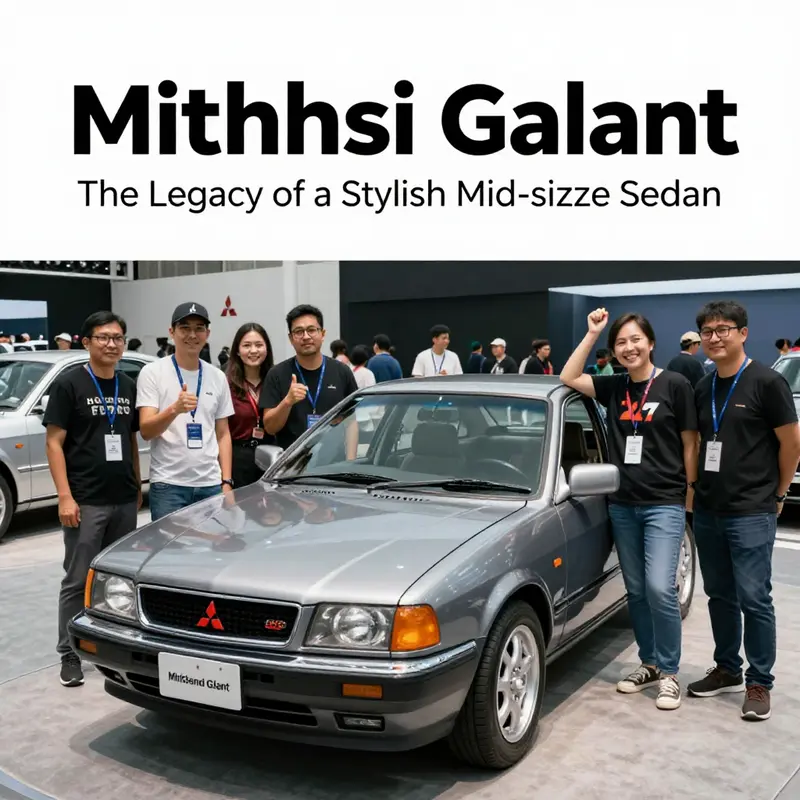
When the first Galant rolled onto the road in 1969, it carried more than a silhouette and a drivetrain. It carried a vision: a mid-size sedan that could steady daily life with reliability while inviting a touch of sport and sophistication. Its name—galant, echoing the French gallant or gentleman—hinted at a posture the car would adopt in markets around the world. The Galant was not merely a mode of transportation; it was a cultural instrument that helped reshape expectations about what a Japanese automobile could be, how it could travel through different societies, and how it could endure changing tastes, regulations, and economic tides. Across decades and continents, the Galant stitched together a narrative in which engineering ambition met social habit, and in doing so it left a nuanced imprint on the cultural fabric surrounding cars and mobility.
In North America and beyond, the Galant’s journey was as much about the idea of reliability as it was about style or speed. When it appeared on U.S. roads through the Dodge distribution network, the car carried a message that Japanese engineering could blend value with comfort and practicality. It became, in some markets, the everyday sedan that did not demand constant attention, the kind of vehicle people could depend on as they built families, careers, and routines around its steady performance. The long arc of its presence contributed a quiet but meaningful shift in how American drivers perceived compact-to-mid-size Japanese cars: not as spartan alternatives, but as compelling choices that balanced economy, space, and a refined driving experience. In regional landscapes as varied as suburban suburbs, rural corridors, and urban sprawl, the Galant grew into a familiar sight—a signal that a Japanese automaker could offer not only cutting-edge technology but also endurance that could outlast fashion and life’s changing tempo. The nickname that would accompany it in some markets—the car that never dies—was less a boast and more a testament to the enduring relationship people formed with a trustworthy, well-rounded vehicle.
Alongside this everyday trust, the Galant harbored a more provocative dimension: performance. The early GTO variants, born in the 1970s, were among Japan’s first serious sports sedans. They married the pragmatism of a family car with a sporting edge that appealed to enthusiasts who craved both form and function. The 2.0-liter engine, the 4G52, produced around 125 horsepower in those days, and the car’s lightweight chassis and balanced dynamics gave it a credibility that would influence Japanese performance design for years to come. This blending of sport and sedan form became a template that would echo through later generations, signaling that a car could be both a practical daily companion and a credible platform for spirited driving. It also helped seed a broader cultural awareness: in the 1970s and 1980s, Japanese automakers were not just exporting reliable machines; they were exporting a philosophy of nimble performance embedded in everyday usability. The Galant’s presence in racing-adjacent culture and its appearance in tuning communities helped crystallize a broader JDM identity that would influence styling cues, modification choices, and the aesthetics of performance-oriented sedans for a generation.
As the Galant evolved into the 1990s, it carried more advanced engineering aspirations. The VR-4 variants—most famously the E84A in its form—introduced twin-turbocharged power and all-wheel drive, delivering a combination of acceleration and grip that uplifted the sedan category in the public imagination. The twin-turbo 6A12TT engine, paired with an always-on four-wheel-drive system, offered a technical blueprint for performance that could be packaged with daily usability and quieter, refined interiors. Inside, technology started to echo the era’s broader industrial push toward intelligent control and efficiency. Features like INVECS-II—an early form of intelligent, semi-automatic transmission management—began to redefine what a driver could expect from a mid-size sedan. GDI engines and other efficiency-minded technologies emerged as the Galant matured, signaling a turning point in how performance and fuel economy could coexist under one roof. Those technical milestones mattered far beyond the showroom floor; they informed the expectations that drivers had for the future of family cars, convincing motorists that speed and stewardship of resources could be reconciled in a single vehicle.
Yet the Galant’s cultural resonance did not stay confined to the road. Its aesthetic language—especially the bold front-end design that came with the infamous “shark mouth” treatment—left a mark on automotive styling language across eras. A face that was unmistakably distinctive in the late 20th century helped cultivate a sense of brand identity that transcended specific markets. The Galant’s silhouette spoke to the broader shift in how cars were perceived: not purely as machines to move people, but as expressions of taste, personality, and social belonging. In many countries, this carried over into popular culture and daily life, where a manufacturer’s car could become a symbol of status, ambition, or technical sophistication. The result was a car whose influence extended beyond its wheelbase and horsepower, seeding a shared vocabulary about what made a mid-size sedan meaningful in an era of globalized production and rapid marketing cycles.
However, the Galant’s story was not uniform across every market. In China, for instance, the Galant encountered a different set of pressures. Southeast Motor’s 2006 introduction, amid a joint-venture environment where foreign brands sought to claim a share in the mid-size segment, carried high expectations. Designers and engineers aimed to position the Galant as a formidable rival to established incumbents in the family-sedan category. Yet the domestic market’s preferences—especially around interior feel, perceived premium-ness, and price sensitivity—proved stubborn. The Galant struggled to translate its global heritage into local resonance, becoming a relatively niche player rather than a market-defining force at the time. The experience underscored a broader truth about cross-border automotive storytelling: heritage does not automatically translate into market relevance. Brand legacies must contend with local consumer expectations, cultural determinants, and the complex economics of domestic competition. The Chinese episode, though challenging, contributed to the Galant’s enduring aura as a relic of a bygone era when Japanese automakers were testing the boundaries of global reach with ambitious, technology-forward cars that carried both promise and a hint of vulnerability in a rapidly shifting market.
Viewed in retrospect, the Galant stands as a cultural artifact that maps the arc of Japan’s postwar industrial ascent. It embodies a period when Japanese manufacturers demonstrated a willingness to blend global ambitions with disciplined engineering, and when markets in North America, Africa, Oceania, and Asia became testing grounds for a new kind of mobility. The car’s story intersects with the rise of global supply chains, the emergence of performance-driving culture in the form of sport sedans, and the ongoing negotiation between heritage and innovation in an era of rapid technological advancement. In enthusiast circles and classic-car forums, the Galant maintains a presence that is less about today’s cutting-edge features and more about a narrative of resilience, adaptability, and the layered memory of a vehicle that could carry the weight of a brand’s aspirations while navigating the layered realities of public roads, garages, and garages-to-be-turned-shows.
For those seeking a broader historical lens, the Galant’s legacy has been recognized and reflected upon in contemporary automotive retrospectives that trace the lineage of mid-size sedans and the early forays of Japanese makers into global performance storytelling. The story is not merely a catalog of trims and engines; it is a case study in how a single model can travel across borders and through time, shaping what drivers expect from a car’s personality and a brand’s promise. It reminds us that the car is not only a machine with a set of numbers but also a cultural participant—engaging with daily life, influencing design language, and becoming a kind of social artifact that tells us as much about the people who drove it as about the engineering that powered it. The Galant’s chapters in different regions—its everyday reliability, its sporting ambitions, its technological milestones, and its moments of market trial—offer a composite portrait of a vehicle that helped define a generation’s relationship with mobility. In doing so, it contributed to a global automotive narrative that continues to inform how we assess the cultural value of cars that blend performance, practicality, and personality.
External resource: to explore a broader historical perspective on the Galant’s legacy, see MotorTrend’s feature on the model’s enduring influence and legacy in automotive history. https://www.motortrend.com/cars/mitsubishi/galant/legacy/
Mitsubishi Galant: From Dynawedge to Dynamic Performance—Tracing an Aerodynamic and All-Wheel-Drive Heritage
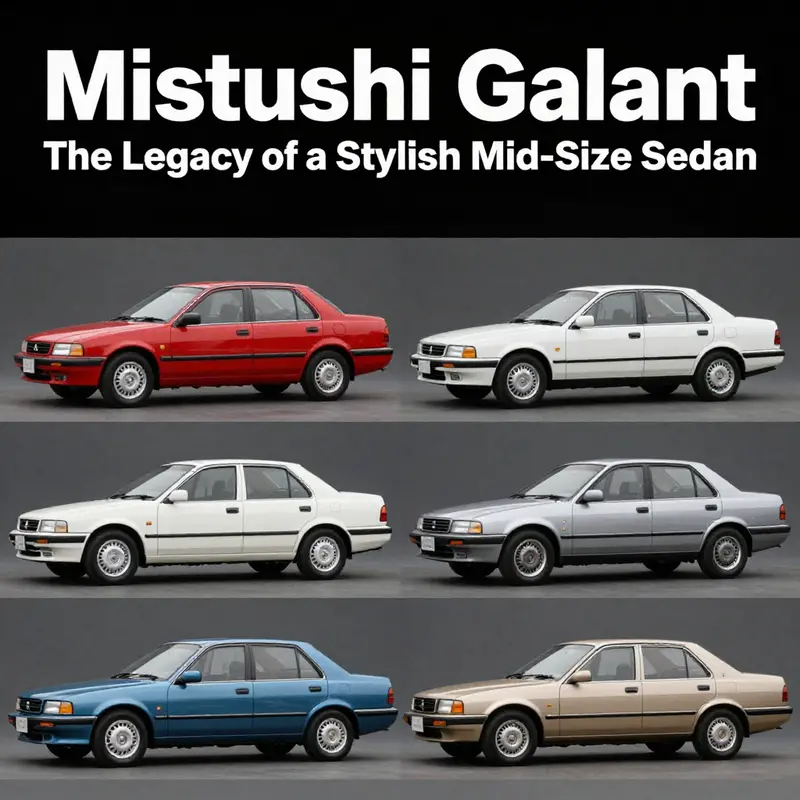
The Mitsubishi Galant occupies a distinct place in automotive history as much for its engineering philosophy as for its family sedan roots. Born in 1969 as the Colt Galant, it quickly became a canvas for a bold design language and early technologies that would shape the brand for decades. Its Dynawedge identity was not just a styling label but a deliberate effort to shape a silhouette that could cut through air with lower drag while keeping the profile stable at speed. In showroom terms, this promised efficiency, steady handling, and a visual cue to aerodynamics—two ideas that reinforced each other in everyday driving. The silhouette became a fingerprint, and the badge stood for Mitsubishi’s growing engineering confidence.
As the decades passed, the Galant matured from a compact to a true mid size sedan. In the 1980s the model evolved into a platform capable of sharper performance ambitions, reaching markets hungry for sportier, more engaging cars. The Galant FTO example showed a higher state of tuning with a 1.7 liter engine delivering around 115 horsepower for its class at the time. Its styling suggested speed even when standing still: a fastback profile, a clean side view, and a lack of a B pillar that emphasized motion. Rear wheel drive with tuned chassis offered direct steering feel and a sense of purpose that set it apart from many contemporary family sedans. The fastback stance became a recurring Galant theme.
That blend of practicality and performance did not happen by accident but through a long arc of engineering development. Early Galants introduced technologies that would become common in the segment, such as electronically controlled transmissions and efficient engine layouts. The shift toward refined powertrains and smarter transmissions helped the Galant compete on driving enjoyment and daily livability as well as price. The 1990s marked a turning point as Mitsubishi consolidated its approach to performance without sacrificing everyday usability. The range included turbo variants and more sophisticated drivetrains, pushing the Galant toward sportier territory while remaining accessible for daily use. The engine lineup broadened, and the chassis delivered a more planted feel for brisk commuting and weekend runs.
Within this era, Mitsubishi experimented with performance in ways that linked the Galant to racing roots. The high performance VR-4 models featured a 2.5 liter twin turbo engine and an all wheel drive system that could deliver substantial power. These variants demonstrated torque distribution, traction, and refined power delivery under real world conditions. The VR-4 combined a turbocharged engine with a sophisticated AWD system that could distribute power with finesse. It was not only about numbers but about how the power was delivered, how the chassis balanced under load, and how the driver could sense the car’s intent through the wheel. Innovations such as an intelligent semi automatic transmission further enriched the experience by blending manual feel with automated convenience at higher performance levels.
Inside, the Galant moved toward a more premium feel. Higher trims offered LCD instruments, climate control displays, leather upholstery, and careful trim choices that suggested a refined ambience. These touches underscored a key theme: performance and practicality need not be separate worlds but can coexist in daily life, whether commuting or enjoying the road. The interior, like the exterior, communicated a philosophy that performance and practicality can reinforce each other.
The Galant’s development story fed into Mitsubishi’s broader racing heritage and later lineage, including the Lancer Evolution. The Evolution III, introduced in 1995, drew on racing engineering and Galant ideas, with front end aerodynamics, cooling, and drivetrain coordination that traced back to early Galant architecture. In this sense the Galant is not merely a footnote in Mitsubishi’s performance history but a foundation for a philosophy that tied aero performance to traction and reliability.
The global journey of the Galant also highlights localization challenges. In 2006, the Dongnan brand in China offered a Galant variant under its own naming, but sales did not meet expectations. The exterior and interior package could not fully match consumer preferences in price, refinement, or perceived value. The lesson is that international success requires alignment with local tastes, pricing, and aftersales support that can sustain a family vehicle across a volatile market. Production of the Galant gradually receded from the global lineup, with Mitsubishi stepping back in the early 2010s. Even so, the Galant’s influence lingers in how designers and engineers think about aerodynamics as a practical tool and how performance can be integrated into a car within everyday reach.
The Galant’s legacy is a nuanced blend of aerodynamics, engineering, and design language that left a lasting imprint on Japanese car culture. Its shark nose front and clean lines signaled a willingness to push beyond conventional sedans, a thread echoed by later Mitsubishi sport models. The evolution—from Colt Galant to mid size configurations and the VR-4 AWD performance—mapped a trajectory where technology drove the driving experience. Even after production ended, the Galant’s role in shaping engineering ethos—balancing refinement, efficiency, and exhilaration—remains a touchstone for enthusiasts and designers. The Galant’s history stands as a reminder that a single model can anchor a brand’s identity across decades and seed the performance ambitions of future cars.
The thread tying these chapters together is the idea that the Galant mattered beyond transportation. Its design philosophy—where silhouette and mechanical heart align—helped define an era when Japanese automakers pursued efficiency and speed together, shaping expectations for mid size sedans. As the market shifted and the Galant gave way to newer models, its influence persists in how performance engineering and aerodynamic sensibility coexist in a car that remains part of a broader Mitsubishi story. The Galant’s journey—from Dynawedge roots to the VR-4 era—remains a reminder that progress in automotive design comes from balancing form and function, everyday usability and driving excitement, and heritage with bold bets on the future.
The Evolution lineage continues to be a touchstone for how racing DNA translates into road going performance. The Evolution 8 and 9 era’s dedicated design details show that the Galant’s influence extended beyond its immediate era. It is a story about a car that can be practical for family life and capable of high performance thrills when the road opens up. In that sense, the Galant was never merely a model but a philosophy that married aerodynamic efficiency with driving excitement and that Mitsubishi would continue to refine across generations. It is this balance—the Dynawedge concept, AWD handling precision, and a racing lineage—that makes the Galant a pivotal chapter in the broader history of Japanese automotive engineering, and a lasting reminder of how design and performance can converge to redefine what a sedan can be.
Final thoughts
The Mitsubishi Galant’s remarkable journey from its debut in 1969 to its discontinuation in 2012 embodies a legacy of innovation, style, and societal impact. Business owners can draw parallels from this iconic sedan to understand the importance of adapting to market demands, embracing technological advancements, and maintaining a connection to cultural significance. The Galant may no longer be in production, but its impact on the automotive landscape endures, reminding us of the complexities and beauty of automotive history.