

The Mitsubishi Lancer Evolution has garnered a reputation for its performance and tuning potential. For business owners looking to cater to enthusiasts and drivers seeking replacements, understanding the availability of Lancer Evolution engines is essential. The focus of this article is on the 4B11T engine assembly critical for the Lancer Evolution X models, specifically from 2008 to 2015. Each chapter will provide insights into the current market landscape, pricing structures, the technical specifications of the engine, and reliable sources for purchasing these vital components.
Where to Find an Evo Engine: Real Availability and What Drives the Market
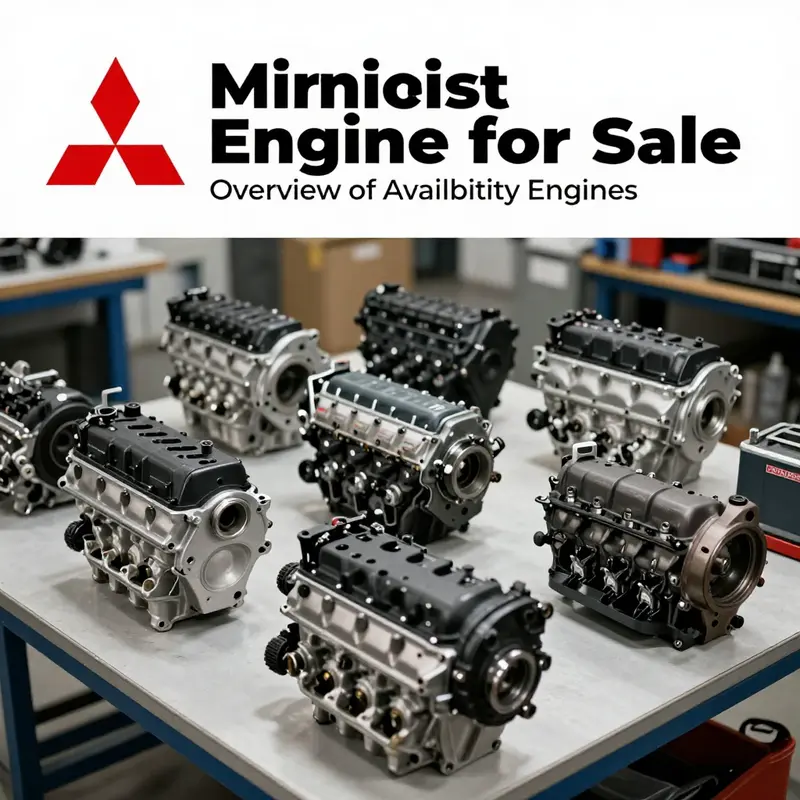
The search for a Mitsubishi Lancer Evolution engine centers on a few consistent realities: demand from enthusiasts, a finite supply of OEM turbo engines, and a market built around used assemblies, remanufactured cores, and specialized sellers. Over the past decade, the Evolution line has been discontinued, and that scarcity changed how engines circulate. What once flowed through dealer networks now moves across online marketplaces, salvage yards, specialized rebuilders, and dedicated import/export channels. Understanding availability means following that chain, learning what sellers list, and knowing how condition, compatibility, and region affect access.
Availability is not uniform. Turbocharged engines, particularly the 4B11T found in later models, are the most sought after. These powerplants combine modern engineering and tuning potential, and they remain valuable for upgrades and restorations. Listings for these engines appear regularly on major auction and wholesale platforms. Many entries are complete assemblies, often described as tested or removed from running vehicles. Mileage on these assemblies varies. Low-mileage examples are rare and command higher prices. Engines with 50,000 kilometers or fewer typically move faster than high-mile units. Mid-range mileage units near 100,000 kilometers are more common, but their value depends on documented maintenance and whether a compression test or dyno verification accompanies the sale.
Sellers fall into three broad groups. First are private sellers offering parts from a single vehicle. They list engines removed after accidents or upgrades. Their prices can be competitive, but warranties are usually absent. Second are commercial vendors and wrecking firms that process multiple vehicles. They can provide salvage titles, partial warranties, or testing services. They also move inventory quickly, sometimes marking “only one left” to signal scarcity. Third are dedicated rebuilders and performance shops that sell remanufactured or upgraded engines. These sellers often install stronger internals or offer short-term warranties. Their units cost more but provide peace of mind and documented work.
Online marketplaces bridge buyers and all seller types. They aggregate listings from across regions, offering search filters for engine codes, mileage, and condition. Many listings guarantee fitment for specific chassis or model years. This feature is helpful because not all Lancer components are cross-compatible. For example, later-model engines may require different wiring harnesses, ECUs, or drivetrain components. Complete engine assemblies that include attached transmission, ECU, and wiring looms simplify installations. Buyers seeking plug-and-play swaps should prioritize those assemblies over bare engines.
Wholesale and global trade platforms also list cores like the 4G63, the older twin-cam turbo from earlier generations. These engines remain in circulation, often sold as either used stock or rebuilt units. Pricing on these platforms can appear lower, but buyers must factor in shipping, customs duties, and potential lead times. Small repair shops sometimes buy units priced per piece, then handle import paperwork. Minimum order quantities on wholesale sites can be low, often set to a single engine, which makes them usable for individuals. However, the regulatory environment for importing engines varies by country. Some regions require emissions certification or specific documentation for registration, so buyers must research local rules before purchasing internationally.
A common and practical option within the community is the halfcut or cut engine assembly. These are sections of vehicles cut from donor cars that include the engine, transmission, front suspension, and harnesses. They frequently appear as a single package and offer easier conversions. They also reduce the risk of missing ancillary parts. When considering a halfcut, confirm which components are included. Common omissions include radiators, intercoolers, ECUs, or accessory brackets. An inspection checklist helps buyers verify that vital parts are present and undamaged.
Condition descriptions vary widely in clarity. Some sellers provide precise notes: tested, compression readings, mileage, and photos. Others list engines as “sold as-is” with limited detail. Establishing a protocol for evaluating listings is essential. First, ask for recent high-resolution photos of the engine bay, serial numbers, and the odometer. Photographs of the cylinder head, turbocharger, and mounting points reveal signs of leakage or repair. Second, request documented test results when possible. A compression test, leak-down numbers, or a short-running video of the engine under load offer tangible evidence of health. Third, ask for the parts history. If the engine received recent maintenance or upgrades, those records increase confidence.
Mileage is a numerical starting point, not the whole story. How the vehicle was driven, how it was maintained, and whether it has been tuned dramatically influence longevity. Engines that were heavily modified or raced often show elevated wear regardless of lower mileage. Conversely, a well-maintained daily-driven engine can be mechanically strong even with higher kilometre totals. Prioritizing sellers who disclose maintenance history and provide at least a basic test reduces buyer risk.
Pricing reflects complexity. A bare used turbo engine fetches less than a complete assembly. Remanufactured engines with new or upgraded components demand premiums. Labor and shipping costs add up for larger assemblies. Buyers should sum parts price, shipping, customs, and installation labor to get a clear total cost. For many projects, the convenience of a tested complete assembly outweighs lower raw prices for a bare engine. Budget accordingly and compare like-for-like offerings.
Compatibility and paperwork deserve careful attention. Engine codes, sub-model differences, and emission systems influence which engine suits a particular vehicle. Some markets require paperwork proving the donor car’s model year or emissions compliance. Others limit what can be registered or modified. A documented VIN and matching engine plate help with registration claims in some countries. If registration is a concern, consult local motor vehicle authorities before ordering across borders.
Warranties and return policies vary. Private sellers seldom offer guarantees. Commercial vendors sometimes provide short limited warranties, typically conditional on professional installation. Rebuilders may offer better terms, sometimes coupled with core exchanges. Clarify what a warranty covers: does it include internal failures, turbo issues, or ancillary components? Also verify the process for returns. Shipping a heavy engine globally can be expensive, and return windows may be short. Ask about crate requirements, insurance, and acceptable courier services.
Shipping logistics shape availability. Engines are heavy and often shipped in wooden crates, on pallets, or inside cut-outs. Freight costs vary with weight, origin, and destination. Some sellers offer door-to-door quotes, while others ship only to freight terminals. If a carrier damages the crate, document everything before accepting the delivery. Photographs and written notes protect buyers in claims. Also consider local transport from the delivery terminal to the workshop. A reliable hoist or engine crane is essential.
Timing matters. Inventory moves quickly when low-mileage cores appear. New listings can vanish within days. For collectors and restorers, being ready to act fast is crucial. Set alerts on marketplace platforms for specific search terms and preferred engine codes. Join community groups and forums where members often post leads before listings go live. These networks can surface halfcuts, donor cars, and engines removed from salvage vehicles.
Finally, consider alternatives and parallel strategies. For some projects, rebuilding an existing engine may cost less than sourcing a used core. For others, a remanufactured or upgraded unit offers a long-term solution. Swap-friendly solutions sometimes require additional modifications, such as harness adaptors or ECU tuning. Factor those costs into the overall plan. If restoration authenticity is a priority, insist on OEM parts and documentation.
One useful resource for shoppers is a listing for a donor-style cut assembly. The community often references these full assemblies for their completeness and easier installations. If you prefer an assembly that includes wiring, ECU, and transmission, check a vendor’s halfcut inventory for matching options such as an Evo X halfcut.
For current live listings and to review availability in real time, consult major auction platforms that aggregate global sellers. These platforms update inventory continuously, showing refined search filters for year range, engine code, and mileage. They also provide buyer protection mechanisms and messaging systems to clarify listing details with sellers. Real-time listings help buyers gauge pricing bands and urgency. For a broad marketplace view, start with major auction sites.
External reference: https://www.ebay.com
From Core to Checkout: Navigating Market Pricing and Condition for the Mitsubishi Lancer Evolution Engine
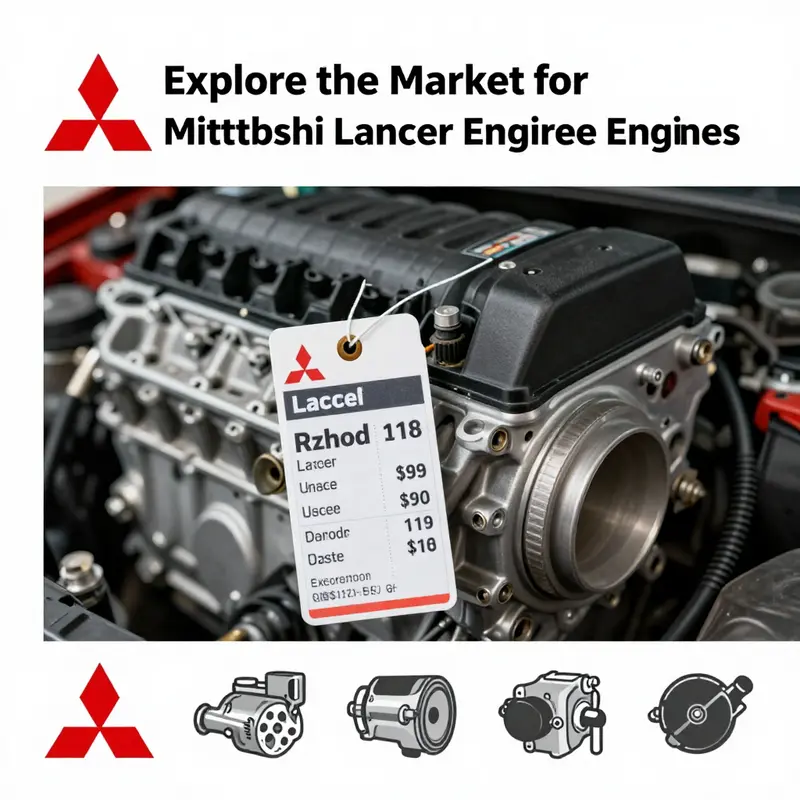
Seeking a Mitsubishi Lancer Evolution engine for sale places a buyer in a specialized market where engineering romance meets practical realities. Enthusiasts arrive with track memories and a plan to resurrect a project car, yet they must navigate provenance, condition, and price in a market where engines are highly sought after and potentially risky. The Evo X 4B11T engine assembly for model years 2008 through 2015, described as long block and tested with mileage around 106,000 kilometers, offers a concrete snapshot of the asset a buyer might encounter. The listing notes the engine was described as Good Tested but does not publish a price, a detail that reveals how price often moves with demand and perceived quality. This absence reflects the broader Evo engine market, where the core value is tied to the engine family, the specific generation, and the likelihood that the unit can form a reliable basis for a build rather than a turnkey swap.
Beyond the Evo X, the market also includes collectibles and scale models that illustrate the Lancer Evolution identity beyond functional cores. For example, a 1:18 scale model reproduces the Evo IV engine and may be priced in local currency, but it is strictly display and not a usable powertrain. This distinction helps buyers calibrate expectations about what a real engine sale can deliver and what kind of investment is needed to complete a project.
The core market reality centers on how price and condition intersect with generation, configuration, and origin. The Evo X 4B11T long block belongs to a lineage that combines a compact turbo four with modern architecture, designed to deliver performance in a contemporary package. These engines attract swaps and restorations because they can deliver meaningful performance when paired with the right turbo, tune, and drivetrain integration. Yet the value proposition depends on model compatibility, mechanical integrity, and total lifecycle cost. A long block provides the engine block and essential rotating assembly but often excludes turbo, exhaust piping, intake manifolds, sensors, and engine management. When a listing does not publish price, the final cost will likely include shipping, potential duties, taxes, and the costs of additional parts needed for a complete install.
To navigate pricing, buyers should anchor expectations around practical realities. Model generation matters because Evo X engines have different footprints and compatibility than earlier generations. Condition is both technical and historical. A mileage figure around 106,000 kilometers suggests moderate wear, but questions remain: has the engine overheated, what is the maintenance history, and is there evidence of prior component damage? Has compression or leak-down testing been performed? Inquiries help quantify risk when the price is unknown. Inclusions and exclusions also affect value. If the long block is missing turbo, piping, intake, or ECU, the buyer must weigh the additional costs and potential fitment challenges. Each missing item can add delays and compatibility risks to a rebuild timeline.
Under the Hood: 4B11T Specifications and What They Mean When Buying an Evo Engine
Technical profile and buying guidance
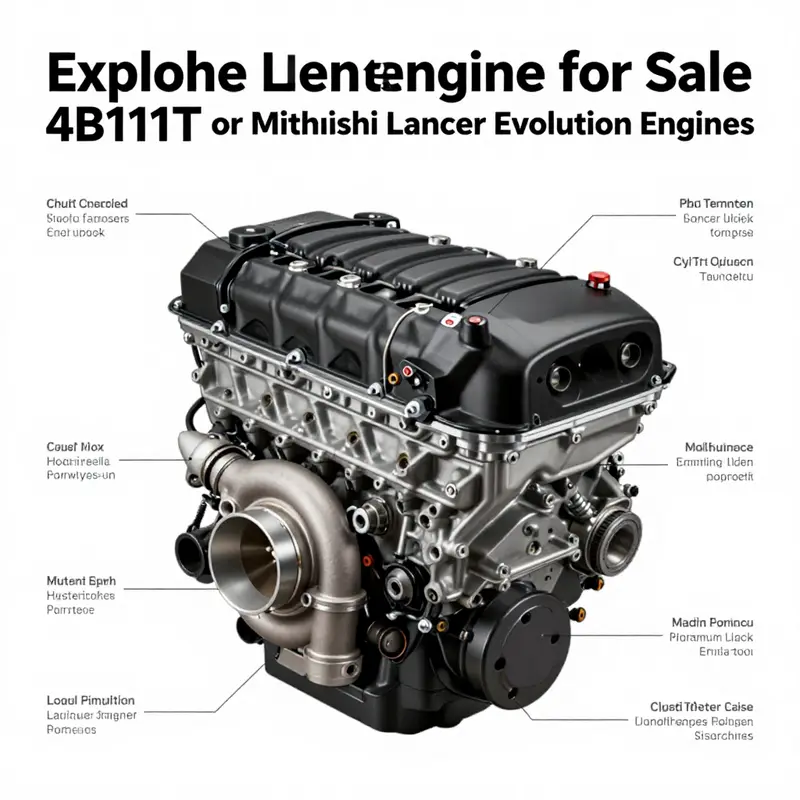
The 4B11T is the turbocharged, all-aluminum four-cylinder that powers the tenth-generation performance sedan. Its core engineering is a departure from the older, iron-block designs that defined earlier iterations. The basic numbers are compact and purposeful: 1,998 cc displacement, an inline-four layout, and a square bore and stroke of 86 mm by 86 mm. That geometry promotes a balanced mix of midrange torque and willing revving, and it helps explain why peak torque arrives early in the rev band.
Compression sits at 9:1, a conservative ratio for a turbocharged engine. That figure reflects an intention to handle forced induction reliability and to accommodate high-octane fuel safely. The factory specification calls for 97-octane gasoline to sustain performance under load. Running lower octane raises detonation risk and will limit safe tuning scope without changes to timing and fueling.
Power and torque figures underline the engine’s dual personality. It produces 295 horsepower at 6,000 rpm, and 366 Nm of torque at 3,500 rpm. Those numbers are meaningful on the street and track. The broad torque plateau is partly thanks to turbocharging and partly due to the engine’s valvetrain design: a dual continuous variable valve timing system. Dual MIVEC adjusts intake and exhaust timing throughout the rev range. The result is stronger low-end response and efficient breathing at higher rpm. The redline is 6,500 rpm, a practical ceiling that balances durability with usable power.
A major design decision was weight reduction. Both block and cylinder head use aluminum, shaving roughly 20 kilograms compared with older, heavier cast-iron alternatives. That weight savings improves vehicle balance and handling. It also reduces unsprung and rotational mass indirectly, which is welcome when every kilogram affects cornering and throttle response.
Valve architecture is DOHC with four valves per cylinder. The four-valve layout, combined with precise MIVEC control, supports efficient intake and exhaust flow. That helps the 4B11T deliver a broad torque curve while remaining responsive to tuning and intake/exhaust upgrades.
Long-term durability features include a silent timing chain. Unlike belt-driven engines that require regular replacement, a timing chain promises lower maintenance when properly maintained. However, chains rely on tensioners and guides that can wear. Any used engine listing should be evaluated for chain tensioner condition and for metal shavings in the oil, which can indicate premature wear.
Emissions compliance is to Euro IV standards, reflecting the era’s regulatory environment. Emissions hardware such as catalytic converters, oxygen sensors, and associated plumbing are integral to a used engine’s completeness. When buying a replacement engine, confirm those components are present and functional if the vehicle will be registered in regulated regions.
For buyers evaluating a listed engine, mileage and test history matter. A tested assembly with 106,000 kilometers is a viable candidate, but it requires careful inspection. Request evidence of compression or leak-down tests. Check oil condition and look for metallic particulates. Inspect coolant color and level for signs of head gasket failure. Examine turbocharger play by spinning the compressor wheel and feeling for shaft movement. Listen for bearing noise. Ask whether the turbo was replaced or rebuilt. A turbo failure is a common wear point on forced-induction engines and can introduce debris into the intake and oil systems.
Look for external leaks at the oil pan, valve cover, and timing cover. Inspect for coolant leaks at the head gasket, thermostat housing, and water pump. If possible, view a cold-start video to observe smoke or unusual noises. White smoke on startup suggests coolant burning. Blue smoke indicates oil consumption. Heavy black smoke hints at fuel system problems.
The fuel requirement and octane sensitivity mean fueling hardware is important. Confirm that injectors and fuel rails are intact and that the engine’s fuel pressure regulator functions. High-performance engines benefit from robust fuel delivery when tuned. If the buyer anticipates power upgrades, plan for higher-flow fueling and an ECU retune. The factory ECU maps are conservative to meet emissions and reliability targets.
The 4B11T replaced the long-serving earlier turbo four and carries different failure modes. Under heavy modification, the stock connecting rods and pistons may not tolerate very high boost without reinforcement. Enthusiasts looking for big power often pursue strengthening options. One solution is a billet or aftermarket block designed to handle increased cylinder pressures and detonation resilience. For buyers planning performance builds, consider the availability and cost of such upgrades.
Beyond internal strength, cooling matters. The 4B11T benefits from a robust intercooler and effective coolant routing. When inspecting a used engine, verify the intercooler plumbing and charge piping. Cracked silicone couplers, missing clamps, or damaged intercoolers are common and impact performance and drivability. A pressure test of the cooling system can expose hidden leaks and thermostat or water pump weakness.
The drivetrain interface is another point of focus. The 4B11T is paired with specific transmissions and differential arrangements in its original application. If you’re buying an engine as a replacement, confirm compatibility with the vehicle’s transmission and AWD components. Mounting points and sensor connectors may differ across trim levels and markets. In some cases, a donor harness, ECU, or mating electronics are necessary for plug-and-play operation.
From a tuning perspective, the 4B11T is receptive to bolt-ons and software adjustments. Common gains come from intake, exhaust, intercooler, and a remapped engine control strategy. However, major power increases almost always require hardware changes. Upgraded turbos, forged internals, and strengthened blocks are typical steps for builds over 400 horsepower. The design supports staged upgrades, but each step requires supporting systems: fuel, cooling, drivetrain, and engine management.
Service history profoundly influences a used engine’s value. Regular oil changes with high-quality oil, documented maintenance, and gentle driving habits increase lifespan. Engines subjected to race conditions, sustained high boost, or neglected oil service carry more risk. Ask for maintenance records. If the seller cannot provide them, be prepared to factor in a conservative budget for potential repairs.
Common weak points to investigate include oil leaks from cam cover gaskets, vacuum lines, and the turbo oil feed and return. The turbocharger’s oil seals can wear and allow oil into the intake. Inspect for oil in the intercooler and piping. Also, examine the PCV system and crankcase ventilation, as clogged passages can raise oil consumption and deposit buildup.
A detailed checklist for evaluating any 4B11T listing should include: compression numbers per cylinder, turbo shaft and compressor wheel condition, oil and coolant analysis, visible external leaks, completeness of wiring, presence of sensors and actuators, and the condition of mount points. If possible, request a video of the engine running under load, or insist on an in-person inspection by a trusted mechanic. If purchasing from an online marketplace, confirm return policies and guarantee terms where available.
For those considering swaps or rebuilds, aftermarket support has matured. Options range from balanced rotating assemblies and forged pistons to full billet-block conversions. If long-term reliability and high output are goals, stepping up to a billet block eliminates many of the stock block’s limitations. Learn the marketplace for parts and estimate labor and parts costs before committing to a purchase.
Finally, consider the broader package. An engine assembly alone may not include ancillary components like the turbo piping, intercooler, ECU, wiring harness, or transmission. A complete half-cut or donor assembly simplifies installation but typically costs more. If the listing is for a tested engine with known mileage, ask exactly what is included. A complete kit reduces uncertainty and integration work.
The 4B11T represents a modern approach to a high-performance four-cylinder. Its engineering choices — square bore and stroke, DOHC with variable valve timing, an all-aluminum layout, and a quiet timing chain — prioritize balance, efficiency, and usable power. Those features make it a strong candidate as a replacement or a foundation for a build. Still, careful inspection, knowledge of required supporting components, and a plan for service or upgrades are essential when buying a used unit. For buyers who plan upgrades beyond modest bolt-ons, factor in reinforcing options such as a billet block to protect the investment and unlock greater performance potential. For further technical reference, see this external specification summary: https://www.caranddriver.com/mitsubishi/lancer-evolution/specs
For a supplier option focused on reinforced blocks and heavy-duty upgrades, see the 4B11T billet block offering here: 4B11T billet block.
Under the Hood: Navigating Sources and Platforms for the Mitsubishi Lancer Evolution Engine
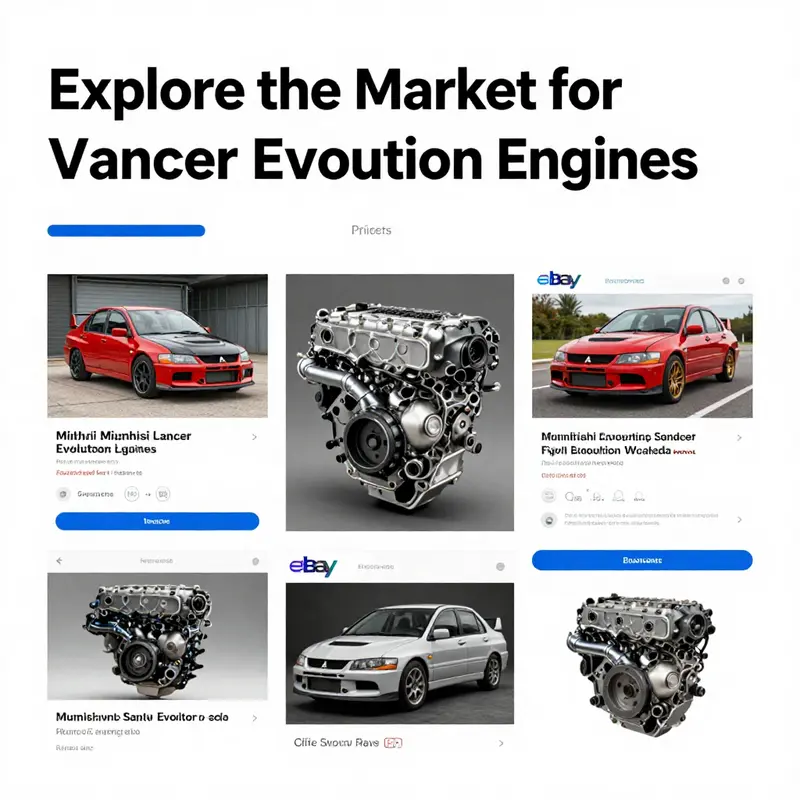
The Mitsubishi Lancer Evolution is more than a rally-inspired sedan; it is a mechanical emphasis on precision engineering, where the heartbeat of the car rests in its turbocharged powerplant. For the Evo, two engines have defined the series across different generations: the legendary 4G63T in the earlier Evo I through IX and the later 4B11T powering the Evo X. When a project calls for a swap, rebuild, or restoration, enthusiasts often turn to a simple truth: the right engine in the right condition is the difference between a dream and a costly lesson. The market for a complete engine, especially the 4B11T that underpins the Evo X from 2008 to 2015, reflects a global appetite for high-performance Japanese powerplants. Buyers look for clean cores or fully tested assemblies with mileage that aligns with their budget and project timeline. A listing described as a 2008–2015 Mitsubishi Lancer Evo X 4B11T engine assembly, tested and driven with mileage around 106,000 kilometers, illustrates a real snapshot of that demand. It also hints at a broader, more dynamic marketplace where the Evo engine can live beyond the car it originally powered. The engine’s value is not merely in its cylinders and turbo; it is in the history, documentation, and the potential for reliable performance after installation and break-in.
From a high-level perspective, buyers today navigate a triangle of sources: large consumer marketplaces, wholesale platforms, and dedicated automotive-part channels. Each has its own set of strengths and caveats. The biggest, most visible arena for used Evo engines is a mass-market site that hosts a spectrum of sellers—from private owners to shops that recondition engines and offer verified test results. The appeal is straightforward: you can spot a range of 4B11Ts that claim OEM authenticity, sometimes with mileage disclosures and occasional proof of running condition. The challenge, however, is the variance in seller reliability, shipping logistics, and the authenticity of the components included. You may encounter complete assemblies described with turbochargers, intake systems, and harnesses, or you may encounter shorter blocks that require additional parts to become a drop-in installation. In this environment, careful verification becomes a form of due diligence, an essential partner to the online shopping experience.
Beyond consumer marketplaces, wholesale and sourcing platforms broaden the horizon for buyers who are outfitting multiple builds or who want to secure a stock of Evo powerplants for a shop inventory. Alibaba-style platforms, known for bulk sourcing, present opportunities to acquire engines in larger quantities or to negotiate bundled arrangements that pair powerplants with performance accessories, from upgraded fuel systems to tuned exhaust options. For a single buyer seeking a one-off engine, these platforms can feel like a different business proposition—one that emphasizes logistics, supplier credibility, and import/export considerations. The emphasis often shifts away from individual transaction risk to supply chain reliability. For a project, that can be a meaningful difference when a shop-based build calendar depends on the arrival timing of engine blocks, gaskets, and turbo hardware.
The broader cultural and market context around these engines also reveals that the Evo’s legacy extends beyond pure performance. It has fostered a community of builders who value OEM-era powerplants for authenticity, as well as tuners who pursue high-horsepower upgrades that push the 4B11T’s potential. In that sense, sources for purchase are not just about the number of cylinders and the turbocharger; they are about the chance to honor a lineage of tuning while mitigating risk through verifiable history. For Evo X powerplants, the 4B11T matters because it represents a modern, compact four-cylinder turbocharged heart that requires careful compatibility checks with the rest of the car’s systems, especially in modes of all-wheel drive and the engine-management setup. Understanding this helps buyers align expectations with the realities of engine swaps, bolting supports, and tuning scenarios that may follow the purchase.
If the case study of a listed Evo X engine is any guide, the market’s elasticity becomes apparent when you combine a historically strong platform with modern shipping and verification practices. A describing feature of the Evo engine market is the balance between “as-is” condition and the involved steps to ensure the engine will function reliably once installed. The 4B11T’s architecture—an inline four with a turbo and a modern valvetrain—means that a buyer’s due diligence should move beyond the number on the block. It should include validation of engine code, casting marks, and the presence of critical components such as the turbocharger, intake and exhaust manifolds, and the engine harness. This attention to detail helps a buyer avoid scenarios where a seemingly complete engine turns out to be missing essential parts or requires more rewiring than anticipated.
One practical approach to navigating these listings is to map the engine’s intended use. For a restoration project that seeks authenticity, a complete OEM-like assembly with verified mileage and confirmed testing can be compelling. For a performance-oriented build, a verified, running engine—paired with documentation of prior maintenance and a clean bill of health—becomes even more valuable when pairings with upgraded components, such as upgraded intercoolers, intake systems, or fuel-management hardware, are contemplated. In both cases, the decision to purchase hinges on more than the engine’s status; it hinges on the buyer’s ability to validate the asset against the project’s technical requirements.
From the standpoint of sourcing, the Evo engine market also invites buyers to consider the internal life of the engine and its potential paths forward. A complete assembly is only the starting point. If the project calls for enhanced reliability, the buyer might explore upgrade paths that include stronger internals, improved cooling, and reinforced rotating assemblies. The conversation around performance upgrades leads naturally to a practical detail that many builders weigh: the value of a billet-block option for modern 4B11T builds. A focal point for enthusiasts exploring this path is a dedicated component commonly discussed among Evo builders as a performance upgrade that can improve durability under higher power demands. For those curious about the specifics, one can refer to a detailed overview of the 4B11T billet-block option, which represents a tangible path for extending the engine’s life under stress. This is not a generic claim, but a pointer to a technical option that some builders consider when planning long-term reliability in a tuned Evo X setup. 4B11T billet block
As buyers scan platforms, another practical layer emerges: the role of documentation and post-sale support. In high-demand markets for specialized engines, sellers who provide robust provenance—serial numbers, service histories, compression test results, and proof of running condition—reduce risk and shorten the path from purchase to install. Whether you are pursuing a stock rebuild or a carefully staged upgrade, these elements matter. Reputable listings often accompany a narrative of the engine’s history, with notes about whether the unit was sourced from a vehicle that lived in a temperate climate, how long it has sat in storage, and whether any non-original components were swapped in for repair or upgrade. Buyers, in turn, should request the same kind of documentation they would expect for any major mechanical component: clear photos, close-ups of identification marks, and a candid description of the engine’s current state. In some markets, sellers also provide performance attestations or third-party verification that the engine was tested prior to listing. While such claims require verification, they nonetheless contribute to a more transparent marketplace and promote informed decision-making.
What does this mean in practice for someone who is contemplating a purchase? It means building a checklist that respects both the Evo X’s technical reality and the realities of online purchasing. Start with engine code verification. The 4B11T belongs to a modern family of four-cylinder turbo powerplants designed for a compact, all-wheel-drive chassis. Confirm that the block and head match the Evo X configuration you intend to restore or modify, and check that the listed components align with your installation plan. If you intend a plug-and-play setup with the factory ECU and transmission, you must assess the compatibility of the engine with the vehicle’s wiring harness and sensors. If you expect to run aftermarket engine-management software, be prepared for the wiring, harness, and calibration work that must accompany the engine install. The next step is to inspect the physical state. Look for signs of corrosion, oil leaks, and evidence of head-gasket replacement or turbo-failure repairs. If the engine is advertised as “tested,” ask for the test method: Was it cold-started? Was it run under load? Were temperature and oil-pressure data captured? The absence of such data can be a red flag, even if the engine appears visually clean. The third pillar is mileage and service history. In a performance context, lower mileage is often appealing, but the engine’s service life is equally if not more important than the number on the odometer. A well-documented maintenance history, including timing belt or chain service, head-gasket work, and turbo maintenance, helps buyers forecast the maintenance cadence after installation. Finally, shipping and handling deserve careful planning. Engine blocks are heavy, and the Evo X’s packaging varies by region. If you are purchasing from overseas or through a wholesale channel, understand the freight terms, the risk of damage in transit, and whether the seller offers transport insurance or door-to-door delivery. A thoughtful plan for receiving, inspecting, and storing the engine upon arrival will save time and avoid surprises when you roll the engine into a counter or into a shop bay.
Throughout this exploration, the role of community knowledge cannot be overstated. The Evo engine market is a living ecosystem where builders share experiences about installing, tuning, and maintaining these powerplants. While the marketplace is global, the wisdom of local shops and experienced mechanics remains invaluable. They help translate a listing’s claims into practical expectations and operational realities. A legitimate shop, familiar with Evo engines, can assist with pre-purchase inspections, compression testing, and a preliminary teardown assessment if the buyer wants additional assurance before committing. In the end, the engine is a platform for performance dreams, but it is also a technical asset that demands respect for its history, its mechanics, and the road it will travel once it leaves its crate.
For readers who want to see a concrete example of the market in action, a current listing on a major marketplace offers a snapshot of what buyers encounter: a 2008–2015 Evo X 4B11T engine assembly, described as OEM, tested, and with a mileage figure in the realm of tens of thousands of kilometers. This kind of listing demonstrates both the market’s reach and its variability. It underscores the need for due diligence, a clear understanding of what you are buying, and the willingness to engage with sellers who can provide credible documentation and verifiable test results. The engine’s journey—from a factory-tue powerplant to a donor for another project, to possibly a rebuilt core that powers a new build—rests on the buyer’s ability to navigate platforms with care and to align expectations with technical feasibility.
As the chapter moves toward the next stage of the article, the reader is reminded that the search for a Mitsubishi Lancer Evolution engine is not a simple impulse purchase. It is a careful calculation that weighs platform reliability, engine code compatibility, and the practical steps required to integrate a used or rebuilt unit into a modern performance build. The choice of platform—whether a broad marketplace, a wholesale hub, or a specialized automotive channel—will shape the buying experience. And as always, the path from listing to engine cradle is paved with documentation, inspection, and a clear plan for installation.
External resource: https://www.ebay.com/itm/2008-2015-mitsubishi-lancer-evo-x-ralliart-engine-2-0l-4-cyl-turbo-4b11-jdm-51k/374594369895?hash=item574a6f6c17
Final thoughts
The Mitsubishi Lancer Evolution remains an iconic performance vehicle, and understanding the market for its 4B11T engine assembly is critical for businesses in the automotive sector. The insights shared reveal the abundance of availability, market pricing, technical details, and sourcing avenues essential for successful procurement. Whether you are sourcing for your customers or developing a garage inventory, this knowledge positions your business favorably in a competitive market. Don’t miss out on the opportunity to cater to a dedicated community of performance enthusiasts.