

The front lighting system of the Mitsubishi Lancer plays a pivotal role in ensuring safety and enhancing the driving experience. As a business owner in the automotive sector, understanding the different types of headlights available for the Lancer – halogen, HID, and LED – is essential. Each type brings unique advantages and compatibility factors. This article will delve into each technology, evaluating their applications, compatibility with Lancer models, advantages of LED upgrades, and the market trends shaping these choices for consumers and professionals alike.
为什么许多蓝瑟仍在用卤素:成本、局限与可行升级路线
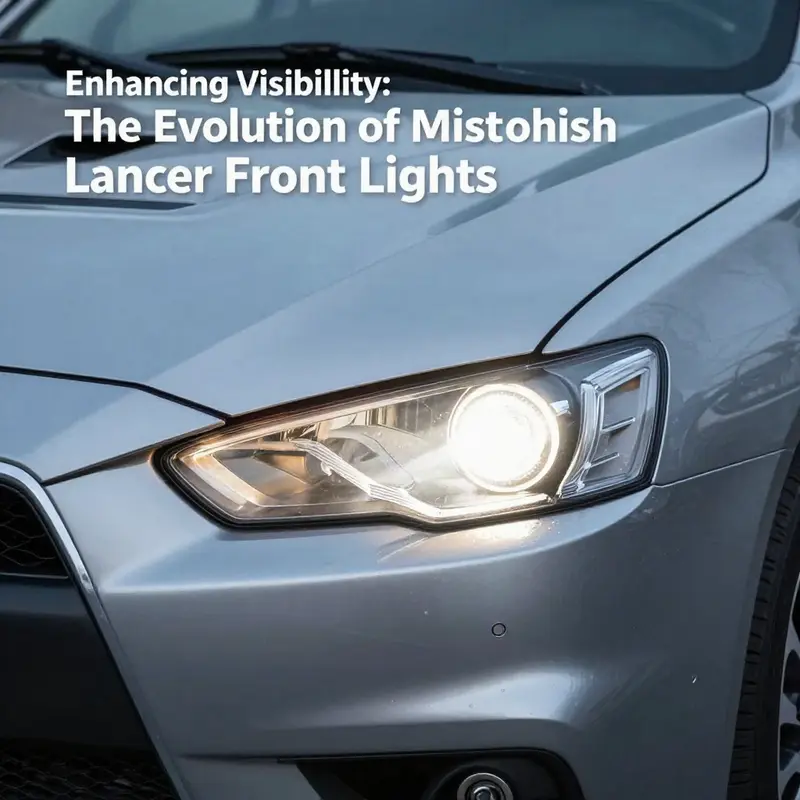
卤素灯在三菱蓝瑟前大灯中的现实应用与取舍
卤素灯曾经是最普遍的汽车前照明解决方案。在众多三菱蓝瑟车型中,尤其是基础与中低配版本,卤素灯长期承担着近光和远光的基础任务。它们的存在并非偶然,而是在成本、维修便利性与设计兼容性之间达成的一种均衡。了解卤素灯在蓝瑟上的实际表现,有助于判断是否需要升级,如何升级,以及在改装时应优先注意哪些细节。
在机械与电气结构上,卤素灯遵循简单直接的工作原理。通过灯丝通电加热,点亮包裹在卤素气体中的玻璃泡。相较于氙气或 LED,这种方式设备轻、制造成本低,且不需要复杂的电子镇流器或专用驱动电源。因此,厂商在为目标价格敏感的车型配备时,往往优先选择卤素方案。对于典型的蓝瑟用户来说,这带来了两类直接好处:初始购车成本更低和日常维护更为直观。更换卤素灯泡在大多数情况下只需拧出旧灯泡,插入新灯泡即可,无须额外编程或配电改造。
不过,卤素灯的技术缺陷也十分明显。亮度和颜色是两个最直观的短板。标准卤素灯的色温大多落在黄色到暖白之间,通常约为3000K到3500K。这种偏暖的光在视觉对比上不如接近自然光的白色光好,尤其是在识别远处物体和路面细节时。亮度方面,卤素灯的光通量有限,常见近光灯泡的有效流明远低于同等条件下的氙气或 LED。实际驾驶感受是夜间视距受限,且对侧向障碍物和标志的识别时间变长。
热量与效率问题也不容忽视。卤素灯将大量电能转化为热能,这不仅降低了光效,也对灯罩和灯体材料提出了更高要求。长期高温会导致塑料透镜泛黄、密封圈老化,从而引起透光率下降和灯腔进水、起雾等问题。这一点在使用多年或经常在潮湿环境下行驶的车辆上尤为明显。对于蓝瑟车主而言,这意味着即便灯泡本身还能继续发光,整套灯具的有效照明能力也可能因为外部件老化而大幅下降。
寿命方面,卤素灯的工作寿命通常在 500 到 1000 小时之间,受使用状况影响显著。频繁的启停、强烈振动或电压波动都会缩短寿命。相比之下,氙气与 LED 在寿命和稳定性上有明显优势,这也是许多车主在改装或升级时首选这些光源的原因。卤素灯的寿命短意味着长期维护成本并非绝对低廉,尤其是在夜间行驶频繁的情况下,更换频率会增加,总开销可能接近一次性升级方案的成本。
照射形态是另一个重要考量点。多数原厂卤素灯使用反射式灯杯设计,这种结构在成本与制造复杂度上有利,但对光线控制不够精细。光束往往较为分散,近光切线不够清晰。在雨、雾等不良天气条件下,黄光与高散射性会加剧眩光和反射,降低驾驶可视性。有车主形容原车卤素灯“夜间效果很糟”,甚至影响安全驾驶,这并非夸张,而是对现实问题的直观反映。
面对这些局限,许多蓝瑟车主会权衡几种常见的改进路径。第一类是选用更高级别的卤素灯泡,如标称“高亮”或“高输出”的型号。这类灯泡通过改良灯丝设计或使用更强的填充气体,能够在不更换整套灯具的前提下提高数十个百分点的亮度。优点是成本低,安装简单,但缺点也明显:更高的热量和电流需求可能缩短灯具寿命,且提升有限,远不及氙气或 LED 的效果。
第二类升级是将反射式卤素灯替换为带透镜的投影式灯组,并配合更亮的光源。项目式透镜能更好地聚焦光束,形成更清晰的切线,从而减少对迎面车辆的眩光。经典的做法是在原车灯壳内安装欧标透镜,并搭配色温在 4300K 左右的光源,以兼顾可视性与合规性。对蓝瑟而言,这类改装能显著改善近光表现,夜间行车更为安心。但施工对技术要求较高,需保证透镜安装位置与角度精准,确保光束落在规定区域内,否则容易造成对向驾驶员眩目并违反法规。
第三类则是直接改装为 LED 或氙气(HID)系统。氙气能提供更白且更亮的光,LED 则在响应速度、能耗和寿命上占优。两者的改装效果明显优于卤素,但涉及更多电气兼容问题。氙气需要稳定高压镇流器,LED 则可能需要 CANbus 适配或负载电阻来避免错误警示。若仅将氙气或 LED 灯泡插入原反射式灯杯,光型往往会混乱,导致散射和眩光,效果和合规性都无法保证。因此进行这类升级时,应同时更换为配套的投影透镜或专用灯组,以保证光束形状合规。
日常维护方面,卤素灯的一个优点是检修简单。更换灯泡、检查电路连接、清洁或更换密封圈都可在家用工具下完成。然而,要保持最佳照明,车主还应定期检查灯罩透明度与灯具对准度。灯罩的轻微泛黄就会显著削弱输出光量。市面上常见的抛光套件可在短期内恢复透镜透明度,但若塑料老化严重,抛光仅是权宜之计,最好还是更换灯具总成。
合规性是另一个不容忽视的维度。许多地区对车灯的色温、光强和光束位置有严格规定。即便某些高亮卤素或改装套件在视觉上提升明显,超出法律规定的色温或产生强烈眩光,都会在年检中造成问题,甚至被交警认定为不合格改装。因此在做出改动前,务必确认所选方案符合法规,或者选择易于恢复原厂配置的改装方式。
在成本与效益之间做出选择,需要考虑个人驾驶习惯与主要行驶场景。如果用户以城市通勤为主,夜间驾驶里程短且路况良好,原厂卤素灯仍可胜任,保养到位即可。如果经常在郊区或高速夜间行驶,视距和识别时间成为关键,投资透镜式改装或直接升级为合规的高亮光源更为合理。从长远来看,改装虽然一次性花费较高,但提升的安全性和疲劳降低具有明确价值。
建议的实际步骤应包括:首先确认当前灯泡型号(例如部分车型使用 9006 型近光)。其次评估灯具外观与透镜状态,若镜片泛黄应先处理或更换。再者决定升级路径:若预算有限,优先尝试认证的高输出卤素灯泡;若预算与合规性允许,可选择投影透镜配套的光源升级。任何涉及氙气或 LED 的改装,都应同步处理灯罩对准与遮光片,避免产生对向眩光。
在安装细节上要注意电气连接的稳固与密封处理。卤素灯更换时要避免直接用手触摸灯泡玻璃面,因为油脂会导致热点,缩短灯泡寿命。灯腔的密封圈若老化,应一并更换。升级到需要驱动器的光源时,应在电路中加装合格的稳压与滤波装置,防止电压波动引发闪烁或损坏电子元件。
最后,改装前应为自己设定明确目标:是否只求更亮,还是同时追求更佳的光型与合规性。合理的升级会以安全为首要目标,兼顾外观与成本效益。对于希望参考现成方案的车主,可以查阅特定车型的灯具替换或改装清单。例如,有专门针对 2007–2017 年款的灯组设计及样式可供参考,便于理解改装后实际效果。headlights-for-lancer-evo-x-2007-2017-audi-design-version-2
如果需要购买替换件或改装套件,常见的线上平台可提供多样选项与价格对比。选择时应优先考虑配件的兼容性与卖家对产品的详细说明,避免仅凭图片下单。更多信息与零件可在常用二级市场检索。https://www.ebay.com
HID Headlight Technology and Mitsubishi Lancer: Compatibility, Safety, and Upgrade Paths
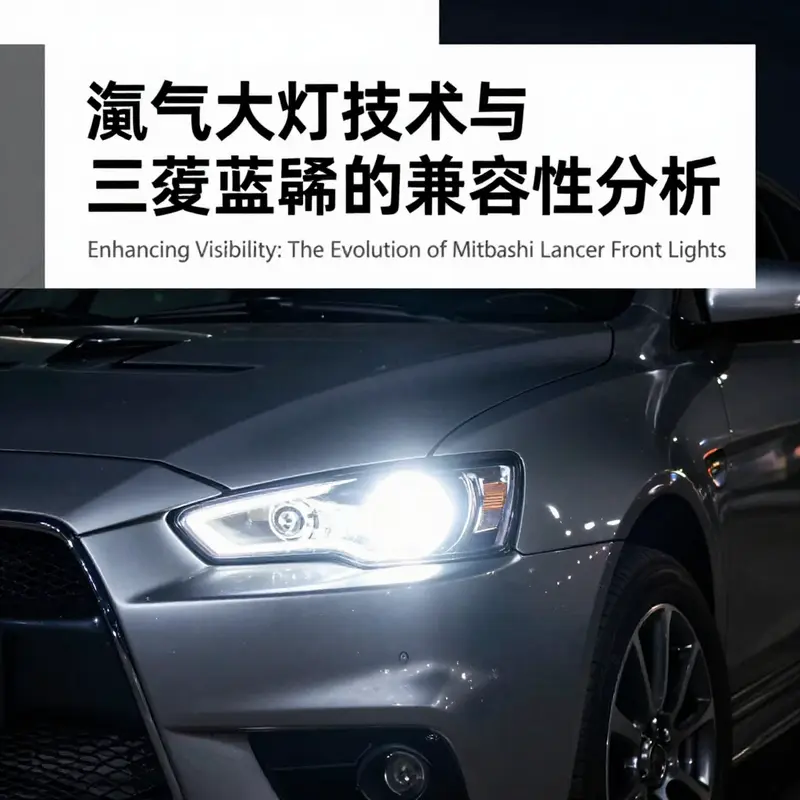
The front light of a car is more than a functional device; it is a statement about how a vehicle perceives the road and protects its occupants after dark. In the Mitsubishi Lancer, the evolution of headlight technology mirrors the broader shifts in automotive illumination. Across generations, the Lancer has transitioned from the simplicity of halogen lamps to the promise of higher-intensity discharge systems and, more recently, to LED configurations that emphasize efficiency, precision, and long life. Yet, within the Lancer’s lighting history there is a fundamental tension: what works on paper in a laboratory or showroom may not naturally align with the vehicle’s original electrical architecture, its optical design, or the legal framework that governs road use. That tension becomes most evident when considering an upgrade to xenon, or HID, lighting on a model that did not originally come with it. The question then is not merely could HID be installed, but should it be, given the vehicle’s design, electronics, and the responsibilities that come with brighter, crisper nighttime visibility. In this context, the compatibility analysis moves beyond a mechanical fit and becomes an inquiry into optics, electronics, and safety, all anchored by the reality of the Lancer’s particular headlight housing and control modules.
From a historical perspective, halogen headlights were the baseline for many early Lancer trims. They offered a straightforward, cost-conscious solution that matched the needs of everyday driving. The trade-off, of course, was an optical beam that was less controlled and a color temperature that leaned toward yellowish tones. The progression to HID, where available, brought a notable jump in luminance and color temperature, yielding a beam that resembled natural daylight more closely. The white, high-intensity light improved the driver’s ability to discern road texture, signs, and potential hazards at greater distances. But the benefits of HID come with a set of mechanical and electrical requirements that are not automatically satisfied by the stock Lancer architecture. The fact remains that there is no clear evidence of factory HID as a standard or widely supported option across most non-Evolution Lancer configurations. Nonetheless, the technology is technically retrofitable, which has made the topic a frequent point of discussion among enthusiasts who want to preserve or enhance visibility while maintaining a coherent electrical system.
The core compatibility challenges can be understood as a triad that cuts across optics, power electronics, and vehicle signaling. First, the lighting optics demand a precise interaction between the lamp’s projector or reflector geometry and the lens system that shapes the emitted light. Xenon lamps inherently produce bright, high-intensity arcs that can saturate a reflector designed for halogen light if the optical interface is not carefully engineered. In practical terms, many Lancer headlight housings rely on a reflector bowl design that is not optimized for the narrow, highly collimated beam pattern generated by HID projectors. Without a properly matched projector lens, HID installations run the risk of severe glare for oncoming drivers, and that glare is not merely inconvenient: it can contravene safety regulations and invite liability in the event of an accident. The second element concerns the ballast and ignition system. HID systems require a ballast to regulate the high voltage needed to strike the arc, typically far beyond the vehicle’s standard 12-volt supply. If a retrofit does not pair the lamp with a ballast that matches the vehicle’s electrical characteristics, the system may trigger fuse blows, alternator load issues, or intermittent operation. It may also clash with the car’s power management and CAN bus-based feedback loops, which monitor bulb status and can illuminate warning lights if a lamp is not communicating its status correctly. The third area of concern involves the lamp control and drive logic that modern Lancers may employ. Automatic headlights, adaptive lighting, and steering-linked lighting functions rely on a network of sensors and control signals that assume certain lamp behavior. A retrofit HID kit must be integrated in a way that preserves or faithfully emulates these signals; otherwise, automatic features can misread the lamp’s status, leading to nuisance warnings or degraded performance.
In terms of safety and regulation, there is a compelling argument for caution. HID lamps emit a larger tunnel of light that, if misaligned, can overwhelm oncoming traffic and create dangerous glare. The very reason optical designers lean toward projector-based HID solutions is to control that glare while preserving illumination efficiency. If a retrofit is done hastily, the resulting beam pattern may exceed legal limits for brightness and angular distribution. The risk is not only a driver’s discomfort but also a potential legal consequence, as many jurisdictions require a documented, regulated approach to headlight upgrades. The GB7258 standard in some regions, for instance, imposes strict requirements on front lighting performance, including the consistency of the light’s projection on the road surface and its failure modes. The retrofit decision thus involves a balancing act: the pursuit of greater visibility must be weighed against the imperative to avoid causing distraction or danger to other road users.
Given these considerations, what then constitutes a prudent path forward for a Lancer owner eyeing HID potential? The practical approach begins with acknowledging that a seamless, factory-aligned HID experience is rarely achieved by piecing together off-the-shelf components sourced from disparate vendors. The most reliable route is to opt for a purpose-designed retrofit kit or a replacement unit that is expressly engineered to work with a particular headlight housing and vehicle electrical architecture. In a best-case scenario, such a kit would couple an appropriate projector lens, a ballast that mirrors the vehicle’s electrical behavior, and a wiring harness that communicates correctly with the car’s control modules, all tested to ensure compliance with relevant lighting standards. When a retrofit is pursued, professional installation becomes not a luxury but a necessity. The alignment process is precise and exacting: the headlight assembly must be adjusted for height and aim, the beam pattern must be tuned to avoid glare while preserving ample forward visibility, and the electrical connections must be verified to avoid intermittent operation or warning signals. The installation should also consider the potential impact on daytime running lights (DRLs) and other light functions, to ensure a cohesive light signature that remains compliant with local regulations.
As an interpretive note, the path of least risk for the conscientious owner may be to consider alternatives that preserve the Lancer’s design integrity while delivering improved night visibility. LED headlights have become a compelling alternative to HID, offering rapid response times, high efficiency, and long life with a lower risk of high-voltage startup complications. LED retrofits for the Lancer can exploit projector-style optics to achieve a light distribution that closely resembles the controlled HID beam, while delivering similar or better performance with a simpler electrical interface. This is not just about brightness; it is about beam control, color temperature, and consistency across the beam pattern. For owners who value reliability and long-term ownership ease, a properly engineered LED upgrade can yield a practical improvement in nighttime visibility without the enduring concerns that can accompany HID retrofits.
For readers seeking a concrete path, one option is to explore a brand-new-original-hid-headlights-for-lancer-evo-8-9 retrofit, which, while not a universal cure, demonstrates the level of design alignment needed for a safe upgrade. This note is not a blanket endorsement of HID over LED; rather, it underscores the central truth: when lighting upgrades are pursued, compatibility between the lamp technology, the optical architecture, and the vehicle’s control systems is the makings of a successful, compliant outcome. In practice, the best strategy for most Lancer owners is to prioritize components that are either OEM-aligned or engineered as a direct replacement, designed to preserve the SRS, safety, and regulatory requirements that vehicles must satisfy.
From a consumer guidance perspective, the market context offers two broad avenues. On one hand, major online marketplaces and automotive parts shops provide a spectrum of options labeled as HID retrofit kits or replacement HID units. Some listings promise “fitment” for the Lancer family, and others emphasize compatibility with particular Evolution variants. The caveat is that fitment claims are only as trustworthy as the testing behind them; buyers should look for evidence of proper beam pattern testing, photometric data, and, ideally, installation guidance that is sensitive to the Lancer’s headlight geometry. On the other hand, a growing number of buyers consider LED headlight assemblies or LED retrofit modules that are specifically designed to preserve optical control within a projector-style or reflector-based housing. The decision often hinges on a balance of cost, risk, and the owner’s tolerance for ongoing maintenance and potential regulatory scrutiny. For the cautious buyer, a retrofit approach that targets a fusion of safety, regulation compliance, and mechanical compatibility will always win out over impulsive upgrades.
As the discussion unfolds, it is essential to keep in view the broader principle that underpins all headlamp upgrades: the goal is to extend visibility without compromising safety. HID technology maps well onto the desire for bright, daylight-like illumination, but without a holistic engineering solution that addresses optics, power, and control systems, the upgrade can become a liability rather than an improvement. The Lancer’s stock architecture—its lens geometry, its reflective surfaces, and its electronic constellation—has been calibrated to a specific standard. Any attempt to deviate must be accompanied by a matching set of components that are explicitly designed to work in harmony with that standard. The responsible approach, therefore, is to treat HID as a carefully scoped modification rather than a casual swap.
In sum, the HID retrofit question for the Mitsubishi Lancer sits at the intersection of optics and electronics, safety and legality, and practical ownership. While the engineering feasibility of converting a non-HID Lancer to HID exists, the execution demands care, precision, and a clear understanding of the vehicle’s electrical ecosystem. The safest and most coherent upgrades tend to be either OEM-aligned replacements that preserve the vehicle’s intended light distribution or modern LED equivalents that deliver comparable performance with fewer high-voltage complications. The driver’s nighttime experience—contrast, depth, and reaction time—depends on this careful alignment. When done properly, the Lancer’s front light can offer a clearer view of the road ahead, with a beam that respects oncoming traffic and keeps the car compliant with applicable standards. When done poorly, the risk is not only glare and poor visibility, but the possibility of liability and legal trouble that undermines the purpose of upgrading in the first place.
External reference for further technical background can be found at https://www.sohu.com/a/649781234_120457 to offer a broader context on halogen, HID, LED, and advanced lighting technologies and their practical implications.
Illuminating the Horizon: LED Upgrades, Front Lighting, and the Market Shift for Mitsubishi Lancer
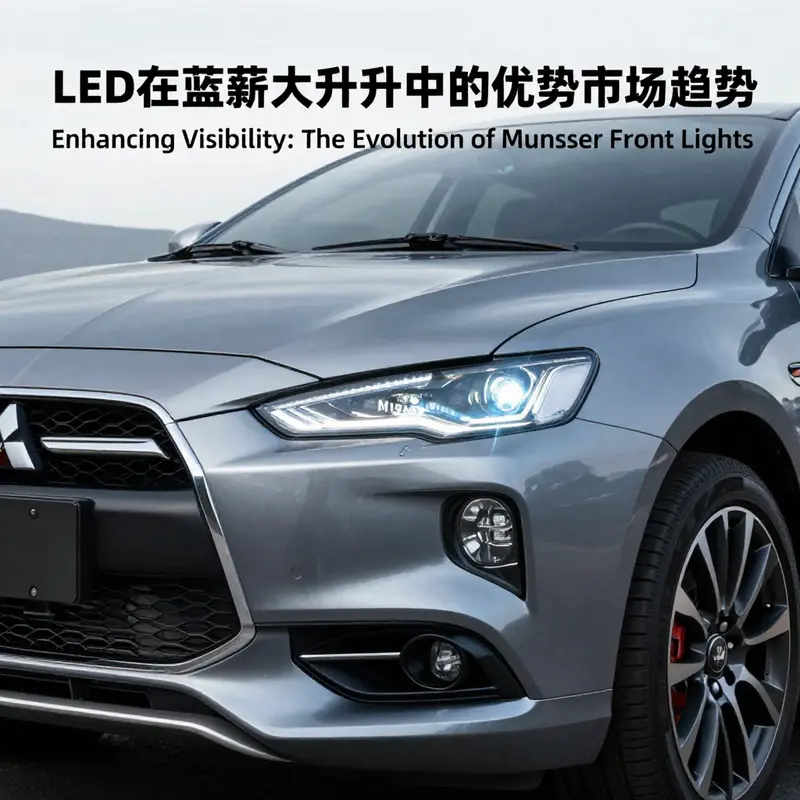
The evolution of the Mitsubishi Lancer’s front lighting mirrors a broader arc in automotive design: from functional incandescent warmth to precise, energy-efficient illumination that shapes not only visibility but the entire driving experience. As the Lancer lineage travelled through its various generations, the headlight itself became a canvas upon which engineering priorities—safety, efficiency, styling, and regulatory compliance—converged. In this context, LED lighting has emerged as the defining upgrade, a transformation that goes beyond mere brightness. It redefines how a driver perceives the road, how a car communicates its intent to others, and how the market responds to an increasingly LED-centric world. The narrative of the Lancer’s front light is thus less a simple feature story and more a case study in how lighting technology alters expectations and decisions across the lifetime of a vehicle model line. It is not merely about bulbs; it is about optics, electrical architecture, and the evolving relationship between a driver and the road ahead.
To appreciate what LED upgrades bring to the Lancer, one needs to revisit the baseline from which many owners depart. Halogen headlights, once standard on entry-level trims and earlier generations, offered a straightforward, cost-conscious solution. They convert electrical energy into light with relative ease, but the price of that simplicity is efficiency and performance. The light produced by halogens tends toward a warmer, yellowish hue, and the overall brightness is modest by today’s standards. Night driving, particularly in challenging weather or rural environments, reveals the limitations of this baseline: reduced range, weaker peripheral vision, and greater fatigue from squinting into glare or uneven illumination. Yet halogens remain a durable option—easy to replace, tolerant of rough roads, and affordable for budget-conscious buyers who rely on consistent, if modest, illumination for daily commutes.
A step up in the Mitsubishi Lancer’s lighting repertoire came with High-Intensity Discharge (HID) headlights. In mid- and higher-end trims, HID systems offered a dramatic leap in brightness and color temperature. The light emitted by HID sources tends to be whiter and more intense, with a spread that can translate into longer sight lines and earlier recognition of obstacles. The practical effect is a night-driving experience that feels safer and more confident. However, HID systems introduce their own complexities: precise electronic ballasts, reliable ignition hardware, careful alignment to prevent glare for oncoming drivers, and higher subtleties in maintenance. If the halogen era was about affordability, the HID era was about performance with an eye toward efficiency and a more premium feel—an aspirational upgrade many owners embraced as the Lancer moved into its mid-life refreshes.
Today, LED headlights are increasingly the defining upgrade for the Lancer front end. The appeal is multi-faceted, and it is not only about brightness. LEDs respond with microsecond immediacy, shaping a beam pattern that can be tightly controlled through lens design, reflex reflectors, and projector configurations. The visual effect is crisp, white light with a more natural color temperature that aligns closely with daylight. For drivers, this means faster recognition of hazards, better edge definition along curbs and lane markings, and more reliable differentiation of pedestrians or cyclists in low-light conditions. The brightness gains cited in many LED upgrade propositions—often threefold over traditional halogen systems—translate to practical benefits: earlier detection of potholes, improved reaction time, and a broader perception of the road’s contours. In specific terms, well-executed LED upgrades can push effective visibility to a range that approaches two to three hundred meters on open roads, with a beam that sweeps more evenly across the front of the car. This expansion of the visible area reduces the likelihood of sudden braking or evasive maneuvers that originate in late-night uncertainty.
The technical advantages of LED upgrades extend beyond raw luminance. LED headlights consume far less power while delivering higher luminous efficacy. Where a typical halogen might demand around 55 watts for a given brightness level, LED assemblies can achieve equivalent or greater brightness with a fraction of the electrical load, often in the 20 to 40-watt range. That reduction in draw is not merely a footnote; it translates into tangible fuel economy considerations and less strain on the vehicle’s electrical system. The longevity of LED modules is another factor shaping the decision to upgrade. With lifespans commonly pegged at tens of thousands of hours, LEDs dramatically outlast halogen lamps and can outpace HID components when considering the total cost of ownership. The practical implication is a lower frequency of maintenance and replacements, particularly appealing for drivers who log long daily commutes or who routinely traverse poorly lit roads where frequent bulb changes would be inconvenient.
But the advantages are not only about durability and efficiency. LED headlights enable more refined optical control. The advent of projector-style lenses, often paired with LED emitters, helps to sculpt a precise cutoff and a sharp transition between lit and dark zones. This precision reduces the risk of blinding oncoming drivers while maintaining a robust forward fill. The result is a more comfortable driving experience for both the Lancer operator and other road users. The improved beam quality also helps in adverse conditions—fog, rain, or snow—by reducing scattered light and maintaining legibility of road edges rather than creating a glare fog that can wash out perception. The overall effect is a more confident driving dynamic, where the driver can anticipate the road surface and potential hazards with less cognitive load.
Of course, upgrading to LED headlights involves more than the lamp element alone. It touches the entire front-end lighting assembly—the housing, the lens, the seal, and the wiring that feeds the system. LED upgrades often come as complete LED headlight assemblies or as plug-and-play modules designed to fit the Lancer’s headlight housing. The integration challenges vary by model year and trim, given the differences in wiring harnesses, CAN bus communications, ballast requirements, and sensor calibrations. A thoughtful upgrade navigates these considerations by choosing components that align with the Lancer’s electrical architecture, ensuring that daytime running lights, adaptive features, and response times remain synchronized with the vehicle’s overall electronic systems. This is not merely a swap of bulbs; it is a measured reengineering of how the front end communicates with the road and with the vehicle’s own brain.
From a market perspective, LED headlights sit at the intersection of safety, aesthetics, and technology adoption. The broader auto industry has embraced LEDs as a standard for new models, driven by the demand for safer, more energy-efficient, and more stylish vehicles. The consumer shift toward LED lighting mirrors a desire for a more sophisticated, modern persona for the car. In the aftermarket, the LED category has grown into a robust ecosystem of designs, with variations in beam patterns, color temperatures, and stylistic cues that allow owners to tailor the look of their Lancer. What emerges is a convergence: the decision to upgrade is increasingly framed by safety and efficiency narratives, but it is also a narrative about personal identity and how a driver wants their car to present itself on the road. Some owners opt for all-LED replacements that maintain the factory look, while others pursue configurations with projector lenses or daytime running light accents that emphasize a contemporary silhouette.
Legal and regulatory considerations remain part of the decision-making calculus. Different jurisdictions regulate the color temperature, brightness intensity, and beam pattern that headlight assemblies may emit. Upgrades need to comply with local standards to avoid issues such as misalignment or glare that could compromise safety or lead to penalties. This regulatory dimension reinforces the practical wisdom of choosing upgrade pathways that emphasize correct aiming, seal integrity, and compatibility with the Lancer’s existing electrical and mechanical framework. It is in these details—the precise alignment, snug fit, and controlled light distribution—that the promise of LED illumination is realized. The best outcomes arise when the upgrade respects both the science of light and the social contract that makes highways safer for all road users.
The narrative of LED headlight adoption in the Lancer also reflects a broader consumer trend: the desire for a seamless, integrated experience. Light sources that connect with the vehicle’s sensors, the vehicle’s safety systems, and even the aesthetic language of the car as a whole contribute to a more cohesive ownership story. The market has responded with options that range from straightforward, performance-oriented LED assemblies to more elaborate, feature-rich designs that incorporate DRLs, improved color rendering, and more advanced heat management. The driving force behind these variations is a simple but powerful insight: better lighting translates into better outcomes on the road. The numbers that circulate in industry analyses—claims that brighter, cleaner light reduces nighttime accident risk—underscore the practical value of upgrading. While the exact percentage improvements may depend on the specific installation, the consensus is clear: better illumination correlates with safer driving behavior and a heightened sense of command behind the wheel.
In weaving these strands together—the technical merits, user experience, and market dynamics—the upgrade decision for Mitsubishi Lancer owners emerges as both practical and aspirational. Practically, LED upgrades deliver measurable gains in brightness, efficiency, longevity, and beam quality. Aspirationally, they align the Lancer with contemporary design language and safety expectations, giving the car a more modern, confident presence on the road. For many drivers, the upgrade is not a rash after-market modification but a considered enhancement that preserves the car’s core identity while pushing it toward the future. To those who value both safety and style, LED headlight upgrades offer a compelling return on investment: reduced maintenance costs, improved night driving performance, and a more compelling visual statement that resonates with today’s automotive sensibilities.
As the market continues to consolidate around LED technology, the Lancer’s front lighting becomes a microcosm of how automotive communities respond to technological progress. The aftermarket ecosystem responds with a compelling mix of options, balancing compatibility with the car’s original design language and the user’s desire for personalized visibility. In this ecosystem, the decision to upgrade is shaped by practical considerations—fit, electrical compatibility, and regulatory compliance—alongside the allure of a brighter, crisper road ahead. The dialogue between engineer and driver thus continues, with LEDs acting as a bridge that connects the Lancer’s heritage with a forward-looking vision. In this sense, the front light is not merely a functional component; it is a dynamic hinge where safety, aesthetics, and market momentum converge to shape what the car represents on urban streets and rural byways alike.
To offer a concrete sense of how closely LED strategies align with Lancer owners’ expectations, consider the practical implications of a well-executed upgrade. The most immediate impact is a visible leap in brightness and beam clarity. The road ahead becomes more legible, with lane markings, signage, and potential hazards revealed earlier and more distinctly. The peripheral field of view expands as the beam pattern spreads more evenly, giving the driver a broader situational awareness without increasing glare to oncoming traffic. The upshot is not just a safer night drive; it is a more confident, less taxing one. Additionally, the reduced energy draw contributes to steadier electrical performance, which matters for owners who have added other electrical accessories or who drive cars with extended operating hours. The extended lifespan of LED modules also reduces the burden of maintenance, a practical advantage for daily drivers and road-trippers alike. The cumulative effect of these benefits is a more resilient ownership experience, one where the front lighting system remains reliable in diverse conditions and continues to support the vehicle’s broader safety and performance profile.
With this lens, the chapter moves from individual benefit to a larger narrative about the evolving relationship between a vehicle and the technologies that illuminate it. LED headlights are at once a technical upgrade and a cultural signal—an acknowledgement that safety, efficiency, and style have become intertwined in consumer expectations. The Mitsubishi Lancer, a model with a long heritage and a dedicated enthusiast community, embodies this shift. Its headlights reflect the same spirit that has driven the evolution of automotive lighting across the industry: a constant push toward better visibility, better reliability, and a more intelligent interaction with the human senses. The decision to upgrade, therefore, is not merely about watts and lumens; it is about reimagining the way a driver engages with the night, the road, and the horizon ahead.
For readers seeking a direct point of reference within the broader ecosystem of Lancer lighting, a dedicated discussion of similar LED headlight configurations within the Lancer family is available. See the specific page on the Lancer Evo X headlights to understand how design principles translate across generations and trim levels. headlights-for-lancer-evo-x-2007-2017-audi-design-version-2. This cross-reference helps illustrate how projector lenses, housing geometry, and optical tuning influence the perceived quality and functional performance of LED front lighting across related models.
As the market continues to evolve, one external resource that provides a technical overview of LED headlight fundamentals can deepen understanding of these design choices. For a more detailed look at how LED headlights operate and why their efficiency and response characteristics matter, consult the information available at a broader energy and technology resource. External resource: https://www.energy.gov/eere/vehicles/articles/how-led-headlights-work. This overview complements the practical experience of upgrading a Lancer by grounding the discussion in the physics of light emission, thermal management, and control electronics that underwrite modern LED lighting systems. It helps connect the day-to-day driving benefits discussed here with the scientific principles that make LED headlights a durable and scalable solution for automotive illumination.
Final thoughts
In summary, the choice of front lighting for the Mitsubishi Lancer can significantly impact safety, aesthetics, and performance. Halogen lights offer a traditional, cost-effective solution, while HID lights provide brighter lighting for improved visibility, albeit with certain installation complexities. LED lights are emerging as the preferred option for many owners due to their advanced technology, energy efficiency, and potential for customization. As a business owner in the automotive field, staying informed about these developments can empower you to better serve your customers and meet their needs in today’s market.