
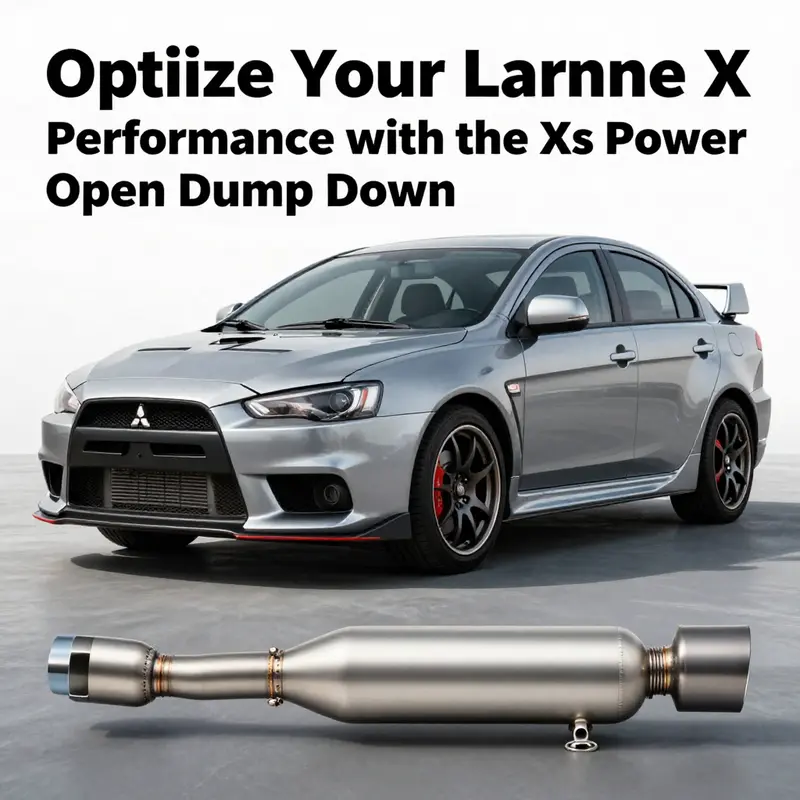
The Xs Power Open Dump Downpipe presents a significant opportunity for business owners in the automotive aftermarket sector to cater to Mitsubishi Lancer Evo X enthusiasts from 2008 to 2014. This article delves into how this performance-enhancing component can elevate vehicle specifications, the installation process that efficient mechanics should be familiar with, critical considerations around legality and environmental impact, a market comparison with other brands, and user experiences that inform purchasing decisions. Each chapter will provide insightful details to help entrepreneurs make informed choices in the competitive automotive market.
Free-Flow Awakening: The Open Dump Downpipe and the Evo X’s Track-Ready Potential (2008–2014)
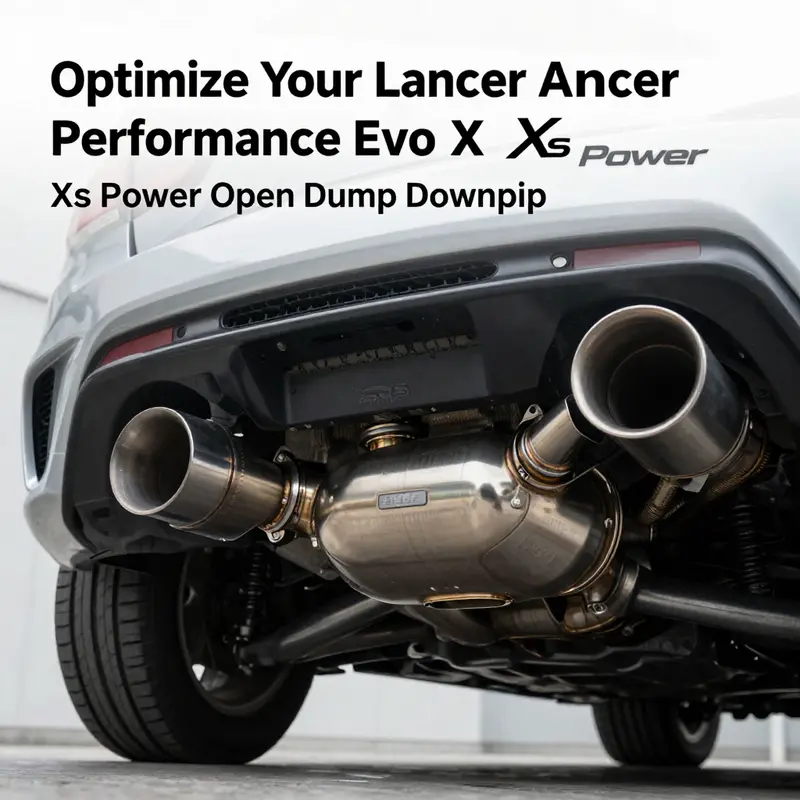
For the Lancer Evolution X, the quest for a sharper, more immediate driving experience often centers on the exhaust system. In the realm of high-performance tuning, an open dump downpipe stands out as a design that prioritizes flow over noise suppression. This chapter follows the thread of how a freer-path exhaust component—one that replaces the catalytic housing with a straight-through, open design—can reshape the way the engine breathes, how the turbo spools, and how the car feels when the throttle is pressed with intent. It unfolds not as a sales pitch but as a narrative about flow, control, and consequence on a platform designed for the twist of a track, rather than the quiet rhythm of street compliance. The Evo X from 2008 through 2014 sits at a crossroads where power, response, and allowable use diverge, and the open-downpipe route sits squarely in the lane of enthusiasts chasing maximum performance on closed circuits and private days on the track.
The core idea behind this type of downpipe is simple in principle yet nuanced in practice. By removing the restrictive elements that sit between the turbine and the outside world, exhaust gases can exit more freely. The factory setup often includes a catalytic converter housing and muffling elements that, while essential for emissions control and noise reduction, impose backpressure. An open design bypasses those constraints, presenting a straighter path for spent gases. The result, in theory, is a clearer exhaust flow, less resistance, and a quicker relighting of the turbo as exhaust gas pressures fall away more rapidly after each power stroke. The sensation traders describe is one of a more eager engine, a turbo that seems to spin to its limit with less delay, and a broader sense of immediacy the moment the accelerator is tapped. The drive—especially with a well-balanced supporting tune—can feel opportunistic, as if the engine has learned to use every gram of boost with sharper intent.
With that freedom comes a cascade of effects that echo through the engine’s response curve. The most immediate is turbo spool. When backpressure is reduced, the turbine can reach its boost threshold sooner, translating to quicker throttle response and a more assertive surge from the mid to upper RPM ranges. In practical terms, this means a more satisfying push when the driver seeks to overtake or to chase a corner exit with authority. The downstream benefits extend to engine efficiency, at least in the sense of volumetric efficiency improving as the exhaust flow becomes less encumbered. The engine can then move more freely air and fuel through the system, which can contribute to a more energetic mid-range feel. It’s important to recognize that improved flow does not automatically translate into a universal increase in mpg. In many situations, especially with an open-path exhaust paired with aggressive driving or high-boost tunes, fuel economy can be more variable. Yet under certain steady-state conditions, a freer exhaust can help the engine operate with less pumping work and less heat buildup from flow constriction, contributing to a perception of improved efficiency.
What often accompanies these mechanical shifts is a notable change in the car’s auditory character. The open design tends to deliver a deeper, more pronounced exhaust note, a sonic signature that enthusiasts find intoxicating on a track where every sound contributes to feedback. The vehicle’s cadence changes as the exhaust note becomes part of the driving experience—more aggressive during acceleration, with a raw rasp that some drivers interpret as a direct line to the engine’s intent. This sound profile, while thrilling on private roads or closed circuits, is also one of the primary reasons why such a setup faces legal and regulatory constraints in many regions. The same open-path exhaust that delivers performance gains can also contribute to noise levels that exceed regional limits for street use, raising the necessary questions about where and when this configuration might be legally employed.
Beyond the sound, the interplay with engine management becomes a central concern. A downpipe that bypasses catalytic conversion creates a leaner tendency in the air-fuel mixture if the ECU continues to operate with stock fuel and timing maps. For this reason, installation in most cases is accompanied by an ECU remap or a retune that brings fuel, timing, and boost control into alignment with the new flow characteristics. The goal is to prevent lean conditions that can stress the engine, especially when the car is operated at or near its elevated boost thresholds. This is not a cosmetic upgrade; it’s a systems-change upgrade that brings a new dynamic to air handling, exhaust velocity, and the turbo’s behavior across the rev range. When paired with complementary modifications—such as a higher-capacity intake, a more capable intercooler, or upgraded fueling components—the full potential of the open design can be realized. Absent such supporting changes, the benefits may be muted or uneven, underscoring the need for careful planning and tuning.
Compatibility is another layer of the discussion for this Evo X generation. The downpipe concept is tailored to the 2008–2014 model years, which share a 4G63T lineage and a platform geometry that accommodates a direct connection to the turbo and exhaust pathways. The fitment is designed to avoid extensive fabrication in most standard setups, yet it does not erase the reality that any major exhaust modification requires attention to flange geometry, sensor placement, and the overall exhaust system interplay. The steering clear of catalytic material is dual-edged: it improves flow, but it also complicates emissions compliance. For drivers who intend to operate the vehicle solely on private tracks or closed circuits, the upgrade can be a meaningful step toward track-ready behavior. For daily street use, it demands legal review and a strict adherence to local laws, a reminder that performance improvements should be weighed against the broader obligations of responsible vehicle operation.
In the broader context, the decision to adopt an open-downpipe approach sits at the crossroad of performance philosophy and practical responsibility. Enthusiasts often describe an experiential payback that goes beyond the numbers on a dyno sheet. The car’s character changes in the sense of urgency, the responsiveness of the throttle, and the way the powerband feels when pushing into a corner or pulling through a long straight. Yet those gains are contingent on tuning discipline and the stability of the rest of the powertrain. Without a calibrated tune, the engine can misfire, the mixture can lean too aggressively, and the vehicle’s behavior under sustained boost can become unpredictable. In practice, the upgrade tends to be most advantageous when it is part of a holistic approach—a balanced combination of flow improvements, intercooling efficiency, and fueling accuracy. It’s a reminder that performance upgrades often operate best when they are not isolated, but woven into a cohesive, track-focused strategy.
For readers who are considering such a modification, the narrative remains practical and grounded in the real-world constraints of street legality, noise, and emission standards. The open-downpipe path offers clear advantages for those who race on tracks or own controlled environments, but it also imposes a duty to understand local regulations and the implications for daily driving. If the intention is to keep the Evo X competitive on a circuit, one should plan for a comprehensive tune, confirm compatibility with existing aftermarket components, and prepare for the possibility of additional upgrades to support fueling and heat management. The journey from concept to road-ready reality is not merely about installing a pipe; it is about recalibrating the entire breathing system of the engine and aligning it with the driver’s intent and the environment in which the car operates. The end result, when approached with care, is a car that responds with speed and clarity to the driver’s input, delivering a track-centric sense of connection that many enthusiasts chase with relentless enthusiasm.
For readers who want to explore related components on Evo X platforms and broaden their understanding of how such modifications fit into a broader build, the evo-x-halfcut article offers a useful context on how major front-end components interact with performance upgrades. This reference helps frame the open-downpipe upgrade within the ecosystem of high-performance parts that shape how the car behaves in the saddle of the driver. External resources and community-driven experiences reinforce the notion that the path to peak performance is often a careful, deliberate sequence rather than a single, dramatic change.
External resource: https://www.xspower.com/products/xs-power-open-dump-downpipe-for-mitsubishi-lancer-evolution-x-2008-2014
Internal link: evo-x-halfcut
Opening the Gate: Performance, Sound, and Real-World Considerations of an Open-Dump Downpipe on the Lancer Evo X (2008–2014)
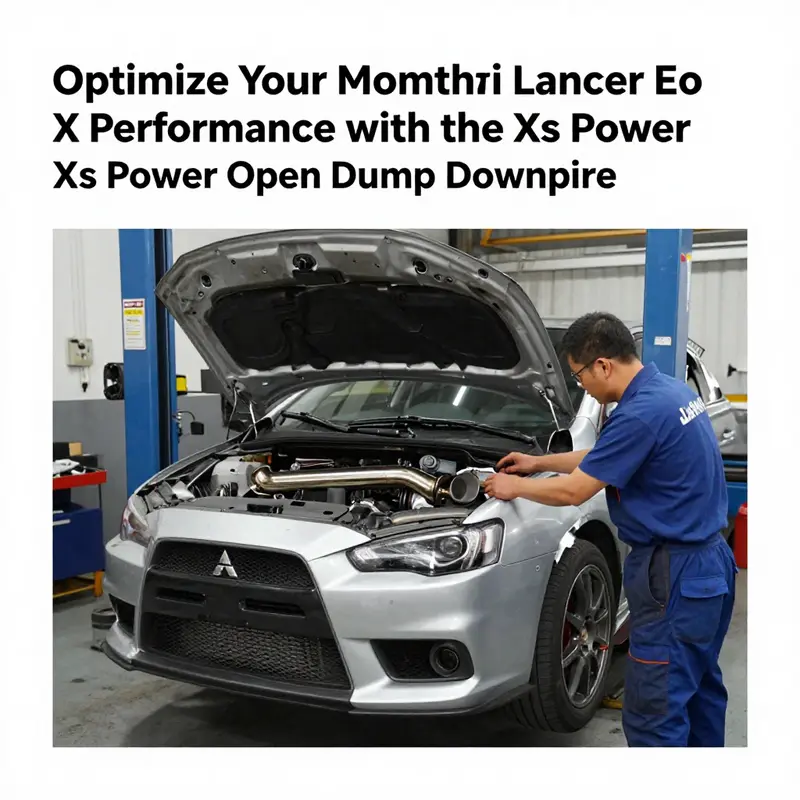
When builders and track day enthusiasts chase a measurable gain from a turbocharged engine, the focus often lands on the exhaust path. An open-dump downpipe for the Lancer Evo X, a component designed to vent exhaust gases directly to atmosphere, sits at the intersection of power potential and practical consequence. This chapter treats the idea not as a quick bolt-on, but as a thoughtful modification that shifts the entire propulsion ecosystem of the car. It invites readers to weigh the physics of exhaust flow against the realities of street legality, daily drivability, and the long arc of maintenance. In the Evo X chassis—2008 through 2014—the turbocharged four-cylinder responds to a freer, less restricted outlet with more aggressive spooling and a different sound signature. But those gains come with caveats that deserve careful attention before any purchase or installation is contemplated.
The core appeal of an open-dump design is straightforward. With the traditional path out of the turbo bypassed, exhaust gases face less backpressure. That reduced resistance can translate into a quicker turbine response and a more direct pressure signal back to the engine. In practical terms, drivers may notice crisper throttle feel and the sense that the turbo breathes more freely at high valve events. The upside, as many enthusiasts describe, is a broadened torque curve and a stepped increase in top-end power, especially in configurations tuned to exploit freer flow. The accompanying soundtrack is part of the trade-off too: the engine note becomes more prominent, often louder, with a sharper crackle when the throttle is snapped shut or opened under load. The sensation is not merely about volume; the tone shifts as pressure pulses surge through the pipes, and the characteristic turbo flutter can creep into the mix in certain operating ranges.
Yet this is not a one-way improvement scenario. Open-dump downpipes intentionally remove or bypass mufflers and, in many cases, the catalysts that sit closer to the engine. The result is a significant uptick in sound energy that travels beyond the cabin and into the surrounding environment. For daily driving, that can translate into a vehicle that feels louder at cruising speeds and during acceleration, even when the engine is not at full boost. In many jurisdictions, the increased noise levels may clash with local sound ordinances, entertaining the possibility of fines or required rework. Emissions compliance is another nontrivial factor. Removing or bypassing catalytic components alters the exhaust gas composition reaching the tailpipe. That alteration can complicate inspections and, in some places, render the car noncompliant with emissions laws. These realities underscore a straightforward principle: performance gains must be balanced against legal constraints and the comfort of everyday use.
From a mechanical standpoint, fitment matters. An open-dump downpipe is not a universal bolt-in. The Evo X platform spans several model years with evolution in turbo outlet flanges, gasket interfaces, and downstream piping. The precise diameter, flange style, and sensor mounting points can differ from one car to the next. This is more than a matter of drilling and torquing bolts; it is about ensuring a leak-free seal that preserves turbine efficiency and prevents exhaust leaks that might undermine any potential power gains. The oxygen sensors, for instance, remain integral to engine management. In a system that bypasses catalysts or mufflers, sensor placement and wiring paths must be verified to avoid misreadings that could trigger fault codes or suboptimal fuel delivery. Even the best hardware can underperform or cause drivability issues if the installation creates exhaust leaks, heat-related wear on nearby components, or improper sensor calibration.
Tuning also sits at the heart of the realistic performance story. An open-dump path changes exhaust flow dynamics and the air-fuel balance that the ECU relies on. Without a recalibration, fuel trims can drift, and ignition timing may no longer be aligned with the new flow characteristics. In practice, many Evo X owners who pursue this modification pair it with a professional tune that explicitly accounts for the absence of backpressure and, when applicable, the reduced catalytic load. The aim is a clean air-fuel ratio across the RPM range and stable ignition timing under boost. A tune that ignores these changes can lead to lean conditions during boost, more heat, and a higher risk of detonation under aggressive driving. Optimally, the installation plan includes a diagnostic session with a wideband O2 sensor data log, a run on a dynamometer if possible, and a careful mapping of fuel and ignition that respects the engine’s hardware limits.
The broader automotive ecosystem surrounding this modification further shapes its value. On one hand, enthusiasts talk about the psychological and tactile feedback of a car that breathes more freely and how that translates into a more engaging driving experience. On the other hand, there are real-world considerations for daily use: neighbor-friendly street manners, garage acoustics, and the possibility of affecting resale value if the modification becomes a point of contention with potential buyers. The Evo X is a platform with a dedicated following, and many owners weigh not only horsepower figures but also the long-term implications of chasing peak performance on a car that may serve as a daily driver, a weekend racer, or a showpiece. The dialogue around an open-dump path is therefore not merely technical; it is a balancing act between enthusiasm and practicality.
For those who are considering this path, a judicious approach to installation is essential. The Evo X’s engine bay and chassis are well documented in forums, videos, and manuals, but there is no universal blueprint that guarantees a perfect fit for every vehicle. The safest course is to treat the process as a collaboration between the car, the installer, and the regulatory environment. A reputable tuning shop or a qualified exhaust technician can help verify compatibility with the chosen downpipe, confirm the absence or presence of a catalytic element, and plan the path of the exhaust through the undercarriage without creating clearance issues with suspension components, heat shields, or the fuel lines. They can also advise on the necessary gaskets, clamps, and mounting brackets that ensure longevity under vibration and heat. Even if the downpipe is advertised as a straightforward swap, attention to detail—such as torque specs, flange flatness, and sensor seal integrity—literally pays off in reliability and performance.
There is value in educating oneself about the broader ecosystem of parts that commonly accompany an Evo X exhaust upgrade. Beyond the downpipe itself, owners often review the compatibility of headers, turbomachinery, intercooling, and fuel delivery to understand how a modified exhaust interacts with the rest of the system. The takeaway is simple: performance improvements compound when the entire pathway from intake to exhaust harmonizes with the engine’s tuning strategy. In practice, this means that the downpipe is rarely a stand-alone solution. Investment in a holistic approach—engine management, supporting hardware, and a controlled testing environment—tends to yield the most consistent and reliable gains while maintaining daily drivability.
For readers who are contemplating exterior or chassis aesthetics in parallel with power upgrades, it can be worth exploring catalog pages that showcase Evo X components beyond the exhaust. In particular, exploring the Evo X rear bumpers and related exterior parts can help maintain a cohesive look as performance upgrades take shape. A representative catalog entry offers a sense of how aftermarket ecosystems are organized for this chassis family and can provide a convenient reference point when planning a broader build. See the Evo X rear bumpers catalog for context and options.
In sum, the open-dump downpipe concept for the Lancer Evo X emphasizes how a single modification can ripple through a car’s performance, sound, and legality. It challenges the driver to balance the allure of faster spool, more aggressive exhaust notes, and potential horsepower gains against the realities of emissions compliance, noise regulations, and daily usability. The practical path forward is clear: acknowledge the power potential, assess the regulatory landscape in your area, and partner with a professional who can align the hardware with a tune that respects the engine’s operating limits. With that careful approach, the Evo X can deliver a distinctive, engaging experience that reflects both the aspirations of the enthusiast and the realities of modern vehicle operation.
null
null
Open-Dump Downpipes for the Evo X (2008–2014): Performance, Legality, and Brand Perspectives in a Changing Market
The Mitsubishi Lancer Evolution X, with its turbocharged heart and tightly tuned chassis, has always invited engineers and enthusiasts into a conversation about flow, heat, and response. When the idea of an open-dump downpipe enters that conversation, it shifts the discussion from mere bolt-on horsepower to a more nuanced balance of power, practicality, and compliance. An open-dump downpipe is designed to route exhaust gases from the turbocharger directly into the exhaust system or atmosphere with minimal impedance. In practice, that means bypassing not only mufflers but often a primary catalytic path as well. For a track-focused Evo X, the draw is clear: less backpressure can translate into quicker turbo spool, more immediate throttle response, and a louder, more visceral exhaust tone. Those who chase peak numbers on a dyno will often see improvements in the neighborhood of a few additional horsepower, but the real gains lie in the way the engine breathes under boost and the way the turbo responds to changes in load. Yet those gains come with caveats that deserve careful attention before any purchase, installation, or test drive begins in earnest.
To understand what an open-dump solution promises, it helps to picture the exhaust path inside an Evo X. The turbo compresses air, the exhaust leaves the turbine and then encounters the downpipe, which in standard form is attached to catalytic components and a muffler system. An open-dump variant removes or bypasses portions of that path. The result is a dramatic reduction in backpressure, a factor that many drivers correlate with faster boost response and a more immediate surge when the accelerator is pressed. The upside is not just peak numbers; the mid-range response can also feel more aggressive, with the engine seemingly freer to rev and respond. The downside is equally real: the exhaust becomes louder, more raspy, and the tone can carry a harsh edge at higher RPMs. Cabin resonance, road noise, and drone at certain speeds are common realities that accompany the shift from a more conventional, muffled setup to an open, race-oriented configuration. This is not a one-size-fits-all modification; it is a very specific trade-off for those prioritizing speed and sensation over quiet operation.
From a tuning perspective, the open-dump approach interacts with the rest of the powertrain differently from a standard downpipe. Because the catalytic converter and muffler elements are removed or bypassed, the engine’s air-fuel mixture and timing requirements can shift. A professional mapping or a calibrated engine control unit (ECU) tune is typically essential to maintain safe ignition timing and to prevent misfires or pre-ignition under boost. In many cases, the tune also compensates for the altered oxygen sensor signals that a pre-cat or catless path introduces. The result can be a more responsive engine with a broader feeling of torque through the midrange, provided the rest of the drivetrain, intercooling, and fueling are aligned with the new flow characteristics. But this is not a universal guarantee. Some builds may see modest gains while others experience little improvement or even a dip in power if the rest of the system is not upgraded accordingly. A prudent approach, therefore, treats the open-dump route as one piece of a broader strategy rather than a standalone magic bullet.
The decision to pursue an open-dump setup inevitably intersects with legality and environmental responsibility. In many regions, bypassing catalytic converters and altering exhaust emissions is governed by strict regulations, and street-legal applications are not guaranteed. Even when a setup is technically installable, it can draw scrutiny from emissions inspectors, police, or regulatory bodies, especially if the modifications are not accompanied by appropriate documentation, testing, or exemptions. Enthusiasts pursuing track-day or club-race scenarios often accept a different risk calculus, recognizing that certain jurisdictions permit off-road or closed-course use where ordinary street rules do not apply. The practical takeaway is simple: before any purchase, confirm the local rules and potential warranty implications. If the vehicle remains within a warranty window, or if emissions systems are a central concern for ownership in daily driving, this path becomes even more complex. In other words, the decision requires a clear-eyed assessment of how the car is used, where it’s driven, and what legal frameworks apply to the owner’s circumstances.
Fitment and durability are also critical to consider. An Evo X open-dump path demands precise alignment with the turbo outlet, correct flange sizing, and robust sealing to prevent exhaust leaks that would nullify any perceived gains. Materials vary, with stainless steel commonly favored for its corrosion resistance and heat tolerance. The thickness of the tubing, the precision of welds, and the design of mounting points all influence long-term reliability. A high-quality unit typically emphasizes consistent geometry from turbine outlet to the exhaust assembly, avoiding bottlenecks that could counteract the intended flow improvements. In addition, practitioners often weigh the option of retaining some form of catalytic element in a simulated or legalized configuration when applicable, a compromise that preserves some emissions control while preserving the torch-like character of the exhaust note. The aesthetic and auditory effects are part of the package as well: a sharper tone, a more aggressive crackle on deceleration, and a sound signature that announces the car’s boosted, tuned character the moment the throttle opens.
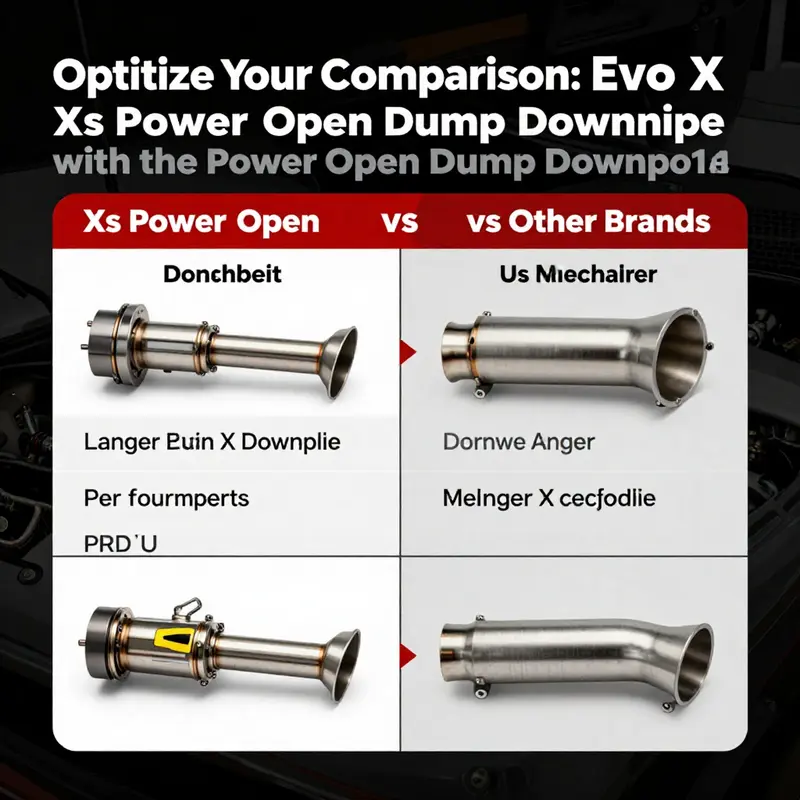
In the market for the Evo X, enthusiasts encounter a spectrum of options. The open-dump category sits alongside a range of downpipes that preserve some catalytic function or incorporate resonators to manage noise while still offering flow gains. Across brands, the real differentiators tend to be build quality, wire-formed flanges, welding consistency, ease of installation, and how well the system holds up to heat cycling in daily driving versus track days. Because the research landscape for this particular component in the 2008–2014 Evo X window has not yielded a comprehensive, side-by-side brand comparison in public documents, buyers naturally become their own best evaluators. They compare spec sheets, review fitment notes from multiple vehicle iterations, and gauge the reputation of the manufacturer’s engineering team through independent feedback and forum discourse. The absence of a clear, standardized, published comparison places greater emphasis on direct communication with sellers, the availability of installation instructions, and transparent warranty terms. It also means the selection process becomes more dialog-based and iterative: a buyer might start with a plan to test a given option, then corroborate the decision with a second or third choice, all while ensuring that the vehicle remains compliant with local rules and that the rest of the build is capable of supporting the change.
For readers who are considering broader Evo-X upgrades, the tuning and accessory ecosystem around the platform often includes components that enable a more cohesive performance package. A well-timed set of upgrades—such as a carefully matched turbo intake, an intercooler upgrade, and a calibrated fuel system—can help align the engine’s capabilities with the altered exhaust path. In this context, a ready-to-install, well-supported open-dump option can be an attractive piece of a larger plan, provided the other components are chosen with the same emphasis on reliability and emissions responsibility. To explore a broader set of Evo-X upgrade options beyond exhaust, you may want to review a collection of related parts that are commonly bundled with major power-focused builds. For readers planning broader Evo-X upgrades, the evo-x-halfcut page offers a bundle that often complements exhaust changes. evo-x-halfcut
The cultural and enthusiast-driven discourse around the open-dump approach also reflects a larger conversation about what makes a modification meaningful. Some drivers prize the visceral, track-ready character that such a setup can deliver. They value the direct, unfiltered feedback to the driver’s senses—the way the engine responds to throttle input, the surge in boost, and the raw cadence of the exhaust as it approaches redline. Others prioritize daily drivability, quiet operation, and the option to pass emissions inspections without risk. For these owners, the open-dump path may seem more like a temporary or selective stage in a broader build, a phase that is refined later as the car transitions from street-focused use to a more track-biased configuration. The reality is nuanced: the same downpipe that makes the engine feel eager can also demand greater attention to maintenance, heat management, and alignment with the rest of the powertrain. If you value a coherent, long-term plan over a momentary performance spike, you’ll weigh the gains in throttle response against ongoing considerations around noise, heat, and legal exposure.
In the end, the Evo X’s appeal as a platform for modification lies in its balance between performance potential and practical constraints. An open-dump downpipe embodies that balance by offering a clear path to enhanced flow and more aggressive character while asking the owner to accept trade-offs that include higher noise levels and heightened scrutiny under emissions rules. As with any major modification, the key to a satisfying outcome is careful planning, reliable installation, and a sound understanding of how the change fits into the vehicle’s broader performance vision. Enthusiasts who approach the decision with this mindset tend to document their results, share their experiences, and build a knowledge base that helps future owners navigate the same questions. It is a topic that invites ongoing dialogue, testing, and refinement—an enduring reminder that performance engineering is less about a single component and more about the harmony of a complete, well-tuned system.
External resource: For a regulatory overview of vehicle exhaust modifications and emissions standards, see the U.S. Environmental Protection Agency’s guidance on green vehicles and emissions standards. https://www.epa.gov/greenvehicles
Rumbling Realities: Real-World Feedback on Open-Dump Downpipes for the Evo X (2008–2014)
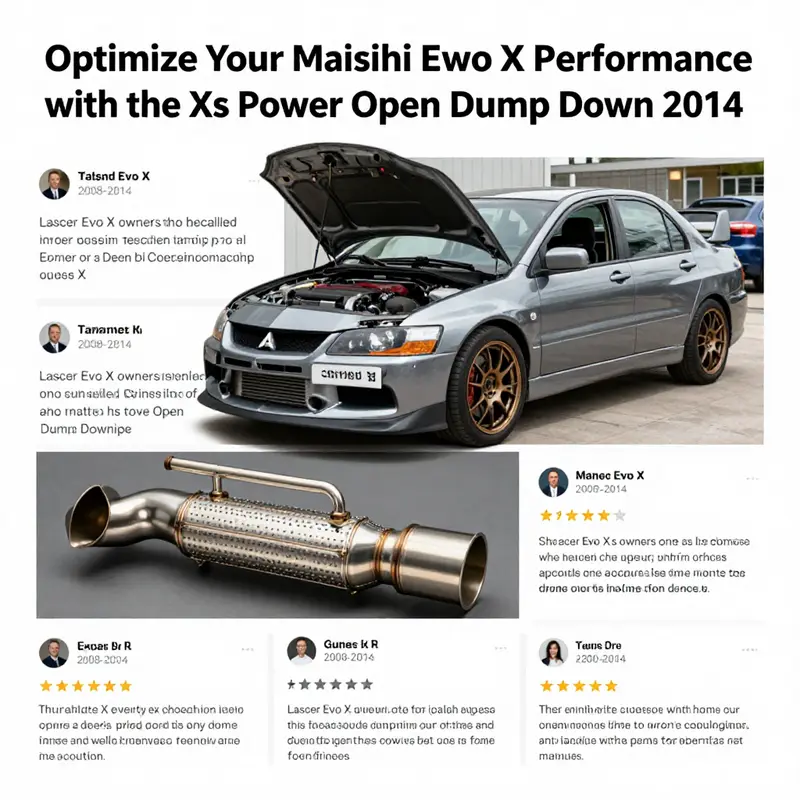
The Evo X line, produced from 2008 through 2014, has long attracted enthusiasts who crave a more visceral driving experience. Among the myriad of upgrades that captivate this community, the open-dump downpipe stands out for its promise of raw performance and unfiltered engine authentication. Rather than narrate a sales pitch, this chapter leans into the real-world voices of owners and builders who have incorporated this design into their cars. What emerges is a nuanced picture: stronger high-end response and a more aggressive soundtrack, tempered by noise, emissions considerations, and a need for careful supporting modifications. In the end, the decision to adopt this route rests on a balance between the thrill of the upgrade and the realities of daily use and local regulations.\n\nFrom a purely mechanical perspective, many users report a noticeable shift in the way the turbo system breathes once the open-dump interface is in place. The core idea is straightforward: by removing or bypassing sections of the exhaust path that dampen flow, the exhaust gases can exit more freely. This tends to reduce backpressure, which in turn allows the turbocharger to respond more promptly to throttle input and maintain higher exhaust gas velocity at elevated RPMs. In practical terms, drivers describe a quicker surge when the accelerator is pressed, especially as the turbo transitions into higher rev bands. The overall sensation is a more direct connection to the engine’s power curve, with a sense that the car revs with a certain urgency that is less pronounced in stock configurations. That perceived improvement in throttle response and mid-to-high RPM pull is a recurring theme across owner forums and firsthand reports, especially on builds that already emphasize an optimized intake, intercooling, and a well-tuned engine management strategy.\n\nThe auditory dimension of this modification is perhaps its most immediate and visceral. When RPMs climb, the exhaust note becomes noticeably deeper and more incisive. For many, the sound is an essential part of the upgrade’s appeal: a robust, almost industrial rumble that captures the essence of a turbocharged four-cylinder with a direct path to the outside world. In open-circuit form, the soundtrack can shift from “sporty” to distinctly aggressive, with a level of harmony between engine speed and engine note that is rarely achieved with a muffled system. There’s a living quality to the sound; it breathes with the throttle, grows more assertive as boost builds, and often carries a sense of digital precision that fuels the driver’s confidence on back roads or a track apron. Yet this very intensity has its trade-offs. In daylight and late-night driving, the same openness that yields a dramatic soundtrack can become a source of unsolicited attention. Neighbors and compliance officers in certain regions may view the absence of a proper muffling device as a nuisance, a reality that forces owners to weigh personal enjoyment against public consideration.\n\nReal-world experiences also point to a broader ecosystem of supporting upgrades. The open-dump approach is not a stand-alone fix; its potential is best realized when paired with a holistic exhaust strategy. Many seasoned builders emphasize pairing a mid-pipe upgrade and a compatible rear exhaust with precise calibration of the engine control unit. With the right combination, the car can avoid rich or lean fuel trims that might otherwise arise from a sudden change in exhaust flow characteristics. This holistic approach helps preserve engine reliability while capitalizing on the performance delta. In practice, this means that a well-tuned setup can maintain stable fueling, prevent excessive sensor noise, and reduce the likelihood of vacuum-related issues that some drivers worry about after installation. The consensus among experienced enthusiasts is clear: you maximize benefits by aligning the open-dump downpipe with a thoughtfully chosen mid-pipe, a tuned ECU map, and a complementary rear section that complements the improved exhaust flow rather than fighting against it.\n\nFitment and installation considerations can shape the ownership experience just as much as the driving feel. Several owners note that, depending on the exact kit and the car’s existing hardware, some minor fitting work may be required. In particular, ensuring a proper seal around flanges and gaskets helps minimize potential vacuum leaks and unintended noise at idle. The risk of a squeal, whistle, or hiss at certain engine loads is a reality for some cars, especially if the rest of the exhaust path hasn’t been synchronized with the upgraded component. This is not a universal problem, but it reinforces the point that the open-dump concept performs best when installation is performed with care, using correct hardware and gaskets, and when the rest of the system is aligned to the expected flow characteristics.\n\nFor those who want to see the broader spectrum of experiences, community feedback often highlights a key takeaway: the value of tuning. A segment of the Evo X community treats the open-dump strategy as a catalyst for more ambitious power goals. They pursue calibrated ECU adjustments to harmonize air intake, fuel delivery, boost pressure, and exhaust flow. In this light, the open-dump design is less about raw horsepower in isolation and more about how it interacts with a tuned, balanced system. Reported gains vary depending on the car’s baseline setup, the quality of supporting components, and the driver’s aim—whether it’s track-focused performance, accelerated street performance, or a blend of both. This is not a guaranteed power upgrade; it’s a configuration that can deliver meaningful improvements when orchestrated with discipline and precision.\n\nThe owner community also reflects nuanced opinions about daily usability. On a street-legal car, some drivers value the sense of character that the open-dump configuration provides, accepting a louder-than-stock note and the possibility of increased highway drone under certain conditions. Others prefer a setup with more containment, especially if they spend a lot of time in traffic or in mixed-use environments where noise can be a concern. The recipe that seems to work best for many is one that includes conservative tuning for daily driving, plus the option to dial in a more aggressive map for spirited drives or weekend sessions. In this sense, the open-dump downpipe is not a one-size-fits-all piece; it’s a catalyst for customization that demands thoughtful planning and ongoing refinement.\n\nCulture and context also shape how this modification lands in different regions. In markets with strict emissions testing and noise ordinances, the open-dump approach can trigger regulatory scrutiny and potential penalties. In these cases, owners often choose to revert to or integrate a more traditional exhaust path during inspection periods, or they seek configurations that maintain performance without violating local rules. The tension between performance geek appeal and regulatory responsibility is a recurring subtext in discussions about this upgrade. Still, for many builders and track fans, the decision to pursue a more aggressive exhaust strategy is driven by a desire for tactile feedback, audible engagement, and a sense of direct, mechanics-first artistry in the driving experience.\n\nIn looking at the broader ecosystem of Evo X modifications, the open-dump concept sits within a family of performance choices that prioritize flow and sensation. A common thread across successful builds is attention to the entire airflow chain—from intake to intercooling to exhaust—and, crucially, the tuning that binds them together. A well-executed package acknowledges that airflow changes can influence turbo behavior, fuel mixing, and overall engine response. The net effect is a car that spools with intent, announces its presence with a concerted exhaust voice, and remains reliable through carefully tuned operation. For readers seeking a practical path, this means focusing on harmony rather than chasing isolated gains. The experience is less about a single bolt-on magic and more about disciplined integration.\n\nFor readers who want a concrete next step in exploring related upgrades, consider exploring Evo X-specific components that complement the higher-output approach. An accessible entry point is the Evo X halfcut option, a modular approach to upgrading the powertrain and related systems in one comprehensive bundle. You can learn more about Evo X Halfcut here: Evo X Halfcut. This link provides a tangible pathway for enthusiasts who are expanding their build toward balanced, track-ready performance.\n\nAs the conversations in forums and build diaries suggest, the open-dump approach to downpipe design remains a polarizing but highly discussed topic. It promises a dramatic change in sound and acceleration, but it asks for a commensurate level of care in installation, tuning, and compliance. The real-world verdict from a broad spectrum of Evo X owners is that this upgrade can deliver a visceral, rewarding experience when integrated with a holistic performance strategy. It is not a guaranteed, plug-and-play improvement; rather, it is an invitation to engineers and drivers to collaborate with their machines, to coax more out of the turbocharged engine while respecting the laws of physics and the limits of the road. For those who pursue it with intent, the reward is a car that speaks in a louder, more immediate voice—one that echoes the pure joy of a well-tuned, enthusiast-driven machine.\n\nExternal resource: For a detailed product review and user feedback on this type of exhaust upgrade, see the discussion here: https://www.c-dubtech.com/products/xs-power-open-dump-downpipe-for-mitsubishi-lancer-evolution-x-2008-2014
Final thoughts
Investing in the Xs Power Open Dump Downpipe can significantly enhance the performance of the Mitsubishi Lancer Evo X, making it a desirable upgrade for enthusiasts. However, it’s essential for business owners to remain aware of installation practices, legal implications surrounding emissions, and potential market competition. By understanding user feedback and comparative features, businesses can better position themselves in the automotive aftermarket industry and cater effectively to the evolving demands of consumers.