
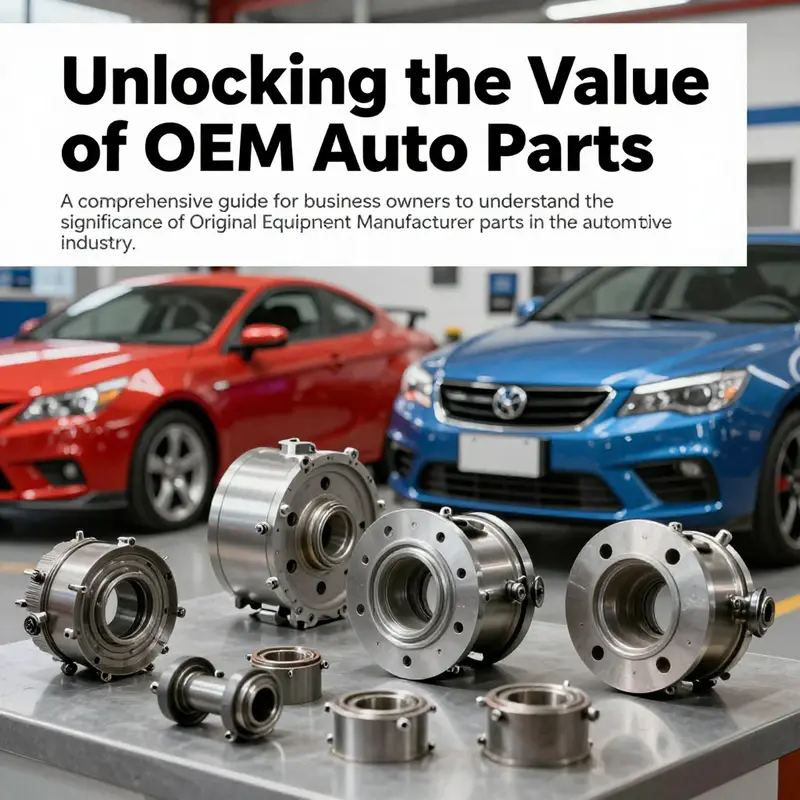
Understanding OEM (Original Equipment Manufacturer) parts is crucial for business owners engaged in the auto parts sector. OEM parts play a pivotal role in vehicle assembly and maintenance, providing quality and reliability that aftermarket alternatives may lack. This article will explore the definition of OEM, differentiate between OEM and aftermarket parts, discuss the benefits of using OEM parts, analyze the economic implications for consumers and manufacturers, and underscore the quality assurance these parts provide for vehicle safety and performance. By integrating this knowledge, business owners can make informed decisions that protect their investments and enhance customer satisfaction.
OEM Parts Explained: What Original Equipment Manufacturer Means for Your Vehicle
Understanding OEM as the Source of Original Parts
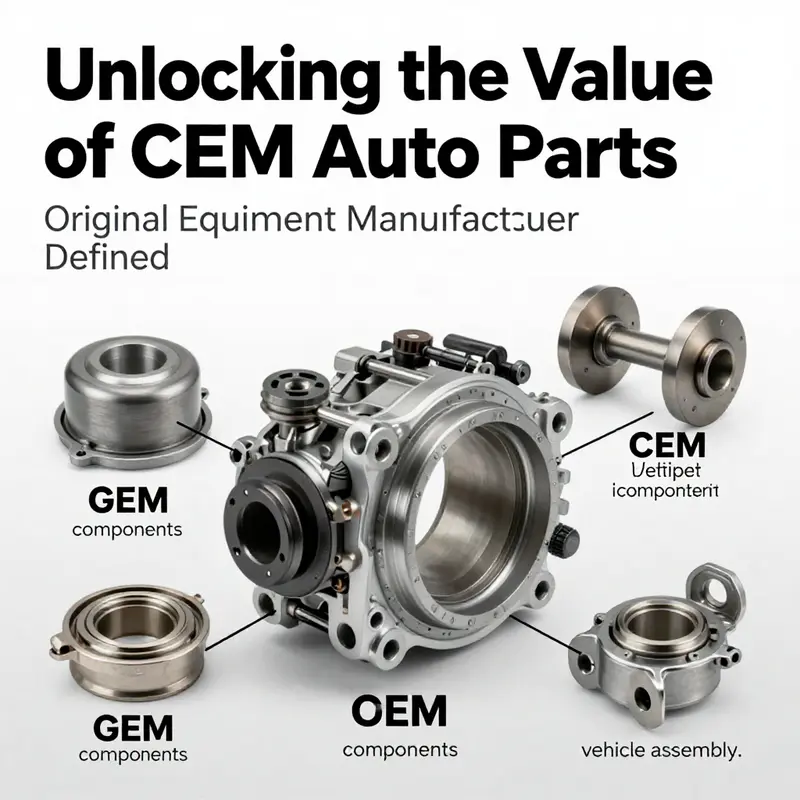
When you encounter the term OEM in the world of auto parts, it stands for Original Equipment Manufacturer. That simple phrase carries important implications for fit, function, safety, and cost. An OEM part is one that was produced to the exact specifications used during a vehicle’s factory assembly. It may have been made by the vehicle maker itself or by one of the supplier companies that built the components for the manufacturer. What matters is that the part matches the original design intent and standards used when the vehicle left the production line.
OEM parts are engineered to integrate precisely with the vehicle’s systems. That means their dimensions, materials, tolerances, and performance characteristics are aligned with the designers’ requirements. For systems such as braking, steering, airbag deployment, emission controls, and engine components, precise performance can be critical. Using an OEM part reduces the risk of fitment problems, unexpected interactions, or degraded safety performance. It also simplifies repairs, because the part will mount where and how the original did. For owners who expect factory-level reliability, this predictability matters.
The supply chain that produces OEM parts is layered and collaborative. Automakers frequently contract specialized component manufacturers to build modules or parts. Those suppliers follow strict quality controls and testing regimes defined by the automaker. The finished components then arrive at the assembly line and are installed under the manufacturer’s supervision. In the aftermarket world, those same supplier-made pieces are often sold as OEM parts to repair shops and consumers. This is why a part can carry the automaker’s branding while still being manufactured by a third-party supplier.
Understanding what qualifies as an OEM part helps when deciding what to buy. If a replacement component is identical to the one originally installed, and it was produced according to the original specifications, it is considered OEM. This includes parts bought from dealerships, many parts sold through authorized channels, and some items from suppliers that maintain the original manufacturing process. Some buyers choose equivalent parts that come directly from the original supplier but are packaged differently. Those pieces can still provide the fit and function of the original, so they often serve as practical OEM alternatives.
Cost is the clearest distinction between OEM and non-OEM options. OEM parts typically cost more. The higher price reflects the certification process, traceability, and quality assurance required by automakers. Dealers and authorized sellers also maintain warranty and inventory systems that add to cost. In many cases, spending more on an OEM part buys peace of mind: exact fit, documented provenance, and predictable performance. Yet cost alone doesn’t determine value. For non-critical components, a well-made aftermarket alternative can deliver acceptable performance at lower price.
Recognizing genuine OEM parts requires attention to labels, part numbers, and packaging. OEM parts come with original part numbers that match service manuals and parts catalogs. These numbers are useful when ordering or verifying compatibility. Packaging often contains manufacturer logos, barcodes, and traceability information. Authorized channels keep that provenance intact. When buying, confirm the part number against your vehicle’s documentation. If a seller cannot supply a matching number, ask for clarification on origin and testing standards.
There are also remanufactured OEM parts. These are original components that have been restored to like-new condition. A remanufactured unit may be a cost-effective OEM-quality option. It typically involves disassembly, cleaning, replacement of worn elements, reassembly, and testing under factory tolerances. Remanufactured parts are widely used for expensive items such as starters, alternators, and transmissions. They often come with core-exchange programs that further lower costs. In those arrangements, turning in a worn component offsets part of the purchase price.
Safety-related components often warrant OEM replacements. Airbags, advanced driver-assistance sensors, structural members, and electronic control units are areas where subtle differences can have outsized consequences. OEM replacements help ensure that safety systems perform as engineered. For non-safety items—trim, cosmetic panels, and some suspension pieces—aftermarket parts can be perfectly acceptable. Still, fit and finish vary among aftermarket suppliers, so measure expectations against budget.
Counterfeit and low-quality imitations exist, and they can masquerade as OEM. Counterfeits may display misleading logos or part numbers. Poor materials and sloppy assembly can compromise durability and safety. Buy from reputable dealers or verified sellers to reduce risk. Request documentation showing part numbers and origin. For high-value parts, insist on serial numbers or traceability records that link a unit back to a recognized manufacturer.
When deciding between OEM and aftermarket, consider the repair goal. If the objective is to restore factory performance and warranty alignment, OEM is often the safer route. If the aim is to reduce cost while maintaining acceptable performance, high-quality aftermarket brands may deliver. For cars that still have active manufacturer coverage, an OEM replacement can help preserve warranty claims. For older vehicles, budget and availability may be more important.
Sourcing OEM parts takes a few practical steps. First, identify the exact part number. Use your vehicle’s repair manual or parts catalog to confirm fitment. Second, choose an authorized or well-reviewed seller. Dealers, certified parts distributors, and established independent shops are safer channels. Third, check for remanufactured options if cost is a concern. Fourth, confirm warranty terms. Some OEM parts include limited warranties that provide added protection.
If you are shopping online, look for listings that clearly state origin and part numbers. A listing for a brand-new original carbon fiber bonnet/hood can demonstrate how OEM-quality items are presented. Pay attention to the return policy and the seller’s reviews. Photographs of packaging, labels, and part numbers help verify authenticity. In many cases, a simple phone call to a parts department with the part number can confirm whether the unit is genuine.
Finally, understand that the OEM label is about design intent and standards. It does not automatically guarantee lifetime perfection. Manufacturing defects, shipping damage, and installer errors still occur. OEM parts reduce variability and risk, but they are one element among many in a successful repair. Balancing cost, safety, and reliability is a practical way to decide if an OEM part is the right choice for your situation.
For a concise industry overview that explains how original manufacturers and suppliers interact, see this external resource: https://www.motor1.com/.
null
null
Original Power, Original Fit: Why OEM Parts Matter in Vehicle Maintenance and Repair
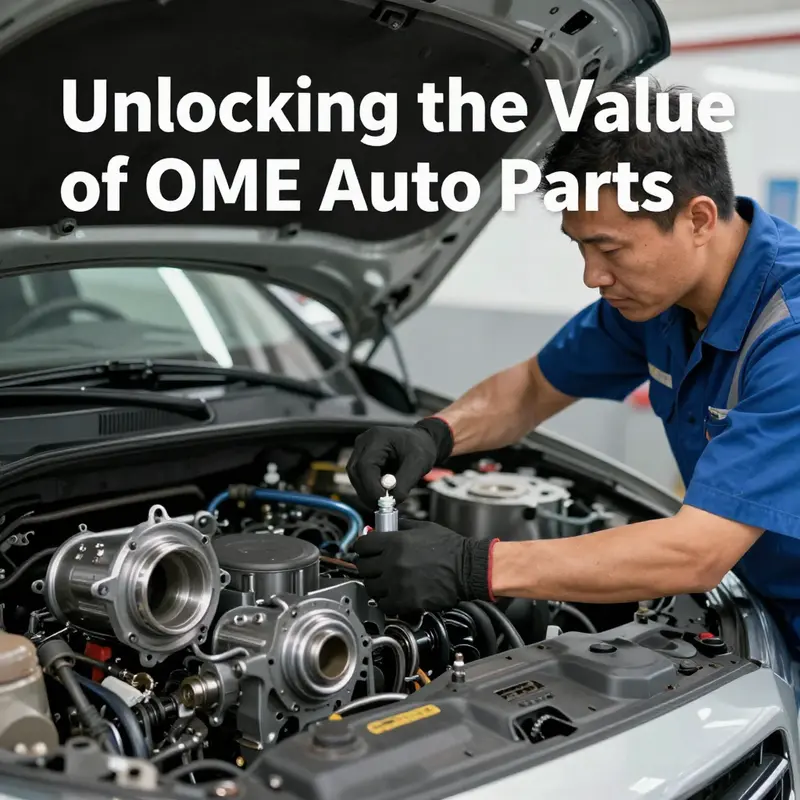
When car owners think about maintaining and repairing a vehicle, a question often rises to the surface with practical clarity: what does OEM stand for in auto parts, and why should it matter to the day to day care of a car? OEM stands for Original Equipment Manufacturer. It signals that the part in question was produced by the company or companies that supplied the components for the vehicle when it rolled off the factory line. This is not merely a marketing label; it is a declaration about provenance, alignment with factory engineering, and the ongoing integrity of a vehicle as designed. Understanding this distinction helps illuminate why many drivers prioritize OEM parts for critical systems and why the choice between OEM and aftermarket parts matters as soon as a repair is contemplated or a maintenance interval arrives. In a broader sense, OEM parts embody a promise that the part is built to the same specifications the automaker used at the start of the vehicle’s life. They are meant to fit exactly, function in harmony with the vehicle control systems, and wear at rates that are consistent with the original design. The practical consequence of this alignment is not only smooth operation but also a higher degree of reliability when the component is called upon under a wide range of conditions, from routine driving to demanding road use. This reliability stems from several intertwined factors, each rooted in the engineering choices made during the original development of the vehicle and its components. The engine management software, the brake hydraulics, the steering linkage, and even the sensors that monitor speed, temperature, and position are all designed to work together as a system. An OEM part is intended to preserve that system integrity because it shares the same material properties, tolerances, and interfaces as the part that left the factory. That compatibility matters in two broad spheres: immediate fit and long term behavior. In the near term, a perfect fit means fewer surprises during installation. A part that was designed to be a direct match to the original equipment will thread into the car with the same alignment, screw pitch, mounting points, and electrical connectors you expect. The risk of misalignment, improper seating, or subtle mechanical clashes drops when the part is drawn from the same design family that built the car in the first place. In the longer term, OEM parts help preserve the intended balance of the vehicle. A brake rotor produced to the exact thickness, diameter, and material specification, for instance, ensures that heat dissipation, rotor wear, and bite feel remain consistent with the factory setup. A timing belt or a water pump made by the same brand that engineered the engine will continue to respect the engine’s timing, oil pressures, and cooling dynamics in ways that aftermarket parts may not always mirror. The practical upshot is a vehicle that behaves the way it did when it was new, at least in terms of the critical systems that govern safety and drivability. The argument for OEM parts also intersects with the topic of warranties and the broader health of a vehicle’s service history. Many manufacturers and authorized dealers explicitly connect the use of OEM parts to honoring or preserving factory warranties. When a repair or replacement is performed with genuine components sourced from the official supply chain, the warranty framework commonly remains intact because the work is performed in alignment with the vehicle maker’s engineering standards. Conversely, substituting non OEM parts opens questions about warranty coverage, potential gaps in coverage for related systems, and the possibility that non approved components could complicate future service visits. The mechanical and electronic ecosystems inside a modern car are not isolated; they are interdependent networks. An accessory or subsystem that appears minor on its own can influence the performance of a larger system. For example, a sensor that feeds data to an engine control module works in concert with the surrounding hardware and software to regulate ignition timing, fuel flow, and emission controls. If a sensor is not truly compatible with the vehicle’s calibration, it can misreport data, trigger fault codes, or, worse, degrade engine efficiency over time. In the same vein, a brake component that does not meet exacting OEM specifications may alter the way the hydraulic system responds under stress, affect pad wear, or change the brake balance between wheels. These possibilities illustrate why many drivers view OEM parts as a safeguard against incidental drift from factory standards. The cost difference between OEM and aftermarket parts is a recurring theme in maintenance conversations. OEM parts typically carry a higher upfront price, reflecting the precision, reliability, and the assurance of factory alignment. Yet the price differential is not simply a question of sticker cost. It is an investment in predictable performance and predictable maintenance outcomes. The extra cost can translate into fewer follow up trips for adjustments, fewer emergency repairs caused by mismatched components, and a more confident resale value when the vehicle changes hands. Speaking of resale value, OEM parts also contribute to a coherent maintenance narrative. Buyers often prefer vehicles with a documented history of using genuine components because that history communicates that the vehicle has been cared for with attention to the factory specifications. This preference translates into a tangible market signal: a car with OEM compatible repairs can be seen as more faithful to its original design and more likely to perform as expected over the next several years of ownership. For owners who rely on manufacturer support networks, OEM parts frequently align with service schedules suggested by the automaker and with the availability of genuine replacement components at authorized dealer channels. This alignment can streamline maintenance planning, reduce the risk of delays caused by sourcing issues, and simplify warranty claims. It is also worth noting that the line between OEM and aftermarket can be nuanced in the real world. Some aftermarket suppliers, for instance, aim to reproduce OEM specifications very closely, meeting or exceeding the original materials or tolerances. In those cases, the distinction may shift toward the provenance of the manufacturing process, the control of supply chains, or the level of certification behind the parts. For everyday driving and for enthusiasts who chase specific performance goals, it is the specifics of fit, calibration, and system integration that decide the value proposition. When the part in question touches vital areas such as braking, steering, or electronic control, the risk profile of using a non OEM component rises. The automotive environment demands precise fit, predictable wear, and uninterrupted compatibility with the vehicle’s onboard computer networks. In such contexts, many technicians will recommend OEM parts as the safer default, especially when a vehicle is under warranty or when the owner desires the closest possible alignment with the original engineering intent. That stance does not automatically dismiss aftermarket options. There are situations where aftermarket parts serve a legitimate purpose. For older vehicles, or for applications where a vehicle has seen unusual usage or extreme conditions, a carefully chosen aftermarket component can deliver acceptable performance at a lower upfront cost. The critical caveat is the need to verify the exact specifications, the manufacturing standards, and the intended use case for the part. A thoughtful decision often begins with a clear assessment of risk tolerance, the vehicle’s current state, and the owner’s goals for reliability, performance, and longevity. In the end, OEM parts embody a philosophy of faithfulness to the original design. They are not guarantees of failure for aftermarket components, but they do represent a disciplined approach to preserving a vehicle as it was conceived and engineered. For many drivers, that fidelity matters most when it comes to the kinds of components that keep the car moving safely and smoothly. The convenience of a match to factory specifications becomes a practical virtue that shows up in installation ease, system harmony, and the long arc of maintenance that follows. If a reader is navigating a maintenance decision, a simple heuristic often helps. When the part is a core safety or performance element—brakes, steering, suspension, air and fuel delivery, or critical sensors—lean toward OEM or an equivalent exact specification replacement. When the part is cosmetic or non critical in isolation, the cost and performance considerations may justify a broader set of options, provided the supplier offers proper fit and verified compatibility. The overarching idea is that OEM parts carry a built in guarantee of alignment with the vehicle’s engineering philosophy and its intended use. They are the expression of the original care that the manufacturer invested in the car, a continuity of design that supports predictable behavior across the vehicle’s life. For readers who want to dive deeper into the broader industry perspective on OEM standards and the role of manufacturers and suppliers, the Motor & Equipment Manufacturers Association offers a thorough framing of these relationships and the expectations that accompany genuine components. External resource: https://www.mema.org
Balancing Cost, Risk and Value: Economic Trade-offs Between OEM and Aftermarket Auto Parts
What OEM means for price and value
When you learn that OEM stands for Original Equipment Manufacturer, the immediate association is with the parts fitted to a car at the factory. That simple definition hides a wide economic landscape where price, reliability, liability, and market structure collide. For consumers, the choice between OEM and aftermarket parts is rarely binary. It is an economic decision shaped by short-term budgets, long-term ownership goals, warranty rules, and the technical complexity of modern vehicles.
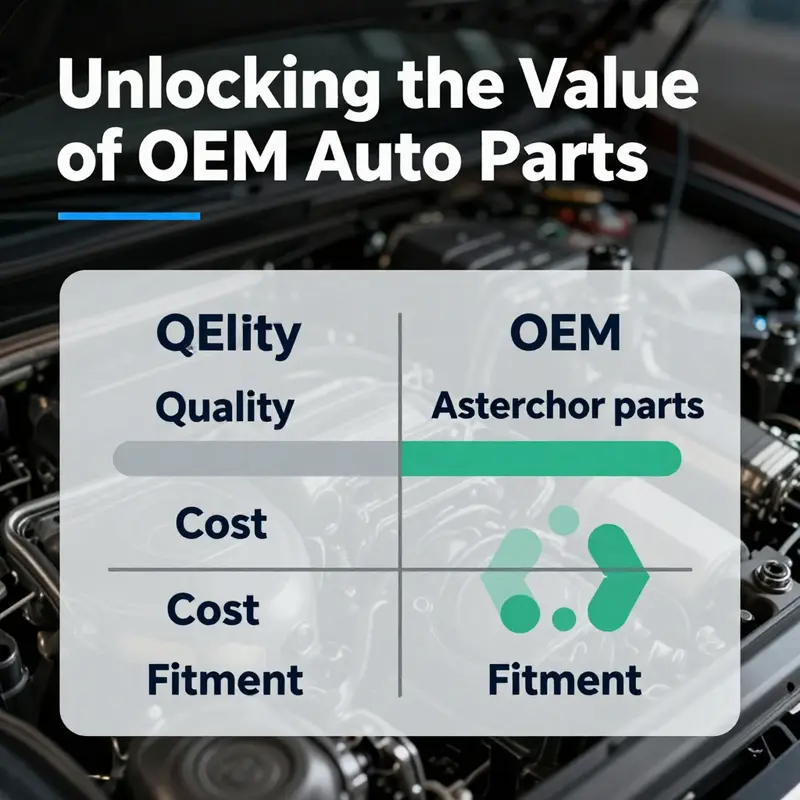
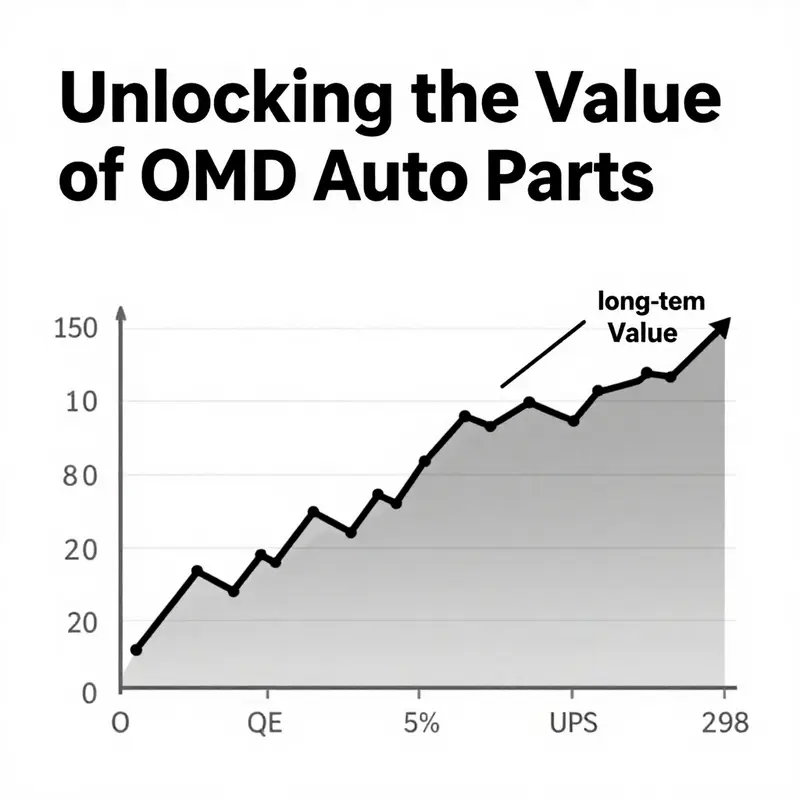
Cost is the most visible factor. Aftermarket parts commonly appear 30–50% cheaper than their OEM equivalents. That discount comes from several sources: lower production overhead, price competition among many suppliers, and a smaller brand premium. For routine repairs—filters, wiper blades, basic trim—those savings often make economic sense. The lower sticker price reduces immediate out-of-pocket expense and can stretch limited repair budgets.
Yet lower purchase price is only one side of the ledger. A cheaper part that fails prematurely imposes additional costs. There are direct costs: a new replacement part and the labor to install it again. There are indirect costs: vehicle downtime, lost time for the owner, and the potential damage a failing part can do to adjoining systems. When repairs are frequent, the cumulative expense of repeated replacements can exceed the initial savings that attracted the buyer. This is where long-term value enters the calculation. OEM parts are built to the automaker’s original specifications. They typically offer tighter fitment and more predictable durability. For systems where fit and integration matter—suspension geometry, braking systems, and electronic sensors—OEM parts can reduce the risk of follow-up repairs and hidden failure modes that lead to cascading damage.
Warranty and liability further tilt the economic balance. Many automakers and dealerships require OEM parts to maintain warranty coverage on systems tied to that repair. Using a non-OEM part on a safety-critical component can trigger warranty denial or added scrutiny. For consumers, this means that an initially cheaper repair could cost more when the manufacturer refuses a related warranty claim. From the insurer’s perspective, acceptance of aftermarket parts for claims processing helps contain repair costs. This practice keeps premiums more affordable, but it also raises debates about whether insurers should differentiate between different tiers of aftermarket quality.
Manufacturers face complementary economic pressures. Selling OEM parts directly or through authorized dealers typically yields higher profit margins compared with the vehicle sale alone. These parts are a recurring revenue stream tapped over the life of the vehicle. More than revenue, however, OEM parts protect brand integrity. A single poor repair outcome attributed to a non-OEM component can harm consumer perceptions of the vehicle’s reliability. For manufacturers, preserving the original specification throughout service life safeguards both reputation and resale values.
At the same time, the aftermarket is not merely a threat. Its competitive pressure stimulates cost-focused innovation and can lower barriers to repair for vehicle owners. In response, some OEMs have begun to license designs, offer remanufactured components, or enter the aftermarket themselves. These moves blur the distinction between OEM and aftermarket, and they change the economics. Licensing generates royalty income without requiring the OEM to scale parts production. Offering remanufactured or certified aftermarket options captures price-sensitive segments while allowing the OEM to retain control over standards and testing protocols.
Competition from aftermarket suppliers also affects supply chains. A vibrant secondary market reduces single-source dependence and can improve parts availability, especially for older models. For consumers, better availability means faster repairs and lower holding costs for a vehicle out of service. For manufacturers and large parts suppliers, the aftermarket creates channels for scaled production and specialist innovation—smaller firms may focus on niche upgrades or performance improvements that were not part of the original vehicle program. This diversity fosters job creation across manufacturing, distribution, and repair services.
The economic calculus changes with technological complexity. Modern vehicles increasingly rely on software, sensors, and tightly integrated modules. Where a component includes embedded software or safety-critical electronics, the cost of ensuring compatibility and certification rises. OEM parts carry embedded guarantees about compatibility with the vehicle’s control systems. Aftermarket suppliers must invest in reverse engineering, testing, and often licensing agreements to reach the same level of assurance. Those investments raise the price of high-quality aftermarket components and narrow the price gap with OEM parts. In such cases, the marginal savings of a cheaper part may be outweighed by the risk of impairment to system performance.
Environmental and lifecycle economics matter as well. Remanufactured OEM parts or high-quality aftermarket replacements can reduce waste and extend component life cycles. For buyers focused on total cost of ownership, choosing a remanufactured OEM or a certified aftermarket part may deliver similar performance at lower ecological cost. This can factor into corporate fleet decisions where both maintenance budgets and sustainability targets must align.
Independent repair shops also shape the economic picture. Shops that specialize in aftermarket parts can offer competitive labor-plus-part packages, attracting customers driven by upfront savings. Conversely, dealers and franchised service centers often price repairs to reflect OEM parts and certified labor. The distribution of repair channels affects regional pricing and can create market segmentation: consumers who prioritize cost often go to independent shops, while those seeking warranty-preserving service favor dealers.
For consumers making the choice, a pragmatic framework helps. Evaluate the part by safety relevance, integration complexity, and expected service life. For safety-critical systems or components that interface with vehicle electronics, the case for OEM increases. For basic wear items, reputable aftermarket options often provide similar function at a lower cost. Factor in warranty implications and insurance policy language. Also consider resale and reliability: OEM parts may support higher resale values by preserving original specifications and documentation.
The macroeconomic effect is clear. Aftermarket competition exerts downward price pressure. It expands options for consumers and introduces efficiencies into the parts economy. OEMs retain strategic value in brand and technical assurance. Where the markets intersect, licensing and certified remanufacture offer hybrid solutions that spread benefit across consumers and manufacturers. Policymakers and industry groups will continue to shape standards and regulations that balance safety with affordability. Meanwhile, the choice of parts remains a practical negotiation between immediate cost and longer-term economic risk.
One practical example of an OEM replacement option available to consumers is an original carbon fiber bonnet designed specifically for a certain model, which illustrates the premium and fitment precision buyers trade for compatibility. For a real-world reference that explores the industry balance between OE and aftermarket parts in greater depth, see this overview: https://www.carparts.com/oe-parts-vs-aftermarket/
For those weighing options, the key is to treat parts selection as an investment decision. Lower upfront cost is valuable. But so is predictable performance, warranty protection, and the avoided cost of follow-up repairs. The economic answer is rarely universal; it depends on the part, the vehicle, the owner’s time horizon, and the local repair ecosystem. Carefully weighing those variables reveals the true cost and value behind the letters “OEM.”
Why OEM Quality Assurance Matters: Protecting Safety, Performance, and Peace of Mind
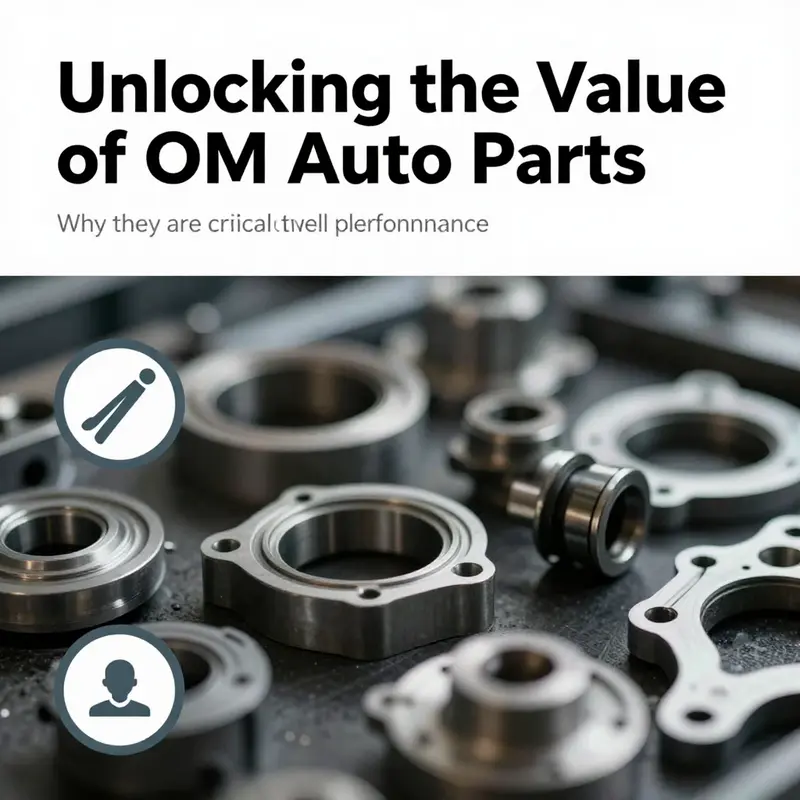
Consistent design and controlled production are what make OEM parts central to vehicle safety and performance. When a component leaves the factory labeled as Original Equipment Manufacturer, it represents more than a name. It embodies a series of engineering choices, controlled manufacturing steps, and verification procedures designed to ensure the part behaves exactly as intended inside a specific vehicle system.
An OEM component begins with a specification. Engineers define exact dimensions, material properties, tolerances, and test criteria so the piece integrates seamlessly with other systems. That single thread of specification makes a major difference for critical areas like structure, braking, restraint systems, and chassis dynamics. A front structural member made to those tolerances will engage with the crumple zones, reinforcements, and airbag triggers in a predictable way during a crash. A brake caliper and rotor produced under the same design rules will deliver consistent stopping force, heat management, and pad wear patterns across a vehicle fleet.
Fitment matters, and the tolerances for fitment are narrower than many drivers realize. A panel gap or mounting point shifted by a few millimeters can change load paths under stress. That shift may increase vibration, accelerate corrosion, or allow road debris into sensitive areas. OEM quality assurance controls these tolerances through calibrated tooling, process control charts, and frequent dimensional checks. The result is parts that bolt on without forcing, that align sensor surfaces correctly, and that maintain the designed geometry of safety-critical assemblies.
Material selection and traceability are another foundation of OEM assurance. Automakers and their suppliers specify alloys, polymers, adhesives, and coatings based on long-term testing and compatibility studies. Components are tracked through serial numbers or batch codes so any failure can be traced back to a production run and corrective action taken. This traceability supports rapid recalls or targeted repairs if a latent defect appears in the field. Third-party parts rarely offer the same level of documented provenance. Without it, identifying the scope and cause of a problem becomes slower and less precise.
Testing is what turns design into confidence. OEM suppliers perform fatigue tests, thermal cycling, impact simulations, and corrosion exposure that mirror real-world conditions. Electronic components undergo electromagnetic compatibility checks and software validation against vehicle control systems. Safety systems such as airbags and seatbelt pretensioners must meet strict deployment curves and force limits. OEM parts are validated within the vehicle context, not just as standalone items. That integrated testing ensures the sensors, actuators, and structural elements behave as a coordinated system when they must.
Reliability follows from repeatable processes. Production lines for OEM parts use controlled environments, calibrated machines, and documented procedures. Quality control uses statistical methods to detect trends before they become defects. Inspections catch anomalies; corrective actions fix root causes. Suppliers typically maintain certifications and internal audits to keep those processes robust. For vehicle owners, reliability translates into predictable maintenance schedules and fewer surprises on the road.
Brake systems illustrate this chain of dependencies. Brakes depend on rotor materials, pad compounds, hydraulic tolerances, and electronic control algorithms. If one piece deviates, it can cause pulsation, uneven wear, or reduced friction under heat. OEM brakes are engineered and tested as an assembly to reduce this risk. That engineering extends to how brake components interact with wheel assemblies and electronic stability systems, preserving the handling characteristics drivers expect.
Handling itself is more than steering feel. Suspension geometry, bushings, dampers, and fasteners all influence vehicle dynamics. An OEM replacement shock absorber will match valving curves and mounting heights. That match preserves roll control, mid-corner balance, and return-to-center behavior. Non-OEM parts can change ride height or damping and alter sensor feedback to stability controls. Those small changes can compound into a vehicle that no longer responds the same way in emergency maneuvers.
Safety systems are uncompromising. Airbags and seatbelts are calibrated to deploy with precise timing and force based on crash sensors and occupant detection. Restraint systems integrate with the vehicle frame, seat anchors, and interior trim. Replacing these elements with parts that do not match the original calibration can reduce occupant protection or create inconsistent deployment patterns. OEM parts maintain the engineered chain from sensor to restraint.
Warranty and support are practical consequences of that same quality framework. OEM parts usually come with explicit warranties and are supported by repair networks that understand the system-level interactions. If a component fails within warranty, the pathway for repair, replacement, or recall is clear. That clarity reduces downtime and avoids disputes about liability. Aftermarket options sometimes offer warranties too, but they seldom match the depth of documentation and long-term support available from OEM channels.
Cost is a consideration, naturally. OEM parts often carry a higher initial price. But cost comparisons should include long-term factors: repeat repairs, compatibility issues, and potential safety-related failures. A cheaper part that introduces wear in a mating component or causes sensor errors can become far more expensive over the life of a vehicle. In that context, choosing OEM parts is an investment in predictable performance and risk mitigation.
Vehicle value and compliance are further benefits. Vehicles maintained with OEM components generally retain their designed performance characteristics. This preservation matters for resale value and for meeting emissions or safety inspections. For owners who value the original driving experience, OEM parts help keep the vehicle true to its design intent.
There are pragmatic situations where non-OEM parts are viable. Routine items that do not affect critical systems, or parts that have proven equivalence through independent testing, can be cost-effective. When alternatives are considered, the decision should be informed by documented testing, fitment data, and an understanding of system interactions. In many repairs, however, the conservative choice remains OEM for components tied to safety and structural performance.
A practical example from service environments shows how OEM parts simplify work. When a certified part is specified, technicians know the torque values, mounting sequences, and sensor calibrations that apply. Fewer unknowns mean faster, more reliable repairs. This predictability minimizes vehicle downtime and reduces the chance of follow-up visits due to fitment issues or compatibility faults. For complex systems, that efficiency translates directly into safer vehicles on the road.
OEM quality assurance is not merely marketing. It is a structured approach to design, materials, manufacturing, and testing. That structure yields parts that fit, perform, and integrate predictably. For vehicle owners and repair professionals, that predictability protects safety and performance. Choosing OEM for structural parts, brakes, handling components, and restraint systems reduces uncertainty and preserves the engineered behavior the vehicle was designed to deliver. When a specific fitment example matters, many owners rely on direct-fit replacement panels like a genuine Evo X front bumper for structural alignment and finish.
For a concise primer on how OEM parts differ and why their controlled production matters, refer to this overview from a trusted automotive service source: https://www.meineke.com/blog/everything-you-need-to-know-about-oem-parts/.
Final thoughts
In summary, OEM parts are essential in the automotive industry due to their quality, safety, and precise specifications that meet manufacturer standards. For business owners, understanding the value of these parts can enhance customer trust, optimize vehicle performance, and lead to better economic decisions. By recognizing the advantages of using OEM parts over aftermarket alternatives, businesses can not only improve their service offerings but also ensure that they are providing their customers with reliable solutions for their automotive needs.