

In the ever-evolving automotive industry, understanding the intricacies of core deposits is crucial for business owners. Core deposits are not merely financial footnotes; they play a significant role in the remanufacturing ecosystem, facilitating recycling and sustainability. This guide delves into the essence of core deposits, breaking down the economic implications, clarifying terminologies, and examining their impact on auto parts recycling. Furthermore, we shall outline the responsibilities consumers bear in relation to core deposits, ensuring all stakeholders are well-informed. By the end of this exploration, you will have a comprehensive understanding of core deposits and their significance to your business and the wider automotive sector.
Core Deposits in Auto Parts: A Recycling-Incentive Engine for Remanufacturing
The idea of a core deposit sits at the crossroads of consumer finance and industrial sustainability. In the auto parts world, a core deposit is a refundable fee attached to the purchase of a remanufactured or rebuilt part. It is not simply a price gimmick; it is a carefully structured invitation to recycle the worn out parts that a vehicle inevitably leaves behind. When you buy a remanufactured component, whether an essential electrical module, a drivetrain element, or a mechanical assembly, you may be asked to pay a core deposit in addition to the remanufactured part’s price. That deposit is the guarantor of return: a promise that the old, worn part will be sent back so it can be inspected, reclaimed, and refurbished for future use. If the core is acceptable, the deposit is refunded after the return is verified and the supplier confirms that the core meets their refurbishing criteria. The process blends practical economics with environmental stewardship, turning what would otherwise be metal scrap into a resource that can be recycled into new, functioning parts.
A common point of confusion is the relationship between core deposits and core charges. While the two terms are related, they are not identical in every case. A core charge is a price component that secures the return of a core; it may be nonrefundable if the customer does not return the old part or if the core is deemed noncompliant. A core deposit, by contrast, is framed as a refundable credit. The refundable portion is meant to be returned to the customer after the core returns and passes verification. In practice, some suppliers combine these ideas into a single line item, labeling it as a deposit or charge depending on their accounting and policy, but the underlying mechanism remains the same: the customer finances the return of a core, and the core is the currency of the remanufacturing loop.
To understand how this works in the real world, imagine purchasing a rebuilt component that lists a price plus a core deposit. The replacement part is installed, and the new component begins to operate as intended. At some point, the customer locates and returns the old part, the core, within a defined window. The returned core travels to a verification process, where technicians assess its condition and determine whether it is restorable and suitable for refurbishment. If the core clears scrutiny, that is, it can be refurbished into a usable product, the deposit is refunded. The timing of this refund varies by supplier but is typically processed after the core has been received and logged, and after any needed confirmation of core eligibility. If the core is damaged beyond refurbishing or if it cannot be matched to the claimed part type, the refund may be reduced or denied, depending on the stated policy. In some cases, a partial refund is offered if the core is usable but incomplete, while in others the entire deposit may be at risk. These policies emphasize the need for customers to handle the old part with care and to return it in a condition that the refurbisher can recognize and classify.
From an economic perspective, the core deposit acts as a stabilizer for the remanufacturing supply chain. Core availability is a key constraint: without a reliable stream of cores, remanufacturers cannot refurbish enough units to meet demand. The deposit helps ensure that customers participate in the market’s circular loop, not simply purchase factory-new parts. Core value is not static; it fluctuates with market conditions, the ease of refurbishing certain cores, and the overall health of the recycling ecosystem. Parts with high refurbishment yield and that retain critical compatibility tend to command higher eligible core values, while cores that are damaged beyond rework or that require expensive processing may reduce the overall economics. In practice, this means the deposit a customer pays is essentially a bet on future recoverable value of the core, balanced against the cost of producing a remanufactured part and the price difference from a new part. When the cores flow efficiently, the remanufacturer can maintain competitive pricing for remanufactured parts and sustain a broader catalog of offerings.
The concept of core inventory helps illuminate the inner workings of remanufacturing. Remanufacturers maintain a stockpile of cores – the old parts retrieved from customers and other channels. This core inventory is not just a storage bin; it is the backbone of refurbishment capacity. A steady stream of returns supports a steady stream of refurbished units, creating a predictable cycle of production and sale. The quality of the cores in inventory matters as much as their quantity. High quality cores that are intact and properly sized enable faster refurbishment, lower processing costs, and better yield. Conversely, degraded cores or misidentified cores can slow refurbishment and erode margins. Because return rates influence factory planning, many suppliers set expectations for the rate and timing of core returns, and they may offer additional incentives or penalties to align customer behavior with operational needs. For the consumer, this dynamic translates into a practical truth: taking care of the core you remove from your vehicle can influence how quickly you can recoup the deposit and how the remanufacturer prices future parts.
The sustainability dimension of core deposits is not incidental. The auto industry faces pressure to reduce waste and to recover valuable metals, plastics, and other materials from worn components. Refurbishment keeps material streams in circulation, lowers energy consumption relative to producing new parts, and reduces the environmental footprint of vehicle maintenance. Core return programs also minimize landfill waste and encourage technicians and consumers to treat discarded cores as valuable resources rather than as disposable clutter. The circular economy logic is clear: a well functioning core system lowers the total cost of ownership for remanufactured parts, broadens access to affordable repairs, and helps facilities meet environmental stewardship goals. This is not mere theoretical rhetoric; many remanufacturers report that the availability of cores and the efficiency of the return process materially affect their ability to maintain inventory, set fair price points, and deliver consistent quality.
From the customer’s vantage point, the journey through a core deposit program is a small but meaningful choice with tangible consequences. Before buying, it pays to ask a few practical questions: How much is the core deposit, and what is the refund timeline? What condition qualifies for full refund, and what constitutes a rejected core? Is there a prepaid return method, such as a prepaid shipping label or local drop off? Will the core be verified in person or by documentation? Clarifying these questions up front helps prevent surprises and ensures the experience is as smooth as possible. It is also wise to preserve the original packaging and to document the part’s condition when removing it. If the old core is difficult to remove, or if it is damaged during removal, customers should communicate promptly with the supplier to avoid misinterpretations that could jeopardize the refund.
In the broader market, core deposits reflect a shift toward more transparent refurbishment ecosystems and a more deliberate use of the existing vehicle stock. The shift is not about replacing the entire catalog with remanufactured parts alone; it is about creating a reliable, verifiable route for old parts to be reprocessed, with accountable standards for condition, refurbishment, and return. The consumer side benefits from clear pricing, potential cost savings, and the knowledge that repairs are supported by a system designed to reuse rather than discard. On the supply side, better core management translates into more predictable production schedules, higher quality refurbished parts, and improved ecological outcomes. A well functioning core program makes remanufactured parts a viable, credible option alongside new parts, even for essential components that bear on vehicle safety and performance. Finally, this approach aligns incentives across the supply chain and helps customers feel confident that their purchases contribute to a circular economy.
How Core Deposits Shape Cost, Supply and Sustainability in Auto Parts
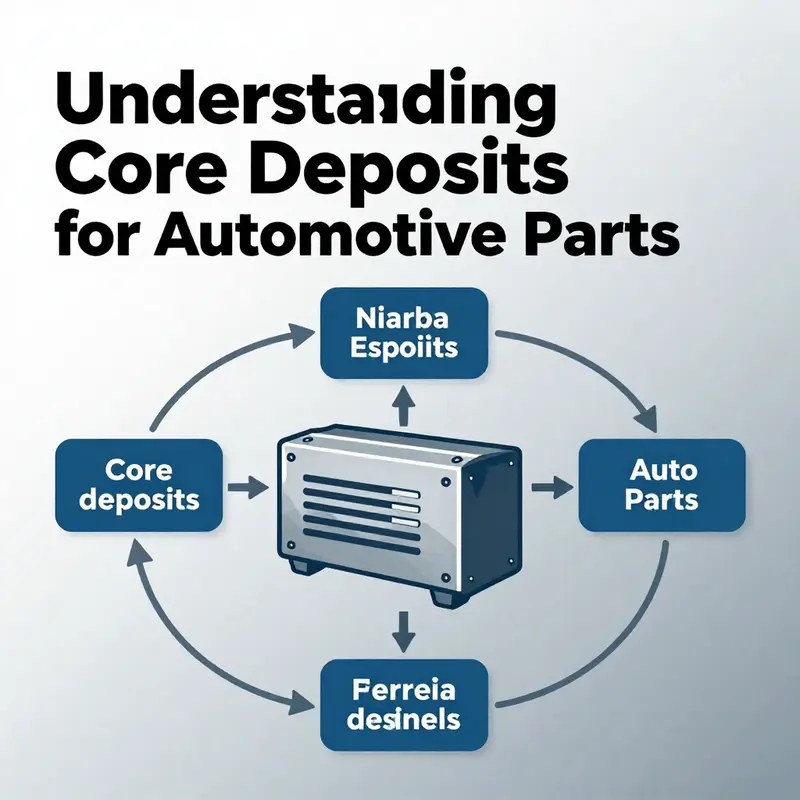
How core deposits shape cost, supply and sustainability in auto parts
Core deposits sit at the intersection of finance, logistics, and environmental practice in the automotive parts market. At their simplest, they are refundable fees attached to the purchase of rebuilt or remanufactured parts. A customer pays a higher upfront price when buying a rebuilt component, then returns the old part — the “core” — to reclaim the deposit. That exchange is more than a transaction. It is the engine that keeps a circular supply chain moving. When you follow the money and the parts, you see why core deposits matter for pricing, inventory stability, and industry sustainability.
The economics begin with cost reduction. Reconditioning an existing part often costs far less than making a new one from raw materials. Labor and processes required to strip, clean, and replace worn components are typically cheaper than the full manufacturing cycle. The difference can be substantial. For many components, rebuilding a core can cut production costs by large margins compared to producing a brand-new unit. Manufacturers and remanufacturers pass part of that saving to consumers. At the same time, the core deposit protects that saving by ensuring a steady return flow of usable cores.
From a pricing perspective, the core deposit serves two roles. First, it functions as a risk buffer. A deposit helps offset the uncertainty about the returned core’s condition. If a returned core is unusable, the cost to source and rebuild rises. The deposit mitigates that risk. Second, the deposit works as a buyer incentive. It makes the net cost of a rebuilt part attractive when the customer completes the exchange. The initial sticker price may look higher, but the refundable portion reduces the effective net cost when the old part is returned. That dynamic nudges consumers to participate in the remanufacturing loop.
Core values vary by part type and market. Small electrical parts may carry modest deposits. Large or complex parts command larger deposits. The core value is proportional to the metal content, the difficulty of rebuilding, and the market demand for a given core. Transmission and engine cores typically attract the highest deposits. They contain valuable metals and complex subcomponents that are expensive to source or reproduce. Conversely, small plastic components or simple brackets often have low or no core deposit at all, because the economic incentive for reclaiming them is weak.
Retailers and remanufacturers design deposit policies to balance convenience and economics. Some operations offer instant refunds upon receiving a core that meets minimal criteria. Others provide store credit, which encourages repeat purchases and retains revenue within the supply chain. Timelines for refunding deposits vary as well. Immediate refunds require staff time for inspection and handling. Delayed refunds allow for more rigorous verification, helping avoid losses from unusable or incomplete cores. Each approach reflects trade-offs between cash management, customer satisfaction, and operational costs.
Core inventory is a central concept in this model. Remanufacturers maintain a stock of cores to feed production. That inventory reduces lead times and stabilizes output. It also functions as working capital. When cores accumulate, they represent potential savings compared to buying raw materials. But cores also carry carrying costs: storage, inspection, transportation, and sometimes environmental compliance. Optimizing core inventory levels is therefore a financial challenge. Too few cores create production bottlenecks and raise procurement costs. Too many cores tie up capital and raise storage expenses.
Cash-flow implications are significant. Core deposits delay a portion of payment until customers return cores. For sellers, this creates short-term working capital advantages when deposits are held before refunds. However, liabilities arise because deposits must be repaid when cores return. Sound accounting separates deposit liabilities from revenue. Clear bookkeeping ensures deposits do not distort profit figures. When managed properly, the deposit system smooths cash flow across production cycles. It also reduces exposure to raw material price swings, which can be volatile and unpredictable in commodity markets.
The deposit model also affects sourcing strategies. Remanufacturers reliant on a healthy core stream can reduce purchases of virgin materials. That dependency creates resilience against raw material price spikes. At the same time, it creates sensitivity to consumer behavior. If consumers do not return cores, suppliers must purchase replacements, eroding profit margins. For that reason, many operators invest in customer education and straightforward return processes. Lower friction in returns translates into higher core recovery rates, which improves unit economics.
Environmental economics are part of the equation. Returning cores reduces waste and conserves resources. Recycling metals and refurbishing mechanical assemblies require less energy than full manufacturing. That energy savings translates into lower greenhouse gas emissions and smaller environmental footprints. Regulators and increasingly informed consumers favor such circular practices. As sustainability metrics take on more value in purchasing decisions, the deposit system becomes not just an economic tool but a market differentiator.
Behavioral economics explains why deposits work. People respond to explicit financial incentives. A refundable deposit ties a tangible monetary value to the act of returning a core. This is more effective than informal appeals to environmentalism alone. The deposit also simplifies decision-making at the point of purchase: return the old part, or accept a higher net cost. That clarity drives participation. The design of the deposit — refundable in cash or as store credit — can further shape behavior. Store credit nudges repeat business, improving lifetime customer value.
Technology and logistics shape future shifts. Better tracking, digital receipts, and barcode-linked cores simplify verification and speed refunds. Improved logistics lower handling costs and reduce turnaround time for cores. As electric vehicles and advanced materials become more common, the composition and value of cores will change. Some traditional cores may decline in value. Others, particularly those containing specialized rare-earth elements or complex electronics, may become more valuable. The deposit system will adapt as core lifecycles evolve.
Finally, consumer experience matters. Clear communication at the point of sale reduces confusion and builds trust. Simple, transparent criteria for acceptable cores minimize disputes. Efficient refund processes raise satisfaction levels and improve recovery rates. When the customer experience aligns with operational needs, everyone benefits: customers, retailers, remanufacturers, and the environment.
For those seeking industry standards and deeper operational guidance, a leading source on recycling and remanufacturing practices offers useful resources. For an example of a reconditioned transmission listing that illustrates how rebuilt parts enter the market, see the reconditioned transmission listing. For broader industry standards and guidance on core programs, consult the Automotive Recyclers Association at https://www.autorecycler.org
Core Charges Unpacked: How Refunded Fees Drive Recycling, Returns, and Reliability in Auto Parts

In the language of auto parts, a phrase sounds simple but carries a batch of practical consequences: core charges. The term core deposit often appears in financial contexts or in discussions about bank-backed loans, but when car owners or shop technicians walk into a parts counter, the world of rebuilds and remanufacturing operates on a different set of rules. The core concept that matters for buyers and remanufacturers alike is not a deposit in a bank, but a refundable fee tied to the return of old parts. Understanding this distinction is essential for anyone trying to evaluate upfront prices, plan a repair, or gauge how the industry recycles itself to keep vehicles on the road and parts in circulation. The auto parts sector uses a core charge as a practical incentive, a practical policy, and a reminder that sustainability in manufacturing is, at its core, a collaboration between producers and customers.
A core charge is a separate line item added to the purchase price of certain rebuilt or remanufactured parts. It’s not a profit center; it’s a credit mechanism designed to ensure the return of the worn part that the remanufacturer will refurbish or recycle. When you buy a rebuilt component, the price you see includes the base price for the remanufactured unit plus a core charge. The core charge acts like a refundable deposit, but there are important nuances. After you install the rebuilt part, you return the old core to the seller or a designated drop-off point. Once the supplier confirms the core is eligible for refurbishing—acceptable condition, complete and intact, within the specified timeframe—the core charge is refunded. The exact amount varies by part, and the conditions for refund can differ among vendors and product lines. A practical example helps: purchasing a rebuilt alternator might involve a base price of, say, 150 dollars for the unit plus a 75-dollar core charge. If you return your old alternator in a claimed condition within the allotted window, the 75 dollars come back to you. If the core isn’t returned, the core charge remains forfeited. This arrangement aligns incentives: it motivates the recycling of old parts, supports the remanufacturing cycle, and tends to lower overall resource consumption and waste.
This is where the critical distinction from a “core deposit” becomes clear. In the automotive parts vernacular, a core deposit does not represent a standard industry term or a widely used price component in the same way as a core charge. A core deposit, in a banking or wealth-management sense, refers to funds held to support loans or to establish credit lines. In the context of auto parts, there is little to no use for that kind of deposit; instead, the financial mechanism that drives the remanufacturing ecosystem rests on the refundable core charge. The importance of this distinction goes beyond semantics. It shapes how customers plan their purchases, how garages communicate costs to clients, and how remanufacturers estimate the feasibility of refurbishing a given part. In short, core charges are a practical tool built into the pricing architecture of remanufactured parts, not a separate banking instrument.
The rationale behind core charges goes deeper than pennies and refunds. Environmental and economic efficiency meet in the idea of a closed-loop system. remanufacturing thrives when the old parts—the cores—are returned in good condition and are easy to refurbish. The core inventory, the stockpile of cores that remanufacturers keep on hand for refurbishment, is a lifeblood for the industry. Without a steady flow of cores, remanufacturers face longer lead times, higher costs, and the risk of using new materials when older parts could be refurbished. The core charge, therefore, acts as a logistical and environmental lever. It reduces waste and minimizes the need for extracting and processing virgin materials. It also stabilizes the cost structure for remanufacturers by providing a predictable stream of recycled material that can be refurbished and reintroduced into the supply chain.
The path from purchase to refund is deliberately simple in theory, but its execution matters in practice. When a consumer or shop buys a rebuilt component, the core charge is collected at the time of sale. After installation, the customer is given a defined window to return the old, worn part. The returned core is evaluated for eligibility. Common criteria include whether the core is complete, whether key components are present, and whether the core’s condition allows for refurbishing without excessive processing. If the core meets the criteria, the core charge is credited back to the customer, often as a direct refund or as a discount against future purchases. If the core fails to meet the required condition or is not returned within the window, the refund does not occur. The clarity of these terms helps customers anticipate the total cost of ownership and understand the value proposition of choosing remanufactured instead of new components.
From a consumer perspective, the emotional and financial calculus can be nuanced. A rebuilt part with a sizable core charge can look expensive at first glance. Yet when the core is returned, the total cost might align with, or even undercut, the price of a new part when all factors are considered. The refund timing and the condition requirements influence decision-making. Buyers often appreciate the potential for savings when they plan ahead for the core return and keep documentation handy to prove eligibility. Mechanics and parts specialists, too, shoulder responsibilities in explaining these terms to customers. A straightforward explanation eliminates confusion, builds trust, and supports smarter choices in vehicle maintenance. The system works best when both parties understand the mechanism: you pay a core charge up front, you return the worn part within the window, and you receive your funds back after the core is verified as eligible for refurbishing.
The environmental narrative tied to core charges cannot be overstated. Every returned core that becomes a remanufactured part displaces the need for new materials and reduces energy consumption associated with producing a new component. The practice also reduces waste in landfills and mitigates the environmental footprint of automotive repair. In a broader sense, it reinforces a circular economy—one where parts are designed for refurbishing, not disposal, and where customers play a direct role in extending the life of automotive components. The core charge, therefore, is not merely an incidental fee; it is a signal to participate in a more sustainable approach to maintenance and repair. It invites customers to consider the end-of-life story of a part from the moment they pick up a replacement, to the moment they return a core, to the moment the remanufactured unit is installed again on another vehicle.
Recognizing the practical realities of ownership also helps. Parts with higher core charges tend to include more complex or higher-value cores, such as engines or transmissions, where refurbishing can recover substantial value and where the core return helps offset a larger investment in the remanufactured unit. In contrast, smaller, simpler cores might carry modest charges that still reinforce the return mindset. The policy structure is deliberately flexible enough to accommodate a range of parts while maintaining core integrity in the remanufacturing stream. For customers, it means asking a few questions at the counter or while shopping online: Is there a core charge on this part? What is the amount? What are the conditions for returning the core? By understanding the framework, a buyer can make purchasing decisions that balance upfront price, potential refunds, and environmental impact.
As the industry continues to evolve, the terminology around core concepts becomes more precise and the processes become more standardized. The essential takeaway is straightforward: in auto parts, a core charge is a refundable fee tied to the return of the worn part, and it plays a central role in supporting remanufacturing, recycling, and sustainability. A core deposit, in contrast, is not a standard term within this field and should not be conflated with the automotive practice. The distinction matters for pricing transparency, for understanding the true cost of a rebuilt part, and for recognizing the shared responsibility between customers and suppliers in maintaining a circular, resource-conscious repair ecosystem. By embracing this clarity, buyers participate more effectively in responsible consumption and contribute to a healthier lifecycle for automotive components.
External resource: For a deeper exploration of how core charges operate and what they mean for recycling and remanufacturing, see the detailed explanation at https://www.autorepairworld.com/core-charge-explained/.
null

null
null

null
Final thoughts
Core deposits play a fundamental role in the automotive parts business, serving as a catalyst for sustainable practices and effective remanufacturing processes. By understanding the complexities of core deposits, business owners can better navigate the financial and operational landscapes of their industries. It is vital for all stakeholders, including consumers, to grasp their responsibilities in the cycle of recycling automotive parts. As the automotive sector evolves, embracing core deposits will not only enhance financial stability but also contribute positively to environmental efforts.