
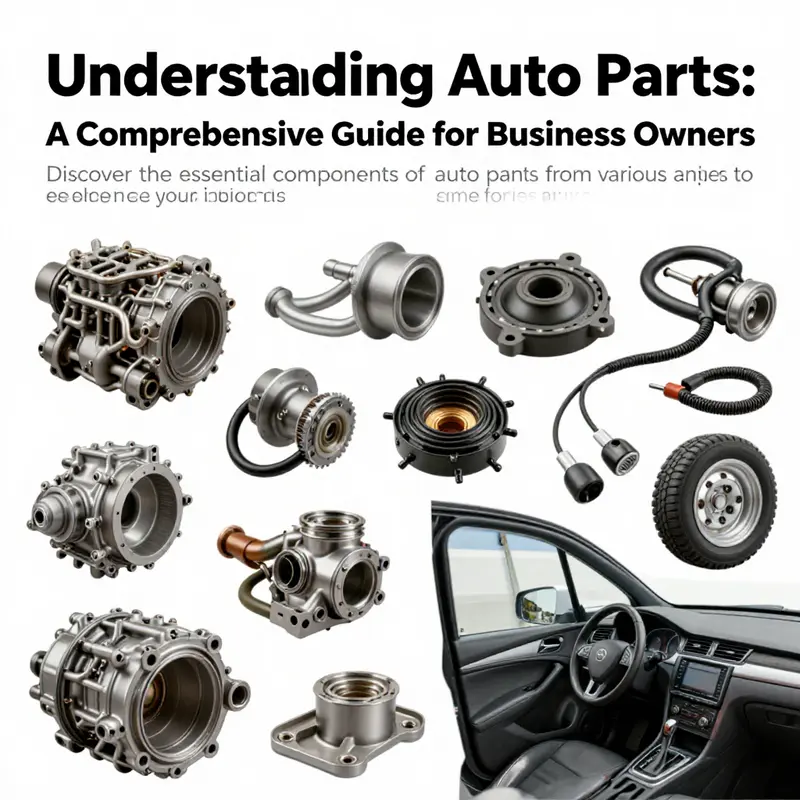
Auto parts play a crucial role in the automotive industry, impacting everything from vehicle performance to consumer satisfaction. For business owners, understanding the different types of auto parts is essential for making informed decisions regarding sales, repairs, and inventory management. In this guide, we will explore the mechanical, electrical, external, and interior aspects of auto parts, offering insights into their significance and relevance in a competitive marketplace. Each chapter will delve into how these components function, their applications, and their implications for your business strategy.
The Mechanical Backbone: Understanding Auto Parts as the Engine of Motion and Safety
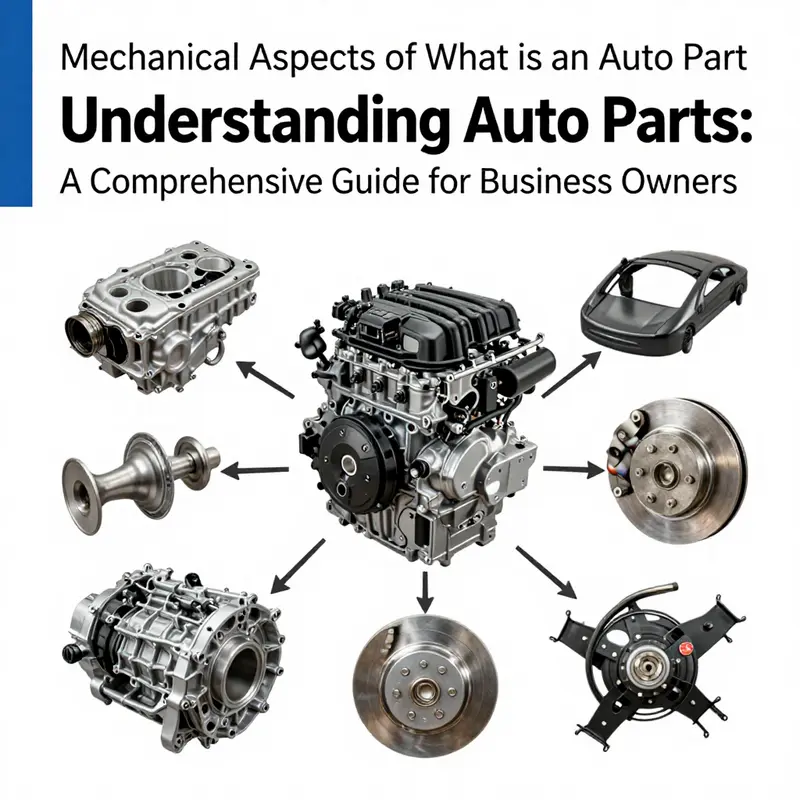
A modern vehicle is a carefully engineered ecosystem in which auto parts act as critical hinges in a larger chain of cause and effect. From the engine and transmission to suspensions, brakes, and steering, each component translates energy, controls motion, and protects occupants. This chapter surveys how powertrain components generate and deliver power, how wheels, tires, suspension, and chassis maintain geometry and contact with the road, and how braking and steering systems convert driver input into safe, predictable behavior. It also highlights the role of exhaust, cooling, lubrication, and supports such as fasteners and seals in reliability and longevity. The relationship between OEM and aftermarket parts is discussed, emphasizing compatibility, quality, and value. Finally, the lifecycle of a part from design and manufacturing to maintenance and replacement is framed as a continuous, integrated process. By appreciating auto parts as interfaces among physics, materials, and human needs, we gain insight into how cars move, stop, steer, and endure under real-world conditions.
Electrical DNA: How Auto Parts Become Intelligent

In modern vehicles, electrical components are not afterthoughts but the core language by which machines think, move, and protect. They weave through every system, translating raw mechanical energy into controlled motion, feedback, and safety. The battery stores energy to start the engine and power systems when the engine is off, while the alternator recharges it during operation. The starter motor delivers the initial spin that kickstarts combustion, after which sensors and control units keep timing and fuel delivery in harmony. Wiring harnesses carry power and signals across the car, and fuses and relays guard against overloads and enable safe switching of high-current circuits. Sensors feed real-time data from exhaust, temperature, pressure, and position to the engine control unit (ECU) and other controllers, which in turn drive actuators that adjust injectors, valves, pumps, and climate systems. Together they enable efficiency, safety, and comfort, while allowing advanced features like ADAS to operate from a centralized network. For technicians, diagnosing electrical issues means inspecting connections, testing battery and charging health, and reading diagnostic trouble codes to confirm whether a sensor drifts, a wire is damaged, or a module requires calibration. The shift toward electrification and networked control makes electrical components indispensable and increasingly complex, demanding careful specification, quality control, and adherence to standards. This chapter invites you to see auto parts not just as individual devices but as a connected ecosystem where electricity and motion are inseparable.
null

null
Inside the Cabin: How Interior Configurations Reframe What an Auto Part Really Is

The inside of a car is more than a collection of objects assembled to shield passengers from weather or chafe against their limbs. It is a living interface, a tightly tuned ecosystem where each component serves a purpose, interacts with others, and contributes to the broader idea of what an auto part can be. When people ask what an auto part is, they often picture a metal piece or a plastic shell. The truth, explored through interior configurations, reveals a broader truth: an auto part is any element that helps a vehicle function as a coherent, usable machine. The interior, with its seats, dashboards, controls, and cabins, embodies that definition in its most intimate way. It translates mechanical motion, electrical signals, and safety priorities into a human-centered experience. It makes the vehicle legible, navigable, and livable. In this sense, interior configurations are not frivolous adornments; they are essential auto parts that shape how a car performs, feels, and endures over time.
Consider the role of seating systems, perhaps the most personal and constantly used auto parts inside any vehicle. Seats are not just cushions; they are engineered assemblies designed to support posture, distribute load, and accommodate countless human dimensions. The adjustment mechanisms, lumbar supports, and even the way a seat breathes with the occupant through temperature and pressure changes all influence comfort, safety, and driver alertness. A seating configuration that optimizes lumbar support for a 6-foot-tall rider, for example, can reduce fatigue on long drives, which in turn affects reaction times and attention—an unspoken but critical integration of interior parts with the vehicle’s overall performance envelope. The seat belt retractor, sensors, and pretensioners are intimately connected to seat design. If a belt cannot snugly fit or a sensor misreads a movement, the entire safety chain weakens. In other words, the interior is a tightly coupled system where seating and restraint mechanisms operate as a coordinated auto-part ensemble, aligning ergonomics with safety protocols while remaining compatible with trim, upholstery, and materials that determine tactile satisfaction.
The dashboard, instrument cluster, and control interfaces form another axis of interior configuration that illustrates how auto parts extend beyond mechanical or exterior components. The instrument panel is not simply a display; it is an information architecture. It organizes a car’s status—the fuel, the speed, the engine’s health—into a readable map. The design decisions embedded in this area affect cognitive load, reaction speed, and even the likelihood of driver distraction. Subtle choices in typography, color, and layout influence how quickly a driver can interpret critical data and react to evolving conditions on the road. The climate control system, the infotainment interface, and the array of switches create an ecosystem of interactions that must be intuitive yet comprehensive enough to convey complex information. The interior configuration of these elements matters as much as the raw components themselves. A well-placed dial, a responsive touchscreen, or a tactile button that remains reliable after years of use can define the long-term relationship a person has with their car. When we think about auto parts, we should never neglect the emotional and practical resonance of these interfaces, because they shape daily behavior as much as a vehicle’s mechanical reliability does.
Interior configurations also illuminate how auto parts connect to safety in more subtle, ongoing ways. Airbags are deployed through the same interior channels that support comfort and convenience. They sit within panels and pillars whose materials must absorb energy yet remain functional under a collision. The steering wheel, with its grip texture and control spokes, is another interior auto part that fuses safety with accessibility. The wheel and its attachments—column, airbag housing, steering assist systems—are designed to respond to driver input with precision, while the surrounding trim and instrument cluster provide immediate feedback about vehicle status. The interplay between softness and stiffness in interior materials can influence occupant protection as well. A dash or door trim that offers impact resilience without compromising aesthetics contributes to a safer cabin. In this sense, interior configurations are not isolated from safety engineering but are a critical site where safety philosophy becomes tangible for the people inside the car.
The materials that wrap the interior are, in themselves, sophisticated auto parts. The choice of fabric, leather, vinyl, or synthetic composites affects durability, climate response, and passenger comfort. These materials must withstand temperature fluctuations, friction from legs and arms, frequent cleaning, and the wear patterns of daily life. A cabin that ages gracefully maintains its ergonomic integrity because the materials continue to behave in predictable ways. The durability of interior components—trim pieces, door panels, and console housings—depends on a careful balance between rigidity and resilience. A misstep in this balance can lead to creaks, squeaks, or brittle failures that degrade the perception of quality and raise maintenance costs. The interior therefore becomes a barometer of how well a car’s auto parts are engineered to endure, not just how beautifully they express a brand’s vision.
Interior configurations are also about modularity and customization. A cabin can be arranged to serve different roles: a family vehicle that prioritizes rear-seat access and storage, a commuter car that emphasizes quietness and ergonomic reach, or a performance-focused model where every control is positioned for immediacy. The way panels snap together, the ease with which seats and dashboards can be replaced or reconfigured, and the standardization of mount points across models determine how adaptable an auto part ecosystem can be. This modularity matters not only for aftermarket enthusiasts but for repair shops that need to source parts quickly and accurately. When a dashboard is mounted on a predictable substructure, with standardized connectors and bolt patterns, replacement becomes less a matter of guesswork and more a straightforward process. Interior configurability thus translates into lower lifecycle costs and shorter downtimes, which are practical indicators of an auto part’s value.
The blend of mechanical integration with electrical and software systems is especially evident in interior configurations. Modern cabins host networks of sensors, actuators, and control units that monitor climate, seat position, lighting, and infotainment. These systems rely on robust harnesses, reliable power supplies, and secure data pathways. The instrument cluster, infotainment screens, and climate controls are not isolated gadgets; they are nodes within a broader electronic architecture. Even simple upgrades, such as changing the lighting mood inside the cabin or tailoring seat memory settings, depend on an integrated approach to interior parts. A cabin that communicates seamlessly—where a driver’s preferred seat position, climate preferences, and display layout are recalled automatically—demonstrates how interior configurations are algorithmic auto parts as much as physical ones. This integration also raises considerations about reliability and maintenance. A single loose connector or worn switch can ripple through the system, leading to false readings or degraded performance. Therefore, interior configurations represent the practical intersection of hardware and software in the auto parts universe, reminding us that a car’s interior is a living system as much as its engine is.
From a maintenance perspective, interior configurations demand thoughtful care. The interior is exposed to dust, sweat, humidity, and abrasion; thus, the upkeep of interior auto parts is essential to long-term performance. Cleaning schedules, protective treatments for leather or fabric, and routine checks for wear at hinges and latches help preserve function and feel. When a seat track begins to seize or a dashboard display dulls, the underlying cause often traces back to wear or contamination that could have been prevented with regular attention. Maintenance is not merely about replacing worn-out components; it is about preserving the precise alignment and calibration that keep interior auto parts performing as designed. The chassis, the engine, and the interior all share a common thread: only when each element remains within spec can the vehicle deliver the safe, predictable experience that owners expect.
In thinking about interior configurations, it is helpful to recognize how the mechanical and environmental conditions of a vehicle shape the design of auto parts. A cabin that prioritizes quietness and warmth in cold climates will use different material choices, sealants, and mounting strategies than a cabin designed for hot, humid regions. Acoustic panels, door seals, and firewall treatments are all interior components whose selection and arrangement influence comfort, which in turn affects how the vehicle is perceived and used. The same logic applies to branding and identity. Interiors often become visual and tactile ambassadors of a vehicle’s philosophy. A well-crafted interior communicates care, precision, and reliability through the simple, often overlooked, experience of touching a switch or settling into a seat. In this way, interior configurations reinforce the broader claim about auto parts: they are not merely the sum of their parts; they are the living, usable expression of how a vehicle is meant to be used.
The journey from raw engineering to everyday use climbs inside the cabin, where interior configurations become the most intimate auto parts. When a reader encounters a dashboard, a steering wheel, a seat, or a panel, that encounter translates into a physical component performing a suite of roles. It must withstand time, respond to human inputs, and integrate with safety and comfort systems. It must be reproducible across mass production while still offering enough variety to meet different customers’ needs. This dual demand—standardization for reliability and customization for experience—defines interior configurations as a central, dynamic category within the auto parts landscape. And because interiors are the most frequently interacted-with aspects of a vehicle, their care, design, and durability shape the vehicle’s everyday value far more often than many people realize. When we study what an auto part is, looking into interior configurations reveals the nuance and depth that defines modern automotive engineering. The cabin is not a backdrop; it is a central protagonist in the ongoing story of how cars are built, used, and loved.
For readers seeking a tangible entry point into interior parts, a glance at an instrument cluster, a dashboard layout, or a single seat adjustment mechanism can be surprisingly illuminating. These components illustrate how a car translates abstract engineering into practical, human-scale performance. If you want to explore a concrete example of how an interior component is integrated with other systems, you can view a dashboard-focused interior page that highlights how mounting, sensors, and interfaces come together in a cohesive module. See the dashboard-focused interior reference here: dashboard-evo-9.
Ultimately, interior configurations remind us that the concept of an auto part is not restricted to metal blocks or plastic shells. It encompasses the full spectrum of components that enable a car to function as a usable, safe, and comfortable means of transportation. From the moment a driver unlocks the door and slides into a seat, from the first hum of the climate system to the glow of the dash at night, interior auto parts perform a quiet, sustained form of engineering work. They transform raw mechanical potential into a daily experience that users depend on. And in recognizing this, we gain a more complete understanding of what an auto part is: not simply a single piece, but a network of interdependent elements that together create the lived reality of driving.
Final thoughts
In conclusion, understanding the various aspects of auto parts is invaluable for business owners in the automotive sector. By grasping the mechanical, electrical, external, and interior components, you can better navigate inventory management, customer inquiries, and repairs. Each part plays a unique role in vehicle operation and safety, and being knowledgeable about these elements not only enhances your service offerings but also strengthens your competitive edge in the automotive market.