

The auto parts market is a complex ecosystem driven by a wide array of buyers, each with distinct needs and motivations. Understanding who these buyers are—ranging from Original Equipment Manufacturers (OEMs) to individual consumers—provides valuable insights for business owners seeking to navigate this dynamic landscape. In the following chapters, we will delve into the primary buyers, highlighting their roles, purchasing behaviors, and how they influence the market, thereby equipping you with the knowledge to optimize your business strategies and reach your target audience effectively.
Behind the Procurement Wheel: How OEMs and Tier‑1 Suppliers Shape Who Buys Auto Parts
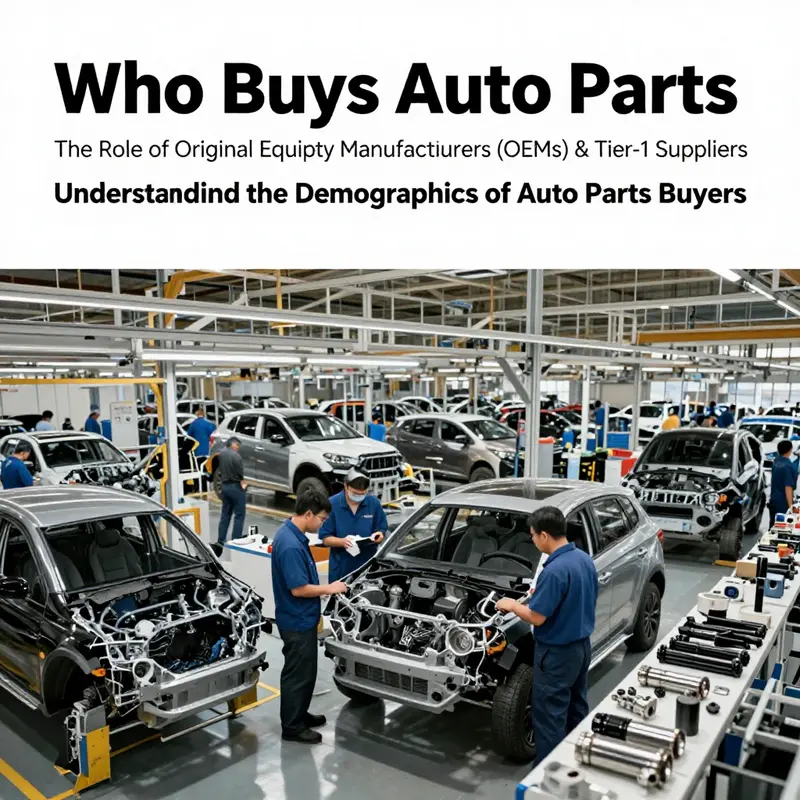
Original equipment manufacturers (OEMs) and Tier‑1 suppliers sit at the center of auto parts demand. They are not just buyers; they define what parts are made, how they should perform, and where value is created in the vehicle lifecycle. This chapter examines how these buyers operate, what drives their purchasing decisions, and how their relationships ripple across the broader auto parts market.
OEMs buy components to assemble finished vehicles. Their purchasing choices set volume, specification, and quality expectations across the supply chain. A single vehicle program can require thousands of unique parts and millions of units of repeated items. This scale gives OEM procurement teams tremendous influence over which suppliers thrive. They translate product design into procurement requirements, balancing cost, weight, safety, durability, and manufacturability. Procurement is integrated with engineering from the earliest design stages. Specifications are precise and nonnegotiable when safety or regulatory compliance is at stake. For commodity items, OEMs may allow more supplier flexibility, but for systems that affect performance or brand differentiation, they typically insist on close collaboration.
Tier‑1 suppliers are the OEMs’ right hand. They provide complete modules and systems ready for direct installation on the assembly line. Their work involves integrating components from lower-tier vendors into larger assemblies. Because they handle integration, Tier‑1s must master systems engineering, testing, and logistics. They often co‑develop parts with OEM engineers. That partnership reduces integration risk and shortens the development timeline. Tier‑1s also act as quality gatekeepers for the OEM. When a module fails in testing, responsibility usually stops at the Tier‑1 level, which means these suppliers must own both design and production quality.
Procurement dynamics between OEMs and Tier‑1 suppliers are strategic and contractual. OEMs seek long‑term, reliable suppliers capable of scaling volumes and maintaining consistent quality. Contracts may span multiple vehicle generations, with clauses for price adjustments, quality metrics, and intellectual property. Suppliers, in turn, invest in tooling and process improvements knowing they will amortize those costs across multi‑year programs. This creates a bias toward fewer, deeper supplier relationships rather than many transactional ones. For suppliers, securing OEM contracts is a primary growth strategy. Winning a program can secure predictable revenue for years and open doors to additional projects.
The structure of buying relationships reduces the effective number of direct purchasers at the top of the market. Because OEMs consolidate demand through Tier‑1s, large volumes move through a smaller set of industrial customers. That concentration shapes regional clusters where suppliers co‑locate near assembly plants. Proximity matters for just‑in‑time delivery and for frequent technical meetings. A supplier located within a short drive of an OEM assembly plant can respond faster to production changes and minimize inventory holdings.
Specification and validation processes are central to procurement. OEMs set detailed requirements across mechanical, electrical, and software domains. Suppliers follow rigorous validation plans that include bench testing, vehicle integration, regulatory compliance, and endurance runs. Traceability and documentation are critical. When problems arise in the field, OEMs and suppliers must quickly trace components to batches and production runs. A robust quality system reduces recall risk and protects brand reputation. Because the cost of failure is high, OEMs prefer suppliers that can demonstrate strong process controls and certification histories.
Pricing and cost management are ongoing negotiations. OEMs aim to reduce unit costs through design simplification, material selection, and scale. Suppliers pursue efficiency improvements and economies of scale to meet price targets while protecting margins. Collaborative cost reduction is common. Engineers from both sides may work to redesign a component to reduce parts, simplify assembly, or substitute a lower‑cost material without compromising performance. These joint initiatives help meet program cost targets while keeping the supplier viable.
Logistics and delivery models matter as much as engineering. Many OEMs operate with minimal on‑site inventory, relying on tightly scheduled deliveries. This requires suppliers to deliver parts to precise windows and in specific packaging configurations. Suppliers invest in logistics systems, pull‑based replenishment, and sometimes consignment inventory to support uninterrupted assembly lines. Failure to meet delivery windows can stop a production line and incur significant penalties. As a result, suppliers frequently develop redundant production lines or secondary sourcing strategies to mitigate disruption.
Risk management has become a strategic competency. Recent global disruptions highlighted vulnerabilities in lean supply models. OEMs and Tier‑1 suppliers now evaluate supplier concentration, geopolitical exposure, and material dependencies. They may qualify second sources, regionalize critical suppliers, or hold strategic safety stocks for high‑risk parts. These measures add cost but protect continuity. In some cases, OEMs and Tier‑1s share the cost of mitigation through contractual arrangements.
Intellectual property and data ownership are sensitive topics in OEM–supplier relationships. Modern vehicles include significant software and electronic content. When suppliers deliver integrated software‑hardware systems, ownership agreements can be complex. OEMs want to protect differentiation and control software platforms. Suppliers seek to monetize their technical investments and protect reusable technology. Negotiating IP rights involves balancing openness for integration with protection for innovation. Clear contractual terms reduce disputes and speed program delivery.
Sustainability and regulatory compliance shape purchasing decisions more than ever. OEMs target emissions, recyclability, and lifecycle impacts when specifying materials and processes. Suppliers must demonstrate environmental credentials and supply chain transparency. Regulations on hazardous substances and end‑of‑life vehicle processing drive material choices. Compliance is both a risk and an opportunity: suppliers that can deliver lighter, cleaner, or recyclable solutions gain a competitive edge.
The move to electrified powertrains and assisted driving technologies is reshaping supplier categories. New specialties—battery modules, power electronics, sensors, and onboard computing—challenge traditional supplier boundaries. Some suppliers evolve from mechanical expertise into systems that combine hardware and software. Others form alliances or acquire niche firms to fill capability gaps. OEMs respond by adjusting their sourcing strategies and by creating new tiers, sometimes named differently to reflect software and electronic integration. The net effect is a reallocation of where value resides, with software and electronic content capturing a larger share of vehicle value and buyer attention.
Performance metrics govern ongoing relationships. OEMs define service level agreements and key performance indicators across quality, delivery, cost, and responsiveness. Suppliers are monitored continuously. Poor performance can result in corrective actions, penalties, or even contract termination. Conversely, high performers may win preferred status or expanded scope. This measurement culture pushes suppliers to invest in continuous improvement and digital monitoring tools.
Aftermarket considerations influence OEM procurement indirectly. OEMs plan for warranty claims, parts availability, and long‑tail supply for older models. They decide which parts to keep as genuine spare parts and which to allow third‑party aftermarket production. These decisions affect aftermarket competition and long‑term parts demand. OEMs with a strong focus on aftersales service may structure procurement to ensure spare part availability for many years. That commitment impacts the entire spare parts ecosystem and determines who buys parts down the road.
The bargaining power between OEMs and suppliers varies by part complexity and uniqueness. For commoditized goods, OEMs often have leverage and may solicit multiple bids. For complex systems or specialized technologies, suppliers hold more power. Long development cycles and high switching costs give suppliers room to negotiate pricing and terms. Smart OEMs diversify strategically to avoid single‑source dependencies for mission‑critical systems.
Regional dynamics also matter. Automotive clusters emerge where production, engineering, and supplier networks concentrate. These clusters attract specialized vendors and create deep talent pools. Procuring locally can reduce lead times and foster innovation through close collaboration. However, global programs still require a blended sourcing strategy across regions to optimize cost, risk, and regulatory compliance.
Integration between procurement and engineering is a defining feature of successful programs. Purchasing teams do more than negotiate price; they shape technical requirements and project timelines. This integration shortens development cycles and ensures supplier readiness for launch. Early supplier involvement reduces surprises during vehicle validation and improves manufacturability.
Finally, strategic sourcing at the OEM level influences who buys auto parts elsewhere in the market. When OEMs consolidate suppliers and demand, distributors, independent repair shops, and aftermarket channels adjust. Tier‑1 suppliers’ procurement of subcomponents supports a vast network of Tier‑2 and Tier‑3 suppliers, sustaining industrial demand across regions. Understanding OEM and Tier‑1 buying behavior explains much of the broader auto parts market’s structure and flows.
For those seeking a snapshot of verified suppliers that serve OEMs and assembly programs, a curated directory of high‑performance auto parts suppliers provides useful leads and context: https://www.alibaba.com/showroom/high-performance-auto-parts-suppliers.html
How Repair Shops Anchor the Auto Parts Market: The Aftermarket Buyer Engine
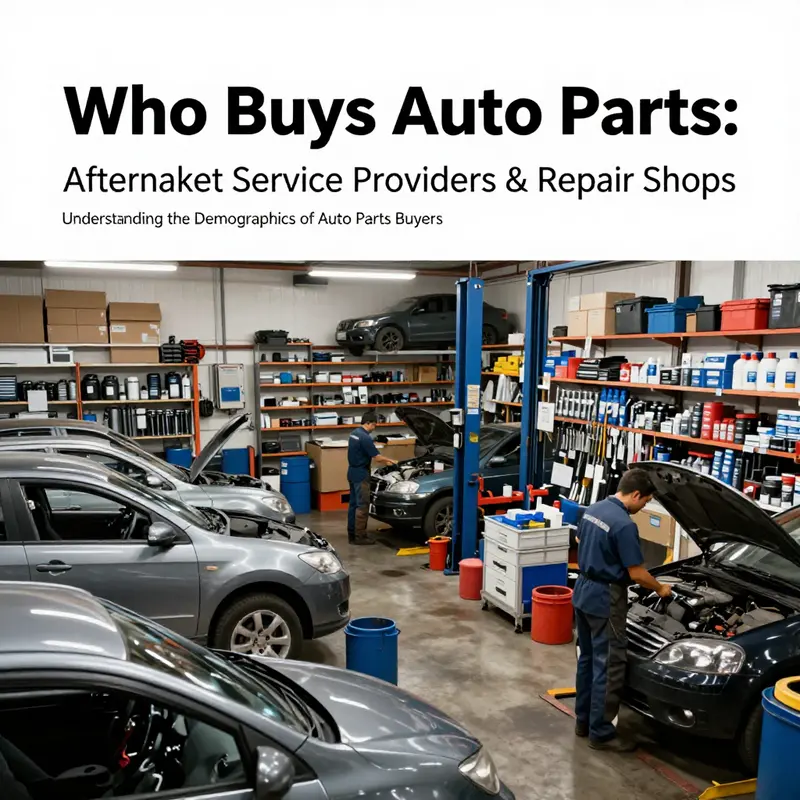
Procurement in Practice: How repair shops anchor demand and shape supply
Aftermarket service providers and repair shops are a cornerstone of the auto parts ecosystem. They translate vehicle breakdowns and routine maintenance needs into continuous, predictable orders. Their buying behavior sets the rhythm for suppliers, distributors, and logistics providers. A small independent shop may place daily orders for consumables, while a regional chain coordinates truckloads of components to dozens of service bays. Both depend on reliable access to parts under tight time pressures. This persistent, demand-driven activity keeps warehouses stocked and factories scheduling production months in advance.
Repair shops are not a single, uniform buyer. They range from neighborhood independents and mobile mechanics to multi-bay service centers, collision repair chains, and specialty garages focused on performance or vintage vehicles. Each has distinct purchasing logic. High-volume quick-service centers prioritize speed and cost per repair. Specialty shops emphasize quality, fitment precision, and sometimes authenticity. Collision centers require body panels and paint-matched components shipped with care. Mobile technicians need parts delivered to a customer location on the same day. These varying priorities create multiple ladders of demand for suppliers to climb.
Operational efficiency is the dominant concern. Downtime in a shop means lost revenue and dissatisfied customers. As a result, shops build supply strategies that reduce the risk of stockouts. Classic approaches include maintaining a core inventory of high-turn items, partnering with local wholesalers for emergency pickups, and using next-day delivery agreements with national distributors. Many shops keep a mix of new, aftermarket, remanufactured, and salvage-sourced parts to balance cost and turnaround time. Decisions about which tier of part to use often combine technician preference, warranty requirements, and the customer’s budget.
Inventory strategy is a delicate balancing act. Overstocking ties capital to slow-moving items and consumes precious shop space. Understocking forces expedited shipping, which raises costs and delays repairs. Savvy buyers track days-of-supply for categories such as filters, brake pads, belts, and batteries. They monitor seasonal patterns and local traffic trends that affect wear rates. For example, shops in cold climates anticipate battery and heater-related failures, while coastal areas see more corrosion-driven replacements. Predictive ordering, based on historical repair data, smooths supply cycles and reduces last-minute sourcing.
Sourcing channels are diverse and layered. Distributors and wholesalers operate as the primary intermediaries for many repair shops. They provide a broad catalog, consolidated shipping, and local pickup. These partners also offer warranty support and return policies suited to the repair trade. For specialized needs, shops may source directly from component manufacturers or certified remanufacturers. When cost control is paramount, shops turn to salvage yards and parts marketplaces that list used or refurbished assemblies. These channels expand options, especially for older or rare vehicles where new components are scarce.
Digital marketplaces and B2B platforms have reshaped procurement. Catalog search tools keyed to vehicle year, make, and model eliminate much of the guesswork in part selection. Mobile apps enable technicians to photograph damaged components and receive immediate cross-reference suggestions. Platforms that connect salvage sellers with shops shorten the path to rare parts and used cores. For many shops, access to a searchable database of donor parts reduces repair turnaround for vehicles with discontinued components.
The globalization of component supply has introduced both opportunity and complexity. A significant volume of commodity parts flows from manufacturing hubs overseas. Suppliers in those regions often meet certification standards and offer competitive pricing. Importing larger subassemblies or bulk consumables can reduce per-unit cost, but it introduces lead times, customs considerations, and minimum order quantities. Repair shops rarely import directly, but they feel the effects when regional distributors source internationally. When relying on overseas supply, shops and their distributors build contingencies for extended lead times and potential quality variance.
Quality control matters. Repair shops balance cost savings with the risk of part failure and warranty claims. Certifications and quality marks, when available, provide useful assurance. Independent testing, vendor ratings, and shop networks that share supplier experiences also guide purchasing decisions. For bodywork and visible components, fitment and finish determine whether a part is acceptable. For mechanical replacements, durability and compliance with safety standards are paramount. Shops therefore prefer suppliers that support returns, offer technical documentation, and stand behind their products.
Pricing pressure is relentless. Customers often shop repair quotes online, and price transparency has increased. Shops respond by negotiating volume discounts, leveraging trade accounts, and optimizing parts-to-labor ratios. Some adopt tiered repair options: an economy part with a limited warranty, a remanufactured option, and an OEM-equivalent for customers seeking original-spec performance. This structuring allows shops to offer choices without eroding margins. Additionally, the ability to quickly source less expensive alternatives can win price-sensitive customers while preserving profitability.
Logistics and delivery are competitive differentiators. Same-day or next-day delivery options win repairs and build customer loyalty. Some distributors operate courier networks that service repair clusters within a metro area. Others rely on regional carriers for scheduled replenishment. For emergency replacements, the presence of a local parts counter or a wholesale partner with a walk-in policy can be decisive. Repair shops increasingly view supply partners as extensions of their operations; responsiveness and accuracy are as important as price.
Technology ties procurement decisions to operational performance. Inventory-management software syncs parts usage with billing and repair orders. Barcode scanning and digital invoicing speed checkout and enable detailed reporting. Integration between shop management systems and supplier catalogs automates ordering, reducing human error. In larger operations, advanced analytics forecast part demand and trigger automatic replenishment. These tools free technicians and managers to focus on repairs rather than chasing parts.
Used and remanufactured parts soften cost constraints and support sustainability. Salvage or recycled components reduce expense and can be preferable for older vehicles. Remanufactured assemblies, often rebuilt to factory specifications, balance quality with savings. For shops, offering a refurbished option serves value-conscious customers and conserves resources. Proper inspection, testing, and disclosure remain essential. Shops that transparently explain the provenance and warranty of a used or remanufactured part maintain trust while presenting economical choices.
Relationships matter more than individual transactions. Trusted suppliers who understand a shop’s repair mix, vehicle demographics, and seasonal peaks become strategic partners. Long-term account relationships enable negotiated terms, flexible returns, and priority handling during parts shortages. Repair groups that centralize procurement benefit from consolidated pricing and logistics efficiencies. At the local level, shop owners cultivate rapport with counter staff and sales reps to secure fast service when the repair bay is waiting.
Regulatory and fleet considerations add complexity. Public-sector fleets, rental agencies, and corporate service agreements impose specific parts standards and procurement rules. Repair shops contracting with such clients must meet documentation, traceability, and warranty conditions. These contracts can be lucrative but require disciplined sourcing and record-keeping. Similarly, shops handling safety recalls or emissions-related repairs must use approved parts and follow manufacturer protocols.
Practical examples illustrate the market dynamics. A small independent shop will typically maintain a well-chosen stock of consumables and rely on a local wholesaler for oddball parts. A specialized restoration shop will combine direct purchases, salvage sourcing, and careful reman selection. Collision centers coordinate panels, glass, and trim across multiple suppliers, prioritizing fit and finish. Mobile mechanics rely heavily on swift parts channels and curated inventories for common roadside fixes. Each approach reflects an operational reality and a buyer’s need to deliver timely, reliable repairs.
The aftermarket purchasing network is resilient. Repair shops, though diverse, share common pressures: keep vehicles moving, control cost, and satisfy customers. Their collective demand sustains a complex distribution infrastructure, from local counters to international production lines. For sellers aiming to engage this market, the takeaway is clear: responsiveness, consistent quality assurance, and procurement flexibility are the levers that unlock lasting business with repair professionals.
For an example of a specialized parts listing often used by repair professionals, see this inventory posting for an Evo X donor halfcut: evo-x-halfcut.
Further sourcing context and market overview are available from this external resource: https://www.alibaba.com
Everyday Buyers: How Individual Consumers Drive the Auto Parts Market

Who buys auto parts when the buyer is an individual? Individual consumers form a varied and powerful segment of the aftermarket. Their motivations blend practicality, curiosity, and cost control. Some seek simple maintenance items like filters, brake pads, and bulbs. Others chase upgrades, performance pieces, or aesthetic changes. Across this spectrum, a few behavioral patterns dominate. Understanding these trends explains how retailers, distributors, and service providers tailor offers and why certain channels grow faster than others.
Consumers often begin with a single need. A warning light, a worn tread, or a cracked lens triggers a search for a part. Many buyers seek quick, straightforward solutions. Price matters, but so do trust and convenience. That combination pushes most consumers toward channels that promise clear fitment information, easy returns, and fast delivery. Others, especially those who enjoy working on cars, prioritize depth of inventory and technical detail. These hobbyists scrutinize part numbers, compatibility charts, and installation notes before committing.
Over the last decade, digital tools reshaped how individuals research and buy parts. Vehicle-specific search filters and fitment check tools are now central to purchase decisions. Shoppers expect to enter a make, model, and year and find only compatible items. When those tools are accurate, conversion rates rise. When they fail, buyers abandon carts or choose local shops where staff can confirm compatibility in person. Reviews and user-submitted installation photos also carry weight. When other owners report straightforward fits and long life, uncertain buyers become confident purchasers.
Delivery speed and fulfillment options shape many purchases. Some buyers plan repairs, so they accept standard shipping. Others need a part the same day. Because of this, retailers that offer in-store pickup or same-day collection earn a segment of practical buyers. A customer can reserve a part online and collect it during lunch. This hybrid of e-commerce and brick-and-mortar service suits people who want certainty and speed. For those who prefer not to install parts themselves, the ability to buy a part and book professional installation at the same location creates a smooth experience and higher spend per visit.
Warranty, returns, and after-sales support influence brand choice. Many consumers are willing to pay a modest premium for a part that carries a clear warranty and easy return window. A concise return policy reduces perceived risk. A helpful customer-support channel, staffed by knowledgeable advisors, further improves buyer confidence. In contrast, a low price with no clear support can dissuade buyers from taking a risk—particularly when the part affects safety or drivability.
A strong divide appears between DIY buyers and those who do not work on cars. DIY buyers tend to be younger, more tech-savvy, and search for detailed specifications. They buy performance upgrades and high-quality replacement parts. They also buy specialty tools alongside components. Non-DIY buyers often focus on convenience. They prefer retailers that connect them with installers or offer services such as readymade kits. Retailers that build clear installation guides and offer optional professional fitment attract these customers.
Price sensitivity varies by part category. Consumables and maintenance items are highly price-sensitive. For items like oil filters, air filters, or brake pads, many consumers prioritize value. For major components and performance upgrades, quality and compatibility outweigh price. Buyers of critical components often seek parts from trusted sources or those backed by robust warranties. Perceived risk and safety concerns push buyers away from the lowest-cost option for structural or safety-critical parts.
Seasonality and geography influence buying patterns. Cold seasons drive demand for batteries, tires, and heating components. Summer months see increased purchases of cooling components and accessories for outdoor travel. Regions with harsh winters tend to have higher per-capita replacement cycles for certain wear items. Urban buyers often focus on convenience and compact accessories. Rural buyers may prioritize ruggedness and longevity. These regional differences shape local stocking strategies for retailers and distributors.
Mobile shopping and instant information play a major role. Many consumers begin research on mobile devices. A clear, responsive website with an intuitive lookup tool improves conversion. Mobile-friendly checkout and multiple payment methods shorten the path to purchase. Push notifications and email alerts help close sales on requested parts. Retailers that integrate messaging for order updates and pickup readiness create a satisfying buyer journey.
Social proof and community matter more than ever. Online forums, owner groups, and social platforms form informal review communities. Consumers consult these groups before buying upgrades or rare parts. When peer recommendations point to a specific part or source, individual buyers are more likely to follow. UGC—user-generated content—like photos of completed installs, enhances trustworthiness. Retailers that curate and display community feedback better connect with the enthusiast segment.
Another important trend is the growth of the do-it-for-me option. Some consumers want to buy parts online but prefer experts to complete installation. This creates a business opportunity: pair online sales with a network of certified installers. The result is a frictionless experience. Consumers get convenience, and service partners gain steady work. This model often increases average order value, since customers are willing to pay for professional fitment and peace of mind.
Vehicle age and ownership patterns strongly affect part demand. Owners of newer vehicles often need fewer routine parts, but they require specialized components or electronic modules. Older vehicles need more mechanical replacements. Collectors and owners of classic models often turn to specialized sellers for specific panels, trim, or engine parts. This diversity forces sellers to balance catalog depth with inventory turns. A lighter catalog focuses on best-selling consumables. A deep catalog caters to repair shops and hobbyists who need rare parts.
When consumers choose sources, trust signals matter. Clear images, exploded diagrams, digital part numbers, and cross-reference tables reduce friction. High-resolution photos that show mounting points and connectors help buyers visualize fit. Video guides and installation walkthroughs further reduce returns. When a retailer offers step-by-step instructions or links to a community that has completed similar installs, confidence grows.
Subscription and replenishment models are gaining traction. For routine maintenance items—filters, wiper blades, bulbs—some sellers offer scheduled deliveries. Consumers who value convenience sign up for recurring shipments. These programs reduce purchase friction and improve lifetime customer value. They also shift the relationship from one-off purchases to a continuous service. Loyalty programs and points systems support retention in tandem with subscription offers.
Sustainability and parts provenance influence some buyers. A rising number of buyers consider environmental impact. They look for remanufactured or refurbished parts that meet standards. Others prefer new parts that come with recycling options for old components. Clear disclosure of part origin and remanufacturing standards can sway eco-conscious buyers.
Payment flexibility affects conversion. Offering multiple payment options, including deferred payments for larger repairs, increases the pool of buyers. Transparent total cost estimates that include tax, shipping, and optional installation fees reduce cart abandonment. A streamlined checkout process, with saved vehicle profiles and shipping addresses, encourages repeat purchases.
Finally, the purchase path for consumers often blends channels. Someone might research online, reserve a part, and pick it up in-store. Another might buy online and arrange a local installation. Others buy from a specialist seller after consulting community feedback. The modern consumer expects choice and fluidity between channels. Successful businesses build consistent policies across platforms and map inventory to expected demand.
For consumers, the driver is rarely a single factor. Convenience, trust, price, and service combine differently for each buyer. Retailers that optimize fitment tools, offer clear returns, and provide multiple fulfillment options win more customers. Service providers that offer installation and technical support convert convenience-seeking buyers. Enthusiast-focused sellers that present deep technical information and community validation attract hobbyists. Across all segments, clarity and reliability are the currency of consumer decisions.
For further practical reference about buying auto parts, consult this resource: https://www.buyautoparts.com/.
You can also explore specific aftermarket components and accessory options through detailed listings such as brand-new-original-carbon-fiber-bonnet-hood-for-mitsubishi-lancer-evo-x.
Bulk Buyers in Public Service: How Government Agencies Shape the Auto Parts Market

When the topic is who buys auto parts, the spotlight often lands on private garages, consumer websites, and the vast world of aftermarket distributors. Yet a decisive force in the market sits behind municipal gates, in maintenance yards, and within the regular schedules of national defense and public service fleets. Government and public institutions purchase auto parts in volume to keep essential services moving. This is not merely a case of restocking a few tires or filters; it is a disciplined, strategic process that rewards standardization, reliability, and lifecycle efficiency as much as price. The scale and consistency of these buyers influence which parts are stocked, how suppliers price them, and how the entire supply chain practices resilience in times of disruption. The General Services Administration’s Federal Supply Schedule is a touchstone reference point here, but the real story unfolds in the day-to-day procurement decisions of fleets that steward police cars, fire apparatus, sanitation trucks, buses, and military vehicles, all while meeting rigorous safety and environmental standards.
From the outset, the sheer volume involved makes government buyers among the most influential customers in the auto parts ecosystem. Municipal fleets operate across streets and channels that touch every resident. Police cruisers, ambulance fleets, and fire department engines require parts that can be counted on to perform when lives are at stake. Transit agencies maintain city buses and maintenance vehicles that must stay on a predictable schedule to serve hundreds of thousands of riders. These purchasers prioritize parts that deliver dependable performance, uniform fit, and predictable supply, because the cost of downtime in public service is measured not in dollars alone but in public safety and service continuity. In practice, this means a marketplace where standardization and compatibility are not optional extras but core requirements.
The procurement machinery behind these decisions is often centralized and long-horizon. Centralization is not a bare preference; it is a reflection of how public agencies manage risk, leverage volume, and ensure consistency across dozens or hundreds of facilities. Centralized procurement makes it easier to secure favorable pricing through bulk ordering, and it supports the negotiation of long-term supply contracts with established suppliers. The result is a stable demand curve that can be relied upon year after year, which, in turn, motivates manufacturers and distributors to invest in durable, high-quality components rather than chasing quick, one-off sales. The Federal Supply Schedule used by many government buyers consolidates a broad array of automotive supplies into a standardized catalog, simplifying lines of purchase and ensuring that agencies can access a vetted set of options with predictable terms. For those who want to explore the formal framework governing such procurement, the Federal Supply Schedule provides a centralized platform for government agencies to purchase automotive supplies, including parts, tools, and maintenance equipment, ensuring standardization and value. (External reference: https://www.gsa.gov/federal-supply-schedule)
This environment rewards parts that survive the rigors of heavy use and severe conditions. Parts must comply with stringent safety and performance specifications. In fleets that operate around the clock, a component’s lifecycle cost—its initial price, replacement frequency, maintenance needs, and end-of-life recyclability—often trumps a simple up-front discount. Public institutions are increasingly conscious of sustainability and environmental impact, and this awareness shapes buying decisions. Agencies may favor components that minimize waste, maximize durability, and can be recycled or repurposed at the end of their useful life. When a fleet manager weighs a procurement option, the calculation extends beyond a single purchase to encompass total cost of ownership, logistics, and the potential for downtime reduction across a fleet that serves an entire city or region.
To understand the practical implications, consider the kinds of fleets that typically dominate government parts buying. Municipal fleets are the most visible example: police departments require components for diversifying their vehicle types, from patrol cars to specialized pursuit units; fire departments rely on parts that stand up to high mileage, frequent starts, and the harsh conditions of rapid response; sanitation and public works vehicles demand reliability across a wide range of everyday tasks. Public transit fleets, which might operate thousands of miles monthly across hundreds of routes, depend on a steady supply of brakes, filters, tires, electrical components, and cooling systems designed for predictable maintenance cycles. Military and defense fleets, while not as ubiquitous in every jurisdiction, post unique requirements in terms of ruggedness, compatibility, and secure, traceable supply chains. Each of these segments has its own mix of standard parts, OEM-equivalent parts, and specialized components that must meet defined standards, yet all share a common demand for reliability and a transparent procurement path.
The supplier community responds in turn by investing in the kind of product catalogs, stock-keeping, and service arrangements that make government purchasing efficient. Catalogs must be comprehensive, with clear compatibility data and documentation that supports compliance reporting. Inventory management becomes a strategic capability: public fleets need reliable access to a long-tail of common wear items and a predictable supply of non-routine parts for aging vehicle populations. Even when the most frequent purchases are tires or brakes, the procurement decision is seldom about a single item. It is about a package of components that can be substituted within a family of parts without creating long delays or high risk of failure. In this sense, the government buyer’s insistence on standardization acts as a filter that shapes what suppliers offer and how those offerings are described, tested, and priced.
The scale of demand also integrates with the broader push toward digital procurement and supplier diversification. Modern fleets increasingly use e-procurement platforms that connect fleet maintenance teams with distributors and manufacturers. These platforms streamline the ordering process, automate compliance checks, and provide a transparent audit trail. They enable agencies to schedule preventative maintenance cycles with confidence, ensuring that the right parts are on hand before a service window opens. The platforms also support performance metrics for suppliers, such as on-time delivery rates, defect rates, and warranty settlements, which feed back into future contracting and supplier qualification. In effect, government buyers help set the tempo for reliability standards that ripple through the entire market, lifting expectations for performance across both public and private sectors.
Amid this operational landscape, the relationship between government buyers and the broader auto parts ecosystem rests on trust, standardization, and a disciplined approach to risk management. Suppliers who understand this triad can anticipate the cadence of demand that accompanies seasonal fleet maintenance, budget cycles, and capital replacement programs. They can align their manufacturing and logistics planning to ensure that components arrive in time for scheduled service windows, with clear documentation to support regulatory reviews and internal audits. In many cases, vendors enter into long-term contracts that cover multiple years and a wide range of vehicle types, enabling economies of scale that would be unattainable in a purely transactional market. These contracts often include performance-based elements, such as guarantees of uptime or specific warranty terms, reinforcing the expectation that public fleets will remain mission-ready regardless of fluctuations in the broader consumer market.
In discussing government and public institutions as bulk buyers, it is important to acknowledge the balance they strike between price and value. Public procurement is not simply about the lowest price; it is about predictable performance, accountability, and societal trust. When a city funds a multi-year contract for maintenance parts, it seeks assurance that those parts will perform under expected duty cycles and that the vendor will provide timely replacements if failures occur. This expectation extends to the after-sales environment as well, where returns, warranties, and reverse logistics are part of the value proposition. The procurement ecosystem thus rewards suppliers who can demonstrate durable quality, consistent supply, and a willingness to align with public reporting and environmental standards.
From a market perspective, the government buyer’s influence can extend beyond direct purchases. The steady, long-tenured demand for standardized parts encourages manufacturers to invest in process improvements, quality control, and traceability. It also encourages distributors to maintain robust regional networks that can shuttle components to city depots, maintenance facilities, and remote outposts where public services operate. The reliability required by public fleets can thus elevate the overall quality bar across the market, lifting expectations for parts used in private vehicles and in service fleets alike. When a city government or a national fleet program signals its preference for certain performance criteria, private sector buyers take note, adapting their sourcing strategies to mirror the level of rigor that public institutions model.
One practical way this dynamic manifests is in lifecycle-focused procurement. Public institutions often design maintenance plans around the total cost of ownership rather than the sticker price of a single part. They favor components that extend service intervals, reduce downtime, and minimize operational risk. This focus translates into demand for parts with proven durability, materials that resist corrosion and wear, and designs that offer standardized fit across multiple vehicle platforms within a given fleet. Even in regions with diverse vehicle mixes, the push toward commonality helps shorten supplier lead times and simplifies logistics, a benefit for both procurement teams and the technicians who perform routine maintenance.
To connect these threads to the broader theme of who buys auto parts, consider the path from policy to practice. Government procurement policies, environmental guidelines, and safety requirements all filter into the daily decisions of fleet managers and procurement officers. The result is a market shaped by disciplined purchasing, transparent performance expectations, and ongoing collaboration between public institutions and a wide spectrum of suppliers. The GSA’s FSS framework is a concrete example of how governments seek to harmonize buying across many agencies, reducing duplication, ensuring compliance, and leveraging scale to obtain favorable terms. Yet the actual buying happens where fleets operate—the maintenance bays, depots, and repair shops that rely on a dependable supply chain to keep public services moving smoothly. In this sense, government and public institutions do not simply purchase parts; they orchestrate a steady drumbeat of demand that underpins the health of the entire auto parts market.
As markets evolve, so too does the way these bulk buyers interact with suppliers and service providers. The shift toward sustainability, greater transparency, and resilience in supply chains is particularly pronounced in public procurement. Agencies increasingly favor parts that align with environmental goals, support circular economy initiatives, and reduce lifecycle emissions. They implement tracking and reporting standards that suppliers must meet, pushing the market toward greater accountability. This is not a withdrawal from competition; rather, it is a disciplined competition on factors that matter most for public service—reliability, safety, and long-term value. The result is a market that rewards those who can deliver durable parts, efficient logistics, and trustworthy partnerships with public sector clients.
For readers who want a concrete sense of how public procurement operates in practice, a central reference is the publicly maintained framework that governs federal vehicle-related purchases. The emphasis on standardized, cost-effective, and environmentally considerate parts translates into a procurement culture that other buyers—municipal, state, and even some large private fleets—often emulate. The underlying lesson is clear: bulk buyers in the public sector do more than purchase components; they shape expectations, drive standards, and influence how the auto parts market organizes itself around predictable, mission-critical needs. That influence, in turn, helps explain why certain categories of parts enjoy a steady, long-term demand and why suppliers invest in the capabilities needed to meet those demands with consistency and accountability.
Internal link example for reference within this chapter: brand-new-original-carbon-fiber-bonnet-hood-for-mitsubishi-lancer-evo-x
External reference for further reading on centralized procurement and vehicle-related supply strategies: https://www.gsa.gov/federal-supply-schedule
Final thoughts
In conclusion, the landscape of auto parts buyers is rich and varied, encompassing a range of entities with unique requirements. Recognizing the specific needs of OEMs and Tier-1 suppliers, aftermarket providers, individual consumers, and government institutions is essential for effectively targeting these segments. As the auto parts market evolves, staying informed about purchasing trends and preferences will empower business owners to strategize and tailor their offerings, ensuring they meet the demands of each buyer category. Leverage this knowledge not only to boost sales but also to foster loyalty among a diverse clientele.