

The automotive parts market is a vibrant ecosystem fueled by a diverse range of buyers each with distinct needs and purchasing behaviors. From Original Equipment Manufacturers (OEMs) to individual consumers looking for replacements, understanding these buyer segments is crucial for businesses aiming to thrive in this industry. This article unpacks each group: OEMs, aftermarket service providers, government institutions, and the budding new energy vehicle manufacturers. Each chapter will dissect the motivations and purchasing patterns of these different buyers, shedding light on how they contribute to the overall market dynamics and opportunities for growth.
Keystone Purchases: How Original Equipment Manufacturers Shape the Market for New Auto Parts

Original Equipment Manufacturers, or OEMs, sit at the center of the automotive parts ecosystem. They are not merely buyers; they are architects of specifications, gatekeepers of quality, and steady drivers of the entire market for new auto parts. When a vehicle maker designs a next-generation car, every component—down to the last sensor and fastener—enters a complex dance with external suppliers that must translate engineering intent into reliable, scalable production. The scale of this relationship is both a strategic asset and a managerial challenge. For OEMs, the pursuit of efficiency, safety, and performance crystallizes into long-term supply agreements, rigorous testing, and a careful calibration of risk across global networks. The consequence is a market that rewards suppliers who can consistently meet exacting standards while maintaining the flexibility to adapt as vehicles evolve through new platforms, powertrains, and software-enabled features. In this sense, OEMs do more than purchase components; they define the very vocabulary of modern parts engineering, specifying what quality looks like, how parts are validated, and how traceability is demonstrated to regulators and customers alike.
From a practical standpoint, OEMs demand a spectrum of parts that ranges from mission-critical core components to highly refined systems that enable new levels of efficiency or safety. Engines, transmissions, and electronic control units sit at the core of the business logic of a vehicle; these are not commoditized items but carefully engineered modules whose performance hinges on precision torque, timing, calibration, and sensing. Sensors, actuators, and interior systems all carry their own stringent requirements for reliability, durability, and ergonomic integration. The OEMs’ emphasis on quality is not only about manufacturing a flawless initial build; it is also about ensuring a consistent supply over the entire life cycle of a vehicle, including the challenging times when components are redesigned for better performance or to accommodate evolving regulatory standards.
This insistence on reliability and safety translates into a procurement culture that prizes long-term partnerships and deep supplier collaboration. OEMs typically work with tier-one suppliers who, in turn, coordinate with tier-two and tier-three manufacturers. The relationship model emphasizes joint development programs, shared testing protocols, and early access to design data so that manufacturers can validate parts before they are committed to production lines. It is a model built on predictability and continuity, because even small disruptions in a supplier’s ability to deliver can ripple through the production schedule and delay the rollout of a new platform. To minimize such risks, OEMs pursue multiple levers: strategic supplier diversification, geographic spread to mitigate regional shocks, and robust contingency planning that includes dual sourcing for critical components. The goal is not simply to stockpile parts but to sustain a calibrated, disciplined flow of materials that aligns with production ramps, changeovers, and model-year updates.
Quality is the other pillar that separates OEM procurement from other markets. OEMs demand components that meet rigorous safety and performance standards, and they expect demonstrable traceability from raw material to finished part. Quality management in this space is not a checkbox exercise; it is a living system of processes designed to prevent defects, accelerate detection, and enable rapid corrective actions when anomalies appear. Standards such as IATF 16949 guide the quality architecture across the supply network, but the OEM’s own engineering teams also impose bespoke specifications that reflect the vehicle’s intended use, climate conditions, and expected service life. In practice, this means that a seemingly small variance in a sensor’s response time or a tolerancing deviation in a machined housing can trigger a cascade of tests, redesign iterations, and re-qualification across multiple plants. The heavy emphasis on traceability—batch-level data, part numbers, supplier lot information, and audit trails—creates an auditable fabric that regulators and customers rely on for safety certifications and recall investigations. Within this framework, OEMs also push for design-for-manufacturability, ensuring that parts can be produced at scale, with consistent quality, and at costs that support competitive pricing in a global market.
The OEM-driven demand also reshapes how the market innovates. In a world attentive to efficiency and electrification, OEMs specify components that offer not just performance but compatibility with evolving architectures. Battery packs, electric motors, power electronics, and advanced driver-assistance sensors have crept from niche enhancements into central pillars of newer platforms. Each of these domains requires a different flavor of supplier collaboration: a high level of engineering co-development for powertrain electronics; supply chain engineering to ensure thermal management and packaging fit within tight vehicle tolerances; and software-integration expertise to guarantee that sensors and ECUs talk to the vehicle’s central computer with minimal latency and robust security. The OEM’s insistence on seamless integration pushes suppliers to invest in advanced testing facilities, component-level validation, and end-to-end system testing that simulates real-world operating conditions. In effect, OEMs accelerate the maturation of new technologies by providing the long-range demand certainty and engineering discipline that many suppliers need to scale from prototype to mass production.
All of this converges in the procurement cadence that governs how and when new parts enter the supply chain. OEMs operate on a rhythm driven by product execution timelines, regulatory cycles, and model-year planning. The early development phase is characterized by design freeze decisions and pre-production runs, during which suppliers contribute to performance optimization, manufacturing feasibility studies, and cost-down opportunities. As the vehicle moves toward production, the emphasis shifts toward capacity planning, logistics optimization, and quality benchmarking across factories in different regions. That cadence creates a pipeline in which a supplier’s ability to scale, sustain quality, and meet on-time delivery becomes as critical as the performance of the part itself. When OEMs find suppliers that demonstrate reliability at scale, they often commit to long-term master supply agreements, with clear service-level expectations, cost-control mechanisms, and defined routes for continuous improvement. These agreements underpin the predictability that OEMs need to plan engineering programs that push the boundaries of what is possible in safety, efficiency, and user experience.
The influence of OEM procurement extends beyond the plant floor. The parts marketplace is shaped by the exacting specifications OEMs demand and the potential for coordinated upgrades across an entire vehicle lineup. An OEM’s preference for lighter, stronger materials, for example, reverberates through the supply chain as engineers seek alternatives that deliver equivalent or superior performance without compromising manufacturability. In some cases, this means engaging with suppliers that can provide advanced materials such as carbon fiber-reinforced composites for certain body components or high-strength alloys for critical structural members. In practice, such highly engineered parts are typically the result of lengthy collaboration between the OEM’s design teams and specialized material suppliers who can demonstrate consistent performance under the vehicle’s dynamic loads and environmental conditions. For an illustration of how this collaboration can manifest in the market, consider the ongoing development of carbon-fiber components that align with the demands of performance-oriented platforms. See an example here: brand-new-original-carbon-fiber-bonnet-hood-for-mitsubishi-lancer-evo-x.
Beyond the technology and process dynamics, OEMs also shape the market through their standards for serviceability and post-sales support. The vehicle’s life cycle requires that parts be accessible not only at the point of manufacture but across decades of operation, through different service paradigms and changing regulatory regimes. This long horizon fosters a steady demand for new parts that guarantee performance parity over time. It also encourages suppliers to maintain documentation, calibrations, and compatibility matrices that allow independent repair shops, dealerships, and mobile technicians to diagnose and replace components with confidence. The result is a durable demand stream that remains relatively stable, even as consumer tastes shift toward new features and aesthetics. In regions with high vehicle parc turnover, OEM-driven demand remains a crucial engine of the aftermarket ecosystem because it sets the performance and reliability bar that independent providers strive to meet and sometimes exceed.
The OEM’s influence is not confined to a single company or region. In a global industry, manufacturers source from a network of partners that spans continents, each contributing to the same vehicle architecture with localized variations in supply chains, labor costs, and regulatory requirements. The discipline of global sourcing means that OEMs are constantly balancing the benefits of scale against the resilience of the network. They map critical components to suppliers who can consistently hit quality benchmarks while offering flexibility to re-route production in response to disruptions. The outcome is a purchasing ecosystem in which parts that originate from a specific plant or region are not merely components from a single source but linked to a broader fabric of certification, traceability, and performance data. This is essential for audits, recalls, and continuous improvement programs that OEMs rely on to protect their brand promise and customer trust.
For readers and researchers interested in the broader industry framework, the role of OEMs in setting standards and expectations is echoed in the industry bodies that govern supplier collaboration and quality assurance. The Global Automotive Suppliers Association, for example, provides broad governance, guidance, and benchmarking that helps frame the expectations between OEMs and suppliers. Access to its resources offers a macro view of how the market aligns on safety, efficiency, and regulatory compliance across diverse markets. External resource: https://www.gasa.org. The association’s influence helps explain why OEMs prize not only technical excellence but also robust governance and transparent data-sharing practices across the supply chain, as these attributes reduce risk and accelerate time-to-market for new platforms.
In sum, OEMs are the primary buyers of new auto parts not because they purchase the largest volumes in every category, but because they set the standard for quality, reliability, and lifecycle support that downstream buyers rely on. Their procurement decisions ripple through the entire market, shaping supplier strategies, investment priorities, and the pace of innovation. The partnership model—characterized by long horizons, deep collaboration, and a relentless focus on safety and performance—creates a market in which new parts must meet exacting specifications, be produced at scale, and be supported by a chain of data that travels from the workshop floor to the regulator. As vehicle architectures continue to evolve toward electrification, connectivity, and intelligent control, OEMs will only deepen their role as the primary buyers of new auto parts. They will push for even tighter integration between engineering design, manufacturing execution, and after-sales support, ensuring that every component contributes to a vehicle’s overall performance, safety, and durability while enabling the growth of related markets in maintenance, upgrades, and customization. The result is a dynamic, interconnected system in which the question of who buys new auto parts is answered by the quality of the collaboration between OEMs and their suppliers, and by the shared ambition to move the industry forward with parts that perform as promised, every mile of the way.
Beyond the Service Bay: The Diverse Tapestry of Buyers That Sustains the Market for New Auto Parts
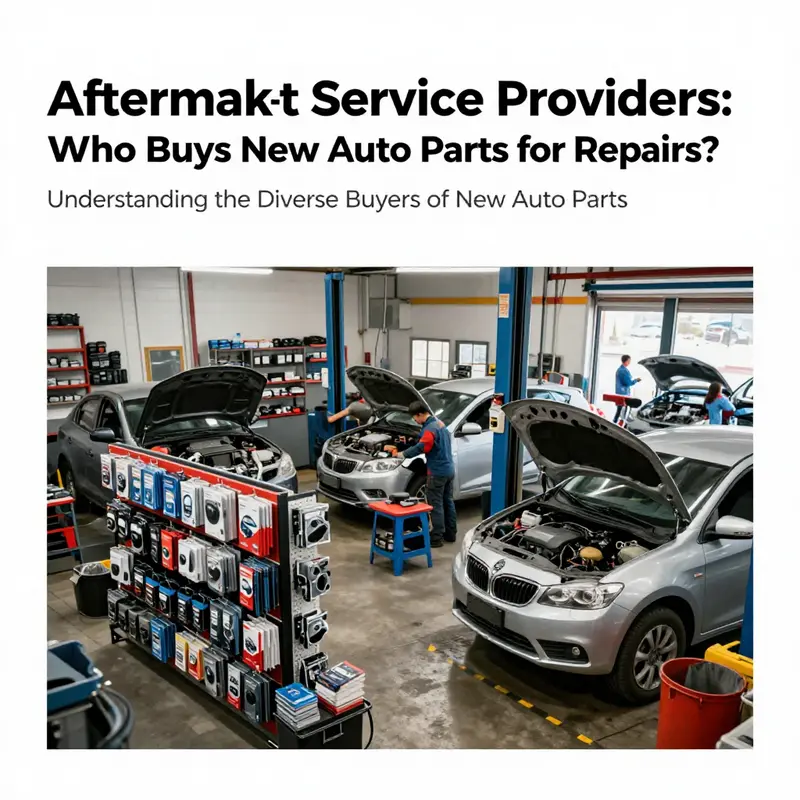
When we examine the market for new auto parts, the picture that emerges is less a simple supply chain than a complex ecosystem built around repair, maintenance, and the ongoing life of a vehicle. The aftermarket service landscape is not just a backroom of the auto industry; it is a living, demand-driven arena where a spectrum of buyers—every one with different needs, constraints, and time horizons—pull the market in distinct directions. The core truth is that the decision to purchase new parts for repairs rests on a blend of technical requirements, cost pressures, and service promises. From independent shops to large fleets, from dealership service bays to specialty restoration studios, each buyer type negotiates the challenge of keeping vehicles safe, reliable, and roadworthy, while also managing the margins that sustain their own operations. And behind this everyday functionality lies the quiet but inexorable rise of new-energy components, government fleets, and even insurance-linked repair networks, all of which shape the cadence of demand in ways that are easy to overlook if one only thinks in terms of consumer purchases at the parts counter.
Independent repair shops, often the frontline of vehicle maintenance for millions of drivers, are the heart of the aftermarket. Their customers expect repairs that restore function with stewardship over safety and performance. For these shops, the choice of parts hinges on a practical calculus: will the part fit, perform as needed, and be reliable enough to stand behind the repair as the vehicle continues its service life? They typically balance OEM parts for critical systems with high-quality aftermarket parts for standard maintenance and non-critical components. In this dynamic, the ability to source parts quickly from a network of distributors, catalogs, and local suppliers is as essential as the part’s technical specifications. The timing of orders matters, too. Repairs can be urgent, and a part that arrives a day late can push a customer’s vehicle out of service longer than necessary. The independence of these shops often means a diverse supplier base, a mix of in-house inventory and just-in-time orders, and a relentless emphasis on compatibility, warranty coverage, and after-sales support. Real-world repair work blends the certainty of OEM-grade parts for critical jobs with the pragmatic flexibility offered by reputable substitutes when the original equipment is either unavailable or cost-prohibitive.
Then there are the large chain repair networks, which bring scale to the equation. These networks—aggregators that span hundreds of locations—use centralized purchasing to secure favorable terms and standardized parts assortments across their footprint. The economics are clear: bulk buys reduce per-unit costs, and uniform catalogs simplify technician training and shop floor workflows. Yet even within these networks, the distribution of parts follows a practical distribution logic. Local branches rely on predictable supply lines to minimize downtime and guarantee that every service bay can complete a job within a predictable time frame. The result is a marketplace where consistency and speed are the primary currencies, and where the vendor relationship is often a carefully orchestrated alliance among a centralized procurement function, regional distribution centers, and hundreds of service bays that act as the final mile for critical repairs. It is a system built for efficiency, yet it remains intensely focused on the customer promise: the car is fixed promptly, correctly, and with a warranty that promises peace of mind.
Dealership service departments, by contrast, tend to ride a spectrum between OEM-first reliability and the practical demand for non-core substitute parts. In many shops, the instinct is to use OEM components for critical subsystems or where vehicle manufacturers stipulate exact specifications. But fleets, aging vehicles, and the pressure to control maintenance costs push dealership service departments to source second-source parts for non-core components or to explore cost-effective aftermarket options that meet safety and performance standards. The procurement approach here is highly structured: a dealership must balance brand alignment, customer expectations, and the financial discipline of the service operation. The result is a buyer group that looks at parts not just as items on a shelf, but as узлы of an integrated service ecosystem—timely, traceable, and backed by warranties and clear return policies. In this environment, the role of digital catalogs, cross-brand compatibility data, and vendor-managed inventory becomes ever more important, enabling service departments to rapidly confirm fitment across a broad range of vehicles and configurations.
Fleet operators illuminate another dimension of demand. Whether a taxi company, a delivery fleet, or a rental agency, fleets purchase parts in bulk and usually under long-term contracts that price reliability and consistency as highly as unit cost. Fleet procurement teams think in terms of lifecycle costs, downtime minimization, and predictable maintenance spend. When a vehicle is out of service, the costs extend beyond a single repair bill. They include lost revenue, customer dissatisfaction, and the administrative overhead of coordinating parts orders across multiple vehicles and locations. This is why fleet buyers often favor suppliers who can deliver a comprehensive assortment—ranging from routine wear items to replacement components for aging fleets—under transparent service terms and with the data trails that fleet managers rely on for cost accounting and compliance.
Insurance company-approved repairers add another layer of complexity. After an accident, vehicle owners may follow a claims path that funnels repairs through shops vetted by the insurer. In this arrangement, the parts mix is shaped by the insurer’s assessment of cost, coverage, and quality standards. Approved repairers must reconcile the repair plan with the policy terms, ensuring that parts used meet the insurer’s specifications while also delivering safe, reliable results for the vehicle owner. The procurement focus here is on standardization and traceability: the insurer wants to know exactly which parts were used, how they were sourced, and what warranties accompany the repair. For repairers, this creates a balanced tension between minimizing claim costs and preserving the long-term value of the vehicle for the owner. The result is a demand signal that pushes certain parts categories toward higher predictability and longer warranty coverage, even as the individual repair shop weighs immediate cost considerations against the insurer’s guidelines and the customer’s expectations for a clean, complete fix.
Specialty restoration and customization shops illustrate a different facet of the market, where the object is not only to fix but to transform. For these studios, new parts may mean specialized, high-end components or hard-to-find pieces that work with classic models or unique builds. The buyer here is less about speed and more about matching exact specifications, historical accuracy, or performance targets. Sourcing becomes a bespoke activity, where the parts ecosystem expands to include limited-production items, OEM replacements for legacy models, and carefully vetted aftermarket pieces that deliver the desired aesthetic or performance outcome. In this space, the relationship with suppliers is often collaborative and iterative, with shops developing long-term partnerships that enable them to fulfill increasingly demanding restoration or customization briefs. The market for these parts operates at a premium—partly because of the rarity and quality requirements, but also because the customer base is often willing to pay for authenticity, precision, and a level of craftsmanship that transcends everyday maintenance.
Amid these diverse buying profiles, a broader industry shift is taking hold. Deloitte Insights has highlighted that manufacturers are expanding their aftersales footprints, turning toward the very ecosystems that service their vehicles to capture ongoing revenue beyond initial vehicle sales. This convergence means the line between “parts for sale to repair shops” and “parts as components of the service offer” is blurring. In practical terms, OEMs and their authorized networks increasingly rely on both direct sales channels and trusted aftermarket partners to ensure that repairs meet quality standards while keeping service costs under control. The outcome is a market where the sourcing decision is rarely a simple either/or choice. Instead, shops and fleets weigh the tradeoffs between OEM fit, aftermarket performance, warranty coverage, supply reliability, and total cost of ownership over the life of the vehicle.
The breadth of this ecosystem is further shaped by the rapid expansion of new energy vehicles and the rising demand for specialized core components such as batteries, electric motors, and power electronics. NEV manufacturers introduce parts categories that require deep technical knowledge and highly specific supply chains. This accelerates a broader shift in procurement discipline—one that favors supplier partnerships capable of delivering not only the right part but also the necessary technical support, data, and aftercare. The growth of these components also redefines maintenance responsibilities and the timing of replacements, given the unique wear profiles and safety considerations associated with electric drivetrains. At the same time, traditional internal-combustion engine parts remain vital for a large portion of the fleet and aftermarket base, ensuring that the core skill set of technicians and the reliability of supply chains remain highly relevant.
What ties all these threads together is the practical reality that the aftermarket parts market lives or dies by availability, fit, and uptime. Parts must be in the right place at the right time, with documentation that confirms compatibility and safety. The procurement pathways have evolved from simple stockpiles to dynamic ecosystems that blend OEM production, third-party manufacturing, and curated catalogs with data-backed assurances about fitment and warranty terms. Digital tools—integrated ERP systems, supplier portals, real-time inventory visibility, and intelligent procurement analytics—are no longer luxuries but necessities for any buyer aiming to minimize downtime and maximize the quality of repairs. In this sense, the buying decision becomes a performance metric in itself, one that directly influences customer satisfaction, repair turnaround times, and ultimately the reputation of service providers across the board.
To illustrate how the parts landscape can look in practice, consider the cataloging and sourcing mindset that a shop might employ when selecting a non-core component or a replacement part for a mid-range model. In such cases, the shop weighs the tradeoffs between exact OEM fit and the broader availability of high-quality substitutes. The decision is rarely binary. It is driven by up-to-the-minute stock levels, the reliability of suppliers, and the potential implications for warranty coverage and future maintenance. In many shops, a thoughtful approach to sourcing involves maintaining a core of OEM parts for critical systems and a carefully curated selection of aftermarket options for routine or non-critical components. This approach helps to balance risk, cost, and service quality, ensuring that repairs can be completed promptly while preserving long-term vehicle value. For readers seeking a tangible sense of the parts catalog experience in today’s marketplace, one can explore a catalog entry that demonstrates how modern parts ecosystems present the same vehicle model in numerous configurations and finishes. See the exact example here: brand-new-original-carbon-fiber-bonnet-hood-for-mitsubishi-lancer-evo-x.
In sum, the buyers of new auto parts for repairs comprise a broad coalition that spans the entire maintenance and repair spectrum. Independent shops and large chain networks anchor the service side with speed and scale; dealership service departments balance OEM fidelity with cost-conscious procurement; fleet operators prioritize uptime and predictable costs; insurance-approved repairers insist on standardization and traceability; and specialty restoration studios push the envelope with high-end, model-specific parts. This mosaic is not just about replacing worn components; it is about maintaining the very conditions under which a vehicle remains safe, reliable, and relevant across its lifetime. The growing convergence between vehicle manufacturers and the aftersales ecosystem further amplifies the demand for new parts, reinforcing the idea that the market is alive with opportunities for suppliers who can deliver quality, availability, and value across multiple buyer types. As the industry continues to evolve—with the accelerating shift toward electrification, data-enabled procurement, and tighter warranty governance—the chapter of who buys new auto parts for repairs will keep expanding, revealing new patterns of demand and new pathways to meet them.
External resource for broader context: Deloitte Insights highlights how manufacturers are expanding post-sale service roles, creating a more integrated and resilient aftermarkets landscape. See: https://www2.deloitte.com/us/en/insights/industry/automotive.html
Public Sector Fleet Parts: Reliability, Compliance, and Public Accountability

Fleet operations for government and public institutions sit at the intersection of reliability, safety, and stewardship of public funds. Municipal departments maintain large fleets that keep emergency response, public health, and civic services running. Police cars, fire apparatus, ambulances, maintenance trucks, and service vans rely on a steady stream of new auto parts to stay on the road. The procurement decisions behind these parts are not about flashy upgrades; they are about predictability, compliance, and the long term cost of ownership. In this context, buying new auto parts becomes a strategic act aligned with public accountability, not a routine consumer purchase. The result is a procurement culture built around formal processes, certified suppliers, and distribution networks that can deliver performance and durability at scale.
At the heart of government fleet procurement lies a discipline of formalized sourcing. Public buyers operate within established frameworks that emphasize transparency, competition, and auditable pathways from requisition to receipt. When a department requests replacement brakes, filters, or lighting assemblies, the request travels through a chain of approvals designed to ensure every dollar is spent with restraint and measurable value. The process often requires parts from certified suppliers who meet quality standards, demonstrate traceability, and provide consistent performance across thousands of vehicles and miles. It is not simply about the lowest unit price; it is about lifecycle reliability, warranty coverage, and the ability to support a broad maintenance program.
To manage complexity at scale, fleets rely on centralized procurement platforms and reputable distributor networks. The organization can maintain a catalog of parts, side by side product comparisons, and editorial guidance that helps procurement teams stay current with industry practice. In addition, many fleets employ data driven tools to assist researchers in researching, evaluating, and procuring parts efficiently. For those who must balance speed with compliance, such tools provide structured, auditable paths to parts selection and purchasing, reducing cycles from weeks to days while preserving governance and accountability. The emphasis on certified suppliers, clear specifications, and documented sourcing paths is not mere bureaucracy; it is the backbone of fleet readiness, safety, and public trust.
The parts that fleets purchase span a broad spectrum. Core components for safety critical systems—brakes, steering, lighting, tires, and air systems—must meet exacting standards and supplier certifications. Beyond safety, fleets demand reliability from powertrains, electrical systems, cooling and HVAC components, and body hardware that withstands high miles and demanding environments. Because government fleets typically operate every day, even minor downtime translates into public service delays or reduced response capabilities. This drives a procurement philosophy that prioritizes compatibility with existing vehicle platforms, long service life, easy access to replacement parts, and predictable lead times. Fleet managers value standardization across makes and models whenever possible because it simplifies stocking, maintenance scheduling, and technician training.
A practical consequence of this approach is a formal emphasis on lifecycle cost considerations. Public sector buyers analyze not just upfront price but total cost of ownership over the part’s service life. This includes warranty terms, supplier support, availability of emergency replacements, and the ease of obtaining recalls and service advisories. When a department considers upgrading a portion of its fleet to improve performance or efficiency, procurement teams weigh the durability of new parts against the existing maintenance cadence and the anticipated savings from reduced downtime. In many cases, the decision is driven by data gathered from maintenance logs, vehicle histories, and predictive maintenance analyses. The aim is to minimize unscheduled outages while maintaining fleet readiness for critical missions. In this environment, a part’s provenance—origin, certification, and repairability—becomes as important as its functional fit.
The role of procurement policy cannot be understated. Regulations surrounding competitive bidding, open specification practices, and supplier qualification govern every major purchase. Public buyers strive to avoid single source dependencies that might threaten continuity of service. Instead, they favor robust, diverse supply chains that can weather market fluctuations. They also demand documentation that demonstrates due diligence: supplier capability, delivery performance, and environmental or safety standards. In the context of new auto parts, this means a preference for parts that can be traced to their source, that meet or exceed OEM specifications, and that are supported by a reliable distribution network capable of delivering to multiple locations with consistent service levels.
As fleets modernize, electrification adds new dimensions to procurement. Electric and hybrid fleets require core components such as high capacity batteries, electric motors, and advanced power electronics, as well as service infrastructure to maintain high voltage systems safely. This transition calls for cross functional coordination among procurement, fleet management, and technical maintenance teams. It also requires evaluative criteria that address safety certifications, battery lifecycle guarantees, and the availability of trained technicians who can service electric drivetrains. In this sense, the procurement playbook expands beyond traditional mechanical parts to include software interfaces, telematics compatibility, and standardized repair procedures that foster consistent performance across diverse vehicle platforms.
Similarity across fleet applications lies in the demand for reliability and traceability. Government fleets frequently operate under accountability standards, with clear audit trails showing when a part was purchased, from whom, and under what terms. This traceability extends to condition reporting and post purchase performance, which managers review to validate supplier performance and adjust procurement plans for future cycles. In practice, this approach builds vendor relationships that resemble partnerships. When a department meets a supplier that can provide a broad catalog, consistent inventory, and reliable after sales support, the partnership strengthens. The supplier becomes a trusted facilitator of service continuity, ensuring that critical maintenance does not stall public operations.
The human element is central to this process. Fleet managers, procurement officers, and maintenance technicians collaborate to translate policy into practice. They interpret vehicle histories, forecast maintenance windows, and plan for parts stocking that can support multiple vehicle types. Their work is often invisible to the public, but it underpins every successful emergency response, public safety, and municipal service. In many jurisdictions, teams invest in training programs that enhance vendors’ ability to meet public sector expectations. They compare supplier performance, hold quarterly business reviews, and participate in vendor qualification events that stress compliance, quality, and reliability. In essence, the procurement culture within government fleets is a continuous discipline: measure, learn, adjust, and then measure again.
The practical realities of fleet parts management are shaped by distribution networks that can deliver quickly and predictably to public facilities. Public sector buyers require access to a broad, survivable supply chain with multiple distribution centers, transparent stock levels, and clear return or warranty policies. The ideal supplier partner offers a catalog that spans essential maintenance parts, service items, and occasional replacements, alongside technical documentation and compatible tools for technicians. Not every purchase will be glamorous; many will be routine, repetitive, and crucial for keeping streets safe, hospitals running, and power services uninterrupted. Yet the reliability of these routine purchases accumulates into a substantial public benefit: steadiness in essential services, reduced downtime, and a vehicle fleet that can meet the demands of a city, a county, or a state.
Electrification and modernization also raise questions about procurement ethics and sustainability. Governments increasingly seek durable, repairable parts and supplier practices that minimize environmental impact. This translates into standards for recycled content, packaging optimization, and the responsible disposal of decommissioned components. It also means that long term partnerships with suppliers who share these values are more valuable than ever. As fleets become more technologically sophisticated, procurement teams must balance the elegance of new technology with the ethical and financial responsibilities of public stewardship. In this balancing act, the credibility of the supplier ecosystem—through certifications, performance data, and transparent sourcing—becomes a core criterion for success.
One practical implication of this procurement landscape is the rise of centralized or regional procurement offices that coordinate across multiple agencies. A centralized approach reduces duplication, harmonizes specifications, and streamlines purchasing for maintenance and replacement parts. It also supports bulk buy advantages, negotiated pricing, and consistent warranty coverage. In this model, a fleet manager can concentrate on operations, while a procurement team negotiates terms that apply to all departments within a jurisdiction. The shared catalog and standardized specifications improve compatibility across a mixed fleet, decrease the risk of non interchangeable parts, and deliver predictable lead times. In essence, centralized procurement creates a backbone that supports public service mobility with the efficiency and discipline that taxpayers expect.
The chapter of government and public institutions among the who buys new auto parts chapters is not merely a catalog of buyers. It is a narrative about governance in motion: a story of how public actors translate policy aims into tangible, reliable mobility. It highlights the importance of trusted suppliers, rigorous standards, and disciplined budgeting. It emphasizes the essential role of platforms that simplify complex decisions and the growing relevance of electrification in public fleets. It shows that, beyond the shield of police vehicles and the siren of emergency responses, there is a steady rhythm of procurement, maintenance planning, and parts resale that keeps the wheels turning every day. And it reminds us that when a city or a state needs to keep its vehicles safe, available, and compliant, the choice of parts is ultimately a choice about public service itself.
For readers who want a concrete example of how a modern procurement ecosystem supports fleet upkeep, consider the practical accessibility of a comprehensive parts catalog and supplier network. The government buyer’s challenge is to source parts that match exact specifications, arrive on time, and come with reliable service support. A well structured supplier directory, coupled with product comparisons and expert editorial guidance, helps procurement teams navigate a crowded market. The AI assisted tools can accelerate research and evaluation, particularly when specifications are strict or when extended warranties and service plans are required to satisfy public accountability standards. In the end, the success of government fleets rests on the reliability of the parts supply chain and the diligence of the people who manage it.
EV Demand Chains: Tracing Who Buys New Auto Parts in the Electric Vehicle Era
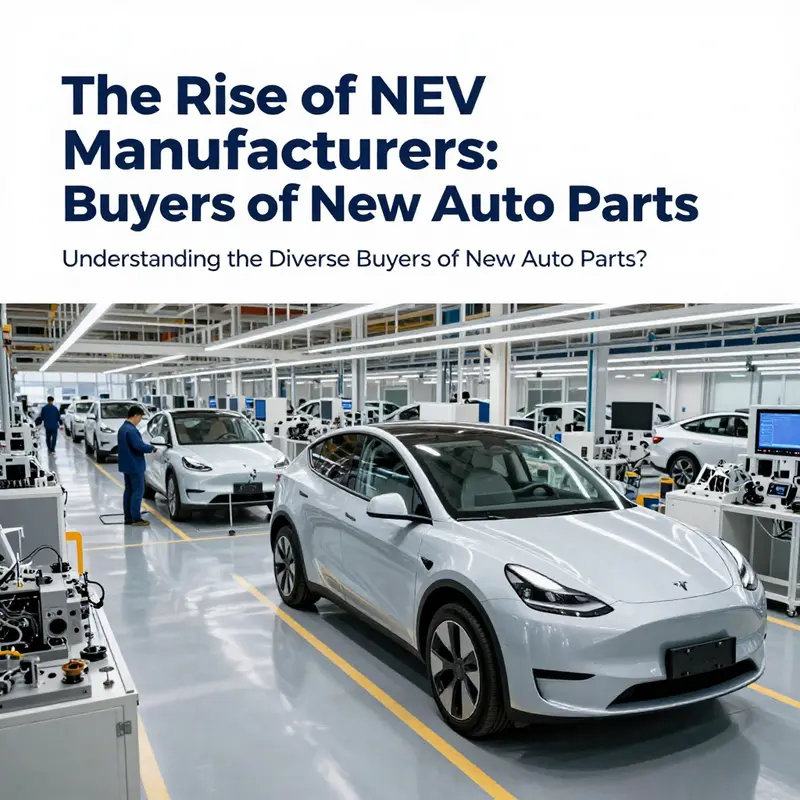
The ascent of New Energy Vehicles (NEVs) has rewritten the map of who buys new auto parts. Where once the market centered on the immediate needs of traditional internal combustion engine vehicles, the electric future has redirected demand toward an ecosystem of manufacturers, suppliers, fleets, and individuals who collectively drive the parts market. In this new landscape, the primary buyers of fresh components are no longer limited to the assembly lines that produce new cars. They include the NEV manufacturers themselves, their tiered supplier networks that engineer integrated systems, and a wider set of buyers shaped by the rapid expansion of electric mobility. Understanding these buyers requires looking beyond the obvious and tracing the chain from core propulsion to everyday maintenance and even the consumer’s personal projects for safety, efficiency, and personal expression.
At the center of the EV demand chain stands the NEV manufacturer. These are the agents that set the tempo for what counts as a “new part” in the EV era. Their needs are both technical and strategic: batteries, battery management systems, electric motors, inverters, power electronics, charging systems, and the specialized thermal management required to keep high-energy components within safe operating envelopes. The battery and BMS, in particular, anchor the value proposition of any electric vehicle, because energy density, longevity, safety, and charge efficiency all cohere around the battery ecosystem. The demand for these items is not episodic. It is ongoing and increasingly complex, reflecting tighter integration across modules that manage energy flow, propulsion, and thermal control.
The NEV manufacturers do not source these core elements in isolation. They rely on tier-1 and tier-2 suppliers that assemble complete subsystems and often co-design components to meet platform-specific requirements. In this sense, the buyer is a networked entity rather than a single company. The tier-1s provide assemblies that merge electrical, mechanical, and software elements; the tier-2s deliver the underlying modules and materials that enable that integration. This collaboration accelerates innovation while also creating a tightly coupled procurement calendar. When a new EV platform shifts to a more compact, higher-energy-density battery chemistry or a smarter inverter topology, the ripple effects travel through the entire supply chain, recalibrating what counts as a new part and who must buy it.
Beyond the NEV makers and their direct suppliers, traditional vehicle manufacturers who are expanding their electric lineups remain important buyers of new auto parts. Their procurement patterns are evolving as they transition from purely drive-line components to integrated, software-driven systems that demand sophisticated hardware and high standards of reliability. These OEMs may still purchase some parts in bulk, but the emphasis increasingly falls on modules that can be tuned, upgraded, or retrofitted as vehicle platforms mature. In practice, this means a shift from discrete components to standardized or semi-standardized assemblies, designed to fit multiple platforms and to accommodate software updates that unlock new capabilities over time.
The public sector and government fleets also emerge as substantial buyers of new parts in the EV era. Police vehicles, ambulances, and municipal service fleets rely on dependable, high-performance platforms that meet stringent duty-cycle requirements. These buyers emphasize quality and lifecycle cost, often requiring parts that endure across many thousands of miles or hours of operation. Their demand drives the need for standardized parts with robust supply chains and clear after-sales support, ensuring that in a critical moment, a high-voltage system or a charging subsystem can be serviced without delay.
A less obvious but increasingly influential buyer segment consists of new energy vehicle manufacturers’ own suppliers who assemble not only the EV powertrain but the broader system architecture. These tiered suppliers are tasked with delivering integrated solutions that unify software, sensors, actuation, and chassis integration. As EVs become more software-centric, the hardware that supports intelligent features—ADAS, infotainment hardware, sensors, cameras, and connectivity modules—also becomes a significant category of new parts. The market’s growth is thus not only a story of batteries and motors but of a convergence between hardware and software that redefines what a “part” is in a modern vehicle.
The demand picture would be incomplete without acknowledging the role of the end users who purchase parts for maintenance, upgrades, or customization. Individual consumers, motivated by safety considerations, convenience, or personal expression, buy replacement parts, add-ons, or upgrades for their EVs. This includes safety-oriented improvements, such as upgraded charging accessories or enhanced dash cameras, as well as aesthetic or performance-oriented modifications. While consumer purchases may not match the scale of OEM or fleet demand, they account for a steady stream of new parts that sustains a vibrant aftermarket ecosystem. In the EV context, the aftermarket service channel also expands as more vehicles hit the road, requiring service providers that can handle high-voltage systems, battery health assessments, and software reconfigurations alongside traditional maintenance.
Another important piece of the puzzle is the international distribution network. Foreign distributors and wholesalers play a crucial role in moving new parts from production sites to markets around the world. In many regions, service chains and independent repair shops look to these networks not only for batteries and power electronics but for a broader range of components that keep aging EV fleets mission-ready while new models roll off assembly lines. This global dimension helps explain why the EV parts market is not simply a regional story but a transcontinental one, with supply and demand shaped by exchange rates, trade policies, and cross-border logistics that can either speed or slow the availability of critical components.
The market dynamics are reinforced by the sheer scale of EV adoption projected in the near term. Market research points to a global EV parts and components market valued in the hundreds of billions of dollars, with a trajectory toward substantial growth driven by rising EV sales. Projections suggest the market could approach nearly 300 billion dollars within a few years, reflecting not only increased vehicle production but the intensification of demand for advanced parts, including power electronics and charging systems. The growth is not uniform across geographies; it is strongest in markets where NEV penetration is accelerating quickly, and where policy environments and consumer demand converge to sustain high replacement and upgrade cycles. In particular, one national strategy illustrates the pace of transformation: a plan aiming for a significant NEV share within the passenger vehicle segment by the end of the decade. Such policies accelerate the need for higher volumes of specialized components, from batteries to lightweight structures, and from high-efficiency motors to advanced thermal management media.
This evolution has tangible implications for the kinds of parts that buyers seek. Batteries and battery management systems remain the heart of the EV proposition, but the ecosystem around them broadens rapidly. Efficient motors and reliable inverters are crucial for performance and range, while power electronics and charging systems determine how quickly a vehicle can recharge and how it manages energy during operation. The emphasis on lightweight materials and structural components also grows as manufacturers chase efficiency gains and extended range. Add to this the software-enabled layers—ADAS and infotainment hardware—that depend on robust hardware platforms and secure, scalable interfaces. Taken together, these trends reshape both what counts as a “new part” and who buys it, knitting OEMs, NEV manufacturers, tiered suppliers, fleets, service providers, and even individual buyers into a shared market for advanced automotive components.
The numbers behind these shifts help illuminate the scale of the transition. The global EV parts and components market has been reported at more than two hundred billion dollars in a recent year, with forecast growth to nearly three hundred billion by the next milestone. This expansion is driven not only by the ascent of EVs but by the sophistication of the parts themselves. As sales of NEVs rise—with forecasts of tens of millions of units annually by the end of the decade—the demand for high-performance cores such as batteries and BMS, along with the associated subsystems, intensifies. International dynamics matter as well; strategic plans in large markets aim to push NEV penetration into the mainstream, which in turn elevates the demand for standardized interfaces, common safety protocols, and scalable modular architectures that can be deployed across multiple platforms.
For practitioners in the field, these shifts underscore a practical truth: the buyer landscape is no longer a simple ladder from factory to showroom. It is a web of interconnected actors who must coordinate across design cycles, production calendars, warranty frameworks, and service ecosystems. The NEV manufacturer and its suppliers drive the core demand, but that demand ripples outward, pulling in OEMs adapting their portfolios, fleets that rely on predictable replacement cycles, public agencies with high standards for performance, and private customers who want reliable, upgradeable, and secure vehicles. In this setting, the value of a single new part often lies not only in its immediate function but in its compatibility with a broader system—an architecture that must endure across generations of EV technology and geographic markets.
From a market strategy perspective, the implication is clear: success hinges on building resilient, transparent supply chains that can deliver complex assemblies on time and to exacting specifications. It also requires an ongoing dialogue among manufacturers, parts suppliers, and service ecosystems to keep pace with rapid software and hardware co-evolution. Standards, interoperability, and safety become as important as raw performance. In a world where NEVs increasingly dominate the conversation about automotive progress, the chain of buyers—spanning production lines, fleets, service points, and consumer homes—becomes the backbone of sustained mobility. That backbone is what allows EVs to move from a niche novelty to a reliable, long-term transportation solution for millions of people around the world.
As policymakers, manufacturers, and market observers continue to map this terrain, the narrative remains consistent: NEV demand reshapes not only what parts are bought but who buys them and why. The parts market is becoming more integrated, more global, and more dependent on the seamless collaboration of hardware and software teams. For readers following the broader arc of the article, this chapter serves as a bridge between the rise of NEV production and the everyday reality of parts procurement that underpins maintenance, upgrades, and the ongoing expansion of electric mobility. The future of auto parts buying, after all, is less about a single purchase and more about an entire, dynamic ecosystem that grows, adapts, and connects across continents as NEVs become the dominant form of personal and public transport.
For further context on the market dynamics described above, see external market analysis that gathers these threads into a cohesive forecast of the global Electric Vehicle Parts and Components market, its drivers, and its regional outlook: https://www.kenresearch.com/industry-reports/global-electric-vehicle-parts-and-components-market/.
Final thoughts
The buyers of new auto parts range from large-scale manufacturers to individuals, each playing a vital role in the automotive ecosystem. Recognizing the distinct needs and behaviors of OEMs, aftermarket service providers, government fleets, and NEV manufacturers not only informs sales strategies but also helps in aligning product offerings with market demand. For businesses aiming to succeed in this ever-evolving industry, leveraging insights about these buyer segments can lead to enhanced partnerships and growing sales in the automotive parts market.