

The CZ4A Lancer Evolution 10 GSR front bumper stands at the intersection of functionality and design, catering to business owners and enthusiasts seeking a reliable and aesthetically striking upgrade for their vehicles. This article delves into the structural integrity and aesthetic design of the bumper, its sourcing availability, and essential installation considerations. By exploring these chapters, readers will gain a comprehensive understanding of why the genuine Mitsubishi Lancer Evolution bumper is indispensable for enhancing vehicle performance and appearance.
Shield and Stance: The Structural Integrity and Aggressive Design of the CZ4A Lancer Evolution 10 GSR Front Bumper

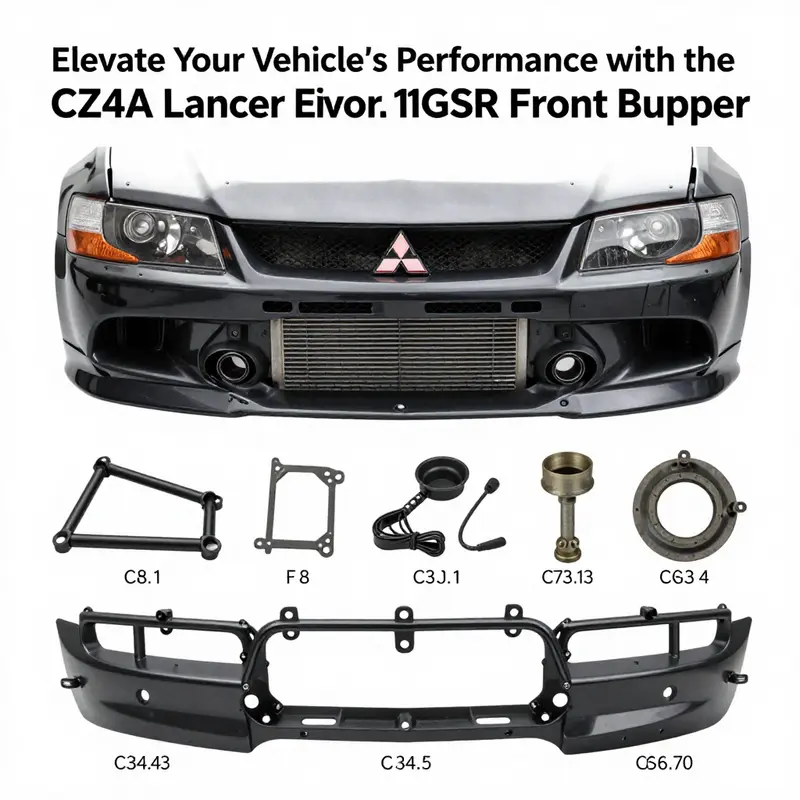
The CZ4A Lancer Evolution X, in the GSR specification, carries a rearward memory of the rally-inspired era that gave the model its sharp, purposeful silhouette. The front bumper of the Evolution X in its GSR trim is more than a cosmetic shell; it is a meticulously engineered structural element that binds safety, aerodynamics, and character into a single, integrated statement. When viewed up close, the bumper’s black finish is not merely a color choice; it is a finish that complements the car’s high-contrast fascia, accentuating lines that speak to the Evo X’s pursuit of precision. The center grille, a defining feature of the design, serves a dual purpose: it preserves the vehicle’s air intake needs while preserving the visual rhythm that communicates speed even while the car is at rest. The bumper is, by design, a genuine OEM part crafted to fit the CZ4A chassis with a factory-standard finish and an exacting tolerance for fitment. In performance terms, that precise fit is a prerequisite for predictable behavior at high speed, where even minor misalignment can translate into real handling or cooling consequences under race-inspired driving conditions.
To appreciate what the CZ4A bumper contributes beyond looks, one must first consider its role in structural integrity. The bumper is a primary line of defense during minor collisions, the kind of impacts that happen on backroads, city streets, and the occasional track day layover. It is engineered to absorb and redistribute energy, protecting the more vulnerable components beneath the shell—the radiator, condenser, headlights, and the critical subframes that anchor the vehicle’s front end. In the Evo X’s engineering philosophy, crashworthiness is not an afterthought but an integral feature, ensuring that impact forces are spread in a controlled manner to minimize collateral damage. This emphasis on safety is not merely regulatory compliance; it is a design choice that preserves the car’s acceleration posture and steering geometry after a jolt, so the driver can regain confidence quickly and continue with minimal disruption. The bumper’s interaction with the rest of the front-end assembly—bumpers, crash beams, energy-absorbing foams, and mounting points—further strengthens the chassis’ ability to withstand lateral and vertical impacts. The CZ4A’s design team understood that a front bumper is not a standalone piece; it is a part of a system, a node in a safety network that must perform consistently under a wide range of real-world scenarios.
In aesthetic terms, the bumper communicates the Evo X’s lineage through a careful balance of function and form. The design reads as bold and aggressive, yet deliberate and refined. The bumper’s lines align with the hood’s sweep and the fenders’ broad shoulders, creating a cohesive silhouette that telegraphs the car’s performance intent even when parked. On select models, ducts and aerodynamic channels are integrated into the bumper geometry to optimize airflow. These features are not decorative ornaments; they are part of a broader strategy to manage air impedance and to guide the boundary layer around the front end. Effective ducting helps to reduce suction at high speed, directs cooling air toward the intercooler and radiator, and contributes to downforce formation at the corners—subtle but meaningful improvements that support stability as speeds climb. The aggressive front fascia, with its bold negative space and sculpted intake openings, also reinforces the Evo X’s identity as a machine designed to be driven with conviction. It tells a story of a car that is not content to merely move through air but to slice it with intention, a philosophy that has long been part of Mitsubishi’s performance lineage.
The specifics of the CZ4A OEM front bumper extend beyond aesthetics and safety. The genuine front bumper assembly, cataloged as the main bumper in the OEM system and finished in a protective black, is designed to deliver a precise fit and a factory-standard appearance. This matters because the front end of a performance car is a dynamic interface between the road and the engine bay; a misfit can create gaps, wind noise, or misalignment with sensor housings, all of which can degrade performance or comfort. The OEM part ensures that mounting points align with the bumper beams, energy-absorbing structures, and the center grille, preserving the intended geometry and load paths. For those pursuing authenticity in their restoration or upgrade, the OEM bumper offers an assurance that the part was engineered to the same tolerances that governed the vehicle at the factory. In practical terms, this means fewer headaches during installation and a higher likelihood that the bumper will maintain its alignment after minor impacts, a critical factor for a car that is driven as if it were still on a test track.
Where the front bumper meets the road in the Evo X is also a matter of durability. The materials chosen for the CZ4A bumper are selected for longevity, resistance to UV exposure, and the rigors of everyday driving, all while keeping a visible, high-quality finish that supports the Lancer Evolution’s aggressive stance. The durability of the bumper extends to its ability to resist small scuffs, chips, and minor abrasions that accumulate with use. In a world where a vehicle’s fascia faces the brunt of road debris, the bumper behaves as a sacrificial layer—absorbing energy and preserving the integrity of more critical components behind it. The combination of a robust outer shell and reliable mounting points translates into a front end that maintains its shape and alignment through the miles, weather cycles, and occasional track sessions that define ownership of an Evo X.
An essential aspect of the CZ4A bumper is its compatibility with the rest of the bumper ecosystem that supports the front end. The center grille functions as a critical air entry for the engine bay, balancing engine cooling with the demands of aerodynamics. The bumper’s design also accommodates the necessary openings for lighting and sensor systems in appropriate configurations, ensuring that cameras or radar units, if present in higher-trim configurations or as part of an optional safety package, retain their intended positions and field of view. This attention to integration reinforces the notion that the bumper is not an isolated piece but a carefully integrated part of a vehicle that depends on predictable behavior in a wide variety of conditions. For collectors and enthusiasts who are aiming for authenticity in a rebuild or a careful upgrade, the precise OEM fit offered by the CZ4A bumper means fewer compromises on alignment, gap symmetry, and finish. In the case where a complete installation is required, a full assembly including the bumper and any necessary garnish pieces—such as the LH bumper garnish—may be necessary to achieve the full factory look. The LH garnish, cataloged separately, is part of the comprehensive set that completes the assembly while maintaining the visual cohesion of the front fascia.
To place this discussion in a practical frame, consider the lifecycle of a stock front end in a high-performance model. After a minor collision or incidental curb contact, the bumper serves as the first reaction to absorb energy and distribute loads. This reduces the likelihood of damage radiating into the radiator core, condenser fins, or auxiliary cooling equipment. It preserves the structural relationship between the bumper beams and the chassis, ensuring that the impact’s aftermath does not ripple into misalignment of the support structures that keep the vehicle rigid at speed. The CZ4A bumper’s architecture—designed to handle daily bumps while remaining capable on a winding road or a light sprint on a race track—speaks to a core philosophy: performance is built on a foundation of protection that does not compromise weight, offset, or geometry. The OEM path remains the safest route to preserve that balance, especially for owners who prioritize reliability and long-term value in a platform celebrated for its engineering precision and rally-bred DNA.
In the broader community of Evo X enthusiasts, the front bumper is often one of the first parts considered when planning the next phase of a project. Whether the aim is a pristine showroom restoration, a track-day weapon, or a visually bold street setup, the bumper functions as a keystone component. The decision to source an OEM genuine front bumper—such as the CZ4A GSR version—underlines a commitment to authenticity, fit, and durability that aftermarket alternatives may not guarantee. The sense of continuity that comes with a factory part helps preserve the car’s original design intent, ensuring that the vehicle’s stance, air management, and aesthetic composition remain true to the Evo X’s performance heritage. In practical terms, this means you can approach upgrades with a calm confidence, knowing that the front end will accept the intended adjustments without upsetting the fundamental geometry or the integrity of cooling and lighting systems. For those who want to push the car’s appearance and performance while keeping a clear link to the original engineering, the CZ4A front bumper offers a coherent path forward that respects both history and the demands of modern driving.
From a maintenance and replacement perspective, it is worth noting that purchasing through official channels or authorized dealerships helps to guarantee long-term reliability and adherence to original engineering standards. Verification of authenticity, part numbers, and compatibility with the GSR trim for the CZ4A model helps avoid mismatched fitment or subpar materials. The main bumper assembly, with part number 7450A360, represents the central element of the front-end replacement. When a complete install is needed, the left-hand side bumper garnish, identified as part number 6405A103, may also be required to restore the full visual continuity of the façade. While each component is designed to work in harmony within the OEM system, sourcing them as a kit from trusted suppliers reduces the risk of misfit and ensures that mounting points, air intakes, and trim pieces align as intended. For a collector or a responsible owner who values the vehicle’s long-term performance, this is not merely shopping; it is an investment in the car’s future usability and appearance.
In closing the practical loop, the CZ4A front bumper embodies a philosophy that blends structural necessity with aesthetic assertiveness. Its role in maintaining crashworthiness while elevating the Evo X’s stance is a testament to the careful engineering mindset that defined the Lancer Evolution’s era. It is a reminder that performance cars are built not only to sprint from zero to sixty but to withstand what the road—and time—throw at them, preserving their essential signature: a front end that looks as prepared as the engine is for action. The balance between resilience and visual impact is, at its core, what makes the CZ4A GSR front bumper a meaningful choice for owners who want to keep the Evo X faithful to its roots while embracing the ongoing evolution of its front-end character. For those exploring this path, the integration of OEM components underscores a commitment to reliability, fit, and the enduring persona of a legend that continues to define what a front bumper can be when engineered with intent and attention to every line, hole, and edge.
External resource for deeper guidance on bumper selection and integration: https://www.carinterior.com/how-to-choose-a-bumper-for-lancer-evo-x-full-guide
Internal reference for broader bumper ecosystems (relevant to the CZ4A front end): 2008-2015 Mitsubishi Lancer Evo-X Rear Bumpers
null
null
Precision Fitment and Sensor-Ready Alignment: Installing the CZ4A Front Bumper on the 10th-Gen Lancer

Replacing a front bumper on a CZ4A platform, especially for a high-performance, right-hand-drive configuration intended for European markets, is more than a cosmetic swap. It is a precise, system-wide task that tests alignment, materials, and software calibration in equal measure. When the vehicle’s front end is reimagined with a new bumper, the entire interaction of airflow, impact energy management, camera and radar units, and chassis geometry must be considered. A well-executed installation preserves the integrity of the vehicle’s safety systems while maintaining the car’s clean lines and aerodynamic efficiency. In this context, the process becomes a careful negotiation between factory specifications and aftermarket realities, a balance that requires attention to detail, the right tooling, and the expertise of a technician who understands the CZ4A’s unique European-oriented design language. To appreciate what goes into a proper installation, it helps to start with the baseline reality: the CZ4A front end is not a generic shell. It is tuned for a right-hand-drive setup and for Euro-spec suspension geometry, with mounting points and air management elements calibrated to the car’s intended operating envelope.
The first consideration is structural integrity and compatibility. OEM front-end architecture in this platform is shaped by the need to absorb and distribute crash energy in a controlled manner while preserving the alignment of critical systems. A bumper designed for a different regional specification or a non-CZ4A variant may retain a similar look but will often fail to align with the car’s bumper mounting points, radiator supports, or crash-beam locations. When fitment fails in these areas, the risk isnures energy absorption performance drops, headlights or fog lamps can sit out of their intended housings, and sensor housings can be displaced. Even if the part appears to drop into place, micro-movements created by subtle misalignment can propagate across the car’s sensing and lighting systems, leading to inconsistent performance and, in some jurisdictions, compliance issues during inspections.
Beyond the obvious geometry, the presence and location of sensors behind and within the bumper—forward radar, forward-facing cameras, and possibly proximity sensors—demonstrate why precise fitment matters more than ever. Modern drivability features rely on accurate sensor positioning to interpret the world ahead. If the bumper’s mounting points shift by even a few millimeters, the sensors may misread distances, trigger false alerts, or fail to detect a potential obstacle. After replacement, a thorough calibration using OEM or factory-approved diagnostic tools is essential. Calibration is not a one-off step; it is a process that confirms sensor alignments, aligns the camera’s field of view, and re-teaches the control modules to the car’s real-world geometry. Skipping or delaying this calibration can render ADAS features unreliable, undermining both safety and user confidence.
Another critical thread in this installation narrative is fitment and alignment. Even with an OEM-equivalent bumper, the slightest deviation can manifest as wind noise, water ingress, or perceptible gaps at the fenders and lower edges. In a zone where Europe’s weather and road textures demand consistent sealing and robust air management, the lower air dam, side splitters, and the bumper’s edge contours all contribute to the vehicle’s aerodynamic efficiency. Proper alignment calls for more than simply bolting two halves together. It requires careful attention to the panel gaps around the grille, the hood line, and the fender joints. Many shops employ alignment jigs or laser guides to verify that each mounting point lines up with the vehicle’s reference points. This approach minimizes rattle, reduces thermal drift during operation, and preserves the intended airflow path, which influences engine cooling, brake cooling, and overall high-speed stability.
Material choice and finish matching represent another axis of fidelity. CZ4A bumpers are typically formed from high-impact resistant plastics—ABS or composite blends—that are then finished to match factory color and gloss. The finish is more than a cosmetic layer; it is an environmental and UV shield that defends the substrate from micro-cracks and color fading. When aftermarket parts are introduced, the temptation to replace like-for-like can create hidden problems. A bumper fabricated from a slightly different grade of resin or cured with divergent paint chemistry may peel or fade differently under sun exposure, or it may respond differently to temperature swings, leading to micro-cracking or dulling. A careful buyer and installer will insist on OEM-grade materials and pigment-matched coatings that can be color-tuned to the vehicle’s original shade. If the manufacturer or supplier cannot guarantee color accuracy, it is prudent to seek alternatives that provide a documented color-matching service and a warranty that covers finish integrity.
All of these considerations feed into the broader topic of warranty and compliance. Replacing front-end components with non-OEM or non-certified items can have consequences, especially in markets with strict inspections or warranty provisions tied to original equipment. If a part fails or a system under the hood detects a discrepancy, the vehicle’s regulatory or warranty status could be in jeopardy. The prudent route is to verify that the replacement part adheres to EU safety and emissions standards and to retain documentation proving compliance. This is not merely bureaucracy; it is a safeguard that supports long-term reliability and resale value, while also providing a clear trail for future service visits. The aim is to ensure that the bumper, its associated mounting hardware, and any integrated sensors all operate as a single, coherent system rather than as a patchwork of mismatched pieces.
Aware of these realities, a professional installation plan for the CZ4A front bumper begins long before the first bolt is turned. It starts with a precise assessment of the vehicle’s current condition, including the state of the crash structure, the integrity of the sensor mounts, and the electrical harness routing for ADAS components. The technician will verify that the new bumper is intended for the CZ4A configuration and that it corresponds to the vehicle’s regional specification. This diligence extends to confirming that the bumper’s attachment points match the frame rails and that any impact-absorbing devices or energy absorbers behind the bumper are compatible with the new shell. A careful inspection of harness connectors and sensor housings ensures that nothing is overlooked when the bumper is removed and reinstalled. Following inspection, the actual removal can begin. The process must be performed in a controlled environment where static discharge is managed, and the battery is disconnected to minimize the risk of airbag or sensor misdiagnosis during reassembly. Disconnecting electrical connectors with care preserves the integrity of sensor rings and avoids disturbing the calibration that may already exist in the vehicle’s memory.
Once the old bumper comes off, attention shifts to the reattachment plan. The mounting points, once exposed, must be cleaned and inspected for damage, corrosion, or deformation. Any warped brackets or damaged clips should be replaced with OEM-grade equivalents to guarantee a secure, vibration-free installation. The new bumper, even if it is an OEM-compatible piece, should be offered up with patient, iterative checks. A foot-long sweep of the bumper along the car’s face will illuminate any lingering misalignment that could affect lighting alignment or grille fitment. The role of the alignment jig comes to the fore here, guiding the bumper’s corners into their precise positions with a level of repeatability that manual alignment simply cannot deliver.
Reconnecting the sensors after installation is one of the most delicate steps. The bumper’s face is a shield as well as a radar of sorts; it houses devices that sense distance, delineate lanes, and parse traffic dynamics. The calibration that follows is not optional; it is a requirement to ensure the car’s driving aids are functioning as designed. In this sense, the installation becomes a hybrid of mechanical engineering and software tuning. Technicians will run diagnostic software to verify that sensor outputs are within expected ranges and that the camera’s field of view is correctly aligned with the real-world view ahead. Any hint of misalignment requires readjustment, re-seating connectors, and, if necessary, a second calibration pass to lock in correct sensor geometry.
At the same time, the aesthetic aspect should not be ignored. The overall silhouette of the front end relies on precise gaps and flush mounting with the surrounding panels. Small discrepancies in the lower air dam alignment or the side splitter interface can alter the vehicle’s airflow, which, in turn, impacts cooling and braking performance, particularly under spirited driving conditions. The aim is a seamless transition between the bumper and the noted interfaces—hood, fenders, grills, and the lower aerodynamics components—so that the car looks as the design intended and behaves as designed under real-world stress. When these joints are pristine, the car’s stance remains balanced and predictable, a quality that enthusiasts value as much as the performance itself.
In terms of sourcing and reliability, the workflow favors verified suppliers who can provide fitment verification and technical support. The goal is to obtain parts that are designed for the CZ4A front end and that come with a clear documentation trail showing compatibility with the right-hand-drive European configuration. This approach helps prevent the drift of expectations that can accompany generic or non-specific parts, which often require additional trim work or softening modifications to fit. The supplier’s willingness to stand behind compatibility, provide color-matching services, and guarantee the durability of the materials becomes an important part of the installation’s value proposition. The combination of correct structure, proper sensor calibration, precise alignment, and consistent finish yields a front end that not only looks right but performs predictably in high-load and adverse weather scenarios.
For readers seeking a practical anchor in this discussion, consider how the broader ecosystem of bumper options can inform decisions about OEM compatibility and regional relevance. A dedicated reference on European CZ4A front and rear bumper configurations offers a window into the range of fitments and the common pitfalls that arise when sourcing from non-OEM sources. This contextual information reinforces the message that a meticulous approach to parts compatibility and calibration yields the best long-term results. For those exploring related bumper options across model years and regional specifications, you can consult a resource that provides a consolidated view of bumper configurations and their compatibility with a variety of chassis codes. 2016-mitsubishi-lancer-front-and-rear-bumpers offers a representative snapshot of how bumper architecture can differ even within the same generation, underscoring why a CZ4A-specific approach matters.
In closing, the installation of a front bumper on the CZ4A platform demands more than a straightforward bolt-on procedure. It requires an integrated method that honors the vehicle’s Euro-spec engineering, preserves the performance of active safety systems, and sustains the car’s distinctive visual language. The best outcomes arise when owners and technicians collaborate with a shared understanding of the system’s interdependencies—from structural attachments and sealing to sensor geometry and software calibration. When done correctly, the front end becomes not merely a protective shell but a well-tuned component of the vehicle’s overall dynamic personality. The result is a cohesive unit that performs, protects, and communicates through design—an approach that elevates the ownership experience while maintaining the integrity of the vehicle’s engineering heritage. For researchers and practitioners, this narrative illustrates how a seemingly simple upgrade unfolds as a multidisciplinary task requiring mechanical skill, diagnostic acuity, and a respect for the original design intent. External knowledge about bumper configurations and supplier guidance can provide additional context for those seeking to understand the broader landscape of OEM-compatible parts and the strategies behind successful installations.
External resource for further reading: https://www.goldsupplier.com/automotive-parts/mitsubishi-lancer-evolution-x-components
Final thoughts
Understanding the structural significance and design elegance of the CZ4A Lancer Evolution 10 GSR front bumper is crucial for vehicle performance and aesthetics. Sourcing genuine components ensures compatibility and durability, while mindful installation elevates the vehicle’s integrity. For business owners and automotive enthusiasts alike, investing in this front bumper promises not only enhanced performance but also a visually appealing upgrade that upholds the heritage of the Lancer Evolution brand.