
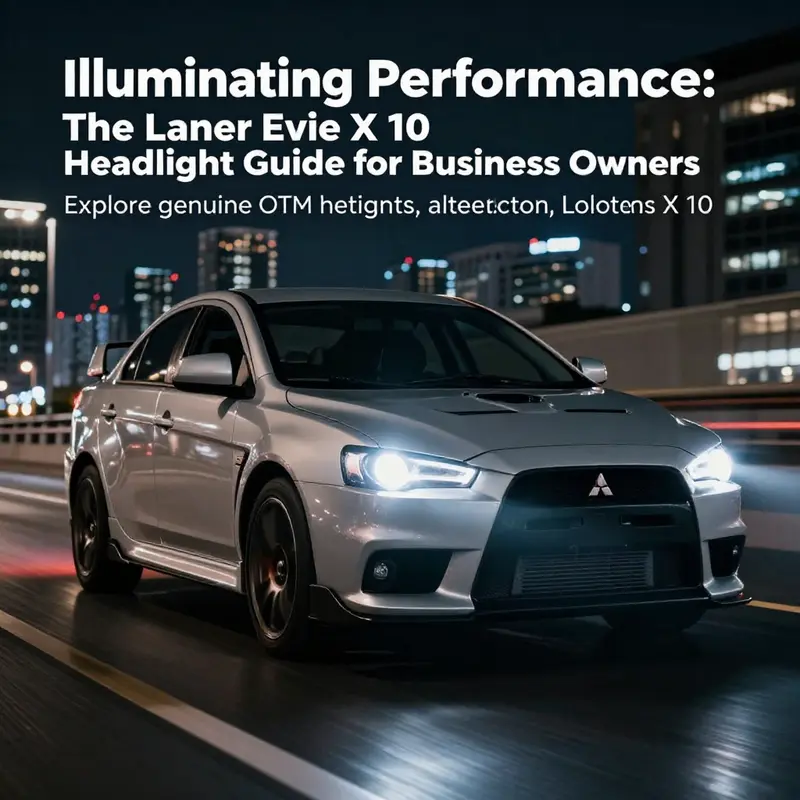
As a vital component of the Mitsubishi Lancer Evolution X, the headlights not only enhance the vehicle’s aggressive aesthetic but also play a crucial role in ensuring safety on the road. For business owners involved in automotive refinishing, repairs, or sales, understanding the differences between genuine OEM options and aftermarket enhancements is essential for meeting customer expectations. This article will delve into the specifics of Lancer Evo X 10 headlights, offering insights into genuine OEM products, compelling aftermarket upgrades, and compatibility considerations that can influence sales and service decisions.
Genuine OEM Headlights for Lancer Evo X 10: Authentic Illumination, Precise Fit, and the Evolution of Style

The Lancer Evolution X’s headlights are more than illumination; they define the car’s face and beam geometry. Genuine OEM headlights provide exact fit, preserved cutoffs, alignment, and compatibility with the wiring harness and leveling systems. OEM units match the factory design and beam pattern, reducing surprises during install. Global marketplaces show 2008-2015 Evo X OEM left and right headlights described as new and unused, with Japan as a common source, and typical international shipping windows. When sourced, verify part numbers and ensure the unit matches exterior color and lens condition, and confirm ballast and connector interfaces will work with the car’s electrical system. The lifecycle: aging lenses yellow, seals degrade; OEM replacements restore factory alignment. Aftermarket options offer brighter lighting or modern aesthetics but may require fitment adjustments and electrical adaptation. The decision hinges on fidelity versus refreshed styling, with safety and legality considerations. In sum, genuine OEM Evo X headlights preserve the original beam geometry and fit, while aftermarket kits can offer updated appearance and performance if chosen with care. External reference to a listing on eBay illustrates what OEM two-headlight sets look like in the marketplace.
Aftermarket Upgrades for Lancer Evo X 10 Headlights
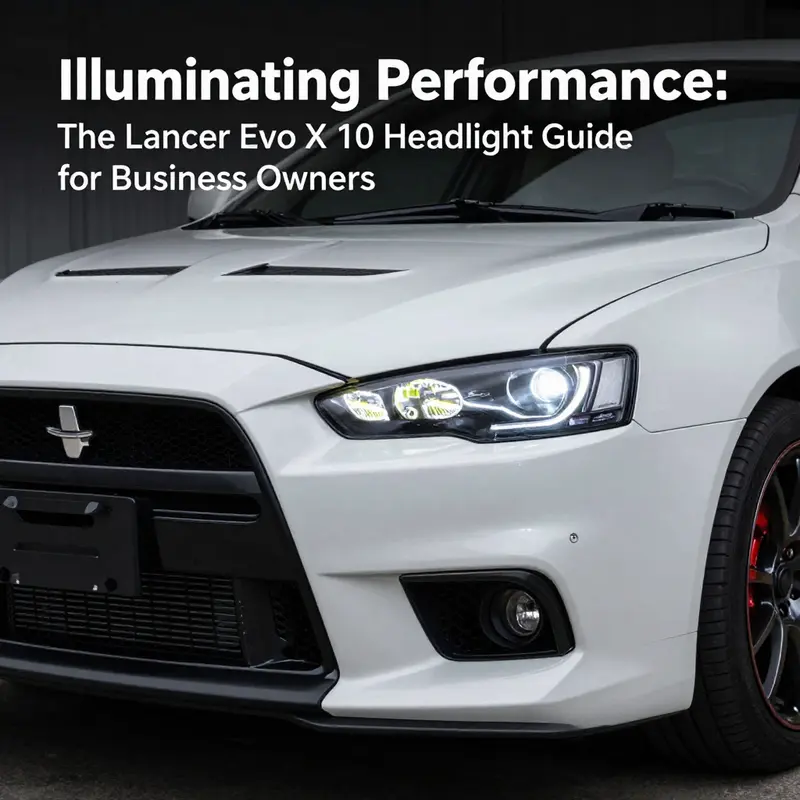
The headlights on the Lancer Evolution X have long been a defining feature of the car’s aggressive character. They sit at the front of the chassis like weaponized optics, casting a wide, precise beam that matches the Evo X’s sharp lines and aerodynamic intent. When enthusiasts set out to upgrade, they are not simply swapping bulbs or painting housings; they are choosing how the car will illuminate its path, how it will present itself at night, and how it will feel to push a button that makes the road glow with a new, more focused intensity. The aftermarket ecosystem for Evo X headlights is robust because the car’s appeal hinges on both visibility and identity. Upgrades here can deliver visible gains in safety and night driving comfort, while also strengthening the car’s modern, high-performance stance. The shift from traditional halogen or even older HID systems to modern LED projector configurations reflects a broader trend in automotive lighting: better light control, longer life, and a more refined aesthetic that still respects the Evo X’s DNA.
At the core of most aftermarket upgrade discussions for the Evo X is the projector headlight concept. Projector headlights use a precise lens system that concentrates light from the source into a narrow, well-defined beam. This design minimizes stray glare that can blind oncoming traffic while maximizing the usable illumination on the road ahead. For Evo X owners, this translates into a beam pattern that feels more like a surgical instrument than a lamp, offering a bright, crisp field that makes corners read clearly at high speed and urban streets feel more predictable in edge-of-visibility scenarios. The transition from reflector-based designs to projector-based ones is not merely about brightness. It’s about quality of light—how sharply the cutoff lines appear, how evenly the illuminated field is filled, and how naturally the color of the light blends with the car’s overall stance. In practical terms, a good projector setup can deliver superior nighttime performance without the harsh, scattered glare that sometimes accompanies more rudimentary lighting systems.
The LED projector variants have become particularly popular for Evo X upgrades. LED projectors can deliver daylight-like illumination with less energy consumption and dramatically longer life than traditional halogen or older HID bulbs. The advantages aren’t solely about raw brightness; they include improved color stability, reduced heat buildup, and the potential for advanced features that complement modern automotive styling. In many aftermarket configurations, LED projectors arrive as complete assemblies that integrate daytime running lights (DRLs), and some even incorporate signature lighting elements like ring accents or segmented turn signals. These design choices are not cosmetic frills. They serve a dual purpose: enhancing the car’s visual language when the headlights are off and delivering a distinctive, recognizable signature when the lights are on. The result is a headlight assembly that feels both contemporary and true to the Evo X’s performance-oriented image.
One of the compelling outcomes of upgrading to LED projector headlights is the improved beam control. The combination of a high-precision projector lens and a modern LED source creates a beam with a crisp cutoff line and a bright center field, which translates to improved exposure and recognition on winding back roads. For drivers who regularly push the Evo X through tricky terrain or dimly lit highways, that improvement in nighttime visibility can be the difference between a confident drive and a cautious one. Beyond the functional benefits, the upgrade also helps the car speak a modern language of performance. The Evo X, especially in its 10th Anniversary or later iterations, is celebrated for its performance chops, and the headlight upgrade becomes a logical extension of that narrative. A clean, bright, well-regulated beam pattern aligns with the car’s chassis balance and suspension response, letting the driver read the road with the same precision that the tires, brakes, and engine offer in a high-speed scenario.
When considering aftermarket LED projector kits, compatibility and fitment are central concerns. A significant portion of the Evo X aftermarket headlight market is designed to fit 2008–2020 models, with attention to the 2008–2015 Evo X variants and related models that share the same front-end geometry. A plug-and-play installation is a major selling point for many buyers. The promise of a straightforward swap—unplug the old unit, connect the new one, and tidy up the wiring—appeals to enthusiasts who want the upgrade to be a relatively quick and clean transformation. In practice, however, the best results come from assemblies that respect the vehicle’s electrical system, CAN bus signaling, and the way the car’s computer monitors lighting status. Some installations may require a simple resistor or CAN-bus adapter to ensure the vehicle does not register a bulb-out warning or misinterpret the new LED module as a fault. The most reliable upgrade paths acknowledge these nuances and provide installation guidance that minimizes the risk of warnings while maximizing beam quality.
Design language is another important dimension of these upgrades. Many aftermarket LED projector assemblies aim to reproduce the Evo X’s original spirit while adding a contemporary twist. It isn’t only about a brighter light; it is about a cohesive look that complements the car’s front end, including the bumper lines, grille texture, and the overall silhouette of the vehicle. For owners who want a subtle, OEM+-leaning upgrade, the market offers projector assemblies with black or dark housings and a restrained LED signature that echoes the clean, precise feel of factory lighting but with the added clarity of modern LED optics. For those chasing a more aggressive look, there are options featuring more pronounced internal geometry, fully integrated DRLs that run along the top or bottom edge of the unit, and optional sequential turn signals that animate in a smooth, at-speed fashion. The key is to choose a design that respects the Evo X’s identity while delivering the practical benefits of contemporary lighting technology.
Beyond the core projector technology, the material and build quality of aftermarket assemblies matter a great deal. The Evo X community values parts that withstand the rigors of daily driving as well as track-day sessions, where a bright, well-aligned light pattern supports late-night training runs without introducing unacceptable glare. The best options come from suppliers who specify the lens material, the sealing methods, and the internal reflector geometry with enough detail to reassure buyers about long-term reliability. In regions where climate and road salt pose corrosion risks, that durability becomes even more important. Buyers should look for assemblies that use robust gaskets, reliable wiring harnesses, and connectors designed to resist moisture ingress. A well-made headlight is not a vanity item; it’s a critical component of vehicle safety and reliability, especially for a car that sits in a high-performance niche where every advantage is meaningful.
For Evo X owners seeking a balanced upgrade, the value proposition often centers on a carefully designed LED projector kit that preserves the original silhouette while upgrading the light quality and adding modern nuances. It is possible to retain the car’s characteristic lines and daytime presence by selecting a configuration that integrates DRLs in a way that reads as a natural extension of the front-end styling. The glow from the DRLs can be warm or cool depending on the color temperature, which interacts with the vehicle’s paint finish and chrome accents. The result is a night-time aesthetic that looks coherent at a standstill and becomes even more integrated when the car is in motion. In the best cases, the new headlight housing becomes an element of the car’s entire lighting story—an accent that complements the tail light treatment, the fog light clusters, and the overall lighting choreography when the vehicle is in use.
From a sourcing perspective, the aftermarket landscape is shaped by global manufacturing patterns and the realities of cross-border distribution. The design and assembly of automotive lighting assemblies are concentrated in regions with well-established supply chains and manufacturing ecosystems. In many cases, the most cost-effective options come from manufacturers that sustain vertically integrated facilities capable of controlling quality across the entire production line. Buyers should still perform due diligence: verify specifications, confirm compatibility with the Evo X’s wiring harness, and assess whether the product specification includes details like beam pattern measurements, color temperature in Kelvin, and the presence of polycarbonate lenses with UV protection. The risk with cheaper alternatives often lies in inconsistent beam performance, inconsistent color temperature, or poor sealing that allows moisture intrusion. In other words, the upgrade should be evaluated not just on the brightness of the light but on how reliable and repeatable the performance is over time.
The Evo X’s front-end ecosystem does not exist in isolation. Enthusiasts frequently view lighting upgrades as part of a broader program of visual and performance enhancements. A well-chosen headlight upgrade can be harmonized with other exterior modifications—body kits, front bumper revisions, or aero components—so the lighting surfaces read as a coherent system rather than disparate elements patched together in response to a single upgrade. This integrated approach often resonates with owners who want a polished, race-inspired look that remains practical for daily driving. It’s not unusual to see a development arc where someone upgrades the headlights first, then elevates their car’s lighting with complementary fog-light modules, or with a front-end refresh that updates the surrounding architecture to match the new lamp aesthetics. The synergy between lighting and overall bodywork strengthens the Evo X’s identity as a high-performance, choice-driven machine rather than a collection of aftermarket add-ons.
For readers seeking concrete direction, the upshot is clear: select a high-quality LED projector kit that fits the Evo X 2008–2020 window, verify the installation requirements, and plan for beam alignment and potential CAN-bus considerations. If you want a direct reference point that reflects the kind of design language discussed above, you can explore options that emphasize an Audi-inspired design approach within the Evo X ecosystem. This path offers a balanced blend of recognizable modern styling and the car’s own signature cues. For a practical sense of how one of these options presents itself in real life, consider following a lead that highlights the integration of the headlight form with the Evo X’s front-end architecture and its overall silhouette. The aim is not to chase the latest trend but to select a configuration that enhances safety, complements the vehicle’s lines, and remains reliable under varied driving conditions.
In the end, the choice of an aftermarket headlight upgrade for the Lancer Evo X is a statement about how a driver experiences night driving in a high-performance car. The optics matter not only for navigation through dark streets but also for how the car communicates its tone to onlookers. A thoughtful LED projector upgrade can convey a sense of precision, control, and modernity that aligns with the Evo X’s historical emphasis on driver involvement and technical sophistication. While the core motivations—visibility, safety, aesthetics, and a cohesive design language—remain constant, the specifics of the upgrade answer the personal questions every owner asks: How do I want to see the road at night? How do I want others to see my car in motion or at a standstill? What is the most reliable and straightforward installation path that won’t complicate future maintenance or emissions/regulatory compliance?
If you’re exploring the path toward a headlight upgrade, consider the practical realities of installation and daily use. The plug-and-play promise is attractive, but it’s worth verifying that your chosen kit’s wiring harness, connectors, and mounting points align with the Evo X’s factory geometry. Some kits offer pre-assembled, sealed units designed to slot into the existing housings with minimal modification; others may require trimming of brackets, careful resealing, or the use of additional mounting hardware. The goal is not to force-fit a component but to maintain the integrity of the front-end assembly while delivering a cleaner, more modern light output. It’s also prudent to plan for a thorough alignment session after installation. Even small deviations in aim can shift the brightness distribution and create glare in the misalignment zone. A precise, measured alignment ensures the improved brightness translates to real-world benefits without compromising safety.
For readers who want to see how others have implemented these ideas, there are options within the Evo X community to view and compare different configurations. A typical progression might involve a first phase of upgrading to a high-quality LED projector assembly, followed by a minor styling refresh that accentuates the new lighting with complementary features on the bumper or fascia. In some cases, enthusiasts pair their headlight upgrades with a coordinated lighting theme inside the vehicle’s cabin or with exterior lighting accents that create a unified, performance-driven presence. The essence of these projects is not just the brightness of the lamp but the coherence of the entire lighting narrative—from the moment you approach the car in a parking lot to the first morning glide along a misty valley road.
A final note on sourcing: while the market presents a wide spectrum of options, the prudent buyer should look for products that provide detailed technical information, clear installation guidance, and transparent warranty terms. Given the Evo X’s popularity among enthusiasts, a robust aftersales support network is often a good indicator of product quality. When in doubt, consult with experienced owners in forums and community groups who have installed similar kits and can share insights about fitment, beam pattern, and long-term reliability. They can illuminate practical concerns that aren’t always apparent in product listings, such as the tendency for certain housings to condense moisture during cold, humid nights or the importance of choosing a kit that includes appropriate retainer clips and gaskets to preserve the integrity of the seal around the headlight assembly. Ultimately, a thoughtful approach to upgrading the Evo X headlights will yield a result that not only elevates the car’s light output but also preserves the vehicle’s distinctive character and driving enjoyment.
For readers interested in exploring a potential option that aligns with these insights, you can discover headlights designed to fit the Evo X with an Audi-inspired design language, providing a recognizable, modern silhouette while maintaining proper fitment and function. This resource-forward approach helps ensure the upgrade remains a living part of the car’s evolving story, rather than a one-off modification that may look out of place as the vehicle ages.
External resource: For a detailed look at LED projector headlight options with practical guidance, see the external reference on LED projector headlights for Mitsubishi Lancer Evo X. This resource discusses how LED projector configurations can improve nighttime visibility, reduce energy consumption, and extend service life, while also noting considerations around installation compatibility and regulatory compliance. https://www.autoz.com/led-projector-headlights-for-mitsubishi-lancer-evo-x-2008-2020-pair.html
Internal link note: To see a headlight option that echoes the Audi-inspired design approach within the Evo X ecosystem, you can explore a compatible Evo X headlight assembly that balances modern aesthetics with a clean OEM-like fit. This option demonstrates how careful design can preserve the Evo X’s front-end identity while delivering the enhanced lighting performance discussed above. Headlights for Lancer Evo X 2007-2017 Audi design version 2.
Lighting the Path: Compatibility Options for Lancer Evo X Headlights
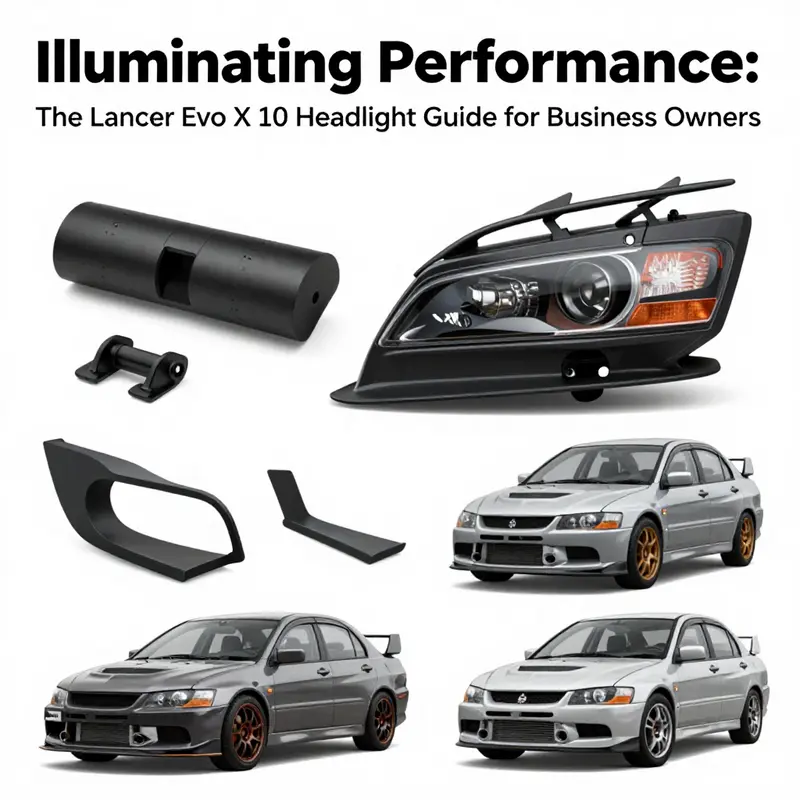
The Lancer Evolution X arrived with a silhouette that communicates performance, and its headlights play a starring role in that impression. The design language of the Evo X—sharp, angular lines and a compact, fully integrated lighting unit—helps the car cut through air while signaling intent to oncoming traffic. When owners begin to explore upgrades or replacements, the central question becomes not just what looks good, but what will fit and function as reliably as the original. The topic of compatibility for the Lancer Evo X 10 headlights is both practical and consequential. It touches on electrical architecture, beam pattern integrity, and the broader aesthetics of a car that thrives on precision and presence. As the Evo X matured through its production years, the market responded with a spectrum of options that fall along a few clear lines: OEM replacements that preserve the factory geometry, straightforward LED plug-and-play kits designed to match OEM fitment, and more elaborate clear-lens or HID alternatives that reframe the car’s face while demanding careful installation and calibration. The idea is not simply to swap bulbs or swap housings; it is to maintain or improve visibility, safety, and the Evo X’s signature look without inviting alignment issues or glare that could draw attention from regulators or the other drivers on the road. The compatibility conversation, therefore, starts with a clear understanding of what the Evo X headlight assembly is designed to accept and how aftermarket paths align or diverge from that blueprint.
In the most general sense, compatibility hinges on three interrelated factors. First, fitment: will the new unit physically bolt into the factory housing, align with the mounting points, and seal against the elements just as the original did? Second, electrical compatibility: do the new headlights draw power within the same range, interface with the car’s wiring harness cleanly, and avoid triggering fault indicators or parasitic electrical drains? Third, beam pattern and regulatory compliance: does the new assembly reproduce or improve the designed cut-off, scattering, and aim so that glare is minimized for oncoming traffic and the vehicle remains street-legal in the operator’s locale? Each of these concerns matters for the Evo X, whose headlights were never just decorative; they are a critical safety system that shapes nighttime visibility through roads, highways, and winding backroads.
Among the most accessible routes to compatibility are LED headlight kits that position themselves as direct replacements. These kits are designed to mirror factory dimensions, with housings that fit into the same cavities and connect to the same electrical harness points. The selling point is straightforward: no vehicle modification required, just a swap that promises brighter output, quicker response, and reduced power draw relative to traditional halogen systems. The practical payoff is not merely brightness—the modern LED solutions often bring more uniform illumination, a whiter light tone, and more precise beam control that preserves the Evo X’s characteristic beam pattern when correctly designed. For a driver who spends evenings on open highways or mountain passes, the incremental gain in visibility can transform the experience of night driving. Yet the transition from halogen to LED must be approached with care. Even plug-and-play claims can gloss over the subtleties of beam alignment and dash indicators. A direct replacement kit will only deliver its promised benefits if the housing is properly seated, the wiring harness is compatible, and the control modules are calibrated to the vehicle’s sensor ecosystem. If any of these elements are neglected, the result can be a dimmer output, misdirected light, or, in the worst case, glare that annoys other road users or draws attention from local authorities.
Clear-lens upgrades offer another path that preserves the Evo X’s familiar geometry while changing the aesthetic and sometimes the performance characteristics. A clear-lens headlight, as opposed to a smoked or tinted alternative, tends to reveal more of the reflector geometry and can sharpen the perceived brightness by reducing color distortion. The benefit is often a modern, high-contrast look that complements a wide range of exterior color schemes and body kits. The critical caveat with clear-lens options is beam pattern accuracy. The reflective surfaces inside a headlight are tuned to work with a specific lens curvature and optical path. If the lens is replaced in a way that alters the way light is refracted or reflected, the beam cutoff can shift, potentially creating glare or reducing illumination on the road ahead. For Evo X owners, this means selecting a clear-lens kit that explicitly states compatibility with the Evo X chassis and confirming that the kit preserves the designed beam pattern. It also means checking for integrated turn signals or switchback functionality in a way that remains consistent with the car’s signaling conventions and regulatory requirements. In practice, a clear-lens upgrade can offer a fresh, contemporary appearance while maintaining the practical safety benefits of modern lighting, but it requires attention to the optics and, ideally, a professional installation or at least a careful beam alignment after fitment.
HID systems—historically a popular choice for high luminous output—represent another branch of the compatibility map. HID, or xenon lighting, delivers substantial brightness and longer-range visibility, which can be compelling for drivers who log a lot of highway time. However, the Evo X’s headlight housings, wiring harnesses, and ballast integrations are tuned around a specific class of lighting. Upgrading to HID involves more than swapping bulbs; it can require ballast mounting, wiring harness compatibility checks, and precise alignment to avoid glare that can bother other road users. HIDs also bring considerations of color temperature and consistency across the beam, which can influence the perceived brightness and spatial coverage at night. In many modern builds, LED solutions have eclipsed HID as the preferred upgrade path due to better efficiency, lighter weight, and easier integration with contemporary vehicle electronics. Yet for some enthusiasts, a carefully designed HID setup remains a valid option when installed with attention to heat management, ballast placement, and proper aiming.
The broader ecosystem around compatibility for the Evo X headlights extends to the car’s front-end integration with other exterior components. The Evo X is often paired with a variety of aftermarket body kits, fenders, and bumper designs that can alter the way a headlight sits in space and how its light spreads across the road. For these combinations, ensuring that the headlight is not only a perfect plug-and-play unit but also physically harmonious with the bumper opening and the surrounding panels is essential. The right headlight kit will slide into the factory mounting points without forcing modification of the car’s frame or sheet metal, preserving both structural integrity and water sealing. Moreover, the electrical connectors—often a simple multi-pin harness in modern kits—should align with the Evo X’s loom to avoid the need for invasive splices or adapters that can introduce failure points. In the best cases, the compatibility narrative extends beyond the headlight itself to embrace the entire lighting system, including daytime running lights, sequential turn signals, and the way these elements communicate with the car’s CAN-bus system. A harmonized lighting setup adds to the car’s visual coherence and traffic safety, ensuring that the Evo X still reads clearly as a high-performance machine to other road users.
The practical path to selecting a compatible headlight for the Evo X thus weaves together fitment confidence, electrical compatibility, and optical integrity. For buyers who want a verified, straightforward route, it helps to look for products that clearly label themselves as compatible with Lancer Evo X 2008-2019 or 2008-2020 models. Such labels are not mere marketing fluff; they signal that the manufacturer has considered the most common iterations of the Evo X’s front-end architecture and has tuned the kit accordingly. It is equally important to examine product listings for details about beam pattern testing, alignment procedures, and any included components that facilitate installation. A well-constructed kit will often come with a plug-and-play harness, or at least an adapter harness, that minimizes the need for cutting or splicing the vehicle’s original wiring. It may also offer built-in features such as dynamic indicators or switchback turn signals that add modern flair while preserving safety and regulatory compliance. The goal is to attain a result that looks right and performs predictably across a range of driving conditions, from dusk urban streets to the long, unlit stretches of backroads.
In the search for compatibility, an operator-friendly resource can help bridge the gap between the generic description of a kit and the specific fitment on a 10th-generation Lancer. One practical route to sourcing compatible assemblies is exemplified by a resource dedicated to the Evo X’s headlights, which provides a direct reference point for what to expect when shopping. This resource uses a precise label for headlight compatibility and presents options that match the Evo X’s 2008-2017 window, a period that covers the bulk of the model’s production life in many markets. The value of such a resource lies in the clarity it offers about compatibility, including notes on whether built-in directional lighting and amber switchbacks are included, whether the units are designed for plug-and-play use with the stock harness, and how the beam pattern is validated to avoid misalignment. For readers who want to dive into concrete options, the linked resource serves as a practical starting point, complementing the general guidance offered here with a snapshot of the current aftermarket landscape.
To further inform the decision-making process, consider the aesthetic and functional goals that drive an Evo X owner to upgrade the headlights. Some drivers pursue a more aggressive, modern face to match a revised front bumper or a lower, more muscular stance created by a broader body kit. Others seek improved nighttime visibility for highway driving or for performance-oriented events where lighting can impact safety and response times. Yet others are drawn to a cleaner, more contemporary look that clears up the vehicle’s silhouette in evening light and enhances perceived value. Each motivation intersects with the same core requirements of compatibility: the unit must nestle into the existing housing with a precise fit, connect to the vehicle’s electrical system without introducing new fault codes, and project a beam that respects legal requirements and road safety norms. The best upgrade choices are those that deliver a balanced blend of aesthetics, function, and reliability—where design and engineering work in concert rather than at cross-purposes.
In this light, the process of choosing headlights for the Evo X mirrors the care a driver applies when selecting any critical performance component. It begins with a clear understanding of the production years and the body configurations you’re working with, then expands into a careful assessment of the energy needs, optics, and mounting geometry. It requires a willingness to verify the claims in product listings against verified compatibility notes and to look beyond superficial features like color temperature or “cool” styling. It demands attention to the reality that the best-looking headlights are not necessarily the easiest to install, and that the most luminous option may still be out of alignment if not properly calibrated. The practical takeaway is simple: prioritize compatibility, verify fitment with your exact Evo X configuration, and ensure that your chosen option preserves or improves beam control and safety. The conversation about Evo X headlights is not a single decision but a careful calibration of form, function, and future-proofing. When done thoughtfully, upgrading the Evo X’s lighting system can be a meaningful enhancement that respects the car’s original design while embracing the benefits of modern illumination technology.
A final note on how these decisions translate into real-world outcomes: the right compatibility choice yields a result where the car’s face remains consistent with its aerodynamic intent while visibility at night becomes more reassuring and more precise. It minimizes the risk of glare that can blind other drivers and reduces the chance of misalignment that might necessitate repeated adjustments after installation. It also keeps open the possibility of future upgrades, should the owner decide to pursue more advanced lighting features or a color-temperature shift that harmonizes with other exterior mods. In other words, compatibility is not a one-off checkbox; it is a foundation for a cohesive, dependable, and visually compelling lighting presentation. In sum, compatibility for the Lancer Evo X 10 headlights is a nuanced, multi-layered consideration that balances mechanical fit, electrical integration, and optical performance. The Evo X rewards a thoughtful approach that respects its engineering while enabling the modern improvements that lighting technology can offer. Whether opting for straightforward LED replacements, clear-lens alternatives, or HID-based upgrades, the goal remains the same: to illuminate the road ahead with confidence, preserve the vehicle’s distinctive character, and ensure that the investment in headlights contributes to safer, more enjoyable driving experiences in the years to come. This mindset—fit-first, risk-aware, and performance-driven—serves as the guiding principle for anyone navigating the compatibility options for Lancer Evo X 10 headlights.
External resource: https://www.amazon.com/dp/B0CZ7JQV3T
Final thoughts
In conclusion, understanding the diverse options for Lancer Evo X 10 headlights is essential for business owners working in the automotive industry. Genuine OEM parts guarantee quality and fitment, making them an ideal choice for those prioritizing authenticity. Conversely, aftermarket upgrades present exciting opportunities for customization that can attract discerning customers looking for unique features. By staying informed on compatibility considerations with accessories, business owners can ensure they provide comprehensive solutions that enhance both vehicle aesthetics and performance. This knowledge not only aids in delivering superior customer service but also positions businesses strategically in a competitive automotive market.