
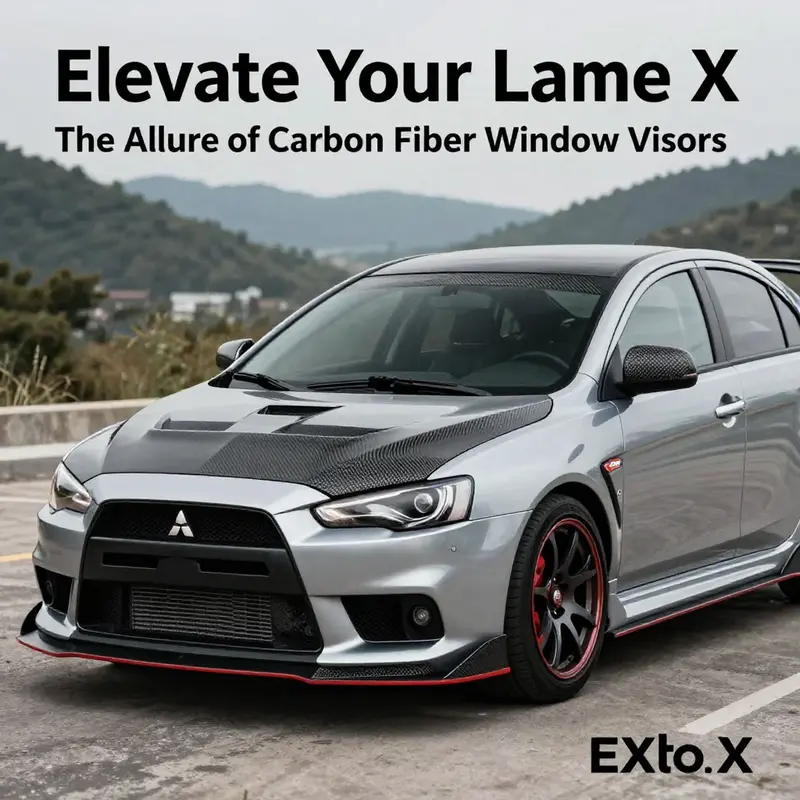
For business owners in the automotive aftermarket, understanding the appeal and potential of carbon fiber window visors for the Mitsubishi Lancer EX Evo X (2008-2015) is vital. These accessories not only enhance the sporty aesthetics of the vehicle but also deliver functional benefits that can resonate well with customers looking to upgrade their cars. This article delves into the unique features and benefits of these visors, outlines the installation process, analyzes the market trends and pricing, and explores consumer insights, providing a comprehensive view that can aid in strategic business decisions.
Carved in Velocity: The Subtle Power of Carbon Fiber Window Visors on the Evo X Lancer EX
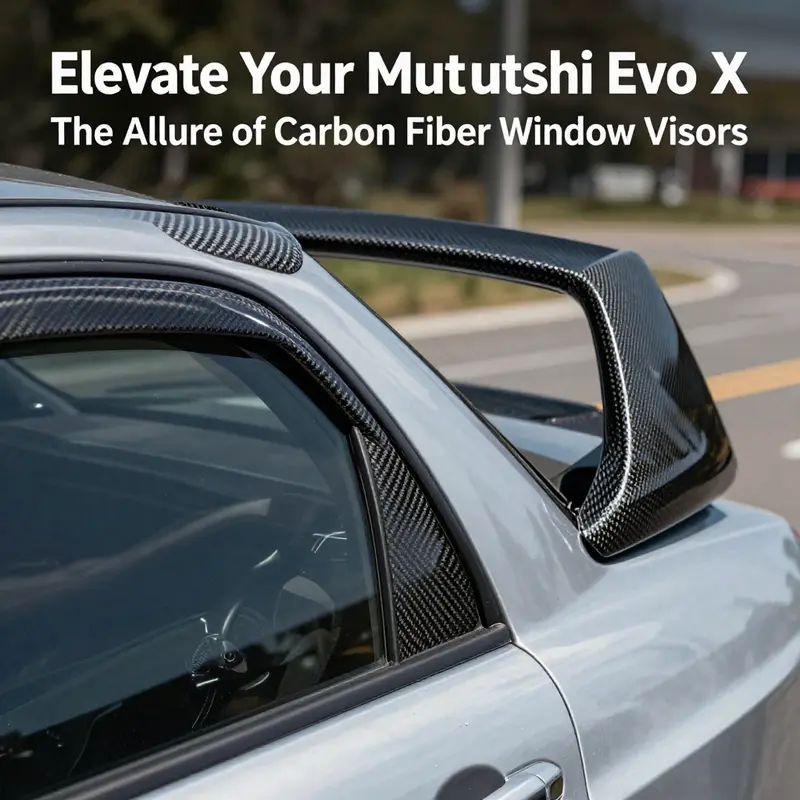
On the surface, carbon fiber window visors for the Evo X Lancer EX read like a small exterior upgrade, but the effect they produce runs deeper than first impressions. These components, designed for the 2008 to 2015 era of the Lancer Evolution X, sit on the front pillars just above the side windows, replacing a standard plastic or acrylic piece with something that looks as engineered as the car itself. What makes this upgrade compelling is not merely the visual texture of the carbon fiber weave, though that detail surely draws the eye. It is the combination of form and function that elevates the overall driving experience, weaving together aesthetics, weather resistance, and a touch of aerodynamic sense into a compact, practical modification that a dedicated enthusiast can install with minimal fuss. The Evo X, sculpted to convey speed even when at rest, benefits from these visors because they align with the car’s clean, aggressive lines while delivering tangible improvements that are accessible to most DIY builders and seasoned tuners alike.
At the heart of these visors is a material story that resonates with performance minded drivers. Carbon fiber, renowned for its high strength-to-weight ratio, contributes a level of robustness without adding noticeable heft. The material commonly arrives in a 3K weave, a classic pattern that expands the sense of depth and texture across every angle of light. The lightweight property is not simply a bragging point; it translates into a subtle but meaningful reduction in overall weight that can influence handling dynamics, particularly when the vehicle is already balanced for performance. The 3D CNC molded design is another feature that matters in practice. It ensures a precise, seamless fit with the Evo X’s factory contours, so the visors sit flush against the body and integrate with the windshield system in a way that feels like a natural extension of the car rather than a second thought. The precision of the molding helps seal out rain and wind, keeping the cabin more comfortable and the interior materials in better condition by reducing direct exposure to the elements.
The finish is another element that reinforces the premium perception. A polished or matte carbon fiber surface not only signals a high level of craftsmanship but also offers UV resistance that preserves the appearance over time. The UV resistance matters because sunlight can degrade finishes and fade edges if the surface is porous or poorly protected. With a properly finished carbon fiber visor, drivers can expect the weave to maintain its striking look without the surface dulling or color shifting that sometimes accompanies sun exposure. That visual longevity matters because the Evo X thrives on a strong, cohesive exterior statement. The visors are designed for models from 2008 to 2015, a window of time when the Evo X command of road presence was at its peak and aftermarket parts were increasingly expected to blend with the car’s design language rather than clash with it.
Functionally, the visors deliver a suite of practical benefits that complement their styling. One of the most immediate is glare reduction. By shading the top edge of the window, they help cut glare from the sun at low angles and on bright mornings, which translates into improved driving comfort and reduced eye strain. This is especially valuable during scorching summer drives or when the sun sits low on the horizon, bouncing off pavement and creating a glare that can challenge even experienced eyes. In addition to glare management, the visors contribute to heat management inside the cabin. By shielding a portion of the glass from direct sun, they help minimize heat buildup on the interior surfaces, which can keep the air from becoming uncomfortably warm and can lessen the strain on air conditioning during peak sun hours. While not a substitute for climate control, this supplementary shading can make a meaningful difference in daily comfort and can help protect upholstery from UV induced fading over time.
A slightly less obvious but equally relevant benefit is the aerodynamic and wind flow consideration. The Evo X is designed with performance in mind, and a low profile visor line can interact with the general aerodynamics around the A-pillar area. While these visors are not a full aero feature, their sleek silhouette minimizes protrusion and maintains clean airflow around the windshield edge. The result is a passive enhancement that harmonizes with the car’s overall stance without introducing drag-inducing angles or turbulence. For drivers who like to push their cars toward a track-inspired look, this understated aerodynamics compatibility matters because it preserves the vehicle’s existing balance while still delivering the visual cue of a performance oriented upgrade.
Beyond aesthetics and functional benefits, the material and manufacturing approach of these visors reinforces a sense of authenticity. They are designed as direct replacements for factoryinstalled units, which means installation is straightforward and does not require altering mounting points. The fit is meant to be precise enough to align with the Evo X’s existing hardware, preserving the original look and ensuring reliable performance in inclement weather. The unit is typically sold as a pair to match the symmetry of the left and right A-posts, making the upgrade feel complete and balanced when viewed head-on or from the side. For the hands-on owner, the straightforward installation can be a satisfying weekend project, a small but meaningful step in personalizing the car without the risk of unintended fitment issues that sometimes accompany more ambitious upgrades.
In this visual and tactile world of carbon fiber parts, there is often a conversation about authenticity and material choice. The visors are commonly produced in real carbon fiber or in a highgrade fiberglass reinforced composite as an alternative. Each path has its own value proposition. Real carbon fiber delivers that unmistakable weave and a level of stiffness that aligns with the premium feel of the Evo X. Fiberglass reinforced composites offer a more budget friendly route while still delivering a strong, durable surface with a credible carbon look. For a car enthusiast who values balance between performance cues and cost awareness, this is a meaningful distinction to understand when evaluating options for a build that aims to stay coherent with the rest of the exterior while respecting the budget. The overall effect, nonetheless, remains a more aggressive, purposeful appearance that resonates with the Evo X community, where exterior upgrades are often exercised with an eye toward both youthful aggression and maturation of the car’s silhouette.
When considering how these visors fit into the broader ecosystem of carbon fiber upgrades, it is natural to connect the dot with other components that share the same design language. While the visor itself is a relatively small piece, it complements larger carbon based updates such as bonnets, hoods, or rear skins that together frame the Evo X as a holistic, performance themed build. The look is not about a single dramatic change, but about harmonizing multiple elements to create a cohesive statement. To see what a multi piece carbon approach can feel like in practice, one can explore related components that echo the same aesthetic and engineering ethos that underpin the visors. 2008-2015 mitsubishi lancer evolution evo x rear bumpers offer a point of reference for how carbon fiber parts can align with the practical needs of design language, fitment, and durability across the vehicle. This alignment underscores the idea that the Evo X community values compatibility and a consistent visual story when selecting upgrades that are meant to endure in daily use as well as on the occasional weekend outing to a show or a track day. For readers curious about how these elements come together in real world car builds, a detailed look at rear bumper options illustrates the broader approach to carbon fiber exterior upgrades that share the same underlying philosophy of precision fit and purposeful style. 2008-2015 mitsubishi lancer evolution evo x rear bumpers
From a market perspective, these visors occupy a space that blends aftermarket appeal with practical necessity. Enthusiasts often seek parts that not only improve the look of the car but also offer tangible performance and longevity benefits. The combination of lightweight construction, precise fit, and durable finishes makes carbon fiber visors a popular upgrade among Evo X owners focused on a balanced upgrade path. Availability tends to be widespread enough that a careful shopper can compare finishes, weave patterns, and compatibility across multiple suppliers while evaluating costs and shipping options. This accessibility is important because it means more drivers can adopt a cohesive carbon fiber aesthetic without compromising reliability or the integrity of the original mounting points. In some markets, the aftermarket ecosystem also emphasizes authenticity and quality control, so buyers can feel confident that the visors they purchase will align with their car’s geometry and stay durable under typical driving conditions.
Care and maintenance for these visors is straightforward but worth noting. Cleaning is best done with mild solutions and soft cloths to avoid marring the polished surface or wearing away the weave over time. Avoid aggressive solvents or abrasive materials which can dull the finish or bite into the resin. When not driving in bright sun, a light wipe with a microfiber helps preserve the sheen and the texture that defines the carbon fiber look. If the visors ever feel like they are not sitting flush, a quick check of the mounting hardware is prudent. Over time fasteners can loosen slightly due to vibration, temperature cycles, and road conditions. Re tightening according to the vehicle’s specifications preserves the seal against weather and maintains alignment with the windows. A well maintained pair of visors can accompany the Evo X through many seasons of use while preserving the crisp contrast of weave against the dark body tones that characterize the car’s expressive stance.
The narrative around carbon fiber upgrades for the Evo X is not about a single bolt on piece but about a broader theme of personalization through materials that speak the language of performance. The Evo X has always attracted drivers who want both the look and the feel of a track capable vehicle, and carbon fiber window visors fit neatly into that ethos. They offer an accessible route to a subtler, yet meaningful, upgrade that can refresh the car’s exterior without dramatic labor or risk. They invite a mindset of thoughtful customization, where the choice of materials, finishes, and fitment is guided by how well the piece integrates with the car’s lines, how it interacts with daily weather, and how it feels when the car is in motion. The result is not a mere visual tweak, but a curated enhancement of the Evo X’s character that respects the car’s original identity while signaling a deliberate intent to push its appearance toward high performance and premium craftsmanship.
Internal linking note the Evo X community often explores related carbon fiber exterior upgrades as part of a broader build narrative. For readers who want to see how these material choices link to other components, you can explore a related collection that showcases a similar design philosophy in external parts. 2008-2015 mitsubishi lancer evolution evo x rear bumpers serve as a concrete example of how carbon fiber design language can extend beyond a single piece to form a coherent, visually integrated system across the car. This approach underscores the value of selecting upgrades that harmonize with the vehicle’s existing engineering and aesthetic language. 2008-2015-mitsubishi-lancer-evolution-evo-x-rear-bumpers.
For those who are exploring the broader aftermarket landscape, the confluence of design, performance, and durability in carbon fiber visors reflects a larger trend toward exterior parts that respect the Evo X’s proportions while enhancing its characteristic aggression. The materials, the finish, and the exacting fit combine to deliver a product that does more than cover or shade the glass; it reinforces the identity of a car that is deliberate about speed, stance, and the rituals of ownership. When these visors are viewed as part of a larger ecosystem of exterior upgrades, they emerge as a sensible starting point for a build that seeks coherence rather than a sequence of disconnected parts. The visual impact, the tactile feedback, and the small but meaningful gains in cabin comfort all contribute to a more satisfying ownership experience that resonates with drivers who understand that great performance begins with thoughtful details.
External resource: For a broader technical perspective on carbon fiber window visors and related exterior upgrades, see a detailed supplier page that discusses material properties, weave patterns, and installation considerations. https://www.alibaba.com/product-detail/Carbon-Fiber-Window-Visor-for-Mitsubishi_1600493497393.html
null
null
Edge and Economy: Market Currents and Craft in Evo X Carbon Fiber Window Visors
On the Evo X and its Lancer EX lineage, carbon fiber window visors sit quietly at the intersection of form and function. They are more than shades for the sun; they are intentional design statements that speak to a driver’s desire for a track-inspired silhouette without losing everyday usability. Replacing the factory plastic or acrylic panels that sit above each window, these visors are crafted from carbon fiber, most often in a 3K twill weave that reads as both rugged and refined. They are marketed as direct replacements for the original parts, designed to slip into place using the same mounting points and hardware, preserving the car’s geometry while delivering a subtle yet unmistakable upgrade in character. The practical benefits align with the aesthetic: UV protection and glare reduction for the cabin, a shield from light rain, and a light, unobtrusive aero edge that suits the Evo X’s lean, purposeful stance. Yet the true appeal lies in the sense that a driver is choosing a material with a history of performance engineering, a texture that speaks to craft, and a finish that complements the car’s bold lines rather than competing with them. In that sense, carbon fiber visors do not merely adorn the Evo X; they contribute to a cohesive narrative of speed, science, and self-expression that is central to modern modification culture for this generation of Mitsubishi’s compact performance car.
Market observers describe a space that feels mature but is far from static. The Evo X has long embodied a blend of rally-derived handling and street-legal aggression, and owners in this circle consistently pursue upgrades that respect the car’s DNA—lightweight components, precise fit, and elements that communicate engineering intent through sight and touch. Carbon fiber visors achieve this triad succinctly. Their distinctive weave, especially when paired with a matte black finish, conveys a degree of authenticity that cheaper plastics or vinyl overlays cannot replicate. The visors’ function goes beyond shading. By shaping airflow in a way that minimizes drag around the A-pillars and window edges, they contribute to a slightly cleaner aerodynamic profile at speed and help dampen wind noise in ways that are most noticeable when cruising on open roads or soaking in the track’s cadence. In environments where enthusiasts accumulate mile after mile in pursuit of personal bests, these small, well-conceived details accumulate into a broader impression of engineering discipline.
The market’s design philosophy now leans toward a marriage of form and function. Modern carbon fiber visors are conceived with attention to aerodynamics, not merely surface aesthetics. Their curvature is tuned to align with the Evo X’s windscreen geometry, ensuring a clean mount and predictable performance in varied weather. The visible weave—often a 3X3 pattern, a hallmark of higher-grade carbon composites—gives depth and texture that under certain light suggests a locomotive coherence rather than a surface embellishment. The finish matters too: matte, non-glare surfaces reduce reflection into the driver’s line of sight, enhancing comfort during bright afternoons or long highway stints. This synthesis of look and feel resonates with a consumer base that treats the car as a living project—one that echoes a philosophy of performance that begins on the outside and ends with confidence on the inside.
Price positioning in this space mirrors the broader logic of aftermarket carbon parts. Market segmentation reveals a clear dichotomy. Entry-level options establish a baseline price point in the range of a modest investment, typically accessible to hobbyists who want a hint of carbon aesthetics without major expenditure. These pieces often use simpler fabrication techniques, which may involve basic carbon fiber composites or even pre-formed shells with minimal finishing. For buyers who want more authenticity, the mid- to upper-range tier represents a meaningful step up. Prices in this band reflect the use of genuine carbon fiber materials, more advanced manufacturing methods such as vacuum forming, and higher fidelity in terms of fit and surface finish. A direct replacement design—one that mates with the existing mounting points and preserves the original geometry—remains the gold standard in this segment because it minimizes installation risk and maximizes alignment with the car’s aesthetic language. In practice, that translates to a typical price ladder where the best-of-breed options command premiums aligned with the quality of the weave, the resilience of the resin matrix, and the reliability of the attachment system.
There are several factors that drive these price differences beyond the raw material. The most obvious is material authenticity. Real carbon fiber—unlike decals or vinyl overlays—offers genuine strength-to-weight advantages and a more natural surface response to environmental exposure. The manufacturing process matters as well. Vacuum molding, used by higher-grade products, yields a more consistent part with tighter tolerances and a smoother surface that won’t show micro flaws under routine inspection. The weave itself performs as a visual cue and a structural element; a deeper, more uniform weave conveys a sense of premium engineering that translates into higher perceived value. Fitment—how closely the visor matches the original mounting points and the window profile—also affects price. A precise, drop-in replacement reduces installation time and minimizes the risk of aftermarket fit issues, which is why components marketed as “Direct Replacement” tend to command higher prices than generic or universal-fit alternatives.
Brand provenance shapes the market as well. Established brands and vendors with traceable supply chains and documented quality control often price higher than unbranded or lesser-known suppliers. The cost of logistics, including shipping from manufacturing hubs in Asia or Europe and the accompanying duties, can also colors the final price. When a product travels long distances to reach a buyer, the landed cost rises, and so does the price. Buyers who anchor their decisions to a broader build quality and long-term durability will often accept the premium because they anticipate fewer warranty concerns and a more stable appearance through years of driving conditions. By contrast, budget-conscious buyers may accept slightly looser tolerances or lighter finishes if the product meets basic functional requirements and aligns with a broader project budget.
The customization mindset within this market has grown in tandem with the price ladder. Consumers increasingly seek options that harmonize with their car’s overall styling—blending with blacked-out grilles, wheels, and exterior trim to create a cohesive visual rhythm. While color options remain relatively conservative—predominantly black or gray finishes—the broader trend toward personalization has pushed some providers to offer finishes and weave patterns that emulate higher-end carbon fiber appearances. In many cases, the decision to pursue a carbon fiber visor is as much about signaling a builder’s taste as it is about improving driver comfort. For some, it is the first step toward a larger carbon fiber program that might include components such as hoods, fenders, or door skins, all designed to maintain a consistent visual language across the vehicle. This holistic approach to upgrading reflects a shift in consumer expectations: it is no longer sufficient to install a single piece that looks the part. The market rewards integrated, coherent styling that preserves the Evo X’s identity while amplifying its performance aura.
From a practical standpoint, installation remains a crucial part of the value proposition. The design intent is to deliver a direct replacement experience that does not require custom fabrication. This is not about re-engineering the body to accommodate the accessory; it is about a precise alignment that respects the car’s existing mounting geometry. For the DIY enthusiast, the process is straightforward: remove the old visor from its mounting points, detach any stray fasteners carefully, and secure the new carbon fiber piece with the same hardware. If the product relies on a vacuum-formed shell with a uniform thickness, there is little risk of distortion during installation, provided the mounting points are clean and free of debris. The improvement in steering feel or wind behavior is typically subtle, yet meaningful in a car built with a focus on handling and balance. The visors’ light weight and the absence of rigid channels around the window area minimize the introduction of any added mass or wind noise, preserving the drivers’ sense of immediate feedback when carving through a corner or accelerating along a straightaway.
The broader ecosystem of carbon fiber parts reinforces the value of a well-curated upgrade. For readers who see carbon fiber visors as a gateway to a larger transformation, the idea is to seek components that share a unified aesthetic and a common engineering philosophy. A single high-quality piece can become the catalyst for a cohesive upgrade path—one that respects weight, balance, and visual harmony. While this chapter does not name specific products, the market discourse suggests that buyers who pursue consistency in texture, grain match, and fit are more likely to report satisfaction with their investment. The visibility of the weave, the uniformity of the finish, and the absence of melted or bubbled resin after exposure to sunlight all contribute to a perception of value that endures beyond a quick visual upgrade.
For readers who want to explore related carbon fiber components as part of a broader build, this chapter points toward a wider ecosystem that emphasizes authentic texture and precise geometry. An internal reference point within the broader catalogs highlights how a single carbon fiber upgrade can ripple through a car’s entire appearance and performance narrative, underscoring the idea that quality is not merely about appearance but about how a part behaves when the vehicle is pushed toward its limits. To lend further context to this discussion, consider looking at a representative collection that demonstrates the level of craftsmanship typical of official or factory-adjacent standards in this segment. This perspective helps frame the value of a well-chosen visor as part of the Evo X’s extended performance story.
From a consumer perspective, the market’s pricing and design logic reflect a broader truth: the Evo X’s appeal is founded on a blend of mechanical capability and visual honesty. Carbon fiber visors, when executed with care, offer a compact, lightweight upgrade that remains faithful to the car’s character. They contribute to a sense of coherence—an external cue that the driver has thought through the car’s proportions and that the build rests on a consistent engineering philosophy. As the aftermarket matures, prices may stabilize around a predictable envelope where genuine carbon fiber and refined manufacturing meet reasonable installation expectations. In that world, owning a carbon fiber visor becomes not just a statement of style, but a reflection of a disciplined approach to upgrading a car that is already recognized for its performance heritage.
For readers seeking further context and validation of this market narrative, a broad catalog of Evo X accessories offers a spectrum of perspectives on how owners value performance-oriented aesthetics. External references and shopping resources illustrate how the community weighs fit, finish, and durability when comparing carbon fiber visors to other aesthetic upgrades. External resource for further reading: https://www.amazon.com/s?k=Mitsubishi+Evo+X+Accessories
Internal reference for related carbon fiber components: Readers curious about related carbon fiber components as part of a broader build can explore a related collection at this page: carbon fiber bonnet-hood for Evo X. This page exemplifies how a cohesive carbon fiber program can emerge from a single strategic upgrade, reinforcing the importance of fit, texture, and a unified aesthetic across the vehicle. The ultimate takeaway is that the Evo X market continues to reward projects that balance style and performance with thoughtful engineering, and carbon fiber visors stand as a small but telling indicator of that larger, ongoing conversation.
Edges in Focus: Carbon Fiber Window Visors and the Evo X Lancer EX
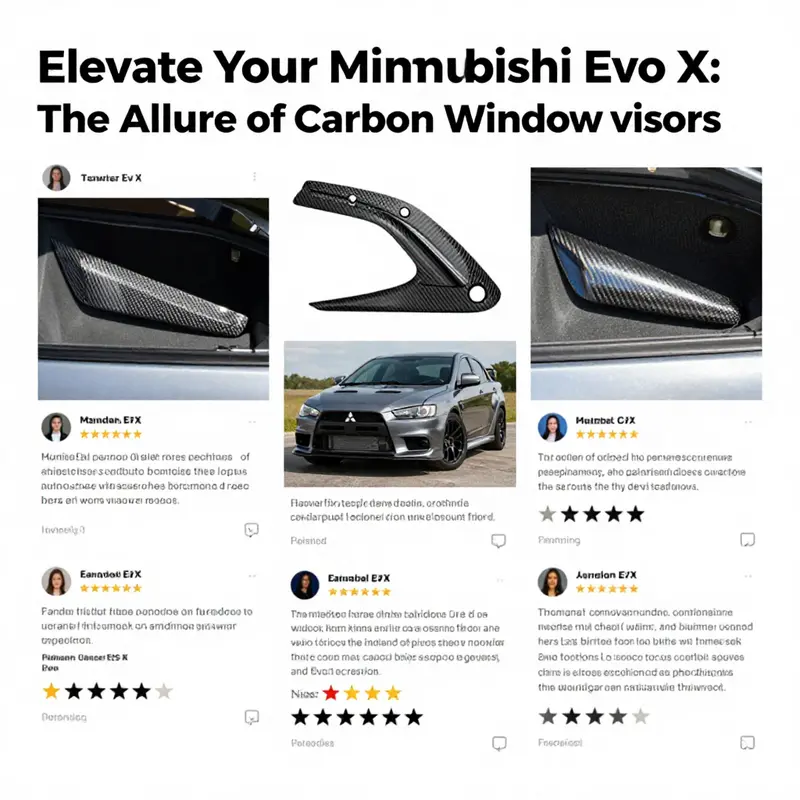
Every car culture has a language, and for the Evo X era of the Lancer, that language shows in lines, textures, and the way light slides across a surface. Carbon fiber window visors enter that conversation quietly, offering a precise whisper of intent rather than a loud shout. They are a refined upgrade that signals a certain automotive sensibility while delivering practical daily benefits. This chapter treats visors as components that intertwine aesthetics, weather protection, and the subtle physics of airflow around the A-pillars.
In the Evo X, the design language—sharp lines softened by restrained aerodynamics—gives a natural stage for a low-profile accessory with a high-contrast finish. The carbon weave and finish speak to track-inspired taste that remains appropriate for daily driving. The visor sits above the front windows, visible from curbside and acting as a shield as sun angles shift. The promise is simple: a cleaner silhouette, reduced glare inside, and a cue that the car’s modification story is about purpose as much as appearance.
From a consumer perspective, premium materials register as a signal of quality and heritage. Real carbon fiber or strong composites promise durability under daily handling, car washes, and occasional storage. Even when weight savings are modest, ownership groups often value the perceived sophistication of the finish and the alignment with the Evo X’s engineering ethos. The texture, gloss or matte, and the seamless edge where the visor meets the pillar all contribute to the perceived refinement.
Fitment and installation matter as much as looks. Buyers expect a precise, factory-like integration with no drilling or major mods. A correct fit means secure attachment, clean seams, and a confident snap into place. When alignment is off, or gaps appear, the user’s trust erodes and the upgrade ceases to feel like a natural extension of the car.
For readers exploring the broader ecosystem of Evo X mods, it helps to consider how visors fit within a cohesive exterior language. Representative discussions emphasize compatibility with model year and body configuration, and real-world install tips often circulate in owner groups and guides. External references and marketplace listings can provide a sense of the range of finishes, durability claims, and installation experiences that buyers weigh as they decide where to invest.
Final thoughts
In summary, Mitsubishi Evo X Lancer EX carbon fiber window visors are more than just aesthetic upgrades—they offer significant functional advantages and appeal to a niche market of automotive enthusiasts. Understanding their features, the installation process, current market trends, and consumer preferences can empower business owners to make informed decisions, ultimately leading to better customer satisfaction and increased sales. By capitalizing on this growing demand, businesses can cater to a discerning clientele eager to enhance their vehicles with premium aftermarket products.