
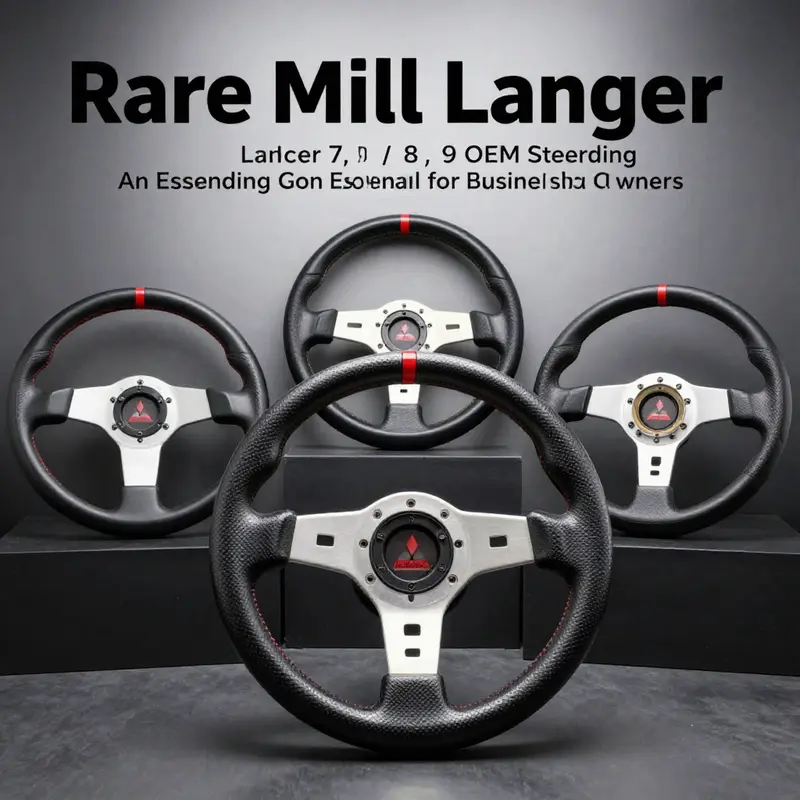
The Mitsubishi Lancer Evo 7, 8, and 9 models are not just about breathtaking performance and advanced engineering; they also embody a legacy that racing enthusiasts cherish. One notable aspect of these iconic vehicles is their steering wheels, particularly the OEM variants, which have gained a reputation for rarity among collectors and users alike. Understanding the rarity, performance assurances, market dynamics, and a practical purchasing guide for these steering wheels can significantly benefit business owners engaged in the automotive parts market. This article is structured to provide insights into each of these critical areas, allowing you to fully appreciate the value that these components can add to your offerings.
Preserving Authenticity: The Elusive OEM Steering Wheel for Evo 7, 8, and 9
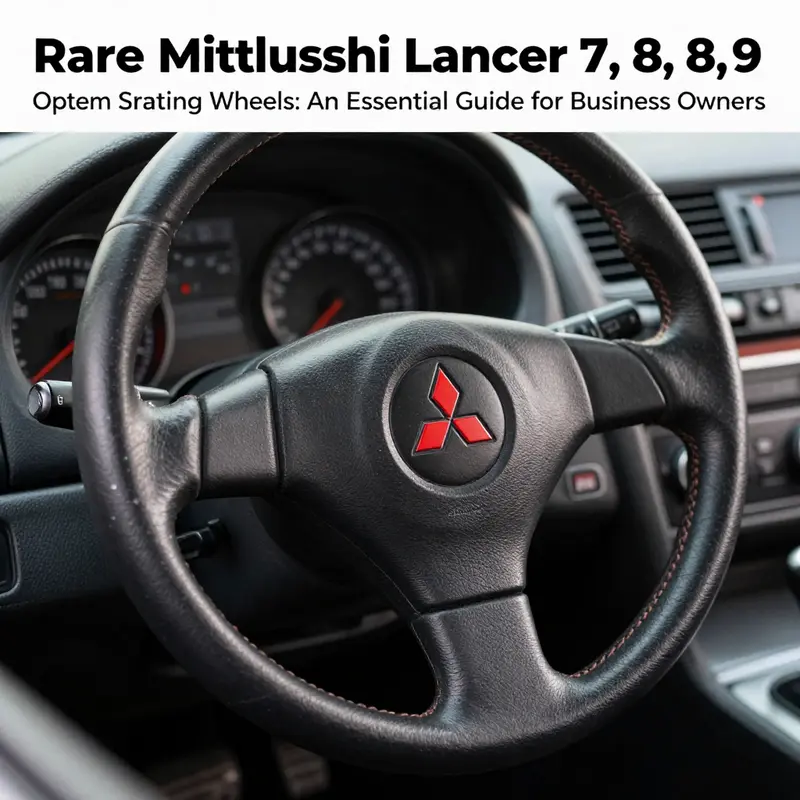
The Mitsubishi Lancer Evolution VII, VIII, and IX carry a distinct aura of rally-born engineering and relentless refinement. For many enthusiasts, the steering wheel is more than a control device; it is the tactile link to the car’s spirit, a handhold that connects driver intent to the machine’s performance. Within this context, the Original Equipment Manufacturer (OEM) steering wheels designed for Evo 7, 8, and 9 occupy a rarefied niche. They are not merely parts; they are custodians of authenticity, carefully engineered to integrate with the car’s horn circuits, airbag system, and steering column geometry. When a member of this lineage surfaces in the market—new, unused, and leather-wrapped—the moment feels like a rare fossil being found in a modern museum. The rarity does not arise from market hype alone but from a confluence of production realities, demand, and the engineering specificity that binds the wheel to its era and its chassis.
The root of scarcity begins with production. Each Evo generation was manufactured in finite runs, with allocations that varied by market and trim. In many regions, the wheel that came standard with these cars was built to tight tolerances, matching a precise wheel diameter, grip thickness, and stitching pattern that complemented the vehicle’s overall steering geometry and cabin ergonomics. Once a model year rolled off the line, the opportunity to place a brand-new, untouched wheel into a still-warranted car diminished. Over time, a large portion of these wheels left service through replacement due to wear, airbag service requirements, or cosmetic updates. The net effect is a shrinking pool of pristine OEM units whose original calibration remains untouched by road miles, sun exposure, or chemical cleaners. This is what gives the OEM wheel its aura of rarity, beyond mere sentimental value.
Enthusiasts who chase authenticity understand that rarity is amplified by demand. The Evo VII, VIII, and IX still enjoy a devoted following, not only for speed or handling but for a sense of historical accuracy when restoring, preserving, or presenting a car to a discerning audience. A factory steering wheel serves as a keystone piece in a broader restoration puzzle: its leather texture, its tactile thickness, its color tone, and its horn button placement all contribute to how faithfully the interior mirrors the car’s original intent. The reality is that the genuine wheel is not just a cosmetic throwback; it preserves the vehicle’s interior geometry, ensuring that the hands’ contact points align with the original design philosophy. In markets where collectors examine a car’s provenance, the presence of an OEM steering wheel can impact perceived originality and, in turn, value. The wheel becomes, in essence, a quiet measure of how deeply a car has remained true to its factory roots.
The conversation around rarity also touches on the mechanical and electrical compatibility that OEM status guarantees. These wheels were not generic components pulled from a parts bin; they were engineered in concert with the car’s horn circuit, airbags, and wiring harness. The horn contact, the airbag module’s engagement point, and the wheel’s slip ring were designed to work in harmony with the Evo’s control systems. When an owner considers an aftermarket alternative, the temptation is to chase feel or aesthetics. Yet substitutes often require compromises in fit, horn reliability, or airbag integration. The OEM wheel’s precision fit ensures that, even after years, the wheel mounts squarely to the steering column, the spokes clear the instrument cluster with no risk of interference, and the horn engages with dependable tactility. This is not simply nostalgia; it is a guarantee of functional integrity that matters on every drive, from daily commuting to spirited canyon runs.
Another layer of rarity is the wheel’s market lifecycle. Over the years, genuine OEM parts do not stay in copious supply. The stock decreases as more cars are retired, parts are swapped during restorations, or interior refreshes favor newer designs. When a pristine OEM wheel surfaces, it often carries a dated stamp in line with the vehicle’s production window. A collector will scan these marks to verify alignment with the car’s original assembly period. The dating is not a mere formality; it ensures that the wheel’s leather finish, stitching color, and overall silhouette correspond to the car’s era. Even within Evo 7, 8, and 9, subtle differences across model years can matter. A wheel for a late Evo VII might have minor variances from an early Evo IX wheel in stitching density or horn button styling. Such distinctions matter when the goal is absolute authenticity, and they contribute to the perception of rarity as something more precise than a general category.
Wear and tear, too, shapes the rarity narrative. Steering wheels live at the point of contact, absorbing oils, perspiration, and sun exposure. Leather can soften or crack; the surface can fade to uneven tones if not cared for properly. On certain cars, the wheel’s interior leather may still feel supple, while on others it may show clear signs of aging. The result is a bifurcated market: lightly used OEM wheels that still show the imprint of long-term use, and pristine, unused units that defy the passage of time. The latter category is, in many ways, the rarest. For owners seeking to preserve originality, an unused OEM wheel represents a missing link in a restoration chain, a piece that anchors the interior to the moment the car first rolled off the assembly line.
The specificity of OEM fit compounds the challenge of sourcing. Genuine wheels are engineered for particular model years and trim levels, not as universal replacements. An Evo VII wheel will not interchange with an Evo VIII, and the same logic applies across the nine-year span of evolution and updates. This non-interchangeability increases sourcing difficulty. It also elevates the value of a wheel that matches perfectly to a given car. The satisfaction of discovery—finding a wheel that is both correct for the year and in good condition—goes beyond aesthetics. It resolves a mechanical and historical puzzle: the car can be restored to its original state with a wheel that carries the same engineering intent as the day it left the factory.
Within the broader ecosystem of OEM parts, some listings explicitly emphasize originality and newness. Without naming brands, these descriptions typically present a factory-spec leather-wrapped wheel as a direct, untouched item, designed for Evo 7, Evo 8, or Evo 9. The allure here is clear: a new, unused wheel offers the closest possible replication of the day-one driving experience. Prospective buyers assess not only leather condition but also the wheel’s fidelity to the original color, crack resistance of the leather, and the subtle cues that identify the wheel as matching a specific Evo generation. The risk, of course, lies in misrepresentation. As with any vintage or enthusiast market, buyers must exercise due diligence, verifying authenticity through serial cues, correct compatibility notes, and a careful review of the wheel’s edge finish and hue in relation to the cabin’s overall palette. The reward, when authenticity is confirmed, is a reversion to the car’s original tactile identity and a maintenance of investment value over time.
For interior-focused restorations, the choice often extends beyond the wheel itself to the surrounding cabin ecosystem. While the steering wheel anchors grip, the cabin’s overall illusion of era fidelity depends on complementary components such as the dashboard, instrument cluster, and door trims. To explore related interior components that complement an Evo interior restoration, one can turn to a related interior reference: dashboard evo-9. This interior focal point illustrates how a cohesive cabin package reinforces authenticity and helps owners narrate a faithful restoration arc. The pursuit is not merely about replacing a part; it is about preserving a holistic driving experience that respects the car’s original choreography of controls and response. For readers curious about related interior options, the dashboard evo-9 resource provides context and demonstrates how interior parts interact in a way that enhances overall originality.
In the end, rarity for the Evo 7, 8, and 9 OEM steering wheel is a function of history, engineering precision, and ongoing enthusiasm. The wheel embodies a precise moment in Mitsubishi’s design language and rally heritage. Its scarcity is not only about supply and demand but about the responsibility of maintaining a car’s narrative. Enthusiasts who seek such a wheel understand that to own it is to accept a stewardship role: to preserve the car’s tactile character, its fit with the instrument panel, and its capability to deliver the intended driving experience exactly as imagined when the car was first conceived. In this sense, rarity becomes a value proposition that honors a lineage, rather than simply a market phenomenon. And while aftermarket options will continue to offer alternatives, the OEM steering wheel remains the gold standard for those who insist that authenticity, fit, and function are inseparable from the Evo’s legacy.
External reference: https://www.amazon.com/dp/B07XJZ5KQF
Turning True Precision: The Rare OEM Steering Wheel for Mitsubishi Lancer Evolution 7, 8, and 9
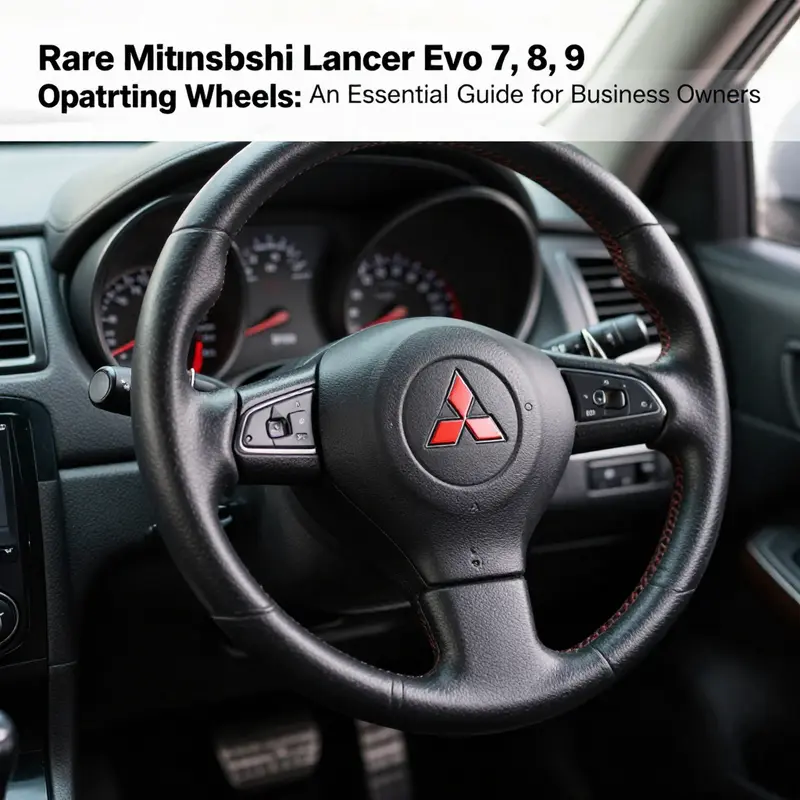
The rare OEM steering wheel for Evo 7 8 and 9 is described as the gold standard for preserving factory feel. It forms the primary link between driver and chassis and carries the original steering geometry, tactile grip, and air bag interface. Replacing a worn wheel with an aftermarket part can alter steering weight, feedback, and safety dynamics; an authentic wheel keeps the factory steering ratio and a consistent sense of connection.
Supply and value: OEM wheels for the Evo generations are limited. Over time stock shrinks while demand from collectors and enthusiasts remains high. This rarity means that a new or unused wheel that matches the original interior is both a functional replacement and a collectible piece.
Authenticity and integration: a true OEM unit is designed to align with the airbag system and horn, and to mount with the correct hub pattern. Mismatched parts can introduce safety and regulatory concerns. Buyers should verify part numbers with authorized dealers, review condition notes, and seek warranties or return options to safeguard authenticity.
Fit and feel: the wheel geometry, grip thickness, and leather quality contribute to the driving experience. When preserved, the wheel preserves the car’s iconic balance and feedback and helps the interior age more gracefully. In practice, sourcing a legendary OEM wheel for the Evo 7 8 9 means balancing desire with due diligence. Start from trusted channels, confirm compatibility with year and trim, and inspect leather, stitching, and overall condition before committing.
Factory Precision, Quiet Demand: Unpacking the Market for the Rare Lancer Evo 7/8/9 OEM Steering Wheel
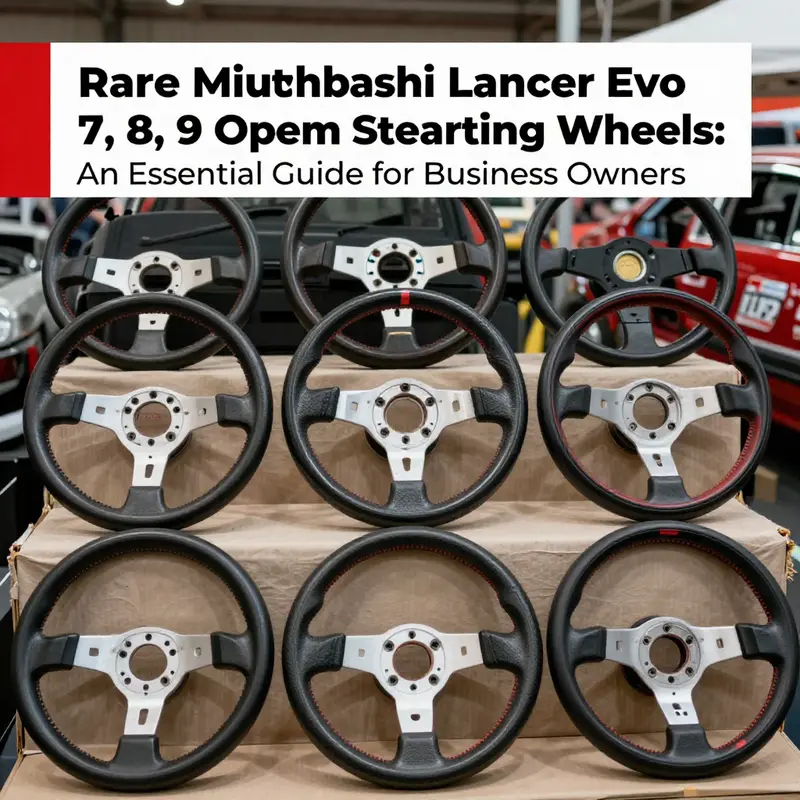
The steering wheel is more than a control surface. For the early generations of the Lancer Evolution, it is a compact piece of memory, a tactile artifact that links driver intent to the car’s full performance personality. In the Evo 7, Evo 8, and Evo 9, the OEM steering wheel sits at the intersection of engineering precision and user experience, designed not merely to steer but to communicate with the driver through a subtle cadence of grip, texture, and response. It carries the imprint of the vehicle’s factory systems—cruise control, steering-wheel-mounted audio or information controls, and in some configurations the airbag and safety electronics—so it does more than look correct; it functions in harmony with the car’s overall control architecture. When enthusiasts talk about the “rare” OEM wheel for these models, they’re not just referencing rarity in a casual sense. They are pointing to a confluence of historical production decisions, long-standing ownership patterns, and the specialized needs of restoration and preservation that converge to make this specific interior component a coveted piece of automotive heritage.
The scarcity of these wheels does not stem from a singular shortage but from a layered set of factors that accumulate over decades. Production runs for the Evo 7, 8, and 9 were inherently modest in the broader sweep of the automotive market. These were performance sedans engineered for rally-inspired behavior and on-road precision, yet they still moved through a finite production window in which every interior part—from the steering wheel to the dash layout—was aligned with a particular design philosophy and tooling. As time passed, wear and tear took its toll. The wheel that once looked perfectly suited to a showroom floor often met the reality of daily driving, drift sessions, or track testing, and many cars saw replacements or upgrades that left the original wheel in shorter supply. A second layer comes from the collector and purist movement that has grown in recent years. Owners who aim to preserve vehicles in as close to factory condition as possible increasingly seek out OEM parts to maintain authenticity. In many cases, that means the steering wheel must be the exact original item or a technically equivalent piece that does not compromise the integration with the car’s systems. The result is a market where genuine wheels, when available, fetch attention and premium values, simply because they embody the factory specification and the intended driver experience.
The value proposition of a factory wheel is anchored in several interlocking advantages. First, the wheel’s diameter, thickness, and grip texture are calibrated to the vehicle’s steering geometry and feedback characteristics. The precise match matters not only for the feel in the hands but for the steering the car delivers on the road or the track. Second, the wheel’s electronics and airbag integration are part of a broader safety and control framework. When a wheel is swapped for an aftermarket alternative, the risk is not simply a different look or a slightly altered grip; it is the possibility of altered interaction with safety systems, cruise controls, and other onboard interfaces. In a car built to exploit a particular balance of chassis dynamics—especially with a sophisticated all-wheel control system—the OEM wheel’s design is optimized for that exact balance. Third, the wheel is a touchpoint of resin-to-leather craftsmanship, with seams, stitching, and leather grade chosen to suit both the long-haul reliability and the tactile demands of aggressive driving. The combination of these factors explains why the market for authentic units remains a quiet but persistent beacon for enthusiasts who prize fidelity over cost or ease of replacement.
The dynamic in this market is not simply about scarcity and demand; it is also about the countervailing force of aftermarket alternatives. A subset of replicas and carbon-fiber facsimiles offers the visual appeal of the original without the underlying OEM pedigree. Aesthetics can be compelling—the glossy surface, the contrasting stitching, the familiar silhouette—but those replicas generally cannot replicate the exact fit, feel, and system compatibility of a genuine OEM wheel. For purists who insist on factory specificity, the premium for a genuine wheel is not just about possession of a rare item but about guaranteeing that every interface, control, and safety connection remains unchanged from the factory expectation. The market thus splits into a small but intense niche of buyers who will pay more for authenticity and a broader, price-sensitive segment that is content with aftermarket styling or functional stand-ins. Each side reflects a different valuation of what an interior component represents: a price tag anchored in provenance versus a price tag driven by appearance or potential performance tweaks.
Within this framework, condition and provenance rise to the top of the valuation scale. A wheel that shows minimal signs of wear, with intact stitching and an undisturbed leather grain, commands a higher premium than one with scuffing, cracking, or fading. Documentation—whether it traces back to a single owner whose care was meticulous or a documented service history that confirms the wheel remained in its original state—can further boost value. The inclusion of original quick-disconnect hardware, wiring harnesses, and any matching airbags or horn mechanisms also matters, because these elements contribute to a seamless reinstallation without the need for improvisation. In rich, nuanced markets like this, provenance does more than tell a story; it reassures a buyer that the part will integrate with confidence and safety standards, preserving the car’s original operating envelope.
The economics of scarcity also feed off practical access considerations. Genuine OEM wheels for these Evo models appear on specialized platforms, in auctions, or through networks of enthusiasts who understand the car’s interior ecosystem. The buying journey can be relatively straightforward for someone who regularly sources classic or performance interior components, yet it is not without risk. The same platforms that host genuine items can also attract counterfeit listings or misrepresented products. The prudent buyer therefore evaluates more than just price. They assess the seller’s reputation, the wheel’s condition, the presence of original hardware, and any available provenance. They may seek pictures showing close-ups of stitching, emblem clarity, and the texture of leather to gauge authenticity. They may compare recent sales to current listings to gauge whether a price aligns with market conditions. This careful due diligence is part of what sustains the market’s integrity and helps prevent depreciation in a segment that can swing dramatically based on small shifts in supply and demand.
What does this imply for someone who is considering a restoration or a careful upgrade of an Evo 7, 8, or 9 interior? It suggests that the value of an OEM wheel rests not only in the wheel itself but in its ability to preserve the broader factory experience. The most compelling restoration is one in which the wheel sits in harmony with steering response, airbag deployment behavior, and the car’s onboard control logic. In that sense, the choice to pursue OEM remains a decision about preserving an era’s engineering philosophy, even as modern interiors have moved toward new fabrics, new control layouts, and different tactile expectations. For many enthusiasts, the aim is not novelty but fidelity: to drive a machine as the engineers envisioned it, to feel the same weight, the same grip, the same immediate feedback that made the Evo a benchmark in its class when new.
As buyers navigate this market, they often weigh the intangible quality of “original” against the tangible thrill of owning something rare. The market dynamics, then, reveal themselves as a map of value—where the precise match of fit and function, combined with a storied production history, translates into a willingness to pay a premium. This is not merely about possessing a piece of plastic and leather; it is about securing a direct channel to a driving experience that is, in many ways, a snapshot of a specific engineering era. The OEM steering wheel, in this light, becomes a keystone interior piece that helps a vehicle retain its authentic character as it ages.
For readers who want to explore the broader ecosystem of Evo 7–9 parts and their authentic compatibility, a related interior component page offers a practical reference point that contextualizes how OEM parts fit into the larger restoration puzzle. See mitsubishi-evo-7-8-9-ct9a-spec-vrs2-front-bumper for a sense of how a complete, factory-inspired interior and exterior restoration can be coordinated around preserved hardware and matching design cues.
Beyond the emotional and historical resonance, there is a pragmatic dimension to the market that owners and restorers cannot overlook. If you are contemplating a careful refresh, you must consider how the wheel’s condition pairs with the rest of the cockpit. The wheel is not a decorative element; it is a central interface that affects how the driver experiences the car’s performance envelope. Its feel, its response, and its integration with the rest of the controls all feed into the driving sensation. In vintage and performance contexts alike, the most successful restorations tend to be those that maintain the original driver interface as faithfully as possible, because that is what preserves the vehicle’s identity and its link to the era’s engineering intent. The fact that the market remains robust for genuine wheels is a testament to how strongly drivers value that fidelity, even as new interiors tempt with modern comfort and technology.
In sum, the market for the rare OEM steering wheel for the Evo 7, 8, and 9 is a compact but potent arena where scarcity, provenance, and performance fidelity converge. It rewards those who invest in authenticity and who approach restoration with a long horizon in mind. It challenges the casual buyer to weigh aesthetics against function and to appreciate the wheel not as a standalone object but as a key to a broader, factory-preserved driving experience. The dialogue between original specification and contemporary use is ongoing, and it is in that dialogue that the true value of this rare interior component is most clearly realized. As the market continues to evolve, the wheel remains a silent testimonial to Mitsubishi’s engineering choices during a pivotal era of rally-inspired performance, a tangible link to a lineage of cars that still captivate the imaginations of drivers who crave precise, unfiltered feedback from the road.
External resource for readers seeking official OEM options and historical model alignment can be found here: https://www.mitsubishiparts.com/ .
Preserving the Pulse: The Rare OEM Steering Wheel for Evo 7, 8, and 9

The steering wheel is more than a control; it is the tactile heartbeat of a car, a direct line from the road to the driver’s hands. For the Mitsubishi Lancer Evolution 7, 8, and 9, a rare OEM steering wheel carries even more resonance. It is not merely a grip for steering; it is a carefully engineered interface that preserves steering feel, button geometry, airbag integration, and the precise steering ratio that those generations of Evo were designed to exploit. Enthusiasts who seek an authentic driving experience often gravitate toward these original components, not only for their look but for their fidelity to factory intent. The appeal lies in a seamless blend of material quality, finish, and integration with the car’s electrical and safety systems. In a world where aftermarket alternatives are abundant, the OEM wheel stands out for its reliability, guaranteed compatibility, and the intangible sense of ownership that comes with something that rolled off the assembly line in the period when the Evo lineage was new. It is, in short, a plug of time and engineering that preserves the car’s character as it was originally delivered to the road.
Authenticity, in this context, is not a luxury; it is a prerequisite. The Evo wheel family is finite. These items are linked to a specific era, a specific market, and a specific set of vehicle electronics. With time, supply tightens, and the wheel’s aura as a genuine OEM part grows. Owners seeking such pieces should begin with a careful authentication process that centers on official channels. The most dependable route is to consult the original manufacturer’s network—authorized dealers or recognized heritage specialists—who can provide documentation, factory specifications, and a verified history of the wheel. Authenticity is not only about surface appearance. It extends to the wheel’s stitching pattern, leather grade, whether the wheel carries the correct embroidery and marks, and how the wheel mates with the hub and airbag system. An OEM wheel will align perfectly with the vehicle’s electrical connectors and safety modules, ensuring that the driver’s controls on the wheel, such as cruise control or multimedia buttons, retain their intended function. When in doubt, demand provenance—receipts from reputable sources, a clear description of the part’s origin, and a warranty that covers fitment and safety. These elements safeguard the car’s resale value as well, because originality remains a central value for Evo collectors.
In practice, the search for a rare OEM wheel emphasizes quality sources that understand the Evo’s interior architecture. A reputable supplier landscape often includes partners who maintain direct OEM relationships or who re-create exact factory specifications for restoration or preservation projects. The emphasis is on true OEM fitment, which means not only matching the diameter and grip thickness but also replicating the stitch direction and the leather finish. The wheel’s diameter, the contour of the grip, and the position of any integrated controls must mirror the original design so that the driver’s hands meet familiar cues as they would in a factory-fresh Evo. This is essential not only for comfort but for consistency with the vehicle’s safety sensors and electronic steering features. Even seemingly minor deviations can yield misalignment of control buttons or interference with airbag deployment paths, making the difference between a truly authentic experience and a mismatched retrofit that alters the vehicle’s intended behavior. For a collector or a driver who values the linearity of a factory experience, such precision can define the ownership experience.
Compatibility remains a central pillar of any decision to acquire a rare OEM steering wheel. Cross-referencing part numbers with official documentation is critical. While the Evo family shares many components, the steering wheel system is tightly coupled to the model’s electrical architecture and the actuator geometry within the steering column. Buyers should verify that the wheel is designed specifically for Evo 7, Evo 8, or Evo 9, and that it corresponds to the car’s production year, trim level, and market origin. In practice, this means engaging with qualified automotive specialists who can confirm fitment, whether through manufacturer catalogs or service documentation. A certified technician will compare the wheel’s hub interface, the electrical connectors for any integrated controls, and the airbag module’s compatibility with the wheel. They can also advise on potential need for software calibration or reprogramming of steering-angle sensors, if applicable. The goal is a seamless, plug-and-play installation that preserves the car’s driving feel while maintaining safety system integrity. In other words, the wheel should feel and perform as though it had never left the factory.
The path to owning a rare OEM Evo steering wheel naturally leads to careful research and listings. International marketplaces frequently host these parts, often priced according to condition, provenance, and the era of the model. A thorough approach includes examining photos for signs of wear consistent with original use, such as uniform grain on the leather, consistent stitching, and the absence of aftermarket alterations. Clear photographs of the back of the wheel, the emblem, and the area around the control buttons can reveal details that differentiate genuine OEM pieces from replicas. Shipping terms and return policies matter, particularly because these items are aging components and may require inspection upon arrival. A seller’s reputation, the presence of documentation, and a transparent history of prior sales contribute to confidence. The careful buyer also considers the total cost of ownership, including potential restoration or reconditioning of leather or stitching, and the costs associated with professional installation to ensure airbag functionality and electrical compatibility remain intact.
In the broader culture around Evo interiors, rare OEM pieces carry a narrative about preserving the car’s original feel. The interior of an Evo is not simply a set of surfaces; it is a designed environment where form and function come together to influence every notch of the driving experience. When the wheel is authentic, the driver’s tactile relationship with the car is preserved—the cornering feedback remains crisp, the control buttons land under the driver’s fingertips with predictability, and even the driving position harmonizes with the wheel’s diameter and grip profile. A genuine wheel also supports the vehicle’s sensor logic and calibration. In the long run, this translates into more consistent behavior on the road, easier maintenance of the car’s original performance characteristics, and a clearer window into the Evo’s engineering story.
To help navigate this landscape, it can be useful to visualize the wheel not as a standalone accessory but as part of a larger ecosystem of interior components that define the vehicle’s personality. Within this ecosystem, the wheel’s position relative to the dash, the steering column, and the instrument cluster matters. The wheel’s rim height and thickness influence the driver’s posture and line of sight, while the button layout should match the vehicle’s standard control mapping. If the goal is to maintain a factory-like driving experience, attention to these details matters as much as the wheel’s aesthetics. In practice, this is why many owners seek guidance from specialists who understand Evo interiors down to the last screw. A thoughtful advisor can help assess the wheel’s condition, confirm its compatibility with your car’s specific configuration, and outline a careful, staged plan for installation that preserves safety features and minimizes risk.
For those curious about deeper interior details, consider exploring additional Evo interior components in related resources. See the dashboard area of Evo-9 components for a connected sense of how the wheel integrates with the rest of the cockpit. dashboard evo-9
The narrative of owning a rare OEM steering wheel for Evo 7, 8, or 9 is ultimately one of stewardship. It is a commitment to maintaining fidelity to the car’s original engineering spirit while navigating the realities of a limited aftermarket market. It asks for patience, careful verification, and a willingness to engage with a community that values precise fitment and genuine parts. The result is not merely a return to factory look; it is a return to factory intent. It restores the sense that the car—nearly two decades old in many cases—can still deliver the precise steering feel, the exact control geometry, and the tactile reassurance that the drive was designed to provide. In the broader arc of Evo ownership, such pieces help sustain a living heritage, where the car’s performance, its ergonomics, and its contact with the road all align in a coherent, authentic experience.
When this journey culminates in a confirmed match, the owner often encounters another consequence: a measured, enduring value. An OEM steering wheel is not simply a cosmetic upgrade; it is a durable control surface built to last and to maintain the vehicle’s performance envelope. The practical benefits extend beyond the initial satisfaction of a perfect fit. Maintenance becomes simpler because genuine components are typically designed to anticipate the same wear patterns and service intervals as the rest of the cockpit. There is less risk of misalignment or functional drift over time, and the wheel’s comfort front remains consistent through years of spirited driving and daily use. For Evo enthusiasts who prize preservation alongside performance, that reliability is a quiet, meaningful return on investment—one that keeps the story of these legendary cars alive in a form that remains true to the factory’s intent.
In closing, the journey to acquire a rare OEM steering wheel for Evo 7, 8, or 9 is a careful balancing act. It requires respect for authenticity, scrutiny of fitment, and a patient approach to sourcing. It invites the buyer to consider the wheel not as a single part, but as an entry point into a broader narrative about how these cars were designed, how they were meant to feel on the road, and how their interiors reflect a time when driving was a more tactile, intimate experience. The result—whether you are restoring a pristine example or preserving a daily driver’s original interior—will be a cockpit that remains honest to the Evo’s engineering convictions and a testament to the idea that sometimes the smallest details carry the weight of an entire lineage. External resources and official references can guide this journey, offering grounded information about authenticity and specifications for those who wish to verify every facet of the wheel and its fitment to the car they love.
Final thoughts
The Mitsubishi Lancer Evo 7, 8, and 9 OEM steering wheels represent a unique blend of rarity, performance, and quality that appeals to enthusiasts and business owners alike. Understanding their rarity and the assurance of performance can help businesses target the right market segment effectively. Additionally, the dynamics of how these parts are bought and sold underscore their significance not only as functional components but also as collectible items. The tips provided in this guide serve as essential tools for navigating the purchase process, ensuring you can meet customer demand while capitalizing on this niche market.