
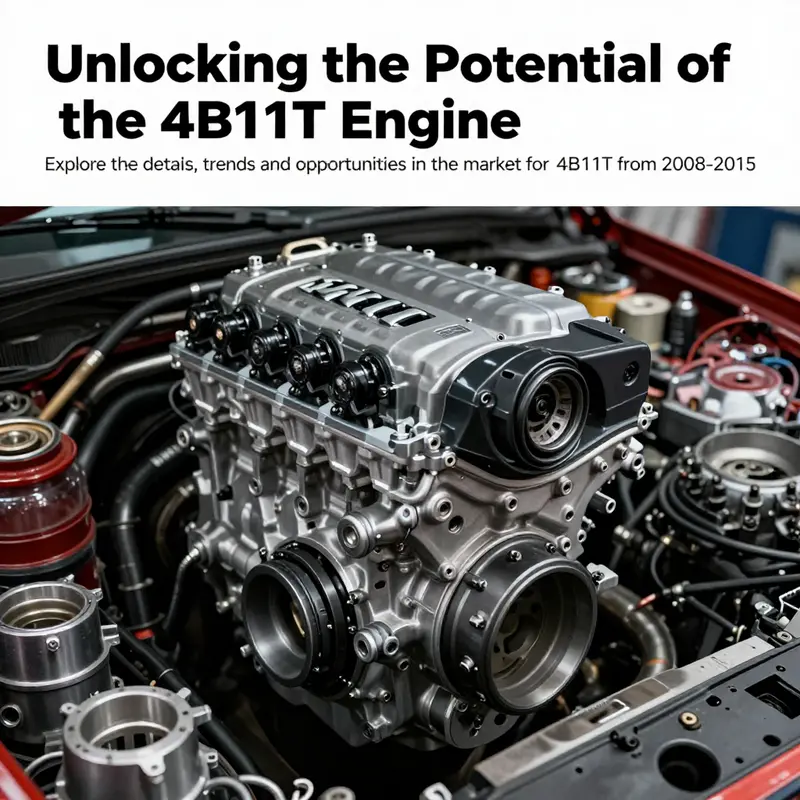
The 4B11T engine, a fascinating component in the automotive industry, particularly for Mitsubishi models between 2008 and 2015, has gained considerable attention due to its performance and compatibility with various vehicles. This article offers business owners a comprehensive look into the sales details, technical specifications, market trends for used 4B11T engines, compatibility with various models, and critical purchasing insights. By understanding these dimensions, businesses can make informed decisions about stocking or investing in this sought-after engine type.
On the Market: The 4B11T Turbo Powerhouse, EVO X, and the Global Used-Parts Pulse
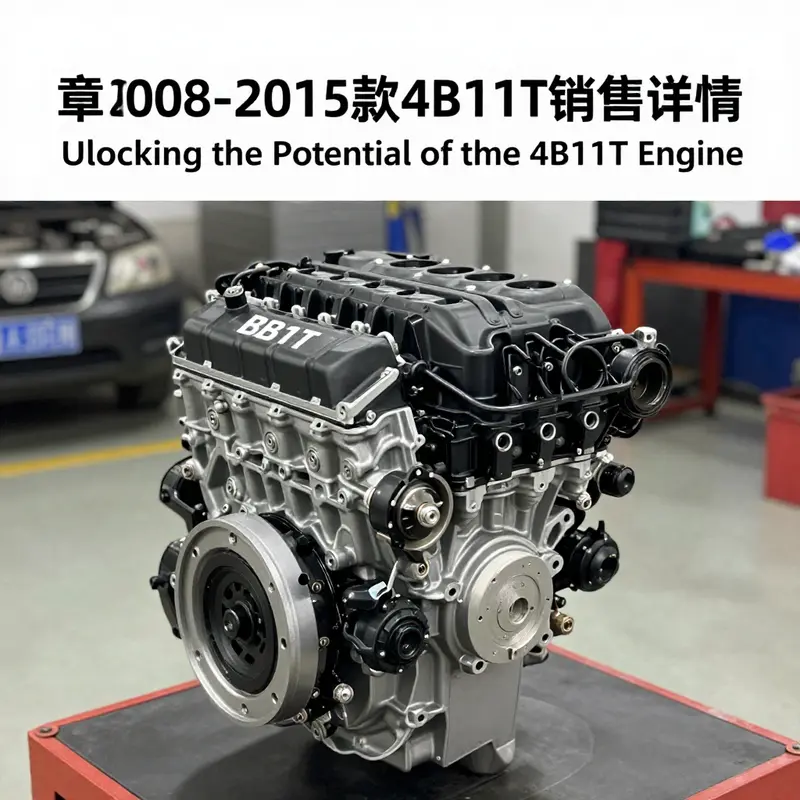
When enthusiasts look for a turbocharged core that still carries the badge of a modern legend, the 4B11T engine sits at a crossroads of performance heritage and practical possibility. It powered the EVO X and its close kin during a high point of late-2000s performance engineering, delivering a blend of response, torque, and tuning potential that remains appealing to builders today. In the current used-market, this engine arrives not as a museum piece but as a functional platform with real upside—an engine that can anchor a restoration, a swap project, or a tuned build with a clear path from stock to more aggressive configurations. The market signal is unequivocal: a ready-to-run core continues to attract interest, even as miles accumulate and years pass since the factory lifeline ended. This is not nostalgia alone; it is a practical proposition for anyone who wants a modern turbocharged powerplant that fits a variety of chassis without sacrificing modern management or reliability if approached with care. The story of its saleability is as much about accessibility as about performance capability; cross-border shipping, OEM integrity, and the well-understood tuning curve all play into why collectors and builders alike still pursue the 4B11T in today’s market.
To understand why the 4B11T remains a magnet for buyers, it helps to anchor the discussion in its technical backbone. The engine is a 2.0-liter inline-4 paired with a dual overhead cam and a 16-valve layout. It employs MIVEC variable valve timing to optimize breathing across a broad range of revs, a feature that complements a turbocharged setup well by preserving response and mid-range torque. The distinctive draw comes from its twin-turbo arrangement, which was designed to deliver robust boost across the power band rather than peak alone. In stock form, the engine can push upward of 295 horsepower and roughly 366 Newton-meters of torque, with a torque curve that fills in smoothly rather than spiking abruptly. This architecture is not merely about peak figures; it is about a broad, usable torque band that makes the car feel fast in daily driving and responsive on a race-start. For builders, that translates into a flexible foundation: upgrade the turbo housing, improve intercooling, and recalibrate the ECU, and the platform can scale power without requiring a wholesale change in the engine block or intake piping. In short, the 4B11T’s design leans toward tunability, and its structural integrity supports a staged approach to power gains rather than a single, blunt upgrade path.
The market comportment around this powerplant reflects several converging forces. On the price front, complete or nearly complete 4B11Ts—especially the JDM variants that found their way into EVO X and its Ralliart peers—have tended to command a premium compared with other used engines from the same era. The typical price band on the used market has hovered around the equivalent of 30,000 to 50,000 yuan, with notable variation driven by mileage, whether the engine remains OEM, the presence or absence of the original ECU, and any accident or wear history. These factors shape a buyer’s risk assessment: lower-mileage cores with OEM continuity are especially desirable for those who want to avoid additional headaches during installation and initial break-in. A real-world snapshot from a popular cross-border listing illustrates the point: a used engine of this type offered around 27,591 yuan, accompanied by the promise of free international shipping. Translating that into dollars highlights why the 4B11T remains appealing to enthusiasts who seek a balance between upfront cost and long-term performance potential. The price ecosystem also reflects the engine’s broader narrative: even as Mitsubishi ended the EVO line in 2015, the demand for this power unit did not fade; scarcity and the legitimacy of OEM components continued to drive value. In many cases, buyers weigh the cost of a complete installation—including ECU compatibility, harness complexity, and supporting components—against the unpredictability of a non-OEM core. The result is a resilient market where a solid, verified core can still offer a compelling route to performance, particularly for those who want to recapture or exceed factory-era capability with informed tuning.
Beyond the current price and availability, the 4B11T’s appeal lies in its versatility and the ecosystem that has grown around it. The engine’s architecture supports precise, measured upgrades that many builders prefer to a radical, one-shot power jump. Upgrading to higher-capacity turbochargers, larger intercoolers, and refined exhaust paths can push power into the 300+ horsepower range without sacrificing the engine’s fundamental reliability, provided tuning is conservative, boost targets are matched to fuel and ignition maps, and maintenance remains meticulous. This approach aligns well with the way the engine behaved from the factory: lively, responsive, and capable of delivering broad torque without a harsh spike when the boost comes on. For those who want to widen the scope even further, the 4B11T can be a candidate for engine swaps or cross-application builds where the goal is to preserve EVO X performance cues while integrating into a different chassis. The practical takeaway is that the engine offers a balanced pathway to higher performance that does not require a total commitment to a bespoke, fully integrated powertrain solution from scratch.
This is where the concept of aftermarket enhancements becomes crucial. Enthusiasts often consider strengthening the bottom end and ensuring the rotating assembly can tolerate higher boost and longer sustainment at elevated power levels. A billet block, for instance, is a popular avenue for those pursuing aggressive builds. The idea is simple but powerful: a reinforced block can reduce flex under boost, improve reliability under sustained high-power operation, and support longer life at elevated revs. The topic is explored in depth on dedicated parts pages that discuss the benefits, compatibility considerations, and installation nuances for the 4B11T. For readers who want to explore that specific upgrade path, a dedicated resource outlines the engineering tradeoffs and practical steps involved in upgrading the bottom end. This kind of upgrade is not merely about chasing numbers; it’s about shaping the engine’s resilience so it can live up to the power goals of a chosen project, whether it is a road-going car, a track-focused project, or a hybrid that blends street manners with weekend speed.
Locking into this broader upgrade conversation is the sense that the 4B11T remains a meaningful piece of Mitsubishi’s performance heritage, even after the EVO line’s retirement. The engine’s lineage traces back to a cross-brand development program—an alliance among manufacturers known for pushing turbocharged performance—an origin that adds a layer of technical credibility to every rebuild or swap. The EVO X’s legacy continues to fuel interest from both long-time fans and newer builders who see in the 4B11T a chance to recapture a modern performance ethos without paying a premium for a complete new-powertrain platform. In limited-edition or high-torque builds, this engine has demonstrated the potential to deliver startling performance within a package that remains approachable for dedicated hobbyists who plan and execute upgrades with care.
In practical terms, buyers today encounter a market where used 4B11Ts are not scarce but highly selective. A complete, well-documented package that includes OEM components, or at least a clear history and documentation, stands out in a crowded field. The value proposition is straightforward: a core that has a known maintenance history, verified components, and a path to reliable operation after install is the most attractive option for a buyer who wants to minimize installation risk and post-install surprises. For builders who want to explore the full potential of the engine, the path often starts with a solid base—one that can be expanded with larger intercoolers, upgraded fuel delivery, and calibrated engine control software, all while preserving the fundamental character of the powertrain. The payoff is clear: a project can evolve from a brisk chassis with a strong turbo feel to a purpose-built machine capable of sustained high performance, and the road-test reality of a well-tuned, well-maintained core provides confidence that the investment will translate into performance rather than frequent downtime.
For readers who want a concrete market reference to guide decisions, the EVO X-era 4B11T remains one of the more transparent and trackable powerplants in the used market. A concrete listing example—showing a 2008–2015 EVO X 4B11T engine in the market with a purchase price around the four-figure region and a note on shipping terms—helps illustrate why buyers continue to consider this engine a viable option. If you’re exploring this path, it’s worth reviewing current listings, checking mileage and ECU inclusions, and weighing how a potential upgrade plan matches your intended power target. The combination of robust stock specs, strong tunability, and a supportive aftermarket landscape means the 4B11T can remain relevant even as automotive platforms evolve. For a concrete market example of a live listing, see the following external resource: https://www.ebay.com/itm/275910000000. In addition, if you want to explore a technical upgrade path that aligns with the engine’s core design, consult the internal resource on billet-block upgrades, which provides a practical overview of how strengthening the bottom end can support sustained higher boost and more ambitious horsepower goals: 4b11t billet block. This internal link serves as a starting point for readers who want to understand how the engine’s architecture accommodates more aggressive performance while maintaining reliability on the street or at the strip.
Ringing the Bell of Power: The 4B11T Engine, Its Tech Specs, and the Allure of a Used JDM Powerplant
The 4B11T engine sits at a fascinating crossroads in automotive history. It is the powerplant Mitsubishi deployed to underpin the high-performance heart of the Lancer Evolution line during a generation when turbocharged four-cylinders proved that sophistication could ride on track-ready intent. When a 2.0-liter, inline-4 turbocharged heart beats in a car, the perception of speed changes. In the case of the 4B11T, that perception is amplified by the engine’s architecture, its advanced timing and fuel-delivery strategies, and the way it translates raw turbocharged torque into usable, predictable performance. The market for this engine, especially in its JDM guise, sits in a niche space where enthusiasts weigh the appeal of authentic performance against the realities of aging hardware and the logistics of a swap or rebuild. In this chapter, we explore the technical core of the 4B11T, connect those specifications to real-world behavior, and consider what buyers face when they encounter a used unit marketed with the familiar tag of for sale on specialist marketplaces.
At the heart of the 4B11T lies a compact, purpose-built architecture. The engine displaces 1998 cubic centimeters, a figure that situates it squarely in the high-strung, high-revving zone typical of modern turbocharged performance four-cylinders. Its block is predominantly aluminum, chosen not just to shed weight but to improve heat dissipation and responsiveness under load. This emphasis on lightness is reflected in the broader narrative of the Evo lineage, where every kilogram saved at the top end of the engine bay translates into improved power-to-weight characteristics for the whole car. The cylinder head is configured with dual overhead camshafts, delivering sixteen valves with four per cylinder. This valve arrangement, paired with a Mitsubishi Innovative Valve timing Electronic Control system, commonly known as MIVEC, is designed to optimize the engine’s breathing across a wide range of speeds. MIVEC’s role is not to chase peak numbers alone but to smooth the engine’s response curve, allowing a more accessible throttle feel from low revs while still delivering the high-end rush expected by track enthusiasts.
The charging system of the 4B11T, as described in technical summaries, relies on a turbocharged pathway that balances air mass, pressure, and charge temperature. The turbocharger, coupled with an intercooler, is designed to suppress the heat that naturally accompanies forced induction. This is crucial because cooler air is denser air, and denser air improves combustion efficiency and, ultimately, power. In some high-performance interpretations of the 4B11T, the configuration has been described as employing a twin-turbo setup, a design choice aimed at broadening the torque curve and maintaining strong boost across a wide rev range. While the exact implementation can vary by market and model year, the intent remains clear: to deliver strong, usable torque from a relatively low engine speed up into the higher rpm ranges where peak power resides. Fuel delivery follows a direct-injection scheme, further refining spray efficiency and enabling precise fuel metering under dynamic load. The combination of direct injection, variable valve timing, and turbocharging gives the 4B11T a distinct engine character: it responds briskly, pulls strongly as boost comes in, and rewards the driver with a linear, confident power band rather than a sudden spike of force.
When translated into performance figures, the 4B11T’s capability becomes a clear, memorable picture. In the Japanese market’s top-tier Evo X configurations, the engine is quoted to yield around 206 kilowatts of maximum power, which translates to roughly 280 horsepower, with peak torque around 422 Newton-meters. That torque figure typically arrives near the mid-range of the rev spectrum, around 3500 rpm, a design choice that complements the car’s all-wheel-drive dynamics and the transmission’s gearing. The effect is a broad and usable torque band: the engine produces substantial pull off idle, accelerates with vigor as boost builds, and maintains acceleration without an abrupt drop-off as the revs climb toward the limiter. This blend of tractable off-throttle torque and high-end power is what gives the 4B11T its reputation for both streetability and track potential. It is a powerplant that can feel lively on a back road yet still deliver the kind of top-end performance that makes a late-afternoon stretch of highway feel like a controlled sprint.
The engineering philosophy behind the 4B11T also emphasizes weight management and thermal efficiency. By moving to an all-aluminum construction for major engine components, Mitsubishi sought to reduce the unsprung weight and the overall mass that the rest of the drivetrain and suspension must handle. Lighter weight in the power unit is valuable not only for straight-line performance but for handling and braking as well. The engine’s aluminum construction, paired with careful thermal management, means it can tolerate higher thermal loads when pushed hard, while maintaining structural integrity under repeated stress. In performance-focused vehicles, such characteristics translate into more consistent behavior on track days and less variability in response during repeated hard accelerations.
A practical thread running through any discussion of the 4B11T is the reality of owning and installing a used JDM engine. A recent example circulating in the market shows a 2.0-liter 4B11T for sale in a configuration compatible with 2008–2015 Mitsubishi Lancer Evolution X and Ralliart models. The asking price for such a unit, when purchased as a used item from a reputable seller, hovered around the four-thousand-dollar mark. The fact that it is a used powerplant means buyers must carefully balance several factors: the engine’s provenance, mileage, service history, the condition of turbocharger and intercooler, and the surrounding systems that influence its longevity, such as the fuel system, oil pump, and cooling circuit. The decision to buy a used 4B11T often hinges on whether a buyer is pursuing a swap, a rebuild, or a restoration project where authenticity and performance alignment with the Evo X lineage are priorities. Another critical consideration is compatibility: even if the core engine is correct, the rest of the installation—ECU calibration, sensor suites, and the harness routing—must align with the vehicle’s electronics. This is not a mere bolt-in proposition; it demands careful planning, the right supporting components, and precise installation.
For buyers leaning into the aftermarket and performance upgrade space, the 4B11T has long offered a compelling platform. Its architecture invites enhancements that emphasize power delivery and reliability under stress. Enthusiasts have explored a spectrum of upgrade paths, from turbocharger tuning to optimized air and fuel delivery, to performance internals that exploit the engine’s robust design. In this light, one can imagine a future where a 4B11T is not just a replacement but a platform for sustained, high-ratio power with controlled temperature management. The existence of a dedicated billet-block option—an upgrade intended to reinforce the bottom end under higher boost and more aggressive use—speaks to the community’s ongoing interest in extending the engine’s life under demanding conditions. For those curious about such avenues, the dedicated page on billet blocks provides more granular details about how a reinforced block can improve reliability and allow more aggressive tuning 4B11T billet block.
The market’s appetite for these engines is also shaped by how the used units are sold and how buyers assess risk versus reward. A complete, documented, and cleanly packaged installation is invaluable in this space. Shipping arrangements, freight considerations, and the difficulty of securing a professional installation at a reasonable cost all factor into the calculus. Some buyers approach the purchase not just as a power upgrade, but as a long-term investment in the value of a performance car. The reality remains that the 4B11T has a devoted following, and that devotion translates into market activity: engines that carry the EVO X lineage, while rarer than typical used engines, command attention, especially when the seller can demonstrate a history of maintenance and provide supporting documentation. The result is a marketplace where enthusiasts evaluate not only the raw numbers but the engine’s condition, its compatibility with their car’s configuration, and the certainty that a swap or rebuild will produce reliable, repeatable performance rather than a momentary thrill.
A subtle but important thread in this discussion is the engine’s potential for integration with other performance components that have become commonly paired with the Evo X ecosystem. The interest in matching an engine like the 4B11T with well-calibrated electronics, a compatible exhaust and intercooling system, and a drivetrain capable of handling improved torque output invites a broader dialogue about what a buyer expects from a swap or rebuild project. It is not just about the engine block or the cylinder head; it is about the synergy of the entire powertrain and how the controller coordinates air flow, fuel, ignition timing, and boost. The 4B11T’s design, with its DOHC layout, MIVEC control, and direct-injection strategy, makes it a tempting foundation for builds that seek to preserve the Evo X’s distinctive character while pushing it beyond its original limits. For those who want to dig deeper into the technical roots of the engine family and see how it compares with contemporaries, the Autohome analysis on the 4B1 series engines offers an authoritative summary of the engineering decisions that shaped this generation’s flagship four-cylinder turbo. It’s a resource that complements hands-on market insights by anchoring the specs in a broader technical narrative External reference: Autohome article on the 4B1 series engines.
在二手市场潮汐中寻觅火力:4B11T发动机的价格、风险与购买逻辑
4B11T发动机:在多平台兼容与极致改装之间的动力核弹

当你在二手市场或改装圈里看到4B11T这个名字时,往往会意识到这不仅是一台发动机,更是一把打开多平台可能性的大门。4B11T作为第十代三菱蓝瑟进化(EVO X)上沿用的核心动力,其技术底子与结构设计让人们对它的兼容性与改装潜力产生持续且强烈的兴趣。它采用全铝合金缸体的轻量化设计,配合双MIVEC可变气门正时系统,使得这台四缸涡轮发动机在响应性、转速区间的平顺性以及高效进排气方面具备独特的优势。原厂状态下,4B11T的官方功率水平可达到约295马力,峰值扭矩约366牛·米,在同级别引擎中具有较高的功率密度与良好的热管理性。这些硬件特性为后续的改装打下了坚实基础,也为不同车型之间的“迁移式”动力提供了现实可能。
最直接也是最稳定的兼容性来自于第十代EVO X本身的群体。作为EVO X平台的标志性动力源,4B11T原生匹配的车型包括GSR、MR等高性能版本,以及同平台或共享技术的变体型号。在搭建承载系统的同时,改装者也会评估四驱结构的承载能力,尤其是在提高输出后对前后悬挂、传动系和冷却系统的综合要求。这些都不是简单的引擎替换就能解决的挑战,而是需要对整车底盘、传动链路、电子控制单元(ECU)及线束系统进行综合校准与升级,才能确保动力传递的稳定性与安全性。
然而,兼容性的讨论并不止步于原厂框架。4B11T的技术栈在同平台的其他车型里也展现出一定的跨界潜力。诸如在翼神底盘基础上的SUV车型,抑或是某些利用相同底盘和传动技术的中小型跨界车,在经过必要的改装后也能接受4B11T的动力输入。此类跨车型改装的核心在于对原有四驱系统、冷却与润滑系统、进排气路径以及ECU映射的重新设计与优化。需要强调的是,跨平台改装往往对底盘结构与传动系的耐久性提出更高要求,特别是在极限扭矩输出下,必须对前后差速、传动轴、悬挂刚性与制动系统进行相应加强,才能避免长期使用过程中的性能下降或可靠性问题。
在具体的改装潜力层面,4B11T的核心优势来自三方面的协同作用。其一是轻量化:铝合金缸体相较于上一代或者某些传统同级别发动机,重量明显下降,车身可用质量减少,实际驾驶中的响应速度与 agility 得到提升;这使得在相同功率输出下,车辆的加速性能和转向响应更具灵活性。其二是气门正时的灵活性:双MIVEC系统为在不同工况下的进排气调校提供了更大的自由度,帮助工程师在高转速段保持足够的呼吸效率,并且在低速扭矩输出上也能保持较好的线性特征。这种特征对改装后的ECU调校尤为关键,因为优秀的气门控制可以在涡轮迟滞、涡轮增压峰值区域以及高转区之间实现更平滑的扭矩曲线。
其三是潜在的高输出空间。原厂端的约295马力并不是一个极限;通过升级涡轮增压系统、进排气、强化缸体与活塞、改装高效的冷却与润滑系统,以及重新编程ECU,4B11T能够实现显著的性能跃升。业内一些改装案例显示,经过综合调校后,输出可达到数百马力级别,甚至在极端的改装方案中实现远超传统V8发动机的性能表现。我们看到的是一个更小排量、但具备高密度驱动潜力的动力核弹,能够在紧凑型轿车上释放出难以想象的推背感。此类改装往往也伴随着对进气冷却效率提升的重视,以及对燃油供给系统的强化,确保高负荷下的燃烧稳定性与机械寿命。
理解4B11T的改装潜力,必须把“可迁移性”与“可持续性”放在同一个框架里看待。迁移性意味着不止限于一两款车型的简单发动机更换,而是将整个动力链条的协同效应在不同车型上实现最大化。可持续性则要求在提升输出的同时维护可靠性、热管理和燃烧效率,以及确保长期维护成本在可控范围内。这就需要不仅仅是改装件的堆叠,更是对车辆底盘、制动、悬挂、传动以及电子控制系统的全方位升级方案。换言之,4B11T的改装潜力之所以让人兴奋,恰恰在于它能把一个看似“紧凑”的动力系统,扩展成一个跨平台的高性能平台,而这也是为何许多热衷驾驶的人将其视为“动力核弹”的原因。
在市场层面,4B11T的可获得性也为讨论增添了现实维度。对有意在合适预算内获得改装基础的人群来说,4B11T的二手市场供应,或在某些平台上以相对合理的成本存在。尽管价格波动、里程与维护历史都会影响性价比,但核心的技术潜力仍然是推动购买与改装决策的重要因素。对爱好者而言,选择4B11T不仅是买一颗发动机,更是在为一个跨平台、跨风格的改装计划奠定基础。为了实现这一目标,理解不同车型对该发动机的兼容性边界、识别对动力链的潜在压力、以及制定可持续的升级路径,是每一个项目的前提。
在深入考察这些要素时,许多人会把注意力集中在缸体、活塞、连杆和涡轮等关键部件的耐久性与协同性上。为了帮助进一步理解,关于缸体与整机的强化设计,可以参考 4B11T billet block 的设计理念,这一资源从机构强度、热管理和材料工艺角度提供了有价值的参考。将这些理念与实际改装需求结合,能更清晰地勾勒出一个既能提升性能又能保持可靠性的升级路径。对打算把4B11T用于不同车型的改装者来说,这种跨件协作的视角尤为重要。
最终,4B11T的魅力在于它能够把“原厂定位”与“赛道潜力”并行放大。作为EVO X时代的核心动力,它的兼容性虽然以原厂平台为主,但跨平台的改装潜力又给了车迷们充足的空间去探索、试验与优化。无论是在保留日常驾驶舒适性的前提下提升路面反馈,还是在赛道环境中追求极致的加速和响应,4B11T都提供了一种可持续的路径,让人们在保持车辆整洁性与结构安全的同时,追逐更高的动力极限。最终,4B11T不仅是一个引擎编号,而是一个连接多种车型、多个改装方向以及个人驾驶愿景的动力桥梁,正如它在改装圈中的口碑所暗示的那样,被视为“动力核弹”并非空话。
外部参考与进一步阅读:在了解4B11T的细节与参数时,可参考专业评测与技术解读页面,帮助读者从参数到实际应用建立清晰的认知。权威来源链接: https://www.pcauto.com.cn/engines/4b11t/
Facing the 4B11T for Sale: A Buyer’s Compass Through Risk, Verification, and Real-World Promise
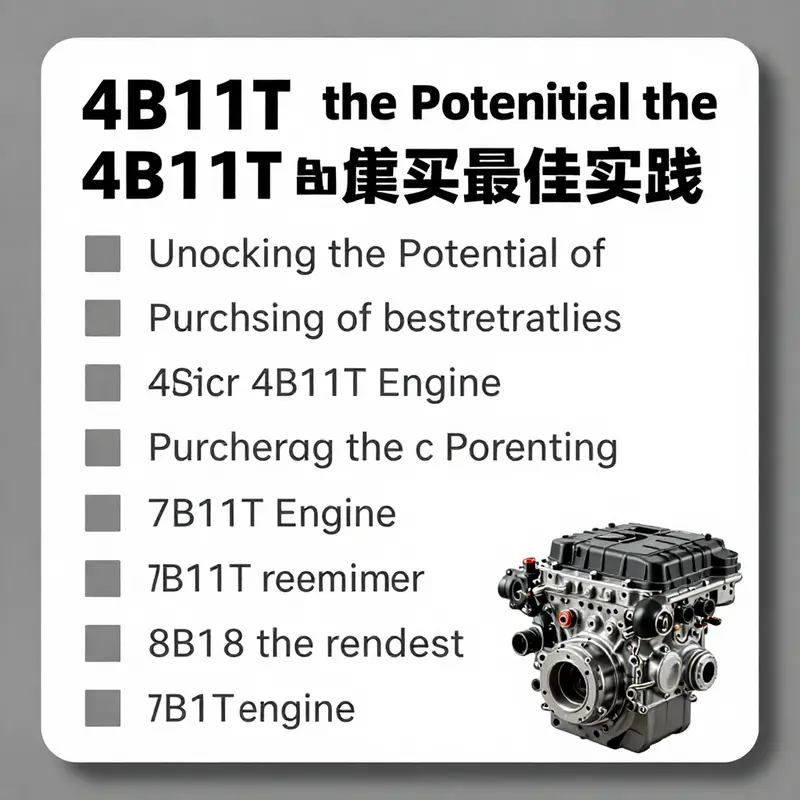
The lure of the 4B11T for sale is strong for enthusiasts who want to recapture a period of raw, high-rev aggression and a track-ready attitude in a streetable form. The engine, a turbocharged inline-four that powered a beloved era of performance cars, represents both a doorway to genuine driving pleasure and a doorway to considerable risk. As with any high-stakes used performance part, the decision to buy hinges as much on disciplined evaluation as on the price tag. The chapters that follow merge practical hands-on testing with a broader perspective on what makes a used 4B11T a worthy rebuildable core or, conversely, a potential money pit. The core message is straightforward: when you hunt for a 4B11T for sale, you are buying not just a component but a slate of tradeoffs, and those tradeoffs will be visible in the engine’s history, its current state, and the way it has been cared for—and will continue to be cared for—going forward.
One of the most pressing concerns that commonly surfaces in discussions about used 4B11T engines is a failure mechanism tied to carbon buildup and oil-flow discipline. In recent chatter within the enthusiast community, a pattern has emerged: carbon deposits can accumulate around the oil pan and the oil-filter pathways, narrowing the clearance and, under certain conditions, impeding the oil return route. When the oil-scavenge or feed becomes marginal, the risk of bearing wear and cylinder-wall scuff increases. The practical implication for a prospective buyer is not merely theoretical. It translates into a concrete, verifiable step: insist on a cylinder-pressure test as part of any pre-purchase inspection. The test offers a window into the integrity of the rings, the tightness of piston seals, and the overall health of the combustion chambers. A robust test result will show consistent compression across cylinders and a healthy rebound when the piston is cycled, while uneven or stubbornly low readings can indicate early wear or inconsistent lubrication geometry that could herald bigger trouble down the line. When a seller provides only vague assurances about “good compression,” a buyer should push for a formal report—ideally accompanied by a professional interpretation.
This emphasis on a compression or cylinder-pressure test connects naturally to a broader truth about engines with performance legacies: mileage alone is a misleading metric. In many cases, a well-maintained engine with moderate miles can outlive a higher-mileage unit that has seen inconsistency in oil changes, improper storage, or neglectful use. Conversely, a low-mileage unit that has sat for extended periods or endured a history of aggressive use can harbor issues that are not readily apparent from the odometer reading. Therefore, the prudent buyer treats mileage as just one data point among many. A seller’s reliability, the engine’s provenance, and the documented maintenance history carry far more weight when the goal is not just to start the engine once but to count on it for reliable miles ahead.
Original condition versus modification history is another axis along which risk and reward align. If you intend future upgrades—perhaps larger turbochargers, reinforced internals, or a tuned fuel and cooling system—the engine’s baseline state matters. An engine that has never been torn down or rebuilt, with intact factory fasteners and original parts, offers a cleaner canvas for planned upgrades. On the other hand, a unit that has been opened for inspection or repair, or one that carries non-stock components, demands a deeper examination of what work was done, why it was done, and whether those modifications suit long-term reliability. The presence of after-market parts may reflect a track-driven life or a careful rework that preserved core integrity. Either way, buyers should obtain a detailed service history, including receipts, parts lists, and any notes about prior failures. This documentation makes the difference between a project engine with clear restoration potential and a money pit that will require ongoing, unpredictable investments.
Maintenance history and operating environment are the silent indicators of long-term viability. An engine that has logged high-temperature miles, frequent short trips, or repeated exposure to subpar lubricants is more likely to develop varnish, carbon buildup, and lubrication-related wear than one that has enjoyed stable temperature cycles and regular, quality oil changes. Even engines with “low miles” can deteriorate quickly if owner habits included delayed oil changes, substandard oil grades, or neglected cooling system maintenance. The buyer’s task is to assemble as complete a record as possible: oil type, oil change interval, filter quality, coolant maintenance, and the nature of last service. The environment matters too. Engines that operated in hot climates, or those exposed to dusty or abusive driving conditions, may show signs of wear that a seller cannot always capture in a simple photo or a single compression snapshot.
The path to a sound purchase does not end with serial numbers and service receipts. A rigorous on-site assessment channels the buyer toward a disciplined inspection regime. Even when shopping remotely, the plan should be to arrange an in-person examination or to contract a qualified technician to conduct a deep-dive inspection. A practical checklist includes cylinder-pressure testing across all four cylinders, a thorough leak-down test to assess valve seating and piston ring integrity, and an assessment of the oil pan and filter-feed pathways for any anomalies. In addition, a careful interior inspection of the engine bay reveals telltale signs: oil on the exhaust manifold, unusual crankcase pressures evidenced by unexpected vapors, or hardware that looks newly replaced or mismatched. More subtle signs accompany age as well—especially in high-output engines. Listen for valve-train noise, assess timing-chain tension and guides, and verify belt conditions where applicable. And do not overlook the external signals: the condition of the accessory drive system, the integrity of the turbocharger connections, and the presence of any oil leaks around gaskets and seals.
For buyers who plan to do more than just drop the engine into a project car, the decision often rests on market realities and the practicalities of building a reliable powerplant. A well-selected, clean engine core can be a powerful starting point for a controlled, well-documented project. But it also comes with a budget that compensates for wear, potential reconditioning, and the inevitable monitoring needed after installation. The figure is never fixed; it moves with the scope of the build, the quality of the supporting systems, and the reliability targets you, as the owner, set for daily use. If you intend to pursue aggressive performance goals, you should plan for robust fuel and ignition upgrades, enhanced cooling, and a drivetrain that can handle the torque. In many cases, that means building around the engine with a matching intake, exhaust, intercooler, and, crucially, a cooling system designed to resist heat soak during track days. The price of admission grows with ambition, and a thoughtful buyer tests that ambition against the engine’s verified condition and the realism of the project timeline.
An essential piece in this practical puzzle is the negotiation and purchase framework. In practice, you should anchor your negotiation to verifiable data rather than promises. A credible seller will permit or even facilitate independent testing, and they will provide complete documentation and transparent histories. The buyer should insist on viewing compression reports, leak-down results, oil analysis data if available, and any teardown notes from prior work. A key mantra emerges: verify before you commit. If the engine’s provenance and current condition align with your project goals and your budget, the purchase becomes a calculated step rather than a leap of faith.
To illustrate how these concepts translate into a concrete decision point, imagine you’re evaluating a 4B11T for sale that appears well priced and complete with minimal external wear. Before you even price the decision to buy, you arrange a test that includes a cylinder-pressure test and a thorough inspection of the oil film and filter system. The results show even readings across all cylinders and healthy oil pressure at idle and under load. This data, combined with documented maintenance, supports a buying decision that aligns with a careful restoration plan rather than a speculative sprint. If the seller can also provide a clear modification history or confirm that the engine has remained in near-stock configuration, you gain confidence that your future upgrade path is viable. Conversely, if the test reveals disproportionate cylinder pressures, or if the oil system reveals signs of chronic contamination or flow restriction, you are afforded a chance to walk away with your investment intact, protected from later, more expensive misfires.
As a nod to the broader ecosystem surrounding this engine, remember that some buyers explore enhancements to address potential weak points. A billet-block upgrade, for instance, represents a deliberate choice to reinforce the engine’s core. This kind of upgrade can dramatically improve durability under high-stress operation and can be a central part of a carefully planned build. If you want to explore this topic further, you can find a detailed resource discussing billet-block options here: 4b11t billet block.
Alongside all these considerations, you should consult high-quality, independent references that synthesize long-term experience with hard data. Publications and technical analyses from established automotive media offer a broader, empirically grounded view of what ownership entails for the 4B11T in the modern era. They provide maintenance frameworks, failure mode analyses, and guidance on what real-world reliability looks like after tens of thousands of miles under variable conditions. Reading these sources helps you calibrate expectations about durability, service intervals, and typical maintenance costs over the life of a rebuilt or stock-spec engine. The practical upshot is clear: use these external analyses to set realistic maintenance calendars, to map risk, and to prepare for the kinds of upgrades and improvements that maximize the chance of owning a satisfying, dependable powerplant.
To bring all of these threads together for a buyer contemplating a 4B11T for sale, the best practice remains simple and durable: prioritize a seller with a proven track record and openness; demand a rigorous diagnostic report, including cylinder-pressure data and a view into the oil-pathway condition; insist on complete documentation of original-state versus modified-state history; and align your purchase with a well-defined plan for use, budget, and upgrades. Do not let a low price or glossy presentation obscure the fact that a turbocharged four-cylinder carries a built-in premium for maintenance discipline and for the reliability it takes to keep a performance engine turning cleanly and consistently over time. In the end, the question is not only whether the engine spins freely on the stand but whether it will perform reliably in the car, under the load of daily use or track duty, long after the sale is completed.
External reference: For a broader perspective on reliability, maintenance, and long-term ownership of the Evolution X with a 4B11T, see MotorTrend’s in-depth tests and long-term evaluation here: https://www.motortrend.com/cars/mitsubishi-lancer-evolution-x/.
Final thoughts
The 4B11T engine has carved a unique niche in the automotive market, particularly among Mitsubishi enthusiasts and aftermarket businesses. Understanding its sales details, technical specifications, marketplace trends, compatible models, and wise purchasing strategies equips business owners to make strategic decisions that can enhance their offerings and meet customer demands effectively. In a dynamic market, staying informed about these aspects not only ensures competitiveness but also opens up new avenues for growth within the automotive sector.