

The seats of the Lancer Evolution X are more than mere furnishings; they represent a symbiosis of performance and style, catering to the passionate driver and vehicle aficionado alike. With a focus on high-performance racing-inspired designs, the Recaro seats offer an unparalleled experience in terms of support and aesthetics. This article delves into the intricate details of Lancer Evolution X seats, covering their design and performance specifications, current market availability and pricing trends, aftermarket modification options, and the balance between comfort and racing ergonomics. By examining these aspects, business owners can gain a comprehensive understanding of how Lancer Evolution X seats can impact both vehicle performance and customer satisfaction.
In the Driver’s Seat: The Design and Performance Narrative of Lancer Evolution X’s Sports Seats
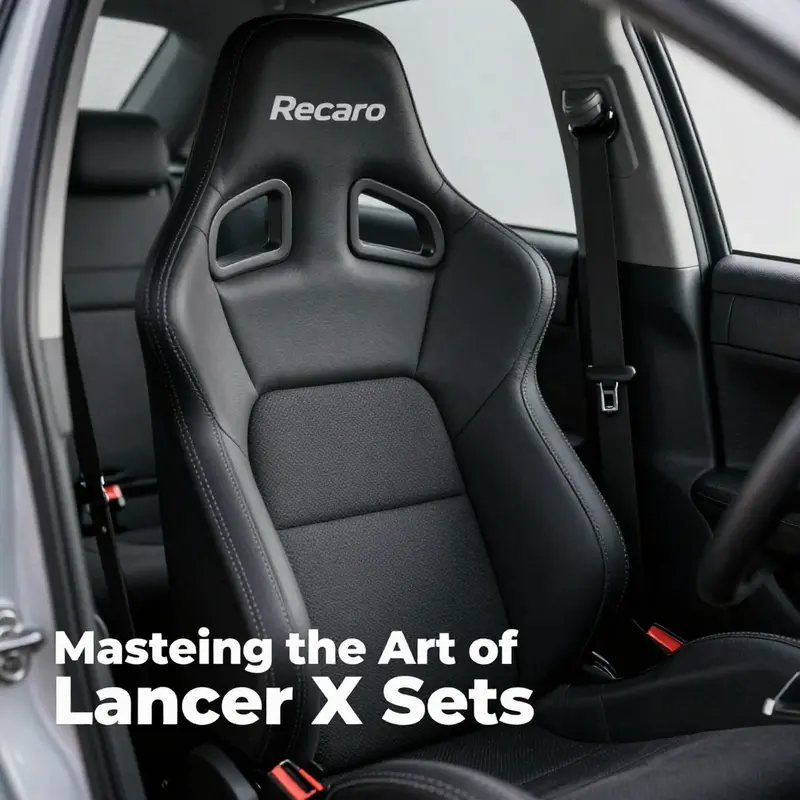
The Lancer Evolution X is celebrated not only for its ferocious handling and turbocharged reflexes but also for a cockpit that is engineered to keep the driver physically connected to the car’s performance. The seats are more than mere cushions; they are the surgical interface through which power, balance, and control are translated into feel and confidence. In the Evolution X, the seating solution is a deliberate fusion of racing-inspired design, advanced materials, and ergonomic precision. This fusion creates a cockpit that communicates with the driver in the language of cornering, braking, and acceleration, and it does so while preserving a surprising degree of comfort for daily driving. The seat’s identity is inseparable from the car’s broader mission: to deliver track-ready performance without demanding compromise in ordinary road use. The result is a clear statement about what the Evolution X values—precise feedback, secure containment, and a driver-centric environment that rewards commitment with every bend and straightaway.
From the outset, the design philosophy centers on enabling aggressive driving without fading into fatigue. The seats in the Evolution X are characterized by a careful balance between weight reduction and structural rigidity. Lightweight yet durable materials form the backbone of the seat construction, which is reinforced by a robust polyurethane foam core and a rigid shell. This combination serves a dual purpose. It lowers the overall mass of the interior, a factor that complements the car’s broader weight management strategy, while preserving the essential support structure that keeps the torso aligned with the spine during hard cornering. In a vehicle that thrives on lateral acceleration, the seat’s primary function is to hold the driver securely in place so that steering inputs and throttle modulations translate immediately into predictable chassis movement rather than margin-of-error body shifts. The reinforcement within the seat’s shell also plays a critical safety role by maintaining form under dynamic loading, so the seat and occupant behave as a single, cohesive unit as cornering forces rise.
Aesthetic choices reinforce function. The Recaro racing seats that define the Evo X’s interior geometry exude a purposeful, competition-ready vibe. The visual language pairs bold stitching with a low-profile bolstered backrest, creating a silhouette that looks fast even when the car is stationary. The outer shell and fabric or leather surfaces are treated to endure high-stress conditions while offering tactile grip that helps a driver maintain contact through mid-corner transitions. These seats are not only about containment; they are about communication. The tactile surface, the contour of the cushion, and the precise angle of the seat back all convey whether the car is ready to bite into a turn or to settle on a straightaway. In practical terms, the mounted seatback angle is tuned to complement the flat-bottom steering wheel and the driver’s seated posture, ensuring a straight-ahead line of sight to the tachometer and the road ahead. The result is a cockpit that feels like an extension of the driver’s limbs, where the seat and wheel work in concert to translate intent into precise vehicle response.
The design specifications go beyond surface aesthetics. The cushion’s density is selected to balance comfort with support. A reinforced polyurethane foam layer underpins the seat’s surface, providing resilience that resists compression during repeated high-load cycles. The foam is engineered to resist breakdown after repeated edge loading, so the lateral support remains consistent even after hours of spirited driving. The shell’s rigidity is not an afterthought; it is integral to how the seat preserves geometry under duress. A rigid seat shell ensures that the seating area does not deform under braking or cornering loads, which helps to maintain predictable contact points for the driver’s pelvis and thighs. This predictability translates into consistent steering feel and pedal modulation, especially when the car is pushed to the limit on a winding road or a track.
Ergonomics play a central role in the Evo X’s seating philosophy. The seats are designed with a focus on the driver’s posture and the ability to quickly adopt a commanding position behind the wheel. A low-profile backrest configuration contributes to a clearer view of the instrument cluster and the road, which is particularly valuable when entering a high-speed corner that requires a precise line. The side bolsters are pronounced enough to hold the torso in place during aggressive maneuvering, yet they are shaped to avoid pinching at the ribs or restricting movement when transitioning to a different seat position. This balance between containment and comfort ensures that the driver can stay engaged for longer without the fatigue that can accompany a more extreme racing seat. The lower cushion geometry is crafted to support the thighs without creating pressure points that can numb the legs during long sessions. In combination with a driver-focused cockpit, this seat configuration encourages a more dynamic driving posture that aligns with the car’s performance characteristics rather than fighting them.
The interior upgrade ecosystem surrounding the Evo X seats further elevates the driving experience. In performance-oriented trims, the cockpit includes a suite of features that reinforce the sense of purpose behind the seat design. Aluminum pedals, a flat-bottom steering wheel, and a minimalist, driver-focused instrument cluster create a coherent architecture that mirrors the seat’s intent: every element is there to shorten the feedback loop between the driver’s inputs and the car’s responses. The metal pedals not only reduce weight slightly but also provide a crisp, tactile surface for heel-and-toe technique and aggressive braking. The flat-bottom wheel places the handgrip at a more favorable height, which improves leverage during spirited corner entries and quick lane changes. The instrument cluster is simplified to prioritize the essential data—speed, RPM, and torque delivery—so the driver can read the car’s status at a glance without diverting attention from the road. The interplay of seat, wheel, pedals, and instruments creates a cohesive driving environment in which the occupant’s body, the vehicle’s chassis, and the engine’s delivery are synchronized in a single performance language.
From a practical perspective, the Evo X seat also carries implications for customization and ownership experience. Original equipment seats in this lineage are a coveted part of the car’s heritage, and they continue to attract attention from collectors and enthusiasts alike. The market for OEM seats remains robust enough to support replacement and restoration activities, underscoring the seat’s role as a key element of the car’s value and its ability to retain or even increase appeal over time. For enthusiasts who want to preserve the factory feel while enhancing performance, genuine seats maintain alignment with the car’s original tuning and safety characteristics. For those who seek a more customized or track-focused stance, aftermarket options exist that preserve the core idea of race-inspired containment while offering different materials, stitching, or harness compatibility. In this space, drivers can tune the cockpit around their own priorities, from ultimate grip to a touch more comfort for daily use. The result is a continuum of possibilities rather than a single, monolithic solution.
The premium options available on some higher-trim or special-edition Evo X models extend the seat’s story into a more refined territory. It is not unusual to encounter seats offered with genuine leather upholstery, enhanced trim details, or additional finishes that elevate the perceived luxury without sacrificing the performance-driven contouring. The leather or leather-like surfaces can heighten the sense of quality and durability in a cockpit that is designed to endure the rigors of race-inspired driving. Such options reflect a broader theme: the Evolution X treats the interior as a tool for performance, but not at the expense of tactile and sensory richness that makes the experience engaging. The seats’ foam density, stitching quality, and fabric or leather texture all contribute to the sense of cohesion in the cockpit. The interior becomes not just a place to sit, but a controlled environment in which all elements reinforce the same driving message: the car rewards the driver who sits with intent behind the wheel.
In the broader context of the Evolution X’s development, seat design is a visible manifestation of an engineering mindset that prioritizes driver feedback and chassis communication. The seating system is more than support; it is a mechanism for translating the car’s mechanical balance into a human-scale sensation. When a driver leans into a corner, the seat’s lateral support and cushion geometry help manage body roll and weight transfer. This physical feedback is a crucial part of how the Evo X communicates with the driver, guiding braking points, steering input, and line selection with a directness that becomes even more pronounced on a racetrack. The presence of a high-performance seat also subtly influences driving technique. By providing secure containment and a consistently tactile experience, the seat invites more ambitious corner entries and more aggressive throttle modulation, encouraging a feedback loop in which the driver’s skill and the car’s capabilities elevate each other.
As the Evolution X continues to be discussed among enthusiasts and professionals, the seat remains a critical reference point for what makes this car distinctive. The race-inspired interior, anchored by the seat, defines a driving atmosphere that is equal parts ergonomic science and emotional pivot—where the body’s contact with the cushion, the feel of the bolsters against the torso, and the alignment with the steering wheel come together to shape a driver’s confidence. The seat’s influence extends beyond performance; it affects how impressions of the car are formed and remembered. The ability to stay centered during the most demanding transitions creates a sense of control that can translate into faster lap times and more precise road manners. It is this synthesis of form and function that turns the Evo X seat from a simple component into a symbol of the model’s character: uncompromising, communicative, and purpose-built for drivers who want to feel what the car can do in their hands.
In sum, the Lancer Evolution X’s seats embody a philosophy that rejects compromise in favor of a cockpit where every detail supports performance without sacrificing engagement. The design and performance specifications—rigid shells, reinforced foam, and a low-profile, high-grip contour—work in concert with the interior’s driver-centric upgrades to deliver a cohesive experience. The premium options add a layer of refinement to a seat that is, at its core, a tool for performance, forged in the crucible of racing-derived engineering. For owners and enthusiasts, the seat is a focal point of the Evo X’s identity, a tangible link between chassis rhythm and human intent. It is, quite literally, the place where speed meets sensation, and where the story of the Evolution X’s dynamic capabilities is continually written in the driver’s own posture and focus.
For readers seeking a closer look at the practical path of acquiring or restoring these seats, there are OEM and aftermarket routes to consider that align with the car’s performance ethos. And while the market for original components remains robust, a growing segment of owners explores lighter, alternative materials and complementary cockpit upgrades to tailor the experience to their own driving style. This ongoing balance between heritage and customization keeps the Evolution X’s seats as one of the most discussed and celebrated elements of the car’s design, a testament to how a single component can shape a vehicle’s character as decisively as any engine or suspension tuning.
brand-new Alcantara front Recaro seats exemplify how enthusiasts view OEM-inspired upgrades. The choice between factory fidelity and individualized blend of materials often hinges on how much weight is saved, how the foam holds up under repeated performance loads, and how the overall cockpit harmony feels to the driver. These considerations remind us that seat design, at its best, is less about chasing maximum grip alone and more about shaping a sustainable, intuitive relationship between human and machine. As the Evolution X continues to be revisited by fans and specialists, the seat remains a focal point where technical specification and driving pleasure converge, a constant reminder that inside this car, the driver’s body is part of the performance equation.
External reference: https://www.mitsubishi-motors.com/en/vehicles/lancer/seats/
Seating the Evolution: The Market, Performance, and Personal Identity of Evo X Front Seats

The cockpit of the Lancer Evolution X has always carried more weight than its size would suggest. In a car built around precise turbocharged thrust and agile handling, the driver’s seating is not merely a place to sit; it is a strategic interface between the car and the driver. The Evolution X front seats perform this role with a purpose that blends sport, durability, and daily comfort. Across the 2008 to 2015 model span, the factory solution leaned into a performance posture that emphasizes lateral support, leg containment, and a snug, race-inspired fit. The result is a sanctuary for drivers who push the chassis to its limits yet still require a seat that can tolerate the rigors of everyday driving. This chapter preserves that tension between performance inevitability and practical realities, and it treats the subject of Evo X seating not as a niche detail but as a core factor in ownership, modification, and community identity.
The market for Evo X seats today is both lively and filtered through the lens of authenticity and fit. Enthusiasts who are restoring cars to original condition or who want to preserve a factory-driven aesthetic seek out OEM front seats that can retain the look and feel of the original cockpit. The data from the market shows a clear pattern: pre-owned OEM front driver seats for the 2008–2015 Evolution X remain actively listed on large online platforms, with a typical asking price around 499.99 dollars and additional shipping in the neighborhood of 69.99 dollars. Those figures convey more than simple price points; they encode the value drivers in this niche market: genuine fit, compatible mounting points, and the assurance that the seating integrates with the car’s belt anchors, seat rails, and side airbags in a way that aftermarket alternatives often strive to replicate but cannot always reproduce with incontrovertible accuracy. In the Evo X community, that blend of authenticity and straightforward interchangeability translates into steady demand, particularly among owners who prefer to preserve the original driving experience or who seek a straightforward replacement that will slot into the existing interior without the need for extensive modification.
Beyond the OEM option, there is a broad aftermarket ecosystem built to extend the Evo X cockpit beyond factory limits. The aftermarket seat category encompasses a wide spectrum of designs, materials, and mounting philosophies, all aimed at two main objectives: enhancing restraint during aggressive driving and refining comfort for longer sessions behind the wheel. In practice, buyers encounter options that emphasize lighter weight, more aggressive bolstering, and premium surface materials such as leather or suede-like coverings for both grip and aesthetics. The purchasing journey in this space prioritizes fitment compatibility with the Evo X mounting rails and tracks, the seat’s overall dimensions relative to the car’s interior width, and the ease with which the seat can be installed and adjusted relative to the driver’s reach and preferred seating posture. The most sophisticated aftermarket choices promise improved lateral support that holds the torso steady during high-g cornering, while keeping the lower back and thighs comfortable enough to maintain focus through a long, demanding drive. For those who view the cockpit as a stage for precision driving, these seats deliver a tangible sense of control, reducing movement and fatigue when the car’s dynamics are under stress.
Pricing in the aftermarket sector reflects a market that has matured to accommodate a range of budgets and performance targets. While OEM seats retain a premium based on authenticity and seamless integration, aftermarket options have become increasingly competitive, driven by a network of tuning shops and distributors focused on Evolution X projects. The result is a spectrum that starts with modest, value-oriented rally-inspired designs and ascends to high-end racing-inspired configurations with advanced foam compounds, carbon-reinforced backing, and micro-adjustable lumbar systems. The pricing narrative here is not simply a matter of higher or lower numbers; it is a reflection of the tradeoffs that drivers are willing to make between weight, comfort, durability, and the subtleties of seat geometry that influence the wearer’s position relative to the car’s pedals, steering wheel, and controls. For many Evo X fans, the decision to invest in aftermarket seating hinges on the balance between a more immersive track experience and the realities of daily driving. The seats must endure the rigors of regular commutes, long road trips, and the occasional track day, all while preserving or enhancing the vehicle’s interior harmony. In this sense, the market’s pricing signals are not just about cost; they are about expected return in performance, feel, and long-term reliability.
In contemplating the future trajectory of Evo X seating, one can forecast a continued evolution toward greater customization and more precise fitment for a wide variety of body types and driving styles. The Evo X’s cockpit remains a platform that rewards personalization, and the time horizon points to more nuanced, brand-agnostic options that can replicate the essential feel of factory seating while offering owners the freedom to tailor support, padding, and texture. The growth in high-end aftermarket seats aligns with a broader trend within performance communities: the desire to transform a car’s interior into a dedicated driver’s arena without sacrificing daily usability. As more owners participate in track days, time trials, or spirited canyon drives, the appeal of seats that can cradle the torso during aggressive maneuvers while remaining comfortable over hours of driving becomes more pronounced. This trajectory is not simply about lighter parts or flashier materials; it is about achieving a balanced interior environment that complements the Evo X’s mechanical agility.
Within this market landscape, a couple of concrete options illustrate the key dynamics at play. The OEM path remains straightforward: a front driver seat built to the car’s original specifications, designed to align with the car’s safety systems and rail geometry. The aftermarket path offers a spectrum of seats, some engineered to mount with factory rails and others requiring adapters or quick-release mechanisms. The discussions around installation emphasize an important point: even with a straightforward bolt-in seat, one must verify compatibility with belt anchors, airbag system integration, and the seat’s interference with the car’s instrument cluster or center console. Enthusiasts who pursue a seamless replacement often seek out seats that retain factory seating geometry, ensuring that the driver’s position remains within the car’s intended ergonomics. This is not merely a matter of comfort; it is about maintaining the driving signal integrity that comes from a well-positioned seat—one that keeps the driver centered, the pedals reachable, and the steering wheel at a natural reach, minimizing the need for awkward postures during intense maneuvers.
For those drawn to the tactile and aesthetic dimensions of the Evo X cockpit, the upholstery story matters as much as the seat’s structural design. Alcantara, leather, and leather-like fabrics carry distinct feel and grip characteristics that influence how comfortably a driver can hold position through long sessions. The aftermarket segment often emphasizes materials and finishes that deliver stronger grip and a sportier silhouette, while OEM seats prioritize durability and a factory look that blends into the broader interior design. In the balance between style and performance, buyers must weigh maintenance realities. Alcantara, for example, can require special care to preserve its texture and color, especially in climates with wide temperature swings or high UV exposure.Leather-like options, on the other hand, may offer excellent durability but can become slick when new or with sweaty gear. The decision is rarely about aesthetics alone; it is about how the seat performs under the driver’s specific climate, activity level, and frequency of use.
Within this ecosystem, there is value in examining the tangible steps for someone who is considering replacing Evo X seats. First, assess the intended use: is the driver primarily on the street, or does the car see frequent track sessions? Second, measure the interior constraints: width, rail clearance, and the driver’s height and leg length all influence whether a seat will fit comfortably and safely. Third, evaluate the installation path: some seats bolt directly to the factory rails, while others require adapters or modified rails. Fourth, consider safety and compatibility: ensure that any seat aligns with seat belt mounting points and airbag considerations, and confirm that the seat’s geometry won’t interfere with the car’s instrumentation or pedal travel. The practical upshot of these checks is a more confident purchasing decision and a smoother installation experience. Buyers who invest time in this upfront planning often find that the final cockpit becomes more than a comfort upgrade; it becomes a performance tool that allows more precise input, faster reflexes, and a more intuitive connection to the Evo X’s chassis.
In parallel with the market dynamics and practicalities, a broader narrative threads through Evo X seating: the sense of community identity built around the car’s cockpit. The seat is not just a physical component; it signals a driver’s commitment to a particular driving philosophy. For some, choosing an OEM seat preserves the vehicle’s heritage and helps maintain resale value, while for others, the aftermarket route is a badge of performance ambition, signaling a willingness to tailor the interior to match the vehicle’s external aggression and engineering mindset. In this sense, the seat becomes a tangible representation of the Evo X’s dual nature: a car designed to deliver exhilarating performance on demanding road courses and a platform that remains comfortable enough for daily life. The market—and the conversations that surround it—reflect this duality, balancing the appeal of factory authenticity with the allure of personalized, track-ready interiors.
For readers who want to explore a concrete example of aftermarket options that retain an eye for quality and fitment, a notable choice within the broader ecosystem is a seating option that emphasizes Alcantara upholstery and precise contouring. This particular offering illustrates how aftermarket seats can approximate, and in some cases exceed, the factory seating experience while enabling a more aggressive posture and improved lateral support. The concept is straightforward: the seat should hold the body steady under lateral loads, while offering enough cushioning to prevent fatigue during long drives. The balance point between support and comfort is often what separates a good seat from a great one for Evo X drivers who plan to push the car into corners with confidence.
As the Evo X community continues to evolve, the market for seats will likely reflect a combination of availability, pricing, and adaptability. OEM seats will continue to offer a reliable baseline for those who value factory fit and guaranteed compatibility, especially for restoration or preservation projects. Meanwhile, aftermarket seats will push into new prestige tiers, offering high-performance contours, lighter weights, and materials that deliver enhanced grip and tactile feedback. The pricing landscape will follow suit, with OEM seats maintaining a premium but preserving a predictable resale value, while aftermarket options compete through a spectrum of price points and feature sets. The net effect is a market that supports a wide range of ownership pathways, from purists seeking original-state integrity to enthusiasts pursuing aggressive, individualized interiors aligned with their driving ambitions.
For readers who wish to explore more about a practical, direct option that bridges authentic feel and aftermarket customization, one illustrative avenue is the brand-new Alcantara front seat option linked through an aftermarket supplier. This seat concept embodies the ongoing tension between preserving a factory ambiance and enabling a personalized performance environment. If you’re curious to see how a high-quality material and precise contouring can influence your Evo X cockpit, the link to this specific option offers a tangible reference point for the type of upgrade many owners consider. brand-new-alcantara-front-recaro-seatsoriginal
Finally, the pricing narrative for Evo X seats, though anchored by the OEM baseline, must be understood through its broader market context. The landscape has evolved toward greater transparency and accessibility, with a steady flow of both authentic replacements and design-forward aftermarket products becoming available to a global community of enthusiasts. The practical consequence is that owners now have more control over the interior’s look and feel than ever before, with seating options that can be matched to the car’s exterior stance, weight distribution, and even the driver’s specific physique. That empowerment matters because the Evo X’s identity rests not only on its engine and chassis but also on how the cockpit communicates the driver’s intent. The seat, in its quiet, unglamorous way, is the conduit for that intent, translating human input into the car’s immediate, tangible performance response. For the Evo X, the seat is where performance meets daily life, where a track-ready posture can be maintained while embarking on a morning commute, and where ownership becomes a process of continual refinement rather than a single, static moment of purchase.
External resource for pricing context: https://www.ebay.com/itm/156374587993
null
null
null

null
Final thoughts
In summary, Lancer Evolution X seats epitomize a blend of design, functionality, and market relevance that appeals to both performance enthusiasts and business owners alike. Understanding the intricate balance between comfort and racing ergonomics not only enhances the driving experience but also elevates customer satisfaction in aftermarket offerings. With the right insights into market trends, aftermarket possibilities, and design specifications, business owners can make informed decisions that positively impact their operations. The Lancer Evolution X stands as a testament to how high-quality seats can define a vehicle’s identity and performance.