

The Mitsubishi Lancer has stood as a cornerstone in the automotive industry, celebrated for its versatile engine lineup and cutting-edge technology. At the heart of this reputation lies the MIVEC (Mitsubishi Innovative Valve timing Electronic Control) system, a hallmark of engineering that optimizes performance and efficiency. This article delves deeply into the significant features of the Lancer engine, beginning with the innovative MIVEC technology, exploring the performance specifications across different engine variants, and tracing the history that has made it a legend in automotive culture. Each chapter illuminates how these elements contribute to the Lancer’s standing as a preferred choice among business owners and everyday drivers alike.
MIVEC Unveiled: How Mitsubishi Lancer Engine Technology Rewrites Power, Efficiency, and Emission Control
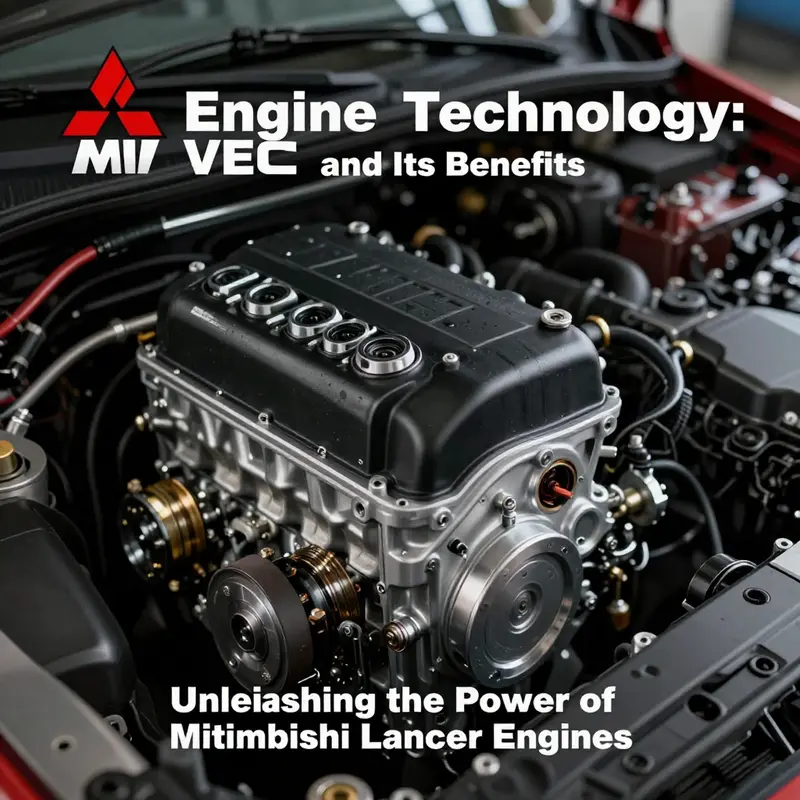
The Mitsubishi Lancer has long stood as a study in balance within the compact class. Its engine lineup embodies a deliberate philosophy: deliver practical daily livability without sacrificing a spark of excitement when the road unwinds. At the heart of this balance lies a pivotal technology that has shaped generations of Lancer performance and efficiency—an electromechanical orchestration that fine-tunes the moment-by-moment ballet of air, fuel, and combustion. That orchestration is MIVEC, Mitsubishi Innovative Valve timing Electronic Control, a variable valve timing system that dynamically adjusts both the timing and the lift of the intake valves. Through precise control, the system aligns with real-time engine conditions—speed, load, coolant temperature, throttle position—guided by the ECU and a network of sensors. The result is not simply a one-off gain in peak power or fuel economy; it is a coherent improvement across the entire operating envelope, from the quiet crawl of city streets to the high-revving cadence of spirited highway driving. The Lancer’s MIVEC-equipped engines demonstrate how variable timing, when executed with precision, can translate into a more complete and refined driving experience.
To understand how MIVEC reshapes performance, it helps to imagine the engine as a living organism rather than a fixed machine. The intake valves govern the amount and velocity of air entering the cylinder. By adjusting when those valves open and how far they lift, MIVEC orchestrates the air into the combustion chamber with a choreography tailored to the engine’s speed and load. At low speeds, one intake valve may open slightly while the other remains nearly closed. This deliberate asymmetry creates a swirl in the combustion chamber, which promotes thorough fuel atomization and a more complete burn. The practical benefits are twofold: better fuel economy and reduced emissions. As the engine moves into higher revs and greater load, the system can switch to a more aggressive valve-lift strategy and closer timing of the intake events. The air can rush in more freely, yielding stronger torque and improved response. The ECU’s role is to interpret signals from a constellation of sensors—the crank angle, throttle position, coolant temperature, engine speed, loads—then choose the optimal combination of timing and lift. It is a real-time decision-making process that keeps the engine operating at its best, regardless of the momentary demands placed upon it.
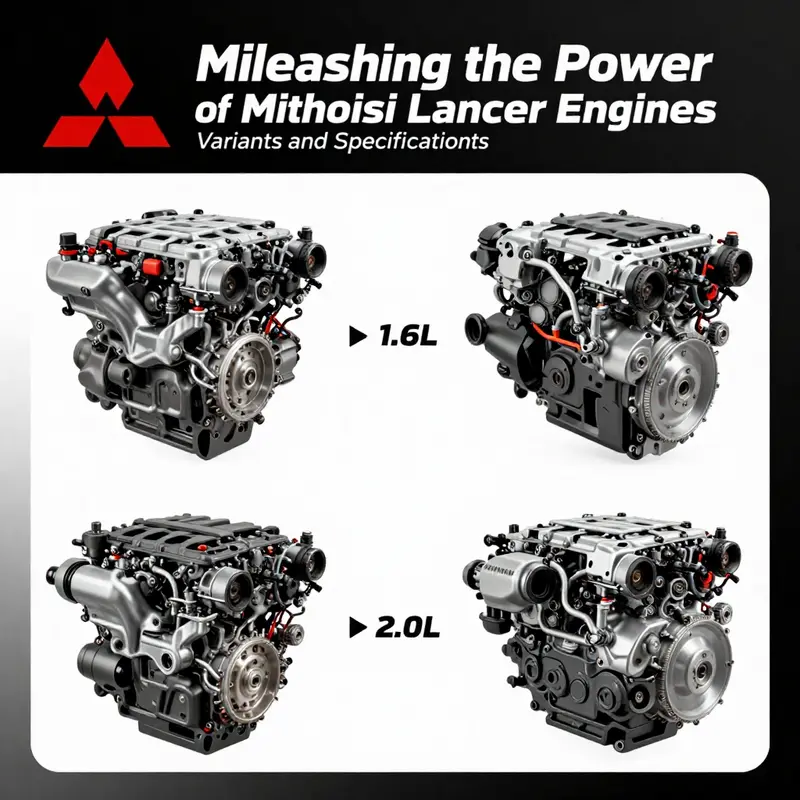
Within the Lancer family, MIVEC appears in a spectrum of configurations designed to meet diverse customer needs. The 1.6-liter 4B11 MIVEC represents the archetype of compact efficiency. It is a compact four-cylinder engine that prioritizes lightness, smoothness, and economical operation—an urban companion whose power output sits in a comfortable band for city duty, but whose MIVEC timing strategy still delivers a surprisingly linear and predictable experience when the road turns. The engine’s ability to optimize the intake flow at low and mid-range speeds means that daily driveability remains a strength, with practical torque available early and a broad usable range that makes freeway merges less stressful and more assured. In terms of fuel economy, this configuration typically achieves a balance that keeps running costs predictable and low enough to appeal to the practical-minded buyer who values reliability and efficiency. The MIVEC system here is tuned to make the most of light-load operation, sipping fuel with a patience that suits the urban rhythm while still preserving the potential for spirited acceleration when needed.
Moving up a notch in displacement, the 2.0-liter naturally aspirated variant of the same family offers a broader, more flexible performance envelope. It is widely regarded as the most balanced choice across the Lancer lineup because it merges sufficient power for comfortable highway cruising with respectable fuel economy. In this setup, MIVEC continues to demonstrate its strength: the ability to adjust valve timing as driving conditions shift, smoothing throttle response and delivering linear torque throughout the midrange. The engine’s responsible middle ground becomes apparent when you consider typical family usage—commuting, errands, weekend road trips—where the vehicle benefits from a steady, predictable power delivery rather than abrupt surges or deep surges in consumption. The MIVEC control strategy supports this balance by prioritizing complete combustion and stable efficiency through part-throttle operation, minimizing emissions and reducing operating costs over many thousands of miles. The synergy between intake-valve control and exhaust-side efficiency is not accidental; it is the logical outcome of a system designed to harmonize performance with practicality.
The most conspicuously performance-oriented member of the MIVEC lineup is the 2.0-liter turbocharged variant that has long been associated with high-performance Lancer iterations. In this configuration, MIVEC is paired with forced induction to unlock a much more aggressive response—yet still underpinned by the same core principle of precise, real-time valve control. The turbocharged 2.0-liter engine leverages MIVEC to manage boost-induced stress and to maintain efficiency across a wider operating range. The result is an engine that can deliver strong, linear acceleration when the throttle is pressed, while the valve-timing strategy preserves good fuel economy when the car is cruising and the exhaust aftertreatment system is handling emissions with efficiency. For drivers who relish a more dynamic experience—the rapid response, the rush of torque as the turbo spools—MIVEC ensures that those characteristics are not achieved at the expense of daily usability. The system’s adaptability is especially valuable here, because turbocharged engines tend to operate across a wider set of conditions where valve timing and lift must respond quickly to changes in load and RPM. The Lancer Turbo’s MIVEC approach is a careful calibration of high-performance tendency and dependable efficiency, enabling a broader portion of the power band to be usable without forcing the engine into harsh, intrusive control actions.
The narrative of MIVEC would be incomplete without acknowledging its historical context and its influence on the Lancer’s broader engine lineage. The evolution of the Lancer’s powertrain is a story of how a compact car stretched the boundaries of what could be expected from a small, efficient four-cylinder engine. Within the Mitsubishi engineering tradition, MIVEC is not a mere feature; it is a strategic capability that informs cylinder pressure, combustion stability, and exhaust chemistry in a cohesive manner. When engineers designed the MIVEC system, they aimed to deliver a consistent set of benefits across the entire range of modeling options—the 1.6, the 2.0 NA, and the 2.0 Turbo—so that the driver would experience coherent characteristics whether the car was in downtown traffic or on a long highway stretch. The beauty of such a system lies in its transparency: drivers feel the benefits not as disjointed performance peaks but as a natural, seamless improvement in efficiency and driveability. The engine becomes more than a bundle of moving parts; it becomes a living control system that responds to the driver’s needs, the road’s demands, and the environment’s constraints.
From an engineering standpoint, the MIVEC architecture represents a sophisticated integration of electronic control, mechanical design, and fluid dynamics. The intake-valve timing is coordinated with precise oil-pressure control and mechanical linkages to ensure that valve-lift is not only accurate but durable across millions of engine cycles. The ECU’s decision logic relies on a sensor suite that captures the engine’s state in real time, converting data into timing commands that optimize air-fuel mixing and combustion efficiency. This creates a chain reaction of improvements: more uniform combustion, reduced knock risk, cleaner exhaust, and better throttle response. The reduction in emissions is not achieved by a single technique alone; it emerges from optimizing the entire cycle—intake air velocity, mixing accuracy, combustion efficiency, and post-combustion processes—so that each stage complements the others. In practice, that means fewer unburned hydrocarbons, more complete oxidization of fuel, and an overall decrease in the pollutants typical of internal combustion engines. In regions where emission standards are strict, such as urban European and North American markets, MIVEC’s contribution to cleaner operation is as important as its contribution to performance.
The way Mitsubishi has woven MIVEC into the Lancer’s identity highlights a broader design philosophy: engine technology should be accessible in day-to-day driving while also offering a platform for enthusiasts to explore higher-performance variants. The Lancer’s 1.6, 2.0 NA, and 2.0 Turbo engines illustrate a spectrum of user needs. A family with a growing number of miles on the odometer might choose the 2.0 NA for its balanced blend of power and fuel economy, enjoying a predictable, linear throttle without the need for aggressive tuning. A sportier set might lean toward the turbocharged variant, where MIVEC’s intelligent timing helps manage the turbo’s surge and keeps the engine from choking during rapid throttle inputs. Yet even in the city’s stop-and-go traffic, the system’s low-load operation—swirl induction and controlled, efficient combustion—translates to a meaningful improvement in fuel economy. That is the signature achievement of MIVEC: it makes the engine feel more sophisticated without demanding extraordinary discipline from the driver.
For readers who want a deeper technical immersion, the core concept rests on three pillars: valve-timing intelligence, lift control, and real-time orchestration by the ECU. At the heart of the mechanism is a hydraulic or electronically actuated system that modulates camshaft phasing and the valve-lift profile. This is not simply about opening a valve earlier or later; it is about sculpting the air’s path into the cylinder, shaping the air’s swirl, and controlling the engine’s breathing in ways that align with the combustion chamber geometry and fuel delivery. The interplay of intake and exhaust dynamics, boosted by the combustive efficiency, translates into improved torque across the rev band. In summary, MIVEC is a technology designed to deliver continuity: consistent throttle response, stable idle, and a driving experience that feels both refined and responsive.
The Lancer’s engine architecture also reflects a thoughtful approach to maintenance and durability. While enthusiasts discover the joys of tuning and aftermarket enhancements, the factory design emphasizes long-term reliability and predictable performance. The MIVEC-controlled engines are engineered to withstand the rigors of everyday use and occasional spirited driving, with robust valvetrain components and engineered tolerances that keep friction to a minimum while maintaining precise control across temperature fluctuations. The overall result is a powertrain that remains dependable across years and miles, a crucial consideration for buyers who depend on their car for daily transportation and weekend adventures alike. The technology’s adaptability—how it scales from the 1.6 to the 2.0 to the turbo—reinforces the Lancer’s broader market strategy: to offer a family-friendly car that can still satisfy drivers seeking engaging dynamics.
In sum, MIVEC in the Lancer represents a successful marriage of physics and software. The physical act of valve timing is augmented by a control system that learns from operating conditions and translates that information into precise mechanical actions. The observed outcomes—enhanced power delivery with a smooth, linear character; improved fuel economy at low and mid-range loads; lower emissions through better combustion completeness; and the adaptability to different driving scenarios—are not accidental side effects but deliberate consequences of a well-conceived control strategy. The Lancer’s engine lineup, with its distinct yet related MIVEC applications, demonstrates how a single technology can underpin a family of powerplants designed to meet a broad spectrum of consumer needs. It is this coherence across the engine spectrum that helps maintain the Lancer’s relevance in a world where efficiency, performance, and emissions are increasingly interwoven in the fabric of everyday driving.
For readers who want to explore more about how MIVEC integrates with the engine’s oil circuits, electronic control logic, and mechanical components, there is a comprehensive guide that dives into the nuances of this technology. Enthusiasts often reference detailed schematics and performance analyses when considering upgrades or restorations. Within the community of Lancer and Mitsubishi engine enthusiasts, some look at upgrade paths that remain faithful to the original design ethos while exploring enhancements. One such avenue, occasionally discussed in user communities and vendor catalogs, is the potential of performance-oriented components that align with MIVEC’s timing strategy, such as a billet-block option for turbo variants. This is a reminder that the technology’s value extends beyond raw numbers; it serves as a platform for learning, customization, and careful engineering choices that respect the engine’s architecture. For those who want to deepen their understanding, a reliable starting point is the official guide to MIVEC that explains the core concepts, the electronic control approach, and the practical implications of valve-timing optimization. Mitsubishi MIVEC Engine Guide.
As the Lancer’s lineage attests, MIVEC is more than a feature; it is a foundational capability that enables the car to perform across a wide range of conditions without demanding concessions from the driver. The engine’s evolution—from compact, city-focused efficiency to balanced mid-range performance, to the heightened capability of turbocharged variants—illustrates how a single technology can be deployed to support a family of powerplants that address diverse lifestyles. In the end, what makes MIVEC so compelling is not just the promise of better numbers on a spec sheet, but the tangible experience of a car that feels right at home whether you are negotiating a crowded urban corridor or chasing the adrenaline of a twisty back road. This is the essence of the Lancer’s engineering philosophy: to provide a propulsion system that is versatile, reliable, and engaging—a combination that continues to shape perceptions of what a compact car can be.
For those who want to trace the lineage of the Lancer’s powertrain improvements more concretely, a number of technical resources and community-driven write-ups offer deeper explorations into MIVEC’s operational principles and its integration with the broader engine architecture. These discussions illuminate how timing strategies interact with fuel delivery, ignition control, and exhaust management, creating the harmonious performance that owners experience every time they turn the key. The Lancer, with its MIVEC-enhanced engines, remains a compelling case study in how a modern valve-timing system can deliver a meaningful blend of excitement, economy, and responsibility—an enduring reminder that sophistication in engineering can translate into a more satisfying driving experience.
Internal link reference: Some enthusiasts interested in performance-oriented rebuilds and blocks may explore options such as a dedicated billet-block upgrade for turbo variants. See this resource for context: 4B11T billet block. 4B11T billet block.
External resource for deeper understanding: Mitsubishi MIVEC Engine Guide. Mitsubishi MIVEC Engine Guide.
null
null
Lancer Engine Heritage: From 4G63T to MIVEC Era
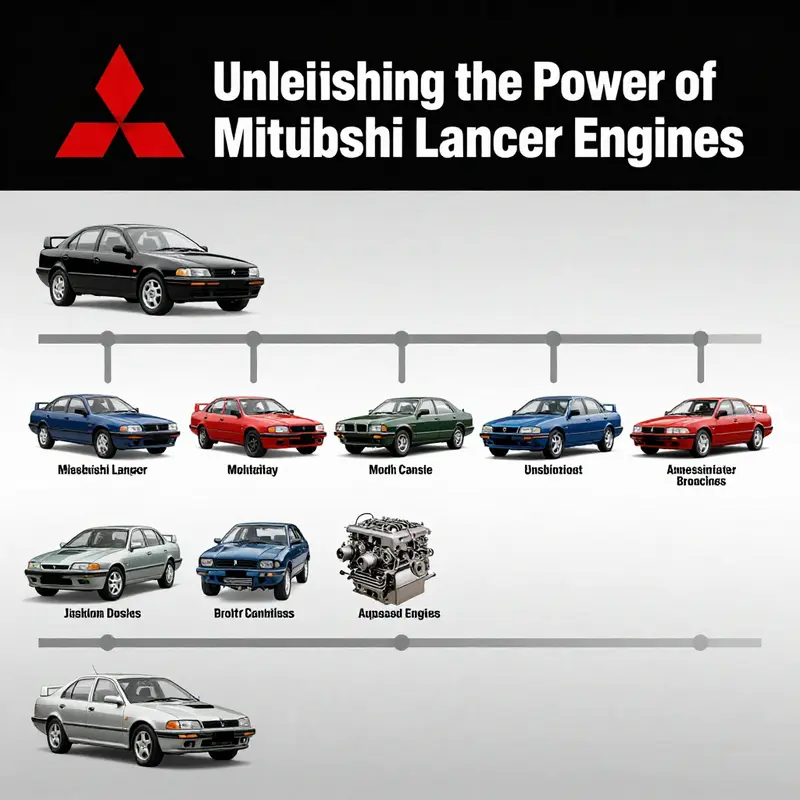
The Lancer’s engine family traces a history of balance between everyday practicality and performance. From the 4G63T turbo tradition that underpinned the Evolution you could tune for rally and road, to modern MIVEC-equipped 2.0-liter variants that aim for both responsiveness and efficiency, Mitsubishi crafted engines that could be used daily while still offering excitement on demand. The narrative emphasizes durability, tunability, and a design philosophy that keeps the Lancer relevant as technology and emissions standards evolved. This chapter sketches the arc from turbocharged legend to modern variable-valve efficiency, and how that engine philosophy shaped the car’s driving character and cultural footprint.
Final thoughts
Understanding the Mitsubishi Lancer engine means appreciating its rich blend of technology, performance, and history. The unique MIVEC system provides notable benefits that enhance both efficiency and drivability, making it a top choice for diverse driving needs. The range of available engine variants caters to different preferences, whether for economical commuting or exhilarating performance. Reflecting on the Lancer’s evolutionary journey underscores its significant impact on the automotive scene, positioning it as a trusted vehicle among business owners and enthusiasts alike. This overview reveals why the Mitsubishi Lancer engine continues to be synonymous with reliability and innovation.