

The Mitsubishi Lancer Evolution, known simply as the EVO, represents more than just a line of high-performance vehicles; it is a cultural icon in the automotive world. Central to its formidable performance is the 4G63 engine, a legendary powerhouse that has redefined performance standards and racing dynamics. The 4G63 is not just any engine; it has propelled nine generations of the EVO, showcasing its evolution from a stock powerhouse to a tuner’s revolution. This article delves into the heart of the 4G63, examining its remarkable engineering and performance dynamics that captured the imaginations of racing enthusiasts worldwide. Additionally, we will explore the lasting impact of the 4G63 on the automotive industry, providing business owners with insights into how this engine has influenced vehicle performance and brand loyalty.
Evolution 4G63: The Heartbeat That Forged a Street-Fighting Legend
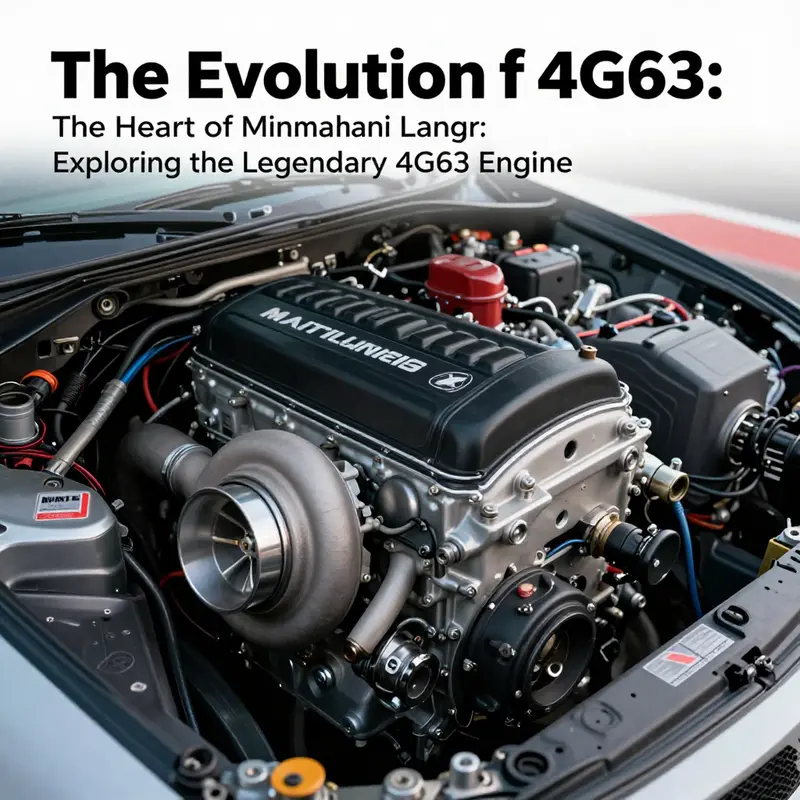
The 4G63 engine didn’t merely power a car series; it gave that series a pulse. Across the early years of the rally-bred sedan, the turbocharged 2.0-liter four-cylinder carved a niche where brutal torque meets unflinching reliability. Its long-stroke architecture and iron block underpinned a philosophy: build gear that can survive the fiercest abuse on the stage and still deliver, repeat, and repeat again. In this sense, the Evolution IV was not just an upgrade but a crystallization of a central idea—engineered toughness tuned for acceleration, cornering, and endurance. The heart of the car, the 4G63T, carried the weight of expectations that extended far beyond horsepower figures. It had to respond with immediate surge, sustain high boost under demanding loads, and survive the punishing rhythm of rally stages that demanded more than sheer speed; they demanded stamina. And while the official numbers were buffered by the era’s gentleman’s agreements, the real-world character of the engine spoke a different language—one of torque that gripped the pavement and torque that kept pulling through the long, unforgiving midrange. The result was a power delivery that felt almost geological in its consistency: a broad surge that did not fizzle as revs climbed, but instead maintained a brutal dignity as the car dug its way through bends and straights alike.
The Evolution IV, launched in 1996, was a clear inflection point in this saga. The core remained the robust 2.0-liter DOHC turbocharged block, but the turbocharger received an important update. The TD05H-16G6-7 unit brought sharper response and higher peak boost, enabling a more eager midrange. That boost, combined with refined internals and improved breathing, delivered torque numbers that etched themselves into touring and rally lore. Official claims hovered around a modest 280 PS, a consequence of the era’s regulatory atmosphere, yet the practical performance told another story. Real-world utilization of the 4G63T repeatedly demonstrated torque in the upper 390 to near 400 Nm bracket, a figure that translated into a muscular, almost relentless pull even when the revs hovered at the mid-range. The on-paper limitations did not dampen the engine’s ability to haul a compact, purpose-built performance sedan forward with authority. It was the kind of power that required a driver’s restraint more than a driver’s appetite, because the chassis and the traction system were designed to exploit that torque with surgical precision.
From the moment you pressed the throttle, the engine’s character came alive in a way that felt almost cinematic. There was a linearity to the power curve that rewarded discipline and timing. The 4G63T’s torque arrived in a smooth, confident wave, and the car responded with a confidence that was hard to miss on a winding road or a twisty stage. This is part of what made the Evolution IV such a decisive step forward: it didn’t just accelerate faster; it did so with a sense of control that gave the driver a tangible sense of partnership with the machine. The turbo’s surge was not abrupt or spiky; it was a steady, almost purposeful force that pushed the car forward with one consented breath. The engine’s architecture—the iron block, forged crank, and strong connecting rods—was designed to weather sustained boost and high stress, even when the torque was being delivered repeatedly under heavy load in high-stress racing scenarios. This durability wasn’t a marketing line; it was a practical advantage that translated into real-world resilience on rally stages, on long-distance endurance runs, and on track days where temperatures, gears, and tires demanded a lot.
The Evolution IV’s vitality extended beyond the engine itself. The chassis and suspension team amplified the car’s sense of balance with more rigidity, thanks to additional welding points and strategic reinforcements. A stiffer backbone meant sharper steering response and more precise feedback through the seat and steering wheel, allowing drivers to exploit the engine’s torque with greater confidence. The suspension tuning—soaked in fine-tuning from road to rally—offered improved control, better bump absorption, and a more predictable attitude when the road surface turned from smooth asphalt to coarse tarmac and back again. Aerodynamically, the package was refined for higher downforce at speed, with a larger front splitter drawing air toward the underbody and a redesigned rear wing that hummed with torque through the rear axle at high velocities. The result was a car that could stay glued to line and apex while the engine delivered its torque, a configuration that rewarded both the bravest and the most patient drivers alike.
What made the Evolution IV particularly compelling was not merely the sum of parts, but the way those parts worked in concert. A 4G63T that could offer broad torque, a chassis that tolerated the weight of that torque with rigidity and balanced handling, and a drivetrain that could distribute power effectively across the four wheels created a dynamic platform capable of carving decisive lap times and conquering even the most punishing rally stages. The all-wheel-drive architecture, while improved in later generations, already demonstrated that the challenge of high-speed stability on gravel and tarmac required more than raw horsepower. It demanded an intelligent distribution of torque, a keen sense of how that torque would shift between the front and rear axles, and a mind for how to preserve traction through corners when the surface could change in a heartbeat. The Evolution IV’s mechanics answered those questions with a quiet, workmanlike confidence. It didn’t seek spectacle through pure noise. It sought momentum through calculated, repeatable behavior that could be trusted when the road grew uncertain.
In the broader story of the 4G63’s evolution, the IV’s triumph was a reaffirmation of a design philosophy that had already proven its worth on stages around the world. The engine’s signature was not only power; it was endurance, reliability, and a surprising adaptability. It could endure the heat of multiple rally runs, the vibrations of off-road surfaces, and the meticulous demands of tuning culture that sought to coax more from less. The 4G63’s capacity for improvement—whether through turbo upgrades, intercooling enhancements, or ECU calibrations—helped the platform stay relevant as regulations and competition evolved. The result was a legend that could be described in torque and temperature as much as in horsepower. In this way, the Evolution IV did not just advance a vehicle; it reinforced an engineering lineage that valued durability just as much as speed, a principle that would continue to echo through each successive generation of the model.
For readers seeking a tangible sense of how such a synergy came together in a contemporary context, one can imagine how a modern build might assemble around the core philosophy of the 4G63. A complete engine package for a late-90s to early-2000s Evo-4/9 setup would bring together the block, sleeved sleeves, a high-flow head, and a turbo system designed to mesh with an intercooler capable of keeping charge temps in line under sustained boost. The idea was never to push a single figure to the limit but to sustain momentum across many laps, many miles, and countless corners. A practical pathway to that experience is crystallized in the idea of a ready-to-assemble engine kit, which, in imagined terms, would provide the essential components to re-create the familiar torque curve and the linear thrust that defined the era—an invitation to feel the same gravity of acceleration that the original cars delivered. Evo-4/9 complete 4G63 engine kit.
As the years advanced, the suite of technologies around the 4G63T matured in parallel with the DNA of the Evo itself. The early generations laid the groundwork: a turbocharged engine paired with a robust platform, a drivetrain designed to justify the engineering risk with measurable performance gains. Later iterations refined the control systems, elevated the chassis’s stiffness, and integrated more sophisticated aerodynamics to extract still more speed from the same fundamental architecture. And through it all, the 4G63T remained a symbol of how power, control, and resilience could be fused into a single, coherent performance identity. It was a recipe that rewarded those who understood that speed without stability is a missed opportunity, and that stability without the raw feel of torque is a sterile achievement. The Evolution IV’s legacy lies precisely in this synthesis: the moment when the engine’s character and the car’s handling came together to deliver a driving experience that could be trusted, enjoyed, and, above all, remembered.
If one were to trace the cultural footprint of this engine, it would extend beyond the race tracks and into the garages of enthusiasts who learned to respect its limits and to coax more from less through careful tuning. The era produced a cadre of stories about reliability under pressure, about the ease with which enthusiasts could realize genuine performance gains through thoughtful modifications, and about the discipline required to maintain such a high-spirited machine in daily use. The allure wasn’t solely about peak figures; it was also about midrange strength, the sense of a machine that would surge forward with every push of the accelerator, and the confidence that came with knowing the drivetrain would behave in a predictable, nearly telepathic manner under stress. It was, in short, a vehicle that taught drivers to listen to the engine, respect its demands, and still expect more—year after year, track after track, mile after mile.
This is the reason the 4G63’s story remains more than a technical footnote. It is a narrative about how a single powertrain, designed with pragmatic durability at its core, could define an entire generation of performance cars. It is a chapter in which engineering choices—long-stroke geometry, forged internals, a robust turbo, and a drivetrain capable of intelligent torque distribution—translated into a driving experience that felt almost inevitable once you learned the car’s language. The Evolution IV didn’t just win races or set records; it established a benchmark for what a 2.0-liter turbocharged four could become when the car was tuned to the task, when the chassis was reinforced to handle the load, and when the driver trusted the machine to translate ambition into unstoppable momentum.
The evolution of this engine continues to be celebrated by collectors and fans who understand that the heart of a legend is a combination of architecture, calibration, and the culture that grows around a great performance machine. The lore of the 4G63T is inseparable from the era’s rally competitiveness and the way it defined a market segment that valued a certain rough-edged purity—a purity that didn’t apologize for its torque or its tenacity. The engine’s legacy persists in the way modern enthusiasts discuss tune potential, durability, and the dream of building a car that could behave as reliably on a public road as it did on a stage in a global rally championship. In memory, the red-headed turbo four still commands respect, not only for what it did but for how it redefined what a four-cylinder could become when engineering courage, endurance, and a rigorous devotion to performance converge.
For readers who want to explore further the historical context and the exact specifications that shaped this chapter of performance car history, the Evolution IV remains a touchstone. It is not merely about horsepower numbers or corner speeds but about the philosophy of building a machine that can survive and excel in the world’s toughest environments while delivering an exceptionally engaging driving experience. The engine’s blend of torque-rich driveability, mechanical strength, and tuning potential exemplifies a design that sought to balance aggression with reliability. It is this balance that continues to inspire the next generation of builders and drivers who still look back to the IV as a reference point for what a truly capable turbocharged four can achieve when placed in a chassis that understands the value of grip, balance, and momentum.
External resource: https://en.wikipedia.org/wiki/MitsubishiLancerEvolution_IV
Iron Heart, Turbo Soul: How the 4G63 Shapes Evolution Performance
Iron Heart, Turbo Soul: How the 4G63 Shapes Evolution Performance
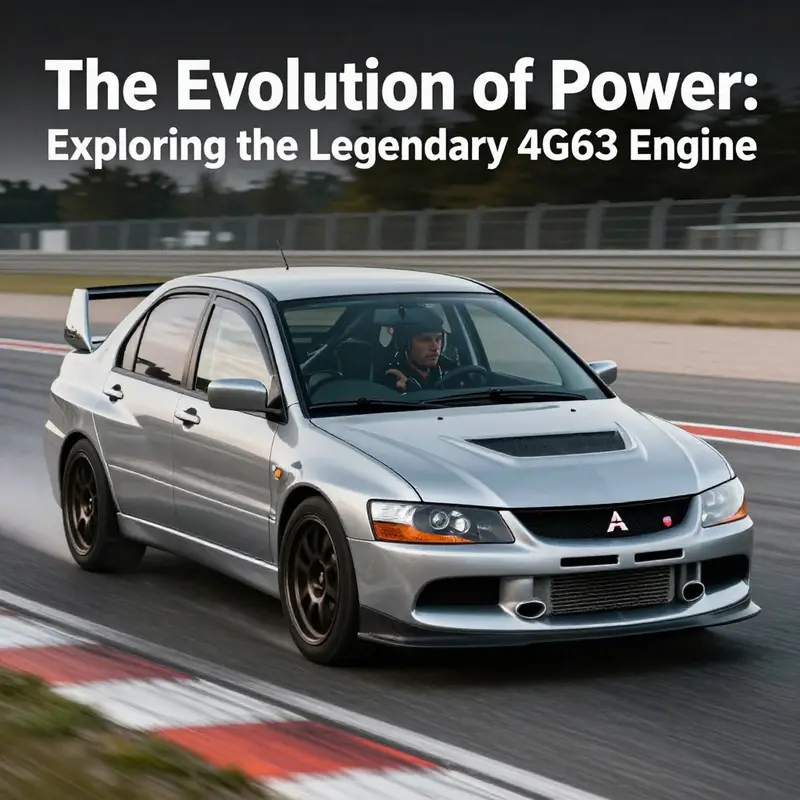
The 4G63 is not merely an engine in a performance car. It is the mechanical manifesto behind an entire approach to speed and control. Its character comes from engineering choices that favor longevity under stress, predictable torque delivery, and extreme tunability. Those choices define the performance dynamics that made the engine legendary in rally stages and road circuits alike. This chapter traces how cast-iron strength, valvetrain efficiency, turbocharger pairing, drivetrain integration, and pragmatic upgrade paths collectively forged the 4G63’s behavior on pavement and gravel.
At the core of the 4G63’s dynamic personality is its cast-iron block paired with a closed-deck design. The iron block is heavier than modern aluminum counterparts, but that weight buys unmatched mechanical stability. The closed-deck reduces cylinder distortion under high pressure. Together, these features let the engine handle sustained boost with less fear of warped decks or cracked sleeves. In practice, that translates to an engine that can be pushed past typical road-car limits. Builders routinely run well over 2.0 bar of boost without structural collapse. This is why high-output builds that exceed 500 horsepower in largely stock bottom ends exist, and why some properly fortified examples approach four-digit figures without wholesale reinvention of the platform.
The 4G63’s internals reflect a similar priority: durability and predictable fail-safe margins. The factory crankshaft, rods, and pistons were designed to survive the continuous abuse of competitive use. Early versions featured robust forging where necessary, and even later variants maintained generous safety factors. That baseline strength enabled owners to adopt incremental upgrades with confidence. A set of forged pistons, uprated connecting rods, and a balanced crank is often enough to support a large turbo and high boost. Builders can stage changes, watching how the engine responds, instead of leaping into full rebuilds.
Valve train and breathing are central to the engine’s real-world dynamics. The DOHC 16-valve layout optimizes intake and exhaust flow across the rev range. This yields responsive throttle behavior and efficient combustion once the turbo is on boost. In low and mid RPMs, the long-stroke geometry favors torque over peak rev power. The result is an engine that feels stronger where road-driving and rally stages demand it — off the line and through mid-corner acceleration. The breathing is further improved through careful manifold and turbo pairing. Twin-scroll turbos, and later compact high-efficiency units, exploit exhaust pulse energy well, reducing lag and sharpening spool characteristics. With the right turbine housing and compressor match, the 4G63 delivers a mostly linear power curve that rewards progressive inputs.
Turbo response is a decisive part of the engine’s personality. The factory turbo choices were designed to balance spool and top-end power, but the platform truly comes alive with modern turbo technologies. Twin-scroll designs isolate exhaust pulses to improve transient response. Newer high-efficiency turbos provide a broader torque band, while advanced materials reduce rotating inertia. Upgrading to a carefully selected turbo can convert the 4G63 from a lively street engine into a track-focused power plant, without losing day-to-day tractability. That makes the 4G63 rare: it scales gracefully. Owners can keep a car usable for daily driving and still extract race-car performance on demand.
Fueling and engine management are equally crucial to the dynamic envelope. The platform responds dramatically to proper fueling and timing. High-flow injectors and a robust fuel pump remove a common bottleneck in high-boost builds. Precision fueling minimizes detonation risk and stabilizes cylinder pressures. On the management side, stand-alone or piggyback systems allow users to manipulate boost, timing, and fueling maps precisely. When matched with knock monitoring and closed-loop corrections, these systems let a heavily modified 4G63 run reliably at power levels that would have destroyed lesser-managed engines.
Beyond the engine itself, the vehicle-level components determine how that power is delivered. The 4G63’s integration with a full-time all-wheel-drive system amplifies its effectiveness. Instead of dumping torque only to the front or rear, a balanced AWD layout communicates the engine’s output to four tires simultaneously. This has two implications. First, it improves traction and reduces wheelspin, allowing for more aggressive boost and throttle application. Second, it smooths power delivery during cornering. Systems that include active torque distribution refine handling further. Modern iterations use electronically controlled differentials and yaw control to shift torque between axles and sides quickly. The combination of a torque-rich engine and a responsive AWD platform yields corner exit speeds that rival much more powerful rear-drive cars, simply because the car maintains grip when others slide away.
Another strength of the 4G63 package is predictability under race conditions. Rallying and endurance events demand continuous, repeatable performance across many stages. The engine’s thermal stability, mechanical resilience, and ease of service meant that teams could run extended high-stress sessions without catastrophic failures. Proper cooling — larger radiators, high-capacity oil coolers, and thermostatic control of idle and fan behavior — is required as power climbs. But the baseline design makes these upgrades straightforward and effective. For many teams and privateers, the 4G63 was the sensible option: strong enough to win, simple enough to fix between stages.
No high-performance engine is flawless, and the 4G63 has a few well-known weak points. Issues like crankshaft end play and balance shaft bearing wear can surface in high-mileage or high-stress engines. Head gasket integrity becomes critical as boost climbs, especially on engines that keep stock heads. These are manageable problems when anticipated. Mechanical fixes range from shimming to full swaps to billet modifications. Head gasket choices, torque patterns, and head studs can eliminate repeat failures. Removing or upgrading balance shaft components is a common path for high-power builds. The guiding principle is to address these points before they become race-ending faults. A properly prepared engine demonstrates the same dependability that made the platform famous.
Tuning philosophy with the 4G63 leans toward incremental, measured changes. The platform rewards conservative steps because the stock architecture is already overbuilt. Increasing boost, upgrading injectors, and improving intercooling often come first. Then, as fueling, ignition, and heat control are secured, stronger internals follow. This staged approach achieves high power while minimizing downtime. It also preserves drivability. One of the 4G63’s hallmarks is that even high-output cars maintain a usable low-end. That makes the engine a favorite among enthusiasts who want a capable weekend race car that remains civil on city streets.
The aftermarket ecosystem is another dynamic factor. An abundance of parts supports nearly every build direction. Forged internals, high-capacity injectors, modern turbos, and standalone ECUs are all available in mature, well-documented forms. This broad support reduces development risk. Builders can consult extensive community data and professional guides to select parts and tune maps. That knowledge base shortens the time from concept to reliable power, and it prevents reinventing solutions that others have validated.
In how the 4G63 transfers its power, transmissions and driveline choice shape the driving experience. Manual gearboxes often pair best with the engine’s torque curve, allowing drivers to modulate boost through gear selection. Sequential gearboxes and upgraded clutches are common for track use, improving shift speed and reliability under high torque. Differential choice is equally impactful. Limited-slip and electronically controlled diffs keep power distributed efficiently between axles and wheels. With such systems, the engine’s torque becomes usable rather than merely impressive on paper.
Heat management deserves more attention than many enthusiasts initially give it. As power rises, so does thermal load. Intercooler efficiency affects intake temperatures and knock resistance directly. High-capacity oil cooling preserves viscosity in extreme conditions. Exhaust routing and heat shielding control underhood temperatures, protecting sensors and intake pathways. These measures are not glamorous, but they define whether a build succeeds or fails during extended hard runs.
What ultimately defines the 4G63’s performance dynamic is its combination of mechanical integrity and adaptability. It begins with an iron block that resists structural failure. It continues with a valvetrain and stroke that favor usable torque. It improves with turbo and intake choices that shape spool and peak power. And it finishes with drivetrain and cooling systems that allow that power to be exploited consistently. Each element influences the others, and the platform’s real genius is how smoothly they integrate. The engine does not demand extreme compromise; it enables progressive transformation.
That integrative quality explains the 4G63’s enduring appeal. Builders do not pursue it because it is the lightest or newest option. They pursue it because it gives a clear, repeatable path from street-friendly performance to extreme race capability. The engine’s faults are known and solvable. Its strengths are predictable and scalable. When a team or enthusiast plans a build, the 4G63 allows a realistic ladder of upgrades, each yielding meaningful gains. The predictability reduces the guesswork that plagues many high-performance projects.
Finally, the 4G63’s role in well-engineered AWD platforms amplifies its reputation. Power alone rarely wins on mixed surfaces; controllability does. An engine that delivers robust mid-range torque, when married to a responsive AWD system, produces a car that exits corners harder, recovers from slides more quickly, and sustains higher average speeds over a stage. That is why the 4G63 became synonymous with rally success and why it remains a favorite on track days. The sum of its parts delivers not just horsepower, but usable, contest-winning performance.
For builders wanting an authoritative technical reference, a comprehensive guide covers the engine’s variations, properties, and performance capabilities in detail. That resource provides engineering context and practical tuning advice for both road and industrial uses. (Source: https://www.motortrend.com/engines/mitsubishi-4g63t-engine-guide/)
For those looking to source a solid long-block as a starting point, there are preserved units from the platform era that provide reliable foundations. One such example is a genuine low-mileage JDM 4G63T long-block, which remains a common choice for restorations and high-performance conversions. A properly sourced engine reduces rebuild time and cost, allowing builders to focus on intelligent upgrades rather than remedial repairs. (See genuine JDM low-mileage 4G63T engine.)
A Legend Forged in Iron and Boost: The 4G63’s Enduring Impact on the Lancer Evolution and Performance Culture

A Legend Forged in Iron and Boost: The 4G63’s Enduring Impact on the Lancer Evolution and Performance Culture
The story of the 4G63 and the Lancer Evolution is not merely a technical chronicle. It is a narrative of engineering intent, motorsport pressure, and community devotion that together reshaped how enthusiasts view compact performance cars. The 4G63 — a 2.0 liter inline-four born from a conservative, robust engineering philosophy — became the beating heart of a rally-born icon. Its strengths were simple and immutable: a rigid iron block, stout internal components, predictable torque delivery, and a layout that rewarded tuning. Those traits aligned perfectly with the Evolution’s purpose. The car was designed to attack stages and highways with the same clarity of intent, and the engine’s character matched that ambition.
Under competition conditions the 4G63 demonstrated why mechanical resilience matters. A long-stroke design gave the engine a torque advantage in the midrange. That torque translated to real-world speed out of corners in rally stages. Forged crankshafts and rods meant the bottom end tolerated high boost and heat cycles. The iron block resisted warping and retained wall thickness under stress. These factors allowed engineers and tuners to raise pressures, swap turbines, and push timing, often without wholesale replacement of the engine block. Where many performance engines required frequent refreshes, the 4G63 stood as a platform meant to endure.
Its metamorphosis from a reliable naturally aspirated unit into a competition-focused turbocharged powerplant defined an era. Early versions provided dependable power. Mitsubishi’s engineering teams then layered DOHC heads, turbocharging, and intercooling to create the 4G63T. Those additions were not cosmetic. They fundamentally altered the engine’s performance envelope. The turbo forced air into the head, and the intercooler kept intake temperatures in check. Higher compression ratios and larger turbo housings improved spool and top-end power. Combined with tuned intake and exhaust plumbing, the result was an engine that produced usable power across a wide band. That trait was invaluable in demanding rally conditions, where surge-free response and consistent torque matter as much as peak horsepower.
When the Lancer Evolution III arrived in 1995, it showcased a 4G63 variant tuned for competition. A larger TD05 turbo and a higher compression ratio helped it reach output figures that blurred the line between production car and racecar. Engineers reinforced transmissions and driveline components to match the engine’s newfound vigor. Those reinforcements allowed the car to exploit the engine’s torque without sacrificing reliability. The result was immediate and visible on the WRC circuit. The Evo III and its successors helped secure wins and podiums. Those successes were not just trophies. They validated a design approach that emphasized robustness and tunability over exotic, high-strung configurations.
The 4G63’s success at rally events translated directly into desirability among privateers and tuners. A proven race engine is a safer bet for modification. People could buy a production engine that already had a record of surviving rally abuse. That track record created a secondary market for components, upgrades, and exchange engines. Tuners quickly learned how to extract incremental power through relatively modest changes. ECU recalibration, upgraded turbochargers, improved fueling, and enhanced cooling delivered significant gains. Many builds that began as mild street cars evolved into serious track weapons. Some owners approached 400 horsepower with bolt-on parts and maps. Others took the architecture further, building engines that approached four-figure outputs. The difference between those paths was often budget and intent, but the starting point remained the same: an engine designed to take punishment.
This adaptability turned the 4G63 into a cultural touchstone. It made the Evolution series accessible to drivers who wanted racecar performance without the prohibitive costs of bespoke engines. The engine became central to a DIY ethos. Enthusiasts swapped head gaskets, reworked intake manifolds, and experimented with cam timing. Online communities cataloged successful parts combinations and tuning strategies. Those shared experiences created a living archive of knowledge. They also fostered a sense of ownership. A tuned 4G63 was a personal statement as much as a technical achievement.
The Evolution itself evolved alongside its powerplant. Early models prioritized lightweight, nimble handling. Later generations incorporated advanced differential and traction systems. From the introduction of active center differentials to the adaptive yaw control systems, the driveline tech worked in harmony with the 4G63’s strengths. By distributing torque intelligently, these systems allowed drivers to use the engine’s torque more effectively. Corner exits became opportunities rather than hazards. The synergy between a torquey engine and a capable all-wheel-drive system elevated the driving experience beyond raw horsepower numbers. It produced cars that felt planted and communicative at the limit.
Limited editions amplified the lore around the 4G63. Special models commemorated championship victories and driver achievements. These cars often included tailored engine tuning, revised intake systems, and hardware aimed at sharpening response. Beyond spec upgrades, limited runs added an emotional value. They acted as trophies for the brand and as covetable artifacts for collectors. Many of those cars now command respect in auctions and private sales, not only for their rarity but for what they symbolized: a period when manufacturer-developed rally technology directly influenced road cars.
On the track and off it, the 4G63 proved exceptionally versatile. Rally cars needed torque and reliability. Time attack builds demanded high-revving power and consistent cooling. Drag racers wanted quick spool and strong midrange pull. The same engine architecture supported all these aims with varying degrees of modification. That versatility reinforced the engine’s legendary status. Tuners could repurpose parts from one discipline to another. Pistons, camshafts, and turbo housings found new life in hybrid setups. The marketplace for reinforced internals and bespoke turbochargers matured around those demands. That aftermarket ecosystem made radical builds achievable without starting from scratch.
Restoration and preservation now occupy a distinct space in the 4G63 narrative. As originals age, enthusiasts face choices: keep cars stock, refresh components, or modernize with newer technology. Many opt to preserve the engine’s character while improving reliability. Upgraded cooling systems, modern engine management, and improved gasketing techniques allow classic Evos to remain usable daily. The presence of a robust aftermarket means parts remain accessible. That continued support keeps cars on the road and in the public eye, ensuring that the 4G63’s story remains visible to new generations.
The engine’s influence extends beyond the automotive hobbyist scene. It altered manufacturer thinking about how to build accessible performance. The 4G63 illustrated that a well-engineered, durable platform could be both competitive and tunable. It shifted expectations around what a mass-produced engine could endure. Other manufacturers watched as the Evo platform conquered stages and circuits. They saw the value in combining accessible chassis design with an engine that invited modification. That ripple effect contributed to a broader market of performance-oriented compact cars.
Community reverence has another dimension: education. The 4G63’s prevalence made it a learning tool for aspiring mechanics and engineers. Working hands-on with a robust, tunable engine taught lessons about forced induction, heat management, and mechanical limits. Schools, clubs, and mentor networks often used the engine as a practical example. That educational role reinforced the engine’s cultural longevity because knowledge passed through generations of hands.
Even as platform changes marked the end of the 4G63 era in factory production, the engine’s presence did not vanish. Many swapped 4G63s into later chassis to combine old-school powertrains with modern components. Others rebuilt engines to higher standards than factory. The engine became a go-to candidate for restomods and bespoke builds. It lived on as a component and as a philosophy: the idea that performance could be achieved through proven, robust engineering.
Collectors and historians now discuss the 4G63 and the Evolution in similar tones. They speak of an alignment between machine purpose and mechanical character. They note how a simple, durable design yielded an engine capable of extraordinary outputs and racing triumphs. They point to the engine’s adaptability, its support network, and its role in shaping enthusiast culture. That commentary is not nostalgia alone. It reflects measurable outcomes: championship wins, aftermarket growth, and a continuing demand for the engine in swaps and restorations.
Today, the 4G63’s legacy continues in multiple forms. It remains a prized engine for restorations. It offers a reliable starting point for ambitious builds. It provides a reference for engineers studying the balance between durability and tunability. For many drivers, the engine retains an emotional pull. It represents a period when mechanical simplicity and ruggedness combined with intelligent forced-induction and driveline systems to produce exceptional performance. The memory of that combination persists in how enthusiasts talk about tuning, durability, and drivability.
For those seeking technical detail or historical verification, the manufacturer’s official documentation outlines the 4G63T’s specifications and applications. That resource is a useful reference for understanding the original engineering intent and the specifications that underpinned the engine’s success. Mitsubishi 4G63T Engine Guide
If you are exploring a period-correct engine for restoration, or a swap for a project build, there are still sources for used, low-mileage units and compatible components. For example, a listed genuine JDM low-mileage 4G63T captures the demand for original engines among restorers and tuners. Such offerings illustrate how the 4G63 remains a practical and cultural commodity.
The 4G63’s long shadow is an argument about values. It suggests that longevity, tunability, and straightforward engineering can matter as much as headline horsepower. It shows how motorsport success can translate to a living aftermarket and a durable enthusiast culture. And it proves how an engine built with clear priorities can outlast changes in fashion and technology, remaining relevant because people continue to use, tune, and celebrate it.
In that sense, the 4G63 did more than power cars. It powered a movement. It taught a generation of drivers and builders how to think about performance. It anchored a rally-bred legend that continues to shape how enthusiasts approach compact performance cars. The engine’s legacy endures because it combined real-world durability with a remarkable capacity for transformation. That combination made it a natural partner for the Lancer Evolution and a lasting icon in automotive history.
Final thoughts
The Mitsubishi Lancer Evolution and its 4G63 engine are synonymous with automotive excellence and relentless performance. As business owners in the automotive sector, understanding this legacy offers invaluable insights into customer preferences and brand loyalty. The 4G63 not only showcases what is possible in engineering but also represents a connection to an aspirational lifestyle for drivers worldwide. Embracing innovation while respecting tradition, the saga of the 4G63 continues to inspire both manufacturers and enthusiasts alike, ensuring that this engine will remain a reference point in discussions of automotive performance for years to come.