

The automotive industry is increasingly leaning towards high-performance solutions, and the 4B11T Long Block engine is at the forefront of this movement. Designed specifically for vehicles like the Mitsubishi EVO series, this engine offers a tantalizing blend of cutting-edge technology and mechanical prowess. Understanding its core features, market insights, reliability, and practical applications is essential for business owners looking to incorporate this engine into their offerings or for those interested in enhancing vehicle performance. Each chapter will delve into these themes, providing a comprehensive overview that empowers businesses to make informed decisions in a competitive sector.
Inside the 4B11T Long Block: Core Design, Strengths, and Performance Potential
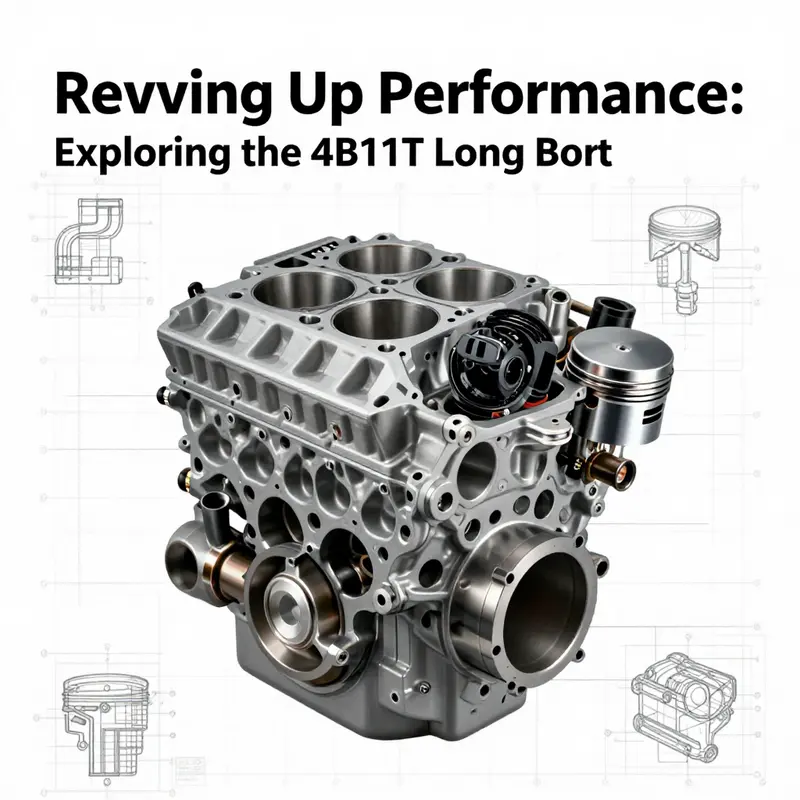
Long Block Core: What the 4B11T Brings to High-Performance Builds
The 4B11T long block is the structural and mechanical heart of a high-performance 2.0-liter turbocharged inline-four. It contains the essential internal hardware that defines how the engine behaves under load: the cylinder block and head, crankshaft, connecting rods, pistons, camshafts, and valve train. What it does not include are many external systems and accessories, such as the intake and exhaust manifolds, timing covers and belts or chains, oil pan, and ancillaries like alternators or pumps. That distinction matters because when a shop or an enthusiast buys a long block, they are purchasing a core assembly intended to be dressed, tuned, and integrated into a vehicle or test stand. The 4B11T long block is designed to tolerate high boost, high RPM, and aggressive tuning while offering a weight advantage over older designs.
At the foundation of the 4B11T long block is its aluminum construction. Both block and cylinder head are cast from lightweight aluminum. The benefit is twofold: a reduction in mass and improved vehicle dynamics. Compared to older iron-block turbo four-cylinder designs, the 4B11T cuts roughly 12 kilograms from the engine mass. That weight reduction improves front-end grip and handling balance. It also reduces rotational inertia associated with the engine as a whole, which subtly improves transient response during acceleration and deceleration.
Aluminum, however, is not a compromise in durability here. The long block employs cast iron cylinder liners that provide the wear resistance and heat tolerance required for boosted operation. These liners preserve ring sealing and bore integrity under repeated high-cylinder pressures. In performance builds, the combination of aluminum for mass savings and iron liners for durability is common because it optimizes the trade-off between weight and long-term reliability.
The internals of a performance 4B11T long block are built with strength in mind. Forged connecting rods and upgraded crankshafts are frequently used in high-output configurations. In stock or lightly modified cores, rod and main bearings are sized and fitted to factory tolerances to support daily-driving power levels. For heavy modification or motorsport use, builders typically specify forged pistons, uprated rings, and high-strength cranks. A common upgrade path is a billet or forged 4340 steel crankshaft, known for high fatigue resistance and the ability to withstand extreme RPM and torque. These hardened cranks reduce the risk of catastrophic failure during aggressive launches or sustained high-load runs.
The 4B11T head and valve train also reflect a performance-first design. Dual overhead camshafts operate 16 valves and are compatible with a variable valve timing system that helps refine torque delivery and peak power. The valvetrain geometry supports high lift and efficient gas flow, which are critical when pairing the core with modern turbocharging hardware. Valve springs, retainers, and valve guides are typically reinforced for builds that push past factory boost levels. Coil-on-plug ignition systems are commonly used for reliable, high-energy sparks during high-boost operation. Proper ignition energy prevents misfires, reduces detonation risk, and supports consistent combustion under aggressive tuning.
Turbocharging lies at the center of the 4B11T long block’s performance identity. Although a long block does not include the turbocharger itself, it is engineered to accommodate a turbocharged setup. Stock and aftermarket turbos that use twin-scroll housings offer improved spool characteristics and scavenging. The inherent turbo compatibility means the core can be upgraded progressively: a modest spool for street responsiveness, or a larger twin-scroll unit for midrange and top-end power. Internally strengthened components make the long block suitable for these stepped upgrades without the need for a complete short-block replacement.
Power potential is one of the most attractive aspects of the 4B11T long block for enthusiasts. With forged internals, advanced engine management, and supporting fueling and exhaust upgrades, well-built 4B11T short- and long-block projects have reached output levels far beyond factory ratings. Documented builds show the platform supporting power in the 500–700 horsepower range when combined with appropriate turbochargers, fueling, and tuning. Achieving those figures requires a holistic approach that addresses fueling capacity, intercooling, engine cooling, and drivetrain durability. Still, the long block core is the critical enabler because it defines the mechanical limits of how much cylinder pressure and RPM the engine can safely endure.
Thermal management and structural stiffness are other strengths of the long block. The block’s design includes reinforced main bearing caps and a four-bolt main cap configuration in performance-oriented variants. These features reduce crankshaft flex and maintain bearing alignment under high loads. Improved coolant flow passages and optimized head design help control combustion chamber temperatures. Keeping temperatures in check is essential for avoiding detonation and for consistent power delivery during repeated high-load runs or track sessions.
Engine management integration is vital with the 4B11T long block. Modern control systems, whether standalone or ECU-tuned OEM units, are required to manage boost, ignition timing, and fueling precisely. The long block is compatible with advanced engine management strategies that include boost-by-gear, closed-loop boost control, and ignition retard under pre-detonation conditions. For maximum output, a comprehensive calibration that accounts for compressor maps, intercooler efficiency, and altitudinal changes is necessary. High-energy coils and reliable fuel injectors work together to maintain combustion stability under the dense intake charges produced by turbocharging.
Beyond pure performance, the long block is used extensively in major repairs and engine replacements. When a core suffers internal damage from oil starvation, hydrolock, or catastrophic bearing failure, replacing the entire long block simplifies the rebuild process. For many professional shops, installing a verified long block saves labor time over machining and rebuilding a damaged block. For modifiers, a long block provides a clean baseline for planned upgrades, ensuring all internals meet tolerances and material specifications before higher-boost components are installed.
Sourcing a 4B11T long block requires attention to detail. Confirm the exact variant and intended fitment before purchase. There are natural aspiration and turbocharged versions of the same family, so ensuring the long block is the turbo-specific design avoids mismatches in oil galleries, head porting, and bearing selection. Purchasing from reputable suppliers or verified builders reduces the risk of receiving a mismatched or poorly prepared core. For those seeking billet or upgraded blocks, specialized vendors list reinforced billet blocks for ultimate strength in high-horsepower builds. Information and product options are often listed on specialized parts pages, such as the dedicated 4B11T billet block resource available online.
When planning upgrades, consider ancillary systems. The long block must be married to compatible oiling systems, pickup designs, and timing components. Some builders opt to retain the vehicle’s OEM oil pan and pumps if they are compatible. Others install secondary oiling or upgraded scavenge systems for high-G or sustained high-power applications. The timing system must be installed with correct tensioning and lifter geometry, as incorrect timing can lead to valve-piston interference and catastrophic mechanical damage.
Balancing and blueprinting are recommended steps when preparing a long block for high-performance use. Balanced rotating assemblies reduce vibration and bearing loads at high RPM. Blueprinting to exact tolerances ensures ring gaps, bearing clearances, and piston-to-wall measurements match the intended performance envelope. These precision steps increase reliability and allow the long block to reach higher power numbers while maintaining service life.
Practical precautions should guide any plan to increase power. First, ensure adequate fueling and cooling before raising boost. Second, maintain conservative compression ratios if planning very high boost levels or if using forced induction with higher exhaust gas temperatures. Third, use high-octane fuel and appropriate ignition timing to prevent detonation in boosted scenarios. Finally, plan for drivetrain upgrades; transmissions and differentials often become the next weak links once the engine output is increased significantly.
In sum, the 4B11T long block is a compact, robust foundation for high-performance builds. Its aluminum architecture offers weight savings, while cast iron liners and strengthened internals preserve durability. The assembly is tuned to work with turbocharging and modern engine management. For tuners and professional rebuilders alike, the long block represents a controlled, upgradeable platform. It removes unknowns from the bottom end of a build, letting builders concentrate on turbo selection, fueling, and calibration. For those seeking a reinforced core for aggressive power goals, consider upgraded crankshafts and billet blocks as part of a phased build.
For more information on billet block options and reinforced long block choices, see the 4B11T billet block resource. For a specific example of a high-strength crank option commonly used in these builds, refer to detailed product listings and specifications at the external reference below.
https://www.alibaba.com/product-detail/Performance-Billet-4340-Steel-Crank-Shaft1600831971248.html?spm=a2700.1.root.dtitle&productId=1600831971248
Power Routes: Navigating the Market and Supply Chain of the 4B11T Long Block
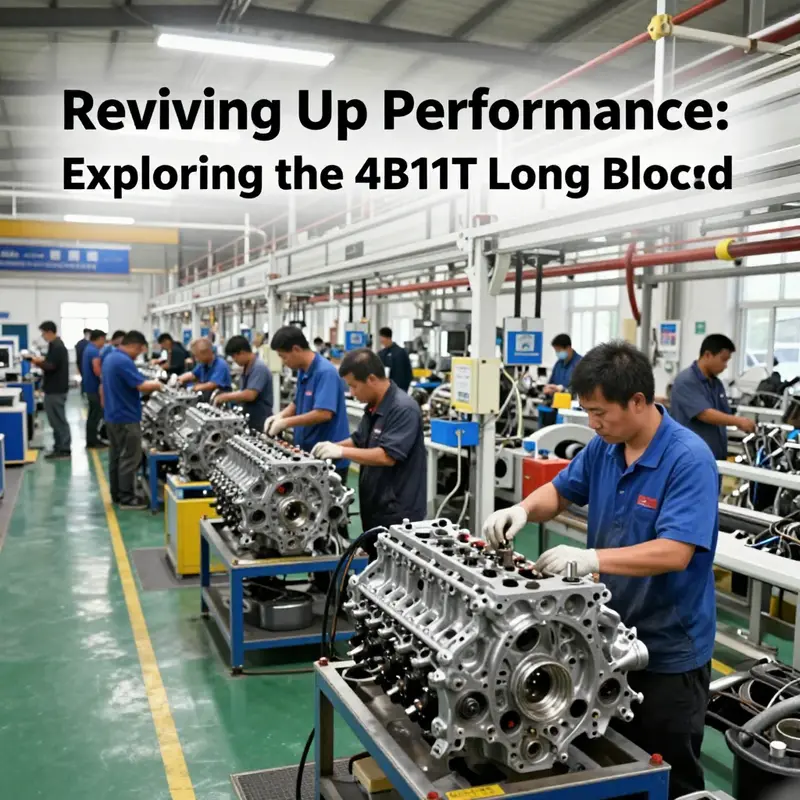
At the heart of high-performance propulsion sits the long block, a compact yet pivotal assembly that determines how well an engine can sustain power under demanding conditions. For the 4B11T, Mitsubishi’s 2.0-liter turbocharged lineage, the long block is more than a mechanical collection of parts. It is the anchor for reliability at high rpm, for the vigor of a turbocharged response, and for the effort of deep tuning that enthusiasts prize. The long block houses the core internals—the block, head, crank, rods, pistons, and other essential components—that must withstand heat, pressure, and the prolonged stress of boost. In this landscape, buyers do not simply purchase an engine module; they invest in a power platform that must integrate with a vehicle family known for its performance heritage, from the Evo models to other performance-oriented Mitsubishi lineups. The market responds to this with a robust, if complex, supply chain that reflects both global demand and the specialized nature of high-performance rebuilds.
The market dynamics for the 4B11T long block are driven by two intertwined forces: a steady thirst among performance enthusiasts for upgraded or replacement powerplants and the specialized needs of rebuild shops that must source core assemblies capable of withstanding high boost and rapid engine speeds. The turbocharged variant, with its roots in high-performance applications, offers a substantial leap in power and torque over naturally aspirated configurations. The long block provides the essential platform for delivering that performance potential. In practical terms, this means buyers seek a powerplant capable of handling sustained boost while maintaining structural integrity around critical areas such as the main bearing cap and the cooling passages. The result is a market that rewards balance—lightweight construction to improve vehicle dynamics, reinforced block architecture to endure higher cylinder pressures, and a cooling system optimized for the heat of turbocharged operation.
From a technical standpoint, the 4B11T long block embodies a selection of features aimed at performance without sacrificing durability. It integrates a dual overhead camshaft arrangement and a 16-valve configuration, with Mitsubishi’s MIVEC variable valve timing system to optimize intake and exhaust flow across a broad engine speed range. The aluminum construction contributes to an overall weight reduction, which translates into improved handling and quicker throttle response. Yet, even with light-weight design, the long block is engineered to handle the demands of turbocharged operation—high manifold pressures, elevated operating temperatures, and the need to maintain precise timing and valve control at high rpm. These design choices, in turn, influence how rebuilds or swaps are planned, what supporting components are needed, and which suppliers are trusted to deliver assemblies that conform to exacting tolerance standards.
Market demand for these long blocks is most visible in the hands of performance enthusiasts who push engines toward the limits and in the hands of rebuild specialists who rely on robust core units to execute precise overhauls. The long block is typically sought for engine rebuilds, performance upgrades, or for specialized maintenance work at professional repair facilities. The user base spans popular Mitsubishi performance platforms, including Evo iterations where turbocharged power delivery has become synonymous with sport-oriented driving experiences. In this context, the long block functions as a foundation for both reliability and potential power gains, a platform from which builders can tailor cam timing, boost strategies, and fuel delivery to suit specific performance goals. The market’s appetite is not merely for fresh units but for dependable cores that can serve as the starting point for meticulous, high-precision projects.
Understanding supply chains in this space requires recognizing the global nature of modern automotive components. A core long block is often sourced through networks that span multiple regions, with China identified in industry discussions as a central manufacturing and supply hub. This is driven by scale and cost efficiencies, along with the region’s capacity to support mass production and diverse configuration options. The result is a marketplace where buyers encounter a spectrum of offerings—from OEM-grade cores to aftermarket or remanufactured assemblies—each with its own implications for fit, finish, and longevity. Trade platforms operating on a global scale—such as widely used online marketplaces—facilitate access to a broad array of long blocks and performance kits, enabling buyers to compare options, weights, and included components. These platforms often present bundles that pair a long block with essential ancillary parts, such as timing components and VVT gear, expanding the convenience and value proposition for a rebuild project. The breadth of supplier activity is matched by a growing emphasis on quality assurance, with many vendors maintaining ISO 9001 certifications to reassure buyers about process consistency and component reliability across batches.
A pragmatic view of the supply landscape recognizes the importance of authenticity and build quality as critical risk factors. In a market where the line between OEM-equivalent cores and aftermarket or rebuilt assemblies can blur, careful verification becomes a core competency for buyers. The January 2026 buyer’s guide highlighted the importance of due diligence, urging purchasers to confirm the authenticity of parts, assess the quality of materials and workmanship, and understand the provenance of a long block before committing. This vigilance is essential in the 4B11T space, where mislabeling between the turbocharged variant and its naturally aspirated kin can lead to mismatched expectations regarding power, compatibility, and performance potential. It is also essential to evaluate the completeness of the kit—whether the long block is being sold as a standalone unit or as part of a more comprehensive package that includes timing belts or chains, camshafts, and VVT gears. The presence or absence of these items affects installation timelines and the reliability of the engine at the outset of a rebuild.
For researchers, hobbyists, and professional buyers, the procurement journey often begins with a straightforward question: what is the true configuration and spec of the unit being offered? In practical terms, this means confirming turbocharged status, bore and stroke details, the integrity of the crankshaft, and the condition of the cylinder walls and pistons. Buyers frequently cross-check serial numbers or consult with the supplier for factory documentation where available. Yet even with documentation, the risk of variances among aftermarket offerings remains, underscoring the need for due diligence that extends beyond paperwork. The long block market rewards buyers who demand traceable quality and consistent performance characteristics, particularly when the objective is to achieve reliable, high-boost operation over many miles of spirited driving.
The procurement path for the 4B11T long block often leads through diverse channels, and one practical reference point for many buyers is a dedicated supplier page that focuses on the long-block assembly. This resource serves as a practical catalog entry for those who want to verify configurations, compare inclusions, and communicate specific requirements to suppliers. For instance, a page dedicated to the 4B11T billet block provides a tangible starting point for discussions about core quality, material compliance, and potential customization. The availability of such dedicated cores reflects the market’s maturity and the willingness of suppliers to offer targeted solutions that address the needs of performance-oriented builds. It is important to approach these options with a clear set of criteria—material grade, machining tolerances, heat treatment, and the presence of ancillary components that can support a seamless upgrade or rebuild.
In the broader ecosystem, buyers also weigh logistical considerations such as lead times, shipping arrangements, and return policies. Lead times can vary with supplier workload and the complexity of the requested configuration, especially if a long block must be sourced with particular cam profiles or VVT gear configurations. Shipping arrangements become a practical matter when the assembly must be shielded from transport damage and handled with care due to torque-tolerant surfaces and precision-fit interfaces. Return policies, warranties, and stocking strategies influence the buyer’s risk profile, especially when the investment is substantial and the project timeline depends on the reliability of the core unit. The right balance of price, lead time, and reliability is rarely found by a single factor; instead, it emerges from a careful synthesis of supplier credentials, documented specifications, and real-world feedback from other rebuilders and workshop partners.
Within this web of choices, a subtle but important distinction remains: the 4B11T long block versus the standard 4B11 long block. The turbocharged variant represents a different calibration of internal tolerances, charging dynamics, and cooling demands. Buyers who are not explicit about the turbocharging status risk acquiring a natural-aspirated core, which can lead to mismatched expectations when planning boost strategies and engine management. This nuance reinforces the value of clear, direct inquiries during the sourcing process and a preference for suppliers who can explicitly confirm turbo-specific configurations. The market, while generous in access, rewards buyers who demonstrate a precise understanding of the engine family they are dealing with and who insist on documentation that reflects the exact variant being purchased.
As part of the procurement narrative, it is useful to consider practical ways to navigate supplier options without becoming overwhelmed by the breadth of offerings. One approach is to lean on vetted platforms and documented supplier capabilities, prioritizing those with demonstrable ISO 9001 certification and a track record of consistent part quality. The emphasis on build quality is especially salient because the performance edge afforded by a 4B11T long block is only as good as the reliability of the core when subjected to tuning, heat, and boost pressure. The market’s robust ecosystem supports rigorous selection criteria: authenticity verification, traceable manufacturing origins, documented machining tolerances, and a clear warranty or guarantee policy that translates into practical peace of mind during the rebuild or upgrade process.
For readers seeking a concrete pathway to explore certified options, one practical reference is the dedicated long-block page that highlights the 4B11T billet variant. The page, anchored in the provider’s catalog, offers a focused lens on core quality, available configurations, and the potential for customization. It serves as a tangible starting point for engineers and shop managers who want to verify exact specifications before committing to a purchase. This link acts as a bridge between theoretical market understanding and hands-on procurement decisions, illustrating how a well-structured supply chain supports the realities of performance-oriented engine work. <4b11t-billet-block>4b11t-billet-block In the broader sense, this is how the market accommodates the practical needs of high-performance builds: through targeted offerings that align precisely with the variant, reliability expectations, and the project’s technical goals.
In the end, the market for the 4B11T long block is a reflection of two values that define modern performance work: confidence in a core that can withstand aggressive tuning, and access to a supply network capable of delivering that core with clarity and accountability. The path from purchase to installation is shaped by due diligence, transparent communication, and an understanding that the long block is just the starting point. The rest of the build—boost strategy, fuel delivery, intercooling, and engine management—depends on the integrity of the foundation. Buyers who approach the process with a systems mindset, who verify variant specifications, and who respect the importance of documentation, will find a resilient market that supports ambitious performance goals while providing the reliability necessary for everyday use and weekend track sessions alike.
External resource: For deeper context on current supplier reliability and market dynamics, see the external listing on a widely used trade platform that aggregates 4B11 engine components, including long blocks and performance kits. https://www.alibaba.com/product-detail/Mitsubishi-4B11-Engine-High-Performance-Long_1600753841742.html?src=1600753841742&source=1600753841742&spm=a2700.100895.0.0
Built to Last: How the 4B11T Long Block Balances Strength, Serviceability, and Lifespan
Built to Last: How the 4B11T Long Block Balances Strength, Serviceability, and Lifespan
The long block version of the 4B11T is more than a parts package. It is the structural heart of a modern, turbocharged four-cylinder engineered for repeatable performance and measured durability. Where some high-output engines chase absolute peak horsepower at the cost of longevity, the 4B11T strikes a clearer balance. Designers prioritized robust internals, predictable failure modes, and ease of diagnosis. The result is an assembly that can serve as a dependable replacement, a solid foundation for upgrades, or a rebuildable core for many service cycles.
Central to this durability is the physical makeup of the long block. The 4B11T uses a fully aluminum construction to cut mass without sacrificing strength. The cylinder block and head are engineered with attention to coolant flow and thermal stability. The long block includes the crankshaft, connecting rods, pistons, and the assembled cylinder head with valve train. The mechanical architecture—DOHC layout, 16 valves, and MIVEC-style variable timing tuned for a turbo application—keeps valve events precise across operating conditions. Four-bolt main caps and semi-closed-deck features reinforce the crank area. These features reduce flex under high cylinder pressures. With consistent oiling and cooling, the structure resists the kinds of distortions that commonly shorten engine life.
Material choices and machining tolerances matter as much as layout. The pistons, rings, and rod bearings are specified to handle elevated pressures from forced induction. The crankshaft journals and connecting rods are sized to distribute stress and avoid localized fatigue. Cylinder walls receive finish and coating treatments that reduce friction and improve ring sealing. Valve guides and seats are hardened where necessary to resist wear. Tight tolerances at the factory mean the assembled long block arrives with predictable clearances. That predictability reduces the early break-in failures that plague loosely controlled rebuilds. When you choose a long block built to original equipment tolerances, you get an assembly that behaves like a new engine from day one.
The 4B11T long block also benefits from modern serviceability. It integrates with OBD-II diagnostics and uses common sensor layouts. Technicians can anticipate failure modes using standard scan tools, and the design makes routine checks straightforward. Valve clearance, cam timing, and compression are verifiable without extensive disassembly. That visibility shortens diagnostic time and lowers labor costs during repairs. The long block format is advantageous here: you replace or rebuild the internal core without wrestling with external ancillaries. This modularity simplifies shop workflows and makes quality control repeatable.
Real-world longevity of the 4B11T long block depends on several practical points. First, oil quality and change intervals matter. Turbo engines run hotter and rely on clean oil for turbo lubrication and bearing protection. Regular high-quality oil changes reduce sludge and bearing wear, preserving the crank and rod journals. Second, cooling system maintenance is essential. The 4B11T’s aluminum construction is efficient but demands a stable thermal environment. Consistent coolant condition and radiator performance prevent hot spots that could warp the head or compromise gasket life. Third, correct timing-system maintenance ensures the valve train does not operate under abnormal stresses. Finally, proper tuning after modifications matters: excessive boost or improper fueling are the most common accelerants of failure in modified engines.
One attractive aspect of the 4B11T long block is its rebuildability. The architecture lends itself to multiple service cycles. Crankshafts and rods can be reground and resized. Cylinder bores can be honed, bored, or sleeved depending on wear. Heads can be resurfaced, valves reconditioned, and guides replaced. Because the long block contains the core rotating and reciprocating assemblies, a skilled rebuild can restore the engine to factory or better condition. This capability matters for owners who plan long-term use or staged performance upgrades. Buying a long block replaces many uncertain variables. It gives you a stable base that shops can inspect, measure, and modify with confidence.
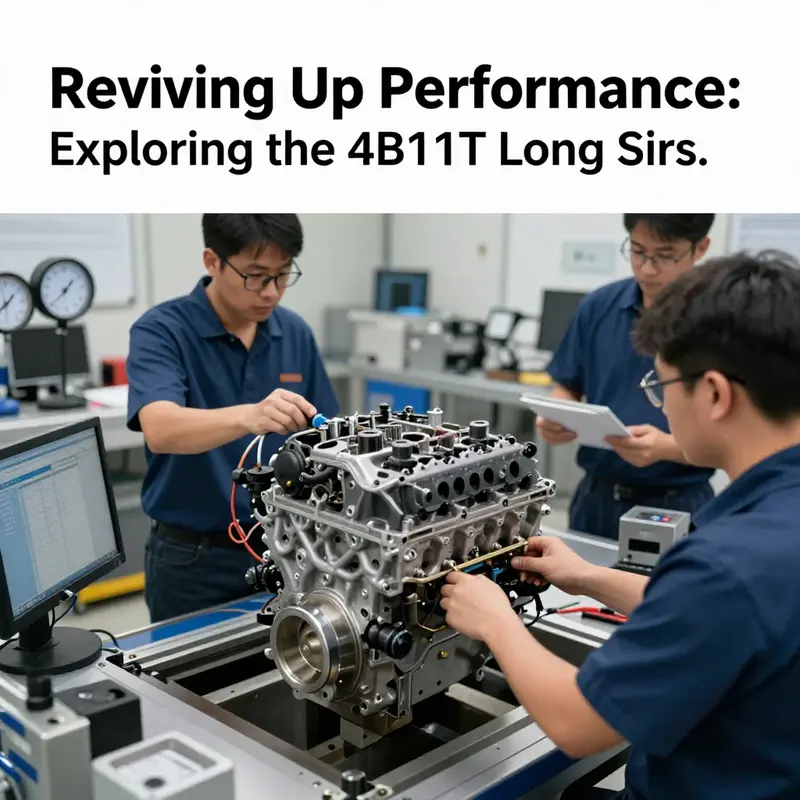
Sourcing a reliable long block is a critical decision. Not all long blocks are equal. Reputable manufacturers and remanufacturers control processes that matter: machining accuracy, heat treatment, balancing, and testing. Facilities that perform thermal cycling, pressure testing, and end-of-line dyno runs reduce the risk of early failures. When looking for a long block, verify the supplier’s testing protocols. Ask about balance tolerances, whether components are replaced or reused, and what warranties accompany the assembly. A well-documented testing regimen and a clear quality process are worth a small premium, because they reduce downtime and long-term repair costs.
Geographic supply hubs play a role in availability and pricing. A number of vertically integrated plants produce and test long blocks in scale. These facilities can offer rapid turnaround, consistent parts, and the ability to customize for specific applications. For buyers, this can mean shorter lead times and options to request upgraded internals or stronger fasteners. However, scale alone is not an assurance of quality. Vetting remains essential. Ask for inspection reports. Request torque charts and assembly photos when possible. Confirm that the long block matches the intended vehicle’s specifications and that the serial or casting numbers align with expectations.
Integration with aftermarket performance work is another strength of the 4B11T long block. Because the core is robust, many builders use long blocks as a starting point for staged builds. The long block accepts reinforcing modifications and can be fitted with strengthened rods, higher-compression or forged pistons, and upgraded gaskets. The semi-closed deck and four-bolt mains provide stability for elevated boost levels. Still, every upgrade demands complementary changes to fueling, cooling, and engine management. A balanced approach preserves drivability and long-term reliability. The long block is not a shortcut to unlimited power; it is a foundation that reduces the mechanical risk of more aggressive tuning.
Understanding common wear points helps owners prolong life. The areas to watch are piston ring wear, bearing clearance growth, valve guide and seat degradation, and head gasket integrity. Turbocharger oil feed and return paths are also crucial; block-level defects rarely cause turbo failure, but poor oil maintenance does. Monitoring compression and oil consumption at service intervals can reveal early signs of wear. Addressing these signs promptly prevents more expensive repairs. Because the long block concentrates the engine’s core, replacing it addresses many wear issues at once and returns the vehicle to a known-good baseline.
Warranty and aftersales support shape owner confidence. A long block that comes with clear warranty terms signals manufacturer confidence in assembly quality. Warranties that cover machining defects and provide limited mileage protection are meaningful. Also valuable are providers who offer technical support and installation guidance. When a supplier documents torque specs, break-in instructions, and recommended fluids, they reduce the chances of installation-related problems. Technical support reduces the chance that a long block will be compromised by incorrect installation or oversight.
Finally, clarity about model variants matters. The turbocharged 4B11T and the naturally aspirated 4B11 share many features, but they are not identical. Confirm the designation before purchase. The turbo variant has strengthened internals, different oiling passages, and head porting suited to forced induction. Confusing the two can lead to mismatched expectations and premature failures. When buying a long block, match the long block’s configuration to the application: compression ratio, cam profiles, and timing provisions must suit the intended use.
For those seeking performance-oriented or fully remanufactured cores, options such as billet or reinforced blocks exist. These are usually for high-boost builds and track-focused applications. They can offer improved cylinder wall stiffness and increased tolerance for extreme pressures. For street-driven cars and mild performance upgrades, a factory-spec long block often delivers the best blend of reliability and cost.
A final practical note: internal documentation and parts traceability matter. A long block that arrives with measurement sheets, torque records, and component lists helps shops and owners plan maintenance. Traceability also simplifies warranty claims and future service. In short, the long block is not just metal and machining. It is a record of how the core was built and verified.
For straightforward replacements or sensible upgrades, the 4B11T long block offers a combination of engineered robustness and serviceability. Its aluminum construction, reinforced mains, and attention to thermal management produce a core that rebuilds well and integrates with modern diagnostics. Sourcing through vetted suppliers and maintaining proper oil, cooling, and timing care maximize its lifespan. For enthusiasts and technicians alike, the long block is a reliable base from which to build dependable, high-performance outcomes.
For readers interested in alternatives aimed at heavy-duty builds, there are billet and reinforced block options. See the discussion on the available billet block variants for the 4B11T for more context: 4B11T billet block.
For supplier evaluation and sourcing guidance, consult an industry B2B sourcing guide for detailed checklists and verification steps: https://www.carinterior.com/4b11t-crate-engine-suppliers-b2b-guide/
Power as a Platform: The 4B11T Long Block as the Engine of Performance Applications
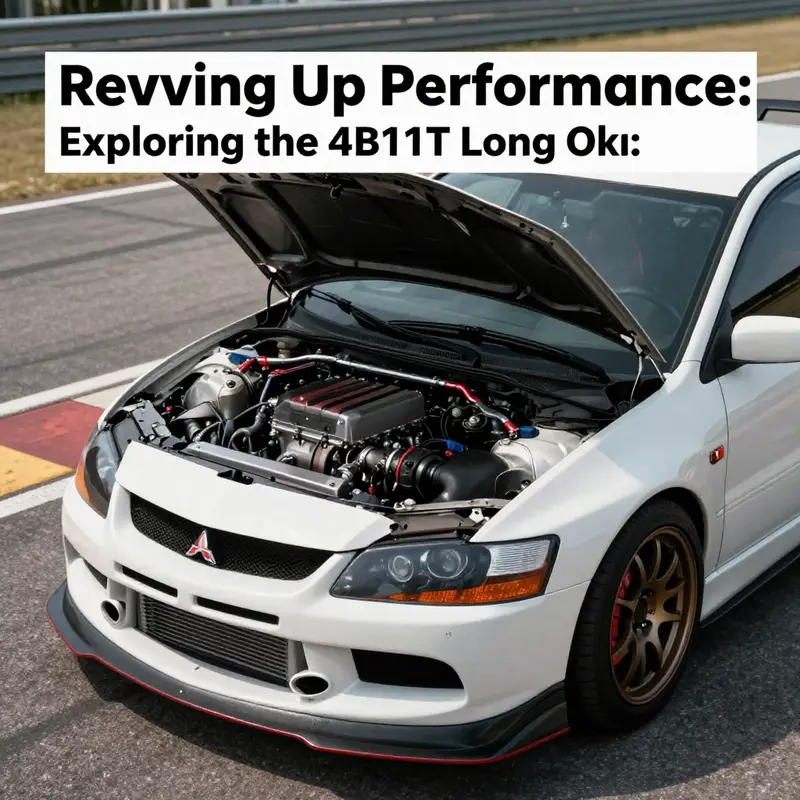
In the continuum of high-performance engineering, the 4B11T long block exists not merely as a component but as a deliberate design philosophy. It is the foundation that determines how far a performance program can go, how consistently a track day can progress, and how deeply a builder can tailor a machine to a specific driving purpose. The long block—comprising the core engine block, the cylinder head, the crankshaft, the connecting rods, and the pistons within the heart of a turbocharged inline-four—functions as a scalable platform. It is designed to absorb the demands of elevated boost, high RPM, and aggressive calibration without surrendering fundamental reliability. In the context of performance applications, this long block serves as the bridge between factory capability and aftermarket ambition, a chassis for dreams that can be made real with the right combination of parts and tuning strategy.
At first glance, the long block presents a compact architecture: the essential internal components are arranged for strength, precision, and weight efficiency. The core materials complement this ambition. The block itself is predominantly aluminum, chosen for its favorable strength-to-weight ratio. But aluminum can be less forgiving in the face of abrasive heat and pressure, so the design integrates cast-iron liners in the cylinder bores. This hybrid approach marries the lightness of aluminum with the enduring wear resistance of cast iron, creating a foundation that can withstand repeated high-load cycles while keeping reciprocating mass manageable. The decision to use such liners is not incidental; it is a deliberate measure to sustain durability under tuned conditions where piston rings, piston styles, and combustion chamber dynamics are pushed beyond stock expectations.
Working in concert with the block and liners is a cooling and lubrication strategy tuned for the heat and friction of insisted performance. The long block is designed around robust, restrained tolerances and enhanced heat management. The cooling channels, the block’s structural integrity, and the semi-enclosed baffles in the crankcase area all contribute to a system that resists the onset of heat soak during long pulls at high boost. While the long block excludes the external subsystems—the exhaust, oil pan, timing components, and accessories—it is designed to be installed, with those external systems brought in from the surrounding build to form a complete, drivable powerplant. This separation is not a limitation but a clarity: it highlights where power comes from and where the builder must direct attention for reliability, serviceability, and repeatable performance.
The mechanical core is reinforced by a packaging philosophy that prioritizes stiffness and durability without prohibitive weight. The long block is designed around a four-bolt main bearing cap arrangement in critical regions, a feature that increases rigidity in a way that matters when torsional stress rises with boost and with high valve lift. The result is a platform that resists flex under the side loads generated by aggressive cam timing and high piston speeds. The crankshaft, connecting rods, and pistons aboard the long block are selected and calibrated to provide a coherent baseline for high-performance tuning. The configuration is conducive to both rebuilds that restore factory reliability and upgrades that push torque and horsepower into new territories, all while preserving the fundamental balance between power, torque, and durability that performance buyers expect on the road and on the racecourse.
In operation, the 4B11T long block is a synergy of modern valve timing, efficient breathing, and turbocharged response. The head assembly uses double overhead cams and a 16-valve layout, integrated with an advanced variable valve timing system. This configuration yields more than simply peak numbers; it improves mid-range response and top-end breathing, which matters as boost pressure climbs and as engine speeds rise toward the redline. The turbocharger, a defining feature of the engine’s performance identity, works in concert with the cam timing and the intake tract to deliver a broad, usable torque curve. This is critical for performance applications where traction and driveability in corners, on straights, and during acceleration define success as much as outright horsepower does. The long block’s role is to hold those dynamic relationships intact through the entire rev range and across a spectrum of operating temperatures and fuel qualities, something that only a well-conceived core can accomplish.
From a practical perspective, the long block can be sourced in several configurations. It may arrive as a new assembly or as a remanufactured unit, depending on the builder’s needs and the project’s budget. In markets with mature parts ecosystems, suppliers offer these long blocks with a range of configurations to suit different power goals, fuel types, and reliability targets. The customization path begins with the core itself and extends to every primary internal component that ultimately determines the engine’s character under boost. Pistons, connecting rods, crankshafts, and camshafts can be upgraded to forged or otherwise strengthened variants. Each choice shifts the engine’s capacity for sustained high-power operation, as well as its tolerance for heat, sealing integrity, and friction losses. The possibility of selecting different internals allows builders to tailor the long block to specific torque curves, turbo sizes, and boost targets, producing a wide spectrum of performance outcomes from the same foundational architecture.
One of the most practical advantages of the long block lies in its modularity. Because the core assembly houses the essential internal elements but excludes the exhaust system, oil pan, timing infrastructure, and ancillary accessories, it provides an organized, modular starting point for a given project. A shop can stage a build around a long block and then add the external systems as a unified, coherent package. In many serious performance projects, this separation also simplifies maintenance planning. You can refresh the block’s internals without having to dismantle engine bays filled with external components. You can swap cam profiles, upgrade valve trains, or install a new turbo system with a clear view of where the long block ends and the surrounding support systems begin. The long block’s design makes it easier to reason about cooling requirements, lubrication routes, and the distribution of compressive and shear forces under racing-inspired duty cycles.
The customization ecosystem surrounding the 4B11T long block has grown in parallel with the appetite for more aggressive builds. Enthusiasts and professional shops alike are drawn to the ability to fine-tune torque delivery and breathing characteristics. Pistons and rods can be swapped to forged variants that tolerate higher peak pressures and faster piston speeds. Crankshafts can be upgraded for increased rigidity, smoother rotation, and refined balance, all of which contribute to reduced vibration and improved throttle response at high revs. Camshafts, gear sets, and timing chains or belts offer further levers for power, response, and efficiency. The availability of OEM- and aftermarket-grade parts—some certified to contemporary quality standards such as ISO 9001—gives builders confidence that critical components can be matched to the long block with predictable fitment and performance. In other words, the long block becomes a canvas on which the painter can craft a stronger, more precise powertrain that still honors the engine’s core architecture.
Beyond the technical and practical aspects, the market dynamics around the long block emphasize its role as a bridge between factory performance and aftermarket ambition. While the longest-lasting power gains come from comprehensive, well-planned upgrades, the long block serves as the consistent base from which those gains are realized. In major markets, including those where specialized maintenance facilities operate at scale, the long block is commonly used for engine rebuilds, core replacements, or as the foundation for a completely rebuilt engine that aims to restore original performance with additional safety margins and longer service life under elevated stress. The long block’s versatility makes it a practical choice for both aspiring track-focused builds and sophisticated street machines, where drivers demand repeatable performance week after week and season after season.
This adaptability is further empowered by a supply chain that understands the needs of performance-oriented projects. In practice, Chinese manufacturers have emerged as central players in producing long blocks and related performance components due to their capacity for scalable production, close tolerance control, and cost efficiency. Neutral packing, customised configurations, and a willingness to tailor long blocks to project-specific needs are common. The result is a robust ecosystem in which a builder can source a base long block, select compatible pistons, rods, and cams, and then add a carefully matched turbo kit, intercooler, exhaust, and ECU calibration to realize a cohesive, reliable high-performance package. For those seeking factory-level fitment alongside upgraded capability, genuine components sourced to preserve OEM interfaces—such as properly calibrated brake systems and optimized suspension packages—can be integrated to maintain balanced handling and braking performance as power climbs.
As a sequence in a broader project, the long block is not a mere replacement part but a strategic platform that shapes the entire engineering conversation around a build. It invites a disciplined approach to performance, one that respects the fundamentals of thermodynamics, mechanical engineering, and dynamic vehicle behavior. The engine bay becomes a stage where cooling paths are optimized, where lubrication is carefully routed, and where exhaust flows are managed to maximize efficiency without sacrificing reliability. The long block’s rigidity and its ability to withstand consistent high-load operation under track-like conditions allow builders to push cam profiles, boost targets, and fuel strategies with a higher degree of confidence than would be possible with a weaker or less thoroughly engineered core.
For those who plan to push the envelope even further, there is the option of stepping into specialized variants that offer enhanced tolerances and tighter control over essential dimensions. A billet-block variant, for instance, represents a different tier of preparation and investment, typically crafted for endurance racing, time attack programs, or other forms of competition where margin for error is tiny. Such options illustrate how the 4B11T long block can be adapted to meet demanding goals while preserving the core virtues of the platform: lightness, strength, flexible tuning, and durable performance under stress. The decision to pursue a billet or standard configuration depends on the intended use, budget, and the builder’s philosophy about reliability versus absolute peak capability. In any case, the central proposition remains intact—the 4B11T long block provides a reliable, scalable foundation for performance-driven machine builds across a wide range of applications.
In practice, a well-considered build begins with a clear understanding of the target dynamics: horsepower goals, the preferred torque curve, the intended operating environment, and the acceptable maintenance cadence. The long block offers a stable core that can be tuned to deliver a broad, useable power band rather than a narrow spike of peak output. It liberates the builder to craft a spec that aligns with the project’s ethos—whether that ethos is a track-focused mid-rev sprint car, a time-attack challenger, or a high-performance street machine that still requires everyday reliability. The synergy between the long block and the rest of the drivetrain, including the transmission, differential, cooling system, and fuel strategy, then becomes the true art of the program. The long block is not alone; it is the nucleus around which a complete, purposeful performance package is built.
As one individual data point among many in the ecosystem, builders often examine procurement options that balance performance with practicality. New or remanufactured long blocks are both legitimate avenues, and within these options there may be further choices about coatings, bore sizes, or liner materials, depending on the expected service life and the level of reliability sought. In every case, the decision to adopt the 4B11T long block should begin with a candid assessment of the project’s goals and the realities of maintenance, fuel quality, and driving discipline. It is a thoughtful investment, but it is also a means to realize a more ambitious engineering program without compromising the engine’s fundamental integrity. This is the essence of why the long block earns its central role in performance vehicles: it is both a reliable base and an adaptable platform that invites, rather than resists, ambitious engineering.
For readers seeking to explore specialized configurations or to understand the precise fitment details for a particular project, a representative resource focusing on the long block and its variants can serve as a valuable guide. A dedicated page that outlines the 4B11T long-block options—along with notes on compatibility, packaging, and upgrade paths—offers a concise overview of what is possible and how to approach planning a build. This resource frames the long block not as a single unit but as a family of cores that can be matched to a driver’s intent, whether the objective is to protect and prolong a factory-supplied performance envelope or to press the architecture into a track-optimized, high-boost future.
In close, the 4B11T long block embodies the principle that performance is not merely about raw numbers but about how a foundation supports every subsequent decision. It is the unglamorous, essential workhorse behind high-performance dreams: a platform capable of bearing substantial power while preserving the structural integrity, cooling resilience, and mechanical harmony required for sustained operation under demanding conditions. It is the engine of performance applications—intelligent, adaptable, and relentlessly capable when guided by thoughtful engineering choices. And as the ecosystem of suppliers, builders, and enthusiasts continues to expand, this long block remains the common denominator that enables diverse visions—from streetability and reliability to blistering lap times and competitive endurance. The next phase of any project will be defined by how one chooses to complement that core with tuned components, calibrated control systems, and a testing discipline that respects both the engine’s potential and its limits.
External reference: https://www.alibaba.com/product-detail/Mitsubishi-4B11-Engine-Long-Block-Assembly_1600732977174.html
Final thoughts
The 4B11T Long Block embodies a fusion of performance and innovation, making it an ideal choice for enthusiasts and professionals in the automotive market. With its impressive power output, reliability, and customization potential, it’s crucial for business owners to comprehend not just its features but also the market dynamics surrounding it. Engaging with this powerful engine can significantly enhance your offerings and satisfy the growing consumer demand for high-performance vehicles.