
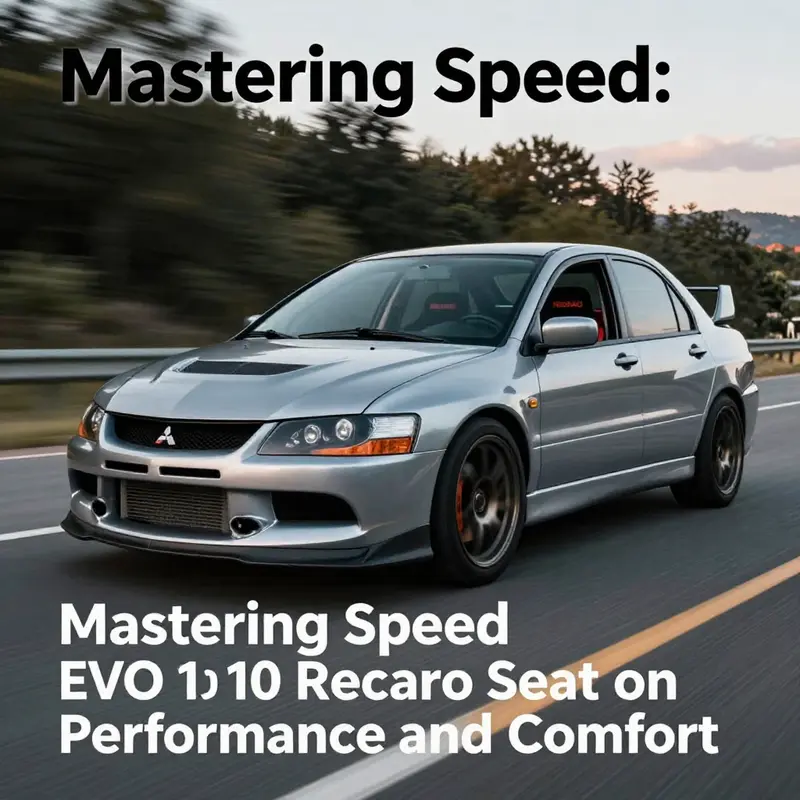
Mitsubishi’s Lancer Evolution X, popularly known as the EVO 10, stands out for its remarkable performance and driver-centric interior, particularly its Recaro seating. These seats are meticulously designed to enhance both comfort and safety, catering to driving enthusiasts and business owners who prioritize superior quality. Understanding the significance of these seats reveals how they not only improve the overall driving experience but enhance performance during high-speed maneuvers. In the following chapters, we will delve deeper into how these seats have evolved in comfort and design, their technical advantages in safety and performance, and the aesthetic elements that appeal to automotive enthusiasts.
Seats in Focus: How EVO X Recaro Seats Redefine the Driver’s Experience
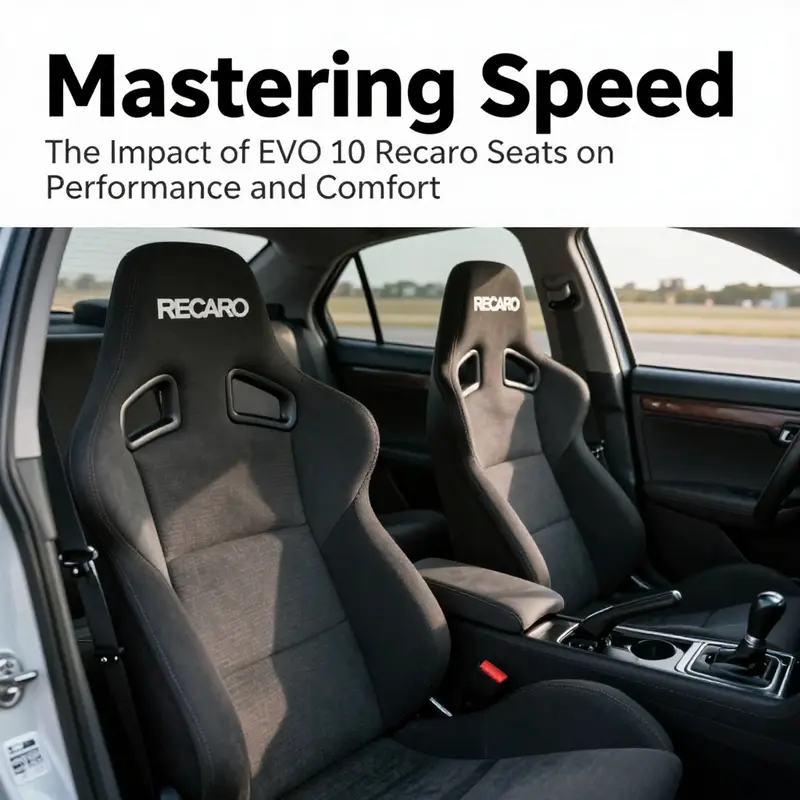
The cockpit of a high-performance machine is more than a bundle of gauges and a pedal box; it is a curated space where the driver and the machine form a single, responsive organism. In the EVO X, the seat is not merely a place to sit but a primary interface through which speed, precision, and control are negotiated. The Recaro-supplied seats at the heart of this design embody a philosophy that privileges the driver’s immediacy with the road. They are engineered to translate formal power into practical trust. When the car leans into a corner at speed, when the tires bite and the Gs rise, the seat deepens its role as both anchor and compass. It is where posture becomes stance, and stance becomes balance. This is the kind of seating science that turns a track day into a focused, repeatable event and daily commuting into an exercise in controlled ergonomy rather than a compromise between sport and comfort. In this sense, the EVO X’s interior is a demonstration that performance seating can be both intense and sustainable, a paradox resolved by careful materials, geometry, and a philosophy of restraint that never lets the seat become merely a visual cue for sport.
The seat’s most immediate contribution is its wrap-around form. A contoured shell, paired with a firm foam density and a thoughtfully integrated side bolster system, creates a cradle-like silhouette that holds the torso and hips in a stable plane. The objective here is less about a dramatic garnish and more about a steady, confident contact. During aggressive steering or rapid directional changes, the body tends to shift in subtle ways. A seat that resists those shifts—without becoming rigid or fatiguing—transforms the experience of driving from reactive to proactive. The driver learns to anticipate the car’s reactions because the body remains aligned with the steering wheel, pedals, and transmission. This is not about keeping the occupant perfectly immobile; rather, it is about reducing the micro-movements that can dull feedback and add fatigue after long sessions or spirited sessions. The result is a more precise translation of driver intent into vehicle response, an essential quality when every millisecond and millimeter counts on a winding road or a race-track straightaway.
Attention to safety in design is not a separate flourish but an intrinsic feature of how the seat is shaped and weighted. The seat shell supports the low-to-mid back and sides in a way that distributes forces evenly during lateral loads. The side bolsters, substantial yet not overpowering, trap the driver in a stable lane without pinching circulation or causing discomfort after extended use. The non-slip materials used in critical contact zones add a tactile certainty that is particularly valuable in high-speed cornering or abrupt throttle modulation. The seat is not just a passive surface; it is a dynamic interface that helps maintain the driver’s posture under stress, which in turn preserves reflexes and decision speed. Combine this with the knowledge that the seat is designed to work in harmony with a sport-oriented interior—an all-black palette accented by carbon fiber trim—and you begin to sense a cabin that is less about intimidation and more about controlled performance. The absence of electric adjustment, a choice embraced in many performance cars, is not a limitation here but a deliberate design decision. It emphasizes the seat’s fixed, optimized relationship to the driver’s position, pedal geometry, and steering reach, encouraging a precise, repeatable seating habit that supports disciplined driving.
Ergonomics play a central role in the EVO X seating equation. The ergonomic design of these seats prioritizes spinal alignment, a factor often overlooked in the heat of performance debates. Proper spinal alignment reduces muscular strain and fatigue, especially on longer drives or during extended spirited sessions. The foam density and contouring are calibrated to support the natural curves of the spine while allowing enough micro-adjustment to accommodate drivers of varying statures. This is not a compromise between comfort and performance but a synthesis of both. An ergonomic seat that aligns the spine and anchors the pelvis helps keep the core engaged and the upper body relaxed, enabling the driver to maintain a steady grip on the steering wheel and a calm, controlled breathing pattern even when the pace climbs. The ergonomic motif extends beyond the backrest and cushion; it threads through the overall seating position, influencing how drivers interact with the pedals, the shifter, and the line of sight to the gauges. A well-positioned seat makes the cockpit feel naturally generous, not cramped or overpowered, which in turn supports more precise and repetitive driving motions.
Material quality reinforces the seat’s performance credentials without surrendering luxury. The EVO X seats balance durability with tactile appeal. Depending on the trim, the seating surfaces employ high-quality fabrics or premium leather, chosen for breathability, wear resistance, and a sense of refinement that remains appropriate to a performance cockpit. The materials’ texture and density interact with the seat’s geometry to provide a grip that is secure without being abrasive. Breathability matters, particularly during aggressive driving when heat and sweat can rise quickly. A well-chosen fabric or leather blend helps regulate comfort, ensuring that long stints behind the wheel do not become a distraction from concentration. The material choices also harmonize with the rest of the cabin—an all-black interior punctuated by carbon fiber accents that reinforce a modern, purposeful theme. The overall effect is a seat that feels both premium and unpretentious, a tool designed for the driver’s needs rather than a display of surface luxury.
Within this material logic lies an invitation to tactile exploration. The contoured seat shell and bolstered surfaces invite the driver to test the boundaries of secure support. The contact points—shoulder blades, hips, and thighs—receive just enough support to reassure the driver that posture will be maintained during aggressive maneuvers. Yet the seat remains forgiving, allowing micro-adjustments in weight distribution as the car changes direction or weight transfer shifts through corners. The design acknowledges the realities of real-world driving: when the car is pushed hard, grip and feedback become more critical than the ability to recline or adjust seat height in the moment. By focusing on stability, contact area, and material fidelity, the seat becomes a constant in a dynamic equation, a stable reference point that helps the driver read the road with greater clarity.
The interior harmony that accompanies the Recaro seats deserves its own note. The EVO X’s cabin uses a restrained palette and discrete, modern trim to emphasize the seat’s role as the performance centerpiece. The all-black upholstery creates a sense of focus, a theater for the road where every surface is designed to support control rather than flaunt it. The carbon fiber trim contributes a tactile and visual texture that echoes the seat’s emphasis on precision and speed. This design language makes the cockpit feel cohesive, a single instrument rather than a set of disparate parts. In such an environment, the seat is not a standalone component but a foundational element of the driver’s perceptual loop. The occupant’s body and the car’s dynamics are in a constant dialogue, conducted through the seat’s feedback, through the way it restraints fatigue, and through the way it communicates grip and release through the fabric, foam, and shell. This is performance seating as an integrated system, not a luxury add-on.
In daily use, the EVO X Recaro seats reveal a balance that can sometimes be overlooked in pure performance narratives. The seats remain comfortable for long commutes, offering a level of support that does not degrade into numbness or stiffness after hours behind the wheel. The absence of electric adjustment is offset by a design that allows the driver to settle into a position that becomes almost second nature with time. The stability they provide is felt as soon as the car moves: a sense that the body is at one with the vehicle, with no creeping, no slipping, no need for constant readjustment to regain a sense of control. For enthusiasts who demand performance but also want a practical daily driver, this balance is a crucial attribute. It signals that speed can exist without sacrificing the ease of ordinary life, a driver’s cockpit that can transition from the track to the highway with equal poise.
To appreciate the seat’s role fully, one must consider the broader context of seating technology in performance cars. The EVO X represents a moment when a company shift happened from focusing purely on horsepower to prioritizing driver ergonomics, feedback, and sustainable performance. The Recaro seats are not just about lateral support; they embody a philosophy that an engaged, well-supported driver is more capable of extracting every ounce of performance the car can offer. When a car encourages a driver to lean into a corner rather than crane away from it, confidence grows. The mind and body respond together, and trust becomes the most valuable currency on the road. In this sense, the EVO X’s seating solution is a reflective surface for the era’s engineering priorities: to fuse speed with stamina, aggression with comfort, and raw capability with refined usability.
For readers who want to explore the tangible material options that lie behind seats like these, the design ethos can be sampled through premium upholstery lines that focus on tactile refinement and lasting performance. A compelling example is the availability of Alcantara or similar premium composites in front seating, a choice that blends grip with breathability and a sense of sporty luxury. For those curious about such material options in related applications, there is a specific reference that highlights available premium front Recaro seats in Alcantara. You can see an example here: brand-new Alcantara front Recaro seats. This touch point helps connect the general philosophy of performance seating to concrete product choices that owners might encounter when upgrading or restoring a vehicle of this caliber. While the EVO X’s original configuration is already finely tuned, the broader ecosystem of seating materials and configurations demonstrates how the core ideas—grip, support, endurance, and ergonomic alignment—translate across generations of performance interiors. It is a reminder that seat design continues to evolve, guided by the same principles that made the EVO X’ s Recaro setup so effective: a relentless focus on the driver as the central agent of performance.
The broader takeaway is that the EVO X Recaro seats embody more than a component choice; they symbolize a transitional moment in automotive design. They mark a shift from the era’s simpler, power-first thinking toward a more integrated, human-centered approach. In the EVO X, the seat acts as a catalyst for a more authentic driving experience, one where the driver’s body is acknowledged as part of the vehicle’s performance equation. The steering wheel, pedals, and gear lever are not the only interfaces that demand precision; the seat forms a critical part of the feedback loop, translating road texture, incline, and lateral force into a stable, readable sensation that the driver can act upon with clarity and confidence. This is the essence of a driver-centric cabin: a space where the body and the car meet, where seating geometry and material science work together to keep speed honest, control instantaneous, and endurance attainable. In the end, the EVO X’s Recaro seats help answer a fundamental question for performance enthusiasts: how can power be harnessed without sacrificing the body’s ability to perform? The answer, in this case, lies in a seat that is both a safeguard and a guide, a companion that makes the car’s heartbeat legible and the road’s challenges navigable.
External reference for broader context on the vehicle’s performance narrative and official specifications can be found on the manufacturer’s site. This chapter has drawn on the concept that seating design complements other high-performance cabin elements, culminating in a driver-focused experience that aligns with the brand’s broader engineering goals: a move toward a more complete, refined driving experience without compromising the visceral thrill of performance. For more technical details and official feature descriptions related to the EVO X, readers may consult the official manufacturer landscape at Mitsubishi Motors.
Seat of Precision: EVO X Recaro Seats and the Feel of Speed
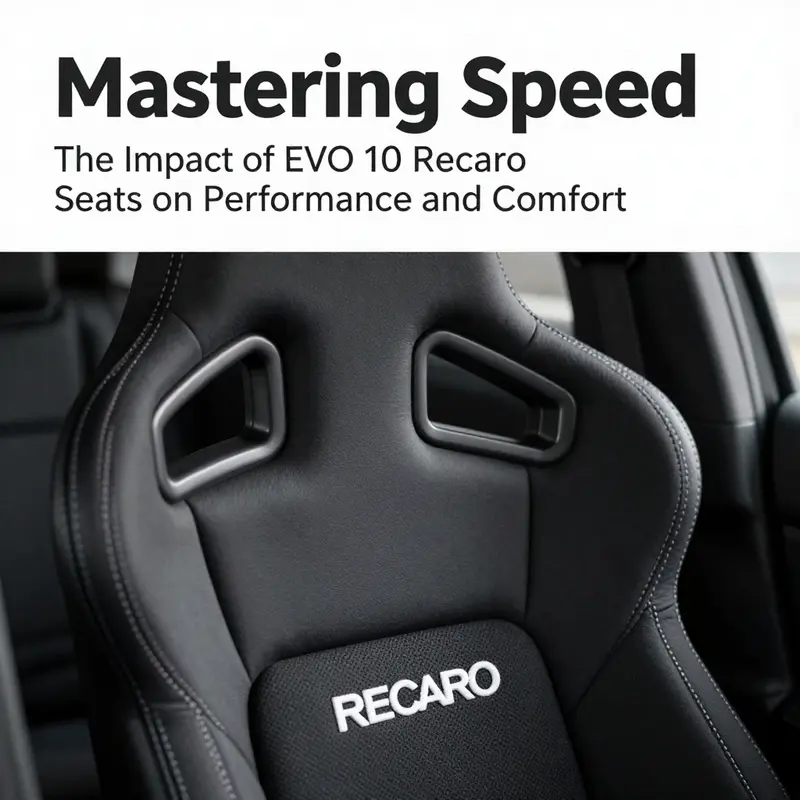
The Lancer Evolution X uses Recaro seats to translate driver input into a conscious, confident feel. The fixed-back bucket seats deliver high containment and strong lateral support that keeps the torso aligned under aggressive cornering. Friction on the seat surface provides a predictable bite, reducing slip and enabling precise pedal and steering inputs. The lack of power adjustment keeps weight down and preserves a direct, repeatable seating position. The interior design reinforces the performance focus with a restrained black palette and carbon trim, so the seat reads as an instrument of speed rather than a distraction. Upgrades to carbon fiber structures or Alcantara trim can subtly change touch and weight distribution while keeping the core benefits intact: ergonomic support, secure containment, and immediate feedback. In daily use, the seats balance comfort with sport intent, making the cockpit feel integrated rather than compromised. For readers seeking deeper context, official documentation and safety databases offer further details on materials, testing, and compliance with performance seating standards.
Contours of Confidence: Aesthetics, Ergonomics, and the Performance Soul of EVO 10 Recaro Seats
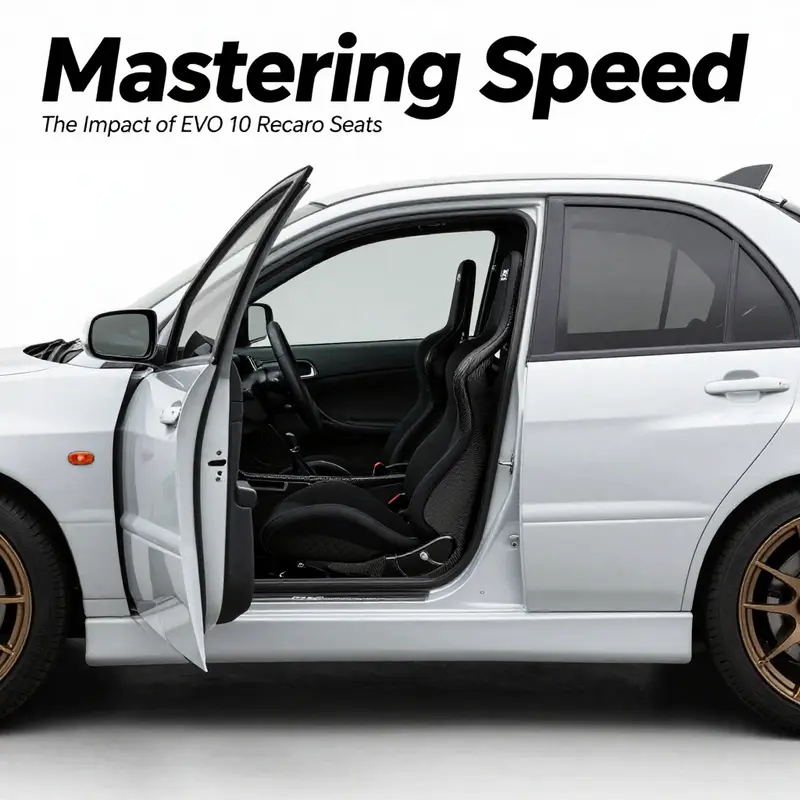
The interior of a high-performance car is never just a cabin; it is a compact arena where form meets function in a dialogue that starts the moment the door closes. In the EVO 10, the Recaro seat system does more than hold the driver in place. It establishes a tactile interface between the body and the machine, a carefully sculpted marriage of aesthetics and ergonomics that speaks to enthusiasts who prize both visual intensity and enduring comfort. The seats are not simply a visual accent on a stadium-black interior; they are the mechanism through which the car’s performance philosophy is transformed into a lived, tangible sensation. The wrap-around silhouette, the way the lumbar and lateral contours catch the torso, and the texture of the upholstery all contribute to a cabin atmosphere that feels both aggressive and refined. This combination—between a sport-inspired look and a posture-conscious design—anchors the EVO 10’s interior as much as its tuned suspension or its torque-rich engine does the chassis.
Design in this context is more than aesthetics; it is a statement about how a driver perceives the car at the limit and how quickly that perception translates into confident action. The EVO 10 Recaro seats are a thoughtful nod to that imperative. They deliver refined sport-inspired styling through upholstery choices that emphasize a high-performance ambience without sacrificing the tactile luxury that enthusiasts expect from a premium seat. The surfaces respond to touch with a reassuring friction that stabilizes the body under g-loads, a crucial feature for those moments when quick direction changes and high-speed cornering demand every ounce of adhesion between human body and seat cushion. In practice, this non-slip contact becomes a practical safeguard; it minimizes unnecessary body movement and preserves the driver’s ability to feel the road. The overall aesthetic—an all-black palette accented by carbon fiber trim—complements the seat design by reinforcing a cohesive, modern, and unapologetically sports-oriented cabin mood. The resulting environment is one where the eye and the spine are aligned toward the same performance objective, a rare synthesis that speaks to a purpose-built philosophy rather than a cosmetic flourish.
At the core of the EVO 10 Recaro seats lies a rigorous attention to ergonomic detail. The sculpted contours cradle the driver and passenger with a sense of containment that is neither constrictive nor excessive. Instead, the seat shell works with the body’s natural curves to support posture over long drives and to reduce fatigue during spirited, deadline-driven track sessions. The ergonomic commitment extends beyond pure support to incluir a distribution of pressure that feels both balanced and precise. In this design, even the small but meaningful decisions—the depth of the seat cavity, the angle of the backrest, the circumference of the side bolsters—play a role in how quickly a driver can settle into the cockpit and maintain focus. When a vehicle is driven aggressively, the body naturally tenses in anticipation of corners, accelerations, and braking events. The EVO 10 seat design anticipates this response and provides a cradle that helps center the torso while allowing the hips to move freely enough for fine micro-adjustments as the chassis shifts mid-corner. The result is not merely comfort; it is a steadiness of control that translates into more precise steering inputs, more confident throttle modulation, and faster, more fluid corner exits.
The discussion of ergonomics inevitably intersects with the matter of materials and contact experiences. The EVO 10 Recaro seats employ high-friction zones in key contact areas to augment the occupant’s grip, a feature that becomes especially important in race-inspired driving contexts where lean angles and lateral forces are a routine part of the rhythm. The contact patches are designed to enforce position retention without sacrificing comfort, an equilibrium that matters when a long day at the track or a weekend canyon run blends into daily commuting. The non-slip characteristics are not accidental; they reflect a deliberate engineering choice to maximize driver confidence during dynamic maneuvers. In this sense, the seat surface material is not a mere textile; it is a functional layer of the vehicle’s dynamic system, contributing to the predictable performance envelope that enthusiasts crave.
While comfort and containment form the heart of the ergonomic proposition, the EVO 10 Recaro seats also embrace performance-oriented engineering through a carefully chosen weight profile. The lightweight construction reduces the overall cabin weight and contributes to the car’s agile handling characteristics. This is a meaningful distinction for a vehicle whose performance narrative relies on a balance between power and precision. Every gram saved on seating contributes to a marginal yet measurable gain on track days, where throttle response and cornering stability can hinge on weight distribution and inertia management. It is not solely about speed; it is about how quickly the vehicle can respond to the driver’s intent and how little the driver must fight the car to execute a chosen line. When combined with other chassis and drivetrain tuning, the lightweight seat design helps to realize a more immediate, almost intuitive, connection between intention and execution.
The EVO 10 Recaro seats also carry a strong safety pedigree that underscores their suitability for high-performance contexts. FIA homologation, a standard often associated with competition-grade equipment, acknowledges that these seats have passed stringent safety criteria while also delivering race-ready performance in everyday use. The presence of FIA approval is not merely a badge of legitimacy; it is a signal that the seat is designed to perform under pressure while offering robust occupant containment in the event of a mishap. Enthusiasts who use their EVO 10 on weekends, or who push their vehicles toward the limits on open roads or closed courses, benefit from a seating system that looks as purpose-built as it performs. It is a reminder that what feels like a simple cockpit detail—an ergonomic contour, a non-slip contact patch, a lightweight shell—can have tangible consequences for driver confidence, reaction times, and endurance behind the wheel.
The interior harmony achieved by pairing the seats with the rest of the cabin’s design language deserves attention as well. Aesthetics and ergonomics, when aligned, amplify perceived quality. The EVO 10 interior, often finished in an all-black upholstery scheme with carbon fiber trim, presents a coherent, performance-first environment. The seats do not fight for attention against the dash or the door panels; they anchor the eye and the body in a single, focused plane. This unity of design is deliberate. It reflects a philosophy in which the cockpit is treated as a performance instrument rather than a lounge. In such a space, lighting, surface textures, and form language reinforce a sense of speed and precision, while the seat’s own silhouette mirrors the car’s overall lines. The resulting impression is one of seamless performance integration: a cockpit where every element—seat, console, steering wheel, pedals—cooperates to reduce cognitive load and enhance instinctual driving responses.
From a buyer’s perspective, the absence of electric adjustment on these seats is not a compromise but a conscious design choice aligned with the vehicle’s performance-oriented ethos. Fixed-position seats challenge the interior to remain comfortable yet supportive for a range of drivers and body types. They force a discipline in how the driver interacts with the car: the emphasis shifts to finding a stable, repeatable seating posture that can be maintained across varied driving scenarios. In daily use, this translates to a seat that feels settled and supportive rather than endlessly adjustable. For enthusiasts who spend long hours behind the wheel, the ergonomic finesse is still evident; the contouring around the thighs and hips works in concert with the seatback to sustain posture during extended drives, while the lateral supports keep the torso aligned through curves that demand rapid steering inputs. The result is a cabin experience that remains engaging and comfortable, even when the vehicle is asked to perform at the edge of its capabilities.
The materials story is equally important. The Recaro seats in this context are not merely about appearance or raw strength; they are about a tactile relationship that respects the driver’s sense of control. The upholstery choices, with their refined textures and colorways, help minimize distractions and maintain a cohesive visual narrative with the rest of the interior. The carbon fiber trim is more than a flashy accent; it reinforces the lightweight, high-precision vibe that the seats embody. In combination, these elements contribute to an interior atmosphere that is serious and focused, a sanctuary of performance where the driver’s attention is drawn toward the road rather than toward filler aesthetics or incongruent design cues.
The significance of the EVO 10 Recaro seats extends beyond their immediate comfort or their visual impact. They embody a holistic approach to seat engineering that Recaro has honed through decades of applied research in motorsport and high-performance street vehicles. The interplay between structure, material choice, and surface interaction shows how a seat can be both a partner in handling and a statement of identity for the car. When a driver slides into one of these seats, the sensation is not only of being supported but of belonging to a lineage of engineering decision-making that prioritizes precise feedback, reliable hold, and a disciplined sense of posture. The seat becomes a gateway to a driving experience where performance is not abstract but personal—where the feel of the wheel, the bite of the brakes, and the way the seat’s contours guide the body toward a harmonious alignment with the chassis all contribute to a more engaged and confident journey.
For enthusiasts who crave deeper details about the material composition and performance characteristics of EVO 10 Recaro seats, the official product documentation from the seat manufacturer provides a comprehensive roadmap. This documentation outlines the specific upholstery options, the precise geometry of the seat shell, the materials used in high-friction contact zones, and the rigorous safety standards that the models meet under FIA homologation. It also explains how weight optimization was achieved without compromising the integrity of the seat’s shielding and containment features. While the general narrative here focuses on the experiential and aesthetic benefits, the underlying technical data offers a map for engineers and designers who seek to understand how such seats contribute to the overall performance envelope of a high-performance vehicle. The alignment between form and function reflects the brand’s commitment to innovation, precision, and the refinement that defines modern seat engineering in this segment.
In contemplating the EVO 10 Recaro seats, it is helpful to remember that the seat is a dynamic interface—a place where the driver’s body interacts with the vehicle’s physics and where small design decisions cascade into meaningful performance outcomes. The wrap-around form, the ergonomic cradle, the tactile grip of the surface, and the weight-conscious construction—all combine to create a seat that invites the driver to trust the machine. This trust is born from a design language that communicates through touch and sight as much as through response and control. The interior ceases to be a peripheral space and becomes an active partner in the act of driving, a rehearsal room for the car’s most energetic expressions. In this light, the EVO 10 Recaro seats emerge not simply as equipment but as the core of a driver-centric experience—an embodiment of why aesthetics and ergonomics matter when performance is measured not only by speed but by the quality of the driver’s engagement with the vehicle.
For readers curious about alternative upholstery and seating configurations that align with the same performance ethos, one example highlights Alcantara-trimmed front Recaro seats and related options. This example demonstrates how material choices can accentuate grip, comfort, and visual cohesion, further enriching the driving experience in a high-performance chassis. You can explore a related option here: brand-new-alcantara-front-recaro-seatsoriginal.
As the chapter closes on the interwoven story of aesthetics, ergonomics, and performance, the EVO 10 Recaro seats stand as a testament to a design philosophy that treats the seat not as a passive component but as an active contributor to driving precision and enjoyment. They demonstrate how a cockpit can balance aggressive visuals with the comfort and support needed for real-world use, including long stints behind the wheel, spirited track sessions, and everything in between. The seats’ form is its function, and their function is to enable a driver to pursue speed with confidence, to read the road with clarity, and to execute precise, repeatable movements that translate into better lap times, smoother corner exits, and a more intuitive connection to the car’s dynamics. In that sense, the EVO 10 Recaro seats do not merely seat a person; they align a person with a machine’s potential, turning a cockpit into a precise instrument tuned for performance and worn with pride by those who know that sitting well is the first step toward driving well.
External reference: For a detailed official specification and product features, see the external resource from the seat manufacturer: https://www.recaro.com/en-us/products/evo-10.
Final thoughts
Understanding the significance of the RECARO seats in the Mitsubishi EVO 10 unveils their role as a key component in enhancing both performance and comfort. Business owners and automotive enthusiasts can appreciate the remarkable fusion of technology, design, and functionality that these seats offer. From the evolution of comfort in their ergonomic design to their technical advantages in safety and performance, and finally, their aesthetic appeal, these seats represent a commitment to driving excellence. Whether on the racetrack or navigating daily commutes, the EVO 10 provides a robust driving experience that is uncompromising in quality.