
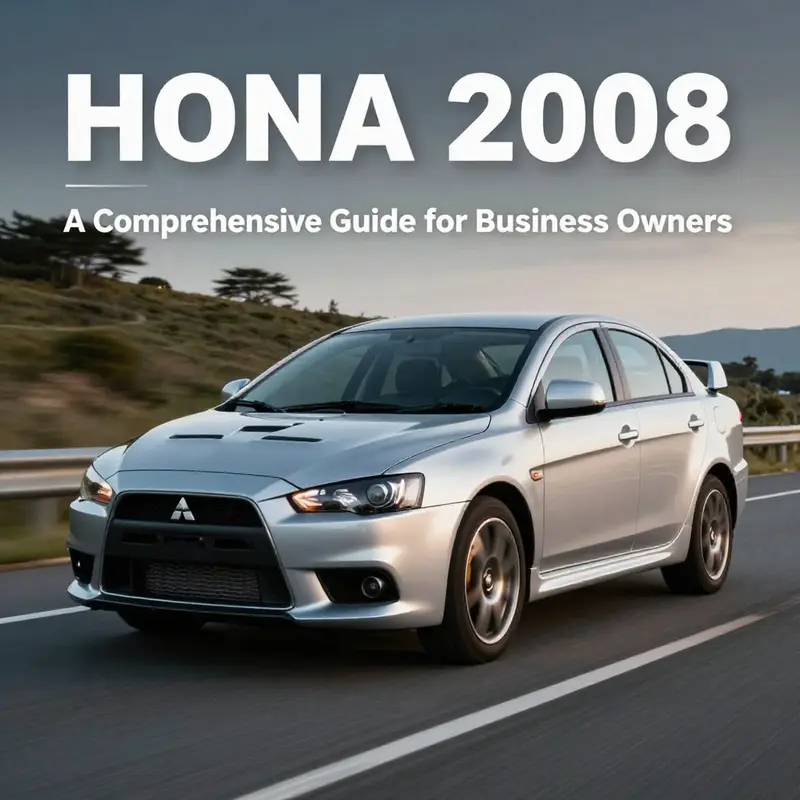
The Mitsubishi Lancer 2008 model serves as an exemplar of compact car ingenuity, blending performance, efficiency, and styling for those in need of a reliable vehicle. This article delves into its specificities, providing business owners with critical insights into its engine specifications, transmission options, configurations, and performance in the market. By the end, the relevance of the Lancer as a fleet or personal vehicle will become clear, helping in your decision-making process.
Under the Hood: A Complete Look at the 2008 Mitsubishi Lancer’s Engines and Drivetrain

A unified view of the 2008 Lancer’s motor choices and drivetrain character
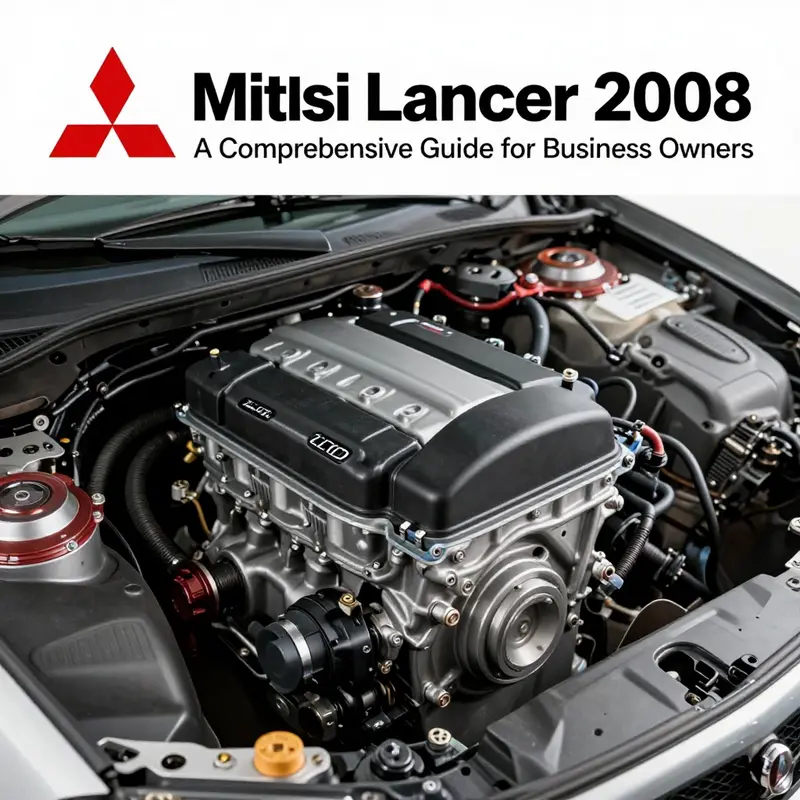
The 2008 Lancer presents a straightforward but varied engine lineup that speaks to different priorities: economy, everyday performance, and true enthusiast capability. Across global markets, Mitsubishi offered naturally aspirated four-cylinders for daily drivers, turbocharged variants for higher-trim models, and a high-performance lineage carried by the Evolution models. These powertrains shaped the car’s personality, influenced its aftermarket life, and determine what buyers should expect when they consider a 2008 Lancer today.
At the heart of many mainstream 2008 Lancer sedans sits a 2.0-liter four-cylinder. In markets such as China and the U.S., Mitsubishi’s MIVEC-equipped 2.0L balanced fuel efficiency, longevity, and smooth operation. Output for the 2.0L MIVEC sits near the mid-150 horsepower range in some specifications, with torque figures tuned for tractable everyday response. The naturally aspirated 2.0L is ideal for commuters and those seeking low-cost ownership. Fuel consumption for these trims typically centers around the mid to high single-digit liters per 100 kilometers on combined cycles, reflecting the era’s focus on reasonable economy without sacrificing drivability.
A step up in displacement and torque came with the 2.4-liter option offered in higher trims. This engine delivers a noticeable boost in midrange power and highway passing performance. Where the 2.0L emphasizes efficiency, the 2.4L aims for a more confident, less strained driving experience at higher speeds. Paired to manual gearboxes or automatics in different markets, the 2.4L-equipped Lancer suits buyers who want a more relaxed highway cruiser and occasional spirited driving without moving into full-on performance territory.
For drivers seeking a performance edge without the full Evolution price and complexity, Mitsubishi introduced turbocharged 2.0-liter engines in sportier trims. The turbocharged 4B11 found in later performance-oriented Lancer variants produced in the ballpark of 170–180 horsepower and offered strong midrange torque. It transformed the Lancer from a comfortable compact into a more engaging car, while keeping fuel economy reasonable under normal use. The turbo 2.0L also proved amenable to tuning, thanks to solid factory internals and aftermarket support.
At the top end, the Evolution models represent a different approach. Derived from motorsport heritage, these cars used the 4G63T turbocharged inline-four in earlier Evo generations and later evolved to other turbo units for subsequent models. The 4G63T in particular is legendary, delivering well north of 250 horsepower in factory tune and offering robust torque suitable for aggressive acceleration and track use. Its construction and tuning potential made it a favorite among enthusiasts who modify for higher output and improved response. For owners looking for replacement or period-correct upgrades, a low-mileage JDM 4G63T remains a sought-after option and can be found through specialist parts channels, as noted by suppliers offering genuine JDM 4G63T units.
Transmission pairings varied to match each engine’s intent. Base models often came with a five-speed manual or a conventional automatic. Sportier trims and turbo variants offered six-speed manuals or dual-clutch systems in some markets. Additionally, CVT units were used in some configurations, with simulated stepped ratios to deliver a more familiar shift feel. The manual transmissions reward an engaged driver, while CVTs and automatics favor smoothness and city ease. When assessing a used example, pay attention to the transmission type and service history. Manual gearboxes are generally durable if the clutch has been maintained, but automatics and CVTs can be more sensitive to neglected service.
The Lancer’s chassis and drivetrain layout contributed as much to its character as the engine choices. A reinforced body shell and independent suspension—MacPherson struts up front and a multi-link setup in the rear—gave the car composure through corners and stability at speed. These elements, coupled with aerodynamic refinements on sport models, kept the Lancer planted. For the Evolution variants, all-wheel-drive systems and advanced traction control technologies provided dramatic improvements in grip and acceleration, making them markedly different to drive compared to front-wheel-drive sedans.
Real-world fuel economy depends on engine, transmission, and how the car is driven. Factory figures for combined use generally fall in the mid-to-high single digits liters per 100 kilometers for the naturally aspirated engines. Turbocharged and high-performance variants expect higher consumption, especially under spirited driving. Maintenance plays a major role: regular tune-ups, proper oil changes, and timely timing-belt or chain services keep consumption and emissions in check.
Reliability trends for the 2008 Lancer are favorable when basic maintenance is kept up. The naturally aspirated engines are straightforward, with long service intervals and robust components. Turbo models require more attentive care; turbocharger health, intercooler integrity, and boost control systems should be inspected by any prospective buyer. The Evolution engines, while capable and durable, were often pushed close to their mechanical limits by factory tuning and aftermarket changes. For these cars, careful history and evidence of sympathetic servicing are essential.
Aftermarket support is one of the Lancer’s strengths. From bolt-on intake and exhaust upgrades to more serious engine internals, there is a wide ecosystem of parts. Wheels, aerodynamic components, and performance hardware designed for Evolution models often fit other Lancer variants with minor modification. Owners often seek lightweight wheels, performance brakes, and suspension tuning to unlock the car’s handling potential. For those restoring or building an Evo, sourcing a genuine low-mileage 4G63T engine can be pivotal; specialist suppliers sometimes list authentic units suitable for transplant.
Buyers in today’s market must weigh engine choice against intended use. A commuter prioritizing economy and low running costs will find the 2.0L MIVEC or 2.4L naturally aspirated options sensible. Drivers wanting a lively, tunable platform should target the turbocharged 2.0L variants or the Evolution models if budget and maintenance tolerance allow. The Evo delivers the most thrilling experience, but also demands the most care and represents the highest cost to own.
When inspecting a used 2008 Lancer, examine common wear items relative to the engine type. Look for oil leaks around valve covers and turbo oil lines. Check for consistent service records, especially timing belt or chain replacements and coolant system work. For turbo variants, inspect intercooler piping and listen for turbo spool without excessive whine or rattles. For manual cars, test for clutch slip and synchronizer wear. For automatics and CVTs, ask for a complete service history and a recent fluid change.
Finally, consider how the market shapes value. In some regions, new Lancer sales ceased years ago, funneling interest into the used market. Special editions and high-performance trims retain higher value due to rarity and enthusiast demand. Meanwhile, mainstream trims often provide excellent value for reliable transport. The decision about which engine and drivetrain to choose ultimately depends on intended use, maintenance willingness, and budget for acquisition and upkeep.
For a focused, authoritative specification overview and performance testing of the 2008 model year, consult an established automotive review to compare factory figures and road test impressions.
For those interested in a period-correct replacement or upgrade for turbo models, consider sourcing a genuine JDM low-mileage 4G63T engine from specialist suppliers: https://mitsubishiautopartsshop.com/genuine-jdm-low-mileage-1995-1999-jdm-mitsubishi-4g63t-2-0l-dohc-turbo-engine-evo-7-bolt-eclipse-talon-awd-automatic-transmission-and-ecu-attached/
External reference for factory specifications and in-depth testing: https://www.caranddriver.com/mitsubishi/lancer/2008/specs
null
null
Transmissions That Shape the 2008 Mitsubishi Lancer’s Character
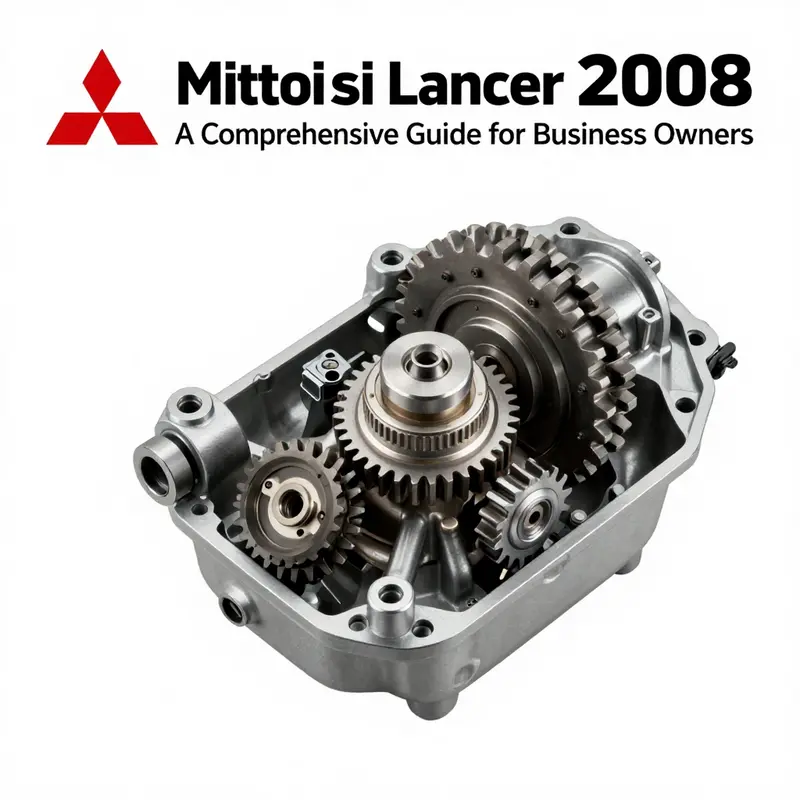
The transmission is the mechanical and emotional link between the 2008 Lancer’s motor and the road. It defines how the engine’s power is delivered, how the car feels under throttle, and what owners must expect in maintenance and tuning. For the 2008 Lancer range, choices ranged from simple manuals and torque-converter automatics to the sophisticated wet dual-clutch unit fitted to the high-performance variant. Each option suits a different driver need, and understanding their strengths and limits helps when evaluating a used car, planning upgrades, or deciding how to drive the car to get the most from its 2.0L MIVEC or larger 2.4L engines.
The simplest transmission option for the standard 2008 Lancer models is the 5-speed manual. It is mechanically straightforward and light. Shifts are direct and intuitive, and the layout promotes an engaging driving experience. When paired with the 2.0L MIVEC four-cylinder, the 5-speed manual rewards drivers who keep the engine in its power band. It’s less complex to repair than modern automatics, and clutch and synchro replacement is a familiar job at most independent shops. For buyers focused on long-term ownership costs and mechanical simplicity, the five-speed manual often represents the best balance of control, cost, and durability.
For drivers who prefer automatic convenience, early Lancers offered a four-speed torque-converter automatic in several trims. This gearbox is tuned for smoothness rather than outright speed. Shifts are deliberate and aimed at comfort and fuel economy in everyday driving. It pairs well with the 2.4L models that seek relaxed highway cruising. However, compared with modern multi-speed automatics and CVTs, the older four-speed can feel sluggish when accelerating hard. Its maintenance needs are modest, though fluid condition and filter changes are critical. Neglect here produces slipping and costly internal wear.
In some markets, and on particular trims, a continuously variable transmission (CVT) or CVT-like unit was used. That system emphasizes fuel efficiency and seamless acceleration. A CVT can keep the engine near its most efficient rpm band, smoothing power delivery. But the driving sensation differs from stepped gearing; enthusiasts sometimes find the lack of distinct shifts less involving. For buyers prioritizing economy and urban traffic ease, a CVT-equipped Lancer makes daily life easier. For those who want crisp throttle response and defined shift points, a manual or a sportier gearbox is preferable.
At the performance end of the 2008 Lancer lineup, the high-performance model introduced a serious departure from the mainstream choices. That variant offered two advanced transmissions: a traditional 6-speed manual and a 6-speed wet dual-clutch automatic. The 6-speed manual carries the purity of engagement that many drivers still prefer for spirited driving and track use. It offers a mechanical connection and clear feedback through the lever and pedal. When tuned or modified, manuals typically handle power increases well, provided the clutch and driveline components are upgraded to meet higher torque levels.
The wet dual-clutch automatic—marketed as a sportronic-style unit by some sources—was the headline item. It’s a six-speed wet DCT designed for rapid, crisp shifts and high thermal tolerance. Unlike dry clutch DCTs that can overheat under sustained load, the wet configuration bathes clutches in fluid, improving cooling and longevity for aggressive driving. The DCT delivers exceptionally fast shift times and can launch the car with minimal torque interruption, which enhances acceleration. It also offers automatic and manual modes, providing both convenience and the ability to control shifts through paddles or a lever.
The DCT in the sporty Lancer is not without quirks. Early wet dual-clutch systems used in high-performance cars sometimes require specific transmission fluids and interval-based servicing. Owners should verify service history and confirm that fluid replacements used the correct specification. Reconditioning or replacement of clutch packs, mechatronic units, or hydraulic components can be costly, particularly if the car has been driven hard on track. For buyers seeking a used high-performance model, a documented history of transmission fluid services is an important inspection item. For those considering a factory-style overhaul or performance upgrade, there are reconditioned DCT assemblies available from specialist suppliers and rebuilders; one example is a reconditioned SST/DCT470 gearbox unit commonly referenced by enthusiasts.
From a practical perspective, transmission choice affects fuel economy and long-term running costs. Manuals generally yield robust longevity if the clutch isn’t abused; they also make it easier to manage engine revs and improve fuel usage in skilled hands. The four-speed automatic is typically less efficient but easier in heavy stop-and-go traffic. CVTs can deliver the best numbers for fuel consumption in urban cycles. The wet DCT balances performance and economy, achieving quick shifts without large torque losses during transitions, yet it requires more attentive maintenance than the basic manual.
Ownership implications extend beyond fuel and servicing. Tuning paths differ by gearbox type. Manual transmissions are widely supported for track days and engine power upgrades. Clutch kits, short-throw shifters, and lightweight flywheels are common upgrades. Automatic and CVT users face a narrower range of bolt-on performance options; many choose ECU tuning that modifies shift maps or torque curves. The wet DCT’s electronic controls and hydraulic actuation allow programmers to tailor shift behavior, but such tuning often needs specialized flash tools and carries risks if not executed correctly.
Reliability patterns also vary. Manuals may show wear in synchronizers and the shift linkage, particularly in cars with high mileage or those driven aggressively. Torque-converter automatics can suffer from worn bands, converter slippage, and valve body issues if fluid service has been neglected. CVTs are sensitive to fluid condition and belt wear; some units exhibit judder or loss of response as internal components age. The wet DCT’s common failure points include clutch pack wear and electronic actuator faults; a comprehensive pre-purchase inspection should include a diagnostic scan, a fluid condition check, and, if possible, a test drive that exercises gear changes across a range of speeds and loads.
When choosing between these transmissions, match the gearbox to how you plan to use the car. For daily commuting in dense traffic, the CVT or torque-converter automatic reduces fatigue. For spirited road driving and occasional track use, the six-speed manual or the wet DCT provides far more satisfaction. If resale or lower maintenance cost is a priority, the five-speed manual and well-maintained four-speed automatics are sensible choices.
Finally, whether you keep the car stock or build it, transmission choice influences upgrade paths. Manuals are straightforward for increased power with upgraded clutches and lightweight components. The wet DCT can handle significant power if upgraded and properly cooled, but its electronic systems demand specialist care. For those shopping the used market in 2026, remember that some Lancer trims are rarer, and finding the right gearbox with clean service records is key to long-term enjoyment.
For additional technical specifications and the original review context on the high-performance variant’s transmission options, refer to archived testing and specification pages by reputable automotive reviewers.
Reference: https://www.caranddriver.com/mitsubishi/lancer-evolution-x/2008/specs
Relevant rebuild and reconditioning resource: reconditioned SST/DCT470 unit
Decoding the 2008 Mitsubishi Lancer: Engine Variants, Trim Levels, and the Quest for Everyday Performance
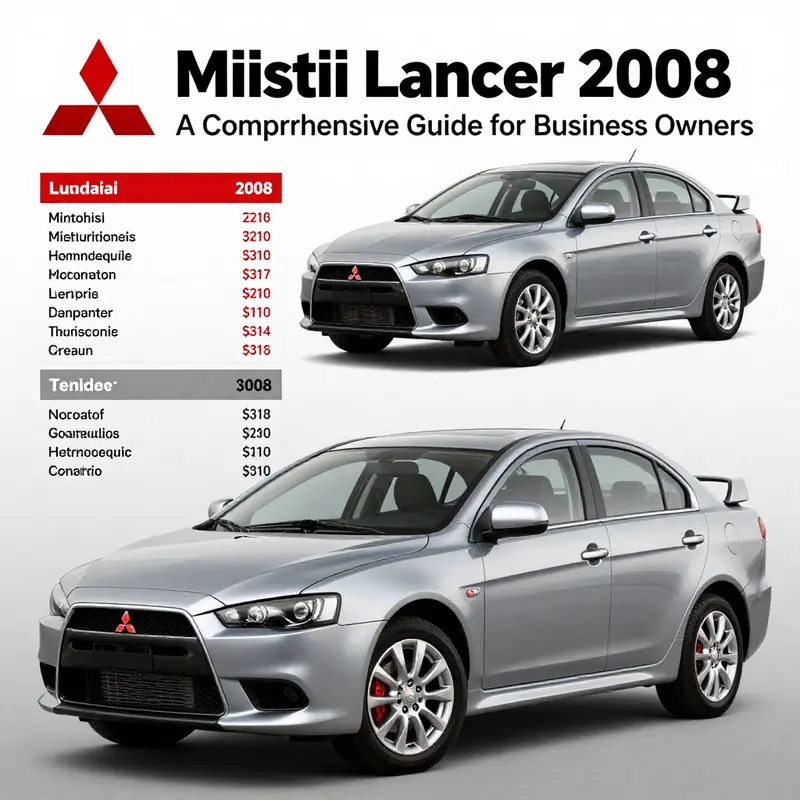
In the crowded field of compact sedans at the end of the first decade of the 21st century, the 2008 Mitsubishi Lancer distinguished itself not by a single engine note, but by an auditable ladder of power and a family of personalities crafted to suit different drivers. Across markets, the chassis remained the same – a neat, four-door package with a crisp silhouette and a handling ethos built for confidence rather than outright luxury. But beneath the skin lay a deliberate spectrum of motor configurations and trim levels that let buyers tune the Lancer to their daily needs, whether it was an efficient commuter, a more dynamic daily driver, or a weekend warrior who wanted a taste of true performance. The numbers tell a story that goes beyond numbers: a philosophy of balance, where engine character, gearing choices, and suspension tuning work together to shape the driving experience as much as the body lines do.
At the heart of the 2008 Lancer in many markets was a 2.0-liter inline-four engine with variable valve timing, often described in technical summaries as a MIVEC setup. In the Chinese and some non-US markets this engine could produce up to about 113 kilowatts, which translates to roughly 152 horsepower, with torque hovering near 198 newton-meters. Those figures point to a smooth, usable surge rather than a screamer, and they set the tone for a car meant to be practical in daily life while still offering a reasonable edge when pressed. In the United States, the same generation of the Lancer carried a similar 2.0-liter heart but was commonly rated closer to 145 horsepower, a reminder that regional tuning and emissions targets shaped the final figure more than the basic architecture did. The engine’s core charm lies in how it reconciles tractable city driving with the possibility of a lively highway roll, especially when paired with the right transmission and gearing.
Transmission options were a crucial part of how those engines delivered their promise. Across the lineup, buyers could choose a traditional five-speed manual, a CVT that was designed to emulate a six-speed feel, or, in the high-performance corners of the family, a dual-clutch setup that nudged the Lancer closer to genuine sport-sedans. The manual offered direct engagement and a sense of connection that many enthusiasts value, while the CVT, tuned to preserve a practical highway persona, kept the car peaceful at light throttle and efficient at steady speeds. The dual-clutch option, when available, was a nod to performance without forcing a heavy-handed driving style on everyday routes. The result was a chassis that could be a comfortable commuter most days and a capable partner for more spirited morning runs when the mood struck.
The ladder of trim levels reflected the same philosophy of choice. In the 2.0-liter category, the Lancer offered the base variant with essential equipment designed to deliver reliable, unflashy transport. Move up to the Lancer SE, and interior trims and standard equipment received upgrades that improved perceived quality and convenience without straying from the core value proposition. The Lancer Ralliart, however, introduced a dramatic shift in character. This model carried a more powerful 2.0-liter turbocharged inline-four, delivering around 230 horsepower in markets where the configuration was tuned for performance. It came with a sport-tuned suspension, revised brakes, and styling cues that signaled its intent to outperform the base models at the edge of the road. The high end in this lineup was marked by limited-run Evolution X editions – ENKEI and BBS variants – where lightweight wheels and refined suspension components pushed the car toward authentic performance credentials. These versions, priced aggressively for the era, leaned into Mitsubishi’s rally heritage and offered a purer, more track-ready experience, albeit in limited numbers.
The 2.4-liter option appeared primarily in higher-end trims and provided a broader torque band for those seeking stronger mid-range pull, especially in situations where a bit more overtaking vigor was beneficial without a dramatic increase in overall fuel consumption. The 2.4L variant was less common in some markets, but where it appeared, it served drivers who valued a stronger, more relaxed throttle response over peak horsepower. In terms of economy, the official consumption hovered around the mid-to-high single digits per 100 kilometers across configurations, with typical blended figures around 8.5 liters per 100 kilometers. That figure is a practical reminder of the era’s norms: the Lancer balanced performance potential with a reasonable operating cost, avoiding the extremes of power-for-power’s sake that could otherwise push fuel economy into less favorable territory.
The human side of this engine-and-trim matrix reveals itself in the car’s everyday persona. The 2.0-liter MIVEC engine’s smooth, linear delivery made it easy to live with; the CVT’s ability to hold steady revs during long highway stints helped with comfort and fuel efficiency; and the five-speed manual offered direct engagement for those who enjoyed a more hands-on driving style. For enthusiasts who desired a more aggressive voice, the turbocharged Ralliart and the Evolution X variants provided a sharper throttle response, a bolstered chassis, and a more aggressive visual language. The Evolution X, in particular, carried the weight of performance expectations. It personified a bridge between city practicality and rally-inspired dynamics: a car that could feel compliant around town yet transform into a focused driver’s tool when the road opened up. The Enkei and BBS wheel variants, along with sport-tuned suspensions and upgraded braking systems, underscored how the model could become a legitimate platform for performance exploration without sacrificing the everyday usability that most buyers prized.
From a market perspective, the 2008 Lancer embodied Mitsubishi’s strategy of offering breadth within a single family. In domestic terms, by the early 2020s the model had fallen out of new-car showrooms, as production wound down and the model segmented elsewhere in response to evolving emission standards and market preferences. Yet the used-car market preserved the 2008 Lancer’s memory, with remaining examples often reflecting the full range of options once offered. The price references, though region-specific, echoed the car’s mixed appeal: later 2.0-liter variants sat in the mid-range, with the sportier Evolution trims commanding a premium for their performance hardware and exclusive wheel packages. Consumer sentiment tended to be solid, with a rating around the mid-four range for the segment – a mark of respect for its handling and practicality, tempered by the realities of aging architecture and a crowded field of newer rivals in the used-car ecosystem.
For readers who want the most detailed, market-specific technical documentation, the 2008 Lancer’s configuration diagram and official specifications offer a rich map of how the engine, transaxle, and dashboard systems interacted. These diagrams illuminate the layout of the 2.0-liter MIVEC’s intake and exhaust plumbing, the interplay with the chosen transmission, and the way the engine’s torque curve was shaped to deliver its characteristic feel. The broader context – how Mitsubishi positioned the Lancer’s motor options against the competition – helps explain why the model carried such a varied trim ladder. It also clarifies why the Evolution X variants earned their reputation for performance in a segment where most buyers prioritized efficiency or brand prestige above outright speed.
Those who follow the evolution of Mitsubishi’s performance lineage will find a tangible throughline: the 2008 Lancer served as a practical gateway to higher-performance horizon, with its engine options acting like a curated menu for niche preferences. The lighter, turbocharged editions whetted the appetite for speed, while the 2.0 naturally aspirated and the 2.4-liter variants kept the car anchored in daily usability. A deeper look at the importation of these engines into different markets reveals how tuning, emissions, and consumer expectations shaped the final figures and the corresponding equipment packages. The result is a chapter in Mitsubishi’s corporate narrative that balances reliability and sportiness, a balancing act that remains relevant to enthusiasts who value a car that can be both a trusted daily companion and a vehicle capable of satisfying a craving for performance when the road turns twisty.
For readers who wish to explore tangible details on high-performance components beyond the factory configurations, there is a gateway to a broader ecosystem of parts and upgrades. A look at this particular carbon-fiber hood for Mitsubishi Lancer Evo X provides a sense of how owners and tuners extended the practical capabilities of the 2008 platform without losing the essence of its balanced design. This is not a sales pitch but a pathway to understanding how performance aspirations translate into real-world upgrades that preserve driveability while lifting the visual and aerodynamic profile of the car. The Evo X variants, with their lighter wheels and refined suspension, embodied a philosophy that many enthusiasts still admire: performance is not just about raw horsepower, but about how the whole mechanical package works together to deliver an engaging, confidence-inspiring experience.
External resources provide a more formal frame for these observations. For a detailed, contemporary specification and performance evaluation, Car and Driver’s coverage of the 2008 Mitsubishi Lancer offers a comprehensive reference point that readers can consult to cross-check official numbers and real-world impressions. This external resource is a valuable companion as one contemplates the full spectrum of the Lancer’s powertrain options and how they translated into on-road behavior in different markets.
Engine, Market and Mileage: How the 2008 Mitsubishi Lancer’s Motor Shaped Its Market Performance
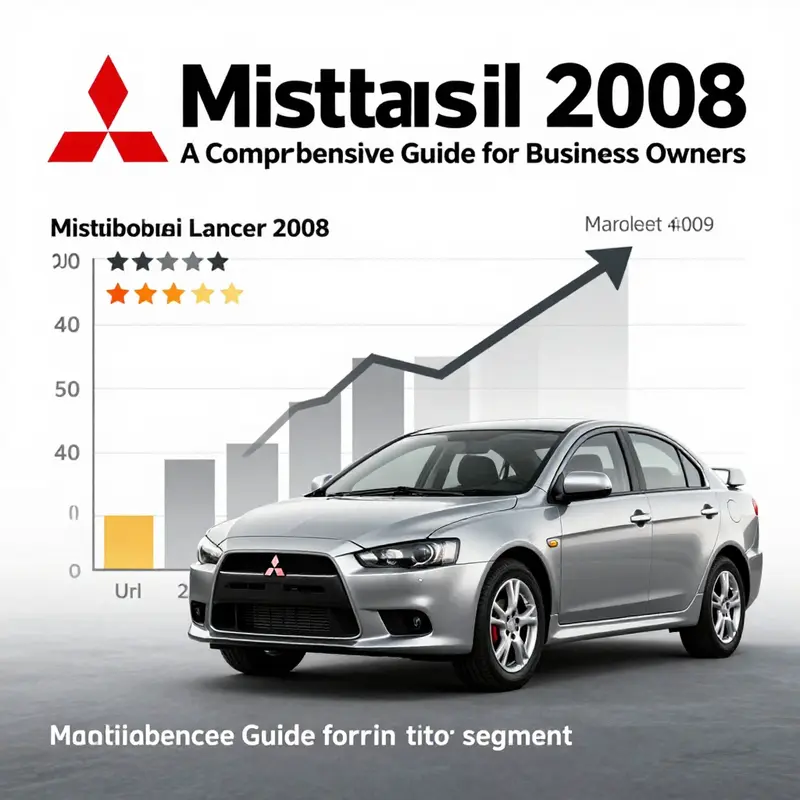
Market Trajectory and Owner Feedback
The 2008 Mitsubishi Lancer earned its place in the compact-sedan field by balancing everyday usability with a hint of sporting intent. Its 2.0L four-cylinder motor, and in higher trims a 2.4L option, gave buyers a pragmatic mix of fuel economy and performance. Those powertrains were not the flashiest in the class. Yet they matched the car’s character: dependable, responsive, and tuned for drivers who wanted engagement without excess. This engine-first identity shaped how the model performed in sales, resale, and owner sentiment over the years.
From a market perspective, the Lancer arrived as a sensible value proposition. Pricing at launch placed it within reach of younger buyers and small families. It also appealed to drivers who sought something sportier than a basic economy compact. That positioning helped the model hold steady against more conservative rivals. Over time, the brand’s motorsport and enthusiast heritage—embodied in performance derivatives—kept interest alive. Enthusiasts and tuners saw the Lancer as a platform. That niche appeal supported healthy demand for used examples and kept aftermarket activity robust.
Owners commonly praised the 2.0L MIVEC engine for its broad usability. It delivered adequate power for daily driving and highway cruising. The motor’s torque band was predictable. It required little fuss. Fuel consumption remained competitive, and maintenance tended to be straightforward. In surveys, drivers highlighted long-term durability. Many described their cars as reliable, with the motor continuing to perform well past typical ownership milestones. This reputation for longevity contributed to steady resale values in the used car market.
Driving impressions also influenced the model’s market reception. Steering feel and chassis balance stood out compared with more comfort-oriented competitors. Even standard trims offered sharper handling than many alternatives, which made the car feel engaging on twisty roads. Buyers who prioritized a tactile driving experience rewarded the Lancer with strong loyalty. Those traits were amplified in sport-derived variants, which featured upgraded suspension and more aggressive tuning. Such versions created halo effect benefits across the range, drawing attention to the standard models as credible, driver-focused choices.
User ratings reflected these strengths. Across owner review platforms, scores leaned positive. Durability and low running costs were common praise points. Routine maintenance items, such as brakes and suspension components, generally followed expected wear cycles and did not surprise owners with frequent, expensive repairs. Reliability studies rated the model favorably against peers in the compact segment. Still, the car was not without recurring notes of criticism. Interior materials and fit sometimes lagged behind top competitors. A few owners reported minor electrical quirks typical for vehicles of the era. Those issues rarely undermined overall satisfaction, but they did temper some high marks.
Resale performance benefited from the car’s reputation. Values held well when compared to many mainstream compact sedans. Affordability and a reputation for low ownership costs made clean, well-maintained units desirable in the pre-owned market. Enthusiast interest in sportier trims and derivatives created another demand channel. Buyers seeking a reliable daily that could also be modified were willing to pay a premium for sought-after examples. That ecosystem kept certain models from depreciating as quickly as ordinary compacts.
Market dynamics shifted as the model aged. Newer compact cars arrived with more advanced cabin materials and a greater focus on in-car technology. Some buyers moved toward those models, leaving older Lancers to the enthusiast and budget used-car segments. Dealers gradually pulled new stock as sales tapered. By the mid-2020s, the car was no longer sold new in many markets. Yet it continued to circulate actively in the used market. For buyers, that cycle created benefits. Values were stabilized by a loyal following, and parts availability remained good thanks to aftermarket interest.
Owners who kept their cars often invested in modest upgrades. Common changes included suspension tuning, brake improvements, and wheel upgrades. These modifications enhanced handling and refreshed the car’s appearance without undermining reliability. The lively aftermarket around the model extended to parts like body panels and trim, which kept older vehicles looking contemporary. Enthusiast communities shared maintenance tips and tuning guides, reducing the learning curve for new owners and helping maintain resale value.
Maintenance costs played an important role in owner satisfaction. The engine’s design emphasized durability and straightforward service intervals. Routine tasks—oil changes, belts, and fluid services—were well understood by independent shops. That simplicity lowered ownership costs over time. While some systems, such as early infotainment units and cabin trim, received criticism, they rarely forced owners into major, unexpected expenses. This overall predictability made the car attractive to buyers who wanted a reliable daily driver with low total cost of ownership.
Safety and perception also influenced market standing. The model’s crash ratings and safety features were adequate for its time. These attributes reassured families and solo commuters alike. Yet as the industry pushed forward with advanced driver aids, the older model’s feature set began to look dated. That shift affected new-car competitiveness, but it did little to hurt used-car desirability among cost-conscious buyers or enthusiasts who prioritized handling and mechanical robustness.
Regional differences mattered. In markets where compact sedans remained popular, the model kept a loyal following. Where buyers migrated quickly to crossovers, the Lancer’s appeal narrowed. Even so, its status among enthusiasts translated into steady demand for well-kept units. That created pockets where the car retained stronger resale values than expected.
When assessing user ratings and market performance together, a clear picture emerges. The motor defined the car’s identity. Its balance of efficiency, durability, and engagement anchored user sentiment. Buyers valued the predictability of service and the engine’s long-term behavior. Enthusiasts boosted the car’s profile with performance variants and aftermarket support. These combined factors underpinned stable resale values and high owner loyalty.
For prospective used-car buyers, the lessons are practical. Focus on service history and evidence of routine maintenance. Confirm that any modifications were done thoughtfully and by reputable shops. Inspect common wear items, such as suspension components and electrical systems, which reflect the vehicle’s age. Consider trims and variants carefully: sportier versions can command premiums, but they may also have been driven harder. Balanced examples with documented care deliver the best ownership experience.
The Lancer’s market life shows how a dependable motor can influence broader commercial outcomes. A well-calibrated engine attracted buyers, kept running costs low, and supported aftermarket enthusiasm. Those elements combined to create a model that retained relevance after it left dealerships. Enthusiasts and pragmatic buyers alike found reasons to choose it. The car’s legacy in the compact segment rests largely on that mechanical heart and how it shaped owner perceptions and market value.
For detailed technical specs and contemporary road-test impressions, consult a comprehensive review from a trusted automotive source: https://www.caranddriver.com/mitsubishi/lancer/2008/review
For readers interested in enthusiast parts and body components that have kept these cars active in the aftermarket, see an example catalog of Evo X rear bumpers and related items at this parts resource: 2008–2015 Mitsubishi Lancer Evo X rear bumpers.
Final thoughts
The Mitsubishi Lancer 2008 model stands out in the compact car market with its impressive engine specifications, versatile transmission options, and a range of configurations that cater to diverse consumer needs. With solid market performance and favorable user ratings, this vehicle continues to generate interest among business owners seeking reliable transportation solutions. Whether for a fleet or personal use, the Lancer remains a noteworthy choice in today’s automotive landscape.