

The Mitsubishi Lancer Evolution IX is a powerhouse that has left an indelible mark in the world of performance vehicles. Its core, the 4G63T engine, is renowned for its robust design and significant modifications potential, captivating car enthusiasts and business owners alike. Understanding the technical innovations, performance specifications, powertrain features, and cultural impact of this iconic engine not only highlights its engineering brilliance but also underscores its value in the automotive market. As we delve into each aspect, we uncover how these elements function synergistically, making the Lancer Evolution IX a timeless choice for both enthusiasts and businesses in the automotive sector.
How the 4G63T Redefined the EVO: MIVEC, Turbo Geometry, and Tunability of the Evolution IX Engine
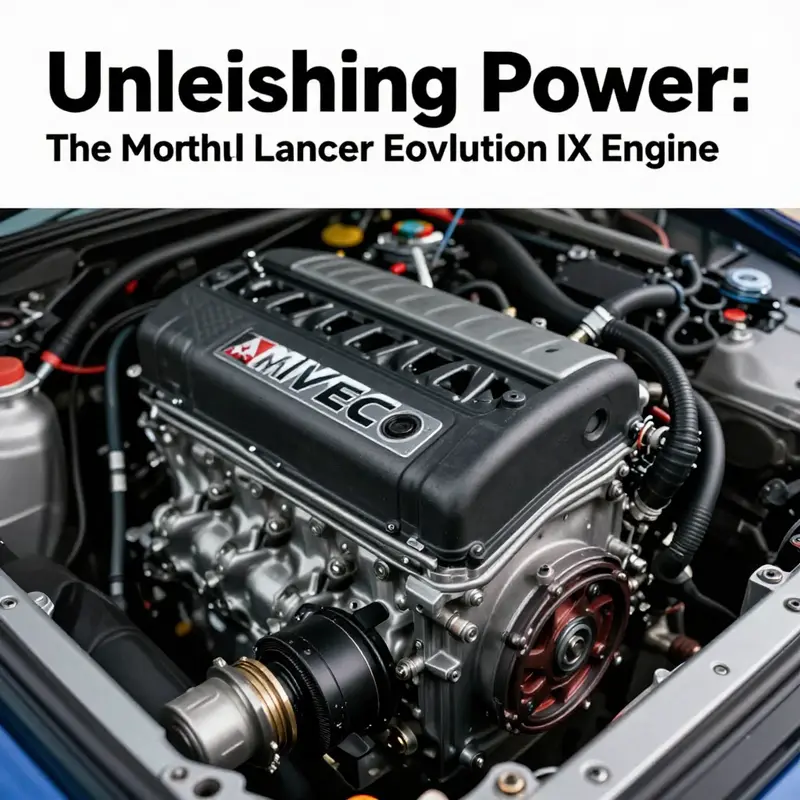
The Lancer Evolution IX’s engine is more than power figures. The 4G63T in the EVO IX represents a careful blend of race-bred durability and modern refinement. Mitsubishi kept the block that earned a cult following, then layered in technologies that tightened throttle response, broadened the torque curve, and made the engine more usable on the road. The result is an engine that feels both immediate and robust, with emotional engagement at the pedal and engineering depth under the hood.
At the heart of the IX’s character is the adoption of variable valve timing. For the first time on the 4G63 platform, the MIVEC system was applied. Rather than a simple on/off change, the system continuously adjusts intake valve timing. That subtlety matters: it tunes airflow and cylinder filling across the rev range. At low rpm, valve timing favors torque and tractability. As revs climb, the system shifts to allow better breathing and higher peak power. The practical effect is a sharp drop in turbo lag and a throttle response that feels more proportional to driver input. The engine no longer feels like two different beasts at low and high revs; it behaves as a single, pliable unit.
MIVEC’s benefits do not stand alone. Mitsubishi revised the turbocharger and its intake geometry to complement the valve timing improvements. The IX received a turbo with a diffuser-style intake housing. That design increases intake efficiency by smoothing airflow into the compressor and reducing separation. The compressor breathes more efficiently across part-throttle and full-throttle conditions. Coupled with MIVEC, the turbo delivers a broader band of usable torque. Drivers notice stronger, more accessible thrust from 2,000 to 5,000 rpm, rather than a narrow band of peak power. That makes the car faster out of corners and more confidence-inspiring in everyday traffic.
Electronics tie these mechanical changes into a cohesive package. The engine control unit was reworked to manage MIVEC and the refined turbo hardware in concert. Fuel injection timing, ignition advance, and boost control are all calibrated to exploit the new systems while protecting the engine. The ECU map smooths transitions in valve timing and boost onset. It reduces abrupt torque spikes and maintains combustion stability under varying loads. For tuners, the improved engine management also provides a better baseline. When remapping for higher boost or different fuel, the IX’s calibrated systems respond predictably, making performance gains safer and more linear.
Peak numbers tell part of the story. Officially, the EVO IX’s 4G63T states 280 PS at 6,500 rpm and 355 N·m of torque at 3,500 rpm. The torque figure is particularly noteworthy. That substantial torque at midrange transforms acceleration dynamics. Launches are stronger, and the car pulls harder through mid-corner exits. In markets without the domestic power cap, some export variants edge closer to the 291-horsepower mark, reflecting small hardware and tuning differences. Yet raw figures miss what these changes do to drivability: they make the engine feel more immediate and more forgiving when pushed hard.
Durability has long been the 4G63’s calling card. The EVO IX retained the cast iron block that allowed the platform to become a tuning legend. That block withstands high cylinder pressures and heat cycles better than many aluminum designs. For enthusiasts who plan forced-induction upgrades, the block’s robustness reduces early failure risk and widens safe tuning margins. Many owners and professional builders value this trait because it lets them pursue significant power increases without investing immediately in a billet or sleeved block.
Because reliability under boost matters, the IX’s package balances strength and drivability. MIVEC softens low-end behavior, the turbo reshapes the torque curve, and the ECU coordinates everything. That balance makes the IX a favorite for both street-driven builds and competition cars. It’s not only about how much power the engine can make, but how useable that power is, lap after lap.
Practical maintenance and common upgrade paths reflect the engine’s twin personalities: refined factory engineering and vast tuning headroom. Routine items such as timing belts, water pumps, and turbo seals are critical for longevity. The MIVEC system adds valve control components to the maintenance list, so servicing schedules and correct oil spec become more important. On the upgrade front, typical first steps focus on breathing and fueling: intake, intercooler, exhaust, and injectors. The diffuser turbo can be complemented by a slightly larger compressor or upgraded turbine housing, but many builders find the IX’s turbo ideal for modest power upgrades because it preserves low-end response.
For those seeking more substantial power, the engine’s cast iron architecture makes head studs, upgraded pistons, and reinforced rods practical upgrades. Even then, the 4G63’s reputation reduces the cost and complexity of a high-power build compared with newer aluminum engines that need extensive strengthening. ECU tuning is crucial at every stage, from bolt-ons to full engine builds. Given the IX’s advanced factory mapping, experienced tuners can extract predictable, reliable gains while retaining drivability.
The synergy with the transmission is another subtle advantage. The EVO IX was offered with a 6-speed manual in many markets, and that gearbox lets drivers exploit the engine’s broader torque curve. Shorter, closer ratios keep the engine in its sweet spot, while the stronger midrange torque reduces the need to constantly rev to the limiter. The drivetrain and engine feel intentionally matched: quicker upshifts and punchier pulls out of corners.
Contextually, the IX occupies an important place in the EVO lineage. While later models moved to a different aluminum-based engine, the IX refined the 4G63 rather than replacing it. That final iteration combined modern variable valve control with proven mechanical strength. Many regard this combination as the apex of the 4G63’s evolution: a tuner’s paradise with advanced factory tech that made street driving easier. For anyone sourcing replacement cores or swap engines, the platform’s popularity means parts availability remains strong. Enthusiasts often seek out a genuine JDM low-mileage 4G63T 2.0L DOHC turbo engine when undertaking restorations or builds.
The engineering choices of the EVO IX show a clear design philosophy. Rather than pursuing peak horsepower at all costs, engineers aimed for an engine that felt fast in real use. MIVEC and turbo geometry widened the usable powerband. The cast iron block preserved a foundation for high-stress use. The refined ECU tied the systems together, producing an engine that is both rewarding to drive and capable of significant upgrades. Those innovations explain why the 4G63T in the EVO IX remains a benchmark for enthusiasts and builders.
External reference: Mitsubishi Lancer Evolution IX – Wikipedia (https://en.wikipedia.org/wiki/MitsubishiLancerEvolution_IX)
The 4G63T Heartbeat: Performance and Passion in the Lancer Evolution IX Engine
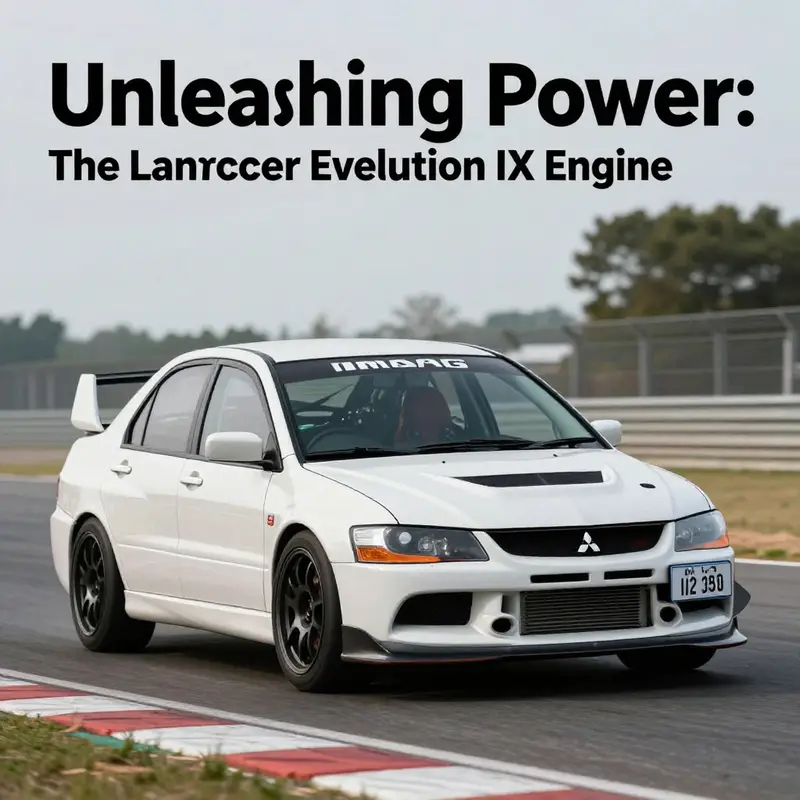
The Lancer Evolution IX carries the echo of a lineage built around one engine that became as much a legend as the cars that housed it. At the center of that legend sits the 4G63T, a 2.0-liter inline-four that proves a compact, rugged architecture can deliver rally-bred drama when paired with a clever turbo system and an electronically tuned throat. This is not merely a specification sheet; it is a portrait of how a powerplant can define a whole driving culture. The engine’s identity begins with its enduring heart—a cast-iron block that refuses to quit under pressure and heat, a design choice that underscored the model’s reputation as a trustworthy platform for enthusiasts who push limits. In a world chasing lighter components and exotic alloys, the 4G63T stood out precisely because it could take heat, retain shape, and respond to power demands with surprising stoicism. Those traits mattered when drivers sought to exploit the turbocharged surge without trading the engine’s liveability on daily commutes or long road trips.
The arithmetic of performance on the IX is succinct and purposeful. The standard output sits around 280 PS (roughly 276 horsepower in European ratings) at 6,500 rpm, with peak torque of about 400 N·m (roughly 295 lb-ft) arriving as low as 3,000 rpm. This torque peak is not a fleeting spike; it is a steady companion that helps the car pull away from a stop or hustle through a mid-range turn with confidence. The compression ratio, reduced to 8.5:1, is a clear signal of turbocharging intent: the engine is designed to tolerate boost, not chase maximum efficiency. Fuel delivery follows a sequential injection scheme that works in harmony with a twin-scroll turbocharger. The diffuser design within that turbo is more than a detail; it is a deliberate choice to improve low-end torque response, reducing lag and sharpening the feel of the throttle as the boost builds.
MIVEC — Mitsubishi Innovative Valve timing Electronic Control — is more than a clever acronym. It represents a variable valve timing strategy that broadens the engine’s effective power band. In practice, MIVEC allows the engine to breathe optimally across the RPM range, delivering robust torque at lower revs while still opening up for the high-RPM charge that the turbo demands. The result is a chassis that feels composed when cruising yet eager when the right foot meets the accelerator. The fuel system and ignition strategy are tuned to extract that balance, maintaining driveability while offering a pathway to higher performance through ECU calibration and exhaust optimization.
The baseline specifications describe a tractable, responsive engine. But the IX’s beauty lies in how that base is a platform for adjustment, a canvas for enthusiasts who crave more than a straight line from zero to sixty. In this ecosystem, the 4G63T has earned the nickname modification god, not as a boast but as a reflection of its tolerant hardware and the generous headroom built into its design. The iron block, the forged internals, the cooling circuits, and the turbo’s capacity collaborate so that upgrades do not require a complete rebuild of the core. Instead, the path to more power often begins with ECU tuning, a more capable exhaust, improved intercooling, and cooling upgrades that extend the engine’s breathing ability at elevated boost. These are changes that respect the engine’s architecture while pushing it toward the edge of its potential.
As the Evolution IX matured, the combination of 4G63T with a 6-speed manual transmission offered a precise, engaging mechanical rhythm. Some lower-spec iterations employed a 5-speed manual, but the 6-speed box was the proper partner for the engine’s torque curve and rev-happy nature. The pairing is more than a count of gears; it shapes how the engine’s torque feels on the road. With the boost peaking around 3,000 rpm and the rev ceiling nudging toward 7,000, a well-tuned IX can maintain momentum through corners and straights alike. The driver’s sense of the engine becomes a dialogue with the car, each shift a note in a song of controlled aggression. The sound of the turbo spooling, the crispness of the intake, and the whistle of exhaust after a clean upshift contribute to a sensory language that many enthusiasts remember long after the drive ends.
Special editions and notable modifications illustrate the engine’s boundary-pushing potential. The FQ-360 variant, developed by a well-known tuning house for the UK market, pushed output toward 366 PS (around 361 horsepower) and torque toward 492 N·m through a careful blend of ECU tuning, upgraded exhaust, and enhanced cooling. These figures reflect a path that many owners explore: not simply adding power, but doing so in a way that preserves tractable behavior under street use. Then there are documented street builds in places like Los Angeles that claim wheel horsepower well into the 650 range with bespoke turbo arrangements and E85 fuel, a stark reminder of how the 4G63T can be coaxed into a different league while relying on a core that remains reliable and repeatable under the right care. The engine’s durability and heat resistance, combined with an effective cooling strategy and robust internals, remain the key ingredients that make such ambitious projects possible, even as they sit beyond the realm of typical daily driving.
To understand why the IX remains so revered in enthusiast circles, one must consider the broader historical arc. The IX represents the last chapter of the original, rally-inspired shell that fans cherished before Mitsubishi shifted to aluminum architecture in the next generation. The move to the aluminum 4B11 engine in the Evolution X symbolized a new era of design priorities, yet many drivers hold the IX as the purest embodiment of the original performance ethos. The 4G63T’s cast-iron heart was not merely durable; it was a modular platform that lent itself to iterative learning. Each modification taught the next, and the car’s all-wheel-drive chassis, with its balanced weight distribution and tuned suspension, responded to horsepower in a way that was predictable in a good way. The result was a driving experience that rewarded both skill and curiosity—an invitation to experiment, test limits, and learn how to extract performance without losing the essential sense of control.
In practice, these specifications translate into a chassis that feels alive without being unpredictable. The power delivery is linear enough to keep the car within a controllable envelope, yet it rewards steering inputs and throttle modulation with a surge that keeps a driver engaged. The turbo’s low-end response, aided by the twin-scroll design, means the car pulls cleanly from low speeds, aiding downshifts into corners and enabling confident mid-corner accelerations. Across the RPM band, MIVEC helps the engine breathe efficiently, ensuring that even as boost climbs, the engine remains tractable and responsive. The compatibility of the engine with the transmission and drive system means these cars can be tuned for track days or spirited street driving without becoming unruly or difficult to manage in everyday conditions.
For readers curious about the deeper technical lineage, the engine’s specifications are reinforced by a history of community-driven knowledge and official documentation. The detailed data from production models lays a foundation for understanding how the IX could be tuned responsibly. It also frames the conversation about why enthusiasts look back at this engine with such affection: it offered a compelling blend of reliability, potential, and a tangible connection to a time when performance was built on a robust, simple idea—boost, breathe, and blast through the next corner. As a result, the IX remains a benchmark chapter in the Lancer Evolution saga, not merely as a page in a brochure but as a living platform that continues to inspire dialogue about how power, engineering, and driving joy converge on a single engine’s heartbeat.
For official and detailed specifications, refer to the technical references offered by the maker’s documentation and production materials, which provide authoritative context for the numbers and design choices discussed here. Additionally, readers can explore broader archival coverage and historical perspectives that illuminate the IX’s place in the lineage. External reference: https://www.mitsubishimotors.co.uk
Internal reference for deeper engine history and components that shaped the IX’s powertrain can be found in related technical discussions here: genuine-jdm-low-mileage-1995-1999-mitsubishi-4g63t-2-0l-dohc-turbo-engine-evo-7-bolt-eclipse-talon-awd-automatic-transmission-and-ecu-attached
Under Pressure and All-Wheel Drive: The 4G63-T Powertrain and the Evolution IX’s Handling Legend
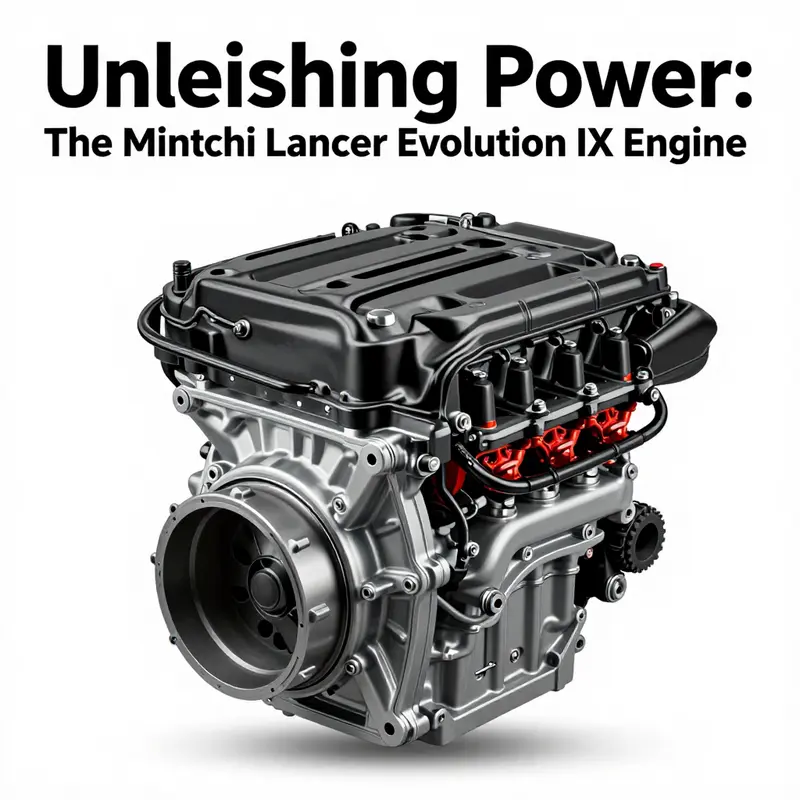
The Lancer Evolution IX stands as a high-water mark in a lineage defined by precision, aggression, and an enduring faith in a robust, turbocharged 2.0-liter heart. At the core of this philosophy sits a 4G63T inline-four, a compact, iron-block powerhouse that has become synonymous with the era it helped to define. In the IX, Mitsubishi paired this engine with MIVEC, a dynamic valve timing system that nudges the car toward responsiveness across the entire rev range while mitigating the infamous turbo lag that can plague turbocharged four-cylinders. The result is not merely straight-line force, but a coherent, usable surge that comes on smoothly as rpm climbs, and a torque curve that keeps the chassis awake from the moment the throttle starts to rise. This is where the Evolution IX earns its reputation as a performance compact with a sense of purpose rather than a mere arsenal of peak numbers.
The architecture speaks of durability and incremental capability. The 2.0-liter displacement, turbocharged and air-fed, feeds a four-cylinder layout that remains faithful to the tradition of a rugged cast iron block. That choice endows the engine with heat resistance and pressure tolerance that enthusiasts have long praised as the platform for extensive modification. In practice, this means a strong foundation for both daily drudgery and weekend experimentation. The emphasis on reliable thermal management and consistent internal pressures fosters an environment where spirited driving—whether on a track, back road, or a stretch of mixed pavement—can be pursued without a catastrophic equilibrium loss. The engine’s character is not merely about peak horsepower, but about the cadence of delivery: quick spool, broad usable torque, and a linear response that keeps the driver confident as road surfaces change and elevation climbs.
MIVEC’s contribution to this cadence cannot be overstated. By adjusting valve timing in real time, it smooths the engine’s timing across the rev band, ensuring the turbo’s energy is not squandered at low revs and that the upper ranges remain lively without becoming peaky. In practice, this translates to stronger mid-range torque and quicker accelerations as you settle into the torque peak. The IX’s powerband feels continuous rather than stepping clunkily from one peak to the next; the car feels eager to respond rather than waiting for a second throttle snap to wake it up. That sense of immediacy is what helps the IX translate its numbers—280 horsepower at 6500 rpm, around 355 newton-meters of torque at roughly 3500 rpm—into the palpable, confident acceleration that enthusiasts remember. While export versions in some markets edge toward higher figures, the essence remains: refined response across the range, with a torque peak that helps the car feel lively out of corners and at mid-speed on winding roads.
A six-speed manual transmission is the natural partner for this engine’s temperament. It offers the kind of precise, predictable gear engagement that makes the IX feel composed in both street and light-track contexts. The manual’s ratios are chosen to harmonize with the turbocharged four’s torque delivery, allowing smooth upshifts as boost builds and deliberate downshifts when trail-braking into a bend. The front-to-rear balance and the all-wheel-drive system reinforce that sense of cohesion. Full-time AWD distributes power with a bias toward traction, enhancing grip when the road surface veers away from the ideal line and helping the car hold a steady path through uncertain corners. The combination of turbocharged enthusiasm, MIVEC-tuned responsiveness, and a confident manual-AWD package defines the IX’s handling character as much as its top speed or 0–60 time.
This is also where the vehicle’s modification lore grows. The 4G63’s reputation as a robust platform—the so‑called modification god, in forums and garages around the world—rests on its tolerance for heat and pressure, and on the relative affordability of a broad ecosystem of parts. Enthusiasts routinely push the engine’s capability through ECU recalibration, upgraded fuel delivery, larger exhaust flows, and enhanced cooling strategies. The aim is not only more power but a higher ceiling for sustained performance and repeatable behavior on a track or a windy mountain road. The engine’s reliability becomes a virtue when pursued with care, enabling a shift from casual tuning to more ambitious builds without sacrificing on driveability.
The IX’s hardware, while modest by modern standards, was engineered with the expectation that drivers would push it hard. The 6-speed manual remains a keystone of its formula, delivering a tactile sense of connection that a modern dual-clutch setup can scarcely replicate in the same way. The all-wheel-drive system provides a platform for control rather than a merely corrective limit—an enabler of confidence. You can carry speed into a corner and rely on the drivetrain to deliver torque to the wheels that need it most, rather than fighting a front-to-rear bias that could smear the line you’re trying to hold. The chassis, tuned to balance steering precision, suspension stiffness, and aerodynamic balance, works in concert with the powertrain to create a vehicle that communicates with its driver in a straightforward and physical language. In that sense, the Evolution IX is more than a set of numbers; it is a comprehensive driving experience where the engine, the transmission, and the AWD system share a common mission: to translate throttle inputs into poised, trackable progress.
From a practical standpoint, the IX sits at the intersection of capability and accessibility. Its power output—roughly 280 horsepower at the crank in stock form—remains within a band that is approachable for competent drivers yet remains a meaningful step up from ordinary sedans. In markets where the tune is more aggressive, the peak figures may shift slightly, but the underlying architecture, the reliability of the 4G63T block, and the MIVEC-enhanced timing curve stay constant as the defining traits. The result is a vehicle that can be driven daily with the same sense of purpose it uses to attack a circuit on the weekend. A car that offers both tractable power for street driving and the potential for significant performance gains with thoughtful upgrades.
For readers curious about the broader ecosystem surrounding a car like this, a glimpse into the aftermarket and parts landscape helps illuminate why the IX remains a benchmark. A related parts page offers practical context for how owners might approach protection, restoration, or enhancement of the car’s exterior and structural components. 03-06-mitsubishi-evolution-8-9-jdm-rear-bumper-oem
In closing, the Evolution IX’s engine-transmission-AWD trio embodies a philosophy of performance that emphasizes usable power, predictability, and a symbiotic relationship between driver and machine. The 4G63T’s tuning flexibility, the MIVEC’s real-time timing ingenuity, and the six-speed manual’s precise engagement together create a platform that encourages both disciplined, spirited driving and measured, methodical upgrades. This is where the IX earns its place in the annals of performance compacts: not simply for the numbers it claimed, but for the way those numbers translated into a driving experience that felt engineered for steady, confident progress through every kilometer of road and every lap of the track.
External resources offer further depth on how high-performance variants approach power and cooling, and how that translates to on-road and on-track behavior. For a detailed look at an official high-performance variant’s engineering and performance characteristics, see the external reference: https://www.mitsubishi-motors.co.uk/vehicles/lancer-evolution/fq-360/.
The Iron Heart of the Ninth Generation: A Narrative of the Evolution Engine’s Legacy and the Shift to a New Era
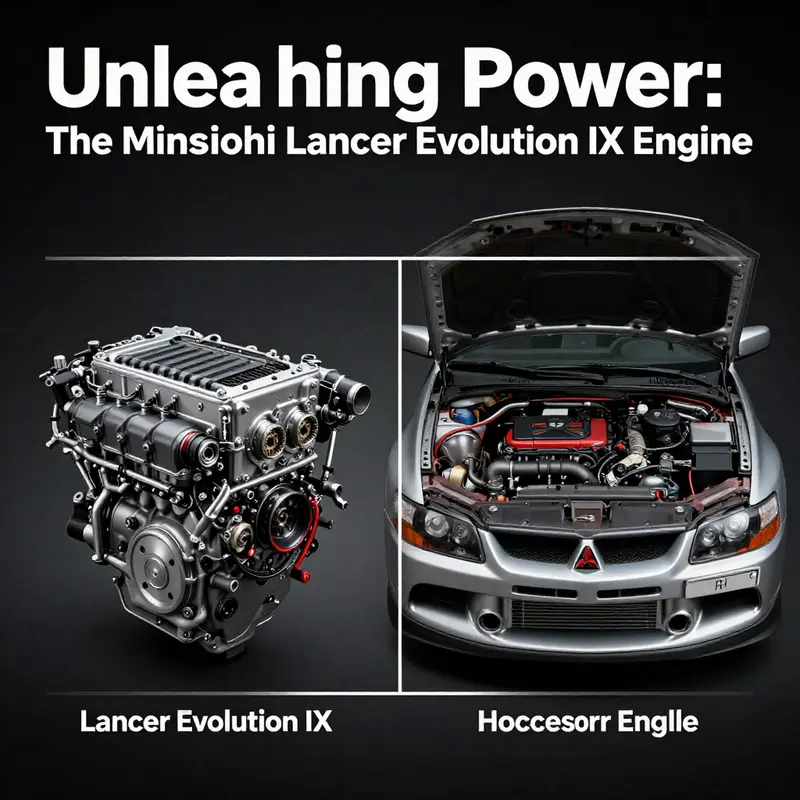
The ninth generation of this iconic rally-inspired sedan earned its reputation not just from a sharp body line or a rallying pedigree, but from the engine that lay at its core. The 2.0-liter turbocharged inline-four that powered the car became a symbol of brute but refined performance. Its cast-iron block offered a resilience that many engineers considered almost legendary, a foundation sturdy enough to tolerate the many hours of abuse a performance machine endures on a track and in hot, demanding street use. Enthusiasts soon nicknamed the powerplant the “modification god,” a testament to how deeply the engine’s durability, heat resistance, and pressure tolerance invited, even demanded, experimentation. The architecture was simple enough to be approachable for tuning, yet robust enough to survive big horsepower leaps without dissolving into chaos at the first sign of boost creep or elevated temperatures.
A crucial part of the ninth generation’s appeal lay in how Mitsubishi integrated valve timing control into this already capable equation. The introduction of a modern timing system—the kind that coordinates intake and exhaust events with the engine’s electronic brain—pushed the engine’s response across the entire rev range. This meant quick, aggressive throttle delivery at lower and mid-range RPMs and a more predictable surge as the tachometer swept upward. The result was not simply peak power; it was a broad, usable torque band that helped the car feel alive in daily driving yet threatening on a back road or a track. The published performance figures—up to about 280 horsepower at 6,500 RPM and peak torque around 355 Newton-meters at roughly 3,500 RPM—felt like a package that favored real-world acceleration and consistent, controllable power over sudden, fragile bursts of speed. In some export versions, the power figure climbed a touch higher, nudging toward the upper 290s, but never at the expense of tractable, reliable performance that could live under everyday driving conditions.
What this engine offered beyond raw numbers was a tuning culture forged in a platform that rewarded iteration rather than replacement. A robust cast-iron block meant builders could push boost higher and run bigger injectors with a safety margin that newer materials sometimes struggle to match without more elaborate engineering. The turbocharger could spin with less fear of block deformation, and the cooling system, while not extravagant, could be pushed to maintain reliability under repeated, high-load sessions. It is no accident that the engine has become something of a litmus test for an enthusiast’s capabilities: a platform where software can be reprogrammed, a migration path to advanced tune setups, and a chassis that can handle the power with a confidence that most modern, lighter blocks struggle to match in the same way when approached with a similarly aggressive aim.
Yet this brilliance did not exist in a vacuum. The ninth generation lived within a broader philosophy that prized mechanical grip, balanced chassis dynamics, and a drivetrain that could exploit the engine’s power with precision. The Active Center Differential and the Super All-Wheel Control systems, paired with a capable manual transmission, gave drivers a real sense of connection to the road. The transmission options ensured that the engine’s character could be fully realized, whether a purist insisted on a pure six-speed manual or a more modern knob-twitching experience. In practice, the engine felt like the beating heart of a machine designed to chase a goal—acceleration with control—without sacrificing the driver’s sense of agency.
The arrival of the successor brought a very different kind of conversation. The next generation would switch to a newer turbocharged 2.0-liter family, but with several core changes that altered how power traveled from the engine to the wheels. Aluminum blocks replaced cast iron, shaving weight and changing the engine’s heat management profile. The new block type introduced benefits in efficiency and agility, but it also reshaped the tuning landscape. Peak horsepower crept upward, nudging into the low three-figure range, while the torque profile remained strong though increasingly tuned around different rpm bands. Enthusiasts often point out that the new arrangement, while arguably more modern and capable in a factory setting, did not carry the same depth of aftermarket modular potential. The 4G63-based platform, with its iron block and well-worn path of proven upgrades, offered a horizon of modifications that many saw as a defining virtue of the era—an intense, lived relationship between car and tuner that kept the community vibrant for years. The newer architecture, while impressive in its own right, did not always invite the same scale of mechanical tinkering, at least not with the same universal appeal or predictability that the older engine offered.
In addition to the heart of the engine, the broader system architecture shifted as well. The ninth generation’s drivetrain ecosystem included an advanced yet intuitive balance of front and rear torque distribution. The active systems that managed yaw and cornering, feeding power to the wheels with surgical timing, were finely attuned to the characteristics of the 2.0-liter turbo. When the successor appeared, Mitsubishi introduced a reimagined all-wheel control philosophy, aimed at delivering seamless transitions between traction modes, a more integrated sense of stability, and a packaging efficiency that came with modern electronics and control algorithms. The shift also touched the choice of transmissions. The era of a purist, hands-on manual driving experience began to coexist with automated, dual-clutch configurations that promised faster shifts and smoother drive dynamics. In the mind of many enthusiasts, this bifurcation marked a pivot point: the old platform rewarded intimate mechanical connection and heavy tuning, while the new platform pursued refined, high-speed performance with an eye toward broader market appeal and modern electronics.
From a tuning and culture perspective, the ninth generation remains a touchstone for a reason. It is not merely that the engine could take more boost or more fuel; it is that the entire package—block material, valve timing, and a drivetrain tuned for immediate, linear response—created a canvas for creativity. Tuning strategies could be scaled up with reliable block integrity, and the timing controls allowed operators to coax smoother throttle behavior as boost rose, reducing the risk of abrupt surges at inopportune moments. The sense of community that grew around the platform—shared knowledge, careful carburetion decisions, cam timing experiments, and intercooler upgrades—still reverberates through modern builds that honor the lineage. By contrast, the successor, impressive though it is, arrived with a different sort of relationship: more efficient and perhaps more accessible to a broader audience, yet with fewer, widely adopted, deeply proven upgrade paths that could be relied upon to push the power envelope in the same intimate, repeatable ways.
For those who measure a model’s value not just in factory figures but in the lived experience of ownership, the ninth generation’s engine is a narrative of resilience, opportunity, and a certain elemental honesty. It rewarded the curious, the patient, and the diligent, turning upgrades into stories of progress and triumph. The successor’s innovations—lighter materials, more integrated electronics, and modern transmission choices—signaled a new era of efficiency and technology, but they also sparked a different kind of devotion: one that celebrated overall performance packaging and refined handling as much as raw forcing of horsepower. The legacy, then, is not simply a comparison of numbers or measurements. It is a story about how a single, iconic engine shaped a community’s identity, how a car’s core character influences what owners chase in upgrades, and how a later generation reframed performance in ways that honored, yet departed from, the original spirit.
External resource for broader context and technical detail can be found here: https://www.mitsubishimotors.co.uk/vehicles/lancer-evolution-x/
null

null
Final thoughts
The Mitsubishi Lancer Evolution IX stands as a testament to automotive engineering, with its 4G63T engine at the heart of its legacy. As we explored its technical innovations, performance specifications, and the robust transmission that harnesses its power, it becomes evident why the EVO IX is celebrated among car enthusiasts. Its comparison to successor models underscores the distinct characteristics that set it apart, reinforcing its status as the ‘last true EVO.’ Furthermore, the cultural impact of this powerhouse continues to inspire a devoted fan base and serves as a benchmark for performance vehicles. In the evolving landscape of automotive excellence, the Lancer Evolution IX will always find its place in the hearts of many.