
In the competitive realm of commerce, having reliable vehicles is paramount for business success. Mitsubishi offers a robust lineup of commercial and passenger vehicles, but maintaining these vehicles requires access to high-quality parts. This article delves into Mitsubishi parts available online, exploring comprehensive resources for both commercial vehicles and popular passenger models. Through our discussion, business owners will enhance their understanding of sourcing genuine Mitsubishi components to ensure the reliability and performance of their vehicles.
Finding, Specifying, and Using Mitsubishi Fuso Parts Online: A Practical Guide for Commercial Fleets
Finding, Specifying, and Using Mitsubishi Fuso Parts Online: A Practical Guide for Commercial Fleets
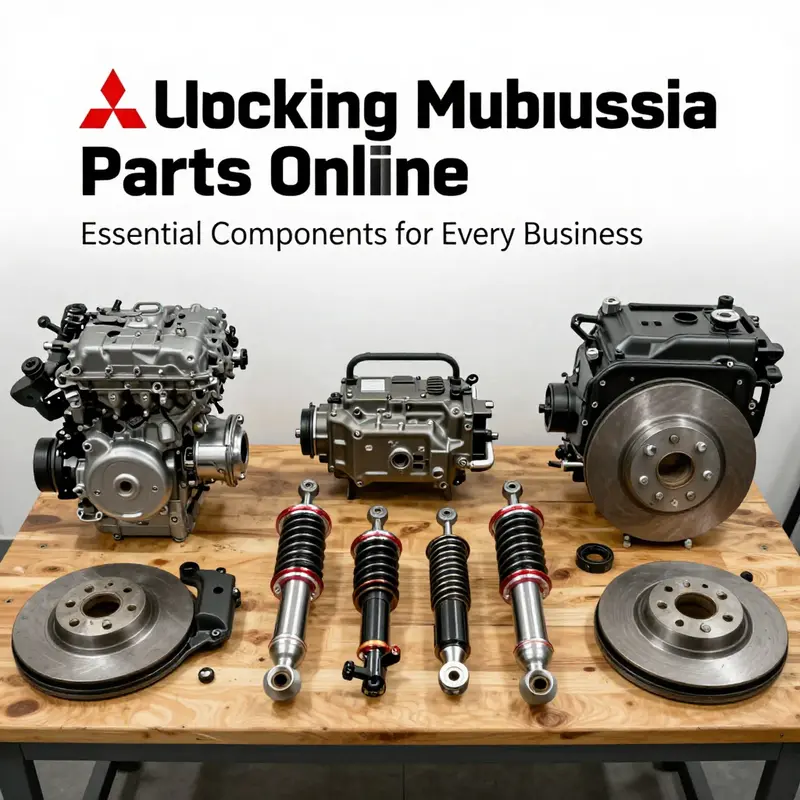
Maintaining commercial Mitsubishi vehicles requires more than ordering a replacement part and waiting for a delivery. It demands clarity about what a component does, how it wears, where it fits into the vehicle, and how an online purchase will affect uptime and lifecycle costs. For fleet managers, technicians, and owner-operators who rely on Mitsubishi Fuso trucks and Canter models, online parts catalogs offer both efficiency and complexity. Navigating that complexity starts with understanding the categories of parts available and the practical choices that influence reliability, safety, and long-term cost.
The largest categories you’ll encounter online are engine, drivetrain and transmission, braking, suspension and steering, electrical systems, and body components. Each category contains items that vary from simple fasteners to precision-engineered assemblies. Engine components such as pistons, crankshafts, camshafts, cylinder heads, oil pumps, and timing belts are built to withstand continuous loads and high thermal stress. Online listings often show material grades and machining tolerances. Those specifications matter: a forged crankshaft or monobloc piston will behave differently under heavy use than a cast alternative. Look for explicit information about metallurgy, heat treatment, and surface finish when evaluating engine parts.
Drivetrain and transmission listings include clutches, drive shafts, gearboxes, differentials, and universal joints. These components carry torque and must match the vehicle’s power curve and duty cycle. For heavy and medium-duty trucks, gearboxes are often offered as complete assemblies or remanufactured cores. Remanufactured gearboxes can provide cost savings, but only if the online vendor supplies a clear rebuild spec and warranty. Pay attention to spline counts, flange patterns, and input/output ratios. Simple fitment checks are not enough; confirm the compatibility of gear ratios and electronic interfaces if the transmission has adaptive features.
Braking system parts are safety-critical. Online catalogs list brake calipers, rotors, discs, drums, pads, master cylinders, and ABS sensors. For commercial vehicles, braking components must handle heat dissipation from repeated stops at high gross vehicle weights. Ventilated discs, heavy-duty calipers, and properly specified pads make a measurable difference. When ordering rotors or drums, check for machining specs and runout tolerances. ABS sensors and wheel speed modules often require calibration after installation. If your supplier offers calibration procedures or compatible diagnostic tools, include those in your procurement plan.
Suspension and steering components maintain control and ride quality. Shock absorbers, control arms, leaf springs, tie rods, and suspension brackets are common parts with different service intervals depending on use. Leaf springs for heavy loads are built with specific spring rates and eye-to-eye lengths; coil springs used in lighter Canter models have distinct load curves. When replacing bushings and stabilizer links, match hardness ratings and material type to maintain predictable handling. Many online vendors include load-rating charts and expected deflection data that help match replacement parts to operational needs.
Electrical systems have become increasingly central to performance and diagnostics. Alternators, starters, batteries, wiring harnesses, ECUs, and lighting assemblies are listed with connector diagrams and wiring schematics. Modern commercial vehicles integrate engine management with telematics and stability control. If you replace an ECU or an engine control module found online, make sure the vendor documents programming needs and provides the correct calibration files. Some parts require dealer-level coding or immobilizer reprogramming. Failure to account for these steps can turn a simple replacement into extended downtime.
Body and exterior parts protect internal systems and maintain the vehicle’s aerodynamic and aesthetic characteristics. Mirrors, bumpers, fenders, doors, hoods, and grilles are usually available as OEM or OEM-equivalent pieces. For collision repairs, check for factory paint codes and rust-inhibiting primer options in the product description. Body panels sold online may arrive unpainted; understanding finish options upfront preserves resale value and reduces rework.
Canter-specific parts deserve special attention. The light-duty Canter is optimized for urban delivery and tight operating envelopes. Its body components, electrical sensors, braking hardware, and suspension parts are sized accordingly. Canter brake drums and ventilated discs are engineered for frequent stop–start cycles. Its wiring looms and sensor arrays often differ from those in larger trucks. When sourcing Canter parts online, verify harness connectors visually if possible, or request close-up photos and pinout diagrams to prevent mismatches.
Choosing between genuine OEM parts and aftermarket alternatives online is not just about initial price. OEM parts carry the advantage of direct fit and factory tolerances. They often include warranty coverage and documentation that helps with compliance. Aftermarket parts can offer excellent value, but their quality varies. When reviewing aftermarket listings, prefer vendors who provide testing data, material specs, and a clear return or warranty policy. Certified remanufactured items from trusted rebuilders are a practical middle ground for heavy components like transmissions and differentials.
Ordering the correct part requires more than selecting from a dropdown menu. Use the vehicle identification number (VIN) or build data to verify compatibility. The VIN encodes axle ratios, transmission codes, engine variants, and factory options. Many reputable online platforms allow you to enter the VIN for a parts lookup. If a site lacks VIN lookup, cross-check model year, serial numbers, and part numbers against manufacturer documentation. When in doubt, request OEM part numbers from the dealer or from online parts diagrams. Confirm any electrical harness connectors and mounting patterns with photographs.
Warranty and certification information must influence purchasing choices. For commercial fleets that measure cost by vehicle uptime, a narrow warranty on a low-cost part is a false economy. Look for vendors offering at least a limited warranty on wear components and longer coverage on assemblies. Certified parts distributors provide documentation that supports regulatory compliance and insurance claims. For example, assigning life-cycle costs to a replacement brake assembly should include warranty coverage for premature material failures. Vendors that back parts with testing certifications or provide remanufacturing standards are preferable for heavy-use applications.
Logistics, shipping, and returns are operational realities. Heavy items such as gearboxes and differentials require freight shipping and may incur liftgate or inside delivery fees. Confirm shipping terms for core returns if buying remanufactured exchange items. Track expected lead times and choose expedited options only when the cost justifies the reduced downtime. For emergency repairs, many suppliers maintain expedited fulfillment networks or regional distribution centers. Where possible, standardize parts across your fleet to reduce inventory variance and minimize emergency orders.
Inventory management for fleets using online suppliers means balancing stocked spares against the cost of carrying inventory. High-failure-rate consumables—filters, belts, hoses, brake pads—are ideal candidates for stocking. For larger items with lower failure frequency, arrange just-in-time partnerships with suppliers who guarantee short lead times. Use repair history and telematics data to predict failure patterns. Prioritize stocking parts with long lead times or single-source supply dependencies.
Installation and calibration are often the least appreciated sources of failure. Some components require torque-to-yield fasteners, specific lubricants, or updated gaskets. Wiring harness replacements might require sealing plugs and dielectric grease. ABS sensors and wheel speed modules can demand rotor surface cleaning and sensor alignment. For ECU replacements, include programming time and diagnostic checks in labor estimates. Vendors that provide step-by-step installation notes, torque specs, or links to service manuals add value beyond the part itself.
Addressing corrosion and environmental wear is essential for commercial vehicles. Vehicles operating in coastal areas, salt-treated winter roads, or humid climates experience accelerated corrosion. When ordering body panels and underbody components online, choose parts that either come pretreated with rust-inhibiting primer or specify the primer type. For brake and suspension parts, check for corrosion-resistant coatings and sacrificial layers. Proper storage of spare parts also matters; keep susceptible items in a dry, temperature-controlled environment and apply protective coatings where needed.
Regulatory compliance and safety certifications matter for parts that affect emissions or braking performance. Emissions-critical parts require compatible sensor and catalyst characteristics. When ordering replacement sensors, catalytic converters, or EGR components, ensure compatibility with the engine’s emission control strategy. For braking and lighting parts, verify compliance with local safety standards. Documentation matters when retrofits or replacements are subject to audits or inspections.
Cost control is not only about part price. Consider total cost of ownership. Factor in downtime, installation, calibration, warranty, and potential rework. For high-volume fleets, negotiate volume discounts and service agreements with online suppliers. Establish preferred vendor lists with clear performance metrics, such as on-time delivery, accuracy of pick lists, and quality claims processing. A supplier that consistently delivers correct parts on time reduces administrative overhead and repair delays.
Finally, building a relationship with trusted online distributors helps maintain continuity. Look for vendors who provide visual part verification, VIN lookup, detailed schematics, and proactive technical support. When you source parts from an authorized dealer or verified marketplace, you gain access to certification, warranty support, and documentation that supports long-term maintenance strategy. Always verify compatibility with the vehicle’s VIN or model year prior to purchase and plan for any reprogramming or calibration tasks required after installation.
For a direct source of official information and vehicle specifics for Mitsubishi Fuso models, consult the manufacturer’s technical resources. They provide the most current parts breakdowns, service specifications, and compatibility charts necessary for confident procurement and maintenance planning: https://www.mitsubishi-fuso.com/en/vehicles/overview/
Mitsubishi Parts Online: Essential Replacement Parts for Popular Passenger Vehicles—A Practical Guide to Keeping Everyday Rides Reliable
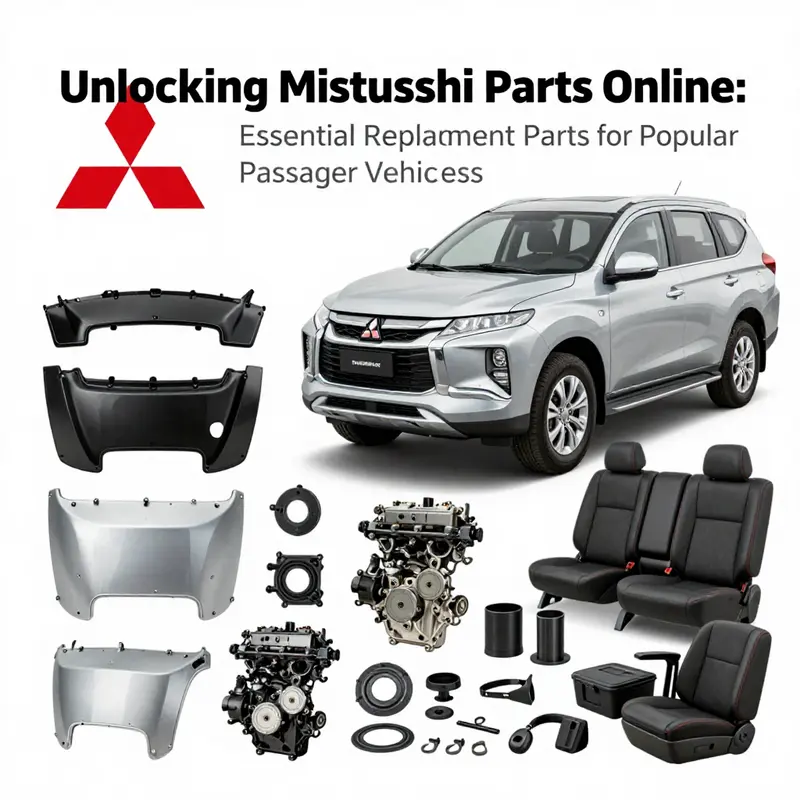
Online catalogs for Mitsubishi parts have transformed how drivers and fleet operators maintain reliable, safe, and efficient vehicles. Genuine components are now readily accessible through official and authorized channels, which means you can source engine components, drivetrain systems, braking assemblies, suspension parts, and body panels with a level of confidence that used to require a dealer visit. For many owners, especially those who rely on a Mitsubishi passenger car for daily commuting or family duties, this shift from phone orders or walk-ins to digital catalogs translates into faster repairs, better part traceability, and, crucially, access to parts that are compatible with a specific VIN or model year. The underlying logic is straightforward: when you search online for Mitsubishi parts, you want parts that fit precisely, perform as intended, and come with assurances about warranty and return options. The catalogs that support this flow are structured around vehicle type and system, with filters that let you drill down from broad categories—engine, brakes, suspension, electrical, body and exterior—to the exact component you need. This alignment matters not only for maintenance but also for long-term ownership value. A Mitsubishi that is kept with factory-recommended components tends to hold resale value better, partly because the parts are designed to work together under the same tolerances and lubrication schemes. It is also worth noting that the emphasis in reliable online sourcing is not solely on new parts. Authorized dealers and verified online marketplaces often provide certified pre-owned or remanufactured options where appropriate, with warranties that protect against defects and ensure compatibility with your vehicle’s core systems. In short, the online landscape for Mitsubishi parts blends the assurance of OEM lineage with the convenience of a digital shopping experience, and it is this fusion that empowers owners to plan maintenance around a schedule rather than a service window.
For passenger Mitsubishis—from the family-friendly Outlander to the rugged Montero variants that still see daily use in markets where SUV duty remains high—the essential replacement parts converge around a familiar set of categories. Engine components keep the heart of the car beating, braking assemblies keep the car stopping in a predictable and safe manner, suspension and steering parts preserve ride quality and handling, electrical components power daily operations from starting to lighting, and body and exterior parts influence both appearance and protection against the elements. The practical upshot is that an online parts catalog becomes less about cataloging toys or novelty items and more about a reliable inventory—one that translates into fewer misfires at the parts counter and less time spent on returns or mismatched shipments. When the catalog system is well designed, you can search not only by part type but also by model year, trim, or even specific emissions or regulatory requirements that may affect compatibility. Keeping the search keyed to your car’s identity helps reduce the guesswork that sometimes accompanies aftermarket purchases, especially when a vehicle has several generations in circulation, each with its own minor engineering shifts.
Within this framework, there are several core categories of parts that consistently constitute the essential replacements for popular passenger Mitsubishis. Engine components are often the ones people think of first because they touch the car’s fundamental performance and efficiency. In the online space, you’ll see oil filters, air filters, spark plugs, timing belts or chains, fuel filters, and coolant presented as a bundled set of maintenance items. The logic here is simple: these parts support routine service intervals, protect critical tolerances, and help teams avoid costly misfires or overheating that can cascade into more expensive repairs. The online buying process allows you to verify compatibility via the vehicle’s VIN or model year, a step that becomes particularly valuable when a car has multiple engine options across its lifecycle. The same catalogs that help you align an oil filter with your engine also guide you toward synthetic or conventional oil choices that meet the manufacturer’s standards, a detail that matters for warranty coverage and for maintaining engine cleanliness over thousands of miles. This level of specificity makes the online environment more than a storefront; it becomes a tool for proactive maintenance planning and a safeguard against the confusion that can arise when a vehicle’s maintenance schedule stretches across different model updates.
Braking components form another cornerstone of essential replacements. Brake pads and rotors sit high on the replacement list because stopping performance evolves with wear. Online catalogs allow you to compare brake pad compounds, rotor designs, and even the correct rotor thickness compatible with your caliper and wheel size. Brake fluid is often listed as a separate item because it can deteriorate and absorb moisture, affecting pedal feel and brake efficiency. A well-curated catalog also points toward the master cylinder and seals when wear or internal leakage is identified, ensuring that the overall braking system remains balanced between front and rear demand. The advantage of sourcing these parts online from authorized channels is twofold: you gain access to OEM-equivalent or genuine variants, and you secure warranty support if a part is found defective. In daily practice, this means a driver can schedule a brake service with confidence that the new components will fit and perform to the same standards the car was designed to meet from day one.
Suspension and steering components are equally central to everyday driving quality. Shock absorbers and struts determine ride comfort and road isolation; control arms, ball joints, and stabilizer links influence steering responsiveness and alignment retention. Online catalogs present these parts through a system-based approach, letting you select by vehicle category and then by the suspension layout. In practice, that means someone maintaining an Outlander or a Montero can replace worn parts without guessing whether a ball joint’s stud dimensions or a tie-rod end’s thread pitch will align with the existing steering knuckle. The online context also helps with wear-prone constituents like sway bar links or bushings, which often wear asymmetrically but are sold as compatible pairs or sets, making proper replacement straightforward and cost-effective. For fleet operators, the ability to order a maintenance kit that bundles shocks, mounts, and related hardware can reduce downtime and simplify inventory control, ensuring that service bays stay productive and vehicles return to duty without drawn-out sourcing delays.
Electrical systems, while sometimes invisible until a fault occurs, are equally important in the online parts ecosystem. Batteries, alternators, and starters form the trio that powers cold starts and steady electrical loads. Replacing a battery isn’t just about starting reliability; it can impact electronics and safety systems that rely on stable voltage. The online catalog approach helps an owner select batteries with the correct capacity, cold-cranking amps, and terminal configurations for a given model year and climate. The alternator and starter parts listed in the same catalogs reflect a practical strategy: if one component is showing signs of weakness, the catalog can guide you to compatible replacements without crossing into mismatched electrical interfaces. Fuses and lighting assemblies—headlights, tail lamps, and signal lights—are also part of the electrical replacement landscape, and their availability through authorized channels provides assurance that replacements will meet the brightness, color, and beam pattern required by road regulations. In everyday maintenance, this translates into fewer nighttime failures and better overall vehicle safety.
Body and exterior parts, while sometimes thought of as cosmetic, contribute to durability and value as well. Wiper blades, door handles, mirrors, and trim pieces must withstand the elements and daily wear. The online space makes color-matching and finish compatibility more straightforward, especially when you’re dealing with a collision repair or UV damage that can cause color drift. Beyond aesthetics, proper exterior parts protect vital components and maintain the vehicle’s aerodynamic and structural integrity. In online catalogs, you’ll often find guidance on paint codes and rust-inhibiting primers that align with factory specifications, helping to safeguard resale value and prolong the vehicle’s appearance. For many owners, this is a practical reminder that part selection extends beyond the engine bay; it includes the doors, glass, and seals that directly affect sound insulation, climate control efficiency, and overall comfort inside the cabin.
The decision to shop for Mitsubishi parts online should be guided by a few practical principles that help translate catalog entries into reliable, long-lasting repairs. First, prioritize genuine OEM-equivalent parts or genuine parts, especially for critical systems like the engine, transmission, braking, and electronics. These parts are designed to work with the vehicle’s original tolerances and system software, preserving performance characteristics and the warranty framework that often accompanies authorized purchases. Second, verify compatibility with the vehicle’s VIN or model year. The same model name can reference different engines or drivetrains across generations, and what fits one version may not fit another. Online catalogs that require VIN entry at the point of purchase reduce the risk of a mismatch and the need for costly returns. Third, consider the warranty and return policy. Authorized channels typically provide coverage for defects or early failures, which is especially important when replacing major components like a timing belt, water pump, or an essential electrical part. Fourth, leverage the catalog’s guided search features. Vehicle type and system filters streamline the process, helping you quickly reach the right part without wading through unrelated items. Finally, don’t overlook the value of color and coating options for exterior replacements. Paint compatibility, primer choices, and rust protection play a significant role in long-term durability, resale value, and even the ease of future maintenance.
For enthusiasts who enjoy the occasional performance upgrade or restoration, the online parts landscape also accommodates specialized components that are compatible with passenger Mitsubishis. In the broader community, online shops sometimes feature carbon-fiber hoods, reinforced panels, or lightweight components tuned for specific models. While these items may lie outside the scope of routine maintenance, they illustrate how digital catalogs connect owners with targeted options, without requiring a trip to a traditional parts counter. To illustrate how an online ecosystem can support a broader range of vehicle interests, consider a high-end customization path where a carbon fiber bonnet or hood is sought for a legacy or modern Evo variant. Such items can be sourced through dedicated parts shops that understand the lineage and fitment specifics, ensuring that even certain body panels align with the vehicle’s sensor placement and structural reinforcements. In this context, one such example of a compatibility-focused offering is the following product page, referenced as a case in point for how online inventories handle specialty parts: brand-new original carbon fiber bonnet hood for Mitsubishi Lancer Evo-X (https://mitsubishiautopartsshop.com/brand-new-original-carbon-fiber-bonnet-hood-for-mitsubishi-lancer-evo-x/).
When you dialogue with an online parts catalog, you are buying more than a component; you are purchasing a guarantee that the part will integrate with the vehicle’s systems, not merely fit within the space allotted. The reliability of that integration is anchored in the vendor’s affiliation with authorized dealers and the catalog’s insistence on model-year and VIN-based compatibility checks. This framework supports a smoother repair workflow, whether you are maintaining a single daily driver or managing a fleet of passenger Mitsubishis that rely on predictable service cycles. It also reduces the cognitive load on maintenance staff, who no longer must rely on memory or guesswork to identify the right piece among hundreds of similar-looking components. The online catalog becomes a living library of parts, each entry linked to a specification, a compatibility note, and a warranty statement, ready to guide a technician from diagnosis to replacement with minimal friction.
For readers who want a visible example of how this ecosystem manifests in a real-world catalog, the approach to information organization is akin to a well-built reference library: you begin with the vehicle family, narrow to the system, and then pick the exact component by its engineering index or year range. This structure is why the online parts experience feels intuitive once you know your vehicle’s identity and service needs. It also helps explain why many owners prefer shopping for parts online rather than visiting a dealership lot, especially when the goal is to perform a routine service or a controlled replacement that keeps the vehicle running without disrupting other maintenance schedules. The key is not only availability but the confidence that the replacement part aligns with the manufacturer’s standards and the vehicle’s design philosophy.
In terms of practical steps, owners should start by confirming the model and year, then move to the relevant subsystem—engine, brakes, suspension, electrical, or body. From there, a quick scan of the part numbers, protective coatings, and warranty terms can confirm whether the selected item is the best match. When in doubt, reaching out to an authorized dealer or a verified marketplace for confirmation can prevent the misstep of ordering a compatible but non-optimal replacement. This is especially important for components that influence safety or critical performance, where even small deviations in thickness, tolerance, or connector type can have outsized effects on function. The digital environment makes it easy to compare multiple options within the same page, view cross-browser compatibility notes, and check whether a given part is compatible with regional variants or emissions equipment. It also facilitates the scheduling of delivery or in-store pickup around the technician’s availability, which helps to manage downtime effectively.
In closing, the online parts landscape for Mitsubishi passenger vehicles offers a blend of confidence, convenience, and clarity that aligns with modern maintenance needs. It is not merely about finding a part; it is about finding the right part, in the right configuration, at the right time, with the assurance of support and warranty that authorized channels provide. The practical outcomes are tangible: reduced repair cycle times, improved vehicle reliability, and preserved resale value. For drivers and fleet managers alike, the shift to online parts sourcing represents not a transient trend but a strategic approach to vehicle stewardship that respects the engineering intent behind every Mitsubishi passenger model. And while the catalog may feel like a marketplace at first glance, it functions more like a diagnostic and planning tool—a vehicle history ledger in which each part entry contributes to a longer, healthier life for the car you depend on.
For readers seeking a direct example of how to engage with this ecosystem through a real-world product page, consider this link to a high-profile upgrade option that demonstrates the precision and specificity of online inventories: brand-new original carbon fiber bonnet hood for Mitsubishi Lancer Evo-X (https://mitsubishiautopartsshop.com/brand-new-original-carbon-fiber-bonnet-hood-for-mitsubishi-lancer-evo-x/). This example illustrates how even specialty parts are cataloged with model-year fitment and material details, reinforcing the principle that online sourcing for Mitsubishi parts can be both precise and purpose-driven. Finally, for readers who want to verify official guidance or obtain manufacturer-backed information beyond the shopping catalogs, the overarching resource remains the official ecosystem that governs Mitsubishi parts and service. For official guidance and authentic parts information, consult the Mitsubishi Motors official pages and authorized dealer networks, including the broader corporate and regional portals that coordinate parts supply and warranty coverage. External reference: https://www.mitsubishimotors.com/.
The Quiet Reliability of Online Mitsubishi Parts: Verifying Authenticity, Aligning VINs, and Building a Trusted Supply Chain
The move to online sourcing for Mitsubishi parts has reshaped how fleets and enthusiasts maintain, repair, and refresh their vehicles. The promise is straightforward: access to a broad catalog of genuine components, fast fulfillment, and the confidence that a repair or retrofit will meet factory specifications. Yet beneath the convenience lies a crucial discipline. Authenticity is not a luxury; it is the foundation of reliability, performance, and long-term value. In a market where counterfeit and inferior parts can masquerade as the real thing, the prudent buyer treats online procurement as a carefully managed process rather than a race to the lowest price. The dialogue around online sourcing thus centers on trust: trust in the supplier, trust in the part, and trust in the process that connects the two through a vehicle identification number, a warranty, and a transparent logistics chain.
For commercial operators and private owners alike, the breadth of Mitsubishi parts online extends across the company’s diverse lineup. From heavy-duty Fuso trucks to the popular Canter, and from rugged SUVs to family sedans, genuine components for engines, drivetrains, braking assemblies, suspension systems, and body panels are cataloged and made searchable through reputable channels. Online catalogs organized by vehicle type and system enable a precise match, reducing the guesswork that often accompanies parts shopping. The value proposition is clear: when a part is genuinely designed for a particular system and model, it is more likely to perform as intended, to fit correctly on the first attempt, and to maintain the vehicle’s original operating envelope. This is especially important for fleets that rely on uptime and predictable maintenance cycles.
Within the spectrum of Mitsubishi parts, the official channels and authorized marketplaces emphasize two core assurances. first, that the parts are genuine and meet the OEM specifications that engineers used during the vehicle’s design and testing phases. second, that the supplier offers warranty support and documented quality assurances, which protect the buyer from hidden defects and post-purchase surprises. These assurances matter because a misfit component can ripple through a system—compromising safety, triggering premature wear, or undermining an entire maintenance schedule. The decision to source parts online, then, becomes a decision to invest in reliability, not merely to secure a piece that fits.
The scope of online parts extends beyond the passenger segments to commercial applications, where Mitsubishi Fuso parts become especially central. For heavy-duty operations with demanding duty cycles, catalogs categorize parts by vehicle type and system, making it straightforward to locate engine components such as pistons or crankshafts, and drivetrain elements like gearboxes and differentials. Brake assemblies—the calipers, rotors, and wear items—are listed with precise specifications that matter in heavy brake events and high-workload scenarios. Suspension components, including bushings and control arms, are cataloged with tolerance ranges that match the rugged realities of a commercial fleet. Even body panels, lighting, and electrical sensors appear in online inventories, reflecting the comprehensive nature of authorized platforms. This structure supports not only maintenance planning but also the legitimate need for aftermarket options when OEM parts are temporarily unavailable. Yet the strongest guidance remains clear: prioritize parts whose sourcing, warranty, and documentation live on an official or certified platform.
For passenger vehicles, such as the Outlander or the Montero, the online environment mirrors the same ethos of compatibility and quality. Replacement body panels, engine parts, and interior components are offered with durability and aesthetic compatibility in mind. The recommended approach to repaint and refinishing emphasizes factory-matched paint codes and rust-inhibiting primers because these details preserve resale value and ensure the repair remains visually and functionally cohesive with the rest of the vehicle. Across all segments, the online ecosystem rewards buyers who verify compatibility with VINs and model-year data, who insist on clearly stated warranties, and who prefer suppliers with transparent quality assurance processes.
What makes the online journey particularly robust is a layered approach to authenticity. Buyers should verify the presence of the official OEM logo and confirm sourcing through authorized dealers or certified platforms. This is not merely about a logo; it is about a traceable quality system that aligns with factory engineering standards. The risks of non-genuine parts are tangible: inferior seal materials can lead to leaks in water pumps, and counterfeit air filters may fail to protect the engine from particulates. A leaky water pump or a compromised intake filter is not a minor inconvenience; it is a threat to engine longevity and, in commercial contexts, to uptime and safety. The emphasis on authenticity thus translates into a disciplined procurement ritual: check the source, confirm the logo, and verify the piece against the VIN or the exact model year.
Beyond the mechanics of a single purchase, the broader ecosystem shapes how reliably an online part order will perform in practice. For fleet managers and mechanics, the organization of Mitsubishi parts online into vehicle-type and system-specific catalogs is not merely convenient; it is a practical scaffold for ensuring compatibility and meeting maintenance SLAs. When a heavy-duty Fuso truck needs a precise piston, or a Canter requires a specific brake drum, the catalog structure reduces the risk of a mismatch. The result is a more predictable maintenance workflow and a stronger warranty posture because genuine parts that align with factory specifications are used within prescribed service intervals. The outcome matters not only for the current repair but also for the subsequent lifecycle of the vehicle, including resale value, safety records, and total cost of ownership.
The sourcing discipline is reinforced by strategic supplier evaluation. The path to resilient procurement rests on VIN-specific lookup tools, transparent supplier profiles, and third-party certifications that attest to quality control, material provenance, and test results. In practice, these tools empower buyers to assess whether a supplier has a proven track record in delivering genuine parts, whether cross-border logistics are reliable, and whether the seller’s quality assurance processes are comprehensive. The storytelling around these relationships matters as well. When a Senior Automotive Engineer from Mitsubishi’s R&D division notes that genuine parts embody performance guarantees, the sentiment resonates with purchasing teams, maintenance shops, and fleet operators who treat procurement as a strategic function rather than a transactional act. The emphasis on authenticity thus becomes a directive for building long-term partnerships with suppliers who demonstrate traceability, warranty support, and clear, verifiable documentation.
In this sense, the official Mitsubishi Motors Parts & Accessories Portal represents a pinnacle of secure, VIN-driven procurement. It is a platform designed to be globally accessible, offering VIN-based part identification and real-time inventory visibility, with fulfillment coming directly from authorized sources. The portal serves as a touchstone for buyers who want to minimize risk and maximize compatibility, ensuring that what lands on a vehicle is the exact part the manufacturer intended. The approach extends beyond a single purchase to a disciplined procurement practice that includes record-keeping, warranty validation, and ongoing supplier oversight. For the buyer, this means a more auditable, repeatable process—one that scales across a fleet, a workshop, or a personal collection of Mitsubishi vehicles.
To illustrate how this online reliability translates into everyday practice, consider the experience of a fleet that needs rapid replacements during peak maintenance windows. A technician can locate a suitable part by vehicle type and system, confirm its VIN-aligned specifications, and proceed to direct fulfillment from an authorized source. The advantages accumulate: a higher likelihood of correct fit on the first attempt, a reduction in vehicle downtime, and a more straightforward warranty claim if a component fails. In the best-case scenario, the process is seamless enough that the vehicle remains in service with minimal disruption, and the maintenance narrative stays clean and auditable for compliance and reporting. Even in the face of supply chain variability, the reliance on genuine parts sourced through verified platforms fosters resilience because the parts are designed to meet the original engineering standards and performance expectations.
The Guangdong manufacturing hubs that often populate industry discussions about OEM-level parts reflect a broader truth about modern supply chains: precision, scale, and flexibility coexist when governance, quality control, and logistics converge. Guangdong’s role in the global aftermarket is not a matter of cost alone but of capability. High-precision components, consistent production tolerances, and the ability to offer OEM-level parts on scalable terms make this region a critical node in the network that supports Mitsubishi’s online parts ecosystem. The caveat is clear: buyers must not anchor their decisions on price alone but on the strength of authenticity, the credibility of supplier certifications, and the reliability of cross-border fulfillment. A supplier that can demonstrate a transparent quality management system, traceable material origins, and robust return and warranty terms is better positioned to deliver long-term value, especially for fleets with demanding uptime requirements.
In the end, the path to trustworthy online sourcing for Mitsubishi parts lies in a disciplined, evidence-based approach. Start with official channels or certified marketplaces, then verify authenticity through the presence of OEM logos and by confirming the part matches the vehicle’s VIN or model year. Prioritize suppliers with clear quality assurance processes, verifiable certifications, and transparent, trackable logistics. Maintain a habit of cross-checking catalog entries against the vehicle’s service history and the manufacturer’s specifications, and resist the temptation to substitute a lower-priced non-genuine component under the assumption that the difference is negligible. The goal is not to chase a bargain but to secure a reliable supply chain that preserves vehicle integrity, safety, and performance over the long haul. The guidance is practical, and the payoff is tangible: genuine Mitsubishi parts aren’t merely replacements; they’re performance guarantees that translate into safer operation, longer service life, and more predictable maintenance outcomes.
For readers looking to explore a representative catalog entry within a credible online seller ecosystem, this link provides a catalog-style reference point: brand-new-original-bbs-rims-set-of-4-r18-rims-for-lancer-sedans. This example underscores how catalog entries are organized and how a user can verify specifications, availability, and compatibility without leaving the sourcing context. While you navigate, keep the core questions in view: Is the source authorized? Does the part carry the OEM logo or a credible certification mark? Can the vendor confirm VIN-based compatibility and provide a warranty? If the answers are affirmative, the path from online search to installed component becomes not a gamble but a controlled, auditable process that upholds Mitsubishi’s engineering standards.
As the online parts landscape continues to evolve, the best practice is to align procurement with factory-backed portals and trusted distributors, while maintaining a vigilant eye for authenticity cues and documentation. The relationship between reliability and online access is not incidental; it is engineered through VIN-aware tools, transparent supplier profiles, and rigorous quality control. In this framework, online sourcing doesn’t dilute standards; it reinforces them by making OEM-aligned parts more accessible to those who value performance, safety, and long-term value. The future of Mitsubishi parts online will likely hinge on even tighter integration between VIN data, real-time inventory, and secure fulfillment channels, creating a connected ecosystem where the reliability of every repair begins with the trustworthiness of the part’s source.
External resource: https://parts.mitsubishimotors.com
Final thoughts
Incorporating genuine Mitsubishi parts into your maintenance routine is not just a choice; it’s a necessity for ensuring the longevity and efficiency of your fleet or personal vehicles. As discussed in this guide, navigating online resources for sourcing Mitsubishi parts is straightforward and essential for business owners aiming to uphold their operational standards. By accessing the right components, you empower your vehicles to perform optimally while preserving investment value.