
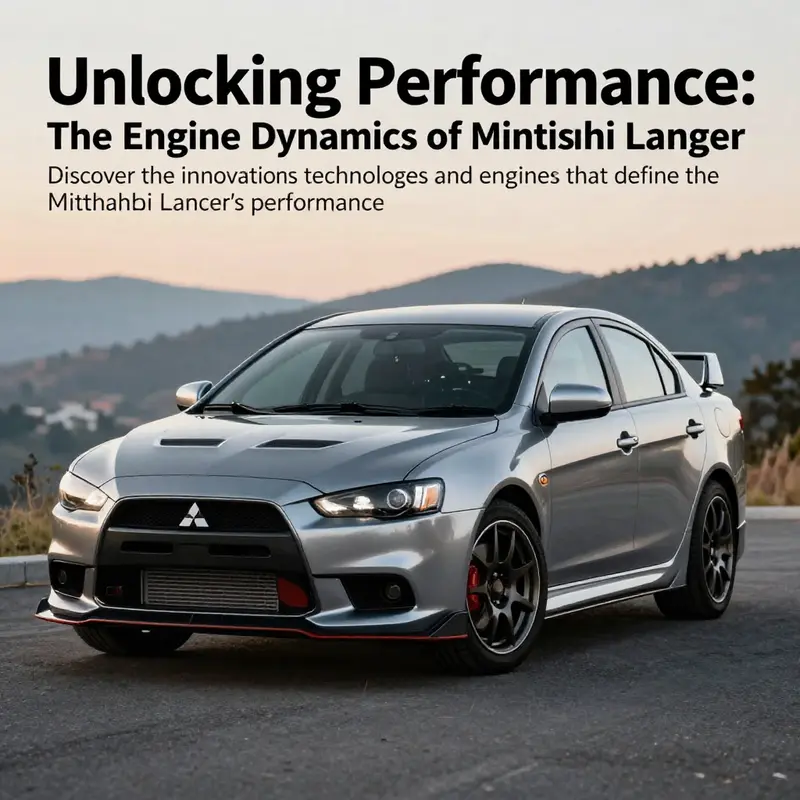
The Mitsubishi Lancer, a staple in the automotive world, has long been lauded for its performance, reliability, and versatility. Its range of engines showcases a blend of innovation and efficiency, catering to varying driver needs and preferences. This article delves into the impressive MIVEC technologies that power the Lancer, the specifications that determine its performance capabilities, opportunities for aftermarket enhancements, comparisons of fuel efficiency among its engine variants, and the impact of transmission choices on performance. Each chapter contributes to a comprehensive understanding of how these elements converge to create a unique driving experience tailored for both everyday commuters and performance enthusiasts alike.
MIVEC and the Lancer’s Engine DNA: From City Commuter to Rally Heartbeat
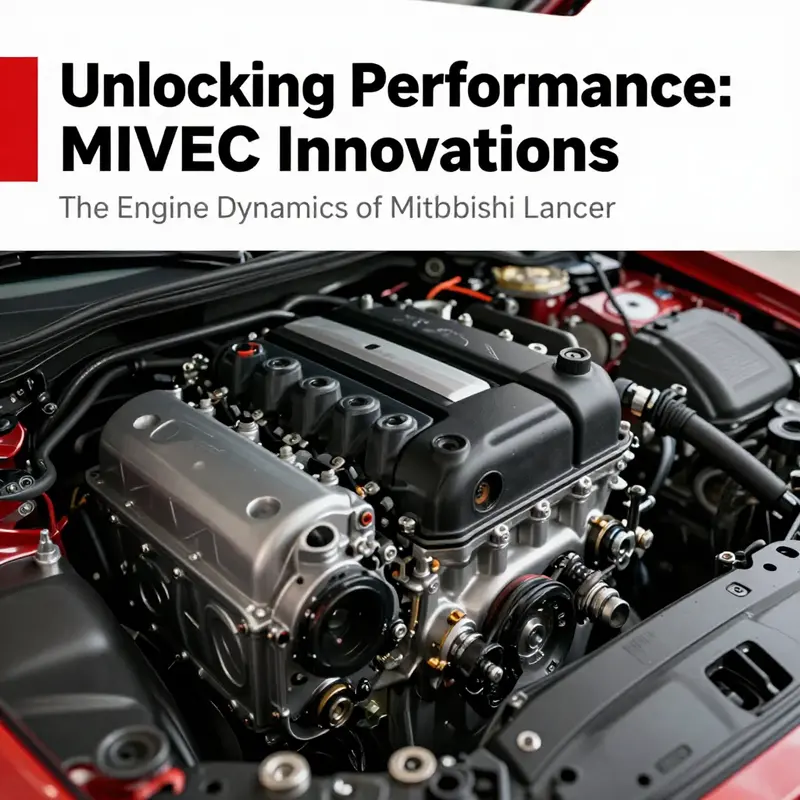
The Mitsubishi Lancer’s identity is written in its engines. Across decades of production, the range has balanced economy, reliability, and performance. At the center of that balance sits an adaptive valve-timing system. That system, Mitsubishi’s variable valve timing, tunes intake and exhaust timing to match driving demands. The result is an engine that breathes efficiently at low revs and wakes up with vigor at higher speeds. The technology shapes everything from fuel consumption figures to throttle feel and emissions compliance.
This chapter follows how that core technology informs each major Lancer engine family, and how engineering choices translate into real-world driving. The story moves from the smallest commuter units to the turbocharged performance engines, with a look at materials, tuning potential, and practical ownership implications.
How MIVEC shapes the Lancer’s engine character
MIVEC manages valve timing in a way that broadens usable power bands. At lower engine speeds it favors earlier intake closing to boost torque and improve off-the-line response. At higher speeds it shifts timing to maximize airflow and power. That dual-mode behavior results in engines that feel responsive in town and capable on the highway. For naturally aspirated variants, the payoff is smoother transitions and better fuel economy. For turbocharged variants, it reduces latency and refines the torque curve, letting boost work alongside valve timing rather than fighting it.
The compact 1.6-liter MIVEC four-cylinder exemplifies economy-focused tuning. With a lightweight design and modest compression, it prioritizes fuel efficiency and low running costs. Typical combined fuel consumption sits in the low-to-mid 30 miles per gallon range under mixed driving. Owners find it easy to maintain because the design avoids exotic components. The trade-off is power: around 110 to 120 horsepower is common. That output suits urban and suburban driving where fuel economy matters more than outright speed.
Stepping up, the naturally aspirated 2.0-liter MIVEC engine balances torque and efficiency. With roughly 148 to 160 horsepower, it delivers stronger mid-range pull. That mid-range strength makes highway overtakes and loaded-cabin driving less taxing. The design also benefits from improved thermal management and lighter internals in later iterations. Manufacturers paired this engine with manual and automatic gearboxes depending on trim. The result is a versatile powerplant that suits daily drivers wanting a livelier feel without sacrificing economy.
At the sharp end sits the turbocharged 2.0-liter MIVEC. When turbocharging joins valve timing, the combination aims for broad power delivery and responsiveness. The turbo forces air into the engine while the valve timing ensures the engine makes best use of that air across the rev range. In high-performance trims this setup produces well over 250 horsepower in stock form, with some variants exceeding 280 horsepower with supporting modifications. The package often pairs with robust drivetrains and reinforced underpinnings to handle increased torque and loads.
Materials and design choices made a difference as engineers evolved the platform. Later 4B11 and 4B12 series engines adopted aluminum alloy blocks and heads. That move reduced rotating and overall vehicle weight. The lighter structure improves handling and helps heat dissipation. It also allows engineers to tune for emissions while maintaining usable power. In practical terms, lighter components reduce stress on ancillaries. They also make the car feel sharper through corners because unsprung and overall mass improve balance.
Beyond the factory setup, the Lancer’s engines respond well to sympathetic upgrades. Increasing airflow, optimizing fueling, and improving exhaust flow bring notable gains. Larger throttle bodies and freer-flowing intake systems can deliver measurable improvements in throttle response and peak power. Properly matched changes often yield up to a 15 percent improvement in power or fuel efficiency over stock components when installed and tuned correctly. For builders pushing higher boost levels, strengthening the block and internals becomes essential. Billet or reinforced blocks are a common upgrade for high-output turbo builds, and serious tuners often choose such hardware to ensure reliability under elevated cylinder pressures. For more on reinforced block options, see this write-up on the 4B11T billet block.
Tuning isn’t only about power. Valve timing flexibility reduces the need for extreme cam profiles. That makes engines friendlier to daily use while still offering a strong performance ceiling. Turbocharged variants also benefit from improved cooling and intercooling systems. Better cooling reduces detonation risk and supports consistent power delivery during spirited driving. A well-matched combination of intake, turbo, and fueling delivers strong mid-range torque and controllable power peaks.
Owners should also weigh maintenance implications. MIVEC systems rely on precise oil quality and stable oil pressure to operate valves and phasing mechanisms. Regular oil changes with the right viscosity and grade are more than recommended; they’re essential. Wear-prone items remain familiar: intake gaskets, sensors, and ignition components require periodic attention. Long-term durability has proven good when maintenance is observed, but neglecting oil service can degrade valve phasing behavior and throttle response.
Another practical angle is transmission pairing. The engines have been matched with manual gearboxes and automatic options across generations. Manual transmissions emphasize driver engagement and allow more direct control over the engine’s behavior. Automatic transmissions favor convenience, and modern automatics mimic the manual’s responsiveness with tighter shift logic. In turbocharged Lancer models, drivetrains include reinforced differentials and all-wheel systems in some trims. Those systems help transfer increased power to the road without overwhelming traction. The engineering intent is clear: keep the driver in control while making the most of the engine’s potential.
Emissions and regulatory pressures influenced development too. Variable valve timing helps reduce cold-start emissions and lowers particulate formation under part-load conditions. The combination of precise fueling, catalytic systems, and MIVEC tuning allows later engines to meet stricter standards while preserving driveability. That balance matters for owners who need daily usability and legal compliance without sacrificing performance.
Finally, consider the Lancer engine ecosystem as a whole. The platform evolved from older, durable units to modern, lightweight engines with sophisticated valve control. Each step improved efficiency, power density, or both. For the average buyer, that evolution means more options. Commuters choose smaller displacement MIVEC engines for economy and dependability. Families and highway drivers find the 2.0-liter naturally aspirated engine an excellent compromise. Enthusiasts choose turbocharged MIVEC units for track and spirited road use, where the combination of forced induction and adaptive valve timing unlocks the car’s sporting nature.
The Lancer’s engines reflect a clear engineering philosophy: extract usable power, reduce waste, and keep the driving experience engaging. Whether you prioritize economy or seek performance, the MIVEC-equipped lineup delivers a coherent progression. Upgrades and tuning paths exist for every level of ambition, from mild efficiency enhancements to full race-focused builds. That adaptability is part of what keeps the Lancer relevant to a wide range of drivers and continues to shape its legacy on road and track.
For an official overview of the underlying valve-timing technology, consult Mitsubishi’s technical summary on their variable valve system: https://www.mitsubishi-motors.com/en/technology/mivec
Under the Hood: How Mitsubishi Lancer Engines Stack Up in Power, Torque, and Real-World Use
Performance Spectrum and Specifications
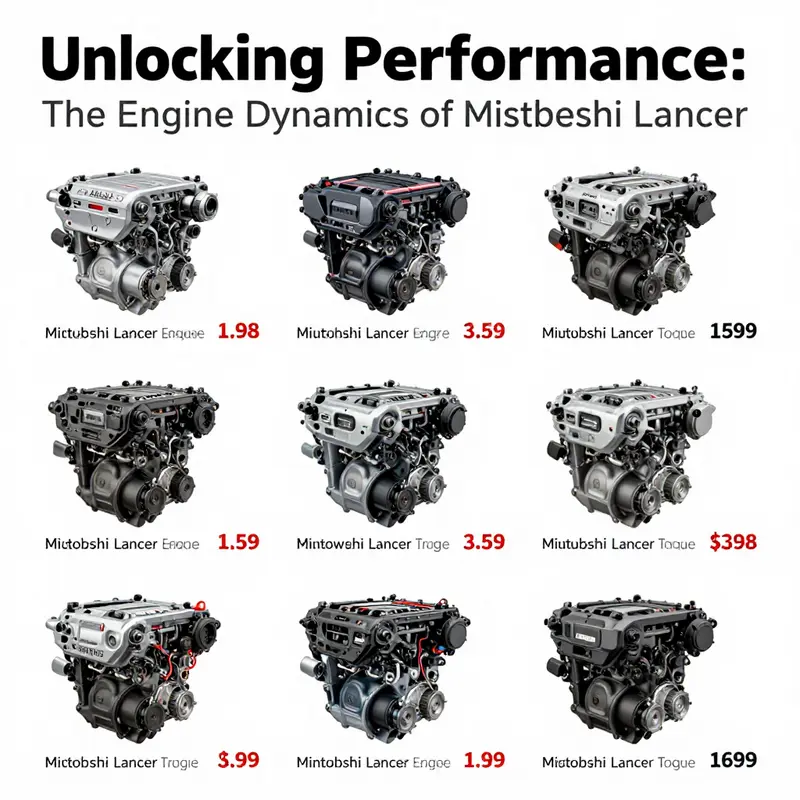
The Mitsubishi Lancer’s engine lineup reads like a compact history of small-displacement four-cylinder design. Across decades, Mitsubishi balanced efficiency, drivability, and outright performance. The same basic layout — a lightweight inline-four — was tuned to serve daily commuters, spirited highway drivers, and rally-focused enthusiasts. Understanding the numerical specs matters, but equally important is how those numbers translate to real-world behavior and upgrade potential.
At the efficient end of the scale, the naturally aspirated two-liter and smaller MIVEC engines provide predictable torque curves and solid fuel economy. The modern 4B12 2.0L DOHC delivers roughly 150–160 horsepower and 140–150 lb-ft of torque. Its aluminum block keeps weight down, while MIVEC valve control sharpens midrange response. That combination gives the Lancer livable acceleration without sacrificing economy on commutes. Expect mixed driving fuel consumption in the high 20s to low 30s mpg, depending on gearing and transmission. The 4B12 is a good match for buyers who want responsive throttle and confident passing power without frequent trips to the gas station.
The 4B11 family sits slightly below and above that in displacement and behavior. In modern form, the 1.8L 4B11 variants are rated near 135–145 horsepower and 125–135 lb-ft of torque. They preserve the MIVEC advantages: improved low-speed drivability and a smoother power delivery as RPM rises. These engines are especially suited to lighter sedans and compact crossovers derived from the same platform. Compared with the 2.0L, the 1.8L sacrifices some outright acceleration but gains a narrower, more linear powerband that many drivers find easy to modulate in city traffic.
For those seeking a sharper edge, the Lancer’s turbocharged engines define the model’s high-performance identity. The 4G63T 2.0L turbo charged DOHC is the most famous. In stock trim for performance variants, it can be factory-rated at or above 280 horsepower, with torque figures north of 270 lb-ft. These numbers are conservative for tuners: robust internals and a strong aftermarket allow tuned builds to reach 400 horsepower and beyond. Key hardware features include forged components, turbochargers with efficient flow, and cooling systems built for sustained loads. This engine transforms the Lancer from a commuter to a rally-bred machine. It responds well to ECU tuning, upgraded turbos, and improved intercooling. For those interested, a listing for a genuine, low-mileage 4G63T can illustrate the engine’s continued demand in the parts market: genuine low-mileage 4G63T JDM engine listing.
Earlier, smaller forced-induction units like the 4G15T offered an accessible entry into turbo performance. With stock outputs around 140–150 horsepower, the 1.5L turbo emphasizes low-end torque. It makes a lively city car and a popular platform for entry-level tuners. While it lacks the top-end headroom of the 2.0L turbos, its lighter weight and strong spool characteristics reward drivers who prefer quick on/off throttle response.
Beyond peak power and torque, the engineering choices matter. MIVEC provides variable valve timing that alters timing based on load and RPM. In practice, it reduces the trade-offs between low-end torque and high-end power. With MIVEC, a two-liter engine can feel eager from idle yet still pull strongly near redline. This system also helps emissions and fuel economy by optimizing valve overlap and lift for different conditions.
Transmission pairing affects usable performance more than raw horsepower in many cases. Manual gearboxes sharpen the driver’s control over boost and RPM, making turbo engines feel more immediate. Automatic and CVT options improve smoothness and fuel economy, but they can mute throttle feedback. When evaluating a Lancer’s power spec, note the transmission: a 150-horsepower engine with a short, sporty gearbox often feels quicker than a 160-horsepower unit with tall gearing.
Real-world reliability often correlates with how the engine is used and maintained. Naturally aspirated MIVEC engines show long service lives when oil and timing components are changed at intervals. Turbo engines require more attentive cooling and oiling. When owners push boost and power, upgraded intercooling, stronger fuel delivery, and improved engine management become essential. The 4G63 and related turbo platforms have strong aftermarket support, including forged internals, upgraded turbochargers, and bespoke engine management. These parts enable high-power builds but also change maintenance rhythms and lifecycle expectations.
Aftermarket breathing improvements are among the easiest ways to extract gains. Larger throttle bodies and freer-flowing intake systems can increase airflow by a measurable margin. When combined with careful tuning, such upgrades can boost power and efficiency by up to 15 percent over stock components. Upgrades must be matched to fuel and management changes to avoid lean conditions or detonation, particularly on turbocharged motors.
Cooling capacity and torque delivery are frequently overlooked. Turbo engines need not only larger intercoolers but also enhanced oil cooling for sustained track use. Upgrading the cooling system stabilizes timing and prevents heat soak, preserving both peak power and lifespan. Likewise, torque curves affect drivability: engines with flat torque bands provide effortless passing and towing capability, while high-revving designs require more gear changes to stay in the sweet spot.
When choosing an engine for a build or replacement, consider intended use. For daily commuting and low running costs, the 1.8L and 2.0L naturally aspirated engines deliver balanced performance and fuel economy. For a dynamic street or weekend track car, the 2.0L MIVEC strikes a compromise between modability and reliability. For full-on performance builds, the 4G63T platform remains the go-to, due to its proven strength and deep tuning resources.
Finally, purchasing and sourcing parts is a practical concern. High-demand performance engines and components maintain robust aftermarket ecosystems. Reputable components for turbochargers, forged internals, and management systems are readily available, but buyer diligence is critical. Insist on condition reports for used engines and verify service history. For technical reference and OEM specifications, consult the manufacturer’s technical documentation hub. That resource provides official teardown specs, fluid capacities, and tolerances essential to safe modification and repair: https://www.mitsubishimotors.com/technical-resources
This chapter frames the Lancer’s engine choices in terms of measured specs and practical outcomes. Power numbers tell part of the story. Transmission, cooling, valve timing, and how the car is used compose the rest. Whether optimized for efficiency or tuned for maximum output, the Lancer’s family of engines offers a clear path for buyers and builders seeking a balance of reliability, performance, and tunability.
Tuning the Heart: Practical Aftermarket Engine Upgrades for the Mitsubishi Lancer
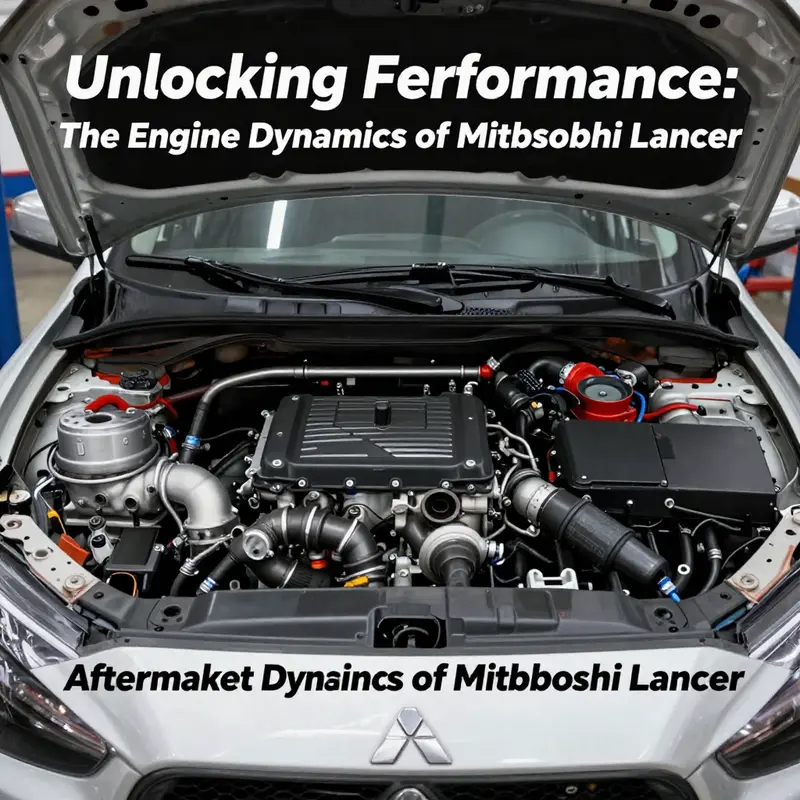
The Mitsubishi Lancer’s engine bay is a playground for thoughtful upgrades. From the rally-proven turbo mills in Evolution models to the modern MIVEC four-cylinders in later sedans, each powerplant responds well to carefully chosen enhancements. This chapter walks through the most effective modifications, explains why they matter, and maps a sensible build path for different goals. It keeps durability and drivability at the forefront while showing how to extract meaningful gains.
Begin with clear objectives. Are you building a reliable daily driver with brisk throttle response? Or do you want a high-power track car that can withstand repeated hard runs? The answers shape choices for forced induction, fueling, and internal strengthening. For turbocharged platforms, increasing airflow and fuel delivery while retuning engine management yields the largest returns. For naturally aspirated models, breathing and engine mapping deliver the best smooth gains.
A turbocharger upgrade is often the centerpiece for high-output builds. Replacing the factory turbo with a larger, modern unit increases air mass and allows higher boost pressures. That change requires matching supporting systems. Without upgraded fueling and precise engine management, extra air will run the engine lean and risk damage. For street-focused turbo builds, choose a turbo that balances spool characteristics and peak flow. A unit with good midrange response preserves daily drivability while offering top-end power for spirited use.
Upgrading the fuel system is mandatory when changing boost or adding large injectors. High-flow fuel pumps and injectors support richer, safer air-fuel targets under load. A fuel pressure regulator tailored to the higher flow keeps pressure stable across RPM and load. Many builders replace the pump with a unit designed for higher duty cycles, and choose injectors sized to deliver the required fuel at peak horsepower. Proper plumbing and a reliable filter are simple measures that prevent cavitation and starvation during sustained hard driving.
Engine management changes must follow mechanical upgrades. An updated engine control strategy—via a reflash or a standalone controller—lets you manage ignition, fueling, and boost precisely. Tuning should be performed on a load-capable dynamometer with data logging. Quality tuning optimizes power while protecting the engine. It also allows you to set safe limits and integrate features like closed-loop boost control and safety fuel cuts. For those keeping the car daily driven, conservative maps tuned for pump fuel preserve reliability.
Improving breathing at both intake and exhaust pays dividends on both turbo and naturally aspirated engines. A well-designed cold-air intake or high-flow filter reduces inlet restriction. Paired with a performance exhaust system and a free-flowing downpipe, exhaust upgrades reduce backpressure and improve scavenging. For turbo cars, upgrading the downpipe and exhaust allows the turbo to work more efficiently and makes boost response crisper. Balance is key: too-large piping on a modest turbo can reduce backpressure excessively and hurt spool.
Strengthening engine internals should be considered when chasing high power figures or sustained track use. Forged pistons and upgraded connecting rods handle elevated cylinder pressures and heat better than stock components. In some builds, a reinforced block or billet options become desirable to handle extreme boost or high RPM stress. These modifications are invasive and costly, and they must be coordinated with rotating assembly clearances, compression ratios, and piston ring specs. When performed correctly, internal upgrades transform a street engine into a dependable race engine.
Supporting systems complete a durable powertrain package. Transmission and clutch upgrades are essential when torque exceeds factory limits. Heavy-duty multi-plate clutches and strengthened flywheels improve torque capacity and modulation. Cooling upgrades—larger radiators, high-capacity oil coolers, and upgraded intercoolers—safeguard temperatures under stress. An efficient intercooler is especially critical on turbo cars to reduce intake charge temperatures and avoid detonation. Heat management extends component life and keeps performance consistent across repeated runs.
A logical upgrade path matters. Start with bolt-on changes that improve reliability and baseline performance: a high-flow air filter, a freer-flowing exhaust, and a quality intercooler for turbo engines. Next, upgrade fueling and engine management together, then consider a turbo upgrade if you want major power increases. If target power moves far beyond stock limits, plan for internal strength and driveline reinforcement. This phased approach spreads cost, allows validation at each step, and reduces the chance of expensive failures.
Tuning strategy should prioritize safety margins. Set conservative fuel and ignition targets during initial tuning stages. Use wideband oxygen sensors and datalogging to monitor air-fuel ratios, knock, and boost. Adjustments can then be made incrementally. For track-focused cars, aim for cooling and oiling solutions that handle long-duration stress. For road cars, durability and throttle feel often take precedence over maximum peak numbers.
Installation quality and part selection affect outcomes as much as the parts themselves. Choose components made for your engine family and confirm fitment. Pay attention to related hardware: gaskets, fasteners, and proper torque specs are not optional. Professional assembly for internal engine work reduces the risk of machining or assembly errors. For turbo and fueling upgrades, route and secure lines to avoid heat damage or chafing.
Legal and emissions considerations must not be overlooked. Many aftermarket modifications change emissions output or break local regulations. Check local laws before installing catalytic bypass components or altering exhaust gas treatment. If your vehicle must pass regular inspections, consider options that improve performance while remaining within legal frameworks.
Finally, consult experienced tuners or shops familiar with the Lancer platform. They’ve seen common pitfalls and can tailor a build to your specific model year and usage. They also have the tools to deliver safe, repeatable results, whether that means a conservative street tune or a full race engine build. When sourcing parts, consider the long-term support and reputation of manufacturers, and verify compatibility with your chosen fuel and power goals.
For those researching strength upgrades, additional technical information about reinforced engine blocks for the 2.0 turbo variants is useful. See a detailed listing for a billet block option here for reference: 4b11t billet block.
For deeper reading on performance components designed around this platform, consult the manufacturer’s performance part catalog linked below. It provides authoritative specifications and compatibility guidance for turbochargers, engine management, and intake/exhaust components.
https://www.hks.co.jp/en/products/vehicle/mitsubishi/lancer_evolution/
Which Lancer Engine Saves You Fuel? Practical Comparisons and Real-World Tradeoffs
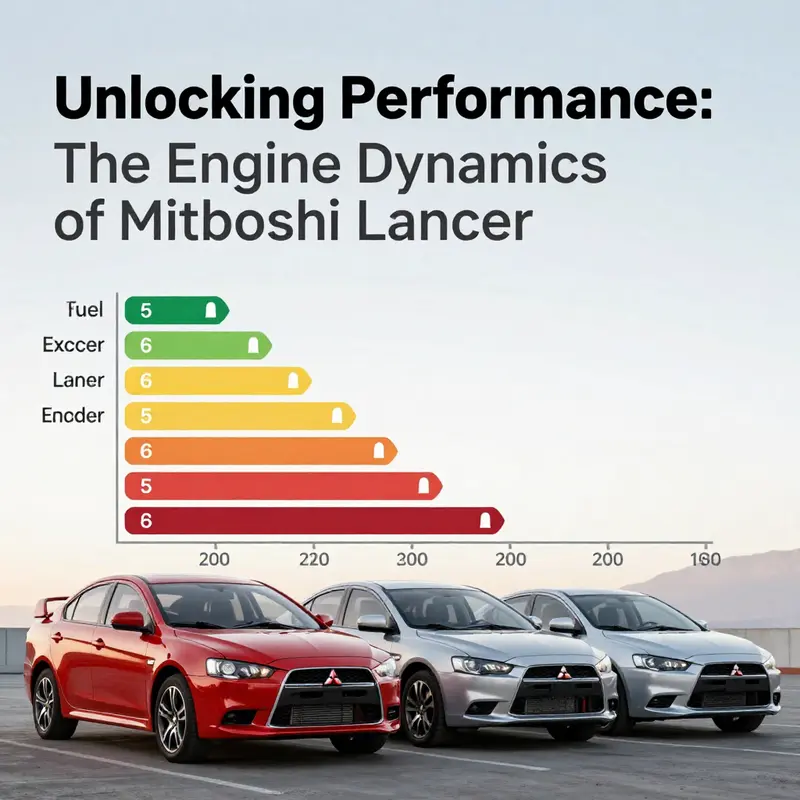
Understanding fuel economy across the Mitsubishi Lancer lineup requires looking past headline numbers. Engine architecture, valvetrain technology, turbocharging, transmission choice, and how you drive determine real consumption. This chapter walks through the most common Lancer engines, explains why their economy differs, and helps you choose an engine that fits your priorities.
The smallest engines in the Lancer family deliver the best fuel economy by design. A compact 1.5–1.6 liter four-cylinder focuses on low internal friction and conservative power tuning. These engines produce modest horsepower but return excellent combined fuel figures in everyday driving. In practical terms, you should expect numbers in the low thirties miles per gallon under mixed driving for well-maintained examples. The efficiency comes from lighter reciprocating mass, lower pumping losses, and tuning that prioritizes economy over peak power.
Moving up to the 1.8 liter and 2.0 liter naturally aspirated engines increases power and alters the balance. The 1.8 liter adds midrange torque, which improves acceleration without a dramatic fuel penalty when driven smoothly. The 2.0 liter typically offers the strongest performance among naturally aspirated Lancer engines while still keeping economy competitive. Expect a modest drop in combined MPG compared with the smallest engines, but also a meaningful gain in everyday drivability and highway passing power. For many drivers, the tradeoff between a slight fuel cost increase and better throttle response is worthwhile.
Valve timing control systems play a major role in this balance. Engines equipped with the variable valve timing system are able to alter valve lift and timing to suit driving demands. At low loads the system favors fuel economy; at higher loads it opens up for better power delivery. This technology narrows the gap between small and mid-sized engines, letting a 2.0 liter rival the fuel use of a 1.8 liter in steady cruising. The result is a livelier engine that does not punish you at the pump when driven conservatively.
Turbocharged variants change the conversation entirely. Turbo engines put more power into a smaller package, but they are sensitive to throttle input. Driving that exploits the turbo frequently will consume far more fuel than natural aspiration. In contrast, a turbo used primarily at highway speeds and light throttle can be quite efficient for its power level. High-performance trims with aggressive turbo maps, larger intercoolers, and sport-oriented tuning tend to deliver the lowest MPG figures. Drivers seeking performance must accept the fuel tradeoff, and plan maintenance accordingly.
Transmission choice also affects fuel economy. Manual transmissions allow more direct control over gear selection and can be more efficient when driven by someone who shifts optimally. Modern automatic transmissions with well-designed torque converters or dual-clutch systems close the gap and sometimes surpass older manuals in real-world economy. In the Lancer range, pairing a responsive automatic with an efficient engine yields the best compromise for relaxed daily driving and long-distance travel.
Beyond factory hardware, modifications and maintenance influence fuel consumption. Upgrading airflow components, for example, can improve volumetric efficiency and throttle response. Some aftermarket throttle bodies and improved intake plumbing can increase power and efficiency by enhancing airflow and reducing restriction. Internal strengthening and cooling upgrades are also common for turbo engines. If you opt for performance upgrades, be aware that gains at the top end often come with either neutral or negative effects on consumption under realistic driving.
Maintenance is equally critical. Regular oil changes using the recommended viscosity, clean air filters, proper tire pressure, and timely spark plug replacement keep the engine operating near its designed efficiency. A poorly tuned engine or neglected intake system will burn extra fuel and produce higher emissions. Simple upkeep typically returns tangible gains in both economy and drivability.
When comparing engines for purchase or resale, consider these pragmatic categories:
- Daily commuter: Prioritize the smallest engine option with variable valve timing. Low displacement and conservative tuning give the best mpg for urban miles.
- Balanced driver: Choose the 1.8 or the naturally aspirated 2.0 for better throttle response while keeping fuel costs reasonable. These engines are versatile and comfortable for combined city and highway use.
- Performance-oriented: The turbocharged engines deliver exhilarating acceleration and tractable midrange torque. Expect higher fuel consumption in spirited driving and plan for increased maintenance demands.
Real-world economy is influenced by load and environment. City driving with frequent stops raises fuel use across all engines, but the smallest engines suffer less because they are optimized for low-speed torque. Highway cruising often favors larger displacement engines that can run at lower RPMs while delivering steady power. Turbo engines can be efficient on long cruises when the turbo is operating at modest boost, but they will penalize fuel consumption under sustained heavy load.
Weight and aerodynamics are important too. Heavier trim levels or added accessories reduce the expected MPG. Similarly, roof racks, large spoilers, or other drag-increasing features change the fuel picture at speed. For models with performance upgrades or reinforced engine components, those improvements sometimes add mass and change the vehicle’s energy demands.
Fuel type and octane rating can affect efficiency slightly. Turbo engines often require higher-octane fuel to meet their spark timing needs and to avoid detonation under load. Using the recommended fuel is essential for both longevity and best economy. Running lower-octane fuel in a turbo-equipped engine can reduce efficiency and increase risk of engine stress.
If you are considering swaps or rebuilds, strengthened engine blocks and performance internals are available for many Lancer engines. Upgrading a turbo engine for higher power typically reduces economy under aggressive use. For owners who plan to keep the engine mostly stock, reinforcing components can increase reliability without changing everyday fuel use. For an example of a strengthened turbo block option, see this 4B11T billet block offering for enhanced durability.
Ultimately, the most fuel-efficient Lancer configuration pairs a smaller displacement engine, conservative calibration, and a transmission tuned for low-RPM cruising. However, the best choice for any driver depends on priorities. If you cover many highway miles, a larger naturally aspirated motor that cruises easily can save fuel. If most driving is urban, the smaller engine with variable valve timing will typically be the most economical. For spirited driving, expect to trade economy for performance and plan accordingly.
For precise, model-specific fuel economy numbers by year and trim, consult official fuel economy resources. These sources provide standardized, comparable figures that help set expectations. For detailed numbers and guidance, refer to the EPA fuel economy guide at https://www.fueleconomy.gov
How Transmission Choices Shape Lancer Engine Performance and Driving Feel

Transmission choices are the invisible partner to every Mitsubishi Lancer engine, shaping how power arrives at the road, how the car accelerates, and how the driver experiences control. The mechanical design and calibration of a gearbox define the usable power band, influence fuel economy, and determine durability limits. For owners and tuners, understanding the trade-offs between manual, traditional automatic, and dual-clutch systems is essential. This chapter explores those trade-offs in practical terms, tying gearbox architecture to the different Lancer engines and real-world driving scenarios.
A higher-revving naturally aspirated 2.0L MIVEC engine rewards close control of engine speed. When paired with a well-sorted 6-speed manual, the engine’s mid-range power is most accessible. Close-ratio gearing keeps the engine in its torque band while downshifts are direct and predictable. The tactile feedback of a manual makes modulation on twisty roads intuitive. A robust manual gearbox also uses high-strength steel gears and durable synchronizers. Those components reduce wear and support repeated high-load shifts during spirited driving. The result is immediate throttle response and a sense of connectedness that an enthusiast will value.
Turbocharged variants, like the 2.0L turbo MIVEC, place different demands on the transmission. Turbo engines produce higher peak torque and can overload weaker gearsets or clutch packs if not matched correctly. For these engines, gearbox strength and heat management become critical. Manual transmissions still excel when matched to high-horsepower builds, because the mechanical clutch and gearset avoid the slip and heat buildup common in less capable automatics. Reinforced casings, upgraded synchros, and optimized gear ratios help sustain repeated hard launches and high-load shifting without compromising reliability.
Automatic transmissions, historically in 4- or 5-speed forms in earlier Lancer models, prioritize smoothness and convenience. They hide gear changes from the driver, reducing perceived effort during urban commuting. Modern automatics, though, do more than shift smoothly. Adaptive shift logic reads throttle input and adjusts shift points, balancing economy and performance. Paddle shifters add manual control without a clutch pedal, giving drivers a middle ground. However, traditional torque-converter automatics can suffer efficiency losses and slower response compared to manuals and dual-clutch systems. That gap is most noticeable in performance applications, where immediate torque transfer and minimal slip are desired.
Dual-clutch and automated manual technologies attempt to bridge that gap. They combine the rapid shift times of a manual with automatic convenience. For a performance-focused Lancer, a well-engineered dual-clutch transmission offers crisp shifts and strong acceleration. These systems use two input shafts and preselect the next gear, cutting shift times drastically. Yet they bring trade-offs: complexity, cost, and sensitivity to heat. Under repeated high-load use, clutch packs and hydraulic systems can overheat and fade without upgraded cooling. For anyone considering these transmissions for turbocharged Lancers, attention to cooling and maintenance intervals is vital. A factory-refurbished high-performance automatic gearbox can be an attractive option for those wanting performance with convenience; for example, owners often replace worn units with a reconditioned high-capacity unit built for Evo-spec duty to preserve durability while retaining modern shift speed. reconditioned 6-speed automatic transmission for Evo X
Gear ratios and final drive selection deserve attention. Short, close ratios keep the engine in its power band and improve acceleration. They are ideal for sporty driving and track use. Taller ratios favor highway cruising and fuel economy. Final drive choice alters acceleration and top speed trade-offs. A turbo Lancer with a short final drive will accelerate quickly but may endure higher RPMs at cruising speeds. Conversely, a commuter-focused Lancer with taller gearing will be quieter and more efficient on the highway. Matching the gearbox to the engine’s torque curve and the vehicle’s intended use is a foundational tuning decision.
Another often-overlooked effect is drivetrain cooling and lubrication. High-power engines load transmissions heavily. Heat buildup can degrade fluid, leading to loss of clutch friction or accelerated gear wear. Performance-oriented manuals frequently use aluminum or magnesium alloy cases. These materials reduce weight and improve heat dissipation. In automatics and dual-clutch units, external coolers and upgraded flow rates extend component life under stress. Owners who push their cars, especially in track day or rally scenarios, should invest in transmission cooling and high-quality lubricants rated for sustained high temperatures.
All-wheel-drive systems in certain Lancer models interact intimately with transmission design. Torque distribution strategies rely on the gearbox’s ability to transfer power predictably. Manual transmissions offer a direct path for torque, while automatics may alter torque delivery characteristics through torque converters and shift programming. For turbocharged, AWD Lancers, a gearbox that maintains consistent torque transfer helps the differential and center coupling do their job, preserving traction and handling balance. When upgrading engine output, consider the whole drivetrain: differential limitations, driveshaft strength, and gearbox torque capacity must be addressed together to avoid weak links.
For many owners, daily drivability matters as much as outright speed. Automatics are kinder in stop-and-go traffic, reducing driver fatigue during commutes. Yet modern manuals can be smooth enough for urban use while still offering engagement on demand. Dual-clutch systems, if properly calibrated, offer a blend: smooth around town and quick when pushed. Maintenance needs diverge, though. Manuals typically require clutch replacements at intervals depending on driving style. Automatics and dual-clutch systems may need fluid changes and occasional valve body servicing. Budgeting maintenance based on how the car will be driven is a practical step often missed when choosing a gearbox.
Finally, the aftermarket and swap scene provides routes for owners wanting a different driving character. Transmission swaps can unlock better gear ratios, higher torque capacity, or lighter weight. Yet swaps demand more than bolting parts together: matching bellhousing, clutch interfacing, shifter geometry, electronics, and axles is complex. Cost and integration time are real factors. For many, upgrading internal transmission components—stronger gearsets, reinforced housings, or improved synchronizers—can yield significant gains without a full swap.
The transmission you choose or build around a Mitsubishi Lancer engine sets the tone for the whole car. It defines how power is used and felt, and it determines durability margins under stress. Whether selecting a six-speed manual for precise control, a smooth automatic for daily comfort, or a dual-clutch system for brisk performance, align the gearbox to the engine’s character and your driving goals. For technical specifications and deeper performance charts, consult the official manufacturer documentation.
Reference: Mitsubishi Motors Official Technical Specifications & Performance Guide (2026): https://www.mitsubishi-motors.com/technical-specs/lancer
Final thoughts
As we’ve explored, the Mitsubishi Lancer’s engine lineup offers a compelling mix of technology, performance, and efficiency. With MIVEC innovations enhancing power and emissions control, various engines catering to different driving preferences, and options for aftermarket modifications, business owners and enthusiasts alike can find the Lancer to be a reliable option for transit needs. Understanding these elements helps potential buyers make informed choices, ensuring their investments meet both their performance aspirations and operational efficiencies.