

A rear wing spoiler is more than just an aesthetic addition to your Mitsubishi Lancer; it’s a crucial element that improves vehicle dynamics at high speeds. This article delves into the aerodynamic benefits, material choices, styles, and installation compatibility for rear wing spoilers, each vital for business owners looking to enhance vehicle performance and appeal. Understanding these elements can help unlock the full potential of the Mitsubishi Lancer and provide an edge in the competitive automotive market.
Downforce at Speed: Unpacking How a rear Wing Spoiler Refines the Mitsubishi Lancer’s Grip

A rear wing spoiler on the Mitsubishi Lancer acts as a deliberate sculptor of air, shaping not just the look of the car but the very feel of its road manners at speed. In the broad world of performance tuning, the rear wing is often the most visible and most misunderstood aero component. Yet when chosen and installed with care, it becomes a tangible source of stability, helping the chassis communicate better with the pavement. The Lancer, with its compact rear end and relatively short deck, benefits particularly from a tailored spoiler that can redirect the stream of air in ways that reduce lift and increase downforce where it matters most. The principle is simple in theory and surprisingly nuanced in practice: as a vehicle moves, air tends to hug the surface of the car. If the rear remains lightly lifted, the tires lose grip and handling becomes skittish, especially when cornering at speed or when a crosswind tugs at the tail. A well-designed rear wing interrupts that flow, creating a higher pressure zone beneath the wing and a lower pressure region above. The result is a net downward force that keeps the rear tires planted and the car tracking true through the apex. This is not only about grip; it is about predictability. A driver who understands the balance of the car recognizes that the rear is not just along for the ride but actively influenced by the wake behind the trunk. The wing negotiates that wake, smoothing turbulence and reducing the chance of oversteer during aggressive inputs. In daily driving, the effect can translate into a confidence boost, a feeling that the car is more planted as speeds climb and road irregularities demand faster responses from the driver. On a track or a winding road, that confidence becomes measurable performance: quicker corner entries, more stable exit speeds, and more consistent lap times. The rear wing does not create grip in isolation; its impact emerges most clearly when it is integrated with a thoughtful aero package that includes front aero elements and underbody shaping. When air is managed from wheel arch to bumper to undertray, the car experiences a harmonized flow. The wing then functions as a component of a larger system rather than a single flashy add-on. The effect grows in proportion to speed, which is why the rear wing’s true value reveals itself most clearly on highway sprint sections, long sweeps, and high-G corner transitions. In these conditions, the wing’s ability to push downward forces back into the tires helps maintain tire contact with the road, reducing yaw instability as load shifts across the axle. The physics behind the downforce are elegantly simple: the wing creates a pressure differential between the top and bottom surfaces as air flows past. The lower surface experiences higher pressure, while the top surface hosts a relative low-pressure region. The net effect is a downward push, which can be tuned by altering the wing’s angle of attack, its endplates, and its overall geometry. A well-chosen profile is crucial because the geometry determines not only the magnitude of the downforce but also the accompanying drag. In a performance scenario, you want as much downforce as possible without a steep penalty in top speed or fuel efficiency. This is where the inverted or carefully contoured wing concepts come into play. Pedestal-mounted wings, for instance, can deliver substantial downforce at the rear without a brutal drag penalty when paired with a streamlined body and properly sealed joints. Lip spoilers offer a more integrated look and a subtler level of downforce, which can be ideal for everyday use or for drivers who value a balance between aesthetics and function. GT-style wings, larger and more aggressive, are typically chosen by enthusiasts who want maximum rear aero impact for track days or high-speed driving. The choice is always a trade-off between downforce, drag, weight, and visual alignment with the car’s overall silhouette. In the context of the Lancer, the aerodynamic package becomes even more compelling when you consider the car’s rear geometry. The trunk area acts as a complex surface where the wake interacts with the tailgate, the bumper, and any rear diffuser that might be installed. A spoiler designed for the Lancer can tailor the pressure field behind the car so that the resultant downforce sits where the tires can use it most efficiently. This is particularly important for models around 2014 to 2024, where aftermarket wings claim fitment for a broad range of trims and power levels. A properly sized wing will not only improve rear grip but also help maintain neutral handling at high speed, reducing the likelihood of abrupt oversteer during late-apex throttle applications. It is worth noting that not all downforce comes from the wing alone. When paired with a front splitter or side skirts, the overall aero balance rebalances the air that flows from the front to the rear of the car. A front aero device can generate a stabilizing push on the vehicle’s nose, which helps align the car’s center of pressure with the chassis’ natural inertia. The rear wing then completes the equation by anchoring the rear in place, reducing lift at the trailing edge and providing a more cohesive aerodynamic footprint that translates into steadier transitions and more confident line selection through corners. From a materials perspective, the rear wing’s construction influences both performance and durability. ABS plastic wings offer a robust entry point with good impact resistance, low weight, and cost efficiency—qualities that suit many aftermarket configurations. When a customer weighs the options between ABS, fiberglass, and carbon fiber, the decision often hinges on how aggressively the user intends to push the car. Carbon fiber wings deliver exceptional strength-to-weight ratios and a premium appearance, but the price premium is non-trivial. Fiberglass sits in the middle, offering solid stiffness with a reasonable cost. For those seeking a factory feel with a perfect fit, OEM-style spoilers are engineered to match factory specifications, ensuring precise alignment and finish. The trade-offs are clear: carbon fiber yields the lightest, stiffest option but requires careful handling and higher investment; ABS and fiberglass provide durability and affordability with reasonable performance. In choosing an aero component for the Lancer, the driver should also consider compatibility with the car’s hatch design and access. A spoiler should not impede hatch operation or trap moisture in sealed seams. Proper sealing and mounting torque prevent wind noise and vibration, which otherwise can erode the perceived benefits of additional downforce. A wing that is poorly aligned or incorrectly sealed can create gaps through which air leaks, nullifying the intended pressure differences. Here the real-world experience of installers matters as much as the theoretical benefits. It is one thing to read about a wing delivering a measurable lift reduction and another to experience how that translates to control and confidence on a windy highway or a rain-slicked track. A practical note for enthusiasts is to approach the upgrade as part of a thoughtful, staged process. Start with a wing that suits the Lancer’s dimensions and weight distribution, then evaluate how it interacts with existing aerodynamic aids such as underbody panels. If desired, the next step could be a front splitter and slightly more aggressive side skirts to create a coherent aero flow that minimizes turbulence. In this sense, the rear wing becomes part of a system rather than a standalone strap of carbon fiber bolted to the trunk. For those curious about fitment realities in the Lancer ecosystem, there is precedent in the broader family of rear-end components where practitioners highlight how small but meaningful adjustments to mounting points and seals can improve fit accuracy and longevity. As one example among common observations, the combination of a rear wing with a properly matched trunk lid profile helps maintain the clean visual lines while ensuring that air exits smoothly rather than becoming trapped at the corners. This balanced approach ensures that the weight transfer during hard braking or uphill acceleration remains predictable and repeatable, which is essential when chasing lap times or simply enjoying spirited drives on winding roads. In terms of installation realism, professionals emphasize the importance of accurate measurement before ordering a wing. The correct span, chord length, and mounting footprint must align with the Lancer’s deck to prevent overhangs or interference with the hatch opening. A wing that is too large can overwhelm the tail and produce diminishing returns, while a wing that is too small may fail to offer meaningful downforce at the speeds the driver intends to explore. The result is a refined, user-friendly upgrade that respects both performance goals and the car’s design language. For readers who want to explore aero options without committing to a full aero package, a small yet well-integrated rear wing can offer a practical middle ground. It delivers a tangible sense of stability at speed while preserving drivability and daily usability. The key is to choose a component sized to the Lancer’s geometry and to prioritize quality materials and precise fitment. When this is achieved, the wing becomes a reliable ally on the road, translating wind into grip rather than nuisance and turning high-speed straightaways into opportunities for confident, controlled acceleration. If you are keen to connect threaded discussions about rear-end components, you can explore related discussions about fitment and compatibility with various Lancer generations here: 2008-2015-mitsubishi-lancer-evo-x-rear-bumpers. External sources also illuminate the material science behind aero components. For readers who want a broader view of how modern composites influence performance, a detailed discussion of lift reduction and long-term durability in carbon fiber reinforced plastics can be found in the following external resource. External resource: Alibaba demonstrates how carbon fiber reinforced ABS and similar composites are engineered to reduce lift by substantial margins while maintaining structural integrity and manageable weight. See 2025-ABS-Carbon-Fiber-Rear-RoofSpoiler1601875989373.html for more context.
Weight, Form, and Downforce: How Material Choices Shape the Lancer’s Rear Wing Spoilers
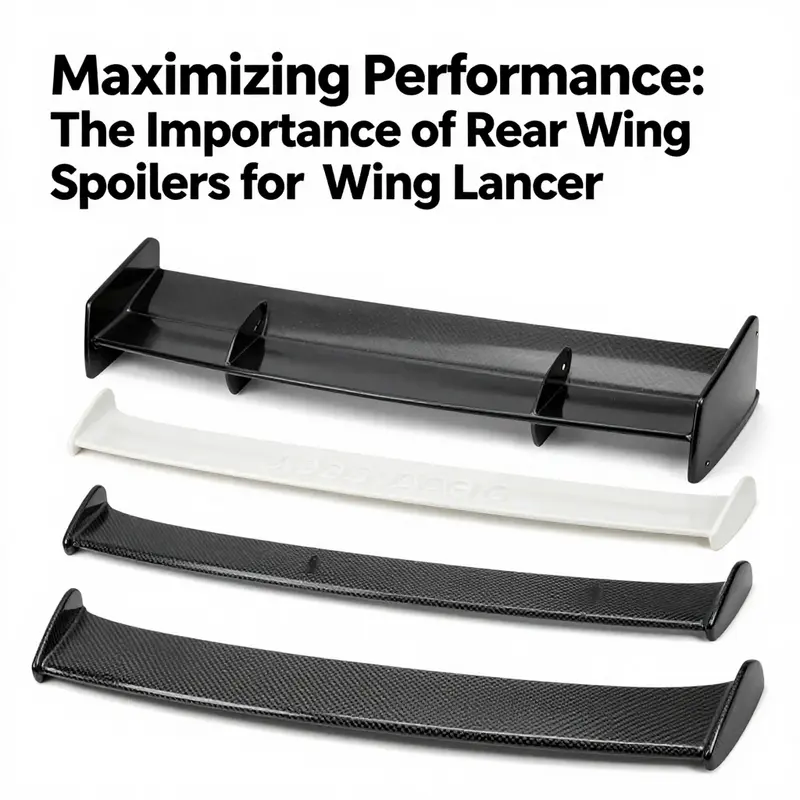
The rear wing spoiler on the Mitsubishi Lancer is more than a stylistic flourish. It is a carefully engineered element of the car’s aerodynamic system, a component that works in concert with the body, tires, and chassis to tame lift and conjure downforce at speed. In this chapter, the material choices behind those spoilers are not abstract details but practical determinants of how a car feels on the road or on the track. The material sets the stage for performance, durability, and even daily usability, guiding the decision from the first glance at a spoiler’s silhouette to the quiet rattle of a closing hatch after a long drive. The spectrum ranges from the everyday affordability of ABS plastic to the premium stiffness and lightness of carbon fiber, with polyurethane and fiberglass occupying important middle ground. Each option brings its own story of weight, resilience, manufacturing ease, and price, all of which interact with how the spoiler functions in real world conditions and how it integrates with the car’s overall design language. ABS plastic, a staple of both OEM and aftermarket spoilers, is celebrated for a compelling trio of attributes: strength, flexibility, and affordability. In the context of the Lancer, these properties translate into a component that can withstand exposure to sun, rain, and road grime without becoming brittle. UV resistance matters because spoilers live high on the rear deck, where they receive substantial solar exposure, and the last thing a driver needs is a spoiler that becomes chalky or discolored after a few seasons. ABS’s weathering resistance helps keep the finish looking intact, which in turn preserves the silhouette’s clean lines and the car’s perceived performance. Installation is often simplified by adhesive-based mounting methods, such as 3M tape, which offers a tool-free upgrade that preserves the factory hatch seal while delivering a confident hold. Weight remains light enough to avoid shifting the car’s balance noticeably, a subtle but welcomed benefit when chasing down precision handling in everyday jaunts or on a twisty back road. When a budget-friendly upgrade is the goal, ABS delivers a reliable and predictable upgrade path that doesn’t force a concession on fitment, especially when the spoiler is designed with factory-like tolerances in mind. The result is a confident, near-stock ride feel with a pronounced rear presence that communicates intent without overwhelming the car’s lines. Polyurethane sits a notch above ABS in terms of resilience, offering a different balance of characteristics that can be appealing for owners who want a spoiler that can shrug off minor impacts and road debris with less risk of cracking. This material’s elasticity helps absorb small bumps and stones that can pepper the trailing edge of a spoiler during city driving or on rougher rural roads. The flexibility reduces the likelihood of cracking under impact, a common concern for drivers who frequently encounter gravel or poorly maintained pavement. The flip side is cost and weight: polyurethane tends to weigh more than ABS and can be pricier, especially when purchased as part of a higher-end kit or a spoiler with a more aggressive styling. For a Lancer owner who wants a practical performance upgrade without chasing a carbon-fiber crown jewel, polyurethane represents a solid trade-off between durability and cost. It also offers a reliable base for finishing, whether the owner seeks a matte, satin, or gloss look that harmonizes with the vehicle’s exterior. In many ways, polyurethane spoilers are the bridge between value and ruggedness, a choice that respects both daily driving realities and the occasional need for a more forgiving surface under stray debris. Fiberglass is a familiar choice for enthusiasts who prioritize performance-oriented shaping and a less prohibitive price point than carbon fiber. Fiberglass provides sturdy structural integrity and the ability to sculpt aerodynamic forms with decent precision. For those who crave a more aggressive profile—an addition that can meaningfully increase rear downforce when paired with a properly tuned mounting and sealing strategy—fiberglass offers a flexible canvas. The material’s strength under load is generally robust, though it can demand more meticulous finishing work during installation to achieve a seamless match with the trunk opening and window gaps. A fiberglass spoiler’s weight sits between ABS and carbon fiber, offering a middle-ground option for drivers who want a more pronounced aesthetic and improved downforce without stepping into the premium tier. When composite layers are applied, or when a spoiler is mass-produced for a crowd of enthusiasts, fiberglass makes sense as a practical platform that can be tuned, reinforced, or finished in a manner that balances cost, performance, and durability. The aesthetic payoff—clean, bold lines that reflect a track-inspired stance—often accompanies the functional gains of improved rear grip and a stable, planted feel through corners and high-speed straights. No discussion of spoilers would be complete without addressing carbon fiber, the material most associated with high-performance and premium appeal. Carbon fiber spoilers shine in both objective and perceptual terms. They deliver an exceptional strength-to-weight ratio, which means less mass perched on the deck and more energy focused into maintaining plate, stable downforce at speed, and minimal parasitic lift. The lighter weight translates into lower rotational inertia and a subtle but meaningful improvement in the way the rear end responds to throttle input and cornering forces. Carbon fiber’s stiffness helps preserve aerodynamic fidelity even as the chassis architecture flexes under load, an important attribute for drivers who push toward the car’s performance envelope. The aesthetic value is equally compelling: carbon fiber’s characteristic weave and sheen convey a distinctly performance-oriented vibe, aligning with the Lancer’s sporty heritage. The downside is cost and repairability. Carbon fiber can be fragile if struck and often requires specialized finishing to prevent UV degradation and to preserve that coveted glossy or matte exterior. It is typically reserved for enthusiasts who want maximum downforce with the lightest possible spoiler, and who are prepared for the higher price and the maintenance considerations that come with premium materials. Across these material families, the essential trade-offs become clearer: weight, strength, and stiffness versus cost and ease of installation. ABS offers the easiest path to a quick upgrade with reliable fitment, while polyurethane presents a tougher, more impact-resistant option at a moderate price. Fiberglass provides an attractive balance for performance-minded drivers who want shape and strength at a reasonable cost, and carbon fiber stands as the pinnacle of lightness and stiffness for those pursuing the utmost in performance and aesthetics. The choice is rarely purely about a single metric; it is a conversation about intended use, climate and road conditions, and how much the owner is willing to invest for marginal gains in handling, downforce, and visual impact. In the context of the newer Lancer generations, spoilers marketed with perfect fitment claims speak to the importance of precise alignment and seal integrity. The rear spoiler must marry with the trunk’s contour and the car’s weather seals to avoid wind noise, water intrusion, or gaps along the trailing edge that could compromise aero performance or hatch access. Achieving that seamless integration often depends not only on the material but on the finish, the mounting approach, and the attention given to surface preparation and sealant application. In this light, the installation process becomes almost as critical as the material choice itself. A well-fitted spoiler, regardless of whether it’s ABS, polyurethane, fiberglass, or carbon fiber, will maintain its geometry under load, minimize rattling, and preserve the vehicle’s silhouette and aero intent for years to come. Improper mounting or poor sealing can turn a seemingly straightforward upgrade into a source of wind noise or vibration, or worse, misalignment that infringes on hatch operation or creates unwanted flutter at high speed. This is why professional fitting is often recommended, especially when a high-grade material is involved or when the installation must harmonize with the car’s factory lines and weatherproofing. The broader compatibility narrative also matters. For Lancer owners, the relevance of compatibility across model years—often spanning 2014 to 2024 in discussions of rear trunk spoiler wings—reflects how a spoiler’s geometry must match the trunk deck and the rear deck’s curvature. A spoiler that fits perfectly in a showroom setting but grips the deck poorly in the real world can negate the theoretical gains in downforce by introducing gaps and flutter. This is why credible suppliers emphasize fitment and precise manufacturing tolerances. The decision to pursue a spoiler that claims perfect fitment should be weighed against one’s willingness to accept professional installation and minor adjustments to sealing or paint work. Beyond fit, the finish matters too. UV exposure can fade or alter gloss levels, especially for low-cost ABS units lacking robust clear coats. Cars that spend most of their time outdoors benefit from spoilers finished with durable topcoats and protective coatings that resist chipping and color fade. The material’s natural properties will shape the maintenance routine; carbon fiber, for instance, may require attention to resin integrity and occasional polishing to preserve its appearance, while ABS can be simpler to care for with routine cleaning and a protective wax layer that helps resist UV dulling. In the field, these material choices also translate into practical decision-making about daily driving, road trips, and track days. For a street-driven Lancer, the quieter and lighter option may be preferable, allowing the driver to enjoy improved aerodynamics without the realities of extreme track use. For track enthusiasts, the added downforce of a carbon fiber spoiler becomes more than a visual cue; it translates into measurable improvements in rear axle stability at speed and in high-G cornering, where the chassis can be pushed closer to the limits of grip. Regardless of the material, the underlying principle remains: the spoiler should complement the vehicle’s overall aero strategy and the driver’s aims. It should deliver predictable behavior under acceleration, braking, and cornering, while remaining robust enough to survive routine road hazards. The Lancer’s sporty lineage invites a careful evaluation of how material choice affects performance and aesthetics in equal measure. It invites owners to weigh the balance between immediate cosmetic impact and the long-term benefits of improved downforce and stability. To support this balance, it is useful to consult vehicle-fit resources that illustrate how aftermarket components align with factory lines and weather seals, such as the page focused on the 2016 Mitsubishi Lancer front and rear bumpers, which demonstrates how aftermarket parts are designed to integrate with the car’s existing geometry and mounting points. This is not just about adding a piece of hardware; it is about preserving the car’s structural and aesthetic coherence while pursuing gains in function and form. In sum, the material choice for a Mitsubishi Lancer rear wing spoiler is a decision that sits at the confluence of performance goals, budget, and durability expectations. ABS provides an approachable, user-friendly upgrade with dependable fitment; polyurethane offers a resilient middle ground for those who value impact resistance; fiberglass presents a compelling option for drivers seeking a performance-oriented silhouette without an exorbitant price tag; and carbon fiber stands as the premium path for those who want a minimal weight penalty and maximum stiffness. The ultimate decision will reflect how the owner balances downforce, weight, aesthetics, and the practical realities of daily driving. And while the material is a critical lever, the final performance will hinge on a thoughtful combination of proper mounting, precise alignment, and conscientious maintenance. For those who want to explore options further, the broader market offers a spectrum that ranges from OEM-mimicking designs to aggressive, track-focused aerodynamics, all designed to work within the Lancer’s distinctive chassis dynamics. External resources provide additional perspectives on availability and compatibility, helping owners identify trustworthy sources and verify authenticity in a sea of aftermarket offerings. External reference: https://www.ebay.com/sch/i.html?_nkw=Genuine+OEM+Spoilers+%26+Wings+for+Mitsubishi+Lancer
Wing Styles that Shape Grip and Identity: Designing Rear Wing Spoilers for the Mitsubishi Lancer
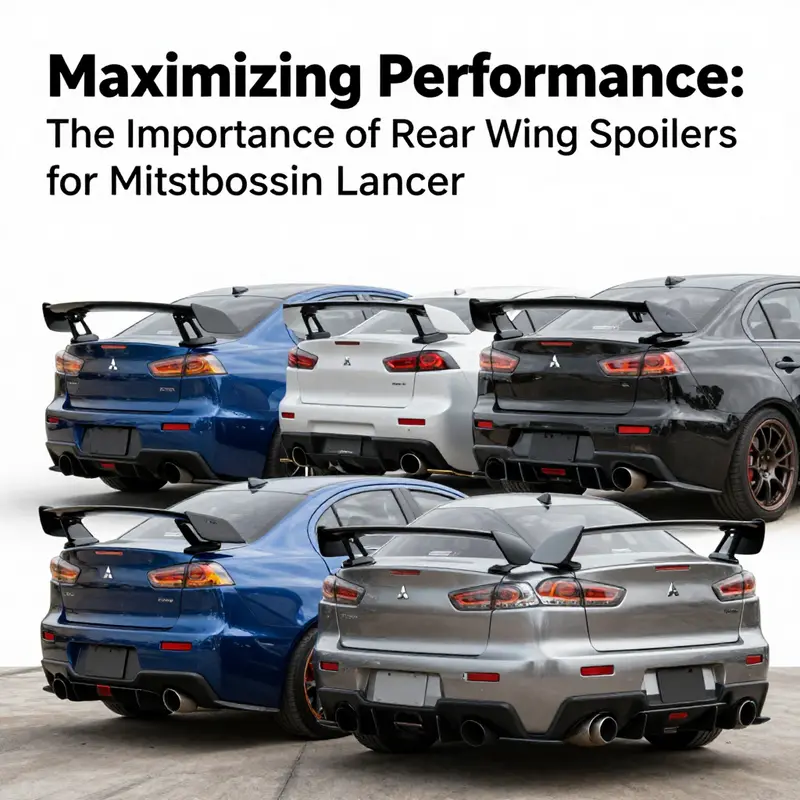
A rear wing spoiler on a Mitsubishi Lancer is more than a visual cue of performance; it is a carefully tuned element that interacts with the car’s entire aerodynamic system. The Lancer’s tidy silhouette belies a truth about fast driving: as air streams over the trunk, the rear end tends to lift unless the geometry behind the cabin is purposefully shaped to manage it. A properly chosen rear wing works with the body to create downforce at the rear axle, improving stability, steering feel, and cornering confidence at speed. The effect grows with velocity, so the spoiler’s design becomes a question of balance. Too much downforce without regard to drag can sap acceleration and efficiency; too little leaves the rear unsettled in mid-corner or on a highway gust. The aim is a design that harmonizes with the Lancer’s lines, enhances predictable handling, and fits the driver’s intent—whether that intent is daily cruising with a hint of sport, or dedicated track work that demands every ounce of grip.
In this realm, styles fall into a few broad families, each telling a different story about how the car will behave when the wind rises. A lip spoiler, for example, is the quiet, understated option that sits close to the trunk lid. It preserves the factory aesthetic while offering a modest, incremental lift reduction and a smoother transition for the rear airflow. The eye reads the silhouette as balanced and clean; the aerodynamic effect is real, but restrained, making it a sensible upgrade for drivers who want a touch more stability without altering the car’s character or hatch access. Pedestal-mounted wings, by contrast, present a more aggressive stance. They raise the wing off the deck and elevate the entire aerodynamic package, generating greater downforce at the rear and a stronger, more immediate response to speed through corners. The advantage here is tangible in high-speed handling and track discipline, but this approach also invites higher drag and a more pronounced silhouette. GT-style wings push the envelope even farther, delivering a race-inspired, high-contrast look that declares intent from across the parking lot. These large, wide-bodied designs pull air across a larger surface and work harder to push the tail down, a boon on a car that chases stability at 140 mph and beyond. Yet the visual drama and the aerodynamic heft must be matched to the car’s chassis and tires; otherwise the wing becomes a liability rather than a performance asset.
A midrange category exists where form and function converge: integrated or “ducktail” concepts that merge a rear extension with the trunk lid’s lines. The goal here is a cohesive profile, one that looks native to the Lancer rather than bolted on. This approach usually employs materials that strike a balance between stiffness and weight, such as high-quality composites or reinforced plastics. The result is a spoiler that cleanly follows the deck’s contour, offering improved rear flow without the extravagant height or reach of a pedestal design. For drivers prioritizing everyday usability, this compromise can be the sweet spot—visually compatible with the car’s design language, easy to install, and capable of delivering a measurable aerodynamic benefit without demanding a full aero kit.
Material selection is the practical compass for any spoiler choice. ABS plastic offers a robust, cost-conscious path that suits a wide audience. It resists impact, keeps weight within reasonable bounds, and can be finished to blend with the car’s color or texture. Fiberglass raises the stiffness and can be molded into more aggressive shapes, often at a lighter weight than metal equivalents. Carbon fiber represents the premium tier, delivering exceptional strength-to-weight performance and a conspicuous, race-inspired presence. The lighter weight reduces the unsprung mass a fraction and can contribute to a more precise feel, though the price premium is substantial. Genuine OEM spoiler units, manufactured to match factory specifications, are typically designed for perfect fitment and seamless finish, preserving warranty considerations and the car’s original feel. But the choice among these materials is not merely about weight or looks; it is about how the spoiler interacts with the rest of the vehicle’s aero architecture and the driver’s expectations for ride quality, sound, and on-paper performance.
The Lancer’s chassis responds differently depending on whether you chase speed on a closed circuit or confidence on public roads. In track-oriented setups, an adjustable angle of attack (AOA) spoiler becomes especially valuable. The ability to alter the wing’s inclination allows the driver to tune the balance between downforce and drag for various conditions. On a hot day the wing can be set to maximize rear grip for corners; on a long straight, a shallower angle can reduce drag and improve fuel economy without sacrificing stability at speed. Manual adjustability is common in performance-oriented offers, and it provides on-the-fly tailoring to the road or the weather. The practical payoff is a more versatile aero platform that supports a broader range of driving scenarios, enabling a single spoiler to serve both street and track duties. For drivers who want the compromise without constant refinement, a fixed design engineered around a broad operating range can still deliver predictable behavior while preserving refinement in everyday use.
Installation considerations are not an afterthought. Even the most sophisticated design can underperform if misaligned or improperly sealed. The rear hatch seal, the trunk’s curvature, and the surrounding bodywork all influence how the spoiler sits and how air behaves around the tail. A poor seal or an ill-fitting mounting base can create wind noise, vibration, or leaks that undermine the aero benefits. The ideal installation is precise, with clean mounting points and shims or adapters that preserve even gaps and a flush finish. This is not merely about aesthetics; the seal integrity and the wing’s angle can influence performance. In many cases, professional installation is recommended to ensure the wing’s position relative to the deck and the car’s overall aero balance is optimal. When the kit is designed to be a “perfect fit,” it helps reduce the time and risk of trial-and-error fitting, but still benefits from a trained hand to verify alignment at multiple speeds and conditions.
Beyond the wing itself, the broader aero kit can harmonize with the spoiler to enhance overall stability. A front splitter or underbody diffuser can guide the incoming air toward the rear more cleanly, reducing separation and creating a more cohesive flow field across the car. The connecting idea is that aero parts should act as a system, not as isolated pieces. A well-chosen rear wing works best when it is seen as a component of a wider strategy that includes body panels, underbody shaping, and even wheel arch treatment. When these elements converge, the car’s rear end feels planted, the steering responds more crisply, and the whole chassis communicates through the seat of the pants.
In that spirit, the choice of a rear wing is less about chasing a single ideal shape and more about selecting a family of designs that fits the driver’s goals. For those who prize a restrained look, a lip spoiler that follows the trunk lines with minimal intrusion is a natural starting point. For enthusiasts who view the car as a capable platform that can be pushed toward the limit for track days, a more prominent wing—paired with a diffuser-inspired rear section and careful alignment—offers a clearer path to greater rear grip. And for weekend warriors who want a balanced upgrade that looks purposeful yet remains comfortable for daily driving, an integrated, low-profile design can deliver meaningful aero gains without dominating the car’s character. The key is to weigh how much the spoiler dictates the car’s personality, how much it contributes to grip, and how it interacts with the car’s other aero features.
Within this decision framework, a practical tip emerges: consider how the spoiler’s footprint aligns with your vehicle’s existing lines and how the entire package will sit when you step back and view the car from behind. The rear spoiler should feel like a natural extension, not a bolt-on that clashes with the trunk’s geometry. A cohesive kit that respects the Lancer’s proportions will look confident, while also delivering tangible handling benefits. The driver’s sense of connection—how the car communicates grip through the seat, the wheel, and the pedals—tells a quiet but decisive story about whether a particular design is right for the car. As with any meaningful automotive upgrade, the best choice comes from balancing aesthetics, aerodynamics, weight, and the intended use-case, ensuring that the wing complements the vehicle rather than competing with it.
For those who want a deeper technical context, a broader technical guide on rear wings and track spoilers offers valuable perspectives on standards, properties, and industrial applications. It explains how aerodynamic efficiency is measured, how downforce and drag interact across speeds, and why certain materials and joints contribute to reliability in demanding conditions. This external resource helps frame decisions about a Lancer spoiler within a wider engineering framework, clarifying how to evaluate different designs for real-world driving. Carbon fiber, for example, often offers a compelling blend of stiffness and lightness, but the structural demands of a rear wing hinge on precise mounting, careful sealing, and robust attachments to withstand high-speed loads and temperature variations. Similarly, adjustable systems are most effective when the mounting points and the wing’s mass distribution are carefully tuned to preserve balance across acceleration, braking, and cornering. Ultimately, the right spoiler design emerges when drivers align their desired handling with a trusted aero philosophy and a robust installation routine. For a concise, technically grounded exploration of track spoiler principles, consult the referenced guide.
Internal link note: for readers exploring complementary aero components that can synchronize with a rear wing on a Lancer platform, consider a carbon rear diffuser option crafted to pair with similar chassis lines and corners of the model family, linked here: carbon rear diffuser for Lancer and Evo 10.
In closing, the landscape of rear wing spoilers for the Mitsubishi Lancer invites a thoughtful, performance-conscious approach. The spectrum ranges from subtle, OEM-colored enhancements to bold, track-ready wings that define a car’s rear silhouette and physical behavior. The right choice respects the car’s original proportions, contributes meaningful downforce where it matters, and remains compatible with the driver’s daily needs and track ambitions. A well-chosen spoiler becomes part of a larger philosophy of driving—one that values steady, predictable feedback, confident handling through corners, and a sense that the car’s aero is a language the driver can read clearly. In the end, the best wing is the one that makes the Lancer feel more planted, more communicative, and more distinctly itself on every road and every circuit it encounters.
External resource for further study: https://www.aerodynamicssolutions.com/rear-wing-track-spoiler-guide
Fitting the Finish: Compatibility, Mounting Choices, and Real-World Installation Advice for Mitsubishi Lancer Rear Wing Spoilers

Fitting the Finish: Compatibility, Mounting Choices, and Real-World Installation Advice for Mitsubishi Lancer Rear Wing Spoilers
A rear wing spoiler is more than a visual flourish on a Mitsubishi Lancer. It changes airflow, affects rear axle load, and can influence traction at speed. Because of that, choosing and fitting the right spoiler demands attention to compatibility, mounting method, materials, and long-term care. The design differences between Lancer generations mean that a spoiler which looks right might not fit without modification. Trunk contours, factory mounting points, and even trunk-lid stiffness vary by year and trim. Confirming that a spoiler lists your exact model year avoids surprises. When a listing claims “perfect fitment” for a range of years, verify photographs and mounting templates against your car. Small variations in lip radius, bolt-hole spacing, or hatch curvature can force drilling or custom brackets.
Mounting style is a primary factor in both performance and longevity. Bolt-on spoilers attach with mechanical fasteners. They are usually secured through the trunk lid with backing plates to spread load. This method gives the most reliable hold for spirited driving and track use. Properly installed bolts transfer aerodynamic forces into the trunk structure instead of the spoiler body alone. That reduces the risk of adhesive failure or edge lifting at high speeds. However, bolt-on installs require precision. Holes must be drilled in the correct locations, edges treated for rust prevention, and sealing applied to prevent water ingress into the trunk. If holes are misaligned, the spoiler can stress the trunk skin and paint. For these reasons, many owners have bolt-on spoilers installed by experienced shops to ensure exact alignment and correct torque specifications for fasteners.
Adhesive-mounted spoilers use industrial-strength double-sided tape. They offer fast, clean installs without drilling. Installation time is dramatically reduced, and there is no permanent alteration to the trunk. For owners seeking a discreet style upgrade for street driving, this method is attractive. Yet adhesive-only mounts are sensitive to surface prep and environmental extremes. The bonding surface must be immaculate, free of wax, grease, and contaminants. Primer or adhesion promoter may be recommended. Temperature at install matters; cold adhesive doesn’t form the same bond as warm. Over time, constant exposure to heat cycles and moisture can weaken the tape. For these reasons, adhesive spoilers are better suited to lighter, lip-style pieces rather than large GT wings that generate significant downforce. If an adhesive-mounted spoiler will see aggressive use, consider combining tape with discreet fasteners or using internal brackets to share load.
Material choice affects weight, finish, and durability. ABS plastic is common and economical. It resists impacts and flexes without cracking under minor stress. For most daily-driven Lancers, a high-quality ABS spoiler provides long life and a factory-like appearance. Fiberglass gives a stiffer, more solid feel and can be repaired easily if damaged. It is heavier than carbon fiber but usually less expensive. Carbon fiber offers the best strength-to-weight ratio and a distinctive high-end look. However, genuine carbon fiber is costly. When choosing carbon pieces, verify weave quality and clearcoat finish to avoid visual defects. Weight matters because additional mass at the rear raises the car’s moment of inertia and can slightly affect handling balance. Well-designed spoilers minimize weight while providing the intended aerodynamic effect.
Fitment also depends on whether the spoiler is OEM-compatible or a universal aftermarket piece. OEM-compatible designs follow factory attachment points and contours closely. They often include templates or hardware designed for easy integration with the stock trunk. Certified aftermarket kits may offer similar fitment while providing varied styling options. Universal spoilers provide flexibility but usually demand trimming, custom brackets, or filler pieces to sit correctly. If you value a seamless, factory-like finish, prioritize OEM-fit items or certified kits verified for your model year.
Installation preparation reduces post-fit problems. Before any fastening, test-fit the spoiler. Position it on the trunk and check gaps, symmetry, and lid clearance. Close the trunk slowly to ensure hinges and latch operation are unaffected. If the spoiler obstructs hatch movement, repositioning or a different model will be necessary. For bolt-on installs, mark hole centers with a template. Use a center punch to prevent drill wandering. Drill pilot holes first, then enlarge to final diameter. Deburr each hole and apply rust inhibitor or primer to bare metal. Use backing plates or washers beneath the trunk interior covering. These spread load and protect the trunk skin from stress concentrations. Tighten bolts gradually in a cross pattern to maintain even pressure along the mounting flange. Over-torquing can deform the spoiler or damage paint.
For adhesive installs, clean the mounting surface thoroughly. Use isopropyl alcohol to remove oils and residues. Position the spoiler and secure it with clamps or temporary tape while the adhesive cures. Follow manufacturer recommendations for cure time and avoid driving at highway speeds during this window. Some owners add a thin bead of automotive-grade sealant along the spoiler base to prevent water intrusion and to give additional bonding strength. If you use sealant, ensure it is paint-safe and compatible with the spoiler material.
Beyond hardware and adhesives, finishing touches matter. Many spoilers include rubber gaskets or foam tape to cushion contact and prevent paint scratches. If these pads are missing, add a thin protective layer between metal and spoiler. When painting a replacement spoiler, use compatible primers and finishes. Poor paint adhesion will flake and expose the substrate, increasing corrosion risk for metallic components or degrading fiberglass. For carbon fiber parts with exposed weaves, a UV-resistant clearcoat preserves the finish.
Performance-conscious owners must consider aerodynamic tuning. A spoiler that generates excessive downforce without adequate structural support can damage the trunk lid. Large, pedestal-mounted wings create leverage that stresses mounting points. For track use, ensure mounts are reinforced and fasteners are backed by interior supports. Balance downforce goals with the Lancer’s suspension and tire choices. Too much rear downforce without front aero balance can induce understeer. For street applications, subtle lip spoilers often provide sufficient high-speed stability without introducing nuisance wind noise or drag penalties.
After installation, several inspections are essential. Check for gaps or unsealed edges where water may enter. Monitor for wind noise at highway speeds and re-tighten fasteners if vibration appears. Inspect mounting hardware after the first few hundred miles and then at every service interval. Adhesive bonds should be checked annually in harsh climates. If the trunk interior shows signs of moisture, address seals promptly to prevent rust.
Legal and warranty considerations should not be overlooked. Some installations may void portions of the vehicle warranty, particularly if drilling or modifications compromise factory structures. If preserving warranty coverage matters, consult a dealer or a qualified installer before starting. Local regulations can also restrict modifications that alter vehicle height or visibility. Ensure that any spoiler does not obscure brake lights or obstruct rearward vision.
Practical installation tips reduce headaches. Have a second person help with alignment and holding the spoiler during mounting. Use low-tack painter’s tape to mark centerlines and mounting positions. Keep a torque spec sheet or use moderate torque settings and check for loosening later. When sealing holes from bolt-on installs, finish with a paintable seam sealer and touch-up paint to match factory color. If the trunk lid has an interior liner, cut access panels to reach backing plates and fasteners for future maintenance.
Aesthetics and resale value matter too. A well-fitted spoiler that matches paint and contour suggests careful ownership. Conversely, sloppy installs and visible sealant can detract from value. If you plan to resell, consider reversible adhesive mounts or use factory-fit options that can be removed cleanly.
Incorporating other rear aerodynamic parts can complement a spoiler. A diffuser or subtle rear lip interacts with wing aerodynamics and can improve overall balance. If you plan multiple changes, stage them and test the car between steps. Small adjustments often yield the clearest sense of how each component affects handling.
Finally, if you are unsure about tools, alignment, or structural reinforcement, seek professional help. A specialist will ensure correct mounting, proper sealing, and appropriate hardware. Professional installation often pays dividends in durability, noise reduction, and confidence during spirited driving.
If you want to see how rear styling pieces pair with other aero parts, review a detailed example of a complementary rear component for the Lancer and Evo X: carbon rear diffuser V-style for Mitsubishi Lancer and Evo 10.
For verified listings of genuine rear wing spoilers compatible with various Mitsubishi Lancer model years, consult reputable marketplace sources and confirm exact year fitment before purchase: https://www.ebay.com/sch/i.html?_nkw=Genuine+OEM+Spoilers+%26+Wings+for+Mitsubishi+Lancer
Final thoughts
Rear wing spoilers are essential for enhancing the performance, aesthetic appeal, and functionality of Mitsubishi Lancers. Understanding their aerodynamic benefits, material choices, styles, and installation compatibility can provide significant advantages for business owners in the automotive sector. Investing in quality rear wing spoilers can lead to improved driving dynamics and customer satisfaction, making it a wise addition to any Mitsubishi Lancer’s design.