
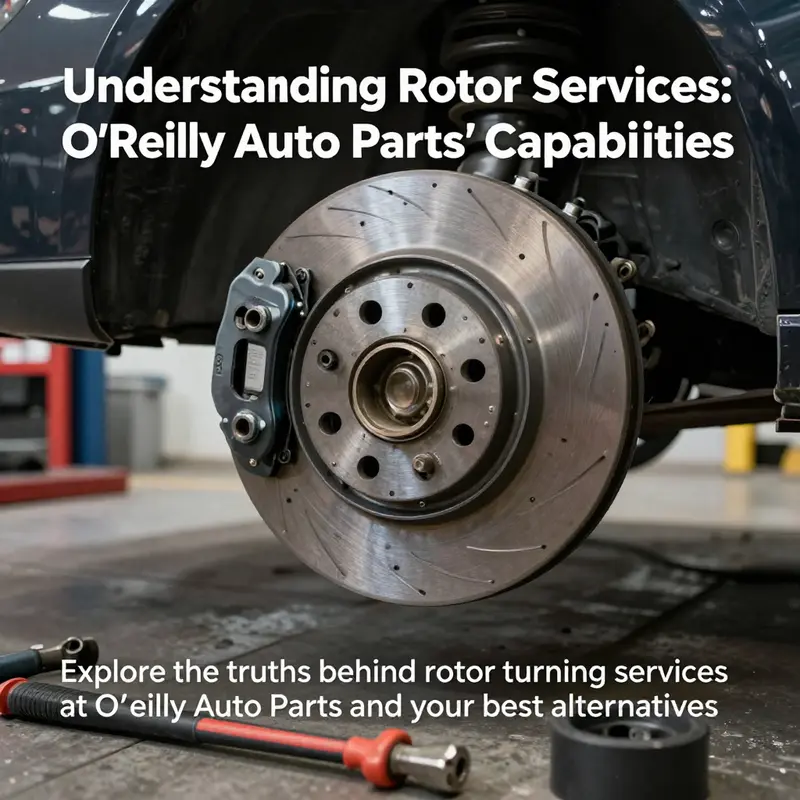
As a business owner in the automotive industry, understanding the services offered by retailers like O’Reilly Auto Parts can be crucial for operational decisions. Specifically, the question of whether O’Reilly Auto Parts provides rotor turning services can affect your maintenance program and customer satisfaction. This article delves into the services offered by O’Reilly, the equipment and expertise necessary for rotor turning, and the best alternatives available should you need this service. By the end of this exploration, you’ll have a comprehensive view of the rotor service landscape and be better equipped to make informed decisions.
Does O’Reilly Turn Rotors? What Store-Level Brake Services Actually Offer
Understanding what “turning rotors” means and what to expect from a parts store
Rotor turning, often called resurfacing or machining, is a process that restores a brake rotor’s flat surface. Shops use a brake lathe to remove a thin layer of metal. The aim is to eliminate unevenness, ridges, or light scoring. A properly resurfaced rotor should sit flat against the brake pads. That restores consistent contact and smooth braking feel.
Many people ask whether a parts store offers this service. The short answer is: availability varies widely. Some locations may provide rotor machining on-site. Others focus strictly on parts sales and basic services. This variation depends on store size, staffing, available equipment, and local demand. Before planning a visit, verify whether the specific store offers machining or only sells replacement rotors.
Why the difference matters is simple. Rotor machining needs specific machinery. A brake lathe is not a basic tool. Technicians also need training to measure rotor thickness, calculate safe minimums, and ensure runout falls within tolerance. A store that sells parts might not maintain that machine. That store may instead refer customers to a dedicated repair shop. Knowing this helps set expectations.
Signs that rotors may need turning include vibration through the brake pedal or steering wheel, pulsation when braking, loud scraping or grinding noises, and visible grooves on the rotor surface. These symptoms do not automatically mean machining will fix the issue. Deep scoring, cracks, heavy rust, or rotors worn below minimum thickness require replacement instead of resurfacing.
A proper assessment begins with simple measurements and inspection. Shops measure rotor thickness at several points. They compare those values against the rotor’s published minimum thickness. They also check lateral runout, which measures wobble as the rotor spins. High runout causes pedal pulsation. Resurfacing can correct moderate runout, but not excessive or structural damage. Any shop offering machining should report those checks before proceeding.
If a parts store does provide machining, the workflow typically looks like this. A technician removes the wheel and bolts off the caliper and rotor. They inspect pads, caliper slides, and hardware. If pads are worn unevenly or calipers are sticking, machining might be futile without resolving those issues. The rotor then goes to the lathe for facing. After machining, technicians reassemble brakes, torque bolts to spec, and often suggest bedding new pads if new pads were installed. A thorough job addresses the whole brake system, not just the rotor surface.
There are two common lathe types: on-car and off-car. Off-car lathes machine the rotor after removal. On-car lathes clamp to the hub and machine the rotor in place. Both have pros and cons. Off-car lathes often yield very accurate finishes. On-car lathes allow precise correction of runout relative to the hub. The choice depends on equipment and technician skill. A store that offers machining should be able to describe which method they use and why.
Many consumers find the economics of resurfacing attractive. When rotors are only slightly damaged, machining can be cheaper than replacement. It preserves original rotors and may maintain a factory balance. Yet resurfacing removes metal. Each pass shortens a rotor’s usable life. If a rotor has already been resurfaced multiple times, it can fall below minimum safe thickness. A trustworthy technician will refuse to resurface a rotor below the safe limit.
There are reasons to prefer replacement in many modern vehicles. Today’s rotors often incorporate improved metallurgy and manufacturing tolerances. Replacement rotors come pre-finished and balanced. They may include protective coatings that limit rust. Some performance or modern brake systems require new rotors to ensure proper safety margins and consistent friction characteristics. A clear discussion with the technician helps decide whether machining or replacement best suits the vehicle.
When contacting a parts store about rotor machining, ask a few targeted questions. Does this store perform rotor machining on-site? If so, which lathe type do you use? Will you check rotor thickness and runout before machining? Can you show the rotor measurements and the minimum thickness specification? What is the estimated turnaround time and cost? Also, ask whether they inspect calipers and pads as part of the service. A clear answer reveals whether the location has the proper tools and procedures.
If a store does not machine rotors, they often sell replacement rotors instead. Replacement options include blank rotors, slotted or drilled variants, and premium resurfaced replacements. For many drivers, buying new rotors and having a professional install them offers the best long-term value. New rotors eliminate uncertainty over previously hidden damage. They also remove the limitations caused by prior resurfacing.
If the parts store does not perform machining, they might still help. Many stores will measure battery and electrical systems, change wiper blades, and perform basic replacement tasks. They may sell rotor installation kits, hardware, and appropriate brake pads. For do-it-yourselfers, such stores supply tools and parts. Some locations also rent specialty tools to install brake components safely.
Choosing where to have rotors resurfaced requires balancing cost, convenience, and confidence in workmanship. Independent specialist shops tend to focus on brake systems and invest in higher-end lathe equipment. General service centers may offer machining as part of brake service packages. Mobile and small stores sometimes partner with local machine shops for rotor turn services. If consistency matters, seek out a shop with explicit brake system certifications and clear measurement records.
A few practical tips improve the odds of a satisfactory result. First, inspect brake pads and calipers before machining. If pads are beyond recommended wear or the caliper slides are corroded, fix those first. Otherwise, resurfacing may only delay recurring problems. Second, always ask for the rotor thickness readings and the minimum spec. Third, request that wheels and lug nuts be torqued to proper specifications after reassembly. Uneven lug torque can cause a warped feeling even on a correctly surfaced rotor.
Warranty and liability matter. Stores that resurface rotors should be willing to stand behind their work. Ask what kind of warranty they offer on machining services. Some businesses extend a short warranty on labor and on the machining procedure. If the store only sells replacement rotors, those parts often carry manufacturer warranties. Clarify which warranty applies and what steps are necessary to make a claim.
In many regions, parts stores function as a hybrid: selling parts and offering limited services. That blended role creates confusion. A location may advertise services like battery testing, light bulb replacement, and tool rental. It may also mention custom hose fabrication and recycling programs. These services show a focus on retail and basic maintenance. Rotor machining is more specialized and not universally offered at these outlets.
For someone deciding between machining and replacement, the rotor’s condition often dictates the choice. Minor surface irregularities, thin glaze, and moderate runout suit machining. Deep grooves, cracks, excessive rust, or rotors near minimum thickness require replacement. A thorough inspection yields a clear recommendation. Reliable shops will explain tradeoffs plainly and document their assessment.
Cost comparison helps too. Machining can be less expensive up front. But replacing rotors can avoid recurring labor costs. If a rotor will need replacement within a short time anyway, investing in new rotors from the start may be wiser. Additionally, some modern vehicles use rotors made to tight tolerances. In those cases, replacement rotors often deliver better performance.
If you plan to do the work yourself, a parts store can be a resource. Staff can advise on compatible rotors and pads. They can supply caliper hardware kits and anti-seize compounds. They may offer tool rental programs to help with removal and installation. When in doubt, follow the vehicle manufacturer’s brake service guidelines.
Finally, when contacting a local store, be prepared with vehicle details. Provide the make, model, year, and any special brake package information. That enables staff to check parts availability. It also helps them give a more accurate answer about whether they can machine rotors on-site. A quick call can save a trip.
If you want to explore how replacement rotors and related parts compare, a useful reference covers replacement options for wheels and brakes. For example, an article listing compatible wheel sizes and fitments may help understand rotor and wheel relationships. See this guide to wheel fitment and sizes for additional context: 17 rims fit mitsubishi eclipse wheels 17×7 5 new.
For authoritative details on whether a particular chain or store location offers rotor machining, consult the company website or call the store directly. You can also find corporate contact pages that list services or connect you to customer support. For the chain mentioned in this article, the corporate site provides official information and local store guidance: https://www.oreillyauto.com
In short, some store locations perform rotor turning, and many do not. The deciding factors include available equipment, technician skill, and store focus. Always verify with your local store before assuming the service is offered. When in doubt, choose a specialist or request replacement rotors. The most important goal is safe, reliable braking performance.
Rotor Turning at O’Reilly: What the Service Includes, How It Works, and When to Choose Replacement
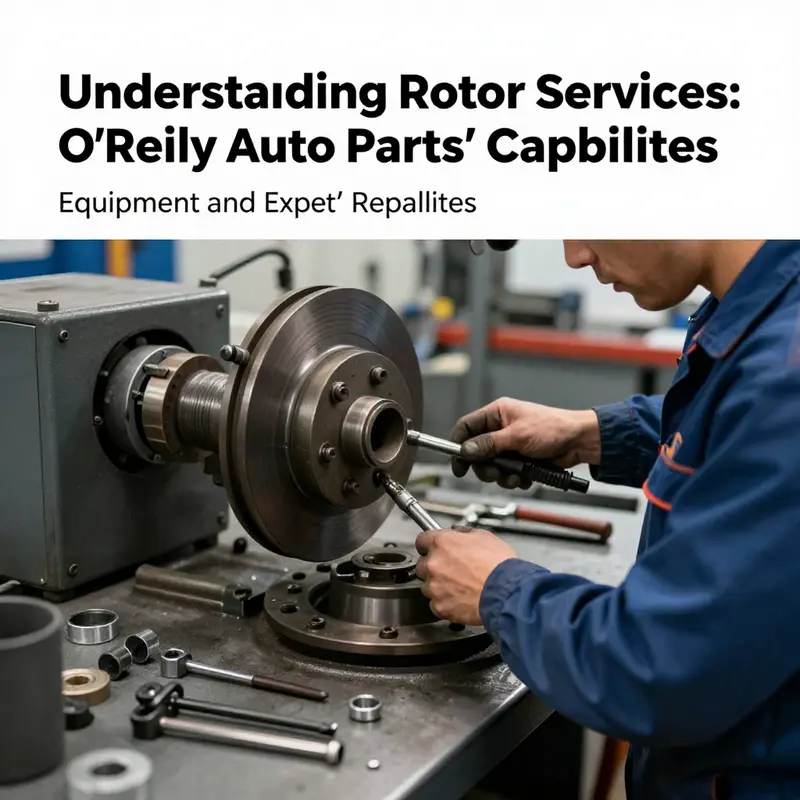
Equipment and process in a retail repair setting
When you wonder whether a national parts retailer will turn your rotors, the answer depends on more than a yes-or-no sign in the window. Some locations in a retail chain do offer rotor resurfacing, but the real key is understanding what that work requires, why it sometimes makes sense, and when a full replacement is the safer, more reliable choice. Rotor turning is not a cosmetic tweak; it is a precision procedure that restores the braking surface by removing a thin, controlled layer of metal. The operation needs the right tool, a skilled operator, and careful measurement of rotor dimensions before and after the cut.
A portable brake lathe is the most common tool used when resurfacing rotors where the vehicle sits. Unlike a large shop-mounted lathe, the portable unit clamps to the wheel hub so the technician can cut the rotor without removing the stub axle or axle components. This setup is convenient for mobile or retail-service environments because it drops the need for a full machine bay. However, a portable lathe still demands careful setup. The rotor must be cleaned and inspected for cracks, deep scoring, and heat damage. The technician must measure the rotor thickness at multiple points to confirm the part exceeds the vehicle manufacturer’s minimum allowable thickness. If the rotor is below that limit, resurfacing would weaken it and is therefore unsafe.
Safety equipment and proper tools matter. Technicians routinely use gloves and eye protection during lathe operations. A torque wrench is essential for correct wheel-lug reinstallation. Accurate measuring devices, such as micrometers or calipers, are used before and after turning to confirm material removal and final thickness. A runout gauge helps detect lateral wobble in the rotor relative to the hub. Excessive runout can cause pedal pulsation and is sometimes correctable by turning; other times the hub or mounting surfaces are the root cause.
Availability varies by location. While many stores within a retail parts network list services that include rotor resurfacing, not every individual outlet performs the work. Some are strictly parts-only retail operations with no service bays. Others provide limited mechanical assistance, possibly through trained staff or contracted technicians. Because availability fluctuates by store, the most reliable approach is a phone call or an online check to find a location that offers rotor resurfacing.
Not all rotors are good candidates for turning. Rotors with deep heat cracks, severe scoring, warping beyond resurfacing tolerances, or those already near the minimum thickness must usually be replaced. Surface rust can be cleaned off and turned away, but structural damage cannot. In addition, some modern vehicles use thin or specially coated rotors whose design makes resurfacing impractical; in those cases, replacement is the recommended route.
Turning versus replacement: decision points. Resurfacing preserves an existing rotor by removing surface irregularities and restoring a uniform contact face. This can cure brake noise, reduce vibration, and extend the rotor’s life. When paired with new brake pads, a properly resurfaced rotor can return braking to near-original performance. But the decision to resurface should weigh rotor thickness, the cause of the damage, and long-term reliability. If the rotor is marginal in thickness or shows oscillating heat patterns, the safer option is replacement. New rotors restore full material thickness and are free of previous stress patterns. The cost difference between resurfacing and replacement narrows in many modern cars because parts are relatively affordable, and labor for replacement may not be substantially higher than the time spent measuring and turning a marginal rotor.
What to expect when you bring a car in for rotor resurfacing. A competent location will perform a thorough inspection before any cutting begins. That includes measuring rotor thickness at several points and examining the braking surface for cracks and heat damage. The technician will check wheel bearings and hub mounting surfaces for warpage or contamination that could create runout. If the rotor passes inspection, the surface will be cleaned and then mounted on the lathe. The lathe cut is usually shallow, removing only a few thousandths of an inch per pass until the surface is smooth and flat. After turning, the rotor will be re-measured to ensure thickness remains above the minimum specified by the vehicle manufacturer.
A final check typically evaluates lateral runout and overall rotor geometry. If reassembly is required after on-vehicle turning, lug nuts are torqued to specification using a torque wrench. Technicians may recommend new brake hardware or pads if wear patterns indicate those components are at fault. Shops that offer turning generally advise a bedding-in procedure after service. Bedding helps create an even transfer layer of brake pad material on the rotor, which improves performance and reduces noise. Customers should receive clear instructions on this break-in process, including gentle stops at moderate speeds and avoiding heavy braking for a short distance.
Limitations and common pitfalls. Even when a location advertises rotor turning, limitations apply. Portable lathes can do a good job but have less rigidity than a stationary bench lathe. That means the finish quality can vary with operator skill. Poor setup or incorrect cut depth can leave a rough finish or cause excess removal of material. If the original cause of surface irregularities is a sticking caliper, contamination, or failed hardware, resurfacing alone will not fix the underlying issue and may produce the same symptoms again. Technicians must diagnose and address root causes, replacing calipers, hardware, or pads as needed.
Another concern is safety margins. Each rotor has a minimum allowable thickness stamped by the manufacturer. That number is a safety limit. Cutting a rotor below that number risks overheating and cracking under load. Shops should document pre- and post-cut thicknesses, and any repair estimate should include the likelihood of replacement if the rotor is too thin. Ask for those measurements; a transparent provider will share them and explain the decision to turn or replace.
When rotor turning is not recommended, replacement is the right choice. Deep heat checks, visible cracks, excessive wear that unevenly reduces thickness, or rotors below the minimum thickness are immediate exclusions for resurfacing. In addition, some vehicles use rotors designed with special coatings or slots and drilled designs where reshaping would compromise coatings or weaken structural integrity. In these cases, replacement restores the intended brake geometry and protective surface treatments.
Cost and value considerations. Resurfacing generally costs less than replacement, but the difference depends on parts pricing and labor rates. When parts are inexpensive, buying new rotors might be a better investment given the long-term safety and reliability. Resurfacing can make sense when rotors are still well above the minimum thickness and the damage is limited to surface irregularities. It is also a reasonable interim repair when immediate replacement parts are unavailable, provided an inspection confirms structural soundness.
If the service is offered at a retail parts outlet, ask whether the work is performed by in-house staff or a contracted technician. Contracted technicians may be equally competent but can introduce variability in service quality. Request to see the lathe’s calibration records, if available, and ask how the technician determines final thickness and runout tolerances. Reliable shops will have clear acceptance criteria and a documented inspection process.
Preparation and communication tips for customers. Before dropping off a vehicle, prepare by gathering maintenance records and any recent brake work documentation. Share symptoms with the technician: pedal pulsation, noise, reduced stopping power, or visual scores on the rotor. If you suspect a sticking caliper or contaminated pads, say so. That information helps the technician prioritize a full brake inspection rather than a single resurfacing step. Ask for a written estimate that lists inspection findings, pre- and post-turn thickness measurements, and any repairs that will be required if damage prevents turning.
Understand warranty and return policies. Some retailers offer limited warranties or guarantees on their resurfacing work. That may cover reappearance of a surface issue within a short time window if workmanship rather than rotor condition caused the problem. Warranties rarely cover underlying mechanical defects like failed calipers or contamination. If you worry about long-term reliability, a replacement rotor with its manufacturer warranty could be the better choice.
How to decide between a chain location and an independent brake shop. Chain retailers can offer convenience, predictable pricing, and sometimes nationwide warranty coverage on parts. Independent brake shops often specialize in braking systems and may have more experience with complex diagnosis, heavy-duty vehicles, or performance-spec rotors. If your vehicle has specialized rotors or you drive in demanding conditions, a shop that focuses on brakes can provide deeper expertise. For standard passenger vehicles with routine wear, a qualified technician at a retail location with a portable lathe can produce satisfactory results.
Signs a resurfaced rotor was done well. After a proper turn and reinstallation, braking should feel smooth and consistent. Pedal pulsation should be eliminated if it was caused by surface irregularities. Noise reduction is common when rotor thickness is restored and pads are matched correctly. If vibration or noise returns quickly, that signals either an incomplete diagnosis or an issue with other brake components. In such cases, insist on a full brake-system inspection rather than repeat resurfacing.
Final practical advice. Because not every store offers rotor turning, call first to confirm service availability. When you inquire, ask specific questions: whether an on-vehicle portable lathe or shop-mounted lathe will be used; how rotor thickness and runout are measured; what the minimum thickness is for your rotor; whether bedding instructions will be provided; and what warranty covers the work. If the technician identifies damage beyond simple surface wear, be ready to compare the cost and benefits of replacement versus resurfacing.
If you need more information about services and locations that may offer resurfacing, check the company’s store services directory or contact a nearby location directly for specifics and booking. For a local store list and service details, visit the official locations page: https://www.o’reillyauto.com/locations
For related vehicle fitment and wheel information, you may find a practical guide to wheel sizes helpful: 17 rims fit Mitsubishi Eclipse wheels.
This chapter has outlined what rotor resurfacing involves at a retail parts outlet, the equipment and skill required, practical inspection steps, and how to decide between turning and replacement. With that context, readers can approach a local store with targeted questions, evaluate the technician’s recommendations, and choose the safest and most cost-effective path for their braking system.
Rotors and Retail: What to Expect When You Ask O’Reilly About Turning Your Brake Rotors
Does O’Reilly turn rotors? The short answer is: it depends. What follows is a clear, practical look at why there is confusion, how rotor turning (also called resurfacing or machining) actually works, when it makes sense, and where to go if a local store can’t or won’t perform the job. Read this as a single, integrated guide that helps you decide the right path for keeping your braking system safe and quiet.
O’Reilly is primarily a parts retailer with hundreds of locations. Many of those stores sell rotors, pads, hardware, and specialty tools. Some locations also provide light installation services. In other words, the company’s core business centers on supplying parts, not running full-service mechanical shops. That business model creates variability. In some stores, staff are equipped and trained to resurface rotors with a brake lathe. In others, stores limit activity to parts sales and basic installations. That difference explains the mixed information you may encounter.
Understanding what rotor turning actually is helps make sense of which locations will offer it. Rotor turning removes a thin layer of metal from the brake rotor’s face. The machine used, a brake lathe, restores a smooth, flat surface. That smooth finish reduces vibrations and noise. Turning can return a rotor to serviceable condition when surface irregularities or light scoring cause brake pedal pulsation or squeal. But turning is not a universal fix. It cannot repair rotors that are too thin, cracked, overheated, or otherwise structurally damaged. Knowing when turning is appropriate protects safety and money.
Several technical limits determine whether a rotor can be turned. Every rotor has a safe minimum thickness stamped on it or specified by the manufacturer. When a lathe removes material, the rotor gets thinner. If resurfacing would reduce the rotor below its minimum thickness, the rotor must be replaced. Heat damage or deep scoring can also compromise structural integrity. Visible cracks, heavy rust in the friction area, or a pronounced lip at the rotor edge often mean replacement is the safer choice. Runout, which is lateral wobble, can sometimes be corrected by machining, but only if the rotor remains within thickness limits after the cut.
Because those technical judgments require tools and training, retail locations must decide whether to invest in machine shops and technician time. Where stores do offer rotor turning, expect a mix of policies. Some stores will machine rotors that you bring in, others will machine rotors you buy from them, and some may require an appointment. Pricing and turnaround also differ. In many cases, shops that turn rotors in-store will offer the service as part of a brake job. In other scenarios, a quick lathe service is available while you wait, especially at higher-traffic locations with a service bay.
If you contact a local store and learn they do not turn rotors, there are sensible alternatives. Independent repair shops typically have a brake lathe and can advise about machining versus replacement. Departmental repair centers at larger auto service chains also machine rotors, though they may push replacement if the cost difference is small. Dealership service departments will assess rotors against manufacturer standards and recommend the safest option. Mobile brake technicians are another route; they can come to your home or workplace and handle pad replacement and rotor work on-site if they have a portable lathe.
Choosing between resurfacing and replacing is often a cost-versus-safety calculation. Resurfacing keeps a rotor in serviceable condition at lower immediate cost. But if a rotor is near its minimum thickness, or if the car has long-term brake issues, replacement is often the better long-term value. New rotors ensure proper flatness and thickness without the residual stresses that can remain after multiple resurfacings. Meanwhile, high-performance or lightweight rotors sometimes respond poorly to repeated machining because their designs tolerate thinner surfaces differently. In those cases, replacement is the recommended option.
There are also practical performance considerations. New rotors and matched new pads give predictable breaking-in characteristics, quieter stops, and full friction surface. Resurfaced rotors can work very well with new pads if the rotor surface is clean and true. Still, resurfacing does not restore protective coatings, and a freshly machined rotor may require cleaning or breaking in to avoid initial noise. In some vehicles, especially those with advanced braking systems, the rotor surface finish and flatness must meet tight tolerances. Shops that understand these tolerances can achieve good outcomes; shops that do not may leave you with persistent vibration.
How to proceed when you need rotors turned. First, inspect the rotors visually and, if possible, measure thickness. You can often see scoring, rust, discoloration, or lip formation at the rotor edge. If you lack a micrometer, a professional can measure rotor thickness and runout in minutes. Next, call the local parts store and ask specifically whether that location machines rotors. If they do, confirm whether they can machine your specific rotor, the price, and how long it will take. Ask whether they require that you buy the replacement parts from them. If the store cannot machine rotors, ask for recommendations to nearby shops that do. Always verify certifications, experience, and guarantees for the machining work.
When speaking with any service provider, use a few direct questions. Ask whether they will check rotor thickness and publish the remaining thickness after machining. Ask for details about the lathe equipment—while you do not need the brand, you should know that a proper brake lathe and trained operator will ensure an even, true surface. Also ask about balancing and runout checks. A properly turned rotor still requires correct installation torque, and rotor-to-hub mating surfaces must be clean. Poor installation can reintroduce vibration even after a perfect machining job.
Pricing expectations: resurfacing costs vary by market and facility. Many independent shops offer a per-rotor fee or a combined fee when machining both front or both rear rotors. Some parts retailers that provide the service bundle it with pad replacement. Remember that parts cost and machining cost together determine the total expense. If the cost of machining approaches the price of a quality new rotor, replacement may be a cleaner choice. Factor labor time, warranty coverage, and the age and mileage of the vehicle into your decision.
Warranty and guarantees matter. Rotors replaced with new parts usually come with a parts warranty. Resurfacing services may carry a shorter service guarantee, so ask about the terms. If a machine job fails or you experience persistent brake problems, a transparent shop will diagnose the cause and recommend corrective action. Keep receipts and documentation about measured thickness and the machine operator’s assessment. That information helps if repeat work becomes necessary.
Safety is non-negotiable. Rotors that are warped from overheating, heavily cracked, or below minimum thickness should never be returned to service. Disc brakes operate under high friction and heat, and compromised rotors can fail catastrophically. If longevity and safety are priorities, replacement is the right choice. If you are comfortable with a careful inspection, an honest machinist, and an accurate thickness check, resurfacing can extend the life of a rotor that would otherwise be prematurely thrown away.
Consider the type of driving you do. City drivers who rarely tow or push brakes hard may find resurfacing an economical option for moderate scoring. Drivers who tow, drive mountainous routes, or track their cars should err on the side of new rotors. Performance driving generates higher thermal loads, which increase the chance of heat checking and warping. For those use cases, fresh rotors maintain braking consistency under stress.
One subtle point: surface finish. Some brake pad materials prefer a specific finish—some like a fine, cross-hatched pattern while others work best on an ultra-smooth face. A qualified technician knows which finish is appropriate and will set the lathe accordingly. If a retail location offers machining, ask whether the technician is familiar with the pad material you plan to use. The right surface finish reduces break-in time and minimizes early noise.
Finally, consider logistics. If a store that offers machining is convenient, you might choose to have rotors turned there and install new pads. If not, plan a visit to an independent shop or dealership. Some stores partner with local shops for installation. Ask about turnaround times. A quick lathe service is often done while you wait, but if the store manages heavier shop traffic, an appointment may be necessary.
In summary, O’Reilly locations may offer rotor turning, but availability varies by store. The deciding factors are safety limits, the rotor’s condition, the relative cost of machining versus replacement, and the type of driving you do. Resurfacing can be a smart, economical choice when performed correctly on rotors with adequate remaining thickness. Replacement is safer and often more cost-effective when rotors are thin, damaged, or when driving conditions demand high thermal stability.
When you call a store, ask direct questions about their lathe procedures, thickness checks, and guarantees. If the local store does not perform machining, independent shops, dealership service departments, and mobile technicians are reliable alternatives. Always prioritize measured inspection, clear documentation, and service guarantees. Properly turned or new rotors, installed with the correct hardware and torque, restore braking performance and keep driving safe.
For the most precise information about services at a specific location, consult the company’s official website or contact the store directly: https://www.o’reillyauto.com
Final thoughts
In conclusion, while O’Reilly Auto Parts is a valuable resource for purchasing brake components, it does not offer rotor turning as a standard service. For business owners and customers needing rotor resurfacing, it’s essential to seek out specialized auto repair shops that possess the necessary equipment and expertise. By understanding the limitations of O’Reilly’s offerings and knowing alternative options available, you can better manage your vehicle maintenance needs, ensuring safety and performance on the road.