
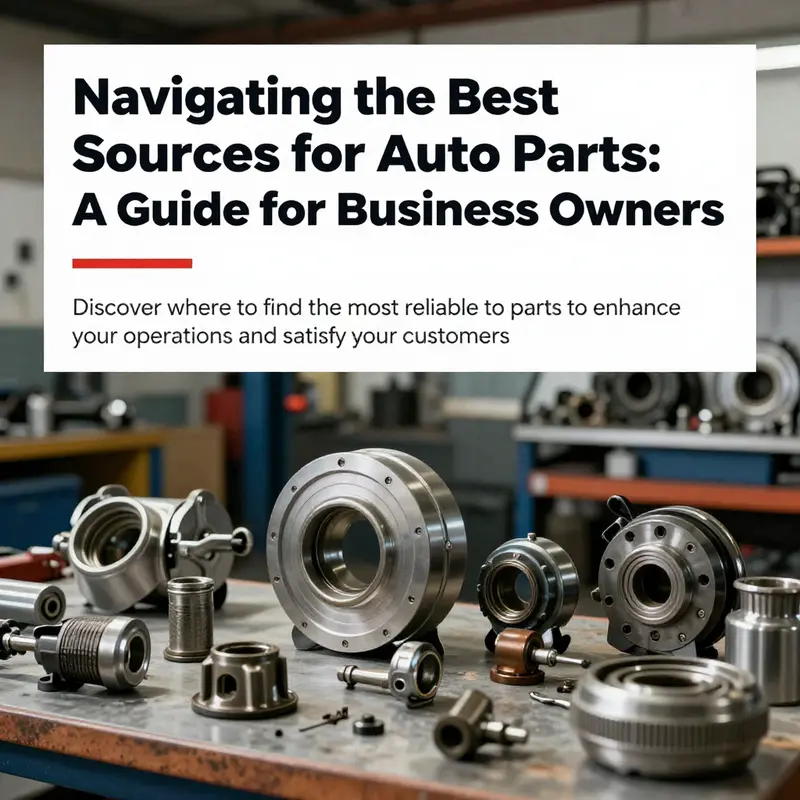
The automotive industry is undergoing constant evolution, making the sourcing of quality auto parts crucial for business owners. Whether you manage repair shops or automotive sales, the choices you’re presented with can significantly affect your efficiency and profitability. From the convenience of online marketplaces to the reliability of specialized platforms and the immediacy of local markets, understanding your options is vital. This guide will dive into three main avenues of purchasing auto parts—online marketplaces, specialized platforms designed for professionals, and local physical markets—to equip you with the insights needed for informed procurement decisions.
Online Marketplaces Decoded: Finding OEM and Aftermarket Auto Parts with Confidence
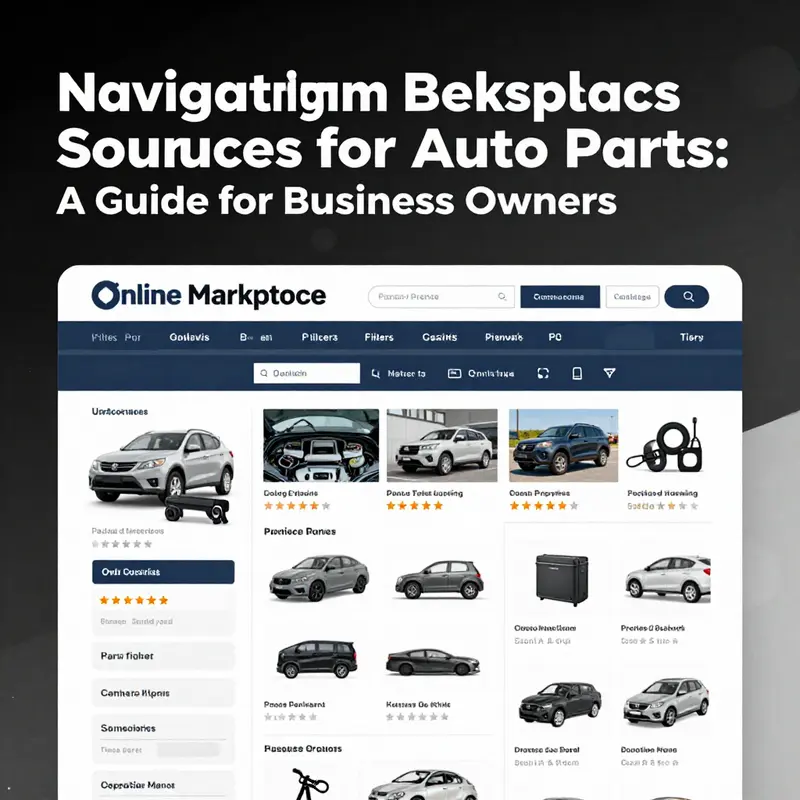
Sourcing auto parts through online marketplaces has transformed what was once a local, walk-in hunt into a global, door-to-door experience. The vast catalogs, the real-time price comparisons, and the promise of fast delivery can feel almost magical when every part you might need is listed in a dozen different shops with hundreds of seller ratings. Yet magic can falter if buyers treat these platforms as a single, uniform marketplace. The truth is subtler: online marketplaces comprise a spectrum of environments, each with its own rhythm, risk profile, and set of guarantees. The core skill is not simply knowing where to click, but understanding how to align your specific sourcing need with the right digital venue, then moving through a careful, disciplined purchasing process that protects fitment, performance, and safety. When you do this well, online marketplaces become a dependable engine for getting the right parts—whether you are chasing OEM equipment, a trusted aftermarket substitute, or a bulk order for a workshop to keep clients moving.
To think clearly about where to buy parts online, start with the distinction between OEM and aftermarket, because the marketplace you choose will hinge on what you value most: exact factory fit and warranty, or broader availability, price flexibility, and customization potential. OEM parts, produced to the carmaker’s specifications, offer a guarantee of compatibility that reads like a warranty in itself. They are your first instinct if your vehicle is new or lightly used, if you must preserve a factory warranty, or if you’re chasing a part for a safety-critical function. For other scenarios, aftermarket components open a wider field of options. They can deliver notable performance gains, cost savings, or easier availability, but they demand careful scrutiny of compatibility data, materials, and testing standards. The online landscape mirrors this spectrum. Some marketplaces specialize in mass market inventory with consumer-level guarantees; others provide import and export data, cross-reference tools, and supplier vetting designed for professional buyers. Still others focus on bulk orders, allowing repair shops and service centers to plan their procurement around predictable pricing and reliable logistics. Across all, your success hinges on a disciplined approach to verification and a clear sense of what you are willing to trade off for convenience or price.
The breadth of online marketplaces is one of their defining strengths, yet it is also the core source of risk. A catalog that seems complete can conceal misfit parts, counterfeit items, or parts that merely look similar enough to be compatible but fail under load. This is where the practical art of online purchasing reveals itself. The practical steps are straightforward, but they require attention and method. First and foremost, you verify part numbers and cross-reference them against your vehicle’s exact specification, including year, trim, and market region. Elite buyers know that even a minor mismatch—such as a brake caliper for a North American model versus a Euro-spec variant—can produce a cascade of performance and safety concerns. A reliable marketplace will present the correct technical data, but you should still confirm the data through a second source, whether that is a parts catalog from the vehicle manufacturer, the supplier’s technical sheets, or a trusted repair guide. In an environment where dozens of sellers may have slotted a single SKU into different product pages, this cross-checking becomes a nonnegotiable habit.
Another core pillar is the credibility of the seller. High ratings and transparent return policies are essential, yet they are not a guarantee of quality. A part can be correctly described and still fail in use due to hidden defects, wear patterns, or manufacturing variations. The best buyers treat seller reputation as a living signal, not a static badge. They read recent buyer feedback with a critical eye for patterns: recurring notes about late shipments, mislabeling, or incorrect fitment can be as telling as a seller’s star rating. Return policies deserve close attention, especially for non-OEM or aftermarket parts where the risk of incompatibility feels higher. A seller that offers straightforward returns and prompt refunds reduces the financial exposure of experimentation, which is often necessary when trying unfamiliar brands or parts across borders. The presence of a warranty, even on aftermarket components, can also be a meaningful indicator of reliability, though you should read the warranty terms to understand what is covered and for how long.
The pace of delivery is another practical dimension that matters, particularly if you run a shop or operate on a tight vehicle turnaround schedule. The logistics profile of a marketplace can be as important as the catalog itself. Some platforms leverage robust fulfillment networks and vendor assurances to deliver parts with predictable timing, while others depend on supplier-to-buyer shipping that introduces variability. If you are ordering critical safety items—brakes, steering components, suspension parts—you may weigh lead times and the possibility of expedited shipping against the reliability of the source. It is not unusual for OEM-aligned channels to carry longer lead times, but they often balance that with a tighter guarantee of fitment and a manufacturer warranty. Conversely, many aftermarket distributors and general marketplaces can move faster, but the risk of receiving a part that does not precisely match your vehicle design increases. The most discerning buyers map the expected delivery window to the urgency of the repair, the cost of downtime, and the risk tolerance they are comfortable with.
The data dimension—how easily you can compare, verify, and match parts across sellers—has grown in importance. Several platforms now offer real-time price comparisons, part tracking, and even compatibility checks that draw from multiple suppliers’ catalogs. For the professional buyer, these data tools can be as valuable as the part images themselves. They converge on a few practical benefits: faster decision making, a clearer sense of price ranges, and the ability to identify outliers that signal counterfeit or misrepresented items. Yet data quality is only as good as the data source, and there are limits. A platform may surface a lower price by listing a “compatible with” attribute that is overly broad. When the potential savings are compelling, it’s wise to drill down into the supplier’s specification sheets and check for compatibility with your exact VIN, engine type, and trim. If the platform integrates with real-time price comparisons and provides a transparent mechanism for price validation across suppliers, you gain a guardrail that reduces the chance of buying with incomplete information.
Part of the marketplace experience, then, is learning to use the tools that help you move fast without sacrificing accuracy. For professionals, this often means leaning on platforms with robust supplier networks, data sharing, and price transparency. Some networks connect suppliers, repair shops, and logistics providers in a way that makes it easier to source exact matches and track the order as it moves through the supply chain. These platforms can be especially valuable if you are managing recurring needs or if you require consistent reliability for a shop’s inventory. For individuals, the value often lies in accessibility and simplicity: being able to locate a replacement part for a daily driver, comparing a handful of options in a short time window, and receiving the item quickly. In either case, the principle remains the same: buy from sources that present clear part data, maintain reliable authentication of the product, and demonstrate consistent performance in the hands of real buyers.
One practical way to navigate this landscape is to think in terms of a buyer’s journey rather than a single moment of purchase. Start with clarity about what you need and why. Are you chasing an OEM fit or a trusted aftermarket substitute? Are you optimizing for price, for the fastest delivery, or for the most complete warranty coverage? Your answers shape which marketplace type you gravitate toward. Then move to verification. Confirm the exact part number, cross-reference the vehicle application, and examine the seller’s history. Evaluate the stated delivery timeline against your own schedule. If the item is time-sensitive, consider whether a local option—such as a nearby independent auto parts shop that lists parts online—might offer a faster turnaround with the same guarantees. And if you are shopping more broadly or for a next-day repair, keep in mind that the right platform may not be the cheapest one but the one that reliably balances fitment confidence, documentation, and support.
The ecosystem of specialized platforms adds another layer that is sometimes overlooked but increasingly essential. For professional buyers, data-driven marketplaces and sourcing networks can streamline procurement, enabling real-time price comparisons, part tracking, and even data sharing for precise part matching. These platforms help bridge the gap between a seller’s catalog and a repair shop’s inventory needs, reducing the guesswork that has traditionally plagued online sourcing. They also help normalize the variability that accompanies cross-border purchases, aligning consumer expectations with supplier capabilities. For the curious reader, exploring professional networks can reveal options that go beyond consumer marketplaces and place a stronger emphasis on reliability and traceability. A good starting point is to engage with platforms that provide comprehensive catalog data, supplier certifications, and clear documentation of each part’s provenance. This is not about placing blind trust in a device or a seller, but about building a transparent knowledge base that supports every purchase decision.
The conversation around online marketplaces would be incomplete without acknowledging the role of professional and community knowledge. Many seasoned hobbyists and shop technicians learn to read the signals that accompany an online listing: the quality of the product images, the completeness of the listing, the breadth of the seller’s catalog, and the consistency of the seller’s communications across orders. Community insight—whether in the form of repair forums, manufacturer technical bulletins, or trusted peer reviews—helps buyers interpret ambiguous listings and reduces the risk of misfit parts. In practice, this means reading multiple sources of information, aligning them with your vehicle’s specifications, and maintaining a healthy skepticism for listings that lack critical detail. It also means using the parts community as a sounding board for difficult decisions, whether you’re choosing a specific aftermarket brand or deciding whether to pursue an OEM replacement that carries a higher price tag. The right approach blends the efficiency of online marketplaces with the practical knowledge of the repair community, creating a resilient sourcing strategy that serves both reliability and value.
To bring these threads together, imagine a typical procurement scenario in a modern online marketplace environment. A vehicle owner notices a recurring issue—an intermittent braking vibration that seems tied to a particular wheel hub assembly. The owner consults the vehicle’s service history, noting the exact year, make, and model. They search a broad online marketplace for the part, filtering for OEM compatibility and a return policy that allows for easy exchange if the fitment proves off. They compare a handful of listings, paying close attention to the part numbers and the seller’s credibility. They read recent buyer comments about fit and installation difficulties and check the warranty terms. They consider delivery times and total landed cost, factoring in potential duties or customs fees if the purchase is cross-border. As the price points converge, they may widen their view to include a professional platform that aggregates cross-supplier data, or they may contact a local auto parts shop that lists the item online and offers in-person pickup if timing is critical. This sequence illustrates how a buyer can harness the strengths of online marketplaces while mitigating their inherent risks through careful verification, sensible expectations, and a practical blend of global access with local reliability. It is not a recipe for spontaneity but a disciplined workflow that recognizes the marketplace’s advantages and its vulnerabilities.
In the end, the choice of where to buy auto parts online rests on aligning the buyer’s priorities with the platform’s strengths. If your priority is the assurance of a factory fit and the security of a warranty, OEM channels, including brand authorized dealers and official brand pages, deserve emphasis—along with marketplaces that clearly delineate OEM compatibility and return policies. If the goal is greater breadth of selection, price leverage, and rapid iteration, then reputable general marketplaces and specialized platforms that emphasize data transparency can offer real value. The interplay between these options is not a dilemma but a spectrum, and the savvy buyer learns to navigate that spectrum with a method that suits the vehicle, the repair context, and the wallet. The chapter on online marketplaces thus becomes less about catalog depth and more about process, about building a sourcing habit that consistently yields the right part at the right time, with the right information to justify the choice.
As you move through this landscape, one practical pointer can anchor your decisions: treat the search as a collaborative exercise between you and the platform. Leverage the platform’s data tools, but verify with independent sources whenever possible. Use the platform’s seller ratings as a guide, not a guarantee. When a listing looks off—whether it’s ambiguous text, questionable images, or a price that seems too good to be true—pause and recheck. This habit reduces the risk of counterfeit or misrepresented parts and protects the vehicle’s safety and performance. And when you need to explore professional networks that bring additional data and reliability into the mix, you can turn to platforms designed for auto repair ecosystems, where real-world part tracking and supplier transparency help align procurement with service delivery. The result is a sourcing approach that is both expansive and disciplined, taking full advantage of online marketplaces while safeguarding your vehicle and your budget.
Within this broader narrative, do not overlook the quieter, more local alternatives that online marketplaces can reveal. Sometimes the fastest path to the right part is a neighborhood independent shop that lists inventory online, or a local auto parts market that has embraced digital ordering without sacrificing physical inspection and hands-on guidance. The combination of online convenience with in-person verification preserves the best of both worlds: the breadth of digital catalogs and the reassurance of direct, tactile assessment when needed. The final decision remains pragmatic: choose the channel that offers the strongest combination of accurate fitment, reliable delivery, transparent data, and supportive return or warranty terms. In the world of auto parts, where the cost of a wrong choice can be measured in time, labor, and road risk, a deliberate, informed approach to online marketplaces is not just useful—it is essential.
For readers who want to explore a broader set of sourcing options beyond consumer marketplaces, one pathway to professional reliability is to explore networks that specialize in automotive parts data and sourcing. These platforms connect repair shops, suppliers, and logistics into a cohesive sourcing ecosystem that prioritizes accuracy, traceability, and efficiency. If you are curious about how such networks operate and want to see a gateway that emphasizes data-driven part matching, you can explore resources at kaisi.com. This link provides a gateway to a network built for auto repair professionals seeking high-end or hard-to-find parts through partnered workshops, offering a model of how data transparency and collaborative sourcing can streamline procurement in a way consumer marketplaces alone cannot match. The experience of using such networks alongside traditional marketplaces is a reminder that the landscape of auto parts sourcing is not a single path but a constellation of options that can be stitched together to fit any need.
Finally, as you weigh the options and begin testing different channels, maintain a few guardrails that keep your purchasing disciplined and safer. Always verify part numbers against the exact vehicle specification. Prefer sellers with clear return policies and warranty terms, and be wary of unusually low prices that may reflect counterfeit or substandard parts. For critical safety components—brakes and steering, suspension and airbag systems—prioritize sources with proven reliability and OEM verification. In these cases, the safest route often combines OEM-aligned channels with the reassurance of transparent data and a straightforward warranty policy. The goal is not to chase the lowest price at the expense of safety or quality but to pursue the optimal balance of fitment, performance, price, and delivery. With this mindset, online marketplaces become not just a shopping channel but a reliable procurement partner that can support both everyday maintenance and more ambitious automotive projects.
Professional Sourcing Hubs: Using Specialized Platforms to Buy Auto Parts Smartly
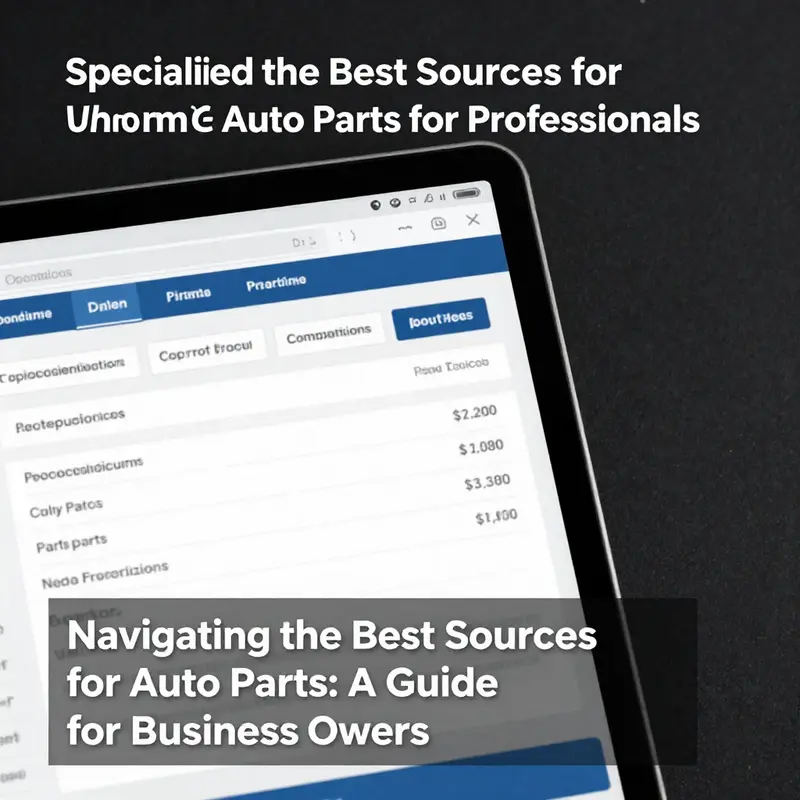
How specialized platforms transform professional auto parts sourcing
For professional buyers—repair shops, fleet managers, parts distributors, and tiered suppliers—the choice of sourcing channel shapes costs, workflow, and reputation. Specialized platforms exist to meet those needs. They combine deep parts data, procurement tools, and supply-chain visibility. They are not general-purpose storefronts. Instead, they act like industrial marketplaces and procurement systems built for accuracy, speed, and scale. A professional who relies on these platforms trades guesswork for verified fitment, traceable quality, and logistics that align with service schedules.
These platforms centralize the technical details you must have. They consolidate part numbers from original equipment, aftermarket equivalents, and cross-references. They display fitment by model, year, and sub-assembly. They attach technical drawings, measured tolerances, and images from multiple angles. For composite components, they publish material specifications, curing processes, and structural load data. That level of granularity reduces incorrect orders and costly returns. It also accelerates quoting cycles when shops must give customers firm repair timelines.
Beyond data, professional platforms streamline procurement workflows. They offer request-for-quote (RFQ) tools for bulk and specialty items. They support purchase orders, invoices, and change orders in a structured format. Many provide electronic data interchange or APIs so your inventory system can talk directly to supplier stock levels. This connectivity enables just-in-time deliveries and consignment stock arrangements. For operations with tight bay schedules, that capability keeps technicians working and reduces on-hand inventory.
Quality assurance is central to professional sourcing. Specialized platforms typically require suppliers to present certifications and traceability records. Look for ISO-style process certifications, material test reports for composites, and batch-level traceability for critical safety parts. platforms that aggregate supplier scorecards enable buyers to compare lead times, return rates, and defect histories. Those metrics matter more than the lowest quoted price. For brakes, suspension components, and structural items, insist on documentation. Vetting becomes a repeatable part of procurement rather than an ad hoc activity.
When you need advanced materials such as glass-fiber or carbon-fiber composites, the platform should expose manufacturing details. Ask for information about ply schedules, resin systems, and curing methods. Components formed in an autoclave will behave differently than those produced by resin-transfer molding. Tolerances, bonding surfaces, and paintability depend on those choices. A trustworthy supplier will provide sample parts, test certificates, and recommended repair procedures. Buy an initial run for fitment checks before committing to large volumes.
Logistics and lead-time management differentiate platforms. Professional channels often integrate warehousing partners and offer multiple shipping modes. You can choose expedited consolidation for urgent repairs or economy sea freight for planned rebuild cycles. The best systems present landed cost estimates including duties, taxes, and handling. They also allow you to route shipments to regional warehouses or directly to service bays. This flexibility helps fleets manage downtime across locations and reduces the risk of bottlenecks.
Security against counterfeit and substandard parts is a persistent concern. Specialized platforms address this with layered defenses. They check supplier credentials, verify certificates, and require photographic proofs of product markings. They may track lot numbers and provide traceability from raw material to final shipment. Some platforms integrate with third-party testing services or support on-site inspections. For parts where failure risks human harm, require batch testing and third-party verification before release.
Pricing models on professional platforms are structured to support business operations. Expect volume discounts, tiered pricing, and negotiated contracts. Some suppliers support blanket purchase orders or standing orders with scheduled releases. Others permit credit lines, leasing of specialized tooling, or consignment inventory that sits in your shop until used. Carefully evaluate payment terms and financial risk. For international purchases, consider instruments like letters of credit to protect large transactions.
Integration with workshop processes is a practical advantage. Platforms that sync with workshop management software reduce admin time. They auto-populate parts lists into job cards and reserve stock against booked jobs. This avoids double ordering and ensures technicians have the right parts when the vehicle arrives. For businesses that manage multi-site operations, look for centralized dashboards that provide visibility across all locations. That view lets you reallocate stock to meet surge demand without emergency procurement.
Customer support and technical backing are part of the value too. Suppliers on these platforms often provide installation guides and assistance for complex components. They can advise on torque specs, adhesives, and surface preparation for painted composites. When buying structural or safety parts, technical support shortens installation time and lowers liability. Choose suppliers who offer training sessions or detailed service bulletins as part of the package.
Risk management must be deliberate. Evaluate supplier stability, insurance coverage, and contingency plans. Ask how a supplier handles product recalls or discovery of nonconforming materials after delivery. Review their procedures for returns, credit handling, and replacement lead times. Contractually document responsibilities for shipping damage and third-party defects. For joint ventures or bespoke production runs, include acceptance criteria and a final sign-off step that precedes full payment.
Testing and acceptance processes should be part of your procurement routine. Define inspection steps for prototypes and production samples. For visual parts, include dimensional checks and fitment trials. For structural or safety-critical components, request mechanical testing reports. That might include tensile, compression, or fatigue tests for composite parts. Maintain a record of those tests in your supplier dossier. It helps when you must defend a repair outcome or justify a vendor selection.
Custom production and tooling for low-volume runs require extra attention. Many specialized platforms connect buyers to manufacturers that offer small-batch production and tooling services. When commissioning molds or dies, document ownership, revisions, and expected life cycles. Agree on change-control procedures. Prototype cycles often reveal fitment gaps. Plan for iterative samples and allow time for adjustments before full production.
International sourcing brings currency exposure, customs complexity, and regulatory differences. Specialized platforms typically provide tools to estimate duties and compliance requirements. They may help classify parts under the correct tariff codes. They can also advise on import licensing and local homologation where required. Use these services when sourcing finished components or materials that must meet national safety standards.
Sustainability and materials transparency are increasingly relevant. Platforms that list material origin, recyclability, and environmental certifications make it easier to meet client expectations. For composite parts, ask about resin types and recycling pathways. Some suppliers now offer reclaimed material options or take-back programs. That data helps larger organizations meet procurement policies and reporting obligations.
Operational tactics improve outcomes. Always specify the precise part identifier, including revision level and any sub-assembly references. Exchange CAD files when fitment is critical and ask for 3D scans where possible. Keep a single master bill of materials and route changes through a controlled change request process. When possible, standardize on a small set of trusted suppliers for core components. That reduces administrative overhead and builds supplier accountability.
A practical pilot approach reduces risk. Start with a small order to validate lead times, fitment, and supplier responsiveness. Inspect the first batch thoroughly and document any deviations. Use those early orders to develop a supplier scorecard that tracks on-time delivery, quality, communication, and cost adherence. Over time, that scorecard becomes the basis for preferred supplier relationships and improved terms.
When a component is especially sensitive or high-value, arrange third-party inspections before shipment. Inspection firms can verify material certificates, perform destructive and non-destructive tests, and confirm packaging standards. Inspections protect you from receiving unusable parts and help resolve disputes over condition at receipt.
For fleet and shop managers, the value of specialized platforms is cumulative. They reduce ordering errors, compress repair cycles, and provide richer supplier data. They also offer procurement controls that support auditability and compliance. Investing time to configure a platform to your operation pays off in fewer expedited shipments and lower warranty costs.
If your needs include composite structural parts, keep the material conversation precise. Request lamination schedules, ply orientations, and the resin system. Ask for guidance on joining methods and repairability. Structural adhesives and fastener specifications matter for longevity. Be cautious when substituting materials; similar aesthetics can mask vastly different mechanical properties.
Finally, build the relationship. Even with a platform, direct communication with key suppliers matters. Use the platform to find capable vendors. Then confirm critical expectations by phone or video. Establish points of contact for rush orders and quality issues. A good supplier will act as a partner when schedules tighten and complex repairs arise.
For extended guidance on sourcing advanced components across joint development platforms, consult industry-focused sourcing analyses. https://www.autosupplierconnect.com/mazda-toyota-platform-sourcing-guide-2026
For an example of a high-quality composite bodypiece used in professional restorations and upgrades, consider reviewing this carbon-fiber hood offering for a 1994–1999 coupe as a reference for specification and finish expectations: 1994–1999 Mitsubishi 3000GT pit-fighter carbon fiber hood.
On the Ground and Under the Hood: A Practical Guide to Local Auto Parts Markets
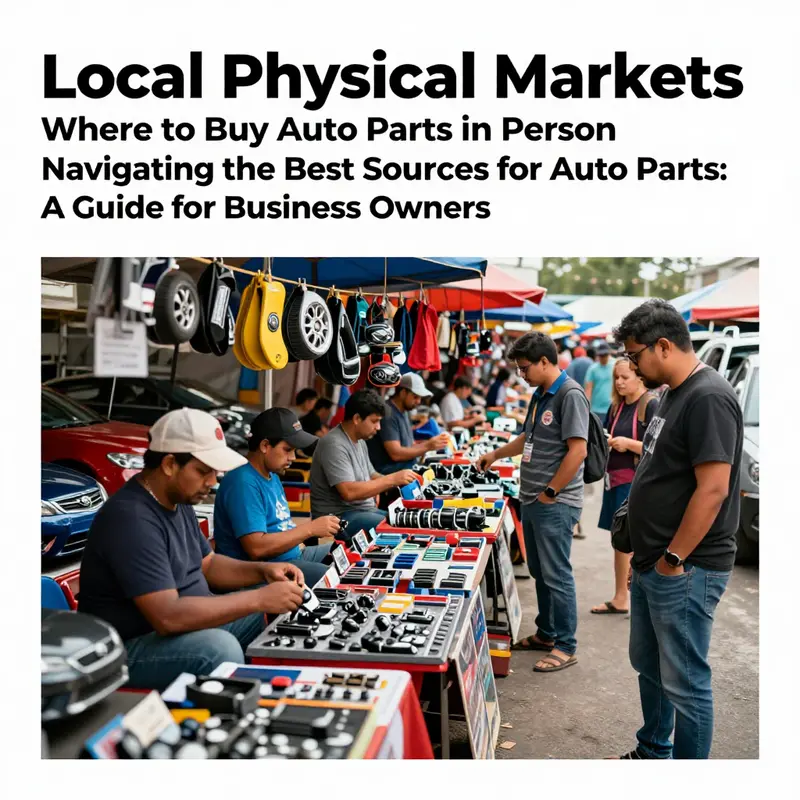
Buying auto parts in person offers a tactile, negotiation driven experience that complements online catalogs. In markets you can inspect fit, packaging, and wear firsthand, which helps you separate basic components from parts built to last. A key benefit is real time availability and the chance to speak with stall owners about stock, lead times, and returns. Regional markets vary, but common patterns include a mix of new, refurbished, and used parts, with vendors who can verify provenance and provide warranties on new items. Preparation matters: bring your vehicle information, a parts list with part numbers, and copies of catalogs or online references. When possible, check the part with measurements and connectors before purchase, and request to see unopened boxes for new items. For used components, ask about age and prior usage, and assess wear. Build relationships with trusted suppliers to improve reliability and pricing over time. Online catalogs remain valuable for price comparison and breadth of choice, but the in person market acts as a validation layer, helping you confirm that a part exists in the real world and that the seller stands behind it. A practical market day often starts with a quick price check in a busy hub, followed by targeted comparisons across stalls to find the best balance of price and reliability. The overall lesson is that local markets are a productive complement to digital channels, not a replacement, and can accelerate repairs when combined with careful online checks.
Final thoughts
Navigating the world of auto parts procurement as a business owner involves a strategic blend of online resources, specialized platforms, and local markets. Each sourcing option presents its unique advantages, tailored to different business needs and types of auto parts. By leveraging the insights provided in this guide, you can enhance your operational efficiency, ensure quality in your offerings, and ultimately improve customer satisfaction. Whether you choose to purchase parts online or engage directly in local markets, prioritizing reliable sources will provide a solid foundation for your business.