
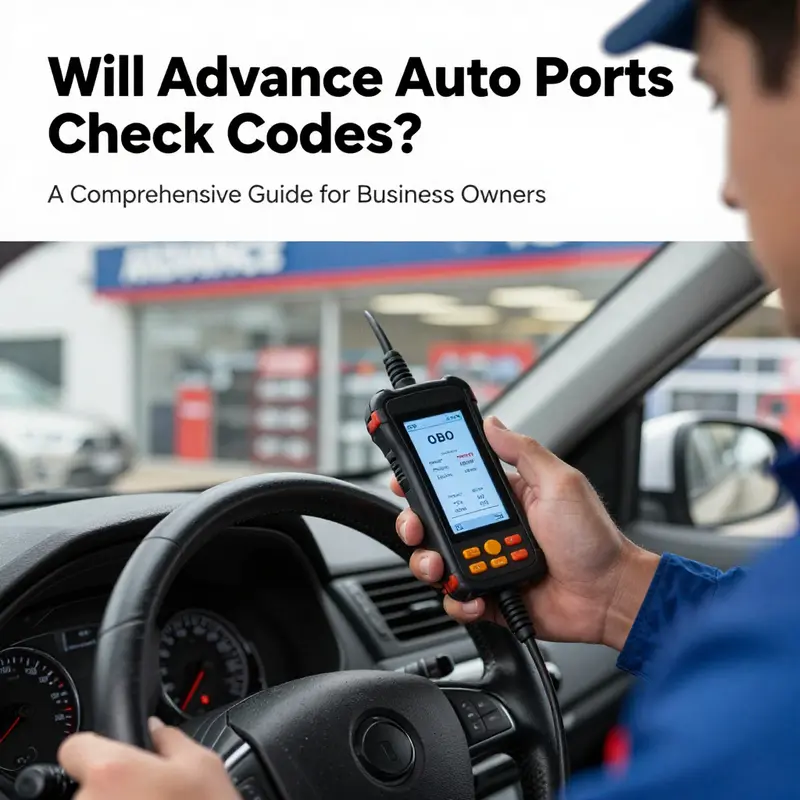
For business owners who rely on vehicles for operations, understanding the functionality and reliability of those vehicles is crucial. One aspect that often raises questions is whether retail stores like Advance Auto Parts can assist with vehicle diagnostic codes. This article delves into the world of automotive diagnostics, focusing on the diagnostic tools available, the role of OBD-II scanners, the availability of in-store diagnostic services, and the inherent limitations associated with these services. By the end, you will be better equipped to understand how to navigate vehicle diagnostics using Advance Auto Parts.
How Advance Auto Parts Fits Into Reading and Responding to Check Engine Codes
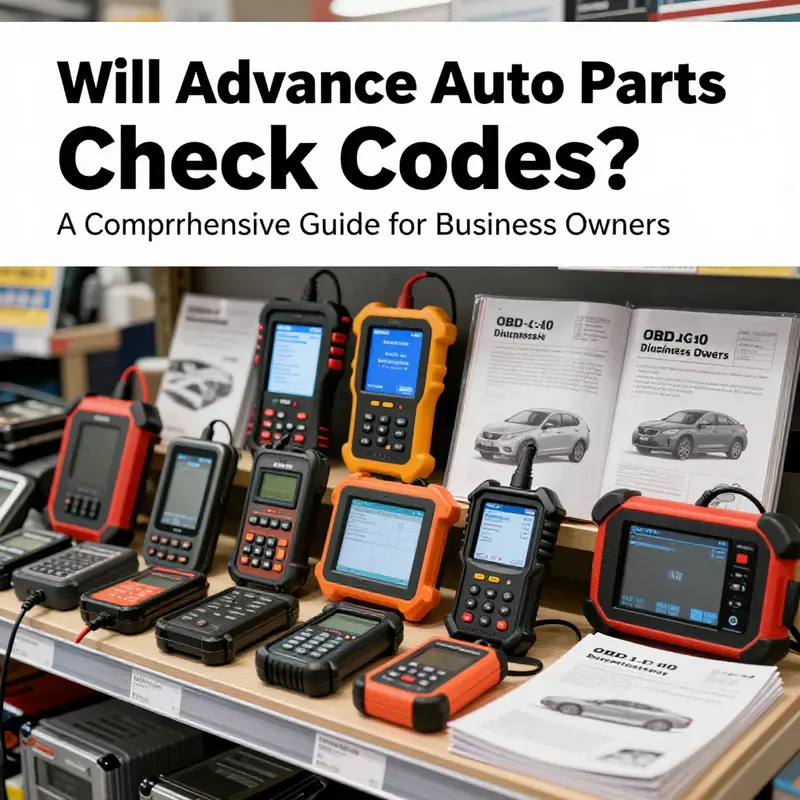
Understanding the role of a national parts retailer when your check engine light comes on makes the difference between simple DIY fixes and costly trips to the shop. Advance Auto Parts typically does not perform full diagnostic services at retail counters. Instead, it positions itself as a resource hub: a place to obtain the right scanning tools, get basic guidance, and, in some locations, receive a free code read that points you in the right direction. That distinction is important. Knowing what the store can and cannot do helps you move faster from code to correct repair.
Start with the basic reality: most modern cars use a standardized OBD-II system for reporting faults. The system stores diagnostic trouble codes, or DTCs, whenever a monitored system detects a problem. These codes are accessible through a port under the dashboard. Retail stores sell handheld code readers and scanners that plug into that port and return the stored codes. A single visit to a parts counter can put a compatible reader in your hands in minutes. Staff can help you pick a scanner that fits your vehicle’s make, model, and year and explain how to connect it.
Not all scanners are the same. At a glance, you can separate them into two practical groups. Basic code readers are compact and simple. They retrieve and display codes, and they can clear the check engine light after a successful repair. Advanced scanners offer more functionality. They log live sensor data, show freeze-frame snapshots, and sometimes offer real-time graphs of engine parameters. Many advanced units sync with smartphone apps, which can translate codes into plain language and suggest likely causes. When choosing between the two, consider how involved you want to be. Basic readers are fine for confirming and clearing obvious faults. Advanced scanners are worth the extra cost if you plan to diagnose intermittent problems, monitor repairs, or work on multiple vehicles.
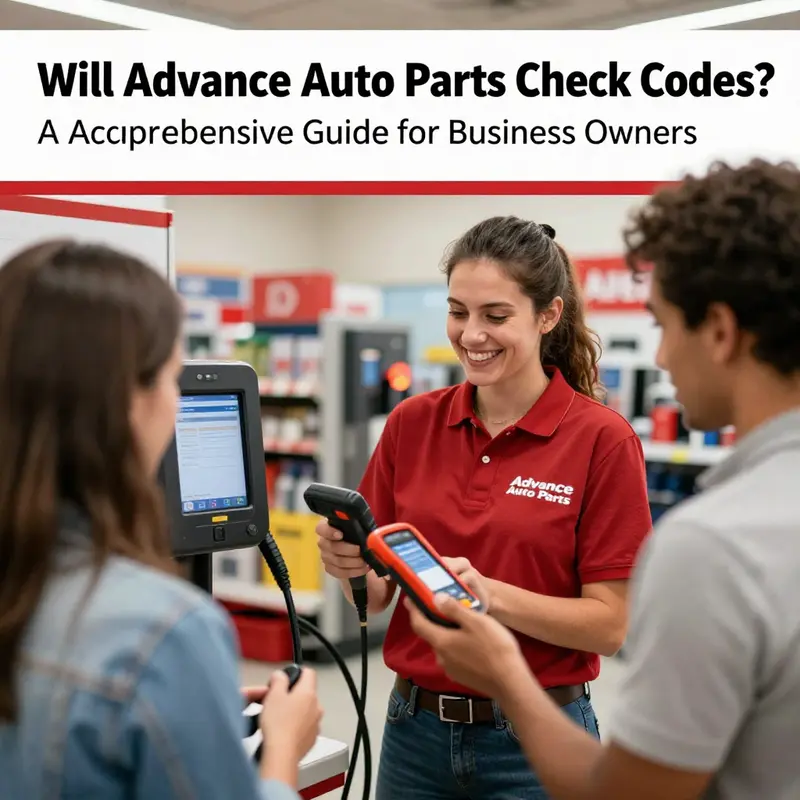
What happens in-store varies. Some locations provide a complimentary code reading service. In those cases, store personnel or an available diagnostic kiosk will retrieve codes for you. The service is generally limited to pulling the codes and printing or telling you the code numbers. Interpretation beyond basic code definitions, detailed troubleshooting, or repair work usually falls outside the scope of retail services. This makes it crucial to call ahead if you expect the store to read codes for you. Policies vary by location, and a quick phone call will confirm if a free read is available.
If you purchase a scanner, the typical workflow is straightforward. Park the vehicle and turn off accessories. Locate the OBD-II port, usually beneath the steering column. Plug in the scanner and turn the ignition to the run position without starting the engine. Follow the scanner prompts to read stored codes. Note the primary code first, then any pending or historical codes. Many drivers start by Googling the code, but that alone can mislead. A code indicates a symptom, not a single cause. For example, a misfire code points to a cylinder misfire but does not name the specific faulty component. Use the scanner’s live data features to watch sensors while you run the engine. Look for anomalies in fuel trim, oxygen sensor readings, or misfire counters. Those clues guide targeted repairs rather than guesswork.
Interpreting codes properly demands context. Basic readers show only code numbers and offer limited help. Advanced tools, or smartphone integrations, provide descriptions and common causes. Still, you should treat those suggestions as starting points. Prioritize safety and reliability. A code tied to emissions often still allows limited driving, but codes related to engine overheating, oil pressure, or transmission temperature require immediate attention. The scanner can indicate urgency, but it cannot perform repairs. If a code suggests a safety issue, stop driving and seek professional service.
There are practical tips that reduce wasted time. First, document everything: the code number, the scanner’s description, and any freeze-frame data. Second, clear codes only after you perform a repair and confirm the underlying issue. Clearing codes as a troubleshooting step without fixing the root cause erases data that can help diagnose intermittent faults. Third, if the check engine light returns quickly after clearing, capture the live data and repeat the code read. That persistence helps separate transient glitches from recurring mechanical or electrical faults.
When the built-in code information and the scanner’s hints aren’t enough, decide when to escalate. Professional shops offer deeper diagnostics using manufacturer-level tools. These tools access proprietary modules and more detailed fault trees. Shops can also perform pressure tests, fuel system checks, and guided component replacement. If your repair requires component removal, specialized calibration, or module programming, a shop is usually necessary. Use the scanner’s output to give a technician a clear starting point. Providing the exact codes, freeze-frame data, and a short history of symptoms often shortens the diagnostic time and lowers the bill.
Choosing the right scanner at a retail counter depends on several factors. Confirm vehicle compatibility first. Not all scanners support all protocols or newer vehicle models. Look for compatibility information on the packaging or product listing. Evaluate feature sets next: live data streaming, graphing capability, and access to pending and permanent codes are useful. Consider user interface and display legibility. Battery-powered, handheld units are good for quick checks. Bluetooth units that pair with smartphone apps provide a modern, often cheaper option with expandable feature sets. Finally, check warranty and return policies. A reasonable return window allows you to test the device on your vehicle and exchange it if the feature set proves insufficient.
Retail staff often help with more than sales. Employees with automotive experience can point out features you might overlook. They can also suggest simple checks you can perform before investing in tools or repairs, such as verifying gas cap tightness, recent maintenance history, or recent battery changes. These items sometimes trigger codes and are easy to address. However, you should avoid expecting a full diagnostic walk-through at the counter. Store personnel can advise, but their resources and time are limited.
Cost considerations matter. Basic code readers are inexpensive and can pay for themselves in a single avoided trip to a mechanic for a simple fix. Advanced scanners cost more but extend the range of DIY repairs you can safely attempt. Compare that one-time cost to the recurring cost of bringing the vehicle into a shop every time the light comes on. If you maintain several vehicles or plan to do ongoing repairs, investing in a higher-end scanner often makes economic sense. Conversely, if you rarely work on cars, a basic reader might be the perfect compromise.
A few practical warnings warrant emphasis. First, not every fault is captured by the OBD-II system. Mechanical issues unrelated to monitored sensors can exist. Second, reading and clearing codes does not confirm the repair. After replacing a part, monitor the vehicle to confirm that the code does not return. Third, be cautious with code-clearing as a test; it removes diagnostic evidence. Only clear codes when you understand the implications and have recorded the data you need.
Advance Auto Parts can be a strong ally in this process. The retailer supplies hardware, guidance, and occasional free reads. Using these resources helps you avoid unnecessary expense and empowers better communication with service technicians. For vehicle owners who prefer a hands-on approach, the store is a convenient place to acquire a tool and basic know-how. For others, it can provide a quick code read that clarifies whether a professional repair is required.
If you want to explore parts, accessories, or cockpit components that relate to diagnostics and interior access, you may find useful reference material for dashboards and instrument clusters. For example, an Evo 9 dashboard reference provides perspective on how instrument panels integrate with vehicle electronics and where access points are commonly located. https://mitsubishiautopartsshop.com/dashboard-evo-9/
Finally, for precise and up-to-date information about services and tool availability at your local store, contact the retailer directly or visit the official website. Store services differ by location, and the online catalog clarifies the range of scanners and accessories offered.
For official store information and to confirm whether a nearby location provides free code reading or sells the scanner features you need, see the retailer’s site: https://www.advanceautoparts.com
From Code to Confidence: Decoding OBD-II Signals and How Retail Diagnostics Move You Forward
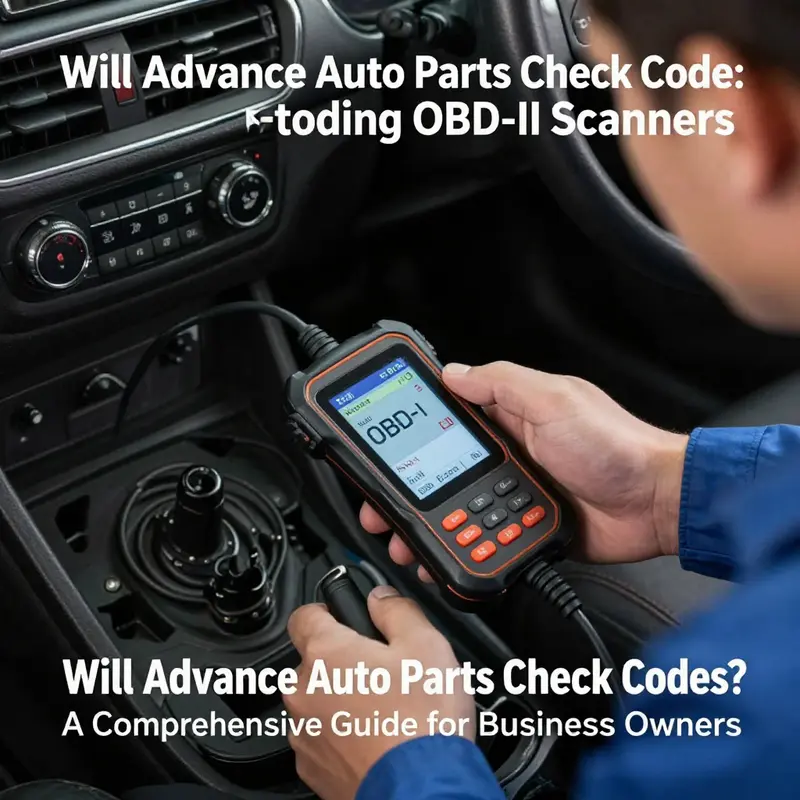
When a check engine light glows, many drivers feel a mix of concern and curiosity. What does it mean, exactly? Which part is failing, and how urgent is the repair? In modern cars, the path from a symptom to a solution often begins with reading diagnostic trouble codes, or DTCs. These codes are not a guarantee, but they are a map. They point to the subsystem that detected an abnormal condition, whether it’s an engine component, an emissions sensor, or a transmission signal. The ability to retrieve these codes has become increasingly accessible, and it changes how everyday car owners approach maintenance. Rather than guessing, you can zero in on the area most likely to require attention, gather the right information, and decide on a course of action with greater confidence. In this sense, the availability of code-reading services at many auto parts retailers represents a practical milestone in consumer-friendly diagnostics. It lowers the barrier to initial diagnostics and helps you enter conversations with technicians with a clearer picture of what’s happening under the hood.
The process is straightforward in principle. You arrive at a store that offers the service, or you reach out to a shop within a retail network that supports this capability. A technician or associate will connect a fixed diagnostic tool to your vehicle’s onboard diagnostics port, typically located beneath the dashboard on the driver’s side. The tool communicates with the vehicle’s computer, pulling any stored trouble codes from memory. These codes are written in formats that are broadly standardized across manufacturers, using a combination of letters and numbers that encode the area of concern and the nature of the fault. For example, a code might indicate an issue in the engine’s fuel injection system, the oxygen sensor, or the catalytic converter. The exact meaning of each code is defined in a standard reference, and an understanding of the code’s prefix helps guide the interpretation. In practice, the codes retrieved at the counter are rarely a complete diagnosis in themselves. They are diagnostic breadcrumbs that point toward possible root causes and testing paths. A well-informed technician will use them as a starting point, then perform additional checks to confirm what’s really wrong before recommending a repair.
The value of this service lies less in speed and more in clarity. When a driver receives a code, the immediate impulse might be to replace the part suggested by the code’s label. Yet many codes surface due to a non-fundamental issue or a temporary condition. A loose gas cap, for instance, can trigger a cascade of related fault codes that otherwise would imply a more serious fault. In other cases, environmental factors, wiring harness wear, or sensor grounding problems can produce codes that mask the underlying fault. The diagnostic tool’s output therefore functions as a hypothesis rather than a verdict. A key part of the service is to help the vehicle owner interpret the codes and to outline the next steps for verification. This might involve simple checks that can be done by the owner, follow-up tests performed by a service technician, or a staged approach to replacement parts after confirming the root cause.
Beyond the mechanics of code retrieval, what matters most is how the information is used. Codes provide a language for talking about car health, a shared vocabulary that can bridge the gap between DIY enthusiasts and professional technicians. They offer a way to prepare for a repair conversation, estimate potential costs, and plan the right sequence of actions. In many communities, the availability of a free code-reading service at a trusted retailer makes this literacy more accessible, especially for drivers who are trying to understand a light that doesn’t illuminate every day. The experience is not a substitute for a formal diagnostic and repair plan, but it can be a powerful first step. It helps you avoid the uncertainty of guessing, and it gives you something concrete to discuss when you walk into a shop or call a technician. When one’s goal is to keep a car reliable and safe without spending more than necessary, turning to this kind of accessible diagnostic touchstone makes sense.
As helpful as the service is, there are important limitations to keep in mind. The code retrieval step on its own cannot tell you the exact failure mode or the condition of every related system. For example, a fault code related to the oxygen sensor might signal an issue with air-fuel mixture, an exhaust leak, or a sensor wiring fault. The same code could persist even after a component has been replaced if a separate wiring issue remains unresolved. Because the codes reflect a snapshot of the vehicle’s computer memory at a given moment, drivers should view the reading as a prompt for deeper inspection rather than a full diagnosis in isolation. In the same vein, clearing codes to turn off the dashboard light is not a cure. If you clear the codes without addressing the underlying problem, there is a risk that the light will return, and during emissions testing or diagnostic checks, the underlying issue could reappear or worsen.
This is where the real value of retailer-based code reading becomes clear. The service acts as a useful triage tool. It gives you a language with which to describe symptoms, a starting point for verifying the fault, and a sense of urgency about whether the issue is safety-critical or more of a nuisance that can be scheduled for later. The staff at many locations are trained to help you translate the code into practical next steps. They can explain which areas typically trigger the types of codes you’ve seen, what common culprits are in your vehicle’s age and model range, and what tests or inspections are most likely to confirm the root cause. They can also help you choose the right diagnostic tool or guide you toward a shop that has the capacity to perform more in-depth testing if the issue appears complex. The practical takeaway is that code reading expands your toolbox as a vehicle owner. It equips you with information you can use to decide whether you can safely drive the car to a shop for a proper evaluation, whether you should perform a basic self-check, or whether it’s time to schedule a more comprehensive diagnostic appointment.
Educational value accompanies practical value in these exchanges. A good counter experience will walk you through what the numbers mean in plain language, not just the alphanumeric codes. For someone new to car maintenance, this can feel empowering. It invites you to participate actively in your vehicle’s health rather than waiting passively for the next breakdown. The interpretive walk-through often includes practical reminders—like confirming that the gas cap is properly tightened, checking for visible signs of fuel or vacuum leaks, and noting any accompanying symptoms such as rough idling, hesitation, or diminished fuel economy. These checks complement the code readout by offering a quick, hands-on way to validate or question the data you were given. When done thoughtfully, the process helps you build a more accurate mental model of your car’s condition and to plan repairs that are timely and proportionate to the risk.
Of course, not every code reading results in an immediate trip to a mechanic. Some issues are intermittent and may not reproduce once a vehicle is back on the road. For others, the root cause lies outside the engine control unit and involves components that require specialized tools or equipment to measure live data. In such scenarios, the code reading serves as an invitation to a more thorough diagnostic, not a final verdict. This is an important distinction, especially for drivers weighing costs and timelines. A retailer’s code-reading service, when used wisely, helps you collect the essential facts and avoid unnecessary repairs. It also helps you prepare for conversations with a technician by framing questions around the likely failure modes suggested by the codes and by the observable symptoms.
As with any service that touches a vehicle’s health, practical steps and best practices matter. If you receive a set of codes, make a short list of the phenomena you’ve observed, when they occur, and whether the issues are intermittent or persistent. Note any recent maintenance work, fuel quality concerns, or environmental factors such as extreme temperatures or dusty conditions. If the codes point toward an emissions-related fault, consider the potential impact on fuel economy and the possibility of test failures in the near term. When you go to a repair facility, bring the list of codes and the observed symptoms, along with the date of the reading. This approach keeps the conversation focused on real issues rather than abstract possibilities. It also signals that you’ve engaged in a basic diagnostic process, which can help technicians get to the root cause faster and more efficiently. In many cases, technicians will perform tests that verify the code’s implication, such as confirming sensor readings with live data, inspecting wiring harnesses, or checking for vacuum leaks, before recommending replacement parts.
The broader arc of using a code-reading service at a retailer intersects with a growing culture of informed maintenance. As vehicles become more complex, the need for owners to participate in diagnostic conversations increases. The ability to retrieve codes at the counter democratizes access to early-stage diagnostics and gives drivers a leg up when navigating the repair process. It also fosters a collaborative mindset between owners and service professionals. Rather than a one-sided transaction in which a customer reports a problem and a technician prescribes a fix, the reading process becomes a shared starting point for problem-solving. This collaborative dynamic can reduce miscommunication, align expectations about timelines and costs, and ultimately lead to faster resolution and safer driving.
For those who want to take even greater control, the code readout can inspire a careful shopping and maintenance plan. With the codes in hand, you can prioritize fixes based on criticality and budget. Some issues, such as a loose gas cap or sealed leaks in the exhaust system, can be resolved with straightforward adjustments. Others, like sensor faults or catalytic converter concerns, may require professional diagnosis and, in some cases, longer lead times for repair. The roadmap you develop after a code readout—whether it’s scheduling a diagnostic appointment, acquiring a replacement part, or performing a temporary workaround—should balance risk, cost, and the vehicle’s dependence on the affected system. In all cases, the process begins with information, and information begins with the simple act of connecting a tool to the vehicle’s port and listening to what the car has to say.
From a practical standpoint, the service’s value hinges on clarity, reliability, and follow-through. Drivers should expect that the code reading will provide a clear list of trouble codes and a plain-language explanation of what those codes commonly imply. They should also understand the limitations: the reading itself does not replace a formal diagnosis, nor does it guarantee a specific fix. It is a diagnostic aid that informs the next steps. If a retailer’s staff can help translate codes, explain typical causes in the context of your vehicle’s age and mileage, and guide you toward reputable next steps, that guidance can be worth more than the initial code read alone. In this sense, the service acts as a bridge between at-home curiosity and professional repair expertise, helping you make smarter decisions about when and how to invest in your vehicle’s maintenance.
For readers who want to explore this service further, a reliable starting point is to review the retailer’s official information on how the code-reading process is presented to customers. This external resource can provide practical details about service availability, typical workflows, and any location-specific considerations that might influence your experience. It’s useful to approach it as a supplementary guide that complements the personal, in-store encounter described above. While the specifics may vary by location, the overarching principle remains consistent: diagnostic codes are a starting point, not a conclusion, and retailer-based reading services are designed to empower drivers to act with greater confidence.
In the end, advancing auto parts check codes through accessible reader services is about turning uncertainty into purposeful inquiry. It’s about giving everyday drivers a reliable first step toward understanding what their vehicle is telling them. It is about transforming a dashboard warning into a structured plan that prioritizes safety, efficiency, and vehicle longevity. It is also about recognizing that while the information gathered at the counter can be incredibly useful, it is best when followed by thoughtful testing and professional assessment when needed. The road from code to fix is rarely a straight line, but with the right information and a clear plan, it becomes a navigable path rather than a mystery. This is the practical reality of modern car maintenance: a blend of accessible technology, informed human guidance, and a shared commitment to keeping vehicles running smoothly for as long as possible.
External reference for further context on this service and its availability can be found here: https://www.advanceautoparts.com
null
null
What ‘Checking Codes’ at Advance Auto Parts Really Means—and How to Get Accurate Results
When someone asks whether Advance Auto Parts will “check codes,” they may mean different things. They could be talking about reading a vehicle’s diagnostic trouble codes from the onboard computer. Or they might mean verifying the balance or validity of a gift card or promotional code. Both uses of the word “check” are common, and the distinction matters. Advance Auto Parts offers clear support for customers in both areas, but the level of service differs. This chapter explains what the stores will and won’t do, how you can accomplish each task efficiently, and practical tips to turn a retrieved code into a meaningful repair plan.
Most retail locations do not perform complex diagnostic work on vehicles. They are not a repair shop with mechanics, and they generally don’t hook up to a car to deliver deep diagnostics. Instead, stores provide two kinds of help that let you check codes yourself or prepare for an efficient visit to a technician. First, they sell and can advise on handheld code readers and scan tools that connect to the vehicle’s onboard diagnostic port. Second, some locations may offer a simple, no-cost code reading service through an in-store scanner or a third-party arrangement. That free service varies by store and is not guaranteed. Calling ahead will save time and avoid disappointment.
Understanding the device and how it works is the first step. The small scanner you can buy plugs into the OBD-II port beneath the dashboard. It retrieves stored trouble codes and clears some codes when appropriate. These devices display alphanumeric codes that map to specific systems or sensor faults. A basic reader will show the code and often provide a short generic description. More advanced scanners can show live data, freeze-frame snapshots, and manufacturer-specific codes. Knowing what to expect helps you select the right tool when staff guide you.
Even with access to a scanner, a single trouble code rarely tells the whole story. Modern cars have interconnected systems, and a fault in one area can create false readings in another. For that reason, a code should be treated as a diagnostic starting point rather than a definitive repair order. When you bring a scanned code to a technician or parts specialist, describe the symptoms you observe. Mention when the fault occurs, the conditions present, and any recent repairs. This context helps transform a numeric code into a targeted troubleshooting plan.
There are practical steps to take before you attempt to read codes. Start with the basics: ensure the vehicle’s battery is charged. Low voltage can prevent a scanner from communicating reliably. Make sure any check-engine light or warning is active when you connect the tool; some intermittent faults clear themselves and won’t appear if conditions change. Have the vehicle’s make, model, year, and engine size ready. Provide the vehicle identification number (VIN) if asked. These details help store staff recommend a compatible scanner or remind you that some features require an advanced tool.
Choosing the right scanner depends on your goals. For a quick code read and a possible code clear, an entry-level reader is fine. If you want to view live sensor data, perform component tests, or read manufacturer-specific codes, plan to invest in a mid-range or advanced scanner. Staff will usually ask about your planned use, and they can point you to models with the features you need. Keep in mind that some functions require more than a handheld device. In-depth diagnostics that include oscilloscope traces, advanced manufacturer protocols, or actuator bi-directional tests are better handled at a repair facility.
If you prefer not to purchase a tool, call your local store to ask whether they offer a free code read. Some stores maintain an in-store diagnostic station or partner with technicians who will scan your car on-site. Availability varies by location. If a free read is available, arrive with a clear description of the issue and enough time for the scan. Expect staff to record the codes and offer basic interpretations. They may provide printed code definitions or recommend parts that commonly resolve the listed codes. Remember that recommendations from a parts counter are general. They are useful, but they don’t replace hands-on diagnostics.
Interpreting codes effectively requires access to up-to-date definitions and vehicle-specific information. Generic definitions can point you toward the affected system, but manufacturer-specific codes often require a lookup. Many scanners display common definitions, and store staff can help you translate them. In other cases, looking up the code in a service manual or an online database is necessary. When you receive a code, note whether it is a generic standard code or a manufacturer-specific one. That distinction guides whether you need more detailed resources.
Once you have a list of codes, prioritize by severity and recurrence. A persistent fault affecting emissions or engine performance deserves prompt attention. Transient codes that no longer appear may indicate an intermittent issue or a momentary glitch. Before replacing parts, consider simple checks. Inspect wiring and connectors associated with the troubled sensor or circuit. Check vacuum lines and fluid levels. Replaceable parts are often expensive; confirming the root cause first avoids unnecessary costs.
When a code signals a sensor failure, replacing the sensor may solve the issue. But in many cases, the sensor is indicating a deeper problem. For instance, a sensor showing abnormal readings could reflect wiring damage, a poor ground, or a related mechanical fault. Use the code as a guide to where to begin visual inspections and tests. If the problem is beyond simple fixes, arrange for a professional diagnostic that includes live data analysis and component testing.
If you plan to use a store-provided scanner or buy one, consider how you will use it after the initial read. Some hobbyists and home mechanics enjoy owning a scanner for ongoing maintenance and monitoring. Others simply need a one-time read to determine whether a repair is warranted. For occasional needs, borrowing or choosing a lower-cost model might be the best value. For regular use and deeper insight, a more capable unit is a better investment.
Beyond vehicle diagnostics, many people ask whether the store will check gift card balances or promotional codes. For gift cards, Advance Auto Parts provides a straightforward online tool to check balances. It’s wise to confirm a card’s balance before shopping. Doing so prevents surprises at checkout and helps you combine payment methods effectively. If you need help using the online tool, store staff can point you to the right web page. For security, never share full card details in public forums or insecure messages.
When using gift cards in store, keep the physical card or the card number and PIN accessible. Some gift cards allow checking balances at the register or through customer service. If a card is partially used, staff can advise how to apply remaining funds. For promotional codes and coupons, policies vary. Some offers require specific conditions, while others exclude certain items. Always read the fine print and ask staff about compatibility with other promotions.
A few practical cautions will improve results and save time. First, never clear codes as your first step. Clearing a code resets the vehicle’s trouble history and may remove valuable diagnostic clues. Only clear codes after confirming repairs or when instructed by a technician. Second, record the codes before clearing them. Take a photo of the reader’s screen or write down the codes and descriptions. Third, take note of freeze-frame data when available. That snapshot shows engine conditions when the fault occurred and can be invaluable in diagnosis.
If a scanned code points to an emissions fault, be aware that many states require vehicles to meet emissions standards for registration. Early diagnosis and repair can prevent failed inspections. When you get a code that affects safety systems, prioritize professional help. Safety-related faults require accurate diagnosis and proper parts to ensure safe operation.
Finally, use the store interaction to your advantage. Staff can recommend replacement parts, consumables, and accessories that match your vehicle. They can also suggest basic tests and share installation tips that save time. If the issue becomes complex, they can recommend reputable repair shops for deeper diagnostics. Combining a clear code read with a targeted parts recommendation streamlines repairs and reduces guesswork.
If you want to prepare before visiting a store, gather the vehicle’s year, make, model, engine size, and a concise description of symptoms. Note any recent maintenance or repairs. If you already scanned the vehicle, bring the code list and any freeze-frame data. Calling ahead to confirm the availability of a free code read is useful. If a free read is not available, ask which scanners the store sells and what features they offer. Staff guidance will help you select the tool that matches your needs.
For gift card balance checks, use the official online balance checker. It is fast and reliable, and it avoids unnecessary trips. For vehicle codes, consider whether you need a one-time reading or ongoing insight. If you need expert-level diagnosis, plan for professional help. A retrieved code is only the first step. Interpreting and acting on that information correctly is what restores reliability and safety to your vehicle.
For quick access to the gift card balance checker, use the store’s official balance page: https://www.advanceautoparts.com/gift-cards/check-balance
For enthusiasts who work on specific models and dashboards, additional resources on classic instrument clusters and dash assemblies can be useful. One helpful internal resource about dashboard components is available here: https://mitsubishiautopartsshop.com/dashboard-evo-9/
With the right preparation and the proper expectations, a visit to a parts store can quickly move you from a cryptic trouble code to a clear plan of action. Whether you leave with a scanner, a recommended part, or a printed list of codes, use that information wisely. Keep a record, prioritize safety-related faults, and seek professional diagnostics when needed. That approach saves money and leads to lasting repairs.
Final thoughts
In conclusion, while Advance Auto Parts may not provide direct code-reading services, the tools and products available empower business owners to take charge of their vehicle diagnostics. The selection of OBD-II scanners can simplify the process of interpreting vehicle codes, giving owners insights into potential maintenance needs. Furthermore, understanding the varied in-store services and the limitations of self-diagnostics is crucial for effective vehicle management. By leveraging these resources, businesses can ensure their vehicles remain in optimal condition.