
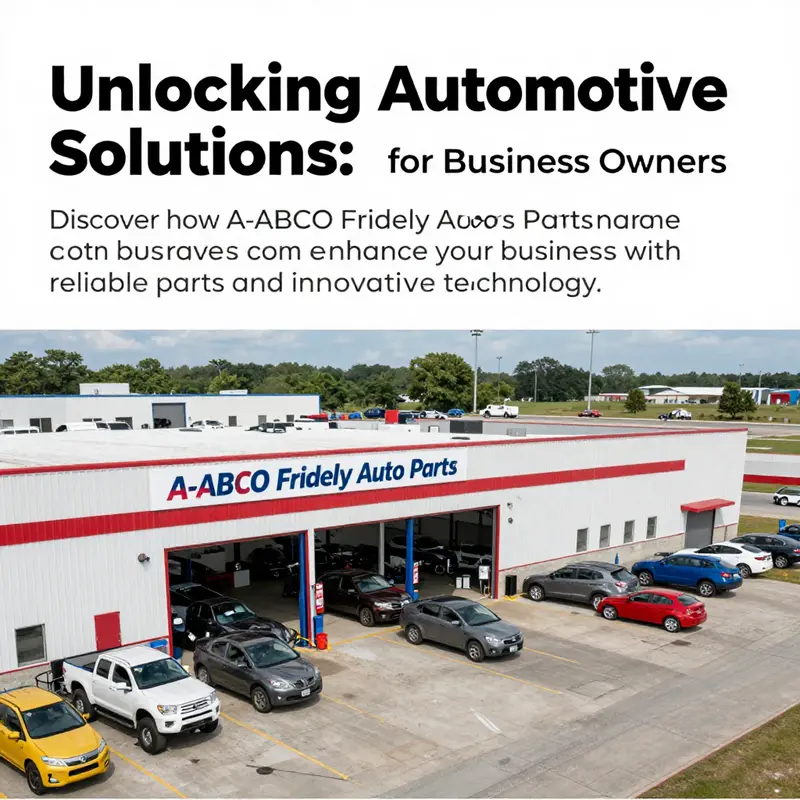
In the competitive automotive parts industry, having a reliable supplier is crucial for business owners seeking cost-effective solutions. A-ABCO Fridley Auto Parts, established in 1946, stands out as a leading resource in the Twin Cities area for both individual consumers and businesses. This article explores the historical significance of A-ABCO Fridley Auto Parts and its strategic location, the advanced technology integration offered via its mobile app, the expansive inventory and services available, and the robust customer confidence fostered by comprehensive warranty policies. Each aspect reveals how partnering with A-ABCO can support business owners in navigating today’s automotive marketplace efficiently.
A Legacy on Central Avenue: The History and Local Roots of A-ABCO Fridley Auto Parts
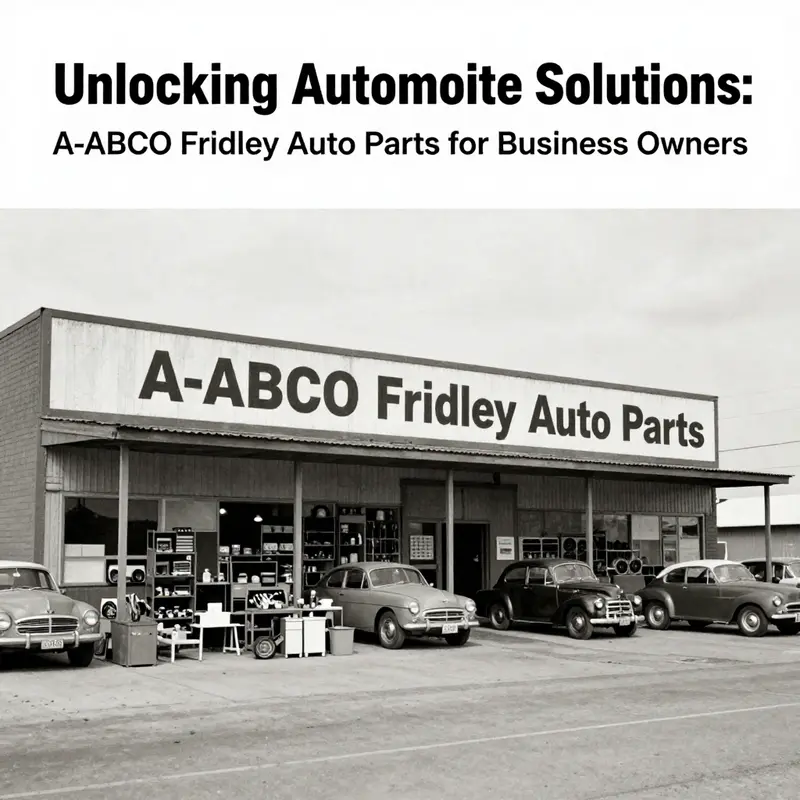
A-ABCO Fridley Auto Parts sits at 7300 Central Ave NE, a location that anchors its story. The address marks more than a street corner. It marks continuity, local identity, and a practical promise to drivers and repair shops across the Twin Cities. Established in 1946, the business has persisted through decades of change in automotive design, repair culture, and environmental awareness. That longevity speaks to adaptation, reputation, and an operational scale few independent recyclers achieve.
From its earliest years, the operation addressed a simple, recurring need: affordable, dependable replacement parts. In the postwar era, car ownership and repair were daily realities for many families. The company found purpose in rescuing reusable components from retired vehicles. That practice reduced waste, saved money for owners, and created a resource for mechanics who needed parts quickly. Over the years, what began as a practical solution expanded into an unparalleled inventory. Today, the facility houses well over a million parts for automobiles and pickup trucks. Such scale changes the nature of accessibility; customers rarely leave without a solution.
The physical site on Central Avenue does more than store parts. It tells a story of incremental investment. Racks and bays acquired and modified over time hold engines, transmissions, body panels, and smaller mechanicals. An array of tires — many refurbished or taken from insurance-totaled cars — waits for buyers in a separate area. The spatial layout mirrors years of growth: aisles widen to accommodate inventory, signage adapts to new systems, and a visible rhythm forms as staff move between bays to locate items. That rhythm reflects institutional knowledge. Employees learn to read rows and serials the way librarians read call numbers. That knowledge speeds service for both walk-in customers and remote orders.
Scale matters in practical ways. For local mechanics, the presence of such an inventory shortens downtime. A hard-to-find part can mean days of waiting. A robust recycler, conversant with older and newer models, offers alternatives. Wiring harnesses, HVAC components, alternators, and suspension pieces often resurface after careful inspection and testing. The business also inventories cosmetic parts for restoration projects. Classic-car enthusiasts benefit from a repository that includes items no longer produced. The variety encourages return visits and fosters word-of-mouth referrals, solidifying the company’s role within the Twin Cities repair economy.
Sustainability is another thread woven into the business’ history. Long before sustainability was framed as a policy priority, the reuse of functional automotive parts reduced landfill contributions. Salvaging components extends the usable life of materials, reduces the demand for new manufacturing, and preserves resources. The company’s operations have therefore intersected with environmental benefit by default. Recycling an alternator, for example, saves the energy and raw material input required for a new unit. Over decades, these small acts add up. The facility becomes a quiet contributor to waste reduction across the metropolitan region.
Customer confidence emerges from both inventory and guarantees. A central assurance offered is a lifetime warranty on most parts. That kind of policy shifts perceptions. Customers who once hesitated to buy used components gain assurance that the item has been vetted. A lifetime warranty is meaningful for parts commonly replaced over years. It reassures do-it-yourself owners and provides repair shops with fallback security when they install recycled parts. The warranty also reflects internal standards. Maintaining a policy like that requires consistent inspection, cataloguing, and a willingness to remediate when problems arise. It is a commitment that elevates a recycler from a simple salvage yard to a trusted partner for maintenance and repair.
Technology has played a central role in modernizing operations. An official mobile application allows customers to search a full inventory, read part descriptions, and view images. The app simplifies discovery by enabling VIN scanning. That capability reduces the margin for error in matching parts to a specific vehicle. A photograph, a part number, and a VIN readout combine to speed decisions. Customers who once relied on phone descriptions or in-person visits now perform accurate searches from phones or tablets. The app further facilitates communication by providing direct contact options to place orders. A seamless blend of physical inventory and digital accessibility widens the market; buyers arrive prepared with filtered results, or they order remotely for nationwide shipping.
Nationwide shipping has extended the business’ reach far beyond Central Avenue. Where once its influence centered in the Minneapolis/St. Paul metro area, online systems and logistics partnerships enable parts to travel across state lines. That expansion matters for specialized items. Enthusiasts, repair shops, and part-seekers in other regions find value in a well-maintained catalog. The company’s ability to package, insure, and send components preserves the local heritage while addressing national demand. This dual focus — local presence and remote service — allows the business to remain anchored in its industrial neighborhood while participating in a broader market.
The location itself holds practical advantages. Central Avenue is a well-traveled corridor that grants easy access to major routes. That accessibility benefits customers arriving with trailers and repair shops sending couriers. Proximity to the metropolitan core also means a steady flow of traffic from nearby neighborhoods. Over time, the address has become familiar in trade networks. Vendors, tow operators, and independent garages maintain lines of communication that shorten lead times for parts retrieval and drop-off. Even the parcel and shipping infrastructure around the facility evolves to serve an active recycler, with freight services accommodating irregularly shaped or heavy automotive items.
Community presence goes beyond transactions. The company’s longevity means generations of customers have depended on its services. Mechanics teach apprentices to source parts there. Families rely on affordable replacements to keep vehicles running. Local restoration projects source parts that are no longer produced. These repeated interactions build social capital. Staff become familiar faces, capable of advising on compatibility and installation. A stable business in a neighborhood contributes to employment and often supports other local enterprises. Its role is less glamorous than city landmarks, yet it supports real mobility needs and the livelihoods tied to vehicle maintenance.
The narrative of change also includes regulatory and safety developments. Over the decades, safety standards, recycling laws, and environmental rules evolved. The business adapted procedures for processing hazardous fluids, handling airbags, and complying with disposal regulations. These adjustments reflect professionalization. They ensure that the practice of salvaging parts adheres to contemporary expectations. Such compliance matters for longevity, because businesses that fail to adapt encounter legal and operational risks. The continued operation at the Central Avenue site indicates sustained investment in compliant processes.
Another practical dimension is inventory visibility. Cataloguing over a million parts requires systems that go beyond manual tags. Barcode systems, photographic records, and searchable databases enable efficient retrieval. The mobile app is one visible layer of that system. Behind the app lies a cataloguing discipline that connects a physical location to a virtual inventory. This discipline reduces time to sale and minimizes lost parts. For customers, it reduces frustration; for staff, it brings order to a sprawling stock. The integration of inventory management with customer-facing tools showcases how traditional recycling practices have modernized while retaining their core values.
The location on Central Avenue remains both a symbol and a tool. As a symbol, it represents stability and trust in an industry marked by change. As a tool, it provides the logistical advantages necessary for a large-scale operation. The combination of history, inventory, warranty policies, technological access, and shipping capability creates a service that supports both practical repairs and the preservation of valuable automotive resources. The site is more than storage. It is a living archive of vehicles and parts, one that continues to serve the Twin Cities and beyond.
For more details about inventory and services, visit the official listing: https://www.car-part.com/abco-fridley-auto-parts-fridley-mn
Mobile-First Transformation in a Twin Cities Treasure Yard: How a Fridley Auto Parts Recycler Redefines Access, Trust, and Efficiency
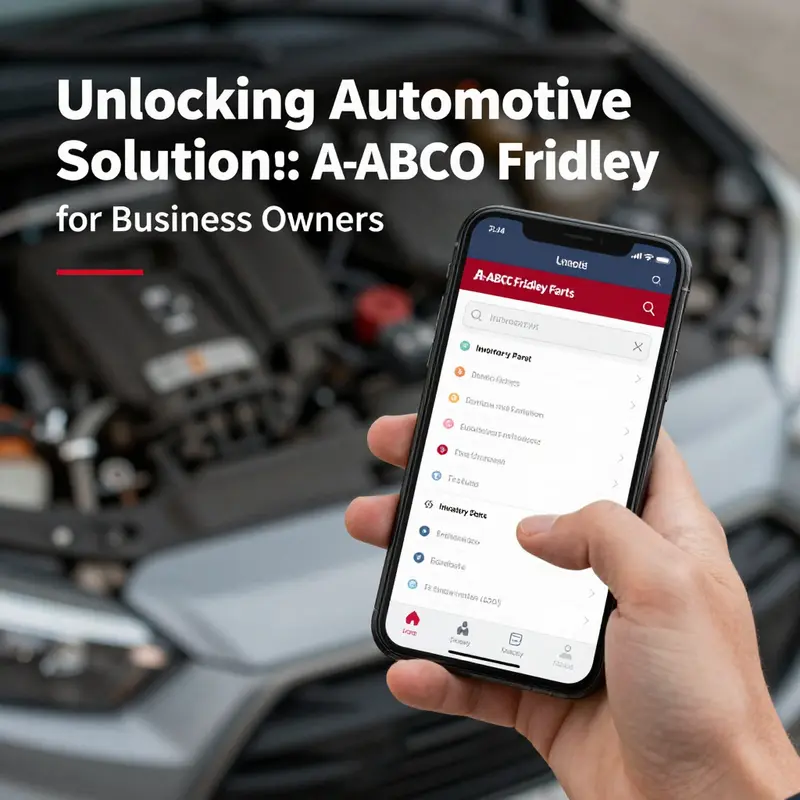
In the long arc of the Twin Cities automotive ecosystem, a Fridley-based salvage and recycling operation has woven its century-spanning legacy into a modern, digitally enabled customer experience. Since 1946, this yard has been a steadfast presence, a repository of parts that keeps vehicles on the road long after their original lifespans appear to end. What began as a brick-and-mortar hub for local mechanics and do-it-yourself enthusiasts has evolved into a capacious, carefully managed inventory that serves customers across a broad geographic footprint. The transformation is not a single gadget or a flashy feature; it is a shift in how access, transparency, and reliability are built into the core business model. At the heart of this shift lies a mobile-first approach that reconfigures the way people search for, verify, and purchase parts, all while reinforcing the environmental and economic advantages that come from reusing rather than discarding components.
The operation’s scale is striking. More than a million individual car and truck parts populate the catalog, alongside thousands of refurbished or insurance-totaled tires that have found second lives. This is not a static warehouse; it is a dynamic, continually updated ecosystem where every part has a provenance, an image, a specification, and a status that can be accessed with unprecedented speed. The larger the catalog, the more important it becomes to offer a way to cut through complexity. The answer is a dedicated mobile platform designed to simplify the procurement process for both local and nationwide customers. Rather than relying on phone calls, in-person visits, or email threads alone, buyers can now engage with the inventory in a way that mirrors the immediacy of modern shopping. What emerges from this integration is not merely convenience but a tangible improvement in accuracy, speed, and trust—an alignment with broader industry movements toward digitized, data-driven service delivery.
Central to this digital shift is the app’s ability to provide a comprehensive inventory search that spans the entire parts catalog. A customer standing on a shop floor or at a workstation can enter a vehicle’s make, model, and year or input more nuanced criteria to locate compatible components. It is a capability that moves with the customer, enabling a self-serve experience that reduces wait times and accelerates decision-making. The search function is complemented by a second standout feature: the VIN scanning capability. By capturing the Vehicle Identification Number, the app narrows the field to precisely compatible parts, eliminating guesswork and the frustration of mismatches. This is more than convenience; it is a way to safeguard both buyer and seller from misaligned expectations and costly returns. In an environment where inventory is abundant and constantly changing, accuracy matters, and the app’s targeted search reduces the cognitive load on the customer while expanding the range of viable options.
Part information within the app is designed to be transparent and actionable. Prospective buyers can access detailed specifications, condition notes, and a gallery of images that convey more than a single snapshot. Visual context matters in a marketplace dominated by used and refurbished components, where appearance often correlates with wear, compatibility, and performance. When a prospective buyer can evaluate multiple angles of a part and compare technical descriptors side by side, confidence grows. This transparency is not a mere nicety; it translates into fewer back-and-forth inquiries, shorter decision cycles, and a higher likelihood of a successful connection between customer needs and the store’s available parts. The seamless transition from search to inquiry is facilitated by direct contact channels embedded in the app, enabling a quick, clear line of communication to finalize a purchase. In a business where local roots meet nationwide reach, this capability anchors a digital workflow that respects the customer’s time and reinforces the retailer’s service orientation.
The strategic value of this mobile integration extends beyond customer convenience. For the business, digitization yields not only efficiency but deeper insight into demand patterns, inventory turnover, and the seasonal ebbs and flows that shape procurement. Real-time or near-real-time visibility into what is selling, what is aging, and what requires replenishment informs stocking decisions and supplier relationships. The result is a more responsive, data-informed operation that can adapt to the market’s cadence without sacrificing the personal touch that has long defined the yard’s reputation. The lifetime warranty offered on most parts sold is a concrete signal of confidence and accountability that travels well online and offline. Customers know they are not buying blind; they are investing in a part backed by a guarantee that offsets perceived risk. That assurance, in turn, underpins a higher conversion rate for online inquiries and a smoother handoff from inquiry to shipment, whether the buyer is local or across the country.
This mobile-enabled approach dovetails with larger industry trends toward more efficient, customer-centric service delivery. Mobile platforms are becoming the primary interface by which buyers explore inventory, verify compatibility, and complete transactions. The Fridley operation’s experience illustrates how a well-structured digital layer can complement and extend a long-standing physical presence. It also demonstrates how the combination of a vast, varied catalog and precise search tools can reduce the time-to-purchase for complex needs. In practice, a customer who identifies a required part can use the app to confirm condition and price, view multiple images, and initiate a direct conversation with the store to arrange fulfillment. The streamlined process minimizes friction and makes the decision to purchase simpler, especially for customers who are coordinating maintenance needs across multiple sites or who rely on remote access to keep their fleets operational.
From a sustainability perspective, the mobile platform reinforces the value proposition of reuse. Recycled parts reduce the demand for new production, with downstream effects on resource extraction, energy consumption, and waste streams. In a metropolitan corridor where vehicles are essential to daily life, the ability to source dependable used components quickly helps extend vehicle lifespans and reduces the environmental footprint associated with auto repair. The app’s efficiency also supports a more sustainable workflow for the store itself. Digital searches curb excessive time spent on the shop floor or in the parts department, freeing staff to focus on value-added activities such as identifying rare equivalents, managing quality control, and ensuring accurate listings. The net effect is a virtuous circle: better access for customers, more precise inventory management for the business, and a stronger story about responsible, resourceful vehicle maintenance for the community.
The user journey within this technology-enabled framework reflects a careful balance between autonomy and support. Buyers enjoy the freedom to explore at their own pace, yet they are never left without guidance. When a part emerges as a good match, the app facilitates a direct line of contact with the seller, enabling real-time negotiation, clarifications about fitment, and a straightforward path to purchase. This synergy between self-directed discovery and human interaction preserves the essential human element that has always characterized salvage and auto parts commerce while leveraging technology to reduce delays and miscommunications. It is a model of how traditional repair ecosystems can adapt to a digital era without sacrificing the trust built through local presence, transparent practices, and a robust warranty framework.
As the catalog continues to expand, the platform maintains a simple truth: a large, diverse inventory is most useful when it is searchable, verifiable, and easy to navigate. The embedded images, the clear condition notes, and the precise part specifications all contribute to a buying experience that is accurate and efficient. The capability to search across the full inventory, complemented by targeted VIN scanning, means customers can identify compatible components with confidence rather than conjecture. In practical terms, this translates into shorter turnaround times and higher satisfaction for both individual customers and small repair shops that rely on a steady stream of dependable parts. It also helps the business manage risk, as accurate matches reduce the likelihood of returns and disputes, reinforcing the reliability of the entire operation.
In weaving this technology into daily practice, the Fridley yard has not abandoned its local community or the hands-on expertise that have always distinguished its service. Instead, it has augmented that expertise with a digital layer that makes the parts more accessible and the purchasing process more predictable. The mobile platform does not replace human interaction; it enhances it by providing the customer with precise information at the moment of need and by offering a direct channel to arrange fulfillment. The result is a more resilient, customer-focused operation that remains deeply rooted in its regional identity while embracing the efficiencies and reach enabled by modern software tools.
For readers curious about how specific categories of parts can surface within such a system, a practical example can illustrate the broader point. Inventory that covers a vast range of models and configurations benefits from digital filtering that helps buyers pinpoint compatibility in seconds. Where a traditional parts desk might require extensive manual cross-referencing, the mobile app reduces this burden by presenting a curated set of options that meet defined criteria. In a field where minutes can determine whether a vehicle is back on the road or sidelined for days, such precision matters. The experience also highlights the importance of high-quality imagery and clear documentation. When a customer can inspect multiple angles of a part and study relevant measurements, the risk of a mismatch diminishes, and trust in the sale rises.
This chapter’s exploration of technology integration is not merely about features; it is about the reimagining of a longstanding, community-oriented business through digital infrastructure. It demonstrates how a storied salvage operation can preserve its core values—reliability, transparency, and service—while adopting tools that expand access, shorten cycles, and strengthen relationships with customers near and far. The result is a cohesive narrative of adaptation: the yard remains a physical locus of knowledge and inventory, but its reach now extends through a mobile pathway that guides buyers to the right parts, at the right time, with the right assurances. In this way, technology and tradition converge to sustain a marketplace that values reuse, supports repair, and honors the practical realities of modern vehicle maintenance. And as more customers turn to this integrated approach, the chapter of the store’s history continues to be written with each search, each scan, and each confirmed purchase.
Inside A-ABCO Fridley: How a Million-Plus Parts, Smart Tools, and Warranty Confidence Keep Repairs Moving
Inventory and Services That Power Repairs Across the Country
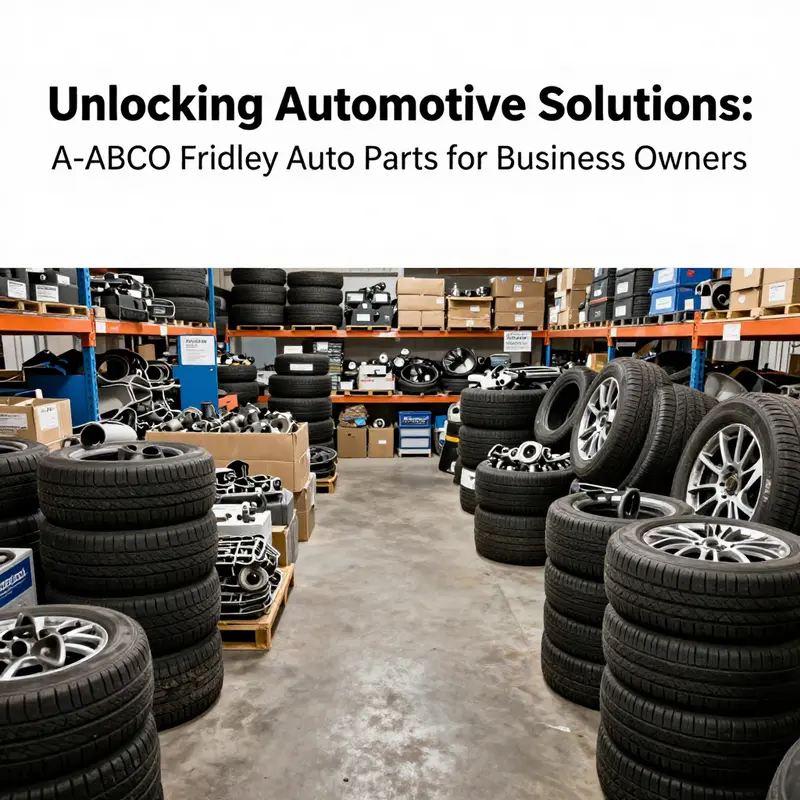
A-ABCO Fridley operates as a living archive for vehicles. Decades of salvage, refurbishment, and careful cataloging have produced an inventory that surpasses one million parts. That scale matters. It means rare items surface at predictable intervals. It means common wear items are plentiful. It means repairers and do-it-yourselfers alike can usually find a matching component without waiting weeks or paying new-part prices. The yard’s stock includes entire cores from collision-damaged but otherwise intact vehicles, assemblies pulled cleanly from retired trucks, and thousands of tires tested and graded to offer safe, like-new tread at a fraction of the cost.
Parts are organized with a focus on reuse and reliability. Engines and transmissions are traced to vehicle histories whenever possible. Body panels and trim are vetted visually and measured for fit. Electrical modules are tested on bench setups to screen failures before they reach the sales floor. Tires receive tread-depth and bead inspections, and those that pass receive careful labeling so customers know the grade and expected life. This approach reduces surprises after purchase. It also supports technicians who rely on accurate condition information to scope repairs and estimate labor.
Cost efficiency is built into the inventory strategy. Salvage parts typically sell for a fraction of new equivalents, but the savings are not just a matter of price. Many components come with a transferable guarantee for their dependability, which changes the calculus for buyers. With lower acquisition costs, repair shops can offer competitive labor quotes and still maintain healthy margins. Owners of older vehicles often find that sourcing a used module or body piece extends a vehicle’s useful life at a sensible price. In markets where certain parts have long lead times or are discontinued, a salvage yard’s repository becomes a practical necessity.
Service extends beyond static shelves. A-ABCO Fridley combines in-yard expertise with technology to let customers find parts faster. The company provides a free, official mobile app for modern devices. The app connects to the full inventory and offers a direct route to purchase. It supports vehicle-identification scanning to match parts precisely to a car or truck. It displays images and condition notes so buyers can see what they will receive. Order management tools allow tracking and communication about shipping or pick-up. For many customers, the app removes the need for repeated phone calls and reduces the time between locating a part and installing it.
Shipping and delivery are core services. While walk-in customers can extract parts themselves or arrange curbside pick-up, the company regularly ships nationwide. Parts are packaged to protect fragile finishes and electrical connectors. Large assemblies are crated or reinforced for over-the-road transit. For remote buyers, this opens a national market. A repair shop in another state can source a hard-to-find component, receive it quickly, and complete a job without the downtime of waiting for new production items. The logistics team coordinates carriers, tracks shipments, and handles customs paperwork when needed. That attention to detail matters when warranty commitments and repair schedules depend on timely arrivals.
Confidence in used parts increases when warranties are robust. A-ABCO offers a long-term warranty on most items, easing the perceived risk of buying pre-owned. This warranty is significant for two reasons. First, it shows that the yard stands behind its inspection and grading processes. Second, it gives technicians a fallback if a purchased part fails prematurely. Knowing there is a clear, supportive return pathway encourages reuse over replacement. It also promotes sustainable repair practices by making recycled parts a first-choice option for many repairs.
Customer service complements inventory size and warranty policy. Yard staff bring years of hands-on experience to each inquiry. They help identify compatible parts by cross-referencing model codes and VIN information. They can suggest interchangeable options for discontinued pieces, or recommend refurbishment steps for cosmetic items. Many customers say the difference between a successful salvage purchase and a frustrating one is informed staff. Quick responses, clear condition notes, and cooperative return handling reduce friction and build repeat business.
The yard also supports specialized needs. Performance-oriented builders and restoration specialists often search for donor components and low-mileage assemblies. For example, halfcut assemblies and other donor subframes show up on occasion. These larger, vehicle-matched salvage items simplify complex replacements and conversions. For buyers pursuing a project that needs a near-complete substitute, such donor finds can save time and preserve factory fitment. A searchable database increases the chance that a needed core will be located and reserved before it is dismantled for parts.
Integration between the physical yard and the online catalog is a key operational strength. Every part is entered into an inventory system with as much descriptive detail as possible. Photographs, mileage notes, and functional test results are attached where applicable. This digital-first approach means walk-in customers find what they saw online, and remote buyers receive accurate representations of their purchases. It also enables staff to run compatibility checks quickly. VIN-based queries are especially valuable. By checking build codes, engine families, and transmission types, the system reduces fitment errors that create costly returns.
Repairs often require more than a single part. A-ABCO supports this reality by offering both individual components and bundled solutions. For collision repairs, a combination of body panels, mounting brackets, and trim pieces can be sourced and reserved as a group. For drivetrain jobs, matched engine and transmission assemblies, related harnesses, and control modules may be sourced together. Bundling simplifies logistics and often reduces per-item costs. It also helps shops plan labor and schedule vehicle downtime with better accuracy.
Sustainability is an underappreciated benefit of this operation. Reusing parts reduces the environmental impact of new manufacturing. It also diverts usable materials from scrap processing. Customers who prioritize sustainable repairs find salvage yards an appealing alternative. The business model supports circularity by keeping components in service longer, and by enabling repairs that delay vehicle replacement. For communities, this translates to lower waste and resilient access to affordable mobility.
Customers new to salvage buying benefit from practical guidance. When ordering, note the seller’s grading descriptions. Ask for pictures of the exact piece when fitment is critical. Verify electrical connectors and mounting points in advance. Use VIN-based searches whenever possible to match complex items. Pay attention to shipping terms and return timelines. The yard’s warranty helps, but clear expectations make the process smoother. Staff can often advise on installation tips and known compatibility quirks, saving time and preventing avoidable returns.
Large-scale inventory requires disciplined yard management. Vehicles are logged, tagged, and stripped in stages. Usable components are tested, labeled, and photographed. Tires are graded by tread and condition. This discipline keeps the digital catalog accurate and reduces errors. It also speeds up customer service; when a part is reserved, staff can retrieve and stage it for pickup or packing within predictable windows. For shops operating on shop schedules, that predictability is a practical advantage.
For rare or performance-oriented parts, timing and persistence matter. The more specific a search, the greater the value of alerts and reservations. The company’s catalog supports inventory monitoring so buyers can set alerts for incoming cores or assemblies. That feature gives restorers and specialty builders an edge. It turns a sprawling inventory into a targeted supply source, where the right alert can turn into a successful project milestone.
Through scale, service, and technology, A-ABCO Fridley functions as both a parts repository and a service hub. Its mile-wide inventory is backed by staff expertise, digital tools, nationwide shipping, and a warranty that reduces risk. For anyone sourcing components for repair, restoration, or modification, the combination of an extensive catalog and an accessible support structure makes the salvage option practical and predictable.
For more details about customer experiences and recent reviews, see the store’s profile on a public review site: https://www.yelp.com/biz/a-abco-fridley-auto-parts-fridley-mn.
For buyers seeking specific donor assemblies, such as halfcut subframes and matched donor sections, the yard’s searchable listings sometimes list specialized entries like Evo X halfcut assemblies that suit large repairs or conversions: Evo X halfcut listings.
Trust by Transparency: How A-ABCO Fridley Auto Parts Builds Confidence with a Lifetime Warranty and a Vast Catalog
A-ABCO Fridley Auto Parts sits at a quiet, unassuming corner of Central Avenue in Fridley, Minnesota, but its influence ripples across the Twin Cities and beyond. Since 1946, this family-rooted recycler has woven itself into the fabric of a regional auto repair ecosystem that depends on reliable, affordable, and responsibly sourced parts. The sheer scale of its operation is a practical argument for confidence: more than a million automobile and pickup parts in stock, plus thousands of refurbished or like-new tires salvaged from insurance-totaled vehicles. This breadth matters because buyers in this market face a legitimate risk: the wrong part, the wrong fit, or a defect can derail a repair job, disrupt a vehicle’s safety, and drain time and money. A-ABCO counters that risk with a disciplined approach to transparency, warranties, and user-friendly access, all designed to help customers feel secure when they buy used parts rather than new ones. The result is a narrative of trust that rests on three connected pillars: a robust, verifiable warranty policy; a modern, accessible discovery and purchase experience; and a long history of local reliability paired with nationwide reach through an efficient online system. The story begins with the most compelling promise in the used-parts market: a lifetime warranty on most parts. This isn’t a throwaway marketing line. It is a formal commitment that defects revealing themselves after installation can be resolved without the buyer shouldering a sudden, ongoing financial burden. The phrase “for as long as you own the vehicle” speaks to a practical understanding of what customers need. Consider the mechanic who installs a used transmission or a rebuilt fuel system and then faces a roadside test or a down payment on another repair weeks later. The lifetime warranty changes the calculus. It shifts the buyer’s posture from cautious optimism to confident expectation. It signals that the seller has evaluated the quality and durability of the parts it keeps in stock and is willing to stand behind them, even when wear and tear are inevitable. The promise also nourishes ongoing relationships. When a part is warranted for life, it becomes more than a one-time sale; it becomes a long-term service contract in spirit. The customer who buys with this assurance is more likely to return for future needs, refer friends, and trust the business as a steward of safe, affordable repair options. Of course, a warranty alone cannot sustain confidence without clarity about what is in stock and what exactly is covered. A-ABCO makes that visibility possible through a combination of inventory scale and an information-rich buying experience. First, the catalog is not a static list of odds and ends. It is a dynamic repository reflecting decades of activity in the Minneapolis–St. Paul metro area. The company curates its inventory with care, offering a mix of high-demand components for everyday repairs and specialized items that can be harder to source elsewhere. The store’s approach recognizes that even well-built used parts carry uncertainties: compatibility must be verified, mounting points must align, and performance must be predictable. To reduce guesswork, A-ABCO provides detailed part information and, when available, images that help customers make informed decisions before they commit to a purchase. This transparency—clear descriptions, real photos, and a straightforward warranty framework—creates a foundation of trust that can be harder to establish in online marketplaces that emphasize price over reliability. The combination of a vast physical stock and a clear warranty policy turns the buying process into a negotiation of risk, not a leap of faith. It’s a narrative that resonates with professional buyers and do-it-yourself enthusiasts alike, because the stakes in auto parts are personal as well as practical. The company’s commitment to accessibility does not end at the counter; it extends into a modern digital ecosystem designed to empower buyers with information and options. A-ABCO’s official mobile app is a key piece of this ecosystem. It brings the full inventory into the palm of a user’s hand, a critical capability as customers increasingly blend in-store and online shopping. The app enables full inventory searches, a feature that lets shoppers quickly locate the exact part they need without paging through shelves or scrolling endlessly on a desktop. It also includes a Vehicle Identification Number (VIN) scanning feature, a tool that adds a level of precision often missing in the used-parts market. A VIN scan is more than a convenience; it’s a safety net. It aligns the customer’s vehicle particulars with the parts database, increasing the odds that the buyer will select a component that fits and functions as intended. The app’s emphasis on transparency continues with detailed part information and images, offering a level of clarity that would be difficult to achieve with a purely storefront approach. For a buyer navigating a complex repair project—perhaps a late-model vehicle with a sophisticated electrical system or a vintage model needing a specific style of component—these digital tools transform what can feel like a scavenger hunt into a guided search. When a required item is identified, the app supports a direct path to purchase, streamlining the transaction and reducing the chance for miscommunication. The practical impact of this integrated approach is measurable in the buyer’s time savings and in the negative space it fills: fewer returns, fewer delays, and more predictable repair outcomes. It is not an exaggeration to say that the app’s transparency improves confidence at the exact moment when doubt could otherwise creep in. The store’s risk management strategy is complemented by its environmental and ethical commitments. Recycling parts rather than manufacturing new ones preserves materials, reduces waste, and aligns with an increasingly stringent set of expectations from customers who want to see sustainable practices reflected in the companies they trust. The parts that pass through A-ABCO’s doors—whether used, refurbished, or taken from insurance-totaled vehicles—are reconditioned or validated to meet reasonable standards of performance. This process is where the warranty and the environmental story intersect. If a part fails due to defects, the warranty covers the customer, but the broader implication is that the company has accepted responsibility for the life cycle of the items it sells. That mindset is a statement about integrity in an industry where parts can be imperfect and where the cost of a misfit can be high. It is precisely this balance of accountability and accessibility that invites continued loyalty from a broad customer base. The store’s physical presence in Fridley coexists with its nationwide reach, blending the reliability that comes from decades of local service with the convenience and scale enabled by an online platform. The local network—relationships with repair shops, service centers, and weekend warriors working on projects—creates a trust ecosystem. This ecosystem is reinforced by the certainty that a single part sourced from A-ABCO can be backed by a lifetime warranty, a policy that reduces friction when customers are deciding whether to invest in a used component. It also clarifies expectations that might otherwise be complicated by the variability inherent in salvage and recycled parts. The warranty acts as a gateway to a more expansive value proposition: it signals that the business has confidence in the parts it handles and that it stands behind them with a clarity that customers can measure against their own repair projects. Consider the shop owner who needs a reliable source for hard-to-find items, or the DIYer who wants to complete a project without risking a sudden, expensive setback. In both cases, the warranty offers a form of assurance that complements the vast catalog, the efficient app, and the logistical support that enables nationwide shipping. The result is a buying experience that feels consistent, predictable, and fair—a rare combination in a market where price competition is fierce and where uncertainty can be the default expectation. The internal breadth of the catalog, coupled with the warranty, contributes to a narrative of confidence that makes sense to everyone from a veteran technician to a weekend hobbyist. A single item in stock—perhaps a specialized hood, a rare trim piece, or a take-off with a low mileage—can become a reference point for the buyer’s trust: this business can source what it claims, this business can stand behind it, and this business can deliver it, whether the customer is near Fridley or across the country. For those who want to see how catalog depth translates into practical buying power, the following example helps illustrate the point: catalog breadth matters because it reduces the chance of a dead end when a repair project requires precision parts. A-ABCO’s extensive inventory, including items salvaged from insurance-totaled vehicles, ensures that many needs can be met in one place, avoiding the futile hunt across multiple vendors. The attached experiences of customers who have relied on the store’s inventory and warranty become a form of social proof, a quiet testament to the idea that a long-standing local business can still compete in a digital marketplace. The synergy between physical stock and digital tools is the core driver of confidence. It’s the combination of a seller’s willingness to provide a life-long warranty on most parts, the clarity of product information, the ability to verify compatibility with a VIN, and the convenience of nationwide shipping that makes the experience coherent and reliable. It also signals a longer-term commitment to the craft of parts recycling, to the communities the business serves, and to the principle that value in automotive repair comes from a careful balance of quality, transparency, and service. To glimpse how a vast catalog can streamline finds, consider the long-running catalog of diverse components such as the 1994-1999 Mitsubishi 3000GT Pit Fighter carbon fiber hood. This item, though just one example among millions, illustrates how a deep catalog can anchor confidence. When buyers know a store maintains a catalog of specialized items alongside everyday replacements, they understand that the business is not merely a reseller of parts but a steward of a repair ecosystem. The presence of such items in the catalog—whether they are common rims and hoses or rare carbon fiber hoods—demonstrates that the retailer can be a one-stop source for projects of varying scopes and budgets. The effect on customer confidence is practical: a buyer can complete a complex repair with fewer compromises, and that reduced risk becomes the practical proof of the store’s warranty and transparency in action. For readers following the broader arc of this article series, the A-ABCO model presents a compelling case study in how legacy businesses adapt to contemporary expectations without sacrificing core strengths. The blend of a long local history with a modern digital interface and a strong warranty framework creates a template for future growth in the recycled-parts sector. It shows that customers do not have to choose between price, quality, and trust; they can obtain all three through a carefully designed value proposition. The chapter’s themes—durability, clarity, accessibility, and responsibility—are not merely marketing phrases. They reflect daily practice: inventory professionals who catalog, inspectors who verify reusability, and customer service teams who guide buyers through a straightforward warranty process. The app, the vast stock, and the warranty are not separate pillars but threads of one fabric designed to carry customers through repair projects with fewer surprises. In closing, the A-ABCO Fridley Auto Parts story is a reminder that the best used-parts experiences come from organizations that combine depth of stock with depth of trust. The lifetime warranty reduces the perceived risk of buying used, while the app and online platform extend that trust into a precise, user-friendly search and purchase experience. The result is a model where reliability meets accessibility, and where the values of years past—quality, service, and accountability—remain central to what the company offers today. The chapter thus connects the operational heart of A-ABCO with the broader conversation about building confidence in the used-parts economy. It shows that the most durable brands are those that invest in protection for the customer, clarity in information, and a catalog that proves they can meet demand with both breadth and depth. External resource for broader context on parts ecosystems: Evo X halfcut.
Final thoughts
Choosing A-ABCO Fridley Auto Parts means aligning your business with a well-established partner dedicated to quality and innovation. With nearly eight decades of service, strong technological tools like a dedicated mobile app, an extensive inventory of parts, and trustworthy warranty policies, A-ABCO positions itself as an invaluable ally for business owners in the automotive industry. By fostering a relationship with A-ABCO, businesses can streamline their part sourcing processes and enhance operational efficiency, ultimately leading to greater customer satisfaction and success.