
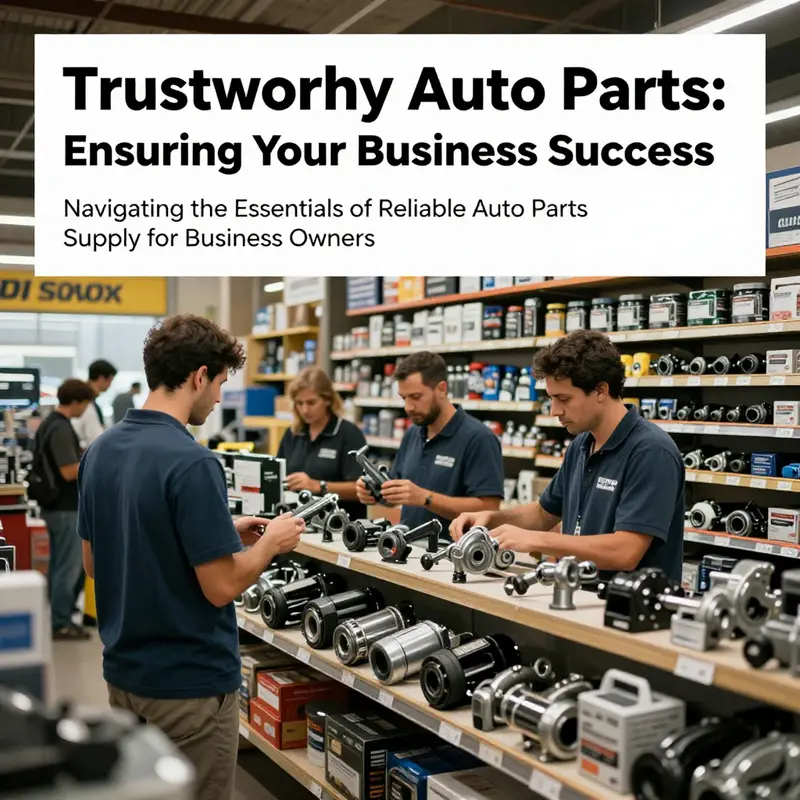
In an industry where precision and safety are paramount, choosing a reliable auto parts supplier can significantly impact your business’s reputation and operational efficiency. Understanding the intricacies of official authorizations, transparent supply chains, and recognized brands allows business owners to make educated choices. This article unpacks the critical aspects of selecting trustworthy auto parts suppliers, covering the necessity of certifications, the importance of traceability, the advantages of brand reputation, and the value of professional services. Each chapter will provide valuable insights that equip you to safeguard your business and ensure automotive excellence.
Certified Authenticity: Why Official Authorization Anchors Reliable Auto Parts
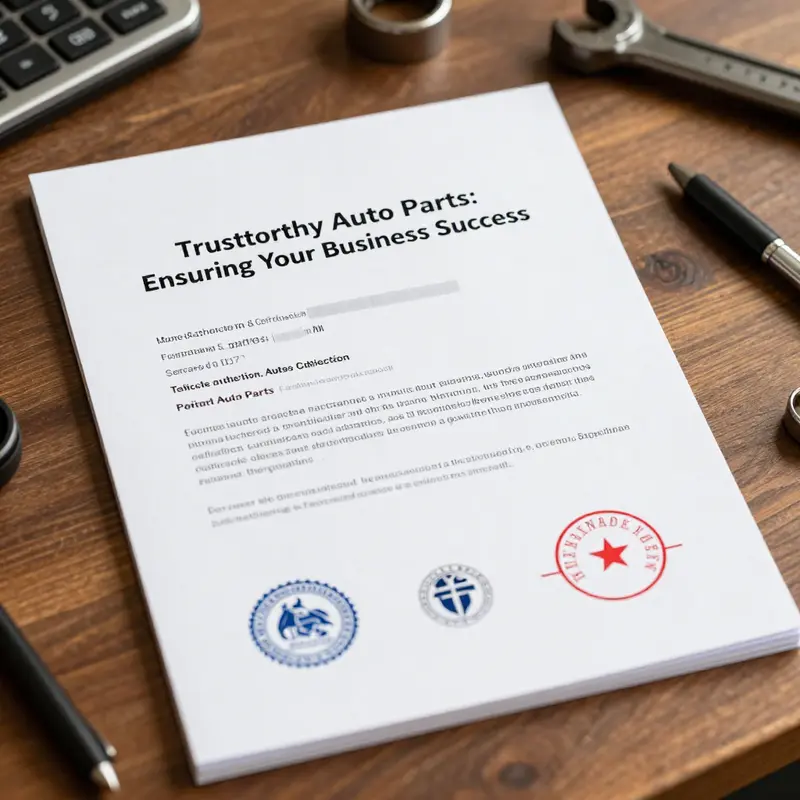
Why official authorization matters
When you choose replacement parts for a vehicle, the decision is not only about fit and price. It is about safety, longevity, and preserving the engineering intent of the vehicle. Official authorization and certification are the clearest signals that a supplier participates in the manufacturer’s controlled supply chain. That control covers manufacturing standards, traceability, packaging, and the documentation that ties a single part back to its source. Relying on authorized channels reduces the risk of fitment failure, premature wear, and safety compromises that counterfeit or unverified parts can introduce.
Official authorization means more than a signed letter. It means the supplier has passed formal audits, follows documented quality processes, and can prove the origin of each component. A certified distributor will have ready access to factory part numbers, release notes, and batch records. They will be able to match parts to a vehicle using the VIN and will honor the manufacturer’s warranty commitments. For owners who care about performance and about maintaining factory standards, that verification is essential.
A practical way to think of authorization is to imagine a chain of custody. At one end, the manufacturer defines materials, tolerances, and packaging. At the other end, the part is installed in the vehicle. Every link in the chain—manufacturer, logistics partner, authorized warehouse, and certified retailer—must be accountable. Authorization creates that accountability and preserves the value of the component as original equipment.
How to verify authorization with confidence
Start with visible proof. A legitimate supplier will provide an authorization certificate, distributor number, or an official partnership statement. Request this documentation and verify it against the manufacturer’s published list of authorized partners. If the supplier hesitates or declines, treat that as a red flag.
Part numbers and labels matter. Genuine parts carry manufacturer part numbers and often unique serial or batch identifiers. These identifiers can be checked against the manufacturer’s database or cross-referenced through an authorized service center. Ask the seller for clear photos of part labels and packaging. Verify that the label format, logos, and holograms match official samples from the manufacturer.
VIN matching is a quick and reliable safeguard. A certified supplier will check the vehicle identification number to confirm fitment and configuration. This step prevents errors caused by platform variations, mid-year changes, or regional specifications. Always insist that the part be matched to your VIN before finalizing the purchase.
Traceability is the backbone of authenticity. Suppliers who practice full traceability can show paperwork that tracks a part from its factory batch to the warehouse and then to the customer. This documentation should include shipping records, batch codes, and, where applicable, inspection certificates. Full traceability is especially important for safety-critical components where a single defective batch can have severe consequences.
Online purchasing: what to look for
When buying parts online, prioritize official brand storefronts on major platforms, or suppliers whose authorization is explicitly verified on the manufacturer’s own site. Reputable online listings include certification badges, verified review histories, and transparent return and warranty policies.
Examine the listing for authenticity guarantees. Some platforms provide buyer protection programs that back authenticity claims, while authorized storefronts maintain strict inventory controls and direct factory sourcing. Read the product description carefully; genuine listings usually include factory part numbers, clear photos of labels, and information about packaging and warranty coverage.
Be cautious with unusually low prices. Deep discounts on parts that normally hold steady in price may indicate gray-market sourcing or counterfeit goods. An authorized supplier may offer competitive pricing, but it will seldom undercut the market by a large margin without a clear explanation, such as a limited-time factory promotion.
Services and support that demonstrate authorization
Authorized suppliers do more than sell parts. They provide VIN-based part matching, technical support, proper installation guidance, and straightforward warranty handling. They participate in recall notification systems and can facilitate authorized repairs under warranty terms. These services matter because they close the loop between purchase, installation, and any subsequent service needs.
A certified seller will accept returns for eligible items and will process warranty claims through official channels. They can also provide guidance on compatible alternatives if an exact OEM part is unavailable, while making clear the difference between OEM and aftermarket options. This transparency reduces the risk of costly errors.
Alternative authorized models: factory-direct partners
Not every reliable source is a manufacturer-owned dealership. Some third-party distributors operate under a factory-direct supply model and maintain close ties with the manufacturer’s parts warehouses. These partners can offer genuine parts at competitive prices while maintaining the documentation and traceability required for authenticity.
If you consider such a partner, ask for the same evidence as you would from a dealership: authorization documentation, batch traceability, and the ability to verify part numbers. Confirm that the partner’s inventory is sourced directly from the manufacturer or an authorized warehouse rather than from ambiguous intermediaries.
Red flags and pitfalls to avoid
A few warning signs point to untrustworthy parts: missing or altered labels, inconsistent part numbers, generic packaging, and reluctance to provide supporting documentation. Sellers who pressure for instant payment, refuse returns, or provide no verifiable contact information should be avoided.
Another common issue is the gray market, where genuine parts are resold outside authorized channels. Gray-market parts may be genuine but lack warranty coverage or the documentation needed in the event of a recall. If the price seems attractive but the supplier cannot demonstrate authorization, the apparent saving may be offset by hidden costs later.
Practical checklist for buyers
- Request and verify authorization documents.
- Confirm part numbers and ask for photos of labels and packaging.
- Require VIN-based part matching before purchase.
- Ask about traceability and batch records for critical components.
- Confirm warranty terms and the returns process.
- Verify the seller’s participation in manufacturer recall and service networks.
- Be wary of deep discounts and high-pressure sales tactics.
Examples and real-world verification
Genuine part listings that show factory-origin details and clear labeling illustrate the standard for authorization. For instance, a listing titled cz4a-lancer-evolution-evo-10-front-bumper-genuine demonstrates how authentic parts pages often include explicit language about origin, part numbers, and compatibility notes. Use such listings as a reference when evaluating other sellers, but always verify the supplier’s authorization independently.
An authorized supplier offers both a document trail and practical service that together protect your vehicle and investment. When authorization and certification are clear, you gain confidence that the part will fit, function, and last as intended. Where documentation is missing, the perceived savings rarely justify the risk.
For further verification of authorized dealers and service centers, consult the official dealer locator: https://www.audichina.cn/dealer/
From Factory Floor to Garage: How a Transparent, Traceable Supply Chain Builds Reliable Auto Parts
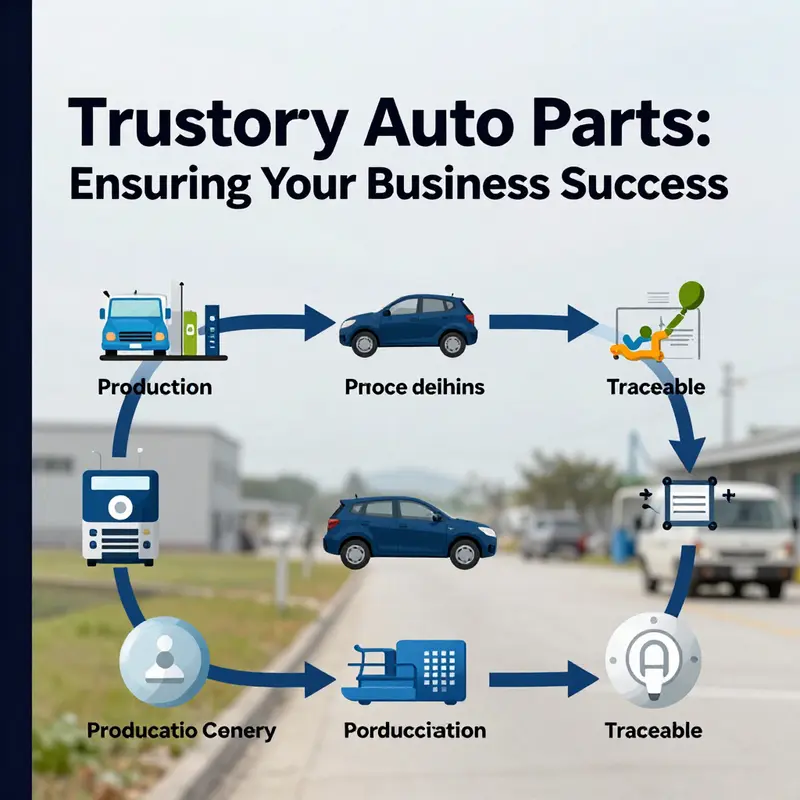
In an era where vehicles rely on an ever more intricate web of components, the reliability of auto parts rests not only on quality but on where those parts come from and how they move through the system. A transparent, traceable supply chain tightens that loop, turning a potential area of risk into a source of confidence for everyone from a mechanic to a devoted owner. The idea is simple in concept but powerful in practice: every part has a verifiable origin, every handoff is recorded, and every user—whether a repair shop, a dealer, or the driver—can verify authenticity in real time. When this level of openness becomes a default, the benefits ripple through safety, performance, and the longevity of the vehicle itself.
The backbone of this approach is end-to-end traceability. Modern parts rarely arrive in a single package with a single date stamp. They travel a journey that spans suppliers, manufacturers, logistics, distributors, and service centers. To manage this journey, many industry leaders are adopting digital twins and unique digital identifiers for each component. A QR code, a discreet security tag, or a digital twin stored in a shared database can verify that a part at the counter matches the part in the vehicle’s record. The promise is straightforward: when a part is scanned, its entire life story is accessible in real time. This is not merely about fraud prevention; it is about removing uncertainty from the repair process. If a technician can confirm a part’s provenance, they can make faster, more informed decisions, reducing the risk of incompatible or counterfeit components slipping into a vehicle’s systems.
In the broader industry, a national, interoperable framework is emerging to support that traceability. Industry dialogues and regional initiatives are pushing toward a shared, secure data space where OEMs, Tier-1 suppliers, logistics providers, and service centers operate from a single, trusted source of truth. The aim is to eliminate data silos and standardize information flows so that a part’s status—production batch, storage conditions, shipment history, and quality metrics—is consistently available to legitimate stakeholders. This interconnected ecosystem does not just enable precision; it also speeds up responses when problems arise. If a defect is detected in a particular batch, the system can illuminate every vehicle that might be affected, enabling targeted recalls rather than blanket notifications. For drivers, this translates to more precise safety actions and fewer unnecessary disruptions to daily life.
One compelling dimension of this shift is consumer empowerment. A growing number of manufacturers and suppliers are designing verification tools that put the power of authentication into the hands of the end user. Mobile verification apps allow owners or shop personnel to scan part codes and confirm that the replacement part is genuine OEM or an approved equivalent. This “double insurance” model protects both the driver and the repair shop from substandard components and the counterfeit risk that can lurk in the aftermarket. When a part’s authenticity can be confirmed with a few taps, trust becomes a tangible, verifiable attribute rather than a hopeful assumption. It is an experience that aligns with the modern consumer’s expectation of clarity and control, even in a world of rapidly evolving technologies.
A practical illustration of these ideas can be seen in the post-warranty landscape. For many owners, finding authentic OEM parts after the original dealer network has narrowed its focus can be difficult and expensive. Transparent supply chains create pathways that bypass unnecessary markups while preserving authenticity. Consider a platform that connects directly with an official parts warehouse and maintains real-time visibility of shipping and storage. Such a model demonstrates how traceability supports cost efficiency without compromising integrity. It shows that the value of a reliable auto parts ecosystem extends beyond the factory floor into long-term vehicle care and peace of mind for the owner.
The importance of authenticity cannot be overstated in this context. End-to-end traceability helps curb counterfeit risk by ensuring parts can be verified against a manufacturer’s database at multiple points in the journey. When a part is scanned, a verified record confirms its origin, batch, and compliance with safety standards. This is not merely a safeguard for consumers; it is a governance mechanism that protects brand integrity and the integrity of the repair process itself. An ecosystem built on verifiable provenance discourages illicit diversion and reduces the likelihood that substandard components enter vehicles through informal channels. It also underpins efficient recall management, because the system can isolate affected parts with precision, minimizing disruption and expediting remediation.
The case for a transparent system is not purely theoretical. Real-world implementations demonstrate how it can bridge gaps that historically created mistrust. Take, for example, the role of direct sourcing within an official parts network. When a supplier obtains parts directly from an automaker’s warehouse, bypassing multiple intermediaries, the path from production to installation becomes much more auditable. The resulting transparency offers a dual benefit: it reduces the opportunities for counterfeit parts to enter the market and it shortens the window between discovery of a defect and the removal of dangerous components from circulation. In such a setup, customers receive clear, real-time updates about the status of their parts—where they come from, where they are in transit, and when they reach their destination. This is not a marketing promise. It is a structural advantage that improves decision-making, lowers risk, and supports a vehicle’s long-term reliability.
A practical anchor for readers is the concept of direct, traceable sourcing exemplified by reputable post-warranty channels. When parts are tied to official warehouses and can be tracked through every stage of the supply chain, ownership extends beyond the moment of purchase. Owners gain assurance that their parts are authentic, that they were stored under proper conditions, and that the logistics path complies with safety and quality standards. For service providers, this transparency translates into faster parts matching and fewer returns due to misidentified items. And for manufacturers, it creates a feedback loop where quality issues are detected earlier, and corrective actions can be implemented with greater precision.
The narrative of transparency becomes even richer when it includes consumer-facing verification tools. Imagine a repair scenario where a technician crosses a threshold of reliability by confirming part provenance before installation. The process becomes a conversation: the technician presents the traceable record to the vehicle owner, who can scan a code with a smartphone to see the full lifecycle of the component. This shared visibility fosters a culture of accountability. It also elevates the customer experience, transforming what could be a transactional exchange into a collaborative partnership centered on safety and performance.
In this context, specific industry practices and case studies help illuminate the path forward. A notable example is the integration of OEM warehouses with post-sale distribution, where parts are cataloged and tracked with a level of granularity that allows for precise recalls. When a defect emerges, the chain can be traced from the factory floor to the garage floor, identifying all vehicles that might be affected and enabling targeted service actions. The result is not only faster remediation but also better data for future design and quality assurance. The ability to correlate field performance with factory conditions is a powerful driver of continuous improvement, reinforcing the reliability of the parts and the vehicles that depend on them.
Within this evolving landscape, every stakeholder has a role. Manufacturers design components with verifiable provenance in mind. Suppliers implement secure, tamper-resistant packaging and robust serialization. Distributors and service centers adopt standardized data formats to ensure seamless sharing across the ecosystem. And, crucially, car owners become stewards of their own safety, empowered to verify authenticity and monitor the health of their parts over time. The outcome is a more resilient, more trustworthy auto parts ecosystem where reliability is not a matter of luck but of verifiable, verifiable integrity built into every link of the chain.
To illustrate how these principles translate into everyday practice, consider a practical, tangible example of part authenticity in a repair setting. A retailer or repair shop might offer a range of genuine OEM or high-integrity aftermarket components sourced directly from a manufacturer’s official channels. The customer can request verification and receive real-time assurance that the replacement part is authentic, properly labeled, and compatible with their vehicle. For those who want to further confirm authenticity, a targeted link to a specific catalog item—such as a genuine, JDM-quality part line—can be presented in the shop’s digital interface. In this context, a concrete example is the availability of authentic parts that carry precise identifiers and can be cross-checked against the manufacturer’s records. See how authenticity is reinforced when a retailer presents a tangible, verifiable proof of provenance: Authentic JDM Evo-9 MR taillights.
The broader implication is clear. A transparent, traceable supply chain is not a niche advantage; it is a foundational capability that reshapes risk, cost, and customer trust. It makes the idea of reliable auto parts a living standard rather than a distant promise. As more regions and automakers adopt interoperable platforms, the barrier to counterfeit and substandard components drops. What remains is a culture that expects and respects traceability, a culture that translates data into action and data into safer, more dependable vehicles. In that sense, reliability becomes a shared achievement—one grounded in the factory’s records, reinforced by the warehouse’s inventories, and confirmed by the driver’s own verification tools.
External resource: For a broader perspective on how national initiatives are steering the industry toward transparent supply chains, see the following external analysis: https://www.autocar.co.uk/industry/china-launches-national-initiative-build-transparent-automotive-supply-chain-20251022
Why Proven Brand Reputation Shapes Reliability in Auto Parts
Why reputation matters and how it protects your vehicle
A supplier’s reputation is the single most practical shortcut for judging auto part reliability. Reputation is not a slogan. It is the accumulated record of design choices, production controls, field performance, and how a company responds when parts fail. When a brand consistently meets specifications, vehicles run as intended. When components fall short, systems degrade quickly and repair costs rise. Choosing parts from vendors with strong market recognition reduces the chance of surprise failures and preserves vehicle value.
Proven reputation translates into measurable benefits. First, brands that have earned trust invest heavily in quality control. They validate materials, test lifecycles, and document tolerances. This reduces variance between individual components. Second, recognized suppliers maintain traceability across the supply chain. That traceability allows technicians to match the exact version of a part to a vehicle’s configuration. Third, established manufacturers stand behind their products with warranties and support. Those commitments make it easier to recover value when a rare defect appears.
Market recognition also affects the aftermarket ecosystem. Repair shops, independent technicians, and fleet managers form opinions based on long-term exposure. If a brand delivers consistent results under diverse conditions, it becomes a default choice. That default status is powerful. It shapes inventory decisions at repair shops and the training technicians receive. Over time, familiarity lowers the risk of installation errors, because parts, tools, and procedures align across many vehicles.
Beyond subjective trust, there are objective indicators of a reputable brand. Look for documented compliance with industry standards, published test results, and independent certifications. Reliable suppliers publish technical data sheets and service bulletins. They share part identification details that technicians can verify. Genuine quality is rarely hidden. It is transparent and repeatable.
E-commerce platforms have broadened access to parts, but they also complicate reputation signals. Online marketplaces host numerous sellers with varied quality. A high-profile brand name may appear next to indistinguishable counterfeits. For buyers, the key is to combine market recognition with verifiable supply-chain details. Seller ratings and return policies are useful, but they are not enough. Ask for traceability codes, batch numbers, and proof of sourcing. A reputable supplier can match a part to production records.
Technology is improving how the market confirms authenticity. Advances in visual recognition, powered by synthetic training data, enable automated verification of parts and labels. These systems reduce human error in labeling and improve inventory accuracy. They also make it easier for warehouses and retailers to spot anomalies before parts leave the facility. As a result, market-recognized brands can leverage digital tools to protect their reputation.
A brand’s public history matters too. When failures occur, transparent handling distinguishes a reliable maker from an unreliable one. Good brands issue recalls or technical bulletins quickly. They explain the problem and provide corrective actions. They also support technicians with diagnostic procedures and replacement part codes. That responsiveness limits secondary damage to vehicles and reduces downtime for owners.
Reputation also intersects with innovation. Brands that consistently invest in research and development raise the bar for durability and performance. Those advances often trickle down into the aftermarket, improving replacement parts. When a supplier has a track record of incremental improvements, buyers gain a better long-term value proposition. The parts last longer, service intervals stretch out, and the total cost of ownership drops.
For consumers balancing price and reliability, market recognition helps prioritize choices. Well-known names may cost more initially. Yet the reduced risk of early failure often makes them cheaper over the life of the vehicle. When comparing options, weigh warranty length, documented testing, and third-party endorsements. A lower sticker price rarely offsets repeated replacements.
Repair professionals rely heavily on reputation when sourcing parts. A single problematic batch can disrupt workshop schedules and damage a shop’s relationship with customers. Experienced technicians prefer suppliers whose parts require minimal rework. That preference reinforces market recognition. Suppliers who consistently deliver quality win the loyalty of service centers, and that loyalty becomes another layer of reliability for owners.
A pragmatic approach for owners is to combine brand reputation with verifiable traceability. Ask sellers for part identification codes and batch numbers. Request information about the source and distribution pathway. When possible, match parts using the vehicle identification number or system-specific codes. This due diligence bridges the gap between market recognition and the precise part fitment your car needs.
Finally, reputation is not static. It is built and maintained through consistent actions. Brands that understand this invest in long-term quality programs. They engage with the technician community, publish clear documentation, and adopt digital tools that secure the supply chain. Consumers who prioritize these signals will benefit from fewer failures, better support, and lower lifetime maintenance costs.
For practical illustration of how reputable listings can look in a specialty marketplace, see this low-mileage engine listing that highlights provenance and component details: genuine JDM low-mileage 4G63T engine listing.
Further reading on how trusted vehicle brands influence parts selection and ownership economics is available here: https://www.carinterior.com/reliable-car-brands-2024/
This chapter ties brand reputation to the practical concerns of reliability, traceability, and long-term cost. Those familiar signals, paired with verification practices, give owners and technicians the confidence to choose parts that protect vehicles and investments.
Beyond Parts: The Professional Services That Build Reliability in Auto Parts

When drivers think about safety, performance, and longevity, they often focus on the part itself—the actuator, the sensor, the gasket. Yet the real engine of reliability is the professional ecosystem that surrounds that part. Parts arrive with a promise, but that promise is kept only when a trustworthy provider couples product quality with expert guidance, transparent processes, and dependable after-sales support. In brands where precision and safety are non-negotiable, such as high-stakes European platforms and their regional partners, the value of professional services becomes evident in every mile of driving. This chapter follows that thread, weaving together the contours of technical consultation, supply-chain integrity, and after-sales continuity to show how a reliable auto parts supplier earns the quiet confidence of technicians, fleet managers, and everyday owners alike.
Expert technical consultation and compatibility assurance sit at the core of reliable sourcing. A truly professional supplier does more than match a catalog to a vehicle; they translate VIN-specific information into precise, install-ready recommendations. For FAW-Volkswagen and similar networks, this means technicians who can cross-reference the full model line—from routine maintenance items to engine and transmission assemblies—against an individual car’s identity and history. The aim is not merely to sell a part, but to guarantee that it fits the car’s exact configuration and will perform in harmony with the vehicle’s systems. When a technician can confirm compatibility through VIN-based data and model-line cross-references, the risk of costly installation errors evaporates. The result is a smoother repair journey for the customer and less rework for the workshop. This deep technical alignment is a hallmark of professional suppliers who invest in their people and their data streams.
Consider the value of a supplier that can show the road from production to installation. A reliable partner will describe a traceable path for each component, complete with unique identification codes that resemble a 17-digit VIN-like part number. Such codes enable verification against the manufacturer’s database and grant customers a clear audit trail from factory to failure analysis. This traceability is more than a bureaucratic nicety; it is a practical safeguard against counterfeit parts and a guarantee that the part you fit today matches the OEM standard used in the factory. In practice, traceability involves not only the identification code but also a transparent handling of the entire process: production, warehousing, and shipping. The package arrives with documentation, and the recipient can verify every link in the chain. A customer who values reliability learns to look for this kind of transparency as a signal that a supplier truly controls the source and the path that component has traveled.
Direct sourcing and end-to-end transparency also foster trust in the post-purchase experience. For example, some suppliers emphasize sourcing directly from official inventories, thereby removing intermediaries who can blur the provenance of parts. When a customer receives a part that can be traced to an original warehouse, where it has been inspected for quality, there is a perceptible difference in confidence. The warehouse itself becomes a quiet guarantor of integrity: controlled storage conditions, temperature and humidity monitoring, and digital tracking that follows a part from the moment it leaves the line to the moment it lands in the shop. This level of control reduces the margin for error and ensures that the part remains within OEM tolerances. It also shortens the pathway to warranty coverage, because the documented chain of custody makes it straightforward to validate claims and verify that the part in question has remained within the manufacturer’s quality standards throughout its life cycle.
A professional service model also extends into after-sales support, where the relationship between supplier and customer becomes ongoing rather than transactional. In robust ecosystems, customers gain access to clear return and exchange policies, direct channels to experienced technical teams, and manufacturer-backed warranties that are easier to claim when the part’s origin and testing history are transparent. This is where the practical benefits of expertise become tangible. Real-time problem-solving, guided troubleshooting, and a network of vetted installers are not luxuries; they are essential components of reliability. A credible supplier will offer structured support that customers can rely on long after the purchase, including on-demand technical hotlines, diagnostic help, and clear paths to replacing or recalibrating parts when necessary. In modern service platforms, this is often supported by app-based or cloud-enabled systems that connect customers with technicians, track issue reports, and monitor warranty status across the lifecycle of a part.
Digital tools have become the connective tissue of professional service networks. The most reliable providers deploy intelligent platforms that deliver a seamless user experience from inquiry to installation. Real-time inventory visibility helps customers understand what is readily available and what requires lead time. Automated order tracking ensures that customers know where their part is in the supply chain, from warehouse to courier to counter. Smart route planning optimizes delivery times and reduces the risk of delays that could extend vehicle downtime. Above all, digital tools empower customers by giving them control: the ability to see part histories, confirm compatibility, request technical consultations, and initiate returns without friction. In a field where a single mismatched component can ripple into performance problems or safety concerns, such digital sophistication translates into measurable reliability and peace of mind.
The professional services model also depends on a well-curated ecosystem of trusted information and guided choice. A credible supplier interprets the complexity of modern vehicle electronics and powertrains and explains it in accessible terms to customers who may not live in the workshop every day. They provide part-match guidance based on precise data rather than generic compatibility charts. They offer educational resources that help owners understand why certain parts should be sourced through authorized channels and how the supply chain protects them from counterfeit substitutes. In this sense, reliability is not merely about the parts in hand; it is about the competence and integrity of the people who stand behind those parts—the engineers, technicians, and support staff who translate specifications into safe, dependable performance.
For owners managing risk, the value of professional services becomes most evident in the ability to source authentic, OEM-aligned components through authorized channels. Official authorization and certification remain the bedrock of trust, but the practical experience of shopping, receiving, and installing parts—guided by technical expertise, traceable provenance, and robust after-sales support—transforms a routine repair into a reliable repair. In a world where counterfeit parts threaten safety and performance, the security baked into a professional service model offers an alternative built on verifiable sources and accountable service. A good provider does not rely on a single touch point; they construct an ecosystem where every link—from the factory floor to the customer’s driveway—holds to the same standard of quality.
Within this ecosystem, even casual inquiries can become opportunities for reliability. A customer who asks about a rare issue or a specific engine variant can be guided by technicians who can cross-check part numbers against official databases, verify compatibility across model lines, and suggest the best sourcing path. The experience becomes a collaboration rather than a transaction, with the customer leaving not only with a part but with confidence—the confidence that the part was chosen with full awareness of the vehicle’s needs and the repair’s implications. And when the repair completes, the sense of reliability lingers: the engine starts smoothly, the sensors communicate correctly with the control units, and the vehicle delivers the intended performance without unexpected interruptions.
As a practical cue to the reader, consider how a single, well-supported part fits into a broader maintenance strategy. A responsible owner will benefit from fixed, predictable support channels, documented warranties, and access to installation guidance that aligns with the vehicle’s engineering. In the long run, these advantages translate into lower total cost of ownership: fewer callbacks, less downtime, and a higher likelihood that the vehicle will maintain its value because its critical components are backed by an organization that treats parts as part of a larger, carefully managed system.
To illustrate how professional service translates into real-world practice, one might look at the way a robust platform handles post-purchase care. A dedicated support hub can streamline issue reporting, enabling technicians to exchange information with the supplier, arrange parts replacement, and coordinate with certified installers. The best platforms also keep a living record of every interaction, so if you return to the vehicle years later, you can review its service history and the provenance of each component. Such continuity matters in safety-critical contexts, where the performance of a single part can affect overall vehicle integrity. And when the work involves a well-known model lineage, the assurance that the part came from an authorized channel—designed to the same standards as the factory part—helps keep the vehicle’s safety profile intact.
The reliability of auto parts, then, rests not only on material quality but on the quality of the relationships that bring those parts to life on a vehicle. In the circles where accuracy, accountability, and after-sales assurance are non-negotiable, professional services define what it means for a part to be trustworthy. They ensure that a driver’s investment is protected by a continuum of care—from compatibility checks and provenance verification to guaranteed warranties and accessible troubleshooting. This is why the strongest auto parts suppliers emphasize professional support as a core value, not a peripheral feature. It is also why savvy owners learn to look for providers who present a clear, auditable path from factory to customer, who offer expert guidance tailored to their vehicle’s configuration, and who stand behind their parts with responsive, dependable service.
For readers who want to see how a mature service ecosystem operates in practice, one can explore how integrated after-sales platforms align with every stage of the lifecycle. A prominent example in the sector demonstrates how real-time shipment tracking, issue reporting, and warranty management can function in concert with a network of vetted installers, ensuring that the repair journey remains smooth from start to finish. To supplement this narrative with a concrete reference, you can explore this example of an integrated after-sales platform: Authentic JDM Evo-9 MR Taillights. This kind of resource illustrates how professional sourcing and support translate into tangible, verifiable outcomes for the end user.
External resource: https://www.xiaoshige.com/support
How to Source Truly Reliable Auto Parts: A Practical Blueprint

How to Source Truly Reliable Auto Parts: A Practical Blueprint
Finding auto parts you can truly rely on requires a clear, practical approach. Reliability is not a single attribute. It is the sum of authorization, traceability, manufacturing quality, consistent performance data, and dependable service. When these elements align, parts protect safety, preserve performance, and extend vehicle life. This chapter presents a unified framework you can apply whether you maintain a personal vehicle, manage a fleet, or purchase for a repair shop.
Start with authorization. The most direct signal of authenticity is official recognition from the vehicle manufacturer. An authorized distributor or service center has passed formal audits and operates within the factory supply chain. That status matters because it ties the part to the exact specifications the vehicle was designed for. Always ask to see a current authorization certificate. If a supplier hesitates to provide verification, treat that as a red flag.
Traceability is the next essential pillar. Genuine parts carry unique identifiers that map back to the manufacturer’s database. These identifiers may look like long part codes or serialized labels. A supplier committed to traceability will provide the code and a method to verify it. They should be open about their warehousing and shipping practices. When traceability is intact, you can confirm origin, batch information, and quality checks. This reduces the risk of receiving counterfeit, refurbished, or out-of-spec items.
Material and manufacturing quality form the physical core of reliability. Modern vehicles combine advanced materials, tight tolerances, and complex systems. Components built from appropriate high-grade metals, engineered composites, or correctly heat-treated alloys behave predictably under stress. Critical powertrain and drivetrain parts demand extreme precision. Small deviations in dimensions or hardness can cause premature failure. Request material certifications, dimensional reports, and any available fatigue or life-cycle testing data. For safety systems and electronics, ask for environmental and electromagnetic compatibility test results.
Assessing supplier credibility goes beyond a single certificate. Longevity in the market and consistent performance records speak volumes. Look for suppliers who have supplied parts to multiple repair networks or vehicle programs over time. Equally important are clear warranty terms and a straightforward returns process. Reliable suppliers stand behind their products with defined warranty coverage and practical support for claims. That makes replacements or repairs predictable and fair.
Service quality also influences reliability in practice. Proper part matching saves time and prevents damage. A supplier who matches parts by your vehicle identification number demonstrates technical competence. This matching avoids common mistakes, such as ordering parts for a similar but incompatible model year. Good suppliers also offer technical guidance on installation tolerances, torque specifications, and whether adjacent components should be replaced at the same time. This guidance reduces installation errors and costly rework.
Supply chain stability determines long-term reliability, especially for repeat purchases or fleet operations. Suppliers with direct access to manufacturer warehouses or long-term contracts are less likely to substitute lower-quality items during shortages. During procurement review, ask how inventory is sourced and where it is stored. Suppliers that eliminate unnecessary intermediaries reduce opportunities for quality drift and improve lead-time predictability.
Price should be considered, but not in isolation. Extremely low prices can indicate inferior materials, recycled components passed off as new, or shorter warranty terms. Conversely, higher price alone does not guarantee reliability. Evaluate total cost of ownership. A part that lasts longer, reduces downtime, and minimizes labor for replacements will often cost less over the life cycle. Request life-cycle cost comparisons when possible.
Verification and due diligence need to become routine steps in any buying process. Verify authorization certificates. Validate part codes against manufacturer databases. Ask for batch documentation and testing results. Request references from other customers, especially those operating similar vehicles. Small checks at the ordering stage prevent large problems later.
For buyers who source internationally, regional specialization matters. Certain regions host mature manufacturing ecosystems for particular components. Suppliers in those areas can offer competitive pricing and deep technical expertise. Still, the same standards of authorization and traceability apply. Prefer suppliers who present clear logistics plans, quality audits, and local points of contact.
Practical risk-mitigation steps round out this blueprint. Insist on serialized packaging for critical parts. Keep a record system that links the part code to the vehicle it was installed on. If you manage multiple vehicles, standardize procurement around a short list of vetted suppliers. Conduct periodic quality reviews based on field performance data. If a newly sourced part shows early wear, document it and escalate quickly with the supplier’s warranty process.
When choosing between aftermarket and manufacturer-sourced parts, match your decision to the application. For life-critical systems and structural components, prioritize manufacturer authorization and traceability. For cosmetic or non-critical items, high-quality aftermarket parts from reputable suppliers can offer good value. Either way, the same verification steps apply.
Finally, treat procurement as a partnership rather than a one-time transaction. Reliable suppliers provide more than boxes of parts. They offer technical support, responsive customer service, consistent packaging that protects parts in transit, and transparency when issues arise. Long-term relationships encourage continuous improvement. Over time, they deliver predictable lead times, fewer warranty claims, and documented performance trends.
For a practical example of sourcing genuine long-life components, consider listings that document mileage, condition, and compatibility. These listings can illustrate how traceable documentation supports confident purchases. One such detailed listing describes a low-mileage, long-life engine offering, complete with attached transmission and electronic controls. Reviewing certified listings like this helps buyers understand the documentation and verification standards they should require when evaluating suppliers. See a representative parts listing here: genuine JDM low-mileage 4G63T engine.
Applying this blueprint will guide you to suppliers that consistently deliver dependable components. Focus on authorization, traceability, documented material and manufacturing quality, clear warranty and service policies, and supply chain transparency. Combine these factors with routine verification and long-term partnerships. The result is a procurement process that protects safety, maintains performance, and reduces overall ownership cost.
For further sourcing options and a directory of verified global suppliers, consult industry B2B platforms that list supplier certifications, minimum order quantities, and shipping details. These platforms can be a starting point for building your vetted supplier list: https://www.alibaba.com
Final thoughts
Selecting a reliable auto parts supplier is crucial for the operational success of any vehicle-dependent business. Prioritizing official authorizations, ensuring a transparent and traceable supply chain, recognizing proven brands, and leveraging professional services will not only enhance the safety and performance of your vehicles but also foster trust with your customers. By making informed choices today, you contribute significantly to the longevity and prosperity of your business in the competitive automotive landscape.