

The Mitsubishi Lancer Evolution X (EVO 10) remains a symbol of performance and design in the automotive world. One of the standout features for enthusiasts seeking to enhance their vehicles is the side skirt, which not only elevates aesthetics but improves performance. This article delves into various aspects of EVO 10 side skirts, focusing on materials and types, aerodynamic features, installation and maintenance, and market trends. Understanding these elements will empower business owners to make informed decisions about incorporating these premium accessories in their offerings.
Materials and Mechanics: The EVO X Side Skirt as a Convergence of Form, Function, and Feeling

The Mitsubishi Lancer Evolution X, a car forged in rally psychology and street-ready engineering, makes a compelling case for the side skirt not as a mere cosmetic add-on but as a component that interacts with air, stance, and the eye. In the world of EVO X modifications, the side skirt is a long, low panel that can redefine the silhouette, but more than that, it is a controlled, purposeful surface that shapes how air flows along the underbelly, buckling the boundary layer into a more forgiving wake. For any enthusiast who has stared at a garage wall full of potential upgrades, the question inevitably shifts from “what does it look like?” to “how does it perform, and at what cost?” The material and the design of a side skirt determine the balance of aesthetics, weight, rigidity, and durability, and this balance matters whether the car is a daily driver, a spirited street weapon, or a track-focused machine that still sees street time. In this sense, EVO X side skirts are a microcosm of aftermarket philosophy: you trade some comfort for control, unless you peel back the layers and chase a material and a design that aligns with your goals. It is a conversation about how a single panel can contribute to the car’s stance, its airflow, and its personality, even before the first turn of the key or the first lap of the day.
The two most common materials you’ll encounter in this segment are fiberglass and carbon fiber. Fiberglass represents the pragmatic path: affordable, robust, and sufficiently stiff for everyday track-day abuse or casual, sport-oriented street use. It sits at a practical intersection where weight is important, but not at the extreme end, and the resin system used for fiberglass skirts typically yields a solid, predictable structure that resists warping under normal stress. This makes fiberglass side skirts a favorite for those who want a noticeable upgrade without the higher cost of premium composites. It is also a material that accepts paint and finish work readily, which matters for owners who like to customize the look to harmonize with the rest of the car’s color palette or with a wider body kit. When a design uses a fiberglass base with a carbon-fiber wrap or texture finish, you still pay a modest premium for the look, but the underlying structure remains fiberglass. This distinction—carbon-look versus real carbon fiber—becomes a recurring theme as you compare options and weigh long-term value against immediate aesthetics.
Carbon fiber, by contrast, is celebrated for its strength-to-weight ratio and its iconic weave that whispers performance. True carbon fiber skirts are lighter and stiffer than their fiberglass counterparts, improving the lower-body rigidity and reducing flex under hard cornering or consistent high-speed runs. The carbon fiber look has an almost universal appeal among enthusiasts who chase the tactile sense of performance materials—the way the weave catches light and hints at engineering intent. However, the premium price that comes with genuine carbon fiber is a practical hurdle for many. And here lies another important nuance: not every “carbon fiber” label on the market is honest. Some products are fiberglass bases wrapped in a carbon texture, delivering the visual allure of carbon at a fraction of the cost and with a different structural profile. The distinction between true carbon fiber and a carbon-look finish is not merely cosmetic; it translates to real differences in weight, stiffness, durability, and, ultimately, how the skirt behaves under load and over time.
This is why the decision often boils down to the owner’s priorities: durability and budget or lightness and premium aesthetics. The more durable fiberglass option is a sensible choice for drivers who value longevity and ease of maintenance, particularly in variable climates where road debris, UV exposure, and temperature swings affect the resin’s aging differently. Fiberglass panels resist milder environmental challenges with predictable resin systems, and because they are generally more forgiving to repair, they offer a practical pathway back to pristine appearance after a minor scrape or curb contact. The carbon fiber route speaks to those who want every gram shaved, not only to reduce unsprung mass but to sharpen the sense of responsiveness. In a car that already emphasizes agile handling and aggressive stance, shaving weight from the side portion of the chassis can subtly alter the weight distribution and aero balance. Yet for all the allure, carbon fiber remains an investment, and buyers must weigh the cost against the goal of a more rigid, lighter side-sill that will likely outlive the fiberglass option in typical ownership cycles.
Beyond the material choice lies a broader spectrum of design philosophy. Some side skirts are designed with venting, ducts, or air-guiding surfaces that couple with the rocker panels and underbody to manage flow and reduce drag or lift. The influence of air deflection in these components is not merely about reducing air under the car; it is about shaping the path of least resistance along the vehicle’s flank. Aerodynamic intent in this segment can manifest as subtle curves, integrated channels, or even a wider version that extends farther along the rocker for improved ground clearance or more pronounced silhouette. For the EVO X, with its inherently down-turned profile and the potential for aggressive wheel aero, the right side skirt can translate into a more stable cornering attitude at speed and a calmer, more predictable front-to-rear wake. In practical terms, the design should respect the car’s ground clearance and wheel travel, especially when a driver lowers the ride height or steers aggressively near limits. A skirt that is too low or poorly contoured can become a liability, catching on curbs or overhangs and introducing unwanted damage or misalignment.
Fitment and durability are not afterthoughts but essential criteria in this conversation. A side skirt’s attachment points, mounting method, and the base geometry determine how well it behaves when subjected to the daily rhythm of street use, including road debris, speed bumps, and the occasional off-camber driveway. A well-engineered side skirt should preserve alignment with the rocker line and not induce scraping before the springs and dampers are fully settled in. The resin and the fiber orientation in a true carbon fiber panel also matter here: while the surface may look unyielding, the interlaminar strength and the elbow room for mounting hardware can influence how well the panel holds up to heat and impact. The care with which a manufacturer configures the inner surface, the attachment flanges, and the venting provisions matters nearly as much as the visible weave. The right balance between thickness, stiffness, and weight becomes the invisible backbone of the aesthetic you see from the outside and the function you feel from the side mirror line inward.
As part of this balancing act, the market also reflects a spectrum of customization. Some owners prefer wide versions that extend further along the lower body, creating a more pronounced stance and a broader visual footprint. Others favor a simpler, factory-leaning silhouette that complements a wide-body kit or a more subdued street presence. The choice often aligns with how the car will be used. If a vehicle sees track days, some drivers lean toward lighter, stiffer carbon fiber varieties to improve response and edge the weight distribution toward the center of gravity. If the car remains a daily driver with occasional spirited drives, a fiberglass option may deliver the most practical blend of durability, cost, and ease of repair or repainting after a minor collision with a parking lot barrier. And for those who crave personalization, a bare, unpainted fiberglass base gives a canvas for unique finishes, textures, or colors that echo the rest of the build. The reality remains that the material choice is a gateway decision; it unlocks a cascade of further questions about finish, care, and long-term ownership experience.
In considering authentic carbon fiber versus carbon-look, you encounter a recurrent theme: clarity in specification. If you aim for true carbon fiber, insist on documentation that specifies real carbon fiber content and the ply architecture. A carbon-look finish can satisfy the desire for the aesthetic without promising the performance advantages that come with genuine materials. This distinction can be the difference between a panel that remains rigid after years of use and one that slowly loses its edge as resin yellows or micro-cracking appears under UV exposure. Some products in the marketplace advertise carbon fiber aesthetics even when they are built on a fiberglass base; this subtle misalignment can eclipse the intended benefits if durability under load matters more than appearance. Enthusiasts who intend to push their EVO X on winding roads or track layouts often find that a true carbon fiber skirt, while costlier, better preserves the side profile’s rigidity over time, reducing the chance of flex that could tilt the aero balance during aggressive corner entries.
All of these realities contribute to a simple, practical point: when choosing a side skirt for the EVO X, the decision is as much about future expectations as it is about present preferences. If you want to preserve resale value with a functional upgrade that remains robust under daily use, fiberglass remains a compelling choice. If your driving life swings toward the track or toward a pinnacle of performance where every ounce counts, carbon fiber becomes an attractive, albeit expensive, option. The ecosystem of options—whether carbon fiber, carbon-look, wrap finishes, or base fiberglass with paint-ready finishes—exists to help you tailor the experience to your own appetite for performance and aesthetics. As manufacturers and workshop specialists emphasize, the best value emerges when the panel truly matches the car’s intended role and the owner’s maintenance willingness. A few moments spent evaluating the kind of road surfaces, the climate, the frequency of use, and the willingness to repaint after minor scrapes will pay off down the road.
In practice, owners often begin by evaluating the fundamental questions: How important is weight in the context of the car’s power and chassis dynamics? How much stiffness does the panel contribute to the rocker area, and how does that stiffness translate into sensitivity at the steering wheel? What is the material’s behavior under heat and UV exposure in the local climate, and how does it age with the car’s daily routine? Then the discussion can move to finish choices and fitment with the rest of the body kit. The answers are rarely singular; they require weighing several interdependent factors, including the look you want, the handling you’re chasing, and the trip you plan with the vehicle. In short, an EVO X side skirt is not just a line along the car’s lower edge. It is an articulation of purpose, a material choice that signals intent, and a mechanical companion that can influence how the vehicle feels when you press the accelerator in a curve or when you park in the lot with equal parts confidence and care.
For readers who want to explore a catalog entry that aligns with these possibilities, you can examine the broader listing framework at the EVO X side-skirt page: lancer-evo-x-side-skirt.
The materials and types surveyed here are a guide, not a gospel. The best choice depends on how the car is built, how its owner intends to use it, and how much time and money they’re prepared to invest in maintenance and cosmetics. The EVO X side skirt, in its quiet way, anchors a broader philosophy: performance is not only what you push powerfully from the engine but how you shape air, light, and line at the car’s most exposed edge. When you evaluate the options with that perspective, the decision feels less like a compromise and more like a calibrated alignment of form and function. A deeper dive into genuine carbon fiber options, including how builders optimize ply layouts and weave orientations for underbody panels, can be found in external resources that map the material science and field performance of carbon fiber in modern automotive applications: https://www.tuningworld.com/products/carbon-fiber-side-skirts-for-mitsubishi-evo-10-11
Silhouette and Air: How Evo X Side Skirts Redefine Flow, Form, and Fast-Track Performance
Air is not only a medium in which a car travels; it is a collaborator that shapes every turn of speed, every breath of wind against the chassis. In the Evo X, the side skirts occupy a deliberate position along the lower flank, a narrow yet crucial stage where air transitions from the front to the rear. The chapter of this modification is not simply about appearance. It is about engineering a boundary layer that guides air with intent, smoothing its path to reduce turbulence and, in the process, affecting the vehicle’s stability, efficiency, and the way it feels when you ride at the edge of gravity on a winding road. These skirts are designed to do more than close a gap between wheel arch and rocker panel; they are a precision tool that interacts with the car’s overall aerodynamics. In practice, the right side skirt makes the car look planted, almost glued to the road, and that visual cue is underpinned by measurable shifts in how air clings to and flows along the vehicle’s body. The result is a synergy between form and function that speaks both to the eye and to the performance envelope of the Evo X on highways and back roads alike.
The materials chosen for these components reveal the philosophy behind their performance. Two primary paths dominate the market: carbon fiber and glass-reinforced plastic. Carbon fiber, with its lightness and stiffness, is favored where engineers want to maximize strength while keeping weight down. While mass is a moral enemy of acceleration and braking in a performance car, the lower weight of carbon fiber can translate into crisper handling, quicker throttle response, and slightly more responsive feedback through the steering. Glass-reinforced plastic, or FRP, offers a more cost-effective, durable alternative that still provides adequate rigidity and surface robustness for daily-driven vehicles and track days alike. The choice between these materials is a balance between budget, weight considerations, and how aggressively the owner plans to drive the car. A practical glance at market listings shows a broad spectrum: some units marketed for the EVO X sit around a few kilograms, with carbon fiber versions hovering at lighter figures and FRP variants delivering greater thickness and more forgiving impact resistance. In the end, the material choice threads back to intent: lightness for speed and nimble handling, or resilience and cost-effectiveness for everyday reliability while keeping a menacing, race-inspired silhouette.
From a design perspective, the manufacturing process matters almost as much as the material itself. The best aerodynamic side skirts for this platform are conceived with a three-dimensional mindset—an awareness that the air approaching the car forms complex patterns that cannot be tated down with a flat panel. Advanced 3D design capabilities and CNC molding enable a precise curve that guides air along the car’s side rather than letting it become a source of drag and random turbulence. This precision matters, because the boundary between clean, attached flow and separated flow is a thin line, one that can change how air reattaches at the rear wheel, how it interacts with the underbody, and how the wake behind the car develops as speed climbs. When the side skirt is shaped with such care, it acts as a micro-aerodynamic device, coaxing air to stay close to the surface, reducing pressure drag and maintaining a smoother pressure gradient along the car’s flank. The effect is not merely theoretical: the collected data from studies that examine similar appendages demonstrates a consistent trend—streamlined side fins or skirts can reduce dorsal drag and assist with stability as road speed increases, contributing to more predictable handling and a calmer, more planted feel at high velocity. The Evo X, already tuned for aggressive stance and responsive balance, benefits from that refined airflow, which complements the car’s chassis and suspension geometry to preserve grip when cornering and to dampen pitch and roll tendencies under load.
In practice, the aerodynamic narrative of the side skirt unfolds through two intertwined threads: drag reduction and flow management. The drag-reduction aspect comes from the skirt’s ability to keep the low-pressure region behind the front wheel from spilling air into the wheel well and underside. By guiding the flow more consistently along the side of the car, the skirt helps to keep the wake narrower and more elongated, which reduces the overall pressure drag acting on the car’s body. The result is not a mere decrease in a number on the dyno but a tangible sensation when driving at higher speeds: a calmer chassis, less wind buffet against the undertray, and a more composed ride as air forgives or challenges the car depending on the driver’s input. Flow management is the other critical thread. A well-designed side skirt can influence the way air wraps around the rocker panel, affects the gap between the skirt and the tire, and encourages a laminar-like transition that reduces separation. This smoother transition reduces the risk of flow separation behind the side panel and helps the car maintain a favorable pressure distribution along its midsection. The aerodynamic engineer inside the street racer knows that every centimeter of coastline along the car’s body matters; a carefully contoured side skirt becomes a contributor to stability, not merely an adornment. This is not about chasing theoretical gains in isolation but about creating a cohesive system where every component plays a role in the car’s dynamic personality.
The aesthetic argument for side skirts is inseparable from the functional one. A low-slung, sculpted side profile immediately signals intent. It communicates a stance that is race-inspired, which, in the context of the Evo X, resonates with a legacy of performance that values balance, precision, and a sense of purpose behind every line. The side skirt does not erase the car’s proportions; it sharpens them. It tightens the line of the rocker while extending a subtle aero-lip that can visually anchor the car to the pavement and visually steal a touch of width from the wheel arches. For enthusiasts who care about the car as a complete visual and dynamic system, the effect is compelling: the Evo X carries a more aggressive, confident posture that matches the car’s mechanical temperament. Yet the improvement is not merely cosmetic. The skirts offer protective benefits for the lower body panels by providing an additional shield against road debris and curbs—an added layer of durability for daily commutes and weekend track sessions alike. The protection has a real value, especially in cities where road conditions can be unpredictable, and it aligns with the broader desire to preserve the underbody integrity, which in turn helps sustain aerodynamics over time as surfaces and seams age.
For those navigating choices in this area, it helps to anchor decisions in the practical realities of the Evo X platform. The 2013 to 2015 EVO X models, with their own distinct balance of ground clearance, power delivery, and chassis stiffness, respond to aero add-ons in a way that emphasizes the subtlety of engineering rather than the sheer scale of modification. A side skirt kit designed for this generation should align with the wheelbase geometry, rocker panel length, and the sill line of the car so that both fitment and flush appearance are achieved without forcing the driver to compromise ground clearance or tire clearance. In this sense, installation becomes a careful tuning exercise rather than a blunt alteration. The best outcomes arise when the kit integrates with the vehicle’s existing lines, matching the profile and angle of approach so that the air flows over the skirt rather than around it or, worse, beneath it. When such alignment is achieved, the Evo X gains a more cohesive, purposeful silhouette that communicates both a driver’s intent and a refined engineering sensibility.
Those exploring options for their own car can look at specific examples of the form and function by examining a dedicated page that presents a clear picture of how side skirts for this platform are imagined and realized. See lancer evo x side skirt for a concrete reference to the level of finish, fitment considerations, and the balance between cost, weight, and durability. This kind of resource helps demystify the choices that buyers face when balancing aesthetics with performance, reminding us that every part chosen for the Evo X is a contributor to the car’s dynamic dialogue with air.
Ultimately, the Evo X side skirt is a compact but potent tool in the car’s aerodynamic arsenal. It is the kind of accessory that invites a rider to feel through the seat how air behaves at speed, to sense the line where stability begins, and to appreciate the way a single, well-designed contour can translate a physical principle—drag reduction and flow attachment—into a tangible driving sensation. It is about the quiet confidence that comes from knowing the side of the car is engineered to participate in the air’s choreography, not fight against it. In the many configurations available, the choice to adopt a carbon fiber or FRP skirt becomes a decision about how aggressively one wants to pursue a lighter, stiffer feel or a robust, cost-conscious option that still respects the car’s proportions and performance targets. The conclusion drawn from this synthesis is simple: when air, form, and function align along the Evo X’s side, the car not only looks the part of a modern performance machine but behaves with a degree of composure that invites confident, controlled speed. For the enthusiast who treats aerodynamics as a meaningful instrument rather than a marketing line, the side skirt becomes a quiet but indispensable ally on the road and beyond.
For a broader perspective on how such aerodynamic devices influence vehicle performance, see the related study on aerodynamic characteristics in heavy-duty applications, which discusses how tailored side skirts can modify pressure distributions and drag characteristics in real-world conditions: https://www.sciencedirect.com/science/article/pii/S004896972500487X.
Stance and Science: Mastering the Evo X Side Skirt for Style, Aerodynamics, and Longevity
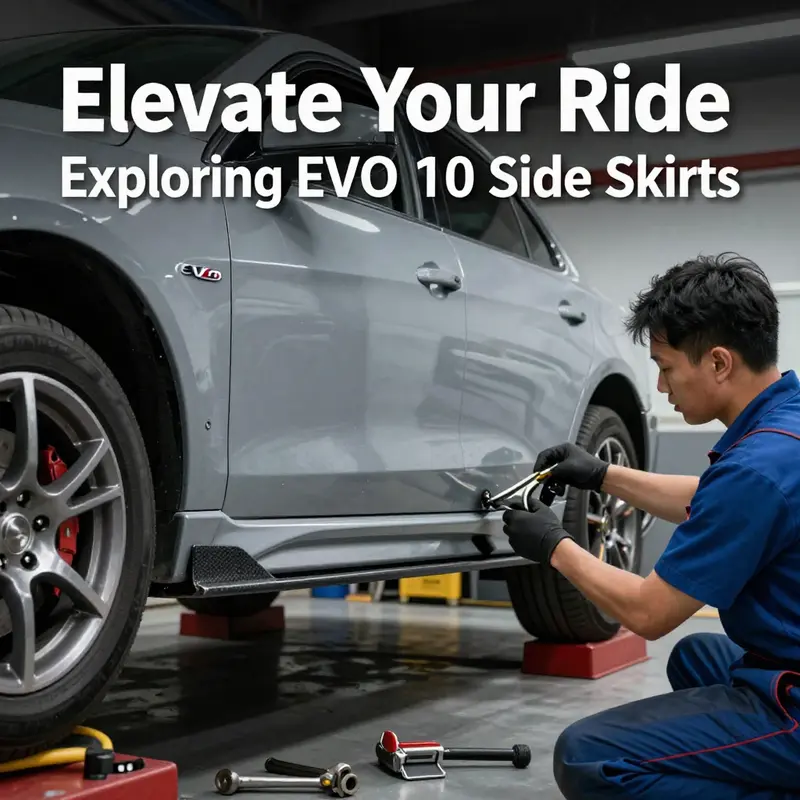
A discreet line along the lower flank can do more than just sharpen the visual silhouette of an Evo X. Side skirts, in their simplest form, are trim pieces that blend the line between wheel arch and rocker panel. In practice, they carry a dual purpose: to enhance the car’s stance and to influence how air travels around the body at speed. For the Evo X, the market offers two familiar routes—carbon fiber and fiberglass-reinforced polymer—each with its own set of virtues. Carbon fiber side skirts present the promise of lighter weight and a high-tech aesthetic, a combination that enthusiasts often associate with performance and precision. Fiberglass-reinforced side skirts, meanwhile, tend to be more accessible, offering durability and a straightforward finish that welcomes owner-driven customization, including painting and detailing. Regardless of material, the overarching goal remains the same: to create a cohesive side profile that complements the car’s aggressive cockpit stance while contributing, at least marginally, to aerodynamic behavior. The choice between carbon fiber and fiberglass is rarely about one being universally better than the other; it is about balancing weight, cost, finish, and maintenance in a way that harmonizes with the owner’s expectations for daily usability and track readiness. In practice, most Evo X side skirts sold on the market hover around a modest weight, commonly in the neighborhood of about three kilograms per unit. That figure may vary slightly with thickness, reinforcements, and the inclusion of air channels or vents, but it remains a useful benchmark for grasping how a component this size can influence overall vehicle dynamics without imposing a heavy penalty on weight distribution. The presence of air-driven features—whether they are simple scoops or more elaborate ducts—speaks to a core design principle: the side skirt should guide airflow in a way that reduces turbulence along the vehicle’s flanks and helps manage the high-pressure zone that forms near the rocker line at speed. When these elements are well integrated, the car’s visual language often communicates a more purposeful profile, one that signals performance even when the vehicle is standing still. The aesthetic impact is not merely cosmetic; it is a dialogue between form and function that drivers subconsciously register as a tangible sense of capability. The designs that perform best in real-world conditions tend to respect several unspoken rules. First, they align with the car’s existing lines rather than trying to force a new silhouette. Second, they preserve ground clearance and do not encroach on the underbody’s near-zero airflow regions that can influence lift. Third, they provide a robust attachment platform that resists the impact of road debris, curbing, and routine road abuse. Materials influence these considerations as well. Carbon fiber’s stiffness and lightness are beneficial for gains in performance-oriented builds where weight savings translate to improved momentum and braking feel. Fiberglass, by contrast, can offer greater impact resistance and a more forgiving surface that is easier to repair or repaint for owners who enjoy a more hands-on modification path. Both options now commonly feature integrated features designed to manage air movement, including subtle air channels or vents that help channel air along the rocker without creating harsh separation. In some versions, manufacturers emphasize an unpainted, raw fiberglass surface intended for customization—a canvas for owners who want a bespoke look that matches a particular color scheme or a bolder theme. The real-world decision, however, often boils down to a balance between how you intend to use the car, the climate you drive in, and the kind of maintenance you are prepared to undertake. The Evo X side skirt is more than a decorative piece; it is a component that must withstand occasional scrapes, the heat of sun exposure, and the occasional encounter with winter road treatment. A well-chosen kit will emphasize durability, offering reinforced mounting points and hardware that can resist loosening under dynamic loads. This is where the installation mindset matters just as much as the material choice. A careful, methodical approach to fitting ensures a snug, seamless integration with the car’s body. The area around the mounting points should be clean and free of old adhesive residues or corrosion. A clean surface is the first prerequisite for a durable bond, whether the skirt is bolted, screwed, or, where applicable, affixed with an adhesive backing. The alignment phase is equally critical. Pre-drilled holes should line up precisely with the chassis reference points, and the installer should verify that there is no binding or misalignment that could stress the plastic or composite during tightening. The fastening phase must respect the torque specifications provided by the manufacturer. Over-Torquing can crack a panel or deform its mounting tabs, while under-torquing can invite movement and squeaks at speed. The choice of fasteners—stainless steel bolts or screws, as recommended—also matters because the fastener material needs to resist corrosion and the tightening forces generated by road inputs. In some kits, there is an adhesive component as well. If a double-sided tape or adhesive backing is included, it must be applied with even pressure across the full contact surface after the side skirt is properly positioned. The goal is to secure not just the outer appearance but the integrity of the bond across temperature changes and road conditions. Finally, the verification step ensures that all fasteners remain secure and that the alignment persists after installation. Although it is tempting to view side skirts as a simple add-on, they demand a thoughtful, iterative approach. The maintenance side of the equation follows a parallel logic. Regular cleaning is essential to preserve the finish and prevent the build-up of grime, road salt, and environmental pollutants that can slowly degrade the surface and the mounting hardware. Gentle cleaning with mild soap and water keeps the finish intact, while avoiding abrasive cleaners or high-pressure wash methods that can mar the surface or loosen the bond at the edges. Periodic inspections should become a routine part of vehicle care, especially after off-road runs or rough pavement, when stones and debris can nick or crack the surface. If you detect any cracks, warping, or loosening at the mounting points, address the issue promptly. Delays can turn a minor blemish into a larger structural concern that compromises both aesthetics and performance. In colder climates, thermal expansion and contraction can place incremental stress on joints and fasteners. Seasonal re-tightening and inspection help preserve the intended aerodynamics and the crisp line along the rocker that the skirt was designed to emphasize. The maintenance philosophy thus becomes a disciplined practice: treat the side skirt as a living part of the car’s aero package rather than a disposable trim. Beyond the mechanical and maintenance considerations, the Evo X side skirt invites a conversation about how a car communicates its intent. The design language—whether it leans toward a minimalist, clean line or a more assertive, vented appearance—speaks to the driver’s expectations for performance. A well-integrated skirt should look like a natural continuation of the car’s silhouette, not an afterthought. For builders who value a tailored look, a wide version with two-piece fiberglass construction might be chosen to allow flexible painting and finishing. This approach makes it possible to customize the lower aesthetics to a wide variety of color schemes and body kits, enabling a personalized stance that still respects the vehicle’s original geometry. When considering installation, many builders appreciate the clarity of a bolt-on or screw-on approach because it offers straightforward replacement and serviceability. For those who prefer a cleaner underbody line or who want to experiment with adhesive-only solutions, some kits may include backing that adheres firmly to the body, provided surface preparation is meticulous. Regardless of the chosen path, the objective remains constant: to preserve structural integrity while achieving an improved, cohesive expression of speed and durability. For readers seeking practical guidance, there is a detailed installation manual provided by the broader community of Evo X enthusiasts and technicians. A careful review of that guide can illuminate the nuances of bolt alignment, torque sequencing, and the subtle interplay between adhesive and mechanical fastening that ensures a durable, weather-resistant bond over time. To connect this narrative with hands-on practice, consider visiting the dedicated Evo X side skirt page that showcases the range of materials, finishes, and fitment details that designers and fabricators weigh when curating a kit for a given car. For those who want to explore this topic further, a curated resource can provide additional insights on how to approach installation and adjustment in a way that respects both form and function. This balanced approach—combining thoughtful material selection with precise installation and proactive maintenance—helps ensure that the Evo X side skirt remains a reliable, visually compelling component for years to come. The focus is not simply a cosmetic upgrade but a carefully engineered enhancement that, when done correctly, contributes to the overall feel of the vehicle’s dynamics. Owners who invest in quality fittings and take the time to prepare the mounting area, align the panels with care, and follow through with proper torque and adhesive considerations will find the result is a side skirt that stays secure, looks deliberate, and supports the car’s aggressive stance without compromising daily usability or long-term durability. For a practical reference that walks through many of these steps, the installation guide linked through community forums offers a stage-by-stage look at common pitfalls and effective practices. And while the specific details will vary with the exact kit, the principles—cleanliness, precise alignment, secure fastening, and thoughtful maintenance—remain a reliable compass for anyone aiming to harmonize style with performance on the Evo X. If you want to dive deeper into the practical steps in a hands-on format, you can explore the Evo X side skirt page for more context on fitment and finish, which places this component within the broader ecosystem of Evo X modifications. lancer evo x side skirt. For a more technical, step-by-step walkthrough, consult the installation guide referenced in the broader Evo X community, which details torque specs, adhesive interaction, and post-installation checks that help ensure long-term reliability. External resources can complement this chapter by offering a deeper technical perspective on the interaction between side skirts and aerodynamics at various speeds. A well-regarded technical guide provides this kind of practical, vehicle-specific insight and can be accessed here: https://www.autozine.org/forums/topic/mitsubishi-evo-10-side-skirt-installation-guide/.
Carbon Alignment: EVO X Side Skirts, Authenticity, and the Craft of Modern Aerodynamics
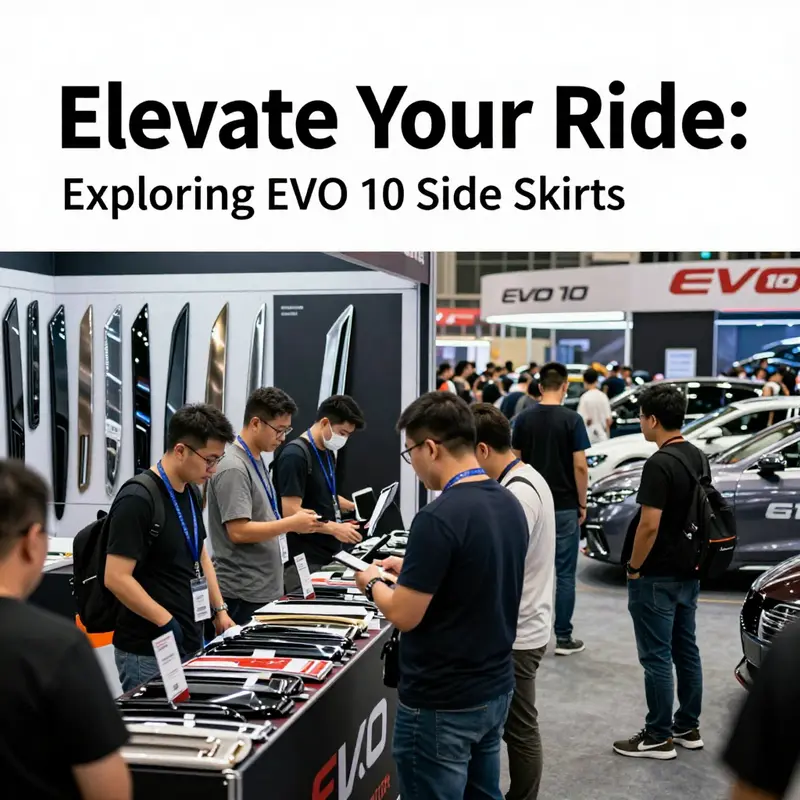
The side skirts fitted along the lower curve of an Evolution X speak more than mere style. They are a conversation between the car’s silhouette and the air that surrounds it. In the aftermarket scene, the EVO X side skirt has become a focal point for a broader tension: enthusiasts want visuals that shout performance while demanding durability, precision, and a sense of connection to the car’s storied heritage. The market has responded with a range of carbon fiber (CF) and glass fiber (FRP) options, each designed to alter the line of the body, to tighten the stance, and to hint at aerodynamics without overhauling the entire chassis. This is not a simple swap, but a calculated enhancement where material science, manufacturing craft, and visual impact converge to shape how the car reads on the street and on the track.
From a materials perspective, carbon fiber has become the dominant choice for fold lines and edge details because it blends lightness with a premium finish. A CF side skirt can appear almost seamless, its weave catching the light in a way that mirrors the car’s OEM lines while adding a subtly aggressive underside. The weight savings, while not always dramatic in every application, matter more when combined with a clean, integrated appearance that doesn’t require heavy bodywork or repainting to look complete. The appeal lies in a balance: you want a piece that looks like a natural extension of the factory design, but that communicates a refined, race-inspired intent. This balance helps explain why many buyers gravitate toward CF extensions that aim to preserve OEM proportions while offering a noticeable visual upgrade.
Quality is the currency in this market. Consumers increasingly scrutinize surface finishes, edge detailing, and the fidelity of the mounting points. A well-made CF side skirt should align with existing rocker panels, not just visually, but within the tolerances that ensure a true, factory-like fit. In practice, this means precise mold manufacturing, careful UV resistance, and a robust bonding or mechanical attachment system that can handle repeated exposure to wind pressure at speed and occasional street debris. When these elements come together, the result isn’t merely a cosmetic enhancement; it is a refined extension that respects the car’s geometry and contributes to a coherent, longitudinal rhythm along the body.
Consumer preference trends illuminate another layer of the story. Buyers are increasingly drawn to options that deliver an authentic appearance—an effect that makes the side profile look as if the car rolled out of a high-end factory lot rather than a street-side workshop. The emphasis on authenticity translates into a preference for carbon fiber extensions that mimic OEM geometry as closely as possible. Yet there is also a practical appetite for durability and value. The market rewards configurations that strike a middle ground: a high-grade CF weave and precise edge finishing, paired with a fitment that does not require extensive modification to the undercarriage or rocker panels. In this space, craft and precision engineering have become as important as the aesthetic.
One observable behavior among enthusiasts is the strong demand for components that offer direct fitment. People want a straightforward upgrade path that minimizes downtime and maximizes the chance of a showroom-like finish. When a carbon fiber side skirt is described as a direct fit, it signals more than compatibility; it signals trust in the engineering that underpins the piece’s contour, mounting points, and seal interfaces. This is especially relevant for EVO X owners who seek a cohesive side profile that integrates with existing doors, wheel arches, and mirrors. A direct-fit solution reduces the risk of gaps, distortions, or misalignment after installation, and it preserves the flow of the body line—an essential factor in achieving the desired visual impact.
The broader market narrative also highlights how buyers weigh cost against perceived value. While CF is the premium route, FRP remains an appealing alternative for those prioritizing budget-friendliness without sacrificing the immediate visual uplift. FRP side skirts can provide a sharp silhouette and a customizable finish that owners can tailor with paint or wraps. The choice between CF and FRP often comes down to the intended use and climate considerations: CF’s stiffness and lightness appeal to performance-minded owners, while FRP’s resilience and lower material cost attract casual tuners who want a striking profile sheet with fewer limitations on spray work and personalization.
Another factor shaping the market is the growing influence of online commerce. The availability of these components on major e-commerce platforms has democratized access to aftermarket aero parts. Buyers are drawn to products that align with the look of factory components but are available at a fraction of the OEM price. The digital marketplace also fosters a feedback loop: images, fitment videos, and user reviews provide practical insights into how a given skirt behaves in real-world installations and across a range of EVO X model years. As more references surface, buyers gain the confidence to pursue configurations that promise a factory-finish appearance without the premium tag associated with genuine OEM options.
Integration is not only about how the skirt sits when the vehicle is static; it’s also about how it interacts with the car’s aerodynamics and stance at speed. A well-crafted side skirt contributes to the visual impression of a clean, uninterrupted line along the lower body, which in turn can influence perceived stability and momentum as the car moves. The air deflection features that accompany some designs are subtle but important; they guide the airflow along the rocker panel to minimize turbulence along the underbody while preserving the overall silhouette. The most successful iterations respect the car’s geometry, rather than imposing a radically different profile. In other words, the best side skirts obey the language of the EVO X’s original design while modulating its presence just enough to convey a heightened performance readiness.
From a design perspective, the EVO X’s side-skirt dialogue often emphasizes a one-piece or two-piece construction that aligns with owner preferences for weight, paint options, and ease of installation. Some configurations are offered in a non-painted state, inviting customization by the owner’s chosen color scheme or wrap. This approach acknowledges that many enthusiasts seek to personalize their vehicles, not only to reflect their own taste but to demonstrate a commitment to quality workmanship that looks both purposeful and cohesive when finished. The best setups provide a predictable base that can be finished to match the rest of the body, turning the skirt from a simple add-on into a visible articulation of the car’s stance and personality.
A key element of the consumer experience is the perception of durability under pressure. The market recognizes that side skirts must endure the rigors of daily driving, occasional track sessions, and road debris. Materials are chosen for resilience as well as appearance. Carbon fiber, while light and strong, must be properly finished to resist cracking and UV degradation, particularly at the edge where impact risk is highest. Quality control during manufacturing, including edge detailing and bonding surface preparation, becomes as critical as the aesthetic. When a product delivers both a convincing OEM-like look and proven durability, it earns a place in the stable of trusted upgrades that owners repeatedly recommend to others.
Within this evolving ecosystem, the emphasis on craftsmanship continues to rise. Buyers increasingly compare surface finishes, paying close attention to the sheen of the CF weave, the uniformity of the resin, and the fidelity of the outer contour against the car’s body lines. Edge detailing—where the skirt meets the rocker panel and the undercarriage—receives particular scrutiny. A well-finished edge not only contributes to a refined appearance but also reduces the chance of moisture buildup or micro-damage that could compromise long-term integrity. As suppliers respond with higher tolerances and tighter quality assurance, the market moves toward products that feel built with the same care one would expect from OEM components. This is the moment when aftermarket parts cross from being simple upgrades to becoming extensions of the vehicle’s engineering narrative.
For EVO X owners who want a precise, factory-like fit while enjoying the sportier narrative of a lower, more aggressive stance, a fundamental principle remains: choose a product that respects the car’s geometry, offers robust mounting options, and provides a finish that endures. Those who seek to preserve originality while leaning into performance will gravitate toward carbon fiber options that mirror the OEM’s silhouette rather than those that merely look fast from a distance. In practice, this means evaluating how a skirt sits in relation to door seams, how the underside aligns with the rocker panels, and whether the attachment method preserves paint integrity over time. The effective result is a cohesive, purpose-driven side profile that communicates intent at a glance.
For readers who want a direct reference point as they explore options, there is a straightforward path to evaluate fitment and finish: review project galleries, assess tolerance charts, and compare edge detailing. These cues help separate truly well-made pieces from those that feel more cosmetic than functional. In a community where every marginal gain in aero balance can translate into a more confident drive, the attention paid to these details matters. The evolution of the EVO X side skirt story, after all, mirrors the broader arc of tuning culture—where aesthetics and engineering converge to celebrate a lineage that began with a car renowned for its performance heritage.
Internal link reference: for readers seeking a practical example of a direct-fit CF side skirt that aligns with OEM geometry, see the EVO X side skirt page. It illustrates how the line, weave, and mounting points come together to form a coherent upgrade rather than a standalone ornament. You can explore a representative listing here: lancer evo x side skirt. This reference helps connect the concepts discussed above with tangible, on-car outcomes that buyers often describe in reviews and install notes.
As the market continues to mature, the trend toward authentic styling, precise manufacturing, and durable finishes is likely to intensify. Suppliers who invest in better surface finishes, more accurate edge work, and tighter tolerances will be the ones customers remember when they look at their EVO X’s profile after a long drive or a late-night session on a back road. In the chapters ahead, the narrative will broaden to consider how these same standards influence the broader aero kit ecosystem, including diffusers, splitters, and underbody panels. The EVO X side skirt, in this context, becomes a touchstone for what aftermarket credibility looks like in a world where authenticity and performance sit side by side on the same line.
External resource: https://mitsubishiautopartsshop.com/lancer-evo-x-side-skirt/
Final thoughts
EVO 10 side skirts are more than just aesthetic enhancements; they represent a deeper commitment to performance and style. By understanding the materials, aerodynamic benefits, proper installation techniques, and prevailing market trends, business owners can better cater to the needs of automotive enthusiasts. This knowledge not only empowers informed purchases but can also enhance customer satisfaction in a competitive marketplace. Keeping abreast of these details will place your business in a prime position to succeed in the dynamic automotive aftermarket.