
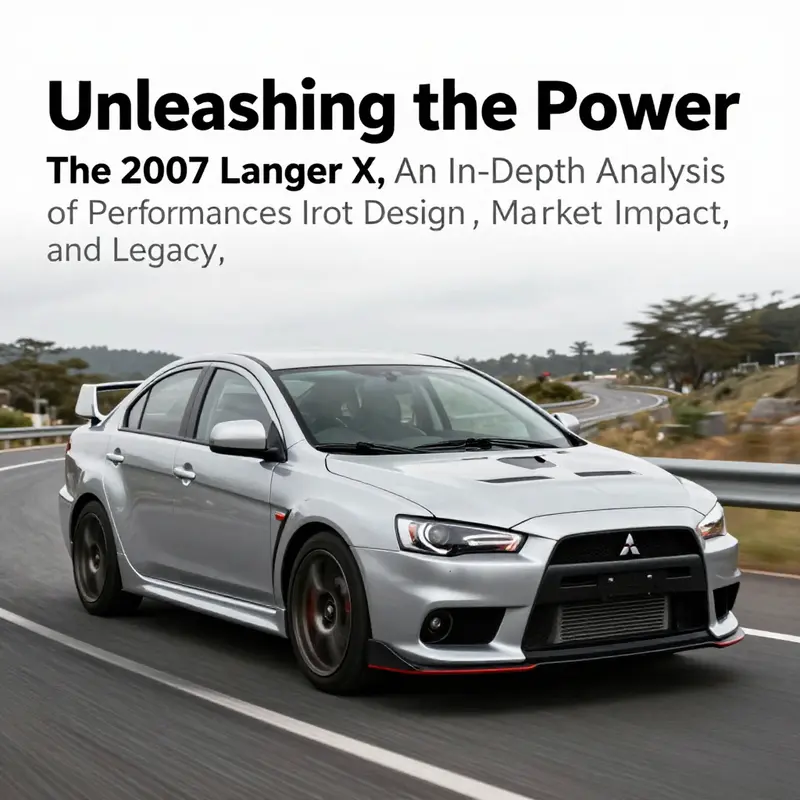
The 2007 Mitsubishi Lancer Evolution X, commonly known as Evo X, represents the pinnacle of Mitsubishi’s engineering capabilities, blending performance and design into an iconic model. For business owners, understanding the technical specifications, aesthetic features, market positioning, and historical significance of this vehicle can provide invaluable insights, whether for fleet management, automotive sales, or industry analysis. This comprehensive exploration will cover the Evo X’s impressive specifications and performance metrics, its distinctive aesthetics, user experiences that define its market position, and its influence on the automotive industry, enabling a well-rounded view of this remarkable vehicle.
The Last Sprint of an era: Unraveling the 2007 Mitsubishi Lancer Evolution X’s Precision, Power, and Purpose
When the industry spoke of a high-performance four-door, the chapter that followed the Lancer Evolution X (Evo X) did more than add a line item to a want list. It closed a long, relentless loop of rally-inspired sedans that bridged street legality and circuit temperament. The Evo X emerged at a moment when the automotive world was both celebrating and recalibrating the balance between raw speed and everyday usability. It carried forward the DNA of its predecessors while integrating a modern philosophy of traction, torque, and torque management that could be convinced only by track time and careful reading of its data sheets. The 2007 introduction in Tokyo and subsequent late-2007 official release marked not just a new badge on the hood but a redefinition of how a performance sedan could be both acute in function and coherent in form. It wore a chassis tune and a powertrain calibration that sought to deliver grip and confidence in equal measure, a goal that would come under the microscope of enthusiasts who could feel the difference between a car built to dominate a slalom versus the same chassis adapting to a public road with composure.
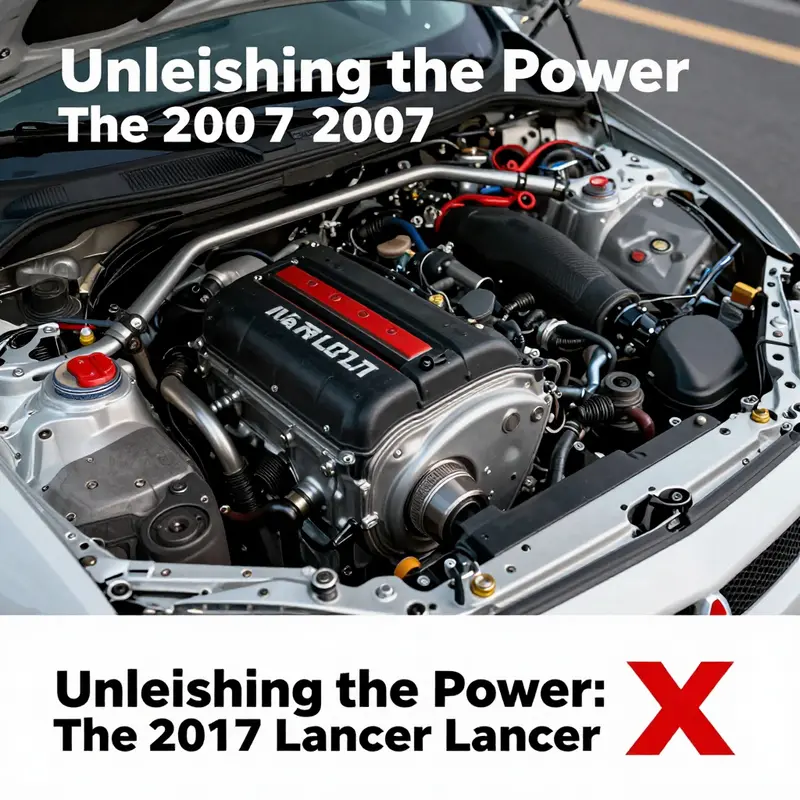
From the engine room the Evo X presented a compact, highly stressed 2.0-liter inline-four turbocharged powerplant that had evolved toward higher efficiency without surrendering the urgency of acceleration. The engine family, known for its compact architecture and variable timing strategy, was tuned to deliver a practical yet potent envelope of outputs. Officially the power figure landed around the 280-horsepower mark, with torque peaking in a broad band that could reach into the 420 Newton-meters range depending on market and calibration. Yet, the spec sheets have carried a veil of variability: some sources list torque as 422 Nm, while others cite 366 Nm in certain markets or iterations. What remains clear is that the engine’s behavior was defined not by a single peak moment but by a wider appetite for sustained acceleration and rapid throttle response. The 2007 Evo X was not merely about peak numbers; it was the orchestration of engine, intake, cooling, and exhaust flows to sustain performance under load, with a careful balance of surge and control.
The transmission options mirrored the dual personality of the car. For drivers who valued immediate control, a five-speed manual offered a direct, tactile connection to the engine’s torque curve. It rewarded precise shifting with a chassis that demanded discipline and offered a raw, unfiltered sense of speed. On the other hand, the six-speed dual-clutch transmission signified a different philosophy: rapid, nearly seamless gear changes that minimized the interruption of torque delivery and kept the car in its power band during aggressive corner exits. The steadiness of the six-speed unit did not erase the thrill of a manual’s involvement; instead, it amplified the Evo X’s ability to stay in the right gear during complex track sequences, a practical advantage on longer laps or daily commutes that demanded brisk overtakes without the typical manual fatigue.
What tied the powertrain to the chassis was an all-wheel-drive system conceived as a complete, integrated dynamic package. The Evo X employed a sophisticated active all-wheel-control approach that distributed power across the axles and modulated the front-to-rear torque split with a sense of purpose. At the heart of this was a central differential whose role was to adjudicate front and rear traction in real time, translating throttle inputs into measured, predictable responses. A rear differential that could bias torque electronically further sharpened the car’s cornering characteristics, allowing it to rotate with a degree of precision that felt almost surgical. This was not a system designed merely to grip; it was designed to communicate with the driver through feedback that translated into confidence on a variety of surfaces, from damp mountain grades to damp asphalt in high-speed straights. The careful integration of traction control, stability systems, and brake-based handling strategies produced a balance that many later performance sedans would chase but not always replicate.
On the brakes and suspension, the Evo X did not go light. The chassis engineers reinforced the vehicle with a braking system that emphasized high-temperature stability and fade resistance. The front pair employed large ventilated discs with high-performance calipers that could resist thermal saturation under track use, while the rear paired smaller discs with calipers tuned to the same performance philosophy. The suspension repertoire leaned toward a tuned, performance-oriented setup rather than a luxury-firm compromise. Dampers and spring rates were chosen to keep the car flat in mid-castor acceleration while preserving enough compliance to handle rough public roads without transmitting fatigue-inducing harshness to the occupants. This setup, along with an optimized aero kit that included a distinctive shark-nose front fascia, a broad lower intake, and a trailing edge diffuser, helped yield predictable aerodynamic downforce and stable behavior at speed. Together with the car’s relatively compact dimensions and a low center of gravity, the Evo X gave drivers a tangible sense of where the car was strong and where it needed delicate steering inputs to maintain traction through a corner.
If the Evo X was a feat of engineering discipline, its dimensions also spoke to a philosophy of mass efficiency. The numbers—roughly a mid-sized footprint with a long wheelbase, a low roofline, and a squared-off stance—translated into a purposeful balance. The front-to-back weight distribution, aided by a relatively light aluminum engine block and a thoughtfully engineered body structure, enabled a chassis that could corner with confidence rather than drift away from the intended line. The weight, often cited around the 1,520-kilogram mark, represented a compromise: heavy enough to feel planted on a racetrack but light enough to respond quickly to driver input as soon as the throttle pressed beyond the 4000 rpm mark. The Evo X’s dimensions and mass were not merely numbers; they were the physical translation of a design aim: to deliver track-level performance on roads that public sedan buyers encounter every day.
Inside, the cabin spoke a language of focus. The interior’s dark palette and restrained silver accents reinforced the car’s performance character. The driver’s cockpit offered a clear, functional arrangement: a stepped center stack forming a slightly elevated console, a three-spoke steering wheel with ergonomic paddles, and twin instruments that framed the tachometer’s redline—an indicator that the engine’s red bar beckoned at around 7000 rpm. The front seats, designed for lateral support during aggressive cornering, used materials chosen for grip and comfort. The rear seats and rear space reflected the car’s performance intent more than a family-sedan practicality, yet the Evo X remained usable as a daily car for those who valued weekend track or canyon runs as much as weekday commutes. The blend of driver-centric ergonomics and carefully chosen materials created a sense of purpose without a compromise on essential comfort features.
Mated to the chassis and powertrain were two distinct trim philosophies, often labeled in the market as base and high-performance variants. The entry-level version pursued a balanced equation of performance and price, while the higher-end variant packaged a more aggressive set of components. The latter included features such as a stiffer, performance-oriented suspension, forged wheels, and more assertive braking hardware. Calibrations also leaned toward a taut, track-ready feel that rewarded quick, decisive inputs with immediate responses. On the interior, while the core layout remained driver-focused, the higher-grade models offered more sophisticated suspension calibration and braking performance that culminated in a more assured highway and road course demeanor. The Evo X’s approach to specification reflected a philosophy that performance is not merely about peak numbers but about maintaining high performance as speed grows and road conditions vary.
From a historical vantage point, the Evo X’s approach to engineering was deeply interwoven with its purpose within the Lancer Evolution lineage. As the tenth and final gasoline-powered iteration of the series, it carried a sense of culmination. It stood as a benchmark for what a high-performance sedan could deliver when guided by a coherent, integrated control theory of power, grip, stability, and brake performance. The many details—from the engine’s flexible torque band to the advanced torque distribution through the AWD system, to the front-end aerodynamics and weight-conscious design—were not incidental features but essential elements of a single, coherent strategic philosophy: a car that could be both a track-day weapon and a confident daily driver when driven with care and intention. It is precisely this synthesis that makes the Evo X a meaningful waypoint in the broader story of performance sedans, representing a mature articulation of a brand’s racing heart into a road-going machine.
As the years moved forward, the Evo X remained notable for being the last of its kind before the model line paused in 2015. The shift away from this form factor and drivetrain configuration signified more than a change in fashion; it marked the end of a particular era of four-wheel traction, manual and dual-clutch transmissions, and a philosophy of relentlessly tuned all-wheel-drive performance. The Evo X had proven that a sedan could swallow long stretches of mountain roads, swallow laps on a circuit, and still carry passengers with a degree of everyday usability. In the end, its engineering, design gestures, and performance envelope told a simple truth: the appetite for a track-oriented vehicle could be reconciled with the realities of daily life, even if the era itself was about to pass into history.
For readers who want to explore a tangible example of the Evo X’s aero and weight-saving ambitions, there is a carbon fiber component option that demonstrates how the model’s lightweight, performance-focused ethos extended beyond the engine and suspension into the bodywork. The hood, crafted from lightweight carbon fiber, reflects a broader trend toward reducing mass in key areas while preserving structural integrity and heat management. The hood’s design is a small but telling chapter in the Evo X’s broader narrative: every detail was chosen to extract more grip, more throttle response, and more confidence under load. That mindset—every component a potential performance lever—remains a useful lens through which to view the Evo X, whether one measures its acceleration, cornering balance, or the way it communicates with a skilled driver on a challenging road.
External and internal references keep this chapter anchored in both data and practice. For those seeking a deeper dive into chassis tuning, mass distribution, and track-oriented behavior, a trusted reference provides a detailed cross-section of the Evo X’s specifications and evaluations. This chapter’s numerical anchors—power around 280 hp, torque in the 420 Nm vicinity, a 0-100 km/h time in the mid-4-second range with dual-clutch, and a top speed near 240 km/h—are consistent with the car’s documented performance envelope while acknowledging market-specific variations. While some sources differ on exact figures, the overall narrative remains: the Evo X was engineered to feel precise, predictable, and eager to exploit a driver’s inputs on a circuit or a mountain pass. For a broader technical verification, refer to the external resource provided at the end of this discussion.
To connect the Evo X’s chassis and aero ambitions with a tangible aftermarket example, one can explore a carbon-fiber hood option designed for Evo X—a choice that exemplifies the philosophy of lightness and heat management. This component, available through a catalog of aftermarket parts, illustrates how the car’s performance personality extends into the physical shell that encases its aggressive powertrain. The hood is not merely a cosmetic piece; it is a deliberate engineering choice aimed at reducing mass and improving heat dissipation under high-load conditions. Its presence in the Evo X ecosystem highlights how enthusiasts pursued incremental gains across a spectrum of parts, from engine internals to body panels, in pursuit of a more responsive, track-ready machine. With the car’s final year in active production, these kinds of modifications stand as a testament to a community that valued engineering precision and shared knowledge about how to extract maximum performance from a well-sorted four-door sedan.
In sum, the Evo X of 2007 embodies a moment when performance engineering aligned with a disciplined design philosophy: the result was not a single standout trait but a coherent, driver-focused whole that could feel at home on a race track while remaining usable as a daily driver. Its powertrain, drivetrain, chassis, and aero package worked in concert to deliver a vehicle capable of delivering the thrill of high-speed engagement and the stability to redeem the driver’s confidence through every corner. The Evo X did not simply push performance onto the road; it invited the driver to explore performance as a continuous dialogue between grip, throttle, and steering—an invitation that still resonates with enthusiasts today. External reference: https://www.dongchedi.com/auto/series/12382
鲨鱼鼻下的速度语言:2007款Lancer Evolution X 外观与内饰的驾驶诗篇
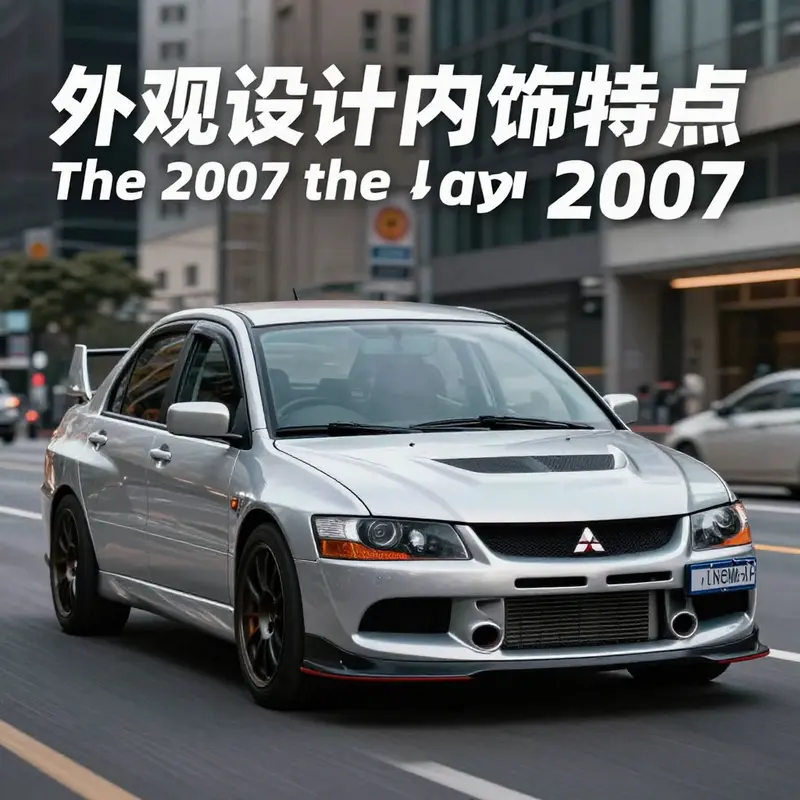
外观设计方面,这款车的视觉冲击力来自一组经过深思熟虑的细节组合。前脸的核心是标志性的鲨鱼鼻造型,它以一个较大的梯形进气格栅为中心,内部采用斜织菱形网格样式。这种网格不仅提升了进气效率,还在视觉上强化了前端的锋锐感。引擎舱上方,三个功能性开口并列分布,承担热管理与进气的双重职责,强调了高性能发动机在高负荷下的散热需求。前保险杠的两侧设计了导风槽,专门为刹车系统的散热服务,在激烈的赛道式驾驶中帮助维持刹车热衰减的控制力与响应速度。前灯组采用透镜结构,搭配氙气雾灯与镀铬饰条,夜间行车的照明与科技感并行。车身轮廓以低矮紧凑为基调,细腻的线条在前后轮拱处自然扩展,宽体套件在部分版本中更加显著,轮距的扩展不仅提升了直线稳定性,也让高速过弯时的姿态更可信。高配版本通常采用亮眼的18英寸轮毂,搭配高性能轮胎,轮毂与轮胎组合在降低不必要的质量传递的同时,提升了路面抓地力与转向响应。尾部的排气布置采用双出式设计,金属尾管的轮廓线条与尾部扩散器共同强调了运动气质与排气效率的平衡。尾部扰流板与扩散器的组合在高速行驶时产生有效下压力,这使得后段在高速巡航时更稳健。对潜在改装的爱好者来说,宽体套件和进气口设计为高速稳定性与视觉冲击力提供了空间。对外观语言的深入理解,往往也要结合车身材料与结构设计的整体考量。此时,碳纤维部件的使用与相关碳纤维组件的开发也成为热议话题,相关信息可以在特定的部件页面中找到。
对于内饰的描述,则把焦点放在驾驶者的直接体验上。内饰以黑色为主,辅以银色点缀,营造出冷静而激进的氛围。中控台的阶梯式设计让功能区域一目了然,上一层是信息显示与音响控制区,下面是空调控制区,操作逻辑清晰且便于驾驶者在快速变线或高强度弯道中保持专注。前排座椅被设计为具有高侧支撑的运动型座椅,材质选择注重摩擦力与包覆性,确保在激烈操控时驾驶者的坐姿稳定。座椅和方向盘的组合使得驾驶者在进出弯和中段提速时都能获得良好的反馈,提升了对车辆的掌控感。方向盘为平底三辐设计,包覆性良好,配合换挡拨片,驾驶者可以在弯道中快速调整动力输出,保持对车身姿态的直观感知。仪表盘采用双筒并置的设计,转速表在7000转/分钟处进入红区,与发动机高转速输出的特征相呼应,增强了对扭矩曲线的直观理解。中控下部的空调控制区的旋钮与按钮布局简洁,触感与反馈清晰,即便在动感驾驶下也能迅速完成调控。
在声学与舒适性方面,制造工艺也体现了对驾乘体验的重视。通过在前围加装高密度隔音材料以及使用双层密封条,车内在高速行驶中的噪声被有效控制,座舱的静谧性提升,驾驶者能更集中地关注路面信息与车辆的反馈。这种平衡不仅提升了日常使用的舒适性,也让高强度驾驶时的疲劳积累得到一定程度的缓释。配置方面,2007款 evo x 提供两种核心版本,分别定位为入门与高阶。入门版满足日常使用和性能体验的综合需求,而高阶版则在传动系统、轮毂材料、制动组件以及悬挂系统等方面进行了强化,进一步提升了车辆在极端工况下的稳定性与响应速度。这样的分级设计,使得同一代车型能够服务于从爱好者到职业赛道使用者的多样需求,体现了系列在性能与实用之间的巧妙取舍与平衡。
作为系列中的终章,EVO X承载了对燃油机时代的致敬与告别。它在设计语言、工程实现和应用场景上都呈现出一种成熟的集成性:外观与空气动力学的协同、车身结构的刚性与安全性、以及内饰的人机工程学都以高度统一的逻辑呈现。正因如此,2007款 Evo X成为了后来者回溯高性能四驱轿车时不可忽视的一段历史。它既是对速度美学的一次完整展现,也是对驾驶者与机器之间沟通方式的一次深刻探讨。在时代的变迁中,这种以人为本的工程美学依然具有强烈的现实意义,因为高速驾驶的乐趣本质上仍然来自人与车之间清晰而直接的对话。
如果你对车身部件的细节与材料选型有更深的兴趣,某些具体部件的示例可通过前述的碳纤维相关配件页面获得直观的了解。也许你会在站点的不同板块发现自己偏好的改装方向,而这一切都在为理解EVO X在其时代所处的位置提供线索。外观和内饰的综合呈现,让这台车成为对驾驶者的一次邀请:亲历其境,感受空气在前脸处奔涌、车身在转弯时的微妙姿态,以及驾驶者与机器之间因细腻设计而产生的紧密对话。
在整段叙述的末尾,关于你可能关心的更多背景信息,官方资料提供了更完整的框架。通过官方页面与车系的技术文档,可以看到这代车型作为整条系列的收官之作,在工艺、材料选用、以及操控技术方面的讲究都被集中体现出来。这种从空气动力学到车内人机工程学的一体化设计,成为后来者效仿的对象,也是许多热爱高性能驾车人心中的理想模板。对追求极致驾驶体验的人们来说,2007年的 evo x,始终是一个值得研究、值得回味的篇章。更多关于官方信息的参考可以在官方 Evo X 页面获得完整的技术与市场定位的阐述: https://www.mitsubishi-motors.com.cn/vehicles/lancer-evolution-x/ 。
Evo X 的市场角色与车主声音:2007 年 Lancer Evolution 的定位与长期吸引力

The tenth-generation Lancer Evolution, launched to the public in late 2007, carved a clear niche in the compact performance segment. It was conceived as the distilled essence of rally-derived engineering for road use. Its positioning rested on three pillars: razor-sharp handling, turbocharged powertrains tuned for usable thrust, and an all-wheel-drive architecture that delivered repeatable performance in varied conditions. Those pillars shaped not only Mitsubishi’s marketing language, but also how enthusiasts and everyday drivers experienced the car over the following decade.
Buyers targeted by the Evo X were not casual motorists seeking comfort alone. They were drivers who valued tactile feedback, who expected a chassis to reward inputs, and who wanted technology that amplified rather than masked driver skill. The car’s appeal was therefore double-edged. On one side it offered the sophisticated integration of active differentials and torque vectoring that modern drivers appreciate. On the other side it preserved a mechanical immediacy, especially in manual-transmission examples, that enthusiasts describe as pure and unfiltered. This combination made the Evo X attractive to weekend track-goers, spirited canyon drivers, and owners who wanted a capable daily with genuine performance pedigree.
From a market perspective, the Evo X sat among a small cohort of compact sport sedans that prioritized driving dynamics above lavish luxury. Its competitors included performance variants from other manufacturers, yet the Evo X’s WRC heritage gave it a credibility hard to match. Marketing framed it as a car for the educated enthusiast — someone who understood the value of torque distribution, differential behavior, and chassis balance. That narrative was supported by tangible hardware: a modern 2.0-liter turbocharged inline-four, a sophisticated all-wheel-drive system, and a choice of focused drivetrains including a traditional manual and a dual-clutch transmission for those who preferred rapid shifts.
User feedback across markets settled into consistent themes. Owners praised steering feel and chassis rigidity, citing confidence when trunking through technical corners. Drivers frequently highlighted the car’s willingness to be driven hard day after day. The gearbox choice mattered: manual variants were colloquially called the “drivers’ cars,” cherished for the engagement and control they provided. Conversely, the dual-clutch option drew commendation for speed and consistency, and for extending the car’s appeal to drivers who valued ease of use alongside performance. Both configurations, however, benefited from the car’s central torque management system, which kept the power useable rather than simply overwhelming the rear tires.
Power delivery and engine character were also frequent topics in owner discussions. The factory-tuned turbo engine delivered strong midrange torque, which translated into brisk real-world passing performance. Many users appreciated this characteristic more than peak horsepower figures. It made the car feel responsive in everyday scenarios and satisfying on twisty roads. Yet owners also warned that extracting higher power reliably required investment. Turbocharged engines need careful attention to heat management, fueling, and tuning. As a result, maintenance and upgrade costs formed a recurring note in community feedback. Enthusiasts accepted those costs as part of ownership, but prospective buyers needed to budget accordingly.
Reliability impressions were nuanced. The Evo X was generally robust when maintained to schedule and when modifications were conservative. Still, high-mileage examples or those subjected to sustained track abuse showed wear on drivetrain components and required replacement of parts not common to mainstream sedans. Brake systems, clutch assemblies, and some electronic control units were items that owners replaced more often than average. The cost and availability of these parts influenced buying decisions in the used market. Additionally, specialist service knowledge was a factor: owners often relied on independent shops with performance experience, rather than general dealers, to maintain the car’s dynamic integrity.
Resale value and collectibility evolved in an expected pattern. Initially, the Evo X depreciated like most mainstream cars. Over time, however, scarcity and legend boosted values. Enthusiast demand for well-kept examples, especially those with factory performance options, elevated prices on the secondhand market. Among the variants, higher-trim models and those with manual transmissions achieved premium valuations. This trend reflected not only performance differences but also emotional value. Buyers were paying not just for hardware, but for the experience and the model’s place in the brand’s performance lineage.
Community culture became one of the Evo X’s strongest assets. Owners formed clubs, track-day groups, and online forums where they exchanged setup tips, maintenance guides, and modification strategies. That collective knowledge reduced the barrier to ownership for new buyers and created an ecosystem for sourcing parts and advice. Aftermarket suppliers mirrored this energy with components that ranged from subtle chassis upgrades to comprehensive powertrain enhancements. The availability of both OEM-style replacement parts and performance upgrades meant owners could personalize the car across a wide spectrum, from understated daily builds to full-race conversions.
Practical considerations tempered the praise. Fuel consumption, cabin noise, and ride firmness were tradeoffs buyers accepted for performance. The hatch’s or sedan’s packaging did not prioritize rear-seat luxury. For families seeking comfort or quiet refinement, the Evo X felt overtly purposeful. Still, many owners saw those traits as virtues, signs the car had not been diluted to chase mainstream comfort metrics. Insurance premiums and fuel costs added to ownership expense, and prospective buyers often factor these into their purchase calculus.
Service history and modification level strongly influenced buyer confidence. Clean, stock examples with documented maintenance histories were highly desirable. Cars with sympathetic, well-documented upgrades also commanded attention, as those builds suggested knowledgeable stewardship. Conversely, poorly tuned or recklessly modified cars depressed asking prices and introduced uncertainty about hidden damage. That dynamic made provenance a core part of the Evo X’s market story.
The dual identity of the Evo X — both as an accessible performance sedan and as a specialist enthusiast icon — shaped long-term demand. Collectors valued low-mileage, original-condition cars for their historical significance. Tuners and drivers prized well-sorted platforms for the potential they offered. This split broadened the market. It also meant that, even years after the model left production, good examples continued to attract buyers willing to pay premiums for condition and originality.
Aftermarket support also influenced the model’s lasting appeal. A healthy supply chain of replacement parts, performance upgrades, and restoration components made long-term ownership feasible. From lightweight wheels and carbon fiber hoods to upgraded brake systems and engine management hardware, the ecosystem allowed owners to tailor cars to personal goals. That availability sustained interest among both weekend drivers and more ambitious builders, keeping the model alive in motorsport and hobbyist circles.
When considering a purchase, buyers weigh several practical signals. A consistent service record, original drivetrain components, and an absence of crash history rank highly. The transmission choice affects both driving character and resale value. Prospective owners factor in the availability of specialist mechanics and the cost of routine services. For those intending to modify, the presence of previous upgrades and the quality of installation matter greatly.
Across regions, regional tastes shaped the Evo X’s reception. In markets with variable weather, the car’s all-wheel-drive competence made it a year-round performer. In climates favoring summer driving or track work, owners often pursued suspension and brake upgrades earlier. These regional differences enriched the overall feedback pool and provided useful reference points for buyers evaluating used examples from different locations.
The Lancer Evolution X therefore occupies a complex but coherent market position. It was a purpose-built performance sedan, aimed at people who prioritized driving engagement. Its strengths — dynamic balance, torque-rich engine, and advanced torque-splitting AWD systems — earned it sustained admiration. Its weaknesses — higher running costs and a firm ride — were accepted by owners as the price of authenticity. Over time, scarcity and community devotion elevated its status, ensuring that the 2007-generation car remains a sought-after model among enthusiasts and collectors.
For anyone considering an Evo X today, the most valuable insights come from owner experience. Real-world feedback emphasizes the importance of provenance, consistent maintenance, and realistic expectations about running costs. Where those elements align, the car rewards drivers with a raw, focused experience that few modern cars deliver. For the market at large, the Evo X’s story is not just about numbers. It is about the lasting appeal of a vehicle that put driving at the center of its design, and kept that promise through both showroom years and the long afterlife on roads and tracks.
Reference: Motor1 review and technical summary provide a thorough contemporary overview of the model’s parameters and market context. (https://www.motor1.com/news/389543/mitsubishi-lancer-evolution-x-review/)
Related internal resource: owners and modifiers often seek lightweight hoods for improved cooling and weight savings, such as the brand-new-original-carbon-fiber-bonnet-hood-for-mitsubishi-lancer-evo-x available through specialist parts channels (https://mitsubishiautopartsshop.com/brand-new-original-carbon-fiber-bonnet-hood-for-mitsubishi-lancer-evo-x/).
Turning Point in a Legend: The 2007 Evo Lancer and the Techno-Shift That Redefined a Performance Heritage
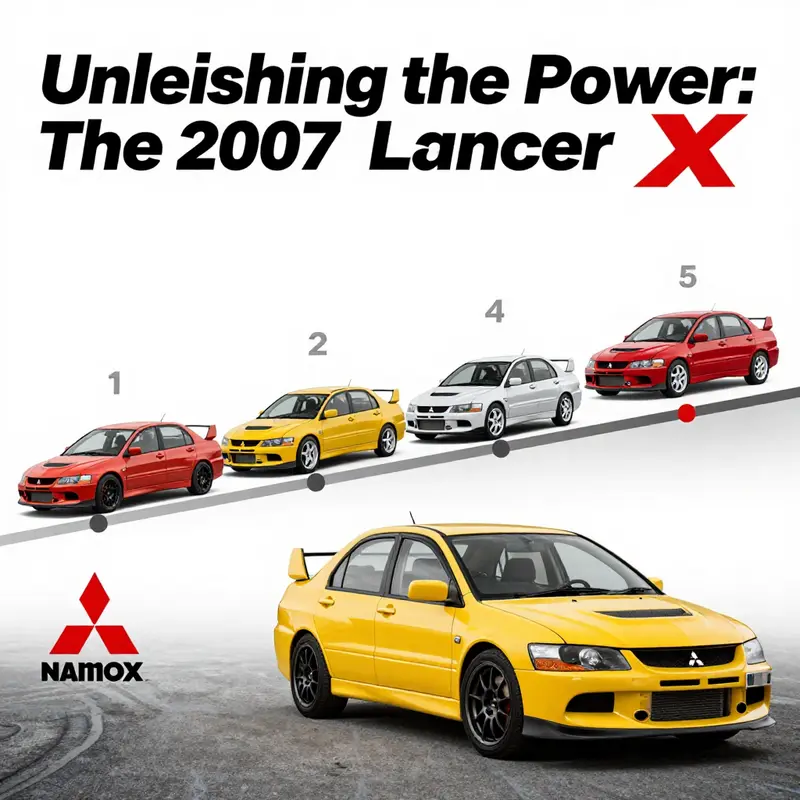
When the Tokyo Motor Show welcomed Mitsubishi’s tenth-generation Lancer Evolution with attention in 2007, it did more than introduce a new model. It announced a deliberate redefinition of what a rally-bred sedan could be in the era of high-tech electronics and global market demands. The Evolution X was not merely a facelift or a measured refresh; it was a complete reimagining built on a fresh chassis philosophy and a new engine family. In the years that followed, this car would be remembered not just for its speed and grip but for the way it bridged the raw, unfiltered aggression that defined the lineage with a modern, electronically integrated approach. From the first official release in late 2007 to its eventual cessation in the mid-2010s, Evo X stood as a monument to engineering ambition and the cultural shift that accompanies a turning point in automotive mythos. Its story threads through the rally past, the showroom present, and the quiet, almost ceremonial end of a legend that refused to be merely nostalgic.
At the heart of Evo X’s transformation was a bold departure in propulsion. The new 2.0-liter turbocharged inline-four, code-named 4B11T, abandoned the iron-block tradition that had underpinned several generations of performance engines. This was not a cosmetic change. The engine was aluminum, lighter, and designed with heat management and rapid response as central tenets. While the peak horsepower remained near the 290s, the gains lay in weight reduction, improved thermal efficiency, and a more immediate throttle feel. The engine’s redline did not suddenly jump into the stratosphere, but the engine’s character shifted—more willing to rev cleanly, with a torque curve that could be coaxed into action earlier and more consistently across a broader band. In practice, that translated into faster acceleration in everyday driving and more predictable behavior under the demanding conditions of high-speed laps and performance driving on track days.
Mitsubishi’s engineering team did not stop at the engine. They introduced the S-AWC, or Super All-Wheel Control, a package that existed not as a single device but as an integrated philosophy of chassis control. This system combined electronic control with a suite of mechanical differentiators, sensors, and distribution strategies that allowed the car to balance grip, cornering aggression, and stability in a way that felt almost prescient for the era. The AYC rear torque vectoring, the ACD central differential, and the electronic inputs to braking and suspension work in concert to deliver a sensation of plantedness that is difficult to imitate in a car of its size and weight. It is easy to describe these features in textbooks, but their real value appeared when a driver asked Evo X to negotiate a bend at speed and the car answered with confident steering feel and a respectful but relentless push toward the apex. The integration of these systems through a variety of drive modes created a tapestry of traction control that felt both precise and adaptive, a crucial step in moving performance sedans away from the days when raw mechanical grip alone dictated outcomes.
Transmission choices reflected a pragmatic intent to broaden the car’s appeal without diluting its performance. Evo X offered a traditional five-speed manual for purists, who relish tactile engagement and the instant feedback of a well-judged shift. But Mitsubishi charted a more modern course with a six-speed dual-clutch transmission, the TC-SST, which brought rapid, seamless gear changes and a level of driveability that could ease the car into everyday use. The availability of a DCT option was emblematic of a brand that understood the market’s evolving expectations: performance could and should coexist with practicality. For a brand historically celebrated for its road-race DNA, Evo X’s transmission strategy signaled a willingness to blend competition-grade technology with the realities of daily driving. In this sense, the 2007 model year helped the Evolution lineage shed some of its singular, almost ritualistic focus on the manual as the only serious performance tool, while still preserving the essence that made the name famous among enthusiasts.
The chassis and suspension architecture complemented the powertrain philosophy with a level of sophistication that made the car feel both agile and composed. The platform’s stiffness, the tuned suspension, and the adaptive dampers worked in unison to deliver a balance that could be felt in the car’s steering response and its ability to maintain a narrow line through corners. The steering itself offered a precise, communicative feel that invited the driver to push just a little further, not through weighty bravado but through an almost telegraphed sense of what the car would do next. On the outside, the Evolution X did not merely look aggressive; its silhouette and aero features served functional purposes. The shark-nose front end, a large trapezoidal intake, and heat-releasing vents on the bonnet spoke to a design language that married aesthetics with cooling and airflow management. The result was a car that looked as if it could be pressed into service as a wind tunnel testbed during a race weekend and still remain comfortable as a daily driver on a crowded city street.
Within the cockpit, Mitsubishi preserved the intensity that had defined earlier Evolutions while introducing a refined environment that could accommodate longer stints behind the wheel. A black interior with silver accents underscored the sense of purpose; the instrument panel’s twin-tube design, with a redline tick just past 7000 rpm, pointed toward the car’s performance DNA while still acknowledging the ergonomic realities of a modern cockpit. The RECARO seats, standard on the higher-spec variants, offered substantial lateral support and grip, making it possible for a driver to stay locked into position during aggressive cornering. The overall ambience betrayed a careful attention to detail: materials were durable but not austere, and the layout of controls rewarded intuitive use rather than esoteric ritual. In such a cabin, the engineering achievements felt less like a collection of features and more like a coherent philosophy—a belief that speed should be maintainable, predictable, and accessible to those who respected its demands.
From a materials and parts perspective, Evo X did not merely reposition an old engine within a new chassis; it redefined how the car could be built and supported in a broader market. The MR variant, in particular, showcased a higher degree of performance hardware that signaled Mitsubishi’s intent to push the boundaries of what a performance sedan could deliver in production form. The six-speed TC-SST, the forged BBS wheels, the glossy red Brembo calipers, and the Bilstein dampers all spoke to a desire to couple the thrill of the race track with the predictability of a road car. The MR’s suspension tuning and spring choices—along with the engine’s revised mapping and turbo response—painted a picture of a car that could be driven hard all day and still remain civil enough for a daily commute. It was a rare balance that listeners and readers would remember long after the initial launch buzz faded.
Yet Evo X’s story cannot be separated from its place in the broader Evolution lineage. It is widely acknowledged now as the final gasoline-powered note in a series that began decades earlier, a finale that did not erase what had come before but rather crystallized its essence into a modern expression. The car’s production run, ending years later as Mitsubishi restructured its lineup, added a layer of cultural gravity to its technical narrative. Enthusiasts fondly recall the sense of occasion surrounding each new release—especially the X—because it felt like a culmination of tireless development and rally-inspired experimentation. The decision to end the Evolution line in 2014, with Evo X as the last petrol edition, turned the model into a kind of automotive relic, a powerful reminder of an era when high-performance four-wheel drive was openly married to an engineer’s experimental zeal. In retrospect, Evo X was not only about speed or cornering prowess; it was about capturing a moment when technology and tradition intersected under the umbrella of a storied brand.
This convergence of old and new also carried a certain bittersweet resonance for the car’s community. There were admirers who felt a pang at the idea of moving away from the familiar, proven powertrain formulas of the past. They argued that the loss of the long-running 4G63T engine marked a departure from a ritual that had formed the backbone of Mitsubishi’s performance storytelling. Yet those same enthusiasts could not deny the undeniable value of the new approach: aluminum construction reduced weight, the 4B11T delivered improved thermal efficiency and throttle response, and S-AWC created an integrated system capable of helping a driver stay on track even when the going got slippery or hot. The car’s broader market strategy—offering both a conventional manual and a sophisticated dual-clutch option—made the Evo X accessible to a wider audience without diluting its motorsport persona. The balance was delicate, and the car managed it with a clarity that remains striking even years later. In this sense, Evo X did more than sell cars; it taught a generation of drivers to think—themselves and the car—as an integrated system capable of adapting to a rapidly changing automotive landscape.
In the end, the Evo X’s legacy is not limited to its lap times or its track credibility. It established a template for how a high-performance sedan could honor a storied lineage while embracing the digital and electronic advances that were reshaping the industry. It proved that a brand could hold onto its rally roots even as the market demanded greater daily usability, and it demonstrated that a performance car could gain new competence without losing its soul. The model’s role in bridging the gap between heritage and modernity resonates with an enduring appeal: the sense that greatness can be reimagined rather than abandoned, and that a legend can learn to speak in a language that a new generation understands. For readers who carry the memory of the road-going rally car into every new model they encounter, Evo X stands as a powerful reminder that turning points matter—sometimes most profoundly when they are both unmistakably faithful to the past and courageously unafraid of the future.
For enthusiasts seeking to explore the tangible details of Evo X’s accessory ecosystem, there is a breadth of aftermarket and OEM-inspired components that reflect the car’s dual mandate: performance and usability. Among these, a carbon-fiber bonnet offers a crisp, lightweight upgrade that speaks to the same philosophy that guided the engine and chassis development. See the detailed option here: https://mitsubishiautopartsshop.com/brand-new-original-carbon-fiber-bonnet-hood-for-mitsubishi-lancer-evo-x/. The link points to a resource that situates a modern, high-strength component within the Evo X’s broader ecosystem, illustrating how owners could extend the car’s performance envelope while preserving its distinctive silhouette. This kind of part exemplifies the continuity between the era’s engineering mindset and the aftermarket culture that sustained the Evo community long after production ceased.
As a closing reflection, Evo X’s place in automotive history rests not only on its specifications or its on-track accomplishments. It sits at a confluence of memory and meaning: the last gasoline-powered Evolution that could still feel thoroughly contemporary, the culmination of a design language that looked forward while appreciating its roots, and a rally-bred identity that learned to navigate the complexities of modern road use. It is a chapter that invites ongoing revisitation, not as a nostalgia trip but as a study in how a single model can carry forward a heritage while embracing the tools and expectations of a new era. For readers who want to understand the broader arc—from the early four-wheel-drive legends to the turbocharged, electronically managed era—this 2007 model year offers a compelling lens. It demonstrates how a legendary name can adapt, endure, and, in a very real sense, evolve again through courage to innovate and the discipline to honor what came before. External context about the Evolution lineage and its place in automotive culture can be explored in depth at the following reference: https://en.wikipedia.org/wiki/MitsubishiLancerEvolution_X
Final thoughts
The 2007 Mitsubishi Lancer Evolution X stands as a testament to Mitsubishi’s dedication to performance and innovation in automotive design. From its powerful 2.0L turbocharged engine to its distinctive styling, every aspect of the Evo X was engineered for enthusiasts who prioritize both capability and appearance. As we explored the technical specifications, design elements, user feedback, and historical significance, it’s clear that the Evo X has not only left an indelible mark in the world of high-performance vehicles but has also shaped industry trends and consumer expectations. For business owners and enthusiasts alike, the Evo X remains a symbol of excellence in automotive engineering and design.