
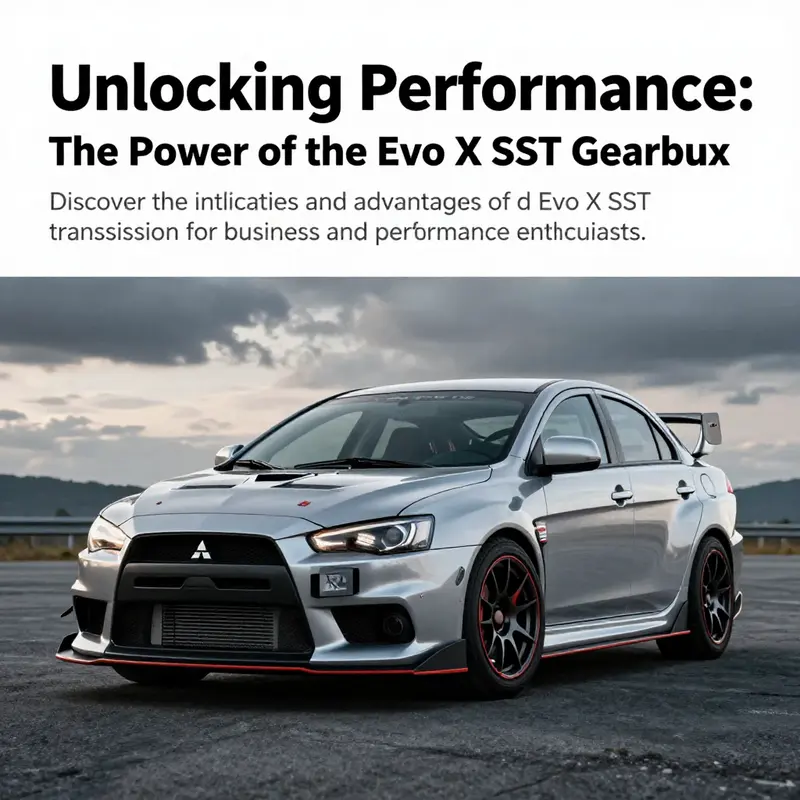
The Mitsubishi Lancer Evolution X, renowned for its high-performance features, showcases a standout component: the Super Sport Transmission (SST). This 6-speed dual-clutch automatic gearbox is a testament to engineering excellence, offering quick shifts and superior performance capabilities. As businesses in the automotive industry seek to understand the nuances of high-performance vehicles, delving into the Evo X SST gearbox provides invaluable insights. The following chapters will guide you through its specifications, performance benefits, market availability, tuning potential, and a comparative analysis with other transmission systems. Understanding these factors will empower business owners to optimize their offerings in this competitive market.
Twin-Clutch Precision: Inside the Evo X SST Gearbox and the Art of Seamless Power
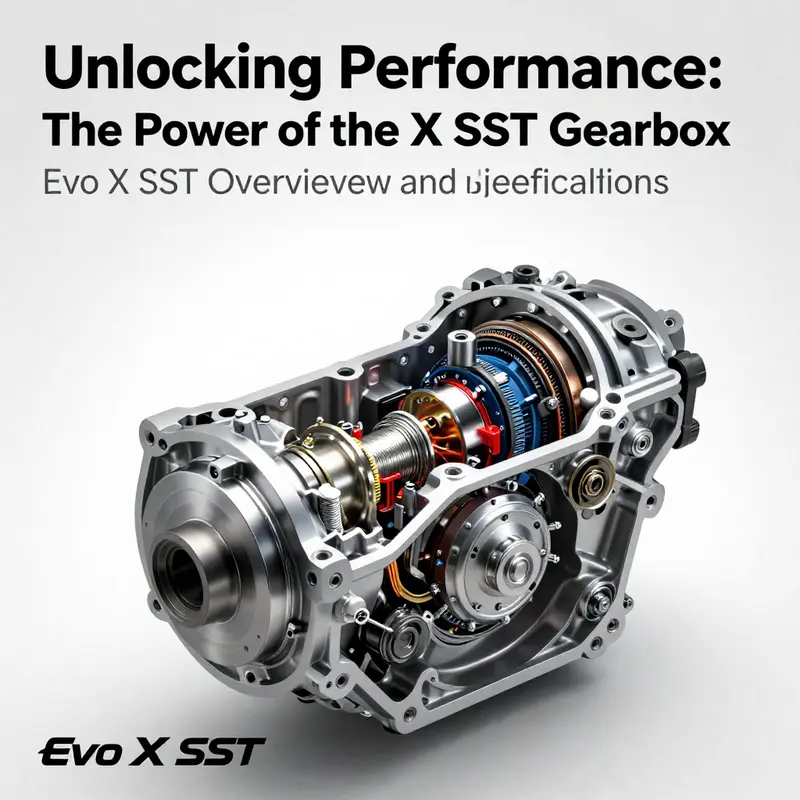
The gearbox at the heart of the Evo X’s performance story is a twin-clutch sportronic system designed to fuse the immediacy of a manual with the convenience of an automatic. It operates as a semi-automatic transmission, letting the driver enjoy rapid, precise shifts without the traditional manual’s clutch pedal. The engineering idea is simple in concept but intricate in execution: two independently operated clutches coordinate a seamless handoff between gears so that power delivery remains uninterrupted as the next gear is pre-selected while the current one remains engaged. This arrangement makes the car feel as if it is continually gripping the road, which in turn translates into a surge of acceleration that seems almost continuous rather than stepped. The specific incarnation within the Evo X is widely recognized for its responsiveness, its ability to hold high engine speeds with minimal torque interruption, and its capacity to harness traction and torque across a broad power band. In practice, this means a driver can carry speed through corners and exit with a strong surge, rather than pausing to pause for a gear change. The practical upshot is straightforward: faster, more confident lap times and a driving experience that rewards smooth, deliberate inputs as much as punishing aggression on track surfaces.
At the core of the system is a split gear arrangement known to enthusiasts as a pre-select strategy. Odd gears—1st, 3rd, 5th—share one clutch while even gears—2nd, 4th, 6th—share the other. This division lets one clutch be ready to engage the upcoming gear while the other remains in a current gear, effectively reducing the “pause” between shifts. The result is a shift pattern that can be almost instantaneous in the right conditions, with the control unit orchestrating a change that is difficult to detect in real time. The mechanical reality behind this feeling of instantaneity is a set of coupled actuators and hydraulic or electrohydraulic controls that synchronize engine torque, transmission input shaft speeds, and the next gear’s preloaded clutch. The goal is a transfer of power that remains as close to uninterrupted as possible, even under rapid-fire downshifts when the driver is hunting for peak corner exit speed.
The Evo X TC-SST, as it is commonly described in technical manuals and the car’s own literature, offers two distinct operating modes: an automatic, computer-managed regime and a manual override that uses paddle shifters or a traditional shift lever. In automatic mode, the ECU and transmission control logic decide optimal upshifts and downshifts based on speed, load, throttle position, and stability conditions. The manual mode hands control to the driver, allowing precise, stepped gear changes that satisfy enthusiasts who want a direct, tactile connection to the car’s performance. The shift speed is often highlighted as a defining trait of this system, with typical times shaving well under a hundred milliseconds when conditions are favorable. This speed is not merely a trick of the software; it is a feature enabled by the hydraulic or electrohydraulic actuation, the two-clutch architecture, and the way gear ratios are laid out to minimize the momentary disruption of torque during a shift.
The driving modes extend beyond the shift speed alone. Normal mode prioritizes a balance between comfort and efficiency, smoothing out shifts and dampening abrupt throttle transitions for everyday driving. Sport mode tunes the timing of changes and throttle response to foster a more immediate, higher-rev experience, encouraging a more dynamic relationship with engine speed and cornering. Track mode, the most aggressive setting, compels the system to accept higher engine speeds, shorten shift windows, and sharpen throttle response for the most demanding conditions, such as circuit laps where every tenth of a second matters. In this context, the transmission’s logic helps the car deliver a blip of throttle to sustain corner exits, adjust torque vectoring on the fly, and maintain stable power delivery when gravity, traction, and aerodynamics all push the car toward the limit. The cockpit feedback—through the steering wheel, pedals, and seat of the driver—still comes from the same mechanical core: the twin-clutch system that can anticipate a next gear with near-surgical precision, reducing the perceived interruption of power and preserving momentum through the sequence of corners and straights.
From a durability perspective, the Twin-Clutch Sportronic Shift Transmission is engineered for high-stress use. The question of reliability often arises when a performance component must endure sustained throttle at high speeds and repeated gear engagement under heavy loads. The Evo X SST targets robust clutches, durable gear meshes, and a control strategy that manages heat buildup during extended track sessions. Yet any high-performance unit has its limits. The compact, highly integrated design can be more complex and more expensive to repair than a traditional manual, especially when individual clutches or actuators wear with time. Heat is a recurrent theme in high-demand operation, and efficient heat dissipation is essential to maintain shift quality, smooth engagement, and consistent torque transfer under endurance testing. The engineers anticipate these realities, which is why the control software, cooling pathways, and lubrication schemes are tuned to accommodate sustained performance and to protect the system from early-life wear if exercised aggressively on track days.
A crucial dimension of the Evo X’s SST story is the driving mix of street usability and track-ready capability. The transmission’s near-seamless power transfer makes city speed runs smoother and more engaging, while in competition-style settings it becomes a tool for achieving fast lap times without sacrificing reliability. The auto mode is particularly forgiving in daily use, smoothing transitions and maintaining a quiet, refined cabin experience when the car is cruising. In manual mode, however, drivers quickly discover that the system rewards precision and commitment—the moment when the engine and gears align through a corner exit becomes less about the mechanical act of shifting and more about managing throttle and chassis balance. It is this fusion of accessibility and edge that has helped the Evo X SST earn a lasting place in the minds of enthusiasts who value both control and speed, not merely straight-line acceleration but the multi-faceted tension of a car that thrives on cornering discipline and precise, timely acceleration.
For those who study the gearbox as a technical artifact, the inline six-to-six gearing concept is notable not only for the speed of engagement but for the way the torque flow is shaped through the clutch system. The pre-selection strategy minimizes torque interruption by ensuring that the engine’s horsepower finds a ready path to the next gear. The ECU’s role in calibrating shift points, engine speed in relation to wheel speed, and the precise moment of clutch engagement cannot be overstated. Even subtle software tweaks—whether implemented by factory calibrations, dealer servicing, or later aftermarket adjustments—can alter the character of the transmission. In particular, drivers who seek to push the car on a track often explore adjustments that alter throttle mapping and boost response, knowing that the SST will respond in kind with crisper, more immediate shifts that preserve momentum during upshifts and downshifts alike. Changes in calibration, combined with appropriate clutch and peripheral upgrades, can enhance both the endurance of the system and the aggressiveness of its response, though they inevitably ripple through to maintenance cycles and operating temperatures.
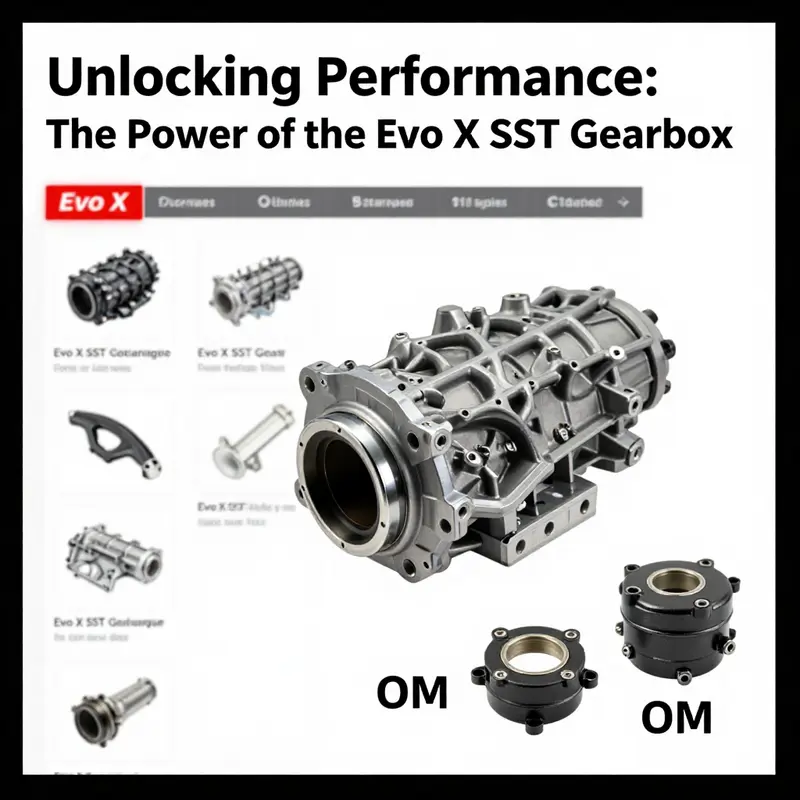
Market access to Evo X SST transmissions, while not ubiquitous, remains feasible for enthusiasts who want to restore or refresh a performance baseline. In practice, OEM units for the Evo X SST have appeared in the parts market as complete assemblies, typically advertised as “parts only” or OEM replacements. A representative example of the market reality is that a factory-specified SST transmission assembly from the 2008–2015 era has been offered with a price range around a few hundred dollars, reflecting the niche nature of the part and the specialized demand for original equipment replacements. The reported figures emphasize the importance of checking the condition, compatibility, and provenance of any such unit, particularly given the high-stress life these components endure when used in performance driving. Buyers should consider not only the gearbox itself but the associated control electronics, sensors, and hydraulics that interface with the vehicle’s ECU. In a broader sense, this reflects how the SST concept, while advanced, remains part of a practical ecosystem in which OEM components and dash-assembled replacements coexist with a vibrant community of enthusiasts who routinely tune and maintain their cars to preserve the delicate balance between speed, reliability, and daily usability. For those exploring such purchases, the specificity of year, model, and drivetrain layout—MR versus GSR, for example—matters greatly, given the evolution of the transmission’s calibration across production runs and the inclusion of subtle hardware refinements over time.
For deeper technical specifics and a deeper dive into the SST’s operation, maintenance, and technical characteristics, a comprehensive reference is available in a dedicated technical manual. This resource provides detailed diagrams, clutch design notes, gear ratios, and control-system descriptions that illuminate how the system achieves its remarkable shift behavior. See the dedicated transmission manual for a rigorous baseline understanding and for practical guidance on service intervals, inspection procedures, and common failure modes. Evo X SST DCT470 reconditioned 6-Speed gearbox offers a case study in the market presence of these systems and demonstrates how a high-performance transmission can be preserved and recommissioned for track readiness. The broader lesson is that the SST concept is as much about the orchestration of software, hydraulics, and mechanical cleverness as it is about raw speed, and it is within this orchestration that drivers discover the most compelling aspects of the Evo X’s performance identity.
As the chapter moves from the gearbox’s internal logic to its place in the car’s broader dynamic package, it becomes clear that the Evo X SST is more than a feature list. It is a carefully tuned system that aligns with the chassis, drive mode program, and electronic stability controls to deliver a coherent, high-performance driving experience. Its strengths lie in its ability to pre-select and hold gears with minimal interruption, enabling drivers to exploit high engine speeds and aggressive throttle application without the conventional delays of a traditional automatic. Its limitations, while real, are manageable for committed users who appreciate the precision and immediacy of its shifts, the practical benefits of its modes, and the potential gains from informed maintenance and, where appropriate, thoughtful tuning. In this sense, the SST transmission embodies a philosophy of performance that balances immediate gratification with long-term reliability, a balance that continues to define how modern performance front-wheel-drive and all-wheel-drive platforms approach high-speed driving in a way that is both approachable and deeply rewarding.
External resource: Evo-X SST Transmission Technical Manual. For deeper technical specifics, visit the official manual and supporting documentation here: https://www.scribd.com/document/478953794/Evo-X-SST-Manual-PDF
Shifting Craft: Precision, Rhythm, and Power Delivery in the Evo X SST Gearbox
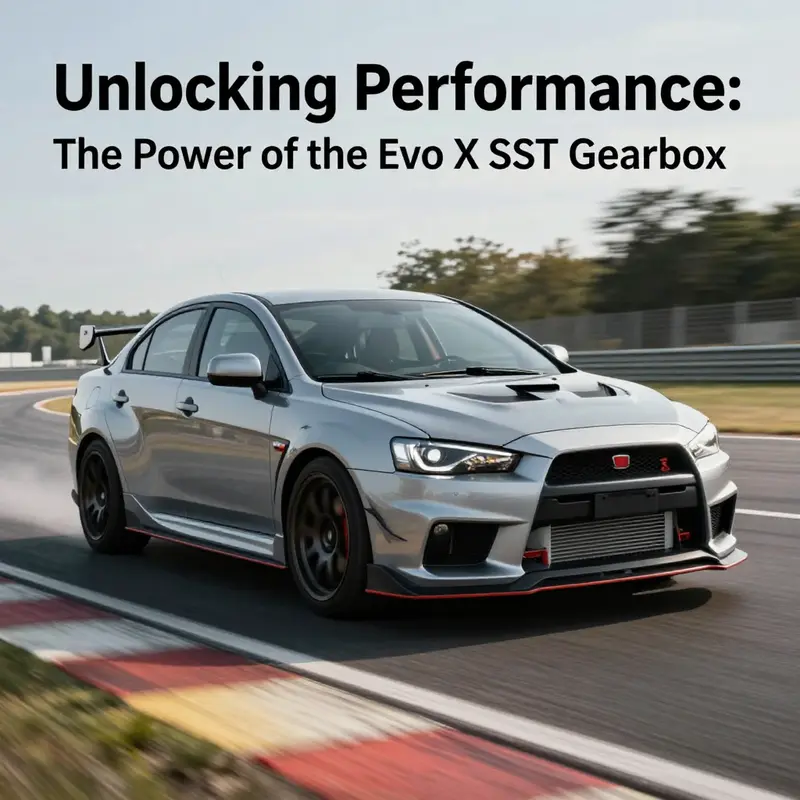
The heart of a high‑performance Mitsubishi Lancer Evolution X sits in its transmission, a compact yet sophisticated system that transforms raw engine torque into controlled, on‑demand acceleration. Developed by the factory and deployed across 2008–2015 models such as the MR and GSR, the SST, or Super Sport Transmission, marked a decisive shift in how drivers experience speed. It is a six‑speed dual‑clutch, sequentially shifting gearbox—often described in shorthand as a TC‑SST—that pairs the immediacy of a manual with the convenience of an automatic. In street and on the track, its design goals are clear: deliver lightning‑fast gear changes, maintain power delivery without interruption, and preserve the driver’s sense of involvement even as shifting happens automatically. That balance—between driver agency and machine efficiency—has helped the Evo X’s SST cultivate a reputation for quick, decisive responses that feel almost tactile, even at the edge of grip and the apex of a corner.
The mechanics behind that perception are deceptively simple in concept and intricate in execution. The SST uses dual clutches and pre‑selected gears, a configuration that allows one gear to be engaged while the next is prepped for engagement. This arrangement minimizes the time spent between gears, producing shifts that are swift and nearly seamless. For enthusiasts, the result is a drivetrain that shuttles between ratios with a rhythm that mirrors a manual’s direct engagement but without the momentary loss of acceleration that traditional automatics sometimes incur. The gearbox becomes a co‑pilot in the car’s dynamic balance—an interface that translates pedal input into a clean, linear surge of torque as if the engine were always operating at the sweet spot of its peak power band. In real world terms, that translates into improved acceleration and more predictable responses as the engine hunts for the right torque peak, especially when the throttle is hammered or when the car is pushed into the high‑RPM realm during track days.
A key feature in the SST’s operating logic is the ability for drivers to retain a high degree of control, even as the box performs automated shifts. Paddle shifters mounted at the wheel give drivers manual access to the pre‑selected gears, allowing for rapid downshifts into corners or quick upshifts to capitalize on a straightaway. The system’s downshift logic is equally deliberate: it’s designed to match engine braking with chassis attitude, which helps maintain the car’s balance as weight transfers from the front to the rear during aggressive corner entries. In practice, this means an owner can drive with a sense of predictability and precision. The car feels engaged, as if the driver is interacting with the hardware at a tempo that suits their pace, not merely following an electronic script. The result is a driving experience that blends the visceral reward of a manual with the reliability and ease of an automatic, a combination that continues to attract purists who want the best of both worlds on a racetrack or a winding canyon road.
Of course, the SST is more than a shifting shortcut. Its performance advantages hinge on how it preserves engine RPM and throttle response during shifts. When a gear is preselected, the system coordinates clutch engagement, gear mesh, and torque delivery so that throttle blips aren’t necessary to keep the drivetrain loaded. The engine can stay within a favorable portion of its torque curve, and the drivetrain can maintain momentum rather than deliver a step in power that would upset chassis balance or spook a mid‑corner rhythm. This refined power delivery is especially valuable on high‑load segments—where the engine and tires are pushed to their limits—because the transmission is engineered to sustain consistent performance under sustained stress. In a sports car context, that translates to steadier lap times and more repeatable behavior on a track, where even small shifts in torque delivery can alter corner exit speed and line choice.
The SST’s integration with the Evo X’s broader performance architecture also deserves attention. The gearbox is not an isolated component; it is embedded in a drivetrain ecosystem that includes sophisticated engine management, a precision torque vectoring system, and an advanced all‑wheel control system. Together, these systems enable a coherent, transferable sense of speed. The engine’s torque is delivered in a way that respects grip limits, while the drivetrain’s geometry and electronics help the chassis maintain stability through corners and over uneven surfaces. The result is a vehicle that can be both forgiving in normal road use and relentlessly precise when the pace rises on a track. Enthusiasts often describe this as a balanced architecture where shifting dynamics, engine character, and chassis behavior align to create a driving feel that is unusually cohesive for a performance Japanese four‑door sedan with rally‑rooted lineage.
Yet the SST is not without its complexities. By design, this type of transmission relies on a mechatronic control unit that coordinates clutches, hydraulics, sensors, and the engine’s torque output. That level of integration means maintenance and service demand specialized knowledge and equipment. In everyday terms, a well‑maintained SST can deliver consistent performance for many miles, but when issues arise, the diagnostic footprint is more intricate than that of a conventional manual or a basic automatic. Hydraulic leaks, clutch wear, sensor drift, or mechatronic failures can affect shift speed, shift smoothness, or the reliability of manual overrides. For daily drivers, that can translate into a sensation of sluggish shifts or a hesitant response during gear changes, especially in older units that have endured many heat cycles on aggressive driving schedules. For track use, where the pressure on the transmission is continuous, heat management and cooling become critical. Sustained high loads can stress the clutch packs and input shafts, which is why many seasoned Evo X drivers treat the SST as a precision instrument requiring careful attention rather than a set‑and‑forget component.
The narrative around the SST’s performance is also closely tied to how owners approach tuning and maintenance. Some enthusiasts pursue adjustments that sharpen response or tighten up shift timing, while others explore minor hardware upgrades such as higher‑performance clutch components designed to improve durability and reduce slip under repeated high‑load shifts. Even when untouched, the baseline SST delivers a remarkable blend of speed and control, but the same strength that makes it appealing—the ability to preselect and lock in gears under load—also makes it sensitive to the quality of the control electronics and the hydraulic system that drive its operation. As with many high‑performance transmissions, consistent maintenance and proactive care pay dividends: clean fluid, healthy seals, and periodic checks of the mechatronics unit help preserve shift feel and reliability. In practice, owners who invest in preventive maintenance tend to experience fewer unexpected faults and a more predictable behavior window on the track, where consistency matters most.
From a historical vantage, the Evo X SST encapsulates a moment when the automotive world began to expect near‑perfect shifts without losing the tactile drama of fast, manual gears. It represents a transitional technology that bridged the gap between traditional manuals and fully automated systems, delivering a package that still resonates with racing DNA. The gearbox’s performance benefits—rapid, sequential shifts; driver‑involved control through paddle shifters; and stable power delivery under load—continue to inspire discussion about how future transmissions will balance engagement with efficiency. While modern iterations of dual‑clutch and automated manuals push the envelope further with even faster shifts and smarter thermal management, the Evo X SST stands as a defining example of how a well‑engineered gearbox can elevate the entire driving equation without sacrificing the driver’s sense of connection to the machine.
For readers seeking a broader context on the transmission landscape and technical specifications, official documentation from the manufacturer provides a concise benchmark for how the Evo X SST was positioned within the line‑up and how it interacts with the car’s high‑performance systems. You can explore the official Evo X specifications to understand the broader performance envelope and how the SST fits into the car’s overall power, weight, and drivetrain architecture. For a deeper look at related transmission architectures and a comparative understanding of sequential gearboxes across generations, consider the resource described by the following link: full sequential gearbox for Mitsubishi Evo 4-9 and X.
As a final reflection, the Evo X SST gearbox stands as a compelling example of how a sophisticated transmission can redefine a performance car’s character. It is both a precision instrument and a driver‑friendly interface, shaping how power is delivered, how shifts are perceived, and how a car communicates with the driver under the most demanding conditions. The gearbox’ strengths—speed, engagement, and consistency under load—make it a cornerstone of the Evo X’s identity as a high‑performance machine, while its complexities remind us that true performance requires ongoing care, technical understanding, and a willingness to invest in maintenance to keep the rhythm of the shift as crisp and confident as the drive itself.
External resource for further study: https://www.mitsubishi-motors.com/en/vehicles/evo-x/specifications.html
null
null
Beyond Seamless Shifts: Modifications and Tuning Pathways for the Evo X SST Gearbox
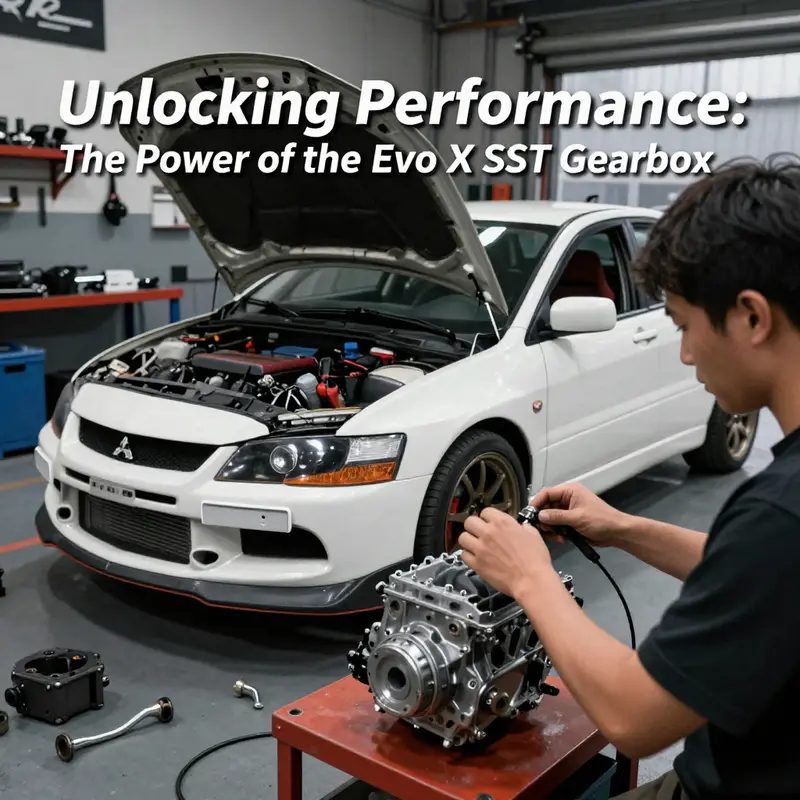
External resource: https://www.motortrend.com/cars/mitsubishi-lancer-evolution-x-tuning-guide/
Rethinking Speed: The Evo X SST Gearbox in Context
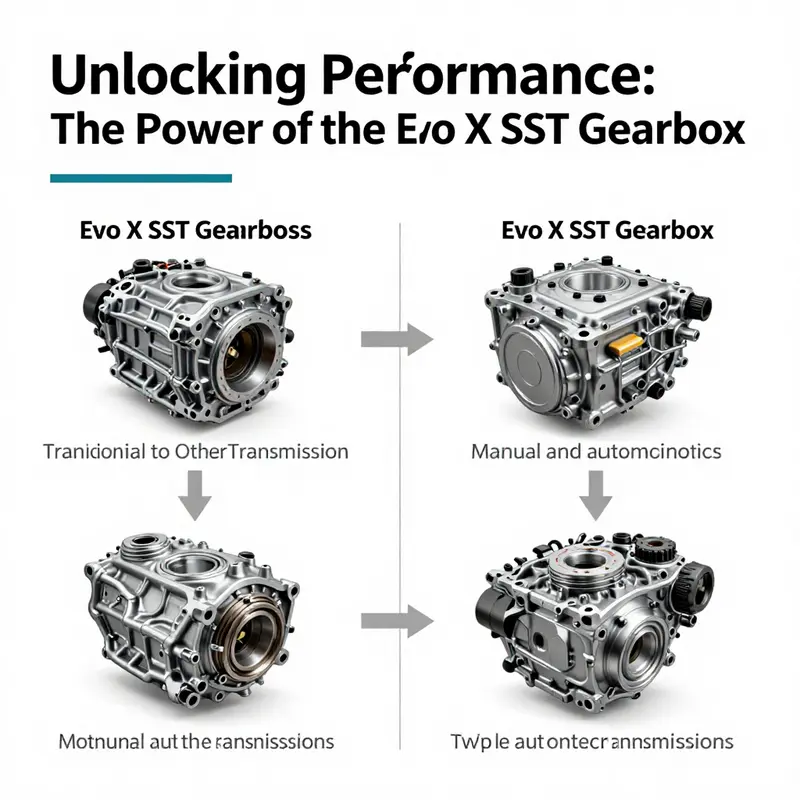
The Mitsubishi Lancer Evolution X marks a particular moment in performance engineering where electronic control and mechanical briskness fuse to redefine how a driver experiences speed. Central to that identity is the TC-SST, a six‑speed twin‑clutch system that sits between the driver and the road with a precision that manual gearboxes rarely rival. Its essence lies not only in how quickly it can change gears, but in how it orchestrates torque delivery, engine speed, and turbo response as a choreographed sequence rather than a series of separate actions. Two clutches, each responsible for preselecting the next gear while the current one remains engaged, allow shifts that happen in a fraction of the time a human hand could manage. This is the core of the Evo X’s drive feel: instantaneous, almost seamless power transfer that keeps the engine in its most effective torque band while the drivetrain remains locked into a forward propulsion rhythm rather than a mechanical stop-start pause. In plain terms, the SST is the hardware that makes the car feel as if it’s sprinting on rails rather than wading through a manual’s slower tempo, and it is the bridge between raw power and the discipline of precision timing on track and road alike.
Yet this apparent simplicity hides a set of design choices that have both fans and critics. The TC-SST uses clutch-based power transfer instead of a torque converter, a shift from the more traditional automatic path that trades a tiny amount of smoothness for a meaningful gain in efficiency and response. The direct clutch‑to‑clutch connection reduces drivetrain losses, which translates into improved acceleration and better fuel economy in everyday use. At the same time, the absence of a fluid coupling means the system’s behavior can be less forgiving in stop‑and‑go traffic, where the absence of a clutch pedal can register as a touch more abruptness than a well‑tuned conventional automatic would exhibit. This is not a shortcoming so much as a characteristic of the technology—one that becomes a choice drivers must make when contemplating a high‑performance setup.
From a performance perspective, the Evo X SST delivers changes that are as much about how you drive as what you drive. In scenarios that demand speed, the system’s architecture shines. The ability to preselect the next gear with one action while the current gear remains engaged means shifts occur in what feels like near zero latency. In controlled demonstrations, shifts can occur in the tens of milliseconds, far faster than any human could achieve with a manual gearbox. The net effect is a 0–100 km/h time that, in optimum conditions and with appropriate tuning, can approach the realm of competitive sport sedans—figures in the region of four and a half seconds in highly optimized contexts and launch‑enhanced conditions, with some variability depending on fuel, climate, and the precise calibration of the transmission control unit. That performance edge, however, comes with a trade‑off: the car’s “engagement” factor, a quality prized by purists who savor the tactile ritual of heel‑and‑toe and the precise cadence of a hand‑timed shift, is inevitably softened. The SST’s joy is in its efficiency and its relentless tempo, not in the intimate, muscular handshake between driver and machine that a manual era treasured.
Comparisons with a traditional five‑speed manual reveal a clear split in priorities. The manual’s strengths lie in direct, intimate driver input, the palpable sensation of the clutch engaging and releasing, the precise placement of a heel‑and‑toe sequence, and the sense of control that comes from mastering a mechanical link to the wheels. The SST, by contrast, excels at speed and repeatability. The shifts arrive with a clinical precision that makes the car feel surgically fast in gear changes and response, which matters most on a racetrack or a tight, twisty road where milliseconds count. On the highway or in casual driving, the SST can behave with a reserve that a skilled manual driver might not always extract, trading some of the gearbox’s drama for the comfort of smooth progression and efficient energy use. The delta in experience—between mechanical connection and algorithmic choreography—illustrates a broader automotive truth: modern performance has begun to prioritize the rhythm of acceleration and the reliability of consistent performance under load as essential parts of the sport, not merely a byproduct of engineering prowess.
A further point of comparison emerges when the SST is measured against standard automatics that rely on torque converters or multi‑plate fluid couplings. Here the Evo X gains a meaningful efficiency advantage. Without a fluid coupling to absorb energy, the TC‑SST can deliver power with less parasitic loss. In practical terms, this translates to sharper throttle response and, when the system is tuned for sport and race modes, a more immediate feed of torque to the driven wheels. The downside is a potential reduction in the “slush” smoothness that some drivers expect from an automatic transmission in daily driving—especially in traffic. Still, the broader transmission design offers better thermal management for sustained performance and a tighter control loop managed by an ECU that can optimize gear selection in real time to preserve torque delivery in the face of turbocharger dynamics. The result is gear changes that feel almost surgical, with each shift contributing to a seamless arc of acceleration that can be rhythmically controlled by the driver through paddle shifters and mode selection.
The Evo X gives drivers three distinct modes—Normal, Sport, and Super Sport—that tailor how the SST interacts with the engine and the turbochargers. In Normal mode, the system favors fuel economy and smoothness, shifting at lower RPMs and maximizing efficiency. Sport mode loosens the shift criteria and raises the engine’s RPM thresholds, delivering a faster, more responsive ride without abandoning control. Super Sport is the arena for track or aggressive street driving. It keeps the engine near redline, sustains high turbo pressure, and commands the transmission to react with minimal delay, effectively turning the car into a weapon for quick sprints and consistent lap times. The orchestrated balance among engine torque, turbo response, and the SST’s precision becomes a defining feature of how the Evo X behaves in high‑demand situations. It is not merely a matter of raw speed; it is about the cadence of power delivery that suits the demands of racing discipline and the driver’s intent.
Yet any discussion of performance cannot overlook reliability and long‑term durability. The TC‑SST’s design has a finite torque capacity—around 450 N·m in standard configurations—which constrains the scope for heavy modification if one wishes to preserve daily usability. Compared with a robust manual gearbox that can be engineered to handle far higher torque with aftermarket clutch packages, the SST sits at a crossroads. Enthusiasts who push the limits often pursue upgraded clutch assemblies or tuning strategies to improve engagement behavior and durability. This reality frames a broader decision: the SST excels at sprinting and consistency, while a broader, more flexible mechanical path offers greater potential for extreme power builds. The trade‑off is a choice between a highly refined, fast‑acting transmission and the versatility of a slightly coarser, more forgiving platform that can be adapted to extreme horsepower without constantly testing the envelope of clutch capacity.
From a maintenance and parts perspective, the SST remains a viable option for many owners. OEM or factory‑spec components can still be sourced, and market availability, including complete gearboxes, persists on platforms that specialize in performance parts. The practical implication is that, for a track‑oriented build or a weekend warrior who wants to preserve factory calibration with the option to upgrade later, the Evo X SST offers a path that balances performance with a degree of accessibility. For potential buyers and restorers, the value proposition rests on knowing the transmission’s limits and the corresponding maintenance cadence. A well‑sourced ECU tune or a measured modification of the clutch system can help extend durability and improve the consistency of the shifts under load, provided the rest of the drivetrain remains within the torque envelope that the SST is designed to handle. A practical guide for those curious about upgrading ecosystems can be found in discussions around optional pathways for gearboxes within the Evo X family, such as this broader reference to a sequential gearbox pathway: full-sequential gearbox for Evo X.
In the end, the Evo X SST gearbox embodies a specific engineering philosophy: maximize speed, precision, and programmable control while accepting a defined ceiling on torque capacity and a distinct relationship with driver engagement. It represents a shift in how performance cars can behave—less a manual relay between human and road and more a digitally choreographed, high‑response system that rewards smoothness, timing, and intent. For enthusiasts whose aim is to chase lap times, the SST is an instrument of speed, making the car feel almost instantaneous in its responses. For purists who measure a car’s soul in the directness of a clutch pedal and a hand‑shaped gate, the SST’s elegance may feel clinical. Both viewpoints share a single truth: the Evo X SST is not a relic of a bygone era nor a mere stepping stone to the next transmission paradigm. It is a milestone that demonstrates how refined control systems can coexist with raw, unfiltered speed, shaping the experience of performance driving in a way that continues to inform how engineers think about gearboxes across the modern automotive landscape. For readers seeking a deeper engineering lens on the topic, a well‑regarded technical overview from the broader automotive press provides additional context and comparative analysis: Car and Driver — Mitsubishi Lancer Evolution X.
External reference: https://www.caranddriver.com/mitsubishi/lancer-evolution-x
Final thoughts
The Evo X SST gearbox is not just a critical component of this high-performance vehicle; it also presents various opportunities for businesses in the aftermarket and performance enhancement sectors. Through its cutting-edge functionality, swift shifting capabilities, and adaptability for tuning, the SST gearbox appeals deeply to automotive enthusiasts. As we have explored various aspects, from its specifications to marketplace trends, it’s clear that understanding the Evo X SST gearbox’s full potential can significantly impact business strategies in automotive manufacturing and parts sales. By leveraging this knowledge, businesses can better cater to the demands of performance-driven customers and tap into the lucrative market surrounding high-performance automotive parts.