
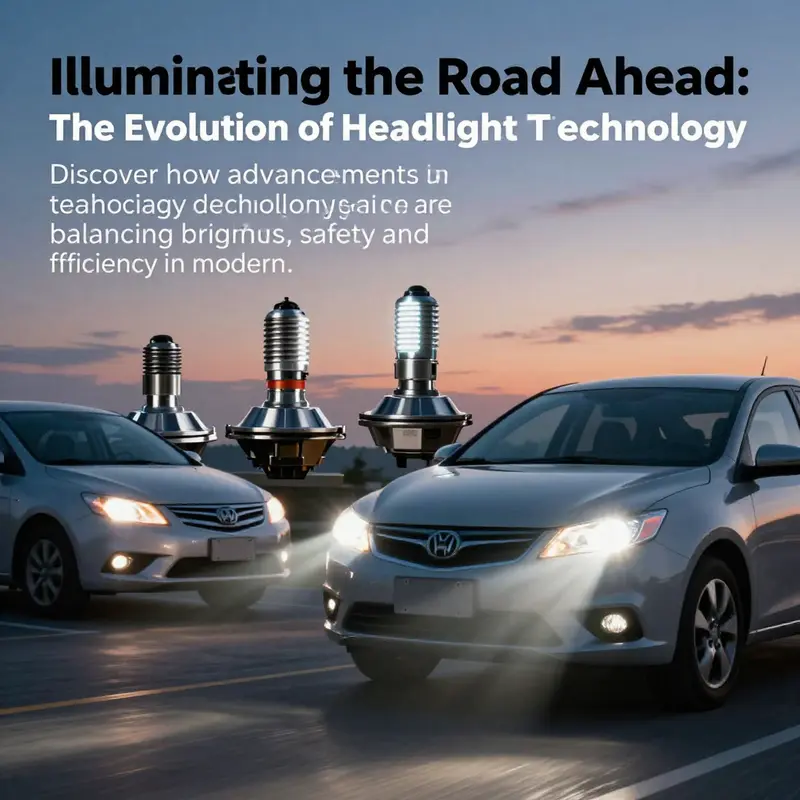
The realm of automotive technology has seen tremendous transitions, and among these, headlight evolution stands out as crucial not only for visibility but for enhancing overall road safety. The journey from traditional halogen headlights to the current high-intensity discharge (HID) systems tells a story of innovation, marked by both significant advancements and challenges. Each chapter of this narrative explores different facets of headlight technology: first, the key advancements that transformed vehicle illumination; second, the ongoing brightness arms race that some manufacturers have engaged in; third, the safety implications these developments have on drivers and pedestrians; and finally, a forward-looking perspective on how intelligent designs can guide the future of headlight technology.
From Halogen to Xenon: Illuminating the Evolution of Automotive Headlights and Safer Night Driving
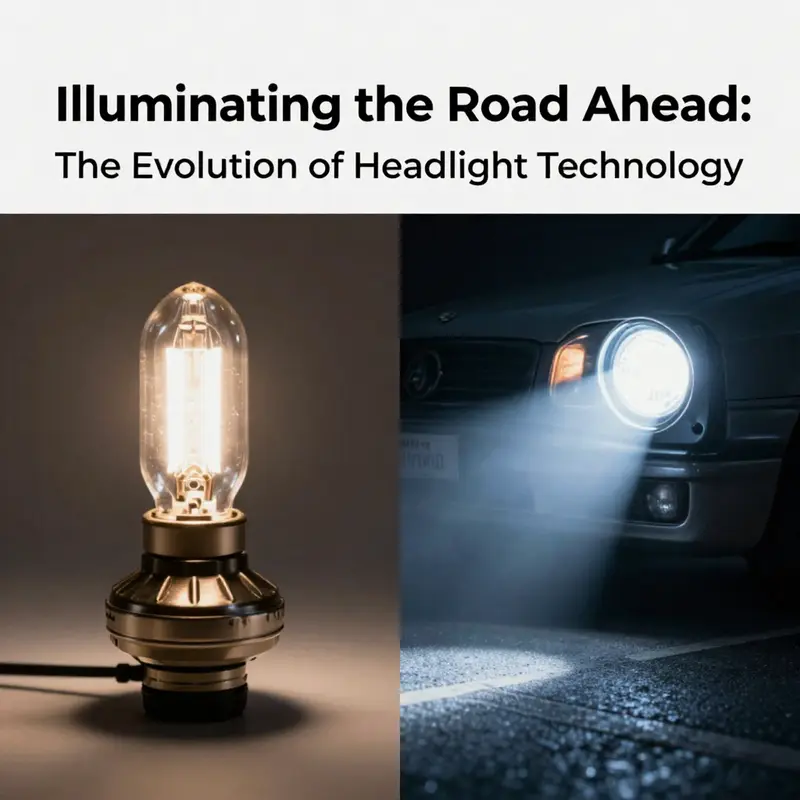
The night has long been a proving ground for how well a society can manage light. Early automotive history relied on simple filament lamps that burned warm light with modest brightness, providing predictable performance but limited reach. Halogen headlights improved efficiency and color rendering while preserving the familiar warm glow, yet their beam patterns remained a balance between visibility, glare, and cost. As speeds and traffic density increased, designers sought brighter, whiter illumination and began to measure how light interacts with road surfaces and pedestrians.
The shift to xenon-based HID systems introduced a dramatic step up in brightness and color accuracy. HID works by creating an electric arc inside a xenon-filled bulb, producing a light typically in the 4000 to 6000 kelvin range that many drivers perceive as closer to daylight. With lumens in the thousands rather than hundreds, HID can improve depth perception and edge contrast, improving detection of hazards in many nighttime conditions. However, brighter light also raises glare concerns for oncoming drivers and pedestrians, triggering new debates about safety performance, testing, and proper beam control.
Over time, the industry grappled with tradeoffs between output, reliability, and total cost of ownership. Ballasts, igniters, and complex optics add vulnerability to electrical faults and environmental stress, while adaptive and electronic control systems opened paths to smarter illumination that can reduce glare for others. The evolution thus shifted from simply pushing more lumens to designing light as a safe, context-aware partner on the road. Today, adaptive driving beams and sensor-informed lighting aim to balance visibility with responsibility, shaping a future where the lamp is part of an integrated safety ecosystem.
For readers exploring headlight technology, this arc from halogen to xenon illustrates how design, regulation, and perception converge to make night driving safer, more comfortable, and more predictable.
The Brightness Arms Race in Evolution Headlights
Headlights trace the arc of motorization like a shifting beam of memory. The story begins with humble flame based lamps in the earliest cars, where illumination depended on a small flame and a glass lens. They were fragile and dim, but they opened a window into night driving that had not existed before. As the decades passed, incandescent bulbs brought steadier, more reliable light, lighting the road with softer halos and giving designers new possibilities for form, optics, and positioning. The shift from flame to filament was not merely a technical upgrade; it was a redefinition of how a driver interacts with the dark. The road transformed from a risk to a canvas in which humans could anticipate threats, judge distances, and respond with confidence that earlier eras could scarcely imagine.
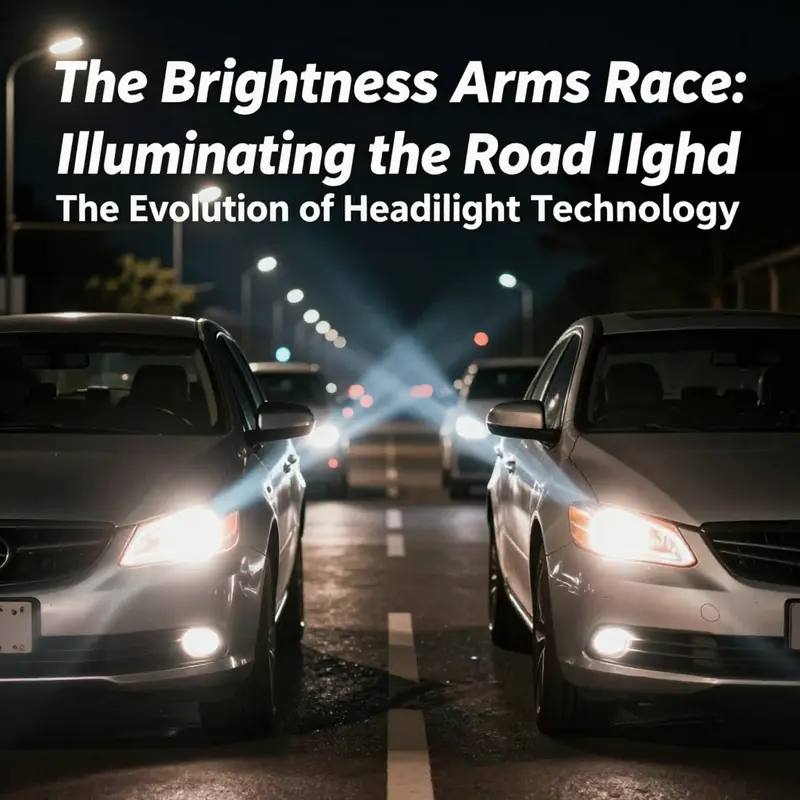
Then came the mid 1990s revolution of High-Intensity Discharge headlights, or xenon lamps, which delivered a dramatic leap in brightness. A typical HID system produced three thousand to three thousand five hundred lumens, a light output several times brighter than the standard halogen. The color temperature rose into a stark white to bluish range, commonly around four thousand to six thousand kelvin. Night driving felt safer or at least more capable as distant signs, pedestrians, and animals became visible earlier. The sensation was intoxicating: more information from the same journey. Yet the glow carried a price. The intense glare from oncoming HID headlights could temporarily blind a driver, creating a moment of disorientation that could cascade into risky maneuvers or misjudgments behind the wheel.
News of speed and brightness traveled faster than the science behind it, and soon the industry was caught in what observers began calling a brightness arms race. Manufacturers pursued sharper light patterns, higher maximum output, and color temperatures tuned to appear more modern or premium. The goal was not simply to see better but to score highly on safety ratings and consumer perception. Agencies like the IIHS crafted test protocols that rewarded certain beam characteristics, encouraging a push toward brighter catalogues. In practice, this occasionally produced a paradox: a car could earn high marks without necessarily delivering safer real world performance. The industry drifted into a moral gray zone where innovation and testing pressures could diverge from everyday safety needs. The phrase Lighting gate later captured concerns that clever beam shaping and evaluation tricks might mislead the public and policy makers about real risk.
To address these tensions, engineers and regulators looked for smarter illumination rather than merely more light. Adaptive Driving Beams emerged as a response, using sensors, cameras, and calibrated optics to modulate the beam in real time. When traffic is light or the road ahead is empty, the system can maintain strong illumination, but as a vehicle approaches another, the beam pattern shifts to avoid glare. In complex environments such as urban streets with pedestrians and cyclists, the beams can spread differently yet preserve visibility for the driver. The promise is straightforward: more precise lighting that concentrates photons where they matter and minimizes exposure where it would harm others. That kind of intelligent lighting reframes the debate away from maximum brightness toward context aware illumination that serves all road users, including the most vulnerable ones.
Alongside these advances, new frontiers appeared in high performance lighting, including laser based headlights that promised sheer intensity with remarkable efficiency. The logic was seductive: convert energy into photons with near perfection, brighten far ahead while consuming less power. The reality, however, has remained more nuanced. Laser systems add cost, complexity, and a different set of glare considerations that must be reconciled with safety standards. The industry continues to weigh the tradeoffs between edge clarity, beam repeatability in bad weather, and the avoidance of distracting flicker or hot spots. In this landscape, it is not only the volume of light that matters but how that light interacts with surfaces, weather, and oncoming drivers. The dialog has shifted from a fetish for brightness to a discipline of controlled, responsible vision.
Regulation and standards form the quiet spine of this evolving field. Safety guides aim to reduce glare, ensure uniform beam distribution, and keep up with increasingly capable sensing technologies. The glare people experience is often not a single sharp flare but a distribution of scattered light across eyes that reduces contrast and reaction times. Balancing light and shadow becomes a safety problem as much as an aesthetic one. This dynamic tension — between enabling visibility and preventing distraction — underlines every design decision and every test protocol. The push for clever illumination must be matched by transparent reporting and credible evaluation.
Looking at the broader safety ecosystem, headlights do not operate in a vacuum. They are part of a network of sensors, interlocks, and driver assistance systems that collectively shape risk. Steering and braking assistance, pedestrian detection, adaptive cruise control, and even weather adaptation are most effective when lighting supports them, not when it competes with them. The trend toward holistic safety reframes headlight evolution as a cooperative venture rather than a solo pursuit. If a beam can illuminate a potentially dangerous obstacle just as a vehicle negotiates a corner, if a bright patch can warn a cyclist nearby, then the technology earns legitimacy not just in the lab but on real streets where unpredictable human behavior is the dominant variable. The ethics of design become a matter of public trust rather than isolated triumphs of engineering.
Among enthusiasts and designers, the tension between form and function plays out in the choices around appearance and optics. Even as many drivers seek sharper aesthetics, responsible design emphasizes beam pattern integrity and regulator friendly adaptation. A telling example can be seen in the community conversations around aftermarket headlight configurations that aim to reproduce distinctive looks while attempting not to create excessive glare. In this spirit, the possibility of balanced, safe styling is not an oxymoron; it is a shared design objective. For those curious about how a specific upgrade might integrate with the vehicle’s optics, consider the example of headlights for Lancer Evo X (Audi design version 2). This reference illustrates how a single product line can celebrate a bold visual identity while attempting to respect lighting norms and test standards. Headlights for Lancer Evo X (Audi design version 2).
Consumers also bear responsibility for meaningful choices. The promise of brighter headlights can tempt buyers into neglecting lighthouse style glare control, glare shields, or proper alignment. Misalignment or poor mounting can magnify glare, offsetting any safety gains from higher lumens. Education about correct installation, maintenance, and regular inspection is part of the safety equation. A well designed headlamp system should offer consistent light distribution across a wide range of speeds and weather conditions. It should support driver situational awareness while reducing intrusion into the eyes of others. The role of retailers and installers becomes critical here, serving as guardians of safety rather than silent middlemen between technology and the public. In this sense, progress is not just a technical achievement but a social contract that binds engineers, regulators, and everyday drivers in a shared mission.
Looking ahead, the path forward looks less like a race toward raw brightness and more like a choreography of illumination. As sensors improve and algorithms mature, headlights could integrate more deeply with street lighting, infrastructure, and vehicle to everything communication. The goal is to maintain high perception thresholds in all driving contexts while delivering the minimum deadly glare to others. In practice, that means refining beam cutoffs, optimizing color temperature for contrast rather than for cool sensation, and ensuring that dynamic adjustments remain predictable to drivers who have learned a certain sense of stability from modern headlamps. The ethical imperative is clear: progress should elevate safety for all road users, not just the occupant of the vehicle with the most aggressive lights.
In recent discussions, transparency and accountability have become central to credible progress. When testing regimes are opaque or data are selectively reported, public trust on the road erodes. A credible path forward combines rigorous measurement, independent verification, and a commitment to continuous improvement. In this framework, adaptive lighting systems are not a mere gimmick but a platform for safer night travel. The human body, after all, is less forgiving than a machine; it reacts slowly to sudden glare, and the margin for error behind the wheel is finite. If a bright future is to emerge, it must be accompanied by discipline in design, clear communication about capabilities and limits, and a regulatory environment that rewards true enhancements to safety rather than spectacular demonstrations of lumen output.
Taken together, the story of evolution headlights is a narrative about how we choose to see and how we choose to be seen on the road. It is a tale that rewards curiosity while demanding restraint, that celebrates clever engineering yet insists on moral clarity. The central question is not simply how bright headlights can become, but how they can help drivers detect hazards earlier, react faster, and anticipate the unpredictable variety of road life. If the answer is a technology that adapts to conditions and protects others from glare, then progress serves the larger aim of safer, more inclusive mobility. The future will likely merge brighter, more efficient light with smarter control systems, yielding a roadway that is as perceptive as it is considerate. And in the process, the evolution headlights will reflect a broader commitment to public safety that transcends brands, models, and individual ambitions. Proceeding chapters will explore how policy, testing, and design tradeoffs shape the pace of these innovations.
For foundational context on safety standards and glare effects, see the official resource from the national safety authority. The URL below provides grounded, authoritative information on headlights and lighting and can serve as a reference point for readers who want to dive deeper into governance and measurement. https://www.nhtsa.gov/vehicle-safety/headlights-and-lighting
The Safety Trade-Offs in Evolution Headlights: Glare, Innovation, and the Road Ahead
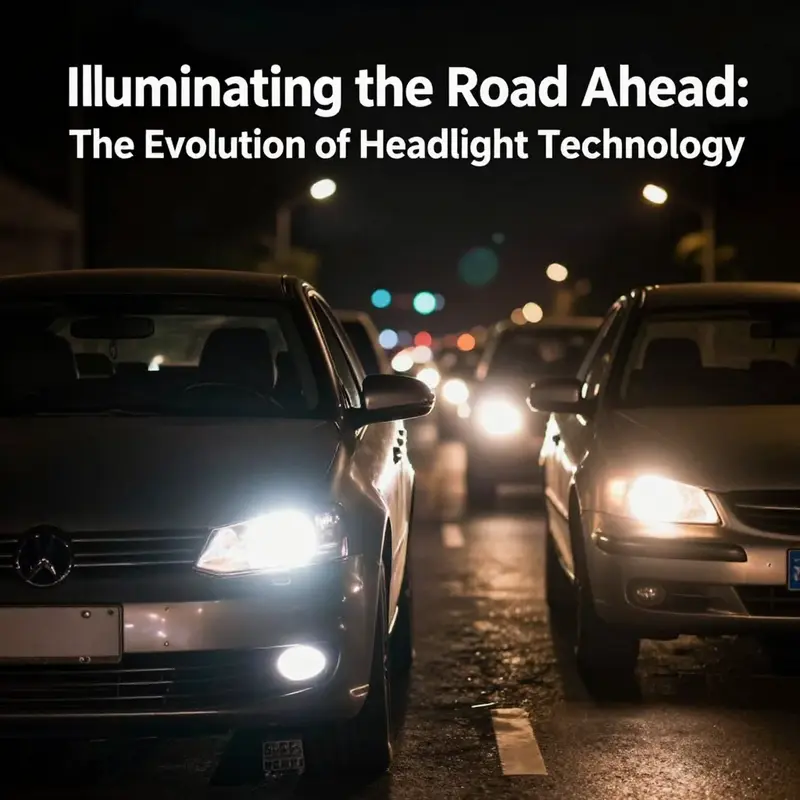
The evolution of headlight technology unfolds as a continuous negotiation between visibility and restraint. It is a story of breakthroughs that brighten the path and challenges that remind us light is not merely a tool for the driver but a shared phenomenon that affects every road user. The shift from basic incandescent lamps to high-intensity discharge (HID) systems in the late twentieth century marked a watershed moment. Brightness surged, delivering roughly 3,000 to 3,500 lumens and shifting color temperatures toward the crisp, daylight-like 4,000 to 6,000 kelvin range. The aim was practical: illuminate farther, reveal hazards earlier, shorten driver reaction times, and level the playing field for nighttime perception. But brightness does not exist in a vacuum. It travels down a line that runs through other drivers, pedestrians, cyclists, and even the wider framework of road design and regulation. The glare that accompanied the HID leap became a tangible counterweight to the gains in visibility. Oncoming motorists reported a temporary blinding effect, a risk that undermined safety gains if not managed with careful beam design and intelligent control. In that sense, the early glory of HID was tempered by a reminder that more light is not always safer light if it radiates indiscriminately across lanes and windows. The problem was not merely a technical one; it was a design ethics issue, a reminder that engineering choices ripple through the social fabric of driving environments. This realization gave rise to a new frame for evaluating headlights: safety is best pursued not through sheer brightness alone but through smart distribution of light, and through systems that adapt to context rather than operate as fixed, one-size-fits-all configurations.
That broader calculus has continued to shape the modern era. We now live in what some observers call a brightness arms race, where manufacturers strive to outdo one another and, perhaps unintentionally, to outshine the safety tests themselves. The pursuit of higher IIHS safety ratings has been a potent driver of innovation, yet it has also created room for controversy. In some corners, concerns have surfaced that beam patterns can be optimized to perform well under standardized tests while delivering glare in real-world settings. The term Lighting-gate has surfaced in public discourse to describe moments when testing incentives appear to override a more holistic consideration of road safety. The ethical dimensions become especially acute when the same beams that illuminate the road for a single vehicle end up creating hazards for others. The tension between improving one-driver visibility and preserving the safety of all road users is not merely technical; it is a governance challenge, demanding clear standards, transparent processes, and a commitment to consumer protection. If the arc of innovation continues to bend toward ever brighter beams, it must do so with a deliberate attention to glare management, beam calibration, and ongoing validation against real-world use.
The era of aftermarket modifications further complicates the safety landscape. As drivers seek sharper LEDs or more color-consistent lighting than the factory baseline, the line between enhancement and risk can blur. Replacements and retrofits—often marketed as upgrades—may deliver better illumination in certain conditions but can also produce unintended glare when installed improperly or when components are mismatched to vehicle electronics or housing geometries. In some cases, improper wiring, noncompliant color temperatures, or misaligned optics lead to light that radiates unpredictably across lanes, posing hazards to oncoming drivers and pedestrians alike. The safety problem multiplies when aftermarket assemblies bypass regulatory verifications or rely on subpar materials. The result is not merely a consumer dissatisfaction issue but a potential public-safety concern that demands consistent standards, rigorous inspection, and clear labeling so drivers understand what their vehicle is signaling to others on the road.
The horizon for headlight technology, however, is not a return to a single optical paradigm but a broader shift toward intelligent lighting that couples illumination with perception safety. Digital lighting platforms—enabled by micro-LEDs and OLEDs, as well as the emerging promise of laser-based solutions—offer a framework for dynamic beam shaping. These systems can sculpt light in real time, amplifying the intensity where the road is most demanding while throttling it in zones prone to glare. The core idea is intuitive: let light follow necessity rather than blanket the environment with uniform brightness. In practice, this means adaptive driving beams that respond to traffic density, weather conditions, and the presence of pedestrians. The potential benefits are substantial. When a vehicle approaches a bend or crest, light can be concentrated along the road surface without spilling into the eyes of a driver approaching in the opposite direction. At higher speeds, enhanced range improves early hazard detection, while in urban settings the same system can reduce glare for nearby pedestrians and cyclists by modulating directionality and intensity.
The engineering discipline behind these advances is increasingly about simulation as much as it is about hardware. Sophisticated design tools, including advanced optics software and physics-based simulation environments, enable engineers to model light propagation, scattering, and interaction with materials before a single component is manufactured. Such virtual testing helps ensure that a new headlight concept meets safety criteria across a wide range of scenarios, from nighttime rural driving to dense urban traffic. It also provides a safer, more economical pathway to iterate around potential edge cases that can arise in real-world operation. As the thermal, electrical, and optical systems become more tightly integrated, the importance of robust testing frameworks grows proportionally. In this evolving ecosystem, the potential for real-time, context-aware lighting becomes less theoretical and more of a design imperative. The challenge then shifts from simply generating more light to generating safer light—light that respects the rights and safety of all road users, not just the vehicle behind the driver’s wheel.
A crucial dimension of the safety conversation is the ethical and regulatory architecture that surrounds lighting design. The notion of Lighting-gate underscores the need for integrity in testing and certification. If beam patterns are manipulated to achieve a favorable pass on standardized evaluations, the public bears the risk of exposure to glare, misperception, and fatigue that the tests did not anticipate. Strengthening oversight, harmonizing international standards, and enforcing transparency in testing methods are essential steps. Another layer of safety comes from the governance of aftermarket modifications. Clear guidelines about permissible color temperatures, beam cutoffs, and alignment checks can help curb unsafe practices. When well-constructed, these frameworks promote consumer protection and ensure that the pursuit of brightness does not outpace the central aim of road safety: reducing the likelihood of accidents and injuries for everyone who shares the roadway.
The story of headlights is also a story of interdependent technologies. The road does not end at the tip of a beam; it interacts with the design of the car, the geometry of the lighting housing, and the surrounding environment. The integration of headlight systems with adaptive cruise control, for example, can optimize illumination patterns in concert with vehicle speed and braking requirements. Augmented reality head-up displays offer a complementary safety layer by presenting navigation cues and hazard alerts within the driver’s natural line of sight, reducing the need for glances away from the road. In concert, these technologies create a safety ecosystem that values perception, attention, and information processing as much as it values raw light output. The objective becomes a balanced choreography: lighting that enhances the driver’s comprehension of the road while minimizing distractions and glare for others.
The maturation of evolution headlights, therefore, is not a single invention but an ongoing redesign of how light is used in traffic environments. It requires a discipline that blends optics, human factors, and regulatory science. It demands a holistic view of safety that places equal emphasis on glare control, beam precision, and predictable behavior across diverse driving contexts. Importantly, it calls for a philosophy of progress that refuses to sacrifice one segment of road users for another. The practical path forward lies in intelligent, adaptive, and ethically guided lighting systems that know when to illuminate, how much light to cast, and where to direct it. In this sense, the evolution of headlights becomes a case study in responsible innovation: a reminder that technological power is most valuable when it is coupled with humility, rigorous testing, and a steadfast commitment to the safety of all who share the road.
For readers seeking a broader perspective on the glare dilemma and the ethical questions raised by high-brightness lighting, a detailed external analysis offers additional context about the risks and regulatory considerations surrounding headlight progress. The discussion there emphasizes how glare, transparency, and testing integrity intersect with consumer protection and the social dimension of automotive safety. https://thestandsafety.com/march-headlight-progress-bright-future-glare-ahead/
Shaping the Road Ahead: The Intelligent Evolution of Headlights Toward Safer, Smarter Illumination
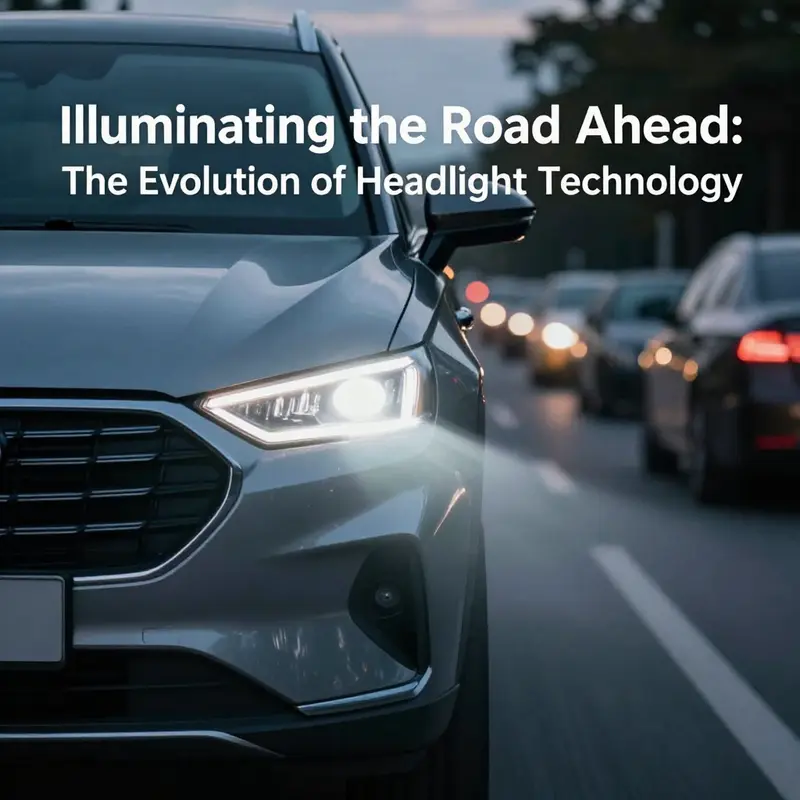
The evolution of headlights has always shadowed the broader arc of automotive intelligence, tracing a line from simple bulbs to complex, context‑aware systems that now function as strategic safety partners on the road. In the early stages, the narrative was almost purely about brightness. The mid‑1990s welcomed high‑intensity discharge headlights that used xenon bulbs to deliver three to three‑and‑a‑half thousand lumens. The glow was brash and efficient, and the color temperature moved into a stark white with a bluish cast around 4,000 to 6,000 kelvin. Drivers reported a striking improvement in nighttime visibility, and manufacturers celebrated the capacity to illuminate the dark with unprecedented clarity. Yet with that leap came a familiar price: glare. Oncoming drivers could be dazed by headlights that felt almost cinematic in their intensity, a disruption that underscored the tension between individual advantage and collective safety. The ensuing era became defined not just by how bright a lamp could shine, but by how it behaved in the real world—how it shared space with pedestrians, cyclists, and other vehicles, and how it respected the shared rules of the night. The phenomenon grew into what many observers described as a brightness arms race, a contest to outshine not only the darkness but the safety metrics that governed modern driving. The push for higher IIHS safety ratings and aggressive testing regimens amplified this dynamic. Some voices in the industry argued that the pursuit of maximum brightness could tempt engineers to game the system, to create beam patterns that exploited gaps in testing rather than genuine road safety. This troubling tendency, sometimes framed in the media as Lighting‑gate, raised urgent ethical and regulatory questions about transparency, accountability, and consumer protection. The episode left a cautionary mark on an industry still learning to balance performance with responsibility. It also marked a pivot point: progress would no longer be judged solely by lumens but by how lighting could think with the road rather than simply shine on it. And so the stage was set for a new paradigm: intelligent, adaptive, and context‑aware illumination that aligns with how we drive, where we drive, and whom we share the road with. The future would demand light that understands the moment, not just the midnight, and that understanding would require cameras, sensors, and a holistic approach to road safety that considers human factors alongside engineering prowess. The shift from brute force to thoughtful restraint would redefine what headlight technology could be capable of achieving, not just what it could show. In this sense, headlights would become more than a lumen source; they would become a communication channel, a navigator, and a guardian for every traveler who steps into the beam. This reframing is not merely a technological evolution but a rethinking of illumination as a social good, a coordinated dialogue between machine and human that seeks to minimize harm while maximizing clarity in complex environments. The aspiration is to move beyond dazzling brightness toward intelligent design that respects oncoming drivers, pedestrians, and the broader rhythm of urban and rural roads alike. It is within this frame that Adaptive Driving Beam (ADB) and related systems emerge as pivotal milestones.
Adaptive Driving Beam represents a fundamental shift in how light is deployed. Instead of a single, uniform pattern that washes every road surface in a fixed, unforgiving glow, ADB uses cameras and sensors to map the scene ahead. It identifies oncoming vehicles, pedestrians, and cyclists and then adjusts the beam to dim or mask those regions that would cause glare, all while preserving the brightest, most informative portion of the field of view for the driver. The result is a balance: drivers retain high visibility of the roadway geometry, lane markings, and obstacles, while glare toward others is significantly reduced. Importantly, ADB embodies a broader philosophy of illumination—one that treats light as a dynamic asset rather than a static commodity. The system responds in real time to traffic density, weather, and road morphology, weaving a safety net that is as much about anticipation as reaction. This approach reframes the headlight as an intelligent instrument, one that communicates intent and adapts to the evolving landscape of a drive. The experience for the human driver becomes more seamless and less jarring; the transition between bright and dim becomes almost invisible, preserving cognitive load and reducing fatigue on long night journeys. The quality of perception changes in tandem with these technological shifts. With fewer abrupt changes in brightness and fewer sudden glares, drivers can form a more stable mental map of the road. In this sense, intelligent lighting does more than improve visibility; it enhances trust between road users by supporting predictable, legible movement patterns. As the engineering community frames these capabilities, the human element remains central: it is not just about seeing farther, but about seeing more clearly what matters at the moment—oncoming traffic, the silhouette of a cyclist in low light, a pedestrian stepping from behind a parked car, or the shadowed edge of a construction zone. The design challenge, then, is not simply about making lights brighter; it is about constructing a lighting language that communicates intent and supports safe decision‑making under pressure. The emergence of high‑resolution projection capabilities takes this language to a new level. Micro‑LEDs and digital micromirror device (DMD) technologies promise that headlights can project high‑definition, contextually meaningful imagery onto the road surface. Imagine crosswalks, speed limits, or directional arrows appearing precisely where the vehicle anticipates a need for guidance. The road itself can become a canvas for information, a real‑time interface that transcends conventional lighting. This is not speculative futurism; industry players have announced prototypes and early mass‑production timelines for high‑resolution intelligent lighting with projection features, signaling that the technology is moving from sandbox experiments into real‑world deployment. The practical benefits are compelling: projecting a clear lane boundary in inclement weather, visually marking a hazard well in advance, or guiding a driver through a complex intersection with a gentle, intuitive cue. The potential for pedestrian safety is particularly intriguing. A projection of a visible crosswalk or a warning symbol ahead of time can heighten situational awareness for pedestrians who assume they are invisible in low light, while also giving drivers a concrete reminder to adjust their behavior before risk escalates. The road becomes a shared space in which information is conveyed with precision and tact, subtly guiding behavior without overpowering the human driver’s sense of agency.
Yet the trajectory toward projection and near‑screen clarity raises questions about reliability, cost, and perceptual psychology. High‑definition imagery demands rigorous calibration, consistent manufacturing standards, and resilient performance across weather and wear. The added complexity of projection optics must be balanced with the realities of thermal management, power consumption, and the long‑term durability of microlens arrays and reflective surfaces. If projections are to be trusted to guide critical decisions, they must prove robust across a spectrum of driving contexts, from rain‑slicked highways to snow‑bound rural lanes. Moreover, projection systems must be designed to avoid creating new forms of distraction or misinterpretation. A symbol projected onto the pavement could be misread or ignored if it competes with other driving cues. The human–machine interface thus remains central: the visual vocabulary must be intuitive, unambiguous, and culturally universal enough to be effective in diverse conditions and markets. The integration of projection with V2X connectivity further enhances this communication layer. Vehicle‑to‑everything networks can supply real‑time data about road work, incidents, and traffic flow, enabling headlights to preemptively adjust their pattern or display warnings before a hazard becomes imminent. A bend in the road detected by a vehicle ahead, corroborated by GPS and traffic data, could trigger a subtle directional cue on the roadway. This level of cross‑system coordination exemplifies a shift toward an intelligent ecosystem in which headlights are not merely output devices but active participants in the traffic environment. The future can also entertain more discreet, almost invisible lighting when the vehicle is off, with light emerging in a controlled, deliberate manner when the system is activated. Materials science and optical engineering are enabling this appearance to harmonize with vehicle geometry, contributing to a sleek, cohesive aesthetic that preserves brand language while delivering state‑of‑the‑art functionality. The result is a new design paradigm in which lighting is visually integrated with the vehicle’s silhouette and functional in service of visibility, safety, and communication. This approach aligns with the broader objective of intelligent vehicle design: to empower every road user with timely, actionable information while maintaining a calm, predictable driving experience. Researchers and engineers emphasize that this evolution should not be celebrated for spectacle alone but for its capacity to reduce glare and confusion, lower accident risk, and improve pedestrian conspicuity at night. The ethical considerations are not trivial. As headlights become more sophisticated, questions about data integrity, cybersecurity, and regulatory alignment intensify. If sensors or projection modules rely on external networks or remote processing, safeguarding these pathways against tampering becomes essential. Regulators must also grapple with how to test and certify adaptive and projection systems in a way that reflects real‑world complexity. The promise is substantial, but the path requires transparency, rigorous testing, and continual refinement of standards so that each automaker can deliver improvements that are verifiable and durable. It is in this spirit of responsible progress that the intelligent lighting paradigm gains legitimacy, not merely as a feature but as a core safety architecture. In practical terms, this means a future where headlights contribute to a driver’s situational awareness without becoming a source of distraction or ethical concern. It means beam shapes that anticipate, illuminate, and then recede in a manner that respects oncoming traffic and pedestrian space alike. It means a lighting system that can communicate intent—whether to warn of a hazard ahead, to guide through a difficult intersection, or to signal a driver’s following distance—without overwhelming the senses. As the technology matures, it will require a disciplined collaboration among carmakers, regulators, insurance performers, and the public to calibrate expectations and ensure that the evolution benefits all road users. The central challenge is not merely to outshine the night but to illuminate it with responsibility. In this light, the chapter you are reading is less a chronicle of gadgets and more a narrative about how light can be harnessed as a safety instrument and a communicative medium. The direction suggests a future in which headlights, bridging hardware and software, become adaptive, context‑aware, and interoperable components of an intelligent driving system. They will connect the road to the vehicle’s sensing suite and to the broader traffic ecosystem in ways that make night travel safer and more predictable for everyone. In that sense, the evolution is less about a single breakthrough and more about a continuous, integrated redesign of what headlights mean in modern mobility. For those following the arc of this story, the implication is clear: the headlights of tomorrow will be less about shouting brightness and more about listening to the road, sensing the moment, and responding with precision. They will be instruments of guidance, protection, and subtle persuasion—a quiet but pervasive shift that transforms darkness from a threat into a cooperative partner in the shared journey of movement. The practical upshot is a world in which intelligent lighting supports decision making, reduces the cognitive burden on drivers, and enhances safety for pedestrians and other road users. It is an evolution that preserves the essential purpose of headlights—seeing and being seen—while expanding that purpose to include communication, anticipation, and responsibility. And as designers push toward this horizon, they will also navigate the aesthetic harmonies of vehicle design, ensuring that new lighting capabilities augment the vehicle’s language rather than conflicting with it. In the end, the best headlights will be those that feel almost invisible in use—precisely because they adapt so seamlessly to the constraints of real driving, delivering clarity when it matters most and receding when restraint is warranted. The path forward is not a simple upgrade but a reimagining of how light serves the human experience on the road, an evolution that holds the promise of safer nights and more confident journeys for all.
Final thoughts
The evolution of headlight technology has journeyed from basic halogen systems to sophisticated LED and HID lights, reflecting not only advancements in illumination but also escalating concerns regarding safety and glare. As the automotive industry continues to pursue maximum brightness and efficiency, it becomes critical to focus on intelligent designs that harmonize driver visibility with the safety of all road users. The future lies in innovations like adaptive driving beams, promising a balance of practicality and responsibility. Business owners in the automotive sector must stay abreast of these changes, ensuring their offerings align with safety and technological progress. The challenge lies in addressing both the needs of consumers expecting brighter headlights and the broader implications for road safety.