
Understanding how to find accurate auto part numbers is vital for business owners in the automotive sector. Whether you’re managing a retail shop, providing repair services, or engaging in parts distribution, having the right part numbers ensures that your customers receive the components they need without delays or complications. This guide will walk you through innovative and reliable methods for sourcing auto part numbers. From using the Vehicle Identification Number (VIN) to inspecting the parts themselves, accessing manufacturer databases, and leveraging dealership resources, each chapter is designed to equip you with the tools to streamline your parts sourcing process effectively.
VIN-Driven Precision: Tracing Auto Part Numbers Through Your Vehicle Identity

The moment a failed component nudges you toward a replacement, you realize the number on a part is a key. The VIN is more than a string of characters. It is a compact dossier of your car. The 17 characters encode country maker model year and options that guide part selection. In practice the VIN helps you pick compatible OE codes and ensure the catalog you consult matches the exact vehicle.
Official manufacturer platforms give the most precise route to OE part numbers. Enter the VIN and you get a vehicle specific catalog with diagrams and cross references. This is especially reliable for engines, transmissions, airbags and other safety related items. The trust comes from production records and calibration data.
Third party tools offer speed and breadth. They translate a VIN into component breakdowns and cross references. Use them to cross check against manufacturer data, not as the sole source.
Dealerships add a final layer of assurance for high stakes replacements. A dealer system can confirm production batch details and installation notes. There is often a fee, but the cost is offset by lower risk of a wrong part.
Beyond catalogs and shops, inspect the part itself. Genuine parts often bear a part number stamped or etched on the exterior. If the imprint is worn, a magnifying glass helps read it. Compare the digits with OE codes in the catalogs.
Mobile apps and AI can speed lookups. Use them as a first pass and then verify with official catalogs and dealer data.
Best practices: verify the VIN exactly, start with official catalogs, cross check with third party sources, and then confirm with the dealer for high stakes parts. Keep a record of the OE codes and sources.
A practical workflow shows the pattern. Enter VIN into official catalog, retrieve OE numbers, cross check with a trusted third party, then confirm with a dealer if needed. Match any physical markings you can see on the removed part to the identified OE numbers.
The VIN should be treated as a starting compass not the sole source. Layered lookup reduces misfits and speeds repairs. For real world use pull the VIN from the dashboard plate, consult the official catalog, check with a third party, and verify with the dealer when necessary. Finally, document the sources and numbers for future reference.
In summary the VIN anchors accuracy and the combined strength of official data third party references and dealership confirmation creates a robust workflow that minimizes wrong parts and keeps repairs on track.
Read the Part: How to Locate and Decode Auto Part Numbers Right on the Component
Where to look and how to read what you find
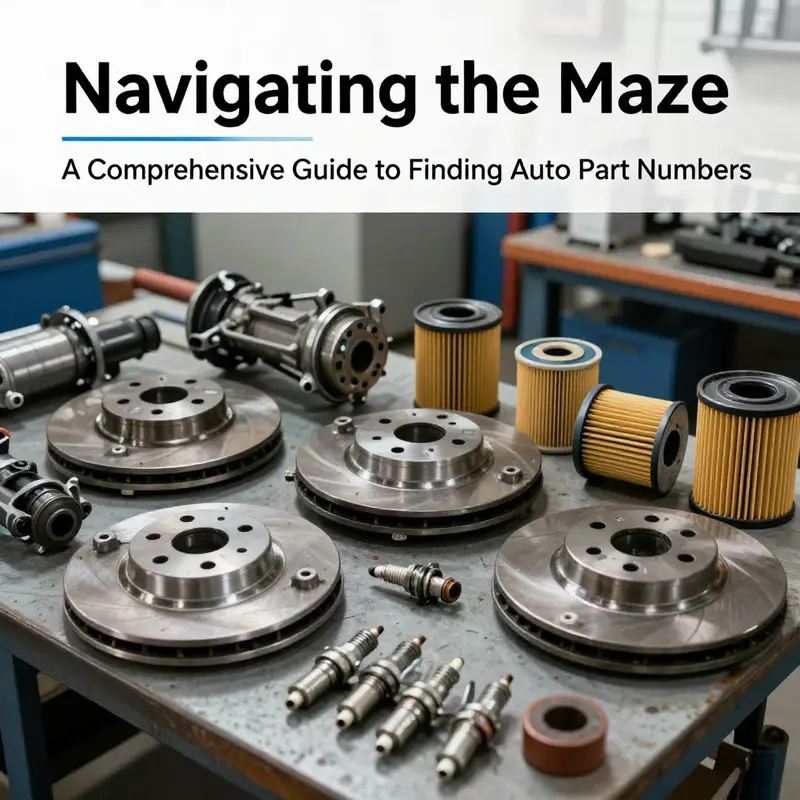
Finding a part number directly on the component is the quickest way to be certain you have the correct replacement. Many original equipment parts carry their identifier stamped, molded, or printed on their surface. These markings are the manufacturer’s shorthand, a unique code tying that piece to a specific model, engine, or trim level. When you can read the code on the part itself, you reduce guesswork and avoid ordering incompatible items.
Begin with a careful visual sweep. Numbers hide in predictable places: along the edge of plastic housings, on the flat face of a metal bracket, near the connection ports of an electrical module, or on the backing plate of brake pads. Filters, plugs, and caps often have codes on their round surfaces. Engine and transmission castings may display long strings near the bolt patterns or on the machined surfaces. Interior trim items hide small molded codes on their undersides or behind attachment points. When performing this sweep, keep lighting even and bright. A handheld LED or a phone’s flashlight oriented at a low angle will reveal shallow stamps that disappear under direct glare.
Dirt, oil, paint, and road grime frequently obscure these marks. Always clean the area before you try to read a number. Use a soft, damp cloth to remove loose debris. For stubborn grime, a mild degreaser applied sparingly, or an alcohol wipe, will clear surface contaminants without damaging paint or plastic. After cleaning, dry the area and check again with a magnifier. If the marking still resists, take a high-resolution photograph at different angles. Cropping and increasing contrast on that photo often reveals characters invisible at the scene.
Part numbers can appear in many styles. They sometimes follow a predictable pattern: a short prefix that hints at the platform or engine family, then a longer serial-like section with letters and digits. A typical code might include dashes, slashes, or leading zeros. Any of these small details matter. If you remember only part of the code, the prefix and the sequence of numbers can still narrow searches dramatically. Even a partial match is far more reliable than identifying a part by shape alone.
Pay attention to companion numbers and secondary markings. Many components display casting numbers, supplier marks, date codes, or batch identifiers in addition to the main part number. Casting numbers are often short and simple; they identify the mold and are not always sufficient for ordering a replacement. The main part number will usually be longer and formatted consistently across similar parts. Supplier marks might identify the factory that made the piece rather than the part itself. Date codes indicate production week or year. When recording information, write down everything you see. That extra context helps technicians or parts specialists confirm compatibility.
Interpreting the code may require basic pattern recognition. Prefixes often point to a vehicle family, platform, or group of engines. A recognizable engine prefix can confirm the part fits only certain powertrains. Suffixes sometimes indicate a revision level or fitment variant. For example, two nearly identical trim pieces may carry the same base number with a different suffix to show color, texture, or trim package. Noting hyphens, spaces, and letter case can prevent ordering the wrong variant.
When characters are damaged or partially missing, use context to fill gaps. Compare the visible pattern with the same part on the opposite side of the vehicle. Many parts are mirrored and carry symmetrical numbers. If you have access to a salvage yard or a parts diagram, compare the candidate code with intact examples. Cross-referencing with a manual or a digital parts catalog—if available—lets you match the partial sequence to a full, official part number.
Some parts, especially fast-moving or low-cost items, might not carry an OEM number at all. Instead they use supplier part numbers or generic codes printed on the packaging. That is normal. For these items, document all available markings and measurements—length, diameter, thread pitch, connector type, and any stamped size or capacity. A precise dimension often proves more useful than a vague visual match when ordering generic replacements.
Authenticity matters. Counterfeit parts sometimes carry fake or copied numbers. If a part’s stamping looks crude, or if the font and alignment differ from other stamped parts on the vehicle, treat the number with caution. Genuine components typically show uniform, crisp stamping or molding and follow consistent placement rules. If you suspect a counterfeit part, compare the marking to images from manufacturer resources or verified parts catalogs. A mismatch can save you from installing an unsafe or short-lived replacement.
Recording and communicating the number needs care. Transcribe characters exactly as they appear. Some letters and digits are easily confused: O and 0, I and 1, B and 8, S and 5. When sharing the code with a parts specialist, spell ambiguous characters out loud. Provide context—describe where the marking was found and what the component mounts to. A correct part number placed in the wrong location can mislead even experienced buyers.
Older vehicles present special challenges. Over time, raised numbers wear down. Repainted parts may hide original markings. In those cases, the stamped code may have been removed during repair. If you cannot find the number anywhere, shift to a measurement-first approach. Document mounting hole spacing, connector pin counts, and interface types. Note the material—plastic, aluminum, steel—and whether the part carries sensors or moving elements. These details narrow compatibility lists when cross-referencing catalogs.
For electrical and electronic modules, small labels and QR-like codes sometimes replace long part numbers. A sticker may contain a barcode, matrix code, or a shorter reference linking to a larger database. Photograph the barcode and, when possible, scan it with a generic scanner app. If scanning returns a serial number rather than a part number, provide both numbers to the parts source; many databases link serial numbers to replacement part numbers via vehicle history or configuration.
Brake and suspension parts often wear grooves or deposits that hide marks. On disc rotors, look at the inner hat surface or the hub face. Brake pads commonly have stamped numbers on the metal backing plate rather than on the friction face. On shocks and struts, search for a band around the body or a plate near the mount where the number will be etched. For rubber bushings and seals, check the mating metal sleeve or housing; the polymer surface rarely bears a detailed code.
When the visible code is a supplier or aftermarket reference, confirm fitment by cross-referencing with the vehicle’s official part number. Aftermarket vendors frequently publish cross-reference charts. If you cannot find a cross-reference, measure and compare the part to the vehicle’s requirements. For safety-related components, such as steering, braking, and restraint systems, prefer parts that display the OEM number or that come from verified suppliers.
Photographs become your best ally when the part is removed. Take multiple shots from different angles. Include a ruler or a known object in the frame to show scale. Capture the mating faces and attachment points. A clear photo of the stamped number, combined with images of the part’s mounting layout, makes it far easier for remote parts specialists to identify the correct replacement.
Use a systematic naming approach when saving images and notes. Include the vehicle’s year, make, and model, plus a short description of the part location. If the vehicle has a VIN, record it with the photo. The VIN plus a visible part number lets a parts professional confirm the exact variant you need.
Even when you can read a number, always verify it in a second source. Cross-check against a factory diagram, a service manual, or a trusted parts catalog. If you have the VIN, use it to confirm the OE number. If a part has been previously replaced, the code on the installed piece might reflect an aftermarket substitution rather than the original. A second verification step prevents surprises.
When purchasing from salvage sources or online listings, insist on a photo that clearly shows the stamped number. Sellers sometimes list generic descriptions without proof. If a number in the listing differs from what you photographed on your vehicle, ask for clarification before buying. Small differences in suffixes or prefixes can mean a different revision or fitment.
Finally, build a habit of documenting part numbers whenever you perform routine maintenance. Filters, wipers, bulbs, and small trim items are easy to record and save future time. Keep a small notebook or a photo album dedicated to the vehicle’s parts. Over the life of a car, this archive becomes a practical shortcut and a safety net when emergency replacements are needed.
For additional visual guidance on identifying part numbers and reading manufacturer markings, consult a detailed source here: https://www.pcauto.com.cn/zhinan/4327998.html
You can also check similar parts and examples to compare markings, such as this Evo 9 dashboard reference: Evo 9 dashboard parts.
Accessing Official Manufacturer Repositories: The Direct Route to Accurate Auto Part Numbers
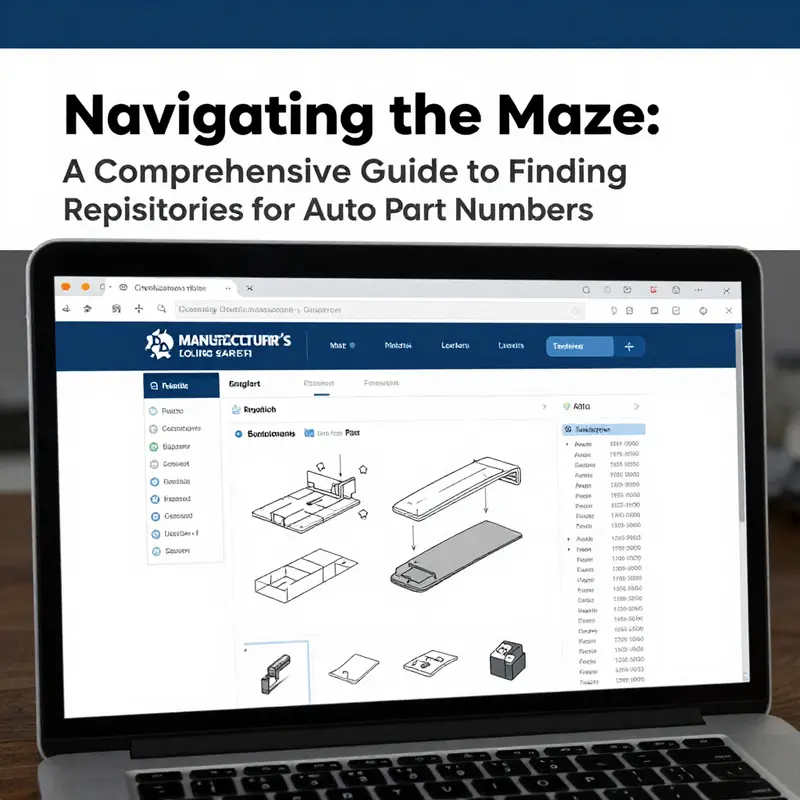
In the world of auto repair and parts sourcing, official manufacturer repositories form the backbone of accuracy. They are the direct conduits from the OEM to the technician, the DIY mechanic, and the parts professional who needs a precise, reliable identifier for a component. These repositories are not merely catalogs; they are living databases that reflect every nuance of a vehicle’s life cycle—its year-by-year changes, regional option packages, and the subtle fitment variations that can turn a seemingly simple replacement into a misfit or failure if overlooked. When you start with an official source, you set a foundation built on validated relationships between a VIN, a model’s exact configuration, and the part numbers that were originally installed or specified by the factory. This approach reduces trial and error, limits the risk of counterfeit or misrepresented numbers, and ultimately speeds up both maintenance and repair work.
The gateway to this precision is the Vehicle Identification Number, the 17-character code that encodes essential facts about the vehicle: its make, model, year, assembly plant, and option groups. In practice, the VIN is more than a serial string; it is a key that unlocks a tailored map of OE part numbers for nearly every component on the car. The most reliable pathways to retrieve those numbers begin with trusted brands’ own ecosystems, where the data is curated by engineers and technicians who understand the critical relationships between a part and the vehicle it supports. One widely used route is through brand-specific service and parts portals. These platforms, often accessible to the public but favored by dealers and service centers, connect directly to the OEM databases and present part numbers alongside fitment notes, diagrams, and installation guidance. The result is a coherent picture: a single part number may appear alongside compatible years, engine variants, and auxiliary hardware, so you can be confident that what you order will actually fit and perform as intended.
Among the most trusted channels for this work is a high-clarity ecosystem that combines VIN input with a structured parts list, backed by official diagrams. Consider a manufacturer’s digital service portal where entering your VIN yields a full OE parts list, not just generic replacements. You’ll often gain access to a multi-layered set of data: the core part number, the subassembly it belongs to, the immediate successors or prior revisions, and the exact hardware details needed for installation—such as screw sizes, torque specs, or gasket thickness. This level of granularity is essential for tasks that demand exactitude, particularly those involving engine assemblies, transmission components, or safety systems. The value proposition is clear: you are not guessing or cross-referencing with aftermarket equivalents; you are confirming that the part you select is the exact OEM specification that left the factory.
In practice, the official pathways expand beyond a single portal. Several major brands maintain official catalogs or catalog-like experiences that provide 3D exploded diagrams, which illuminate how a given part sits within the broader assembly and how it interacts with neighboring components. Such visual context is priceless when you are trying to navigate a complex assembly or confirm whether a replacement aligns with the original mounting points and electrical connections. The 3D views often come with part numbers embedded in the model or clearly annotated on the diagram, making it easier to cross-check with printed pages, PDFs, or dealership systems. This is not merely a convenience; it is a safety and reliability advantage. When you can see the exact geometry and how a part interfaces with surrounding hardware, you can avoid compatibility pitfalls that would otherwise lead to fitment issues, incomplete installations, or performance inconsistencies.
One prominent example of this approach is the use of official channels that provide VIN-based access to a complete OE catalog, with precise part numbers and detailed specifications. In the luxury and performance space, for instance, a brand’s official platform might allow a user to input a VIN and retrieve a comprehensive list of OE part numbers along with specifications that matter most to high-precision repairs. These include not only the part numbers themselves but also critical installation details such as screw sizes, torque values, and even 3D models showing placement within the engine bay or chassis. This depth of information is indispensable for technicians who deal with high-stakes components, where even a minor mismatch can lead to improper function or safety concerns.
Alongside these brand portals, another credible route is to engage with authorized dealerships through their Dealer Management System (DMS). In many cases, this route remains the most thorough for safety-critical elements like airbags, ECUs, or engine/transmission assemblies. A dealership technician can pull a complete, vetted parts list based on the VIN, ensuring that every number aligns with the vehicle’s original specification. While some dealers may charge a small fee for this service, the benefit is the assurance of OEM integrity and the availability of official fitment data that has not been filtered or generalized for broader markets. The dealership environment is also where you often encounter the most up-to-date information about current production status, component revisions, and the newest service bulletins that might affect compatibility.
For those who operate outside dealership networks or who need a broader search across multiple brands, professional automotive platforms offer another layer of support. Vendors that present parts within a VIN or vehicle-detail framework typically display OE numbers, cross-reference data, and fitment guidance. The reliability here hinges on how well the platform cross-links the OEM catalog with user-entered vehicle data. The best practice remains consistent: cross-verify with at least two independent sources. A VIN-derived list from an official portal should be matched against the numbers stamped on the part itself in a non-worn state. This practice minimizes the risk of misidentification—an issue that has plagued many repair jobs where part numbers have drifted across revisions or where the same base number is used for multiple submodels.
Speaking of physical verification, the most tangible method remains to inspect the part itself. Genuine OEM components commonly bear their part numbers stamped or laser-etched in visible positions. The challenge is that wear can obscure the imprint, especially on frequently touched items like brake pads, filters, or battery terminals. In such cases, image documentation becomes a practical aid. A high-resolution photo can be used to compare typography, font, and character arrangement against official databases. If the imprint is partially legible, even a partial match can enable a reliable cross-check. Again, the VIN-based route provides a definitive anchor; the numbers you see on the part should align with the OE numbers generated from the VIN lookup. This cross-check creates a robust, redundancy-rich approach to confirming the exact part you need.
Another essential habit is to bookmark and routinely consult the official manufacturer databases for your brands of interest. For enthusiasts who work with a particular family of vehicles, such as a line that includes engines, transmissions, and core safety systems, developing muscle memory around where these catalogs live saves time when a vehicle comes into the shop or when you’re scouring a parts bin. It also helps you remain vigilant about regional differences. Some platforms tailor the catalog not only to the vehicle’s VIN but also to the market where the car was originally sold, which can influence equipment packages and, consequently, the part numbers. When you are ordering, you might see price and availability data that reflect regional supply realities, and that can inform a smarter purchasing decision rather than chasing a phantom part that looks right but isn’t.
Pro tips sharpen the practice. First, verify part numbers using at least two methods—such as cross-referencing a VIN-generated OE list with the imprint on the actual part. This dual-check approach reduces the chance of misfit, installation issues, or later performance concerns. Second, watch for an “official certification” badge on the source website or app. That badge is not a mere marketing flourish; it signals a governance layer that helps ensure the data you access is current and sanctioned by the OEM rather than an independent aggregator with mixed reliability. Third, take advantage of the standard information that often accompanies official part listings: 3D models, exploded diagrams, and the relationships between the assembly subcomponents. These elements give you a more complete understanding of how a part is installed and how it interacts with adjacent parts, which is essential for both DIY repair work and professional replacement procedures.
To illustrate how these channels weave together in practice, imagine you’re tasked with replacing a critical engine component on a model where the part numbers vary by year and trim package. You would likely start with the VIN check in an official portal to pull the baseline OE numbers. Then you would open the brand’s parts catalog or exploded diagram to confirm the exact subassembly and the precise mounting hardware involved. If you were to supplement this with a dealership pull for safety-critical components, you would cross-check any discrepancies or ambiguities against the DMS-provided list, ensuring that every reference aligns with the conservative OEM specification. For broader context or non-critical components, a reputable third-party platform can fill in the gaps with fitment notes and supplier options—yet you would always tether those results back to the OEM data to confirm compatibility.
For readers who want a concrete example of how this approach works in the wild, consider the Mitsubishi Evo family. An internal OEM-oriented listing can surface through an official page dedicated to the Evo’s parts catalog, while a practical reference for enthusiasts can be found in this Mitsubishi Evo parts page. The link demonstrates how a typical OEM surface shows up in an online catalog, with specific part numbers attached to each subassembly. This is the kind of reference you would want to see when chasing a stubborn gong of a component that has multiple revision numbers across generations. It is not merely about finding a number; it is about validating that number in a controlled, source-verified environment, and then cross-checking it with the physical component and with the VIN-derived data.
As you navigate these official channels, a practical takeaway is to approach the process as a chain of trust: VIN → OEM catalog → part imprint (if present) → dealership/ DMS confirmation → cross-platform cross-check. When you follow this chain, you minimize the risk of misidentified parts and you maximize the likelihood of a seamless repair or replacement, even when you are dealing with rare configurations, regional variations, or EV-specific components with unique battery and motor compatibility notes. The experience of working with official repositories is not just about obtaining a number; it’s about gaining access to a verified narrative that ties the vehicle to its intended hardware in a way that aftermarket listings cannot guarantee. That reliability is what transforms a routine maintenance task into a precise, efficient, and dependable repair process.
For those who want to explore an example firsthand, you can reference an OEM-focused Mitsubishi Evo page that offers a tangible glimpse into how official part identifiers surface in catalog entries. This serves as a practical bridge between theory and application, showing how the catalog logic translates into real-world part selection. The broader lesson stands for any brand: leverage the VIN as a doorway, trust the official catalogs for the most accurate numbers, and use corroborating sources to confirm fitment before placing an order. In the end, the most reliable route to accurate auto part numbers is a disciplined use of official manufacturer repositories, reinforced by thoughtful cross-checks and a clear eye for the details that matter when you’re turning wrenches on a modern vehicle.
Internal link note: Mitsubishi Evo OEM parts page. Mitsubishi Evo OEM parts page
External resource: Mercedes me Vehicle Service Portal
Inside the Dealership Wire: How VINs Meet Their Exact OE Part Numbers Through EPC and DMS

The journey from a stubborn part mismatch to an exact OE replacement often begins where most drivers never look: the dealership system. A service department functions as a living bridge between your vehicle’s production history and the parts that keep it on the road. It’s not just a showroom or a service desk; it’s a data hub that translates a complex manufacturing record into a precise, install-ready part number. When you understand how this ecosystem works, the process of locating the right OE part becomes less of a scavenger hunt and more of a guided diagnostic that respects the car’s life story written in its VIN.
The core advantage of dealership resources lies in their access to manufacturer databases that feed the Electronic Parts Catalogs (EPC) and the Dealer Management System (DMS). The EPC is more than a static list of numbers. It’s a dynamic, 3D-enabled map of a vehicle’s anatomy, showing where each component sits, how it connects to neighboring parts, and how it may share compatibility across model years and trim levels. For partners who service a broad spectrum of makes, the EPC is the guardian of accuracy, updated in real time as new assemblies roll off the production line or receive factory service bulletins. A technician, armed with a VIN, can navigate these catalogs to pull the exact OE part number that corresponds to a vehicle’s unique production history. The VIN—the 17-character fingerprint of a car’s make, model, year, plant, and configuration—acts as the keystone that unlocks the EPC’s precise mapping.
When a VIN is entered into the EPC, the catalog doesn’t simply throw out a list of compatible items. It returns a tightly scoped set of candidates that have been validated against the building blocks the factory used when assembling the vehicle. This is crucial for components that can vary by option packages, regional specifications, or service campaigns. For instance, a brake caliper on a certain year might be different from another year’s model even if the exterior appearance and dimensions look the same. The EPC’s exploded diagrams, coupled with the VIN-specific filters, reveal the exact part numbers tied to the vehicle’s production run. This is why dealerships emphasize VIN accuracy before any search for parts—typos or missing digits can send you down the wrong path, wasting time and potentially ordering incompatible hardware.
A companion system, the Dealer Management System, coordinates the flow of information from parts catalogs to the actual ordering, inventory, and delivery. The DMS doesn’t just track what the shop has in stock; it maps each part number to its sourcing channel, price, lead times, and vehicle compatibility. When a technician identifies the OE part number via the EPC, the DMS confirms it against live supplier inventories, checks for factory-direct compatibility, and surfaces the corresponding packaging details. This is where the dealership’s workflow becomes particularly valuable for vehicle owners who need certainty. The same part number that the factory used to assemble your car can be requested again with confidence because the DMS links the number to the VIN, your vehicle configuration, and the original equipment history.
The reliability of this approach rests on two pillars: first, the accuracy of the VIN in the system, and second, the integrity of the manufacturer’s data transmitted to the EPC. When both are intact, the process yields a rare form of certainty in the aftermarket landscape. The technician can present a verifiable OE part number, supported by the vehicle’s production narrative, rather than a best-guess substitute. In practice, this means you’re far less likely to encounter fitment problems, mislabeling, or mismatched performance characteristics that can arise from generic substitutes or cross-application parts. The dealership environment is built to enforce this kind of accountability, and the real advantage for the customer is that it minimizes the risk of compatibility issues that plague other sourcing routes.
Beyond the VIN-driven lookup, dealerships also provide direct access to the manufacturer’s official channels. While the EPC is the primary tool, manufacturers maintain supplementary catalogs on their own sites or through partner portals. These catalogs often feature confirmation pages that mirror the EPC’s results, with additional notes about service campaigns, recalls, or updated part numbers tied to a specific production batch. For those seeking extra assurance, technicians can cross-check the number against the manufacturer’s live catalogs, ensuring that the part’s designation aligns with the vehicle’s exact year, trim, and regional specifications. In the event a part is updated or superseded, the EPC and DMS together can track those changes and present the current OE number along with any relevant supersession history. This layered verification—VIN-based EPC lookup plus DMS-assisted verification against manufacturer data—constitutes a robust control framework for part-number accuracy.
Another practical advantage the dealership environment offers is the visible and tangible traceability of parts. Genuine OEM components arrive with clear, durable labeling that carries the part number on the product itself, as well as on the original packaging. The number is typically a 9- to 17-digit alphanumeric code, laser-etched on metal or molded into high-visibility stickers inside the packaging. This dual labeling supports traceability: if a technician needs to confirm the part at the counter or during installation, the label can be read directly from the component or checked against the packaging’s documentation. The reliability of this labeling is a direct reflection of the OEM’s quality practices, and it provides a physical confirmation that the digital record corresponds to a tangible object.
In situations where the exact part is not obvious from the EPC alone—such as complex assemblies or components that have multiple sub-variants—the dealership’s approach is to trace the part to its production history. The VIN ties the vehicle to a particular assembly line, a specific plant, and a given batch of components. This chain of custody is especially important for safety-critical parts like airbags, ECUs, or engine and transmission assemblies, where incorrect substitutions can introduce risk. In these cases, the dealership often opts for the most conservative route: confirm the OE part number through the EPC, then verify again through the DMS against the manufacturer’s official catalog and the vehicle’s service history. If there is any doubt, the technician can escalate to a specialist who handles parts for that particular brand or model program. The goal is not to rush an order but to ensure that the replacement aligns perfectly with factory specifications and safety standards.
For those who want a tangible example of how this workflow looks in practice, consider the moment you walk into a shop and describe the component you need. The advisor doesn’t simply pull a random list of parts; they ask for the VIN, confirm the model and year, and then retrieve the exact OE number from the EPC. They cross-reference that number with the DMS to confirm stock status, price, and lead time. If the part sits on a shelf with a barcode, the technician scans it to confirm it matches the recorded OE number. If needed, they pull up the original packaging documents to show the exact part description and its intended application. This is how a dealership protects accuracy across the entire replacement lifecycle, from ordering to installation and beyond. The goal is clarity and certainty, not merely availability.
In some niche cases, the search for OE numbers may extend into specific product lines or rare configurations. For example, a particular Evolution part may be cataloged in a way that seems esoteric to a casual observer but is perfectly standard within the EPC ecosystem. A cross-reference entry, such as mitsubishi-evolution-evo-4-9-shock-block-short-motor-engine-complete-4g63-1000b075, demonstrates how even highly specialized components can be indexed within the EPC and linked to a VIN-derived configuration. Such entries illustrate the depth of the dealership data network and why relying on trained technicians who can navigate the EPC and DMS yields results that are both accurate and dependable. The point is not to limit the customer to a dealer’s service bay, but to provide a reliable, auditable path for the part-number discovery that you can then validate through additional sources if you wish.
The broader ecosystem also recognizes that many owners want to verify numbers through manufacturer sites or independent catalogs. The dealership approach complements this by offering a historically grounded link back to the vehicle’s original assembly and production record. Manufacturer sites—like Toyota’s official parts catalog, for example—provide searchable databases that can corroborate the dealer’s OE number, often with model-year filters and VIN-based search options. The dealership, however, remains the most authoritative single source where all the data converges, because it combines live catalog data with the vehicle’s actual service history and real-time inventory. This convergence is what makes dealership channels the most reliable method for extracting OE part numbers, particularly for vehicles with a long production run or multiple sub-variants.
If you’re approaching parts procurement with a mindset of precision, you’ll find that the dealership route also offers practical benefits beyond the number itself. The parts department can confirm the part’s compatibility with your vehicle’s current configuration, discuss any service campaigns or recalls related to the component, and provide packaging that clearly identifies the exact OE number. They can also guide you toward the appropriate replacement strategy, whether that means ordering a single part, a complete assembly, or a factory-approved alternative that preserves performance and warranty terms. The integrity of this process rests on two simple habits: present the correct VIN, and ask the right questions. When you combine VIN accuracy with an in-house EPC-driven lookup, you’re effectively turning the dealership into a factory-backed search engine that knows your car inside and out.
For readers who want to explore this path with a concrete, hands-on approach, remember that the dealership is not a black box. It is a well-integrated system designed to minimize guessing and maximize accuracy. The technician’s first move is usually to verify the VIN and re-check it against the vehicle’s ID plaque or dashboard label. From there, they step into the EPC and begin a VIN-driven search, watching for any superseded numbers or changes in the part’s designation. If the part is safety-critical, or if there is any ambiguity about fitment, the technician will escalate the inquiry to a specialist or access the manufacturer’s official catalog in parallel. The result is a part number that matches the car’s exact year, model, and option package, delivered with a traceable history that you can reference on your invoice, your service ticket, and, if needed, your next purchase order.
When you’re ready to bring this process into your own maintenance routine, it helps to arm yourself with the right questions and the right expectations. Bring the VIN, the vehicle’s current odometer reading, and a clear description of the component you’re replacing. If you already know the suspected OEM number, share it as well. Ask for confirmation from the parts advisor that the OE number aligns with the EPC entry and the DMS’s current inventory status. If the advisor offers an alternative number, request a cross-check against the manufacturer’s own catalog and any available service bulletins. This multi-pronged verification approach mirrors the dealership’s own reliability standard and gives you a shield against misinterpretation or mismatched parts. In the end, the aim is straightforward: a correct, installation-ready part that preserves the vehicle’s performance, safety, and longevity.
A useful, real-world hint for enthusiasts who frequently source parts for less common variants is to keep a small library of VIN-proven references. If a particular component is tricky to identify by sight or dimension, the VIN-backed EPC search often reveals a narrow field of candidates, with diagrams that show how the part interfaces with adjacent components. When you spot a number that appears on the part’s label, compare it to the EPC’s listing and to the DMS’s packaging documentation. If all three sources align, you’re looking at a reliable match. If they don’t, you’ve uncovered a moment to pause, double-check, and perhaps bring in a second opinion from a specialist. The dealership’s infrastructure is built to manage these complexities with a rigorous audit trail and a clear path to resolution.
The bottom line is that the dealership is the most robust, comprehensive, and auditable route to obtaining exact OE part numbers. It ties the VIN to real-world production data, merges it with live inventory and supplier information, and anchors the result to a physical part that bears the correct labeling. This integrated approach minimizes the risk of incorrect substitutions and ensures you receive parts that fit, perform, and warranty-qualify as intended. For readers who want to see how this looks in practice, you can explore a related resource that demonstrates how specific Mitsubishi Evolution components are cataloged and referenced within a dealer-backed framework: mitsubishi-evolution-evo-4-9-shock-block-short-motor-engine-complete-4g63-1000b075. If you want a broader perspective on OEM catalogs beyond the dealership environment, remember that the official manufacturer portals and trusted independent platforms can offer corroboration, but the dealership remains the central, authoritative source that marries the vehicle’s history with the parts that keep it on the road. External resources such as Toyota’s Parts Catalog further illustrate the same principle in a brand-agnostic sense: the VIN-driven lookup, the OEM-number labeling, and the direct link to production standards are universal features of the modern parts ecosystem.
External resource: Toyota Parts Catalog – Official Website (https://www.toyota.com/parts/)
Final thoughts
Successfully locating auto part numbers is fundamental to maintaining operational efficiency and customer satisfaction in the automotive business. By mastering the strategies outlined—from utilizing VINs and inspecting parts to tapping into manufacturer databases and dealership resources—you can significantly improve your sourcing processes. This not only saves time and reduces errors but also enhances your credibility and service quality in the eyes of your customers. Equip your business with these skills, and stay ahead in a competitive market.