
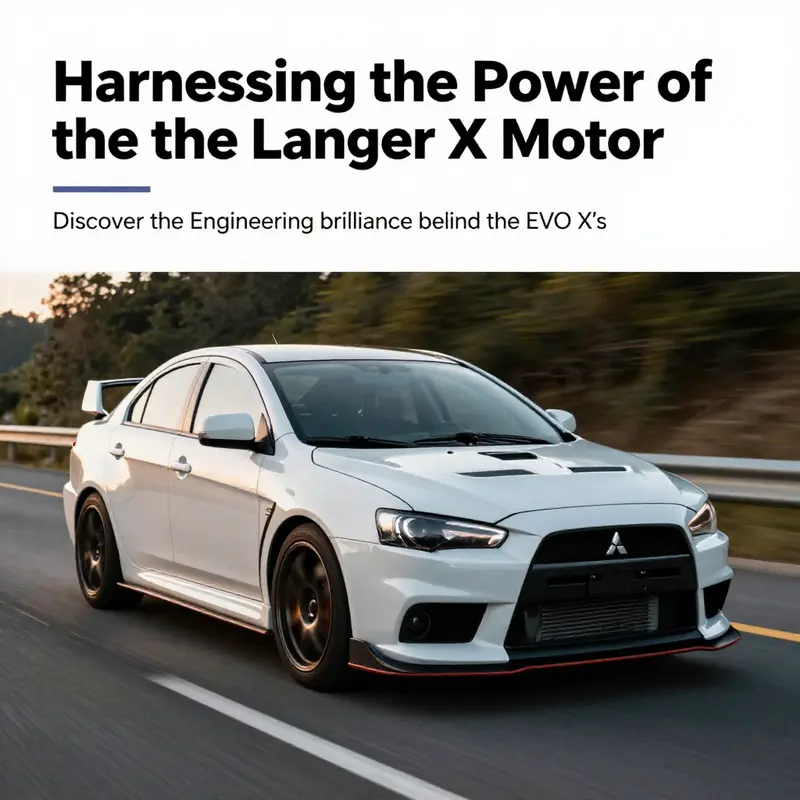
The Mitsubishi Lancer Evolution X, often referred to as EVO X, is a pinnacle in high-performance vehicles, making waves in both automotive and enthusiast circles. Central to its allure is the powerful 4B11T engine, a technological marvel that defines its exceptional driving experience. This article delves into three key areas: first, an in-depth analysis of the engine’s core parameters and performance metrics; second, a look at the innovations and design philosophy that underscore its engineering; and finally, an examination of its market performance and the vibrant culture it inspires among driving enthusiasts.
动力的解剖与路感的极限:解码 Lancer Evolution X 的 4B11T 发动机及其工程哲学
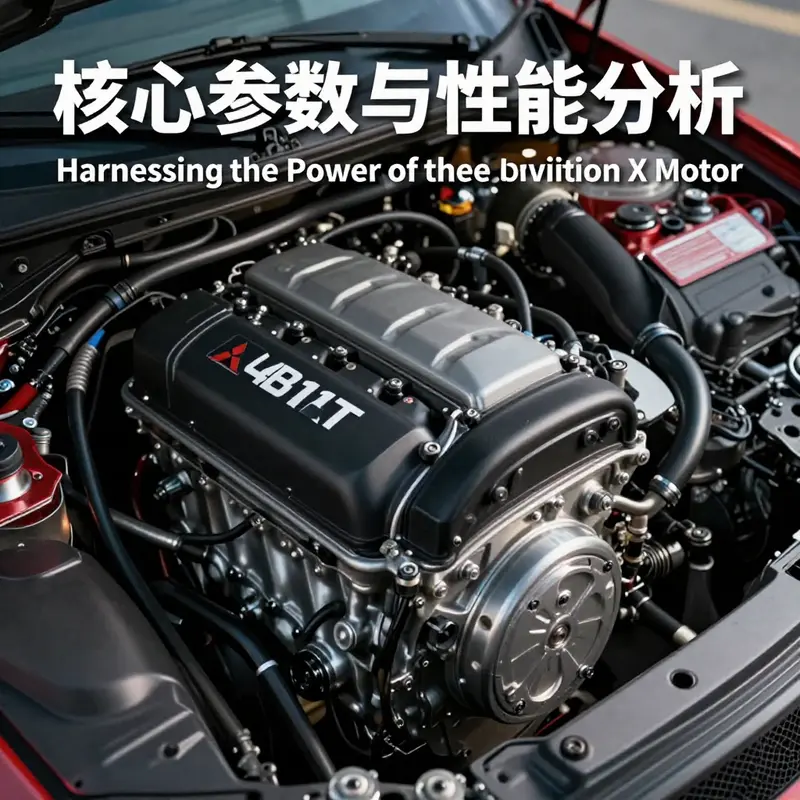
在一辆高性能四门轿车中,发动机并不仅仅是提供动力的装置。对于 Lancer Evolution X 而言,4B11T 2.0 升涡轮增压发动机像是整车性格的心脏;它的响应、扭矩曲线、热管理与轻量化设计共同决定了这台车在赛道与日常之间的过渡能力。该发动机以紧凑的排量实现了高热能转化效率,借助涡轮增压和可变气门正时系统,把燃油的化学能以极高的效益转化为路面可感知的速度与力道。无论是在蜿蜒的山路还是在直线的高速段,4B11T 均能将车身的重量与空气阻力之间的张力转化为可控的动量。它的存在,让 EVO X 不仅在直线加速中给人震撼,也在弯道中以极致的线性响应展示出钢铁般的刚性与灵活性。通过对核心技术的逐步优化,发动机在不同版本之间保持了足够的灵活性,以应对市场对性能、耐用性以及日常可驾驶性的综合诉求。对热管理、材料选择和制造工艺的细心打磨,使这台发动机在极限条件下仍能保持稳定的性能输出,这也是它成为车迷心中“东瀛战神”誉名的重要原因之一。
动力的心脏与驾控的哲学:解码 Lancer Evo X 的 4B11T 发动机与全轮驱动的艺术
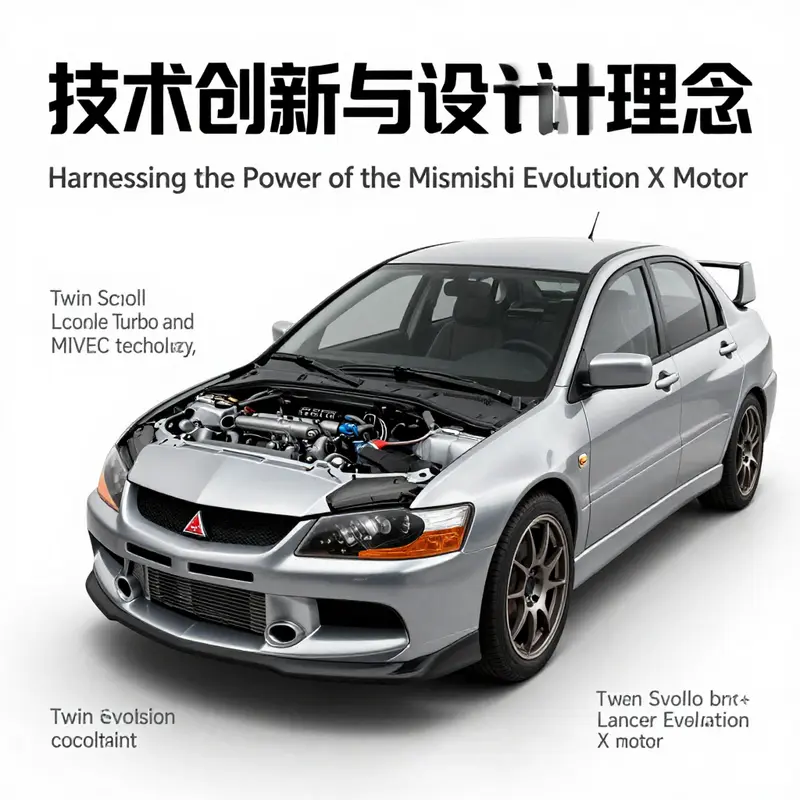
在讨论三菱 Lancer Evolution X 的时候,发动机往往被描述为“心脏”,但真正让这颗心跳出激越律动的并非单纯的排量数字或涡轮压力,而是它与整车工程的深度协同。Evo X 搭载的代号为 4B11T 的 2.0 升直列四缸涡轮增压发动机,像是一枚经过精密调校的小型发动机艺术品。它的排量为 1998cc,属于紧凑而高效的工艺品。官方对最大功率的表述在不同版本之间存在小幅差异,常见区间落在 291 到 303 匹之间,而限量版的 Final Edition 进一步将马力推至 303 匹。峰值扭矩则覆盖一个相对宽广的区间,从低转到中高转都能提供充足的推动力,研究资料中给出的数据在 366 至 422 牛·米之间波动,且在 2500 到 5000 rpm 的区间内呈现出极致的扭矩滑动和持续性。这样的设定并不是简单的功率叠加,而是为操控与响应设计的“宽转矩带”——以确保在曲线中保持推力的连贯性,在直线起步时给予强而稳定的爆发。发动机的关键技术创新为整车的性格奠定了基础。双涡管单涡轮(Twin Scroll Turbo)的设计有效降低了涡轮迟滞,使动力响应显得更为线性,驾驶者在踏下油门后能够更直观地感受到车辆的进入感与推进力的连贯性。这一点在高速弯道中尤为重要,因为涡轮迟滞往往是惊喜与不确定性之间的分界线。配合此举的,是 MIVEC 技术——三菱的可变气门正时与升程电子控制系统。通过智能调整气门的开合时机和升程,MIVEC 能在不同工况下实现高效与高输出的折中,确保发动机在低速阶段的扭矩平滑性,以及在中高速段的呼吸能力,从而使综合性能更趋稳定。铝合金缸体的应用,进一步降低了发动机自身的重量,也提升了热管理效率。这些材料与工艺的选择,既考虑了日常驾驶的耐久性,也为赛道环境下的高热工况留下了足够的余量。若从工程之眼看,4B11T 的结构设计像是在平民轿车上进行极限驾驶的实验性实验品,在保持日常可用性的同时,将可能性推向边界。这并非仅仅追求“更大马力”,而是在同一发动机平台上实现“更早的响应、更宽的可用扭矩带”和更高的热稳定性。正因如此,Evo X 不仅在直线加速方面给人以震撼,更在弯道中让人相信它具备与赛车级别相近的动态跟踪能力。为了理解这份信念,必须将发动机、传动系统与驱动架构的协同工作放在同一个框架内审视。
如果把节奏放在整车的运行曲线中来看,4B11T 的功率曲线不是单纯的峰值数据所能解释的。它在 3500 rpm 左右的扭矩输出已经达到较高的饱和,配合 2.0 升排量带来的中低速扭矩特性,车辆在穿过弯道时不仅能快速建立滚动阻力,还能在进入弯心前保持稳定的推力。这种“较宽的有效扭矩区间”是 Evo X 的驾驶体感的核心。若以官方资料为参照,4B11T 的输出在不同版本之间虽有差异,但共同点是一致的:强调从低转到高转的持续性与线性响应。驾驶者无需在转速区间内频繁追逐动力峰值,便能获得稳定而强劲的推进。随着引擎热管理与燃油供给的不间断,整车在持续性驾驶中也能保持恰当的底盘稳定性。
这枚发动机并非孤立运作的孤岛。S-AWC(Super All-Wheel Control)智能四驱系统是它的“大脑”,也是整车动态表现的核心支撑。S-AWC 将 ACD(主动中央差速器)、AYC(主动舵角控制系统)和 ASC(主动稳定控制系统)整合成一个实时计算的动力学控制平台。它能在复杂的弯道中不断评估前后轴的扭矩分配、后轮的制动力分配,以及车身在横向与纵向上的姿态变化。换句话说,当车辆进入弯道时,系统会根据实时的数据抉择最合适的扭矩输出与制动矢量,以实现更接近“完美循迹”的结果。对于驾驶者而言,这样的系统意味着在同样的弯道、同样的路面条件下,内心的信心会被系统持续地放大。它更像是一个会学习的合成乐队,协调着发动机、传动和悬架的每一个细胞,让整车在过弯时呈现出更低的转向不足与更高的转向精准。尤其在高速过弯的场景,S-AWC 会倾向于加强内侧后轮的牵引力与制动力控制,以帮助车辆更顺畅地向弯心进入,这一过程并非单向的“刹车点内”,而是一个全方位的力学微调,确保前轮指向与车尾跟随之间保持紧密的协调。传动系统方面,Evo X 提供两种变速箱选择:5 速手动变速箱和 6 速 TC-SST(双离合自动变速箱)。这两种系统各有侧重。手动变速箱强调驾驶者对换挡时刻的直接掌控,留给驾驶者更多“参与感”;双离合变速箱则以快速、平顺的换挡节奏著称,辅以方向盘上的换挡拨片,帮助驾驶者在激烈驾驶中保持节拍与动力连贯性。对于许多热爱在赛道上打点的人来说,TC-SST 的存在几乎像是一种“辅助的节奏感”,让换挡的中断最小化,同时保留了手动操作的直观反馈。
设计理念在 Evo X 的外观与硬件组合中也显现出哲学的统一。前脸的鲨鱼鼻设计、扁平而拉长的车身线条,以及尾部的扰流器布局,共同构成了在高速下的空气动力学表现实。巨大的梯形进气格栅不仅带来充足的进气,更成为视觉冲击力的重要源泉。18 英寸的 BBS 锻造轻量轮毂与 245/40 R18 的优科豪马 Advan 轮胎组合,提供了不折不扣的抓地力和响应速度。制动系统选择 Brembo,前后通风盘与红色卡钳在高强度驾驶下的热衰减能力尤为关键。车身在动态时的表现离不开悬挂的调校,合理的减振器设定与连贯的几何结构共同保证了在激烈操控中的稳定性与可预测性。 内饰方面,Evo X 的氛围亦不失专注于运动本质。黑色基调与银色装饰的对比,营造出强烈的视觉冲击。标配的 RECARO 桶形座椅提供出色的侧向支撑,帮助驾驶者在极限过弯时保持姿态稳定。仪表盘以“双炮筒式对称”设计呈现,转速表红区设在 7000 转/分钟,强调了高转速的性能定位。三辐平底方向盘与换挡拨片为驾驶者提供了更直接的操作体验,强化了仪式感与操控的便利性。
在这样的综合设计语言下, Evo X 的动力系统不仅仅是输出数值的组合,而是一种整体驾控体验的表达。4B11T 发动机与 S-AWC 智能四驱的耦合,使整车的响应在从起步到转弯的全过程中保持连续性。即使在 0-100 km/h 的加速时间被记录在约 5.9 秒的区间,驾驶者也能感受到从踏下油门的瞬间到加速曲线进入稳定阶段的平滑过渡。这是通过高效的涡轮响应、智能化的气门调控以及对扭矩输出的动态管理共同实现的。在日常道路驾驶与赛道驾驶之间,Evo X 的工程师们以“平民轿车也可以被科技武装”的信念来驱动整车的调校。这种理念不仅体现在发动机本身的耐久性和响应性上,更体现在整车平台对操控与稳定性的综合追求之中。
不可忽视的是,Evo X 的工程实践还体现了对赛道能力与公路可用性之间平衡的追求。尽管在 2016 年停产,但这架机器在当代车迷心中仍被视为经典。其铝合金缸体、轻量化设计,以及对涡轮增压系统与气门正时的综合优化,均使其成为当时高性能技术的集中体现。这不仅是马力的堆叠,更是对可控性与耐用性之间关系的探索。正因为此,许多车迷与专业人士仍然将 4B11T 视作“发动机工程的一个里程碑”,相信它在赛道上所展现出的综合潜力,超越了单纯数据的意义。
作为对话式叙述的一部分,本文也将内部工程细节作为理解的切入口。对 4B11T 的铸件与结构设计的深入探索,可以通过专门的改装部件页面来获得更多技术层面的信息,例如铸铝块体的强化版本与极端工况下的热管理改进。这些细节并非为了喧嚣的排量对比,而是在强调:发动机的耐久性、热稳定性与高转速时的可靠性,是决定长期驾驶体验与赛道释放潜力的关键因素。对追求极致操控的车主而言,知悉并理解这些部件的作用,能帮助他们在改装或赛道培训中做出更为明智的选择。请读者在需要时关注关于 4B11T 发动机结构与铝合金缸体的进一步资料,这些资料将帮助理解发动机在热管理、重量分布与刚性方面的综合优势。 4B11T billet block 作为该领域的一个研究入口,提供了对高端部件设计的一个切口,帮助读者理解在高性能应用中如何通过材料与加工工艺提升核心部件的耐用性。
在回顾这一切的同时,不能忽视 evo X 的历史语境。它在 2010 年代前半期的市场定位,是以高性能为核心诉求,同时保持对民用日常驾驶的可接受性。这种定位使得发动机与传动系统的调校不仅要在赛道上表现出色,也要在日常公路驾驶中具备稳定性与耐用性。最终,Evo X 以“技术武装平民轿车”的理念树立了一个时代的象征。它的设计哲学并非一味追求极端马力,而是在于实现“驾驶者对车辆的信任感”,这正是现代高性能车追求的核心价值。
对未来的展望,4B11T 的精神仍然值得研究与借鉴。它们所体现的技术路径——涡轮增压与气门正时的协同、铝合金缸体与热管理的协同、以及以智能化驱动平台实现综合控制的理念——在后来者的设计中仍然具有启示意义。对于那些愿意在公路与赛道之间寻找平衡的人来说, Evo X 提供了一种参考模型:一个以科技为手段、以驾驶乐趣为目标的性能平台。它不是盲目追求极致的瞬时快感,而是通过系统级的工程设计和跨领域的协同工作,塑造出一个在多场景下都具备高可预测性与回馈性的动力体系。这种“可持续的性能”正是它留给后世的宝贵财富。
外部参考资料的存在,帮助我们把对 Evo X 的理解放在更广阔的知识谱系中。广义上,发动机技术的发展、涡轮增压的应用、以及四驱控制系统的演进,都是汽车工程进步的重要组成部分。若你愿意深入了解更多层面的信息,可以参考相关的权威资源来扩展视野。 外部参考:维基百科上的 Lancer Evolution X 条目提供了对车型历史、技术规格及市场表现的系统整理,是理解 Evo X 技术背景的一个有益入口。 Lancer Evolution X on Wikipedia
Under the Hood and Beyond: Market Currents, Collector Mindsets, and the EVO X Motor’s Cultural Pulse
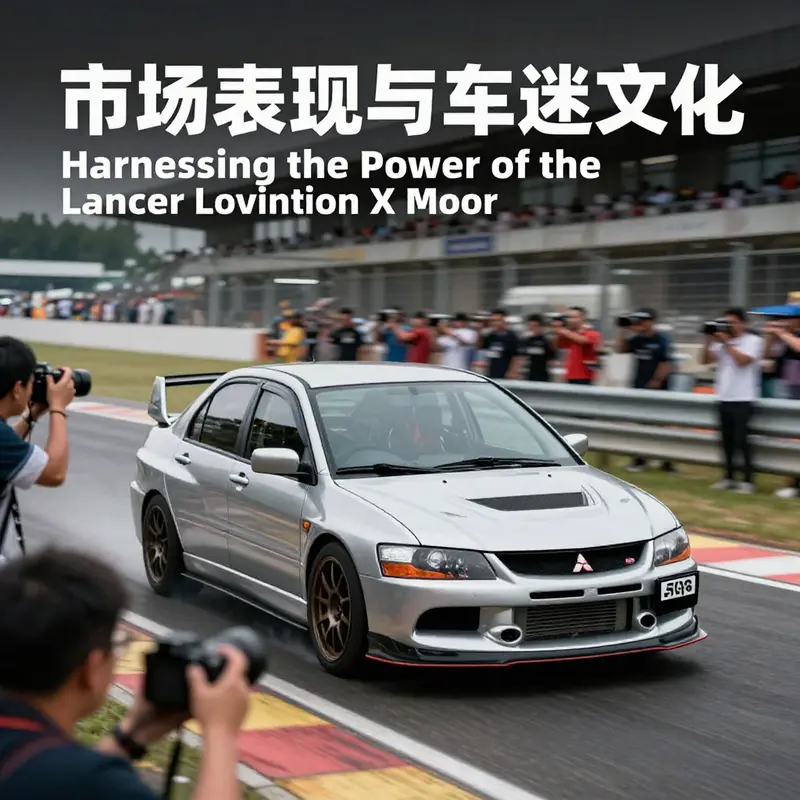
The state of a car is seldom measured only by its numbers at the chassis dyno or its zero-to-hero sprint. It lives in conversations around coffee breaks, in the whispers of the garage, and in the price tags that shift with the seasons. The EVO X, powered by the 4B11T engine, sits at a fascinating crossroads where engineering ambition, market reality, and fan devotion collide. It is not merely a powerplant under a bonnet; it is the heartbeat of a car that defined an era for enthusiasts who chase precision, drama, and the thrill of instant, tangible feedback from the road. In this chapter, we trace how that engine’s technical prowess translated into a market story and how the car’s culture, both nostalgic and forward-looking, keeps it alive in the minds of a generation that still loves to debate, modify, and collect. What happens when a performer who once sang on the rally stages becomes a collectible in a showroom and a topic of endless chatter in online communities? The answer lies as much in pricing, scarcity, and perception as in boost curves and exhaust notes.
When the Evolution X stepped into the spotlight in 2008 as the successor to the widely admired EVO IX, it carried the weight of a storied lineage. The 4B11T 2.0-liter aluminum engine was a clear statement: Mitsubishi would blend the glory of rally-bred torque with modern tech to broaden the car’s appeal without surrendering its essence. At the core, the engine combined a compact displacement with a twin-scroll turbocharger, aluminum construction, and a sophisticated intake–exhaust management system. This was a powerplant designed not only for peak horsepower but also for a broad, usable torque band. In practice, that meant horses that came on in a more linear, accessible fashion and a surge that was perceptible from the moment you rolled into the mid-range. The torque curve, stretching from the lower revs into the mid-range rpm, delivered a sense of immediate urgency that translated into lively acceleration, especially in sportier drive modes. A 0–100 km/h time around 5.9 seconds was not merely a number; it was a declaration that a compact sedan, tuned for road and track, could pair daily usability with track-ready tempo.
Market dynamics around the EVO X’s release reveal a layered story. In its home market, and in many import markets, the car established itself as a high-performance compact with a price premium that signaled its specialized role. In China, for example, the official price range hovered in the vicinity of roughly fifty thousand yuan, give or take a few tens of thousands depending on the spec and the year. That positioning told buyers this was a premium product that fused the thrill of a race-bred engine with the daily practicality of a four-door sedan. It was a car meant to be driven hard and observed with pride, not merely an object to own. Across borders, international values followed a similar logic but with distinct variations driven by market demand, import duties, and the era’s currency dynamics. The EVO X’s relative valuation as a used car reflected a dual sentiment: respect for its engineering and a sober view of the higher maintenance and parts costs that can accompany a performance-oriented vehicle of its era.
Despite the model’s eventual discontinuation, the EVO X remains a magnet for value retention in the used-car segment. Its legacy as a “halo” model, coupled with the 4B11T’s reputation for strong reliability when properly maintained, endowed it with a durable, collector-friendly aura. In domestic markets, and particularly in the years following the end of production, the values of these cars often displayed a two-gear dynamic: steady interest from enthusiasts who wanted to preserve the car in as-original a state as possible, and a parallel stream of buyers who sought affordable entry points into the EVO universe. The resulting price movements tell a nuanced story. On the one hand, the entry price for a safe, well-kept EVO X in the mid- to late-2010s could look appealing against the price of contemporary performance cars; on the other hand, scarcity began to assert itself as the model aged. In 2025, for instance, many EVO X examples in reasonable condition still circulated in the mid-to-high tens of thousands of yuan in the domestic market, while well-preserved units — especially those with lower miles and a clean history — enjoyed a premium that reflected their status as a finite link to a more aggressive era of performance sedans.
A parallel dimension of market reality appeared on the international stage. In the global used-car market, the EVO X most commonly settled into a price band of approximately 35,000 to 45,000 U.S. dollars for typical, driver-ready examples in the mid- to late-2010s. The limited Final Edition, a model celebrated for its sharper alignment with the original rally discipline and the last glow of a lineage, could fetch notably higher figures, often in the region of 45,000 to 50,000 dollars, reflecting its rarity and its symbolic status as the final act of a long-running performance. These numbers, while not dramatic by the standards of some modern hypercars, spoke volumes about how collectors, enthusiasts, and new entrants perceived the EVO X: a car whose value was as much about the story it told as about the raw numbers beneath the hood.
Culturally, the EVO X has generated a spectrum of opinions that explains why it remains a touchstone of the brand’s performance identity. The dialogue around the car’s handling and dynamics tends to revolve around two camps. One side celebrates the EVO X for introducing a refined chassis language enabled by the Super All-Wheel Control system and a more sophisticated damping tune. The other side laments the car’s mass increase and the shift in the driving experience that accompanied the move from the EVO IX’s more compact, direct feel to a larger, more capable chassis. The debate stretches beyond technicalities and into the realm of what enthusiasts value most: a raw, tactile connection to the car’s intent, or a well-rounded, accessible instrument that remains thrilling in daily use. In reality, the EVO X offered a blend of both: an environment where the car’s electronic aids could be dialed back to reveal the underlying chassis signals, while still providing a reassuring margin for less confident drivers in variable conditions. This duality became a key driver of its culture, as fans learned to navigate the balance between precision and the forgiving nature of modern drivetrains.
Inside the broader fan ecosystem, the EVO X occupies a particularly interesting role. It is often described as the “end-of-an-era” model within a lineage that had built its reputation on a direct and relentless approach to driving engagement. The car’s interior accommodations, while reasonably refined for its class, did not aim to reduce the driver to a synthetic experience; rather, they offered a platform where the engine’s character could be experienced with a clear sense of responsibility and control. This alignment helped foster narratives about the car as an instrument rather than a luxury accessory. Enthusiasts discuss how the engine’s torque delivery meets the chassis’ intent, how the turbo’s responsiveness interacts with the MIVEC valve-timing system, and how selective modifications can unlock a more personal driving arc without eroding the car’s identity.
As a result, aftermarket culture grew around the EVO X in ways that reinforced its market presence. The car became a canvas for enthusiasts who sought to preserve, elevate, or personalize the original experience. The tuning conversation — never purely about horsepower, but also about response, balance, and reliability — found a natural home here. In this milieu, modifications such as lighter body components, optimized exhaust paths, and advanced intercooling strategies were discussed not only for peak numbers but for how they would affect throttle response, heat management, and cornering confidence. The lure of a removable carbon-fiber bonnet or a lighter drive shaft was as much about preserving the spirit of the car as it was about adapting it to a specific local track or street environment. This culture sustained the EVO X’s relevance long after production ended; it kept the car in conversation and in garages where the next generation could discover a point of resonance with a brand that had once stood at the intersection of rally heritage and street performance.
From a practical standpoint, the EVO X’s market story also reveals how owners and buyers navigated ownership economics. The car earned a reputation for rewarding diligent maintenance, attentive torque management, and a thoughtful approach to wear components such as clutches, turbochargers, and cooling systems. When owners paid attention to service history, to the quality of parts, and to the condition of the chassis and suspension, the perceived value of the car tended to stay robust even as the market for new performance sedans shifted toward electrification and lighter, more computer-managed platforms. In such an environment, the EVO X’s blend of mechanical focus and electronic sophistication became a compelling counterpoint to the rapid evolution of automotive technology around it. The model’s longevity in the second-hand market, combined with its scarcity as a later-generation survivor, helped sustain a culture in which owning one was seen not merely as a hobby but as a kind of custodianship of a particular era’s driving ethos.
The conversation around market performance and car culture for the EVO X is not just about the car in isolation; it is about the social economy of the enthusiast world. The car functions as a hinge between two forms of value: monetary value, which is visible in price tags and the cost of maintenance, and intangible value, which emerges in the form of memory, identity, and community. In this sense, the EVO X is more than a set of numbers or a garage favorite; it is a portable artifact that carries with it a shared memory of how drivers learned to seek grip, balance, and momentum on the edge of performance. The 4B11T engine, with its twin-scroll turbocharging and sophisticated valve control, stands at the center of that memory. Its performance characteristics, and the way they translated into street and track behavior, provided a language through which a generation could articulate what it means to push a car toward its limit while still feeling in control.
That sense of control, and the car’s ability to reward good judgment as much as it rewards horsepower, has continued to shape its market demand. When buyers seek a car with a proven track record, they often look not only at how fast a vehicle can accelerate but at how predictably it can deliver the dynamic response that matters most on the road — steady torque, linear boost, and a chassis that speaks clearly through cornering. The EVO X’s market performance, then, is less a simple arithmetic of depreciation and more a narrative of how enthusiasts read a chassis, how they value a car’s robustness under spirited driving, and how scarcity translates into desire. In a sense, the EVO X achieved a status that few cars attain: it became both a tool for performance and a symbol of a culture that believes in the beauty of imperfect, imperfectly refined mechanical purity wrapped in modern engineering.
From this perspective, the EVO X’s legacy is not merely historical; it is functional and ongoing. Enthusiasts continue to search for examples that reflect meticulous maintenance, low mileage, and a careful blend of original components with thoughtful, purpose-built upgrades. The market responds in tandem with those desires, showing that even a production car no longer in regular production can maintain a resonant value. The Final Edition, with its slightly higher performance envelope, stands as a reminder that special runs can crystallize a model’s memory into something collectible, a badge of a fleeting era when the engineering team could ambitiously push the envelope without yet crossing into the electrified future. In the broader narrative of performance automobiles, the EVO X’s engine and chassis pairing carved a unique place that continues to influence how people think about balance, risk, and the joy of driving on the edge.
The car also offers a lens on the evolving relationship between engineers and fans. Technical details — the aluminum block, turbo architecture, and valve-timing logic — are not just specifications; they become touchpoints for storytelling. The way enthusiasts describe throttle response, turbo lag, and mid-range surge is a way of passing down knowledge, a form of mentorship across generations. The EVO X has thus become a living classroom: an example of how modern engineering can bridge the gap between raw mechanical feel and the predictability needed for daily use. In this sense, the 4B11T engine’s enduring reputation is because it delivered a balance that could be appreciated on a winter commute as readily as on a summer track day, a balance that allowed drivers to push without losing confidence in the car’s overall behavior.
For fans and collectors, the economics of scarcity often intersect with the car’s emotional resonance. The EVO X’s status as a nearly final step in a famous lineage adds to its mystique. The finality, in this case, is not just about discontinuation; it is about a cultural moment when performance cars were both machines and memories. The idea that this model might someday be viewed as a historical artifact is reinforced by the way market prices react to global demand, to the availability of pristine examples, and to the stories that owners tell about their cars’ early days, their track experiences, and the long evenings spent addressing maintenance quirks that come with any performance engine of its era.
If one looks closely at the cultural economy around the EVO X, the pattern is clear. It is a car that rewarded buyers who valued sound engineering, specific handling traits, and an engine that could deliver a meaningful, measurable sense of speed without requiring the vehicle to be pushed into the redline at every corner. Its market value, in both domestic and international contexts, reflects a consumer base that considers ownership more than ownership itself: it is an ongoing relationship with a car that promised a particular driver’s experience and delivered a consistent, repeatable version of it. Enthusiasts who keep the model alive do so not only to enjoy the car in isolation but to participate in a broader tradition of sharing know-how, comparing builds, and challenging each other to tune for the right balance of torque, response, and control. In that sense, the EVO X’s motor is not only a set of pistons and a turbo; it is a catalyst for a culture that prizes hands-on learning, community sharing, and the idea that a car can be more than a sum of its parts when those parts are put together by people who love the discipline of driving well.
The chapter’s ending, if one could call it that in a story that remains ongoing, does not come with a neat closure. Instead, it points to a continuing dialogue between past glory and future curiosity. The EVO X, through its motor and chassis, invites new generations to discover and discuss what performance can be in the era after the internal combustion–powered rally era. It invites them to weigh the trade-offs between a car that feels immediate and engaging at every rev and a newer platform that may offer greater efficiency, safety, and connectivity but might not deliver the same visceral sense of raw, communicative driving. The dialogue around price, collectability, and the emotional price of maintenance remains vibrant because the underlying driving experience was well designed to reward the brave and the patient alike. The engine’s narrative is a living one, and as long as enthusiasts dream of a machine that can pull cleanly from mid-range power to the apex of acceleration, the EVO X’s legend will continue to breathe in workshops, showrooms, and online threads where the talk is as spirited as the car itself.
For those who want to explore more of the material world surrounding the EVO X’s tuning culture, there are places to look that blend the old with the new. If you want to see a tangible example of aftermarket carbon components that enthusiasts have discussed in relation to how these engines are framed by the car’s silhouette, you can read about carbon fiber bonnet options here: carbon-fiber bonnet hood for Mitsubishi Lancer Evo X. This link provides a sense of how even small aerodynamic and weight-saving choices can influence perception and, in turn, perception influences market interest and resale value. It is a reminder that the EVO X’s appeal is not just in its stock form but in the potential it carries for owners to craft a more personal connection with the machine while remaining faithful to its core driving ethos.
The broader context also invites readers to consider the external lens through which the EVO X has been interpreted in the wider automotive culture. A deeper historical anchor can be found in general overviews of the Lancer Evolution lineage, where the EVO X is often discussed as a critical transition point — a model that captured the last moments of the gasoline-powered rally philosophy before the market’s shift toward alternative power and new performance paradigms. For researchers and curious readers who want a broader, external frame of reference, this page offers a compact orientation to the Evolution saga and its place in automotive history: https://en.wikipedia.org/wiki/Lancer_Evolution. It anchors the EVO X within a longer arc of engineering goals, competition in rally eras, and the evolving perceptions of what makes a performance sedan compelling to a global audience.
In the end, the EVO X’s motor, the 4B11T, is remembered not only for its measurable output but for the constellation of values it helped crystallize in a dedicated circle of fans. It is a reminder that performance cars live and die by the stories their drivers tell about them. Its market performance—periods of strong demand, followed by strategic scarcity as production ceased—echoes that narrative: a car that was once a practical performance tool but became a symbol of a defining moment in automotive culture. The engine’s torque that arrives with a confident rush, the chassis that communicates with the driver in a language of precise feedback, and the car’s overall balance—all of these contributed to a legend that remains alive in garages, in shows, and in the many conversations that continue to shape how this machine is valued, experienced, and remembered.
Final thoughts
The Mitsubishi Lancer Evolution X is not just a car; it’s a symbol of performance excellence that has left an indelible mark on automotive history. From its powerful 4B11T engine that delivers thrilling performance to its innovative technologies that continue to influence modern engineering, the EVO X embodies a legacy cherished by car enthusiasts worldwide. Understanding its core parameters, technological innovations, and its cultural significance allows business owners and automotive stakeholders to appreciate the remarkable impact it has made within the industry and its lasting appeal among passionate drivers.