
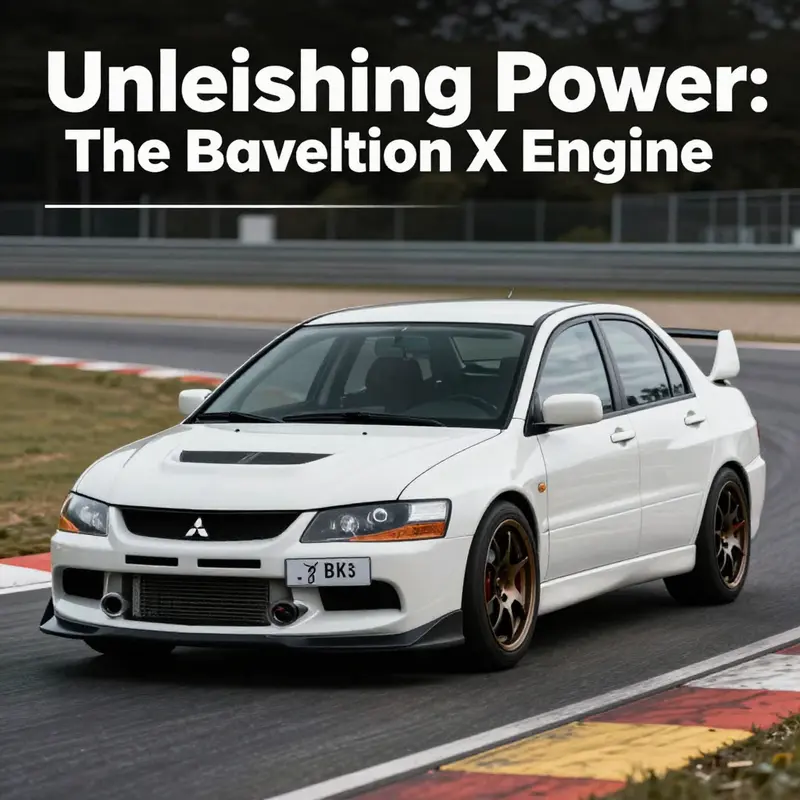
The Mitsubishi Lancer Evolution X, often referred to as the Evo X, solidified its legacy as an automotive icon through engineering excellence and performance. Central to this formidable vehicle is its 4B11T code 2.0-liter turbocharged engine, which sets the standard for performance vehicles around the world. This article delves into its specifications, innovations, turbocharging and induction systems, market variants, and the vibrant enthusiast community that cherishes this masterpiece. By examining each chapter, business owners can understand how the Evo X engine continues to influence the automotive industry, reveal opportunities for aftermarket innovations, and attract a passionate customer base that seeks high-performance solutions.
A Living Heart: The 4B11T Engine at the Core of the Evolution X
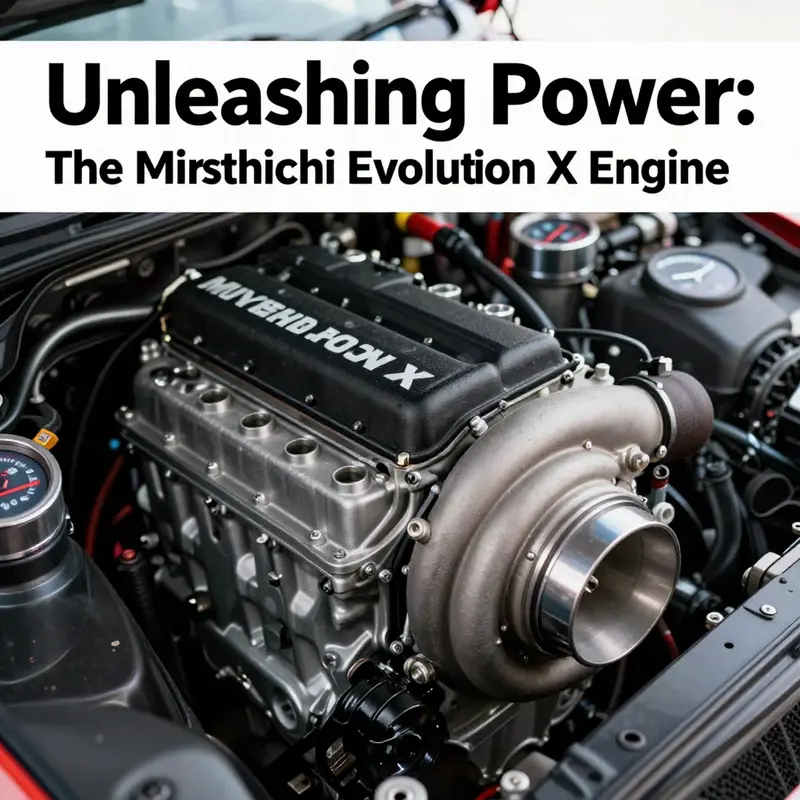
The Evolution X frames its performance story around a compact, extraordinarily capable heart. The 4B11T, a 2.0-liter inline-four with turbocharging, sits in the cradle of a chassis built for agility, precision, and rally-inspired acceleration. This engine is more than a power unit; it is the conduit through which Mitsubishi translated a rally pedigree into a road-going sedan that could sprint from a standstill with the same verve as a race-bred machine. Its 1998 cc displacement belies a design that emphasizes lightness, responsiveness, and a broad, usable torque band that keeps the car eager at every turn of the dial. The engine’s architecture—an all-aluminum block and head, twin-scroll turbocharging, and a sophisticated valvetrain management system—was chosen to deliver both speed and efficiency, a balance that became a defining characteristic of the Evo X experience.
At the core, the 4B11T is an inline-four with two overhead camshafts and sixteen valves, a configuration common in modern performance engines but executed here with specific intent. The all-aluminum construction reduces weight, a deliberate choice to improve not just acceleration but overall handling through reduced unsprung mass and better cooling characteristics. The engine breathes through a multi-point fuel-injection system, and it relies on direct ignition to ensure reliable ignition and consistent performance across varying fuel qualities and temperatures. Cooling is liquid-based, a necessity given the heat generated by a turbocharged four-cylinder that must deliver rapid response and sustained power without overwhelming the cooling system. The result is a unit that can respond quickly to the driver’s intent while maintaining reliability and repeatable performance on the track as well as on daily commutes.
The turbocharging architecture is a key element of the engine’s personality. The Evo X employs a twin-scroll turbocharger, a design that separates exhaust pulses into two paths to optimize spooling behavior and reduce lag. This arrangement fosters a swift boost onset and a broad torque curve, so the driver experiences strong midrange torque as soon as the accelerator is pressed. The induction system is paired with MIVEC—the Mitsubishi Innovative Valve timing Electronic Control system. MIVEC actively adjusts valve timing for both intake and exhaust to balance low-end torque with high-end power. In practice, this means the engine can deliver robust acceleration from low rpm without sacrificing peak power, a crucial trait for a car that must sprint from city traffic to highway speeds with minimal throttle input. The combination of MIVEC and turbocharging is central to the Evo X’s ability to feel lively and responsive across a wide rpm range.
Performance figures for the 4B11T vary by market and model year, but the engineering intent is consistently evident. The engine produces between 291 and 303 horsepower, with maximum torque spanning roughly 366 to 422 Newton-meters. That torque is particularly noteworthy for arriving at a relatively low rpm, around 3500 rpm in many configurations, which translates to strong, usable thrust from a standstill and impressive midrange momentum for confident overtaking without a whine of high revs. The redline sits at a high, spirited 7000 rpm, inviting the driver to explore the upper limits of the rev range if desired. Such a design supports the Evo X’s emphasis on rapid, linear acceleration rather than a narrow high-end peak that can feel brittle in everyday use.
The chassis and drivetrain work in concert with the engine to deliver the car’s signature performance. The 4B11T’s power and torque are not isolated specifications; they are statements about how the engine communicates with the car’s handling systems. The high-rev capability and broad torque band allow for seamless shifts, whether paired with a conventional five-speed manual or the six-speed twin-clutch automatic that some MR variants used. When combined with Mitsubishi’s Super All-Wheel Control system, the engine’s output is translated into controlled acceleration and composure through corners rather than simply raw speed. The synergy between engine, torque delivery, and all-wheel drive is what makes the Evo X feel planted even when pushed hard, a sensation that has endeared it to enthusiasts who crave an accessible yet ferociously capable performance machine.
The Final Edition of the Evo X is a notable milestone in the engine’s story. Tuned to 303 horsepower, it stands as a testament to how the 4B11T could be dialed for a last hurrah while preserving the fundamental character that defined this generation. It’s a reminder that the engine’s design—its aluminum block and head, its twin-scroll turbo, its MIVEC control—can be tuned within a well-understood envelope to extract more pace from the same core architecture. For many owners, this edition epitomizes how the Evo X could evolve without abandoning the core philosophy that launched it: a compact, responsive engine paired with a chassis engineered for speed and balance rather than brute force alone.
From a practical standpoint, the engine’s weight advantage and cooling efficiency help the Evo X perform at the edge without overheating or sacrificing reliability. The aluminum construction reduces mass, aiding not only straight-line acceleration but also the car’s cornering agility. The turbo design ensures that boost arrives quickly, so the car feels alert even when exiting turns or merging into faster traffic. In daily use, the vehicle remains tractable and relatively refined for a high-performance sedan, a testament to the engineers’ ability to fuse a race-bred impulse with everyday usability. The engine’s life cycle—its durability, potential for power growth through careful tuning, and compatibility with supporting components like intake manifolds, intercoolers, and exhaust systems—has become a focal point for the tuning community. Builders and enthusiasts alike recognize that while the 4B11T is compact, it is not fragile; it invites incremental improvements that can yield meaningful gains in response and peak power while staying within the bounds of reliable operation.
For those considering performance upgrades or restoration work, the engine’s architecture provides a clear path. The aluminum block and head, while demanding in terms of heat management and gasket integrity, offer a solid foundation for upgrades such as more robust internals, enhanced cooling capacity, and upgraded boost control. The documentable lineage of the 4B11T—its turbocharging strategy, its MIVEC-driven valve timing, and its twin-scroll architecture—gives technicians and enthusiasts a coherent framework for diagnosing issues or planning modifications. In this context, upgrades that emphasize maintaining proper cooling, ensuring air flow, and preserving the integrity of the variable valve timing system become not just common sense but essential steps in preserving the engine’s long-term performance. The evolution of this powerplant into the Final Edition-era tune demonstrates that the 4B11T is not merely a relic of a single era but a living platform capable of adaptation and refinement through thoughtful engineering.
For enthusiasts who want to see a tangible link between the engine and the parts that deserve attention, consider the engine block itself as a focal point for upgrades. A billet-block upgrade offers a reinforced foundation that can support higher boost levels and more aggressive durability targets. This upgrade concept is well aligned with the engine’s design philosophy: keep the core light, responsive, and robust, while expanding the envelope of what the drivetrain can reliably handle under spirited driving conditions. The integration of such upgrades with the Evo X’s already well-tuned hardware can deliver a more engaging driving experience, one that preserves the car’s essential balance while unlocking additional performance potential. In the broader scope of the project, these upgrades reflect a philosophy of enhancing the core without betraying the DNA that made the 4B11T and the Evolution X a reference point for enthusiasts.
As a closing reflection, the 4B11T’s legacy rests on its ability to fuse speed with everyday practicality. Its engineered harmony—aluminum construction for weight control, twin-scroll turbocharging for rapid response, MIVEC for valve-timing finesse—transformed a compact four-cylinder into a machine capable of thrilling acceleration and notable track performance. The engine’s versatility—adequate torque at low revs, sustained power to the redline, and compatibility with advanced all-wheel-drive dynamics—helps explain why the Evolution X remains a favorite among drivers who value a road car that feels like a rally machine when demanded, yet remains approachable in routine traffic. In this sense, the 4B11T is not merely an engine; it is the living core of a philosophy that sought to bring the raw excitement of rallying into a production sedan without compromising reliability, control, or day-to-day usability.
Internal link for enthusiasts pursuing upgrade paths: 4B11T billet block. For further specification detail beyond this discussion, see the external reference below. For a detailed specification overview, see Car and Driver’s Evo X specs: https://www.caranddriver.com/mitsubishi/lancer-evolution-x/specs
Inside the Evo X’s Heart: The 4B11T Powerplant, Twin-Turbo Talent, and MIVEC Precision
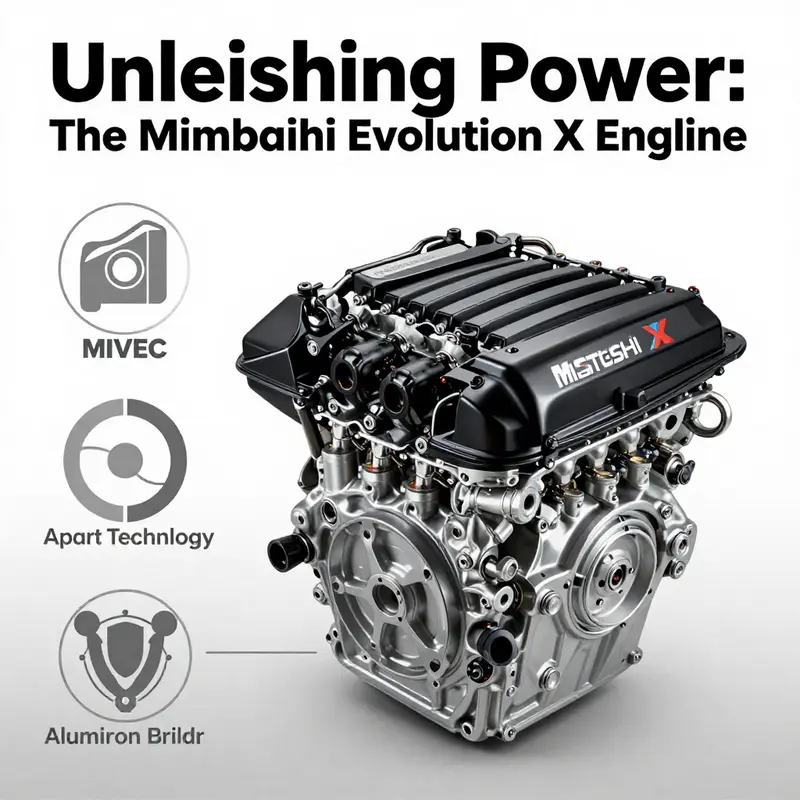
The Mitsubishi Evolution X embodies a remarkable marriage of compact engineering and audacious performance, with its 4B11T engine serving as the beating heart that powers the car’s reputation for speed, quickness, and razor-sharp handling. This chapter follows the careful choreography between engine design, induction architecture, valve timing, and the drivetrain that allows a high-revving four-cylinder to deliver both dramatic acceleration and a controlled, predictable drive in everyday conditions. It is not merely a tale of numbers, but of how each technical choice—weight reduction, cooling efficiency, valve timing, and torque delivery—works in concert to create a coherent driving experience that feels both violent when summoned and trustworthy when cruising. At the core sits a displacement of roughly 2.0 liters, achieved with a 2.0-liter inline-four that is notably light thanks to an all-aluminum block and head. This choice of materials is more than a weight-saver; it reduces inertia, improves heat dissipation, and supports the engine’s capacity to sustain boost without ballooning temperatures under track demands. The result is an engine architecture that remains compact, robust, and responsive, ready to feed a chassis tuned for dynamic cornering and rapid direction changes.
Two nicknames carry this engine’s legend forward: the sophisticated valve timing of MIVEC and the formidable twin-turbo induction that helps sustain pressure across a broad RPM range. The twin-turbo setup, paired with a robust intercooler system, was engineered to deliver strong throttle response from low to mid RPM while maintaining peak power well into the upper revs. This is not merely a raw horsepower story; it is a tale of boosting strategy that minimizes lag and preserves linearity, so the car does not feel sudden or surprising when the accelerator is pressed. The engines’ torque curve, as cited in detailed specifications, demonstrates a broad, usable plateau—an attribute prized by both track enthusiasts and street drivers who demand predictable acceleration regardless of gear or speed.
The heart of the Evo X’s engine performance lies in a deliberate integration of technology and tuning that respects daily usability as much as race-ready capability. The MIVEC system, Mitsubishi Innovative Valve timing Electronic Control, represents a sophisticated approach to variable valve timing. It optimizes intake and exhaust phasing across the rev range, smoothing throttle response and expanding the efficient range where power is produced. The result is a more linear torque delivery that helps the driver keep the engine in its sweet spot, whether purring through city streets or blasting onto a highway at high rpm. MIVEC’s role becomes especially evident when the engine is under peak boost, where consistent valve timing supports stable boost pressures and reduces the risk of surge or sudden drops in torque. In practice, this translates to easier, more predictable acceleration and a confidence-inspiring feel when pushed hard. A deeper look into high-performance engine internals, including component-level options, can be found here: 4b11t-billet-block.
The engine’s displacement—near 2.0 liters—belies its capability. The 4B11T is a 16-valve, double overhead cam (DOHC) setup, neatly packaged within an all-aluminum block and head. This configuration balances lightness with strength, enabling the engine to rev freely while resisting the thermal and mechanical stresses that a turbocharged four can impose. The aluminum construction helps with rapid heat transfer, allowing the engine to shed heat more efficiently during sustained sessions on a track. Efficient cooling is a necessary partner to a turbocharged engine that must maintain performance without overheating, especially when the car is driven aggressively over extended intervals. The induction system’s design—large turbochargers paired with a well-sized intercooler—ensures that the engine maintains strong oxygen charging and consistent boost pressure. This is critical because, in turbocharged engines, the efficiency of the intake path directly affects how quickly air can flow into the cylinders as RPM climbs and as loads rise. The story here is not just of raw boost, but of a carefully engineered balance between air, fuel, timing, and exhaust gases, all working harmoniously to deliver real-world performance.
Power output and torque figures further illuminate the Evo X’s engineering philosophy. Factory ratings for the engine in this generation typically hover in the high 280s to low 300s horsepower range, with peak torque often cited in the mid-range to around 366 Newton-meters in many market configurations. The Esprit de l’Evo X is its ability to deliver usable torque at lower RPMs and sustain it as the tach climbs. In practical terms, this translates to the car sprinting to 100 km/h in about five seconds under the right conditions, while remaining responsive and tractable for everyday driving. The numbers vary by year and market, reflecting calibration differences, emissions requirements, and tax policies. Notably, certain variants and editions have been tuned to push power toward 303 horsepower, a refinement that occasionally appears in special editions or national-market adjustments. The engine’s overall performance profile is a carefully curated blend of high-end power and broad, usable torque, designed to keep the vehicle spirited at speed without sacrificing the everyday drive quality that enthusiasts value.
But raw numbers can obscure the true character of a modern turbocharged engine. Here, the twin-turbo arrangement must be considered in concert with the drive system and the control logic that governs boost and torque delivery. The Evolution X pairs the engine with a six-speed TC-SST dual-clutch transmission. This setup enables incredibly fast gear shifts, which helps the car respond instantly to throttle inputs and maintains momentum during aggressive driving. Paddle shifters offer the driver a tactile link to the transmission’s behavior, enabling manual control when desired. The transmission’s role cannot be separated from the engine’s torque delivery; it is the bridge that converts the engine’s explosive response into forward motion with precision. The result is not merely a fast car, but a car that feels fast at every speed and in every gear.
The drivetrain surrounding the engine deserves attention as well. The Evolution X benefits from Mitsubishi’s advanced Super All-Wheel Control (S-AWC), a sophisticated four-wheel-drive system that integrates an Active Center Differential (ACD), Active Yaw Control (AYC), Active Stability Control (ASC), and Sport ABS. These components work in an adaptive loop with the engine’s output to deliver traction, stability, and cornering confidence across a broad spectrum of road conditions. The synergy between the 4B11T engine and the S-AWC architecture means torque can be redistributed efficiently to the wheel that needs it most, whether entering tight corners or blasting out of a bend on power. In practical terms, this translates to balanced handling and a sense of planted, predictable behavior when the car is pushed toward the limits. The powerplant’s ability to deliver steady thrust through a wide rev range makes it easier to exploit the car’s AWD dynamics, reinforcing the driver’s confidence when steering inputs are combined with throttle and mechanical grip.
Engineering decisions in the Evo X go beyond immediate performance. The all-aluminum construction, for example, yields weight savings that improve braking, acceleration, and steering feel. Lighter components reduce unsprung mass and rotational inertia, contributing to crisper responses in dynamic maneuvers and more efficient cooling management, since less energy is required to dissipate heat through the engine bay. These characteristics, when paired with the sophisticated intake and exhaust arrangements, promote a broader, more usable powerband. The result is a car that remains tractable on public roads yet transforms into a formidable performance machine on a closed course. Enthusiast communities have long celebrated how this platform remains a robust base for tuning, allowing enthusiasts to extract maximum potential through carefully selected components, calibrations, and mechanical upgrades.
The Evo X engine story also benefits from acknowledging the human element behind the engineering. The engineers who designed the 4B11T balanced multiple objectives: compact dimensions for fit in a compact sports sedan, high power with turbocharged reliability, a broad powerband for everyday usability, and a control architecture that respects drivability and safety. The MIVEC system serves as a linchpin, providing the means to tailor valve timing and lift across the RPM spectrum to support both idle stability and peak output. This level of control is essential for ensuring that the engine remains linear in its response, avoiding abrupt surges that could unsettle the chassis dynamics during aggressive driving. The resulting combination of lightweight block and head, efficient cooling, sophisticated valve timing, and seamless turbo integration is what allowed the Evolution X to stand out as a performance sedan with a credible daily persona.
For readers who crave a deeper technical dive, the 4B11T’s core architecture—particularly its billet-block variants and internal component options—offers a compelling window into the levels of precision that underwrite high-performance engines. The billet-block article linked here provides a closer look at the potential for enhanced strength and stiffness within the engine’s lower end, illustrating how enthusiasts and engineers push the platform toward greater durability under demanding conditions: 4b11t-billet-block.
In sum, the Evolution X engine is more than a powertrain; it is a carefully engineered system where each choice—aluminum construction, twin-turbo induction, MIVEC timing, and a responsive dual-clutch transmission—supports a broader philosophy of performance that remains accessible and controllable. The engine’s capability is measured not only in peak horsepower, but in how smoothly power is delivered across the rev range, how predictably boost comes on, and how the car communicates through the throttle and steering under varied conditions. This is the essence of a powerplant that has earned its place in a lineage famous for pushing the envelope while remaining a driver’s car. External resources detailing official specifications and performance data provide an additional layer of verification and context for readers who wish to compare numbers across markets and generations: https://www.mitsubishi-motors.com/vehicles/lancer-evolution-x/specifications.html
Turbocharged Heartbeat: How the Evo X 4B11T Harnesses Turbo, TMIC, and MIVEC for Relentless Performance
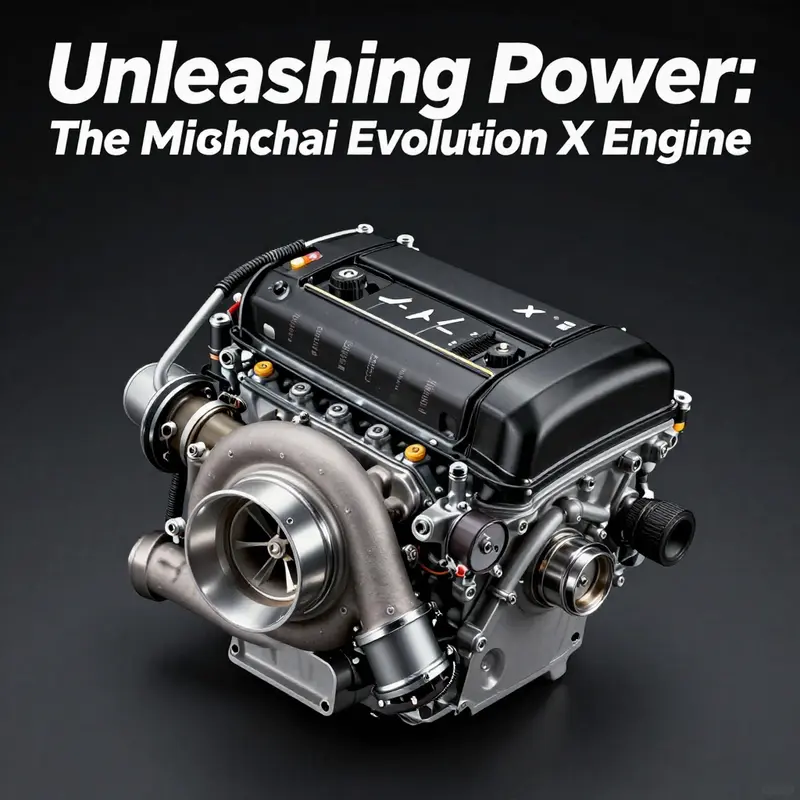
The engine that powers the Evo X is more than a mechanical package; it is a carefully choreographed system where turbocharging, induction, and valve timing converge to deliver the car’s signature blend of immediacy and raw drive feel. At the core sits a 2.0-liter inline-four that is not simply about peak numbers but about the way it breathes, spools, and repeats power with discipline. The 4B11T architecture uses an all-aluminum block and head, a choice that reduces weight and improves cooling, which in turn helps the engine stay stable under high loads. This is not a brute-force unit built only for peak horsepower; it is a refined powerplant designed to respond with confidence from the moment the throttle opens. The result is a machine that can sprint from rest to speed with a cadence that feels almost tactile, a sensation that has earned the Evo X a dedicated following among drivers who value both performance and control.
The heart of that immediacy lies in the turbocharging arrangement. The Evo X employs a twin-scroll turbocharger, a configuration that splits exhaust gas pulses and feeds them to paired segments of the turbine wheel. This design minimizes the lag that often characterizes smaller-displacement turbo systems and helps the engine spool more quickly as soon as you tip into the throttle. The driver’s foot becomes a bridge from intent to action, bypassing the long dead spots that can slow momentum on a twisty road or a race circuit. In practice, the twin-scroll setup translates into a more lively response at low and mid RPM, with a broadened power band that pushes you toward the upper end of the tach without the abrupt surges that can unsettle traction control.
Cooling and air management are inseparable from that turbo strategy. The Evo X uses a top-mounted air-to-air intercooler (TMIC) perched above the engine, a layout chosen for its efficiency in displacing heat from compressed air before it reaches the intake manifold. As the turbo compresses air, its temperature climbs quickly; the TMIC extracts that heat, increasing air density and thus improving combustion efficiency. Cooler, denser air means more oxygen in the cylinder, which, when paired with the engine’s fueling strategy, translates into stronger torque available across the rev range. The TMIC’s position also helps shorten the air path, contributing to a more immediate throttle response. In spirited driving, where heat soak can curb performance, this architecture proves its worth by maintaining power delivery even after sustained high-load use on a track or back road.
Beyond the turbo and the intercooler lies the induction system, a network designed to present air to the cylinders with both precision and speed. The Evo X features a throttle body tuned to balance rapid response with a stable, linear feel as revs climb. The intake manifold is shaped to optimize air velocity and volumetric efficiency, guiding the air stream smoothly into each cylinder. This arrangement works in concert with Mitsubishi’s MIVEC technology—Mitsubishi Innovative Valve timing Electronic Control—which continuously adjusts the balance between intake and exhaust valve timing in response to engine speed and load. The result is a system that sustains strong mid-range torque while preserving high-end power, enabling the engine to pull cleanly through the gears as you approach redline. The synergy between turbo, intercooler, throttle dynamics, and MIVEC creates a coherent power delivery that makes the Evo X feel alive even at modest throttle openings, and as you wind it up, the engine carries momentum with a relentless, linear grip.
The numbers behind this orchestration are a testament to careful engineering rather than raw eccentricity. Factory specifications locate power in the neighborhood of 291 horsepower with peak torque around 366 newton-meters, figures that reflect a careful balance between performance and drivability. The torque curve in particular is shaped to deliver immediate response at low RPMs while maintaining a substantive push well into the upper revs, a combination that helps the car accelerate with purpose rather than cadence. In real-world terms, that means a 0–100 km/h time that sits in the mid-five-second range under proper conditions, a performance envelope that makes the Evo X a compelling choice for both daily spirited driving and more demanding scenarios. The 2015 Final Edition, tuned to 303 horsepower, demonstrates how factory calibrations can refine breathing space further without compromising reliability, a reminder that the engine’s architecture can accommodate evolution along with the chassis and drivetrain.
For enthusiasts who seek more from the platform, the turbocharging and induction approach provides a solid foundation for carefully planned upgrades. A larger or more efficient intercooler can shave additional degrees of intake air temperature, letting the engine inhale more dense air through the same twin-scroll path. A higher-flow turbocharger can extend the response window and push more air into the cylinders at higher RPM, while a tuning remedial—often a calibrated remap or a tuning box—can optimize fuel delivery and ignition timing to harmonize with the enhanced breathing. Such upgrades are not about turning the Evo X into a garage showpiece; they aim to preserve the integrity of the engine’s oiling and cooling systems, ensuring that the increased thermal and mechanical demands remain within its design envelope. The practical outcome is a more responsive, more capable machine that still behaves predictably on the road and on the track, where the difference between a good setup and a great one hinges on how well the induction and turbo systems are封 integrated and cooled under load.
Within this engineering tapestry, the block and head’s all-aluminum construction surfaces as a decisive advantage. By shedding weight without compromising rigidity, the engine reduces unsprung mass and improves cooling efficiency, both of which contribute to a more confident power delivery under load. Aluminum also aids heat dissipation, a critical factor when a turbocharged engine is asked to sustain high power over extended periods. The result is a chassis that feels more planted, a drivetrain that delivers power with a measured breath rather than a stumble, and a balance between performance and reliability that has kept the Evo X relevant in a world where rivals chase ever higher horsepower figures. A closer look at the heart of this system reveals a practical truth: every element—from the twin-scroll turbine’s impulse to the TMIC’s heat rejection, through the MIVEC-driven valve events—works in concert to sustain performance while keeping fuel use and emissions within reasonable bounds for a car in its era.
For readers who want to understand the factory baseline intimately, the discussion of the 4B11T engine is more than a catalog of parts; it is a study in how performance pragmatism meets enthusiast desire. The engine’s architecture imposes a discipline that benefits everything from daily commuting to high-speed laps. The choice of an aluminum block and head reduces the rotational inertia the moment you snatch for torque, while the twin-scroll architecture ensures that the power comes in cleanly rather than as a sudden shove. The TMIC’s role is not merely to cool; it is to preserve air density under conditions where heat would degrade performance. The MIVEC system’s value lies in the way it negotiates the valve timing to increase torque when you need it most and sustain power at higher RPMs when your right foot is heavy. The result is a signature blend of tractability and ferocity—an engine that can deliver precision on a winding road yet still feel exhilarating on a straight, with a cadence that invites the driver to keep exploring the limits.
It is worth noting a practical touch that carries into maintenance and upgrading: the engine’s performance relies on robust lubrication and cooling. When enthusiasts seek to extend the breathing room of the turbo, the path they choose must preserve oil flow and heat rejection. That is where the chassis, cooling system, and oiling strategy prove their worth, making sure that increases in boost, airflow, or valve timing do not outpace the engine’s ability to stay within safe thermal margins. In this light, the Evo X’s turbocharged, TMIC-assisted, MIVEC-driven induction system reads not as a single feature set but as a cohesive package. It is this cohesion that explains why the car feels so coherent when driven hard, why the power at the wheels remains in touch with the driver’s input, and why the vehicle earns its reputation not solely as a straight-line genius but as a chassis and powertrain collaboration that rewards both skill and patience.
For researchers and builders interested in the underlying fundamentals, references to the technical library and factory documentation provide a more formal lens on how these components are specified and tuned for different markets and model years. A deeper dive into the 4B11T’s turbocharging and induction can illuminate how variations—such as turbine geometry, intercooler sizing, and valve timing maps—translate into subtle shifts in feel and torque delivery. This level of detail helps explain why the Evo X remains a favorite among tuners who value a solid, interpretable base and a framework that tolerates careful calibration rather than becoming volatile when tweaks are introduced. The engine’s design philosophy embodies a principle that enthusiasts often seek: performance that is measurable, repeatable, and resilient across varied driving contexts.
Internal link note: for a focused discussion on a structural upgrade that supports higher boost and sustained high-load use, see the 4B11T billet block resource. It offers a look at how builders reinforce the core to maintain rigidity at elevated pressures. 4B11T billet block.
External reference: for factory specifications and engineering notes, consult the official Mitsubishi Motors Global Technical Library, which provides authoritative data and context for the engine’s engineering choices. https://www.mitsubishi-motors.com/en/technical/
Heart of the Evo X: Market Variants, Power Curves, and the 4B11T Turbocharged Core
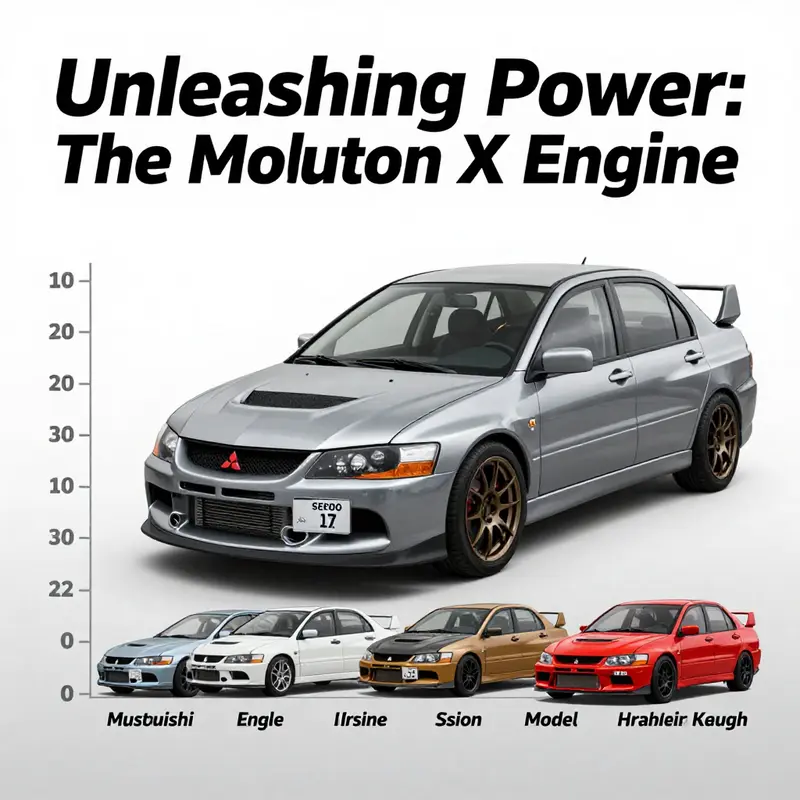
The Mitsubishi Lancer Evolution X carries its name with a quiet certainty, yet the engine that sits at its core—the 4B11T 2.0-liter turbocharged inline-four—is anything but quiet in its ambition. This powerplant, cast in an all-aluminum block and head, represents a deliberate balance between lightness and strength. Displacing 1998cc, the engine is designed to shed weight where it matters while maintaining rigidity under the motor’s spinning demands. Its architecture is a testament to Mitsubishi’s philosophy of efficiency meeting performance: a compact, highly strung four that can mature into a high-revving, torque-tueled sprint machine. The turbocharged induction system injects a robust sense of immediacy into the Evo X’s character, with a large turbo delivering strong spool and sustained pressure across the rev range. The engine breathes through a sophisticated intake and exhaust path, but the real trick lies not simply in boost, but in how the valve timing and manifold pressure interplay with the MIVEC system to unlock power without sacrificing driveability or emissions controls. MIVEC, Mitsubishi’s intelligent valve timing electronic control, allows the engine to shift its timing map to suit different RPM bands, delivering high-end horsepower when the tach needle climbs while preserving tractable manners in lower gears and stop-and-go traffic. In everyday terms, that means the Evo X moves with a response that feels both predictable and almost anticipatory, a trait that’s prized in a performance sedan that doubles as a daily driver. The engineering intent is clear: a turbocharged core with variable timing to maximize power without blowing up the fuel bill or the environmental footprint during cruising, a balance that has helped the Evo X win respect beyond the track.
Market-by-market, the same core architecture woke up with different personalities. The international market version of the 4B11T delivered a formidable 291 horsepower, with torque peaking at 366 Nm. On the dyno, that translates into a broad torque curve and a broad window of usable power, where the car feels eager without aggressive tuning or harsh surges. In countries with stricter tuning norms or different fuel qualities, that 291 hp figure offered a reliable baseline, preserving tractable throttle response and a manageable torque curve that could be leaned on for daily acceleration or canyon-road spurts. Yet, Japan’s domestic market—the JDM—had a different story. In the land where emissions regulations are often more permissive in terms of peak output but stringent in other respects, the 4B11T found its own sweet spot. The JDM Evo X was tuned to deliver up to 303 horsepower and 422 Nm of torque, a substantial lift over the international specification. The jump in torque, especially, is telling: it suggests a torque curve that favors strong mid-range pull, allowing the car to feel more muscular at lower RPMs and usable at the everyday speeds where most driving happens. It’s a tuning philosophy that aligns with a taste for quick, confident overtakes and nimble mountain passes, rather than peak-lap drama alone. In a sense, the JDM variant embodies the Evo X’s philosophy of combining turbocharged performance with practical everyday usability.
The final flourish of the Evolution line—the 2015 Final Edition—took the 4B11T up another notch in power, delivering the higher-output version of the engine paired with a five-speed manual transmission. This edition marked the end of an era for Mitsubishi’s Evo lineage, a tribute to the car’s racing DNA with an emphasis on engaged, hands-on driving. The Final Edition’s 303 horsepower figure is not merely a statistic; it’s a signal of the exhaustive refinement that had gone into the turbocharging system, the intercooling, and the fuel delivery network over the Evo X’s production run. With the five-speed manual, drivers could fully exploit the widened power band and the torque that arrives early enough to push the chassis into a rhythm that suits both track and back-road driving. The combination of higher output and direct, unassisted gear engagement made the Final Edition a particular favorite among enthusiasts who prize feedback and immediacy. The chassis’ All-Wheel Control, which Mitsubishi has long integrated with its performance sedans, relied on the engine’s refined torque delivery to provide a stable yet lively platform—one that responded with precision to throttle input and steering direction, maintaining grip while the powertrain propels the car forward with a sense of purpose.
Several elements contribute to the Evo X’s distinctive performance profile. The turbocharger itself is a centerpiece—designed to deliver robust intake pressure without sacrificing responsiveness. The intercooler sits in the airflow path to keep charge temperatures in check, an essential function when the engine is driven hard and the air density is variable. The high-flow fuel delivery system complements the turbocharger by ensuring the air-fuel mixture remains optimal as torque is asked to rise and the revs climb. When the engine crosses the 7000 RPM redline—one of the Evo X’s defining peaks—the benefit becomes clear: a high-revving experience that rewards clutch and gear control as much as throttle discipline. This combination of turbo, intercooler, and fuel delivery creates a broad power envelope. It allows the Evo X to pull cleanly from relatively low RPMs, not just when the turbo spools, but in mid-range gears where overtaking and acceleration often matter most in real-world driving.
The 4B11T’s design also reflects a philosophy of robust, repeatable performance. The all-aluminum construction reduces the unsprung weight and rotary inertia, aiding the car’s handling balance and cooling efficiency. This weight savings translates not only to better track performance but to more livable on-road manners, where heat soak and throttle response can influence daily comfort. The engine’s layout—an inline-four with turbocharged induction—also permits a compact intake and exhaust system, which minimizes throttle-induced lag and allows the engine to breathe more efficiently under heavy boost. The MIVEC system’s timing shifts play a critical role here; by advancing or retarding valve timing across different RPMs, the engine hunts for the right torque figure at the moment power is demanded, ensuring that the turbo’s boost translates into usable speed rather than wasted energy.
For those who want to visualize the variant story at the hardware level, a deeper look into the engine’s block and its reliability factors can be found in the dedicated resource about the 4B11T billet block. The billet block represents a performance-focused evolution of the core engineering that underpins the Evo X. 4B11T billet block This block idea underscores how enthusiasts approach the Evo X’s core: not only extracting more horsepower but ensuring that the engine remains reliable under higher boost, repeated high-load sessions, and the heat of aggressive tuning. The block’s architecture, with careful material choices and precision machining, supports higher cylinder pressures and increased rigidity, which in turn sustains valve train alignment, piston stability, and crankshaft dynamics when the engine spends long hours at or near its performance ceiling. The story of the Evo X engine is thus twofold: the living, breathing performance map generated by MIVEC and turbo control, and the enduring hardware that keeps that map reliable under duress.
In relation to the broader chapter of the Evo X’s life, the Final Edition’s final flourish stands as a reminder that this engine family matured in a way that pleased both purists and performance-seekers. It wasn’t merely about more horsepower; it was about preserving the engine’s power delivery while maintaining the car’s hallmark drive feel. The five-speed manual transmission in the Final Edition provided a direct, tactile connection between driver and machine, a trait that many enthusiasts associate with the purest form of performance driving. And although the market variants shared the same fundamental architecture, the way power was delivered—whether in a broad international spec, a more torque-forward JDM tune, or the Final Edition’s balanced blend of power and suppression—created a spectrum of Evo X experiences. Drivers in the international market experienced a responsive but slightly milder torque curve; Japanese drivers encountered a stronger mid-range torque that felt more urgent in urban or winding-road contexts; and Final Edition owners enjoyed a calibrated balance between peak output and drivability that made the car feel both race-ready and street-appropriate. Each variant demonstrates how a single engine family can be tuned to speak in different accents, depending on regulations, fuel, and the desires of drivers in different regions.
The Evo X engine’s story, then, is not just about horsepower figures. It is about how a compact 2.0-liter turbocharged unit can deliver a broad, usable range of power while maintaining the kind of reliability that makes a performance car practical. It is about how advanced valve timing, precise fuel delivery, and expertly sized turbochargers come together to shape torque curves and redline behavior. It is about how the market and regulatory environment influence tuning choices, and how enthusiasts celebrate a Final Edition that both honors the lineage and invites a new generation of drivers to experience what the 4B11T can do when it’s given the right level of ambition. This is the heart of the Evo X: a modern turbocharged engine that remains unmistakably Mitsubishi in character, capable of quick acceleration, confident highway bursts, and a driving experience that rewards skill and focus as much as it does raw power. For those who want to explore the technical lineage further, the external reference to the official technical specs offers a broader context for how the Evo X engine sits within the spectrum of its peers and rivals. Car and Driver Evo X specs
How the 4B11T Forged a Legacy: Evo X Owners, OEM Philosophy, and the Tuning Culture

The Mitsubishi Lancer Evolution X’s 4B11T engine did more than power a car. It anchored an identity. Built as a compact, all-aluminum, turbocharged 2.0-liter inline-four, the engine combined rally-bred intent with modern engineering. That blend made the Evo X a performance benchmark and a devotion point for enthusiasts who insisted on both speed and durability.
At the heart of this story is the 4B11T’s character. Its 1998 cc displacement, dual overhead cams, and variable valve timing created an engine that loved to rev. With a 7,000 rpm redline and factory outputs hovering around the high 200s to low 300s horsepower, the power delivery felt immediate yet tractable. A large turbocharger and efficient intercooling built torque down low and sustained power higher in the rev range. The result was a car that launched hard off the line, lived comfortably on the road, and could be pushed through a sequence of corners with confidence thanks to a broad, usable torque curve.
Engine architecture played a big role. The all-aluminum block and head cut weight and enhanced heat transfer. Precision-engineered internals, from pistons to connecting rods and the cylinder head components, were designed to work at factory tolerances and to survive the thermal and mechanical stress of spirited driving. The factory integration of variable valve timing helped reconcile two goals that often conflict: peak output and everyday efficiency. That compromise is one reason many owners found the Evo X easy to live with while still feeling uncompromising on the road or track.
Because the Evo X was conceived with competition in mind, the role of genuine OEM components cannot be overstated. Owners who treat the car as a true performance platform understand that core components—engine internals, brake assemblies, suspension hardware—must meet the original standards. OEM brakes and calipers, for example, are engineered for thermal resilience and predictable fade characteristics. Suspension parts, shocks, and control arms are tuned to preserve the vehicle’s rally-inspired handling and to work with the car’s integrated all-wheel control systems. When those parts are in spec, the chassis behaves as the designers intended: balanced, communicative, and resilient.
That reliability is part of why the Evo X cultivated a loyal community. Enthusiasts gravitated toward a car that rewarded careful modification. Forums, local clubs, and track days became schools of shared knowledge. Owners documented bolt-on changes, tuning maps, and endurance runs. They discussed compression ratios, fueling strategies for the direct-injection system, and the merits of upgrading components versus preserving originals. Across those discussions, one theme recurred: keep the core engine and drivetrain trustworthy. Modify the intake, tweak the turbocharger or optimize the engine management, but respect the parts that govern longevity.
Yet the Evo X also invited creativity. With a strong foundation, builders pursued varied goals. Some prioritized reliability and period-correct restorations. Others chased power milestones on dyno charts and organized hill climbs. The platform tolerated moderate forced-induction upgrades and fueling refinements quite well. However, when power scaled dramatically, owners learned to match upgrades in a holistic way: stronger pistons, reinforced rods, upgraded cooling, and transmission reinforcement. The objective shifted from just adding horsepower to creating a balanced package that handled the new stresses.
Sourcing parts became part craft, part community service. Owners shared known-good vendors, part numbers, and rebuild strategies. For those who wanted to keep the original spirit but improve durability, a billet engine block solution for the 4B11T emerged as an advanced option. This path allowed enthusiasts to retain the stock architecture while reinforcing the block for higher boost and increased cylinder pressures. Conversations around such upgrades helped define the Evo X community’s ethos: respect the original engineering, then innovate responsibly. If you want to explore reinforced engine blocks, consider researching the 4B11T billet block for detailed options and fitment.
Maintenance philosophies also split into two camps. One camp prioritized OEM replacement parts and scheduled, conservative servicing. Their cars retained showroom-like behavior and often proved more reliable during long events. The other camp accepted shorter service intervals for modified cars, investing in higher-capacity cooling systems, stronger clutches, and performance-oriented fluids. Both approaches worked when executed with discipline. What mattered was understanding how each change affected the car’s systems and making choices that preserved safety and reliability.
The result is a culture that values authenticity and competence. You see it at meetups where lightly modified examples sit alongside full-blown track cars. You see it in the archive photos of Evo Xs competing in regional rally events. Owners swap data, log files, and setup notes. They advise on tire compounds, brake cooling ducts, and shock valving. That knowledge accumulation raises the bar for every owner and helps newer enthusiasts make smarter decisions.
Beyond performance upgrades, the community cares about originality. Keeping a car’s chassis and powertrain in factory condition can maintain collectible value. Special editions and low-mileage examples command attention precisely because they retain that balance between tactile performance and mechanical integrity. For many, the ideal Evo X is one that still feels connected to the factory’s intent while reflecting tasteful, purposeful upgrades.
In practical terms, this means that whether you plan light tuning or aggressive builds, you need to think systemically. Strengthen the engine where loads will increase. Upgrade cooling and fueling to match increased boost. Reinforce drivetrain components before exceeding the known limits. Preserve factory behaviors that contribute to drivability. And rely on trusted parts for critical systems—brakes, suspension mounts, and engine internals—so progress is sustainable.
The Evo X’s legacy lives in this balance between respect and reinvention. Enthusiasts keep the flame alive by sharing knowledge, supporting meticulous maintenance, and making informed upgrades. That dynamic keeps the 4B11T platform relevant, competitive, and rewarding to own. For those who study the platform, the lesson is clear: the most successful builds start with an appreciation for the original engineering, and then apply modern solutions in a coordinated way.
For more in-depth factory specifications and service information, consult the official technical resource from Mitsubishi: https://www.mitsubishi-motors.com/en/vehicles/lancer-evolution-x.html
Final thoughts
The Mitsubishi Evolution X engine stands as a testament to the pinnacle of automotive engineering, blending power, efficiency, and innovative technology. Each aspect, from its specifications to its turbocharging systems, contributes to a vehicle that not only performs exceptionally well on the track but also continues to foster a passionate community of enthusiasts. By understanding these elements, business owners can appreciate the Evo X’s role in shaping the automotive landscape and explore pathways to relate their brands to this enduring legacy. The Evo X is not just an engine; it is an emblem of aspiration, commitment, and love for performance.