

The Mitsubishi Lancer Evolution, widely known as the Evo, is not just a car but a cultural phenomenon, particularly celebrated for its groundbreaking 4G63T turbocharged engine. Since its inception in 1992, this engine has set benchmarks in performance, reliability, and modification potential, making it a favorite among car enthusiasts and racers alike. This article explores the intricate details of the Evo motor’s technical performance, its evolution and upgrades across generations, its significant impact on racing technology, and the cultural significance that has solidified its legendary status. Through these chapters, we unravel how the Lancer Evo motor has become a symbol of automotive excellence, influencing not only the racing scene but also forming connections to a vibrant community of automotive enthusiasts.
The 4G63T Powerplant: Architecture, Generational Evolution, and the All-Wheel-Driven Performance Philosophy of the Lancer Evolution
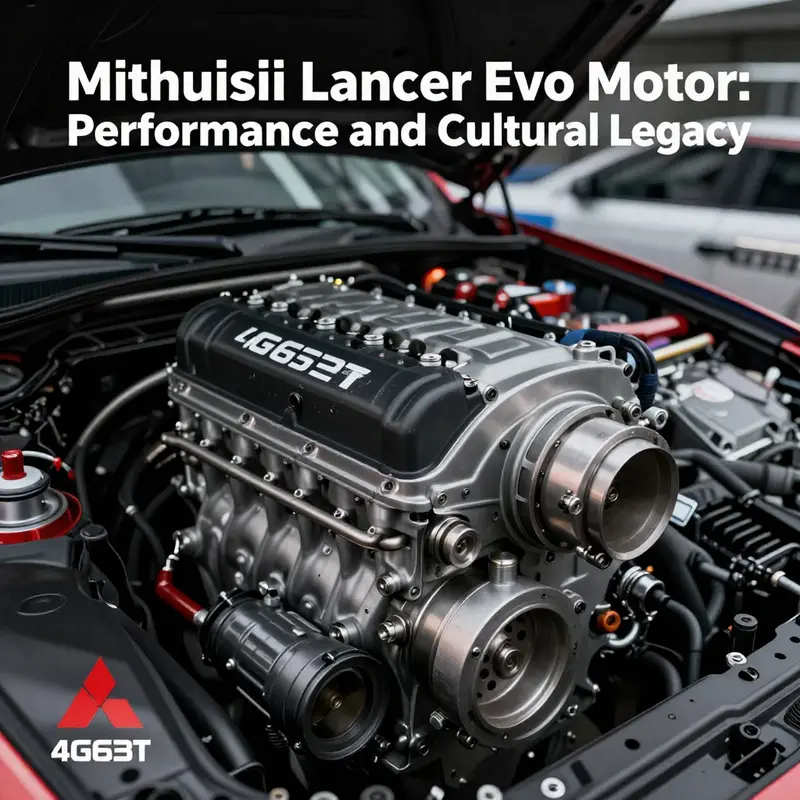
At the heart of every Mitsubishi Lancer Evolution, from the earliest road-going legends to the later, highly refined variants, sits the 4G63T—a compact, forceful 2.0-liter inline-four that has earned its place in performance history through a blend of rugged reliability and relentless tuning potential. The engine’s core architecture is deceptively simple in its origins: a short-stroke, four-cylinder powerplant with double overhead camshafts, a cast-iron block designed to survive high boost and relentless loading, and a turbocharging system that could be coaxed into more aggressive behavior as the car evolved. What makes the 4G63T so enduringly compelling for enthusiasts is not just the numbers printed on a brochure, but the way the architecture scales with ambition. It is a motor that invites the user to push the envelope, while offering durability enough to withstand the repeated cycles of factory tune, incremental enhancement, and the sort of chassis control that makes all-wheel-drive performance meaningful on real roads and stages alike. Displacement rests at just under two liters—1997 cc—yet the character it develops is unmistakably forceful, with linear torque delivery that remains predictable as boost rises and the engine spins toward its redline. The block’s cast-iron construction is a deliberate choice aimed at resilience, a foundation on which the Evo team could add turbocharged air, tuned fuel maps, and a cooling system capable of stabilizing the charge under stress. The engine’s high-rev behavior, paired with a strong bottom end, laid the groundwork for a platform that could be tuned from week to week, with each revision bringing a clearer picture of what was possible within the constraints of a single, derived platform.
Across generations, the 4G63T’s essence remained constant even as the hardware around it—the turbocharger, the intake, the cooling, and the drivetrain—was upgraded to deliver more usable power and sharper response. Early evolutions leaned into sharper exhaust flow and mechanical refinements that could coax a few more horsepower and a touch more torque from the base block. The result was a progression that looked incremental on paper but felt transformative when experienced on the road or the track. A recurring theme in the Evo’s development is the balance between peak output and usable torque. Across the span of Evolution II through Evolution VIII, the engine’s peak horsepower crept up to the same 280-PS plateau, but the torque curve shifted substantially, delivering higher twist at lower engine speeds and more aggressive delivery when the turbo spooled. In practical terms, this translated into faster launches, quicker response off boost, and improved mid-range tractability—an essential quality for a car whose core mission is to put power down through a demanding all-wheel-drive system.
In the Evolution II, the team began to refine flow management and fuel delivery, raising valve lift and optimizing exhaust dynamics. The result was a durable increase in power—260 PS at 6,500 rpm with a torque peak around 309 Nm at 3,000 rpm. The fundamental layout remained a straightforward, robust inline-four with a turbocharger capable of responding quickly to throttle input. A higher-capacity fuel pump and refined gear ratios within the five-speed manual transmission helped translate the engine’s capability into real acceleration, particularly in the mid-range where peak power was not yet fully realized but where torque character could make the car truly responsive in everyday driving.
By Evolution III, the 4G63T shed some of its early-stage bottlenecks. The compression ratio increased to 9.0:1, a move that improved thermal efficiency and throttle response under boost. The engine breathed through a larger turbocharger—an evolution that delivered a notable jump to roughly 270 PS and the same torque peak as before, around 309 Nm, but with a broader delivery window. The accompanying cooling improvements reduced heat soak during extended runs, helping to sustain performance as boost pressures climbed toward the upper limits of factory calibration. These adjustments weren’t about a dramatic leap in numbers alone; they were about building a setup that could maintain performance as loads rose during spirited driving and to enable more aggressive tuning over time.
Evolution V marked a significant milestone in both horsepower and torque. A factory figure of 280 PS at 6,500 rpm came with a torque surge to about 373 Nm at 3,000 rpm, a meaningful step that altered the car’s on-road behavior. The turbo housing was enlarged, enabling improved spool characteristics and better leverage of air intake. Simultaneously, lighter pistons and an enhanced cooling system reduced inertia and kept the engine resilient as boost pressure climbed. Wider wheelbase geometry on certain variants contributed to stability at high speeds and during cornering, a deliberate choice that complemented the 4G63T’s growing torque output. The net effect was a smoother, more confident acceleration profile that leveraged torque to tear into straights and hold momentum through mid-corner transitions. The engine’s reliability and consistent behavior in factory trim gave engineers room to imagine meaningful upgrades without sacrificing daily drivability.
Evolution VII arrived with a new turbocharger designation and a broader upgrade program aimed at increasing both power and tractability. The engine retained the 280 PS ceiling, but torque rose to about 382 Nm at 3,500 rpm. A more capable turbocharger unit and the introduction of an advanced torque-distribution strategy through the drivetrain integrated more cleanly with the car’s chassis dynamics, allowing the power to be distributed more effectively to the wheels. A strengthened front limited-slip differential and refined driveline hardware enabled the Evo to exploit the engine’s drag coefficient more aggressively on corner exit, increasing traction and reducing wheelspin under high-load conditions. The result was a package that felt more confident on winding roads and avoided the artificial throttling that can hinder a performance car when mid-corner torque is too abrupt or poorly matched to the chassis’s grip.
In Evolution VIII, the 4G63T reached a performance crest in several respects. Peak horsepower maintained at 280 PS, but torque grew to 398 Nm, with the peak moving to around 4,000 rpm. This shift reflected improvements across the air intake and turbo efficiency, as well as a more optimized intake system to bring cooler, denser air into the combustion chamber. The chassis received a corresponding upgrade in rigidity and suspension components, a refinement that helped the engine’s torque translate into meaningful motion rather than wasted energy and mid-corner wiggle. The Evolution VIII also introduced a second-generation active torque distribution approach and a refined yaw management concept in tandem with the car’s chassis engineers’ focus on cornering stability. A dedicated MR variant, with a six-speed transmission in place of the standard five-speed, underscored the performance emphasis—several inches of extra control in gear selection and a more complete interface between engine and drivetrain. These changes ensured that the 4G63T could continue to respond with crisp throttle feel and a linear power band, even as boost pressure rose and the torque curve shifted upward.
Beyond the engines themselves, the Evo’s drivetrain philosophy remained central to the car’s performance narrative. The 4G63T was paired with a full-time four-wheel-drive system in most configurations, designed to deliver traction where it mattered most. The combination of a robust torque-biased drive system and well-sorted mechanical differentials allowed the Evo to exploit the engine’s torque envelope with confidence. A reinforced chassis and high-rigidity platform—especially in later generations like the Evolution VIII’s architecture—gave the powertrain a solid home. Weight was kept in check through a mixture of structural reinforcement and, in some variants, lightweight components such as an aluminum roof. The overall package emphasized a balance: a torquey, eager engine that could be controlled precisely by a driver who understood how to exploit grip without overdriving the car’s limits.
The engine’s enduring appeal lies in its tuning horizon. Enthusiasts quickly learned that the 4G63T’s reliability, coupled with a robust cast-iron block, makes it a formidable candidate for aftermarket upgrades. With upgraded turbochargers, intercoolers, fuel delivery systems, and engine management, the 4G63T has repeatedly surpassed factory limits to deliver well beyond 300 horsepower, often approaching 400+ horsepower with sensible enhancements. The core story, though, isn’t just about raw power; it’s about how the engine’s strength blends with the Evo’s chassis—the way a turbocharged four can deliver a broad, usable torque band that feeds into an all-wheel-drive platform designed to place power precisely where it can be put to work on the road and on the track. In popular culture and in the tuner scene, the Evo’s image as a capable, push-plate of a car is reinforced by the engine’s ability to respond to upgrades without requiring a complete rework of the fundamental architecture. It is this duality—the stability of a durable block and the versatility of the turbocharged, high-boost environment—that makes the 4G63T a symbol of automotive performance philosophy.
To give a tangible sense of the hardware’s depth, consider a billet block option that represents a logical extension of the engine’s philosophy: strength, precision, and the willingness to push the limits of what a four-cylinder can endure. A billet block, designed for high-demand applications, embodies the idea that the 4G63T can be prepared for sustained, high-boost operation without compromising reliability. The possibility of such an upgrade underscores how the Evo’s engine has always been more than a power unit; it is an invitation to engineers and drivers to think in terms of robust systems, where the engine, the intake, the turbocharger, and the drivetrain work in concert rather than as isolated parts. A glimpse of this approach can be found in dedicated engine-upgrade catalogs that discuss high-strength blocks prepared for the 4G63 family, illustrating the ongoing dialogue between heritage engineering and modern performance demands. For readers curious about the deeper hardware options, one such reference point is the billet-block option offered within a specialized engine-upgrade catalog, which provides a concrete example of how the 4G63T can be adapted to new levels of endurance and power while preserving the fundamental layout that made the Evo’s performance package possible. See the linked block option for a sense of how the architecture scales in practice: 4b11t-billet-block.
Another facet of the engine’s story is the governance of power through the car’s control systems. Across the Evolution line, a philosophy of sophisticated torque management and stability control emerged. This philosophy did not rely on exotic electronic tricks alone; rather, it depended on a holistic approach to chassis dynamics. The drive unit had to deliver robust, repeatable torque that could be managed by a driver without resorting to extreme throttle inputs. The result was a real-world performance curve that rewarded precision and smoothness as much as raw acceleration. The engine’s character—torque-rich at low-to-mid revs, cleanly peaking in horsepower as rpm rose—made it possible for the Evo to respond crisply to steering inputs and throttle modulation, even in challenging corner sequences. In practical terms, this meant a car that could start strong from a standstill, sprint quickly through mid-range arcs, and then carry momentum through corners with a trustful sense of grip and balance. The chassis, with its reinforced rigidity and tailored suspension geometry, allowed the Turbocharged four to develop and deliver its power in a controlled, predictable fashion, a synergy that defined the Evo’s on-road persona.
In sum, the 4G63T is more than the sum of its parts. It is a robust, architecturally simple engine that proved remarkably adaptable. From Evolution II to Evolution VIII, it demonstrated an ability to evolve through tighter tolerances, improved flow paths, and better cooling, while still preserving the essential character that has made it such a beloved platform for performance enthusiasts. It is this blend of durability and tunability that makes the Lancer Evolution a study in how a well-engineered engine can form the core of a broader, coherent performance philosophy—one that places power where it will do the most work, and that treats the car as a complete system rather than a collection of parts. For engineers and drivers alike, the 4G63T remains a vivid reminder that great performance starts with a solid foundation, and that the most enduring legends in automotive history are often built from the simplest, most resilient ideas applied with relentless ambition.
External reference for a broader official perspective on the Evolution VIII era can be found here: https://www.mitsubishi-motors.com/en/evolution/viii/
Turbo Evolution: How the Mitsubishi Lancer Evo’s 4G63T Motor Shaped a Rally Legend
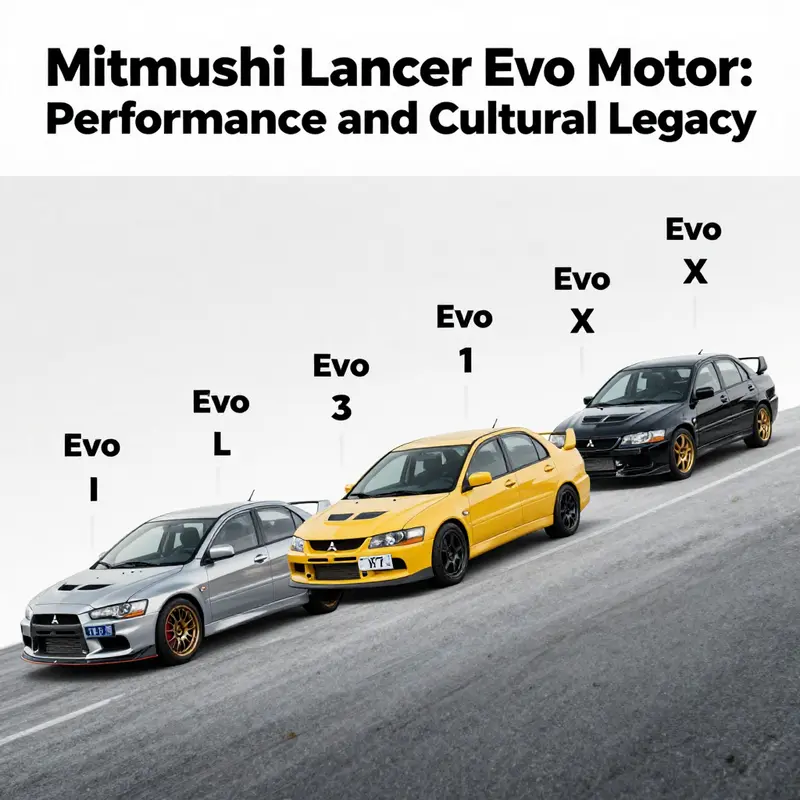
The Mitsubishi Lancer Evolution’s heartbeat is the 4G63T turbocharged engine, a 2.0-liter inline-four that forged a connection between street performance and rally dominance. From its debut in 1992, the engine established a reputation not just for raw power but for a balanced combination of reliability and tunable potential. In its factory form, it navitated the line of performance set by the era’s regulatory limits, delivering up to 280 horsepower and a peak torque that could reach the higher reaches of the rev band when demanded. The engine sits inside a chassis engineered for all-weather grip, and when paired with Mitsubishi’s sophisticated all-wheel-drive systems, the 4G63T became more than a motive force; it became the engine that could be trusted to carry a driver through variable surfaces with surgical precision. The cast-iron block, a cornerstone of its durability, enabled a level of chassis manipulation and aftermarket ambition that continues to resonate with enthusiasts today. It is this blend of rugged architecture and turbocharged surge that convinced a generation of drivers that the Evo was built not just to sprint, but to endure and evolve. The 4G63T’s legacy is inseparable from the Evo’s identity, and in reviewing its evolution, one can hear the steady heartbeat of a machine designed to push the envelope while keeping a lid on the kind of mechanical falter that would derail a rally program mid-stage.
Across generations, the engine’s core attributes—robust torque delivery, strong mid-range response, and the potential for substantial tuning—made it a platform unto itself. The factory power ceiling, often cited as 280 horsepower due to regulatory agreements of the time, belied a vast canyon of tuning opportunities that enthusiasts would explore in countless builds. Those opportunities were not merely about chasing peak numbers; they were about preserving tractable power delivery, ensuring that the torque curve remained usable at rally speeds and on twisty back roads alike. And while the engine’s hardware evolved, the philosophy remained clear: extract maximum forward drive without sacrificing reliability. The Evo’s evolution was thus a study in incremental refinement, a sequence of changes that improved breathing, cooling, and timing in ways that amplified confidence behind the wheel. The synergy between the 4G63T and the Evo’s drivetrain is worth understanding in stages, not as isolated upgrades. It is the sum of improved breathing, more efficient intercooling, and better flow paths through intake and exhaust that allowed a driver to reach the engine’s full potential more consistently across varied competition conditions.
Evolution I, introduced in 1992, marked the engine’s rally-inspired entry into a wider market. The 4G63 turbocharged unit produced 195 horsepower, a figure that underscored the Evo’s immediate promise: performance with a balance of power and control. The car’s behavior at the limit was approachable, inviting drivers to explore the line between grip and slip with confidence. This initial package established the baseline for what would become a long lineage of refinement—each successive Evolution would test and incrementally elevate the engine’s capabilities while preserving the character that defined the model in the first place. The chassis and drivetrain had to work in concert with the engine’s dynamic, and the result was a car whose performance could be extended well beyond the straight-line sprint.
Evolution II, arriving in January 1994, increased the game’s stakes considerably. Power rose to 260 horsepower, and the improvements focused on breathing and flow. Exhaust pressure management and valve lift were enhanced to extract more of the turbocharged rhythm from the same fundamental engine design. The result was a more muscular midrange, a broader torque band, and a more confident acceleration profile that could be sustained through the gears with minimal drama. For fans and technicians alike, Evolution II demonstrated that the Evo’s engine could accept more aggressive tuning while preserving the reliability that rally crews depended on during arduous stages. The evolution of this generation also underscored a broader truth about the 4G63T: the heart could be coaxed into more aggressive territory without demanding wholesale changes to the core architecture. This progression set the stage for more dramatic hardware refinements in later evolutions.
Within the same lineage, a deeper exploration of the 4G63T’s development reveals a notable milestone in Evolution III, which arrived in February 1995. Mitsubishi pushed the compression ratio to 9.0:1 and introduced a larger TD05H-16G6-7 turbocharger. The compression increase was not merely a numbers game; it altered the engine’s breathing characteristics, allowing it to respond more aggressively at lower boost levels while still feeding the turbocharged surge at higher speeds. The net effect was a jump to about 270 horsepower, with peak torque arriving more decisively than before. The turbo upgrade complemented this change, delivering the necessary mass airflow and pressure to sustain the higher compression without sacrificing reliability. The result was a more eager engine that could pull strongly from mid to upper revs, translating to quicker acceleration and more usable pull in corner entry. The synergy between higher compression and a more capable turbo pointed toward a fundamental philosophy: smaller displacement, higher efficiency, and more precise control of boost and timing.
Evolution IV, introduced in 1996, cemented the 4G63T’s reputation for high-rev capability and comprehensive flow improvements. Horsepower climbed to 280, aided by a larger intercooler, which kept intake temperatures in check under load, and by refinements in both the intake and exhaust paths. A high-lift camshaft optimized valve timing for peak power, and a revised turbocharger delivered more sustained boost across the usable RPM range. The combination of these changes produced a more linear and confident power curve, softening the throttle response into a smoother yet potent surge as the engine approached its upper limits. The intercooling upgrade mattered as much as the turbo tune because cooler intake air not only improves power but reduces the risk of knock and detonation in a turbocharged configuration. The result was a more tractable, more repeatable engine under the demanding stresses of rally stages and road performance testing alike.
With Evolution V, pushed into January 1998, the engine received refinements that improved durability and cooling while maintaining the established 280-horsepower target. The turbo exhaust port was enlarged, enabling better flow; lightweight pistons reduced the inertial load on the rotating assembly; and cooling systems were further optimized to preserve performance during extended duty cycles. Torque rose to about 38.0 kgm, a meaningful gain that transformed how the car pulled out of corners and up grades. This torque enhancement helped offset the weight of the car and the drag of the drivetrain while ensuring that the engine could deliver meaningful thrust not only at peak power but across the mid range where rally cars spend significant time fighting through corners. The emphasis on cooling and lubrication in Evolution V reflected a broader understanding: the tighter, more aggressive the engine, the more purposefully the supporting systems must work to maintain performance and reliability over long, punishing events.
Evolution VI, arriving January 1999, retained the 280-horsepower ceiling but leaned heavily into reliability upgrades. Oil-cooled piston tops offered better stability under sustained load, while an upgraded oil cooler and a revised oil pan helped manage heat and scavenge oil more effectively during long runs. These enhancements reduced the risk of thermal fatigue and oil-related issues that could otherwise threaten performance consistency on a rally stage or a demanding road course. Together, these refinements gave the 4G63T a sense of maturity: it could defend its performance envelope under repeated stress without the creeping worries of oil leaks or component wear that plagued earlier turbo setups. The combination of improved lubrication, cooling, and structural longevity meant that even well-used Evo models—many more than two decades old—could still deliver competitive performance in factory condition, a testament to the engine’s robust design and the foresight of its engineers.
Beyond these explicit evolutions, the engine’s integration with Mitsubishi’s all-wheel-drive architecture became increasingly sophisticated through the later generations. The Active Center Differential (ACD) and Active Yaw Control (AYC), introduced in the seventh generation, moved torque and yaw dynamics with a nuance that complemented the 4G63T’s torque delivery. The addition of the Super All-Wheel Control (S-AWC) system in the tenth generation pushed the concept even further, coordinating power across the axles with remarkable precision. This drivetrain evolution meant the engine’s horsepower and torque were not simply a matter of peak numbers; they were linked to a broader strategy of traction, stability, and cornering confidence. In practice, this meant that the Evo could maintain traction longer, respond more predictably to driver input, and transfer power efficiently through challenging surfaces. When the engine was tuned for more boost or reworked for higher compression, the AWD system acted as a brake on wheel spin and a lever for traction, ensuring that the car remained controllable even as power rose.
The 4G63T engine’s enduring popularity is no accident. Its architecture—a cast-iron block paired with robust rotating components and a turbocharged top end—lends itself to modification with a manageable risk profile. Enthusiasts have long valued the engine’s ability to respond to changes in boost, fuel delivery, and cam timing without a wholesale reevaluation of its core design. Factory figures, such as the 280-horsepower cap, reflect a regulatory context rather than a limit to engineering potential. In practice, the engine’s real-world output could outpace the simple numbers on a brochure, especially when paired with a well-tuned exhaust, a properly sized intercooler, and a careful approach to fuel and timing maps. The Evo’s legend rests on this balance between a durable, factory-titted base and a nearly endless horizon for tuning. The drivetrain’s role in making that tuning meaningful cannot be overstated; a powerful engine is only as good as the chassis, the cooling, and the torque-management systems that keep the car composed under load.
To connect the historical thread with the practical curiosity of builders and drivers, a deeper dive into archival and contemporary references can be revealing. For those seeking a detailed look at specific engine variants and how they were configured in different Evo generations, this resource captures the evolution with a focus on the factory-to-rally-grade transition. genuine-jdm-low-mileage-1995-1999-jdm-mitsubishi-4g63t-2-0l-dohc-turbo-engine-evo-7-bolt-eclipse-talon-awd-automatic-transmission-and-ecu-attached provides a window into the variants that fed the Evo’s development at the time, including detailed engine configurations that influenced later tuning choices. This level of specificity helps illuminate how each generation built on the last, not merely by adding horsepower but by refining cooling, breathing, and durability to maintain performance under ever more demanding conditions.
The narrative of the Evo’s motor is therefore not a simple catalog of horsepower figures. It is a story of iterative optimization, where small gains in compression, boost management, and breathing translated into meaningful gains on gravel, dirt, and tarmac alike. It is a story of how a design that began with rally racing sensibilities—lightweight, resilient, and capable of high boost—could be adapted for the street without losing the raw, thrilling sense of engagement that defined the model. The 4G63T became a platform that rewarded both careful factory calibration and bold aftermarket experimentation. The result is a generalizable lesson in engine architecture: with a robust core, thoughtful enhancements to cooling and airflow, and intelligent integration with a sophisticated AWD system, a turbocharged four-cylinder can sustain high performance over time while remaining accessible enough for enthusiasts to push toward their own personal performance horizons.
External reading: Car and Driver’s overview offers a broader technical context for the Evolution family and its performance heritage. Car and Driver overview.
Impact of the Mitsubishi Lancer Evo Motor on Racing Technology

The Mitsubishi Lancer Evolution’s heartbeat is the 4G63T turbocharged engine, a 2.0-liter inline-four whose reputation travels far beyond its compact displacement. This powerplant did more than propel a rally-bred sedan to podiums and record speeds; it became a movable blueprint for how a road car could borrow brutal efficiency from the world of motorsport. In the Evo lineage, the engine is not a mere component but a central character in a larger story about engineering intent, homologation demands, and the transfer of racing tech to production machines. From its origins in competition to its street-driven iterations, the 4G63T embodies a philosophy that performance is best achieved when the lines between track and road blur, when reliability and adaptability become the currency of a car’s entire development program. The engine started with a straightforward premise—extract as much air and fuel as possible, compress it intelligently, and manage the resulting torque through a drivetrain designed to deliver traction in every race scenario. Yet the way Mitsubishi refined that premise reveals a broader truth about racing technology: the toughest lessons learned on the rally stage eventually guide how a manufacturer designs, tunes, and tunes again a production model. In the Evo, the engine is both a power source and a testing ground, a place where the relentless demands of competition forced continuous refinement that would ripple outward to influence handling, aerodynamics, and the very architecture of the car’s chassis credibility.
The connection between rally competition and the road car is most clear when examining the evolution of the 4G63T across generations. Early Evo iterations leaned on the turbocharged torque and a dependable cast-iron block to create a robust platform that could survive the punishing demands of stage rallying. But as the World Rally Championship (WRC) participation intensified, the engineering team faced a cascade of pressures: increasing horsepower without sacrificing reliability, extracting more usable torque at lower revs for tight stages, and managing heat and intake efficiency under continuous high-load operation. This is where the Evo III stands out in the narrative. For WRC competition, Mitsubishi pushed the 4G63 engine to a revised compression ratio of 9.0:1, paired with a larger TD05H-16G6-7 turbo. The result was a substantial horsepower bump—approximately 270 horsepower—and peak torque lifting to about 31.5 kilogram-meters at a relatively accessible 3000 RPM. This configuration did more than deliver a higher top-end; it transformed the character of driveability on rally stages, where torque at midrange and a responsive throttle feel could determine a car’s ability to hold a line through a fast corner or claw back speed on a tight hairpin.
The aerodynamic and chassis context is essential to understanding how these engine refinements translated into on-track performance. The Evo III did not excel on power alone; it benefited from an integrated approach to downforce and cooling that was tailored to rally and circuit realities. A redesigned front bumper with dedicated brake cooling ducts, a thoughtfully sculpted side skirt set, and a full-width rear wing were not cosmetic; they were functional, engineered to generate substantial downforce at high speeds and to improve stability under heavy cornering loads. In rally conditions, where grip is a constant struggle against loose surfaces and variable coefficients of friction, this kind of aerodynamic development was a practical imperative. The modifications enabled the car to translate its boosted power into predictable acceleration out of corners and consistent line-holding ability on fast, undulating sections. The Evo III’s package thus illustrates a core theme in racing technology: you do not win races with raw horsepower alone; you win by engineering a coherent system where the engine, the airflow, and the chassis all speak the same language of momentum, traction, and control.
As the Evo line moved forward, Mitsubishi aimed to preserve the engine’s durability while expanding its tuning envelope. The four-cylinder 4G63T is renowned for its robust cast-iron block, a structural decision that underpins a long legacy of reliability in high-stress environments. Its durability matters because modern performance cars live on the edge of their limits; they demand components that can be pushed harder, longer, and with fewer surprises. This durability, combined with a strong bottom end and a versatile turbocharging strategy, gave tuners a broad canvas for experimentation. Factory figures, constrained by an overall performance cap—280 horsepower in many regions due to theGentlemen’s Agreement—still left substantial room for enthusiasts to pursue further gains through careful modifications. The Evo’s tuning culture has always been about unlocking this potential without compromising the engine’s core integrity; it’s a balance between pushing performance and preserving the engine’s life under repeated high-load sessions. The legacy is visible in the fact that many Evos, well into their two decades, still perform competitively in stock form or with moderate enhancements, a testament to the engineering choices that made the 4G63T both powerful and durable.
The Evo VIII marks a turning point where race-derived technology began to permeate the street-car DNA with a more systematic approach. Mitsubishi’s engineering team introduced a more sophisticated all-wheel-drive architecture with its second-generation Active Center Differential (ACD) and an upgraded Active Yaw Control (AYC). These systems weren’t mere add-ons; they represented an evolution in how torque was managed and distributed in real time across the front and rear axles. The ability to vector torque with precision translated directly into the car’s on-road handling, especially during high-speed cornering or when exiting turn-in on damp surfaces. The result was a more confident, more communicative chassis, a car that could be driven harder before its limits revealed themselves. The EVO VIII MR variant exemplified the synthesis of racing philosophy and street usability: a 6-speed manual, a torque-biased all-wheel-drive system, a front mechanical limited-slip differential, Bilstein dampers, and light-weighting measures such as an aluminum roof contributed to a car that felt more planted, more agile, and more responsive to even subtle steering and throttle inputs.
Chassis rigidity and weight distribution remained central to the Evo’s ability to turn power into real-world performance. The CT9A platform, refined for the EVO VIII’s demands, emphasized structural integrity and predictable behavior at the limit. In this context, even the choice of materials—like aluminum in the MR version’s roof—carried performance implications. Lighter, stiffer platforms reduce the energy lost in flex and allow the suspension to respond more directly to the driver’s inputs. The result is a cascade of improvements: more immediate turn-in, crisper mid-corner stability, and better balance as the car transitions from throttle to brake and back to acceleration. These are not merely technical niceties; they are the differences that translate into lap times and podium finishes. In rally and circuit contexts alike, the synergy between upgraded engine management, torque vectoring, and chassis rigidity culminates in a car whose handling character is defined as much by its ability to hold a line as by its maximum horsepower.
The broader significance of the Evo motor, then, lies not only in the numbers it could achieve but in the philosophy it embodied: racing technology is not a single invention but a persistent, iterative process. Each generation uses what worked in the past as a springboard for new ideas, whether those ideas concern turbocharging efficiency, turbo footprint, or the way torque is choreographed across the tire contact patch. The 4G63T’s persistence in the Evo’s evolution demonstrates how a single powertrain can drive an entire engineering culture. It supplied a reliable foundation for high-output tuning while also challenging engineers to rethink how the drivetrain communicates with the driver, how the car distributes traction during dynamic weight transfer, and how the aerodynamics package would enhance straight-line speed without destabilizing the chassis under load. In the arena of racing technology, the Evo’s motor stands as a case study in disciplined aggression: push the limits, but do so with a clear sense of how all the parts must work together to win.
For readers who want to delve deeper into the hardware that powered these machines and understand the baseline architecture that allowed such aggressive tuning to be attempted, a detailed look at the 4G63T’s core appears as a useful reference. genuine-jdm-low-mileage-1995-1999-jdm-mitsubishi-4g63t-2-0l-dohc-turbo-engine-evo-7-bolt-eclipse-talon-awd-automatic-transmission-and-ecu-attached offers an in-depth look at a classic configuration that underpinned the Evo’s performance credo. It places in context how the engine was designed to be both a workhorse and a platform for experimentation, reinforcing the idea that reliability and upgrade potential can coexist in the same powerplant. The interplay between these technical strands—durability, turbo efficiency, and torque management—produced a kind of engineering ecosystem where race-developed ideas would migrate to road-going performance, and where the boundaries between competition and everyday use were continually redrawn in favor of more capable, more confident driving experiences.
As the story progresses, it becomes evident that the Evo’s motor did more than push a small sedan toward headline speeds. It helped shape a broader automotive philosophy. The migration of race-derived systems—efficient turbocharging, sophisticated center-differential layouts, active yaw control, and torque-vectoring all-wheel-drive architectures—into everyday road cars has become a standard expectation in the performance segment. The Evo’s approach showed that a boutique, rally-focused machine could set benchmarks that the entire industry would later adopt. It wasn’t only about raw numbers; it was about how a company could craft a dynamic relationship between the engine, the drivetrain, and the chassis, such that the car behaved in a way that felt almost telepathic to the driver. This alignment of power, control, and feedback is precisely what keeps the Evo’s memory alive in contemporary performance narratives, even as new platforms push further beyond the thresholds the 4G63T helped establish.
The story of the 4G63T in the Evo lineage, from the radical aero and turbo claims of the Evo III to the refined, driver-centric chassis mastery of the Evo VIII, remains a touchstone for how racing technology informs production dynamics. It is a narrative about learning under extreme conditions and translating those lessons into vehicles that can be enjoyed by enthusiasts on the street while still delivering a tangible sense of competition at the track. In this sense, the engine’s legacy extends beyond horsepower figures and lap times. It encompasses a methodology: measure, iterate, and integrate. It is this methodology that has left an indelible mark on the way performance cars are conceived, engineered, and driven—an imprint that the Mitsubishi Lancer Evolution carried forward with its 4G63T heart and its unwavering commitment to turning race-day insight into road-going capability. A deeper historical overview can be found in this retrospective: MotorTrend article.
From Rally Tracks to Street Legends: The Evo Motor as a Global Cultural Force
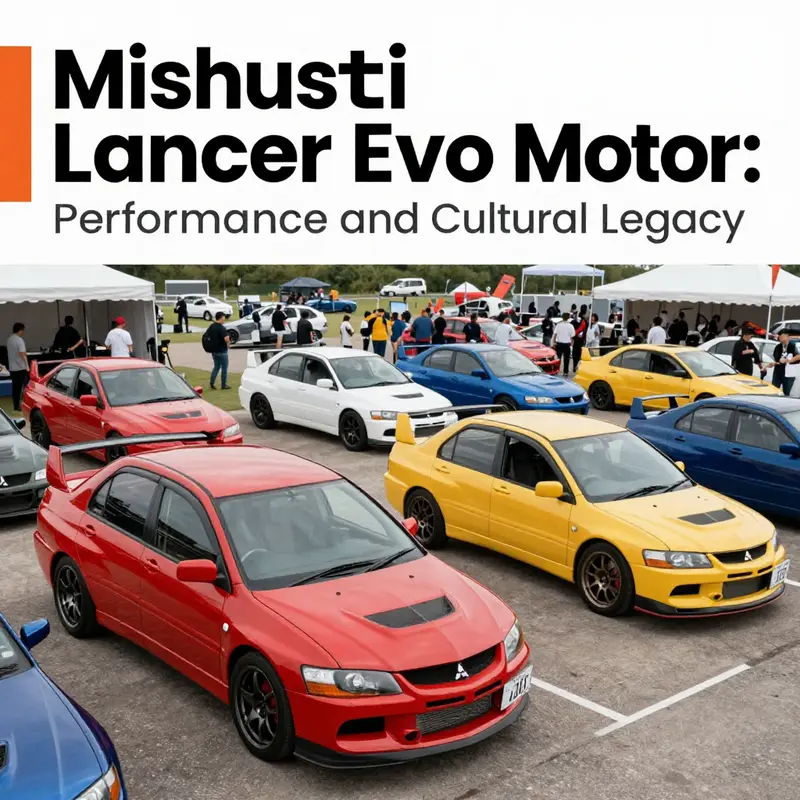
The Mitsubishi Lancer Evolution, and particularly its 4G63T turbocharged heartbeat, is not merely a powerplant. It is a cultural instrument that has threaded its way through stadiums, street corners, garages, and online forums around the world. The engine, a 2.0-liter inline-four with a cast-iron block and a turbocharged soul, became the rapid, relentless pulse of a lineage that stretched from factory floors in Japan to back roads and drag strips across continents. In its factory form, the Evo’s 4G63T could deliver up to 280 horsepower, a ceiling imposed by a historical marketplace agreement, with peak torque around 392 Nm. Yet those numbers tell only a fraction of the story. What truly mattered was not simply the horsepower rating, but the engine’s enduring trust, its capacity to tolerate high loads, and its readiness to be coaxed into ever greater performance through careful tuning. The combination of horsepower, torque, and the protective embrace of a robust, cast-iron block created a platform that enthusiasts could trust while they pursued personal thresholds of speed and control. The 4G63T’s longevity is not merely a statistic; it is a signal that a modern legend was built with an eye toward both reliability and possibility, a balancing act that became a shared promise among drivers who brave rough roads, wet surfaces, and the unpredictable drama of rally-inspired handling on public streets. The engine’s 2.0-liter displacement is modest by today’s standards, yet the way it breathes through turbochargers and intercoolers—paired with an architecture designed to resist deformation and leakage under load—made it a favorite canvas for those who enjoy pushing hardware to the edge without sacrificing resilience. The evolution of the powertrain across generations—culminating in the later Evo lines with refined intake approaches, improved turbocharging, and calibrated engine management—always returned to the same core: a turbocharged four that can be coaxed, tuned, and coaxed again, without mutiny from the block or the bearings. It is this fusion of rugged core and tunable spirit that underpins the Evo’s cultural standing in the wider world of performance machines. The engine’s role in this story is inseparable from its drivetrain siblings—the all-wheel-drive systems that Mitsubishi choreographed to deliver torque with surgical precision. From the seventh generation onward, Active Center Differential and Active Yaw Control introduced new layers of traction, steering feedback, and stability, while the subsequent Super All-Wheel Control family expanded the realm of what a road car could negotiate with confidence. The 4G63T did not merely push power; it shared a platform of trust that allowed drivers to attack corners with speed, knowing that the chassis and the AWD system would translate intent into action with exactitude. In that sense, the engine became a cultural ambassador for a philosophy: that speed can be harnessed through mathematics, engineering discipline, and a willingness to lean into the edge without surrendering control. The Evo’s cultural resonance is often described in three intertwined strands: motorsport heritage, Japanese automotive culture, and the global tuner scene. In the realm of WRC, the Evo’s racing DNA was not an ornament but a mandate. The model line was engineered to compete at the pinnacle of rally competition, and the results spoke loudly. Between 1996 and 1999, Evo siblings helped secure four consecutive WRC Manufacturers’ Championships, a feat that cemented the car as a benchmark for performance-oriented vehicles. Those wins were more than trophies; they were a validation of the engineering choices embedded in the 4G63T and its associated drivetrain systems. They showed that a turbocharged four, paired with a carefully tuned AWD architecture, could translate rally discipline into street-savvy performance. The significance of this racing pedigree lies in its contribution to a broader narrative about reliability under extreme demands. Enormous power is only part of the story; consistent, repeatable performance under varied conditions is what sustains trust among drivers who live with the car every day. The Evo’s 4G63T, with its robust casting and long-stroke heritage, became a symbol of that reliability, a common ground for enthusiasts who push for more power while maintaining a sense of structural integrity. Beyond the track, the Evo found a second life within Japanese automotive culture and the global tuner scene. Its design language—aggressive front fascia, oversized rear wing, and the now-iconic shark-nose grille—captured a look that was both purposeful and emblematic. The visual identity of the Evo, especially in later generations, became instantly recognizable, a visual shorthand for performance and a philosophy of engineering that emphasized balance between raw capability and driver involvement. This bold aesthetic, married to a turbocharged engine capable of expressing itself through a wide spectrum of modifications, helped turn the Evo into a canvas for personal expression. It is no coincidence that countless garages across continents housed builds that ranged from street-legal track weapons to race-inspired machines purporting to push beyond the 700–800 horsepower range. The blueprint—stock reliability, abundant tuning headroom, and a chassis tuned for traction—made the Evo an ideal starting point for experimentation, while the simple fact of owning a 4G63T engine provided a sense of connection to a lineage of tuner culture that has no borders. The cultural dynamic is further enriched by media exposure that introduced the Evo to audiences who might otherwise have overlooked a Japanese rally machine. The car’s appearance in popular cinema—well beyond the technical realm—brought it into living rooms, video game interfaces, and car show circuits where fans could learn the language of performance by seeing the car in action, sometimes with dramatic modifications that symbolized the wider culture. The Evo’s media visibility helped democratize performance dreams. It showed that a road-legal car could straddle the line between road and track, that a driver with ambition and skill could transform a car into a personal statement about speed, control, and a sense of belonging to a global community of like-minded enthusiasts. The social fabric around the Evo has grown into a robust, shared culture, one that invites newcomers and old hands alike to contribute to an evolving story. The engine, with its legendary durability, has become a touchstone for conversations about what makes a modern performance car resonate with people across borders. Enthusiasts discuss not only the numbers, but the ways in which the 4G63T, the turbocharger, and the long-stroke architecture respond to the pressure of upgrades, and how those choices affect drivability at the limit. The community is sustained by a common understanding: that performance is not a single figure on a dashboard, but a relationship between engine dynamics, chassis behavior, and a driver’s ability to read a car’s feedback through the steering wheel and pedals. The Evo’s internal culture extends into the practical realities of ownership, maintenance, and tuning. The iron-block 4G63T architecture is known for its durability, which translates into a willingness to experiment with reasonable risk. It is not unusual to hear stories of engines that exceed factory outputs through careful modifications—larger turbochargers, upgraded intercoolers, refined fuel delivery, and precision engine-management calibration—that preserve reliability while expanding capability. Those stories are what give the Evo its staying power: a car that invites experimentation without demanding sacrifice in daily use. The design and engineering choices surrounding the Evo’s motor are part of a larger myth that has grown through rallying and street culture alike. The car’s ability to deliver tractable power with a broad torque curve makes it a friendly platform for both new drivers and seasoned tuners. The engine does not demand perfection from its owner; instead, it rewards a thoughtful approach to upgrading and maintenance. That balance—power on tap, predictable response, and a chassis that communicates clearly—has made the Evo a living tradition, a car that can be tuned to a personal story, whether that story unfolds on a winding mountain road, a closed-circuit, or a well-lit highway at night. A subtle but important element of this culture is the global distribution of parts, knowledge, and communities. The 4G63T’s compatibility with a wide range of upgrades means that enthusiasts can exchange ideas in forums, at local meets, and in online streams, creating a sense of international camaraderie. The Toyota dynasty in the global tuner scene has its own admirers, but the Evo’s aura is different: it is not merely about raw potential, but about the craft of extracting usable performance in a way that respects the car’s engineering. This ethos resonates with a broad audience. The Evo has inspired a balance of reverence and practice, a sense that performance should be approachable, learnable, and shared. It invites young drivers to study lines through corners, to understand torque delivery, and to appreciate the art of adapting a rally-ready engine to daily life. The cultural significance thus rests on more than a set of numbers or a single championship season. It rests on a transnational, intergenerational conversation about what it means to chase speed with discipline, to celebrate engineering, and to participate in a community that thrives on curiosity and collaboration. The engine’s story, from its cast-iron roots to its modern tuning potential, mirrors the broader arc of the Evo itself: a machine born in the crucible of motorsport, refined through generations of road-going refinement, and carried forward by a worldwide network of fans and practitioners who keep the flame of performance alive. For readers who want to see how this culture translates into tangible choices, a quick glance at the broader ecosystem of Evo parts and JDM heritage offers a window into the ongoing dialogue between enthusiasts, engineers, and dreamers. A small but telling example is the ongoing interest in authentic, period-correct details that signal a car’s lineage, from the distinctive taillight suites to interior cues that whisper of a shared history. In this spirit, the cultural significance of the Evo motor extends beyond the garage and the racetrack. It has become a language that enthusiasts speak in airports, car shows, and online communities—the language of power responsibly pursued, of engineering respect, and of a global tribe that believes in the joy of driving as a shared experience. The engine, with its robust architecture, continues to offer a path for those who value both performance and longevity. It provides a template for how to balance ambition with an understanding of mechanical limits, a lesson that resonates well beyond the boundaries of any single car or country. As the world moves forward, the Evo’s motor remains a living archive of how a well-engineered turbocharged four can become a symbol of identity, craft, and community. It is a reminder that great cars are never merely machines; they are vessels for culture, memory, and the ongoing pursuit of speed that respects the past while pushing toward new horizons. The Evo’s motor, in this sense, is not just a component. It is a cultural artifact, a catalyst for shared passion, and a testament to the power of engineering to connect people across oceans and generations. To readers who want to explore this deeper, a glimpse into the broader JDM heritage and the particularities of Evo-9 MR styling offers a tangible nod to the authenticity that underpins the movement. For those who want a firsthand sense of the era’s authenticity, one can explore the authentic JDM Evo-9 MR taillights, which encapsulate the era’s attention to detail and its signaling of a car’s performance heritage. The link to this exploration can be found here: authentic-jdm-evo-9-mr-taillights. This small window into the era’s components underlines how the Evo’s culture is a mosaic built from engineering, aesthetics, history, and shared experience. In sum, the cultural significance of the Evo motor rests on a triad of performance, provenance, and community. The 4G63T engine exemplifies a design that could be trusted under rally-grade demands and then reinterpreted by drivers who sought personal expression through upgrades and modifications. The rally championship pedigree confirmed the engineering promise; the visual language and design cues sealed the car’s identity; and the tuner culture expanded its reach across borders. The result is a living tradition that invites participation from anyone who loves driving and respects the craft that makes speed both possible and meaningful. External resources can offer a broader historical lens for those curious about the Evo’s place in automotive history. For further reading on the broader evolution of Mitsubishi’s performance ethos and how it intersected with rallying and production cars, visit a comprehensive overview at https://en.wikipedia.org/wiki/Mitsubishi_Evolution.
Final thoughts
The Mitsubishi Lancer Evolution motor, particularly the renowned 4G63T engine, is more than just a powerful engine; it represents a legacy of automotive engineering, performance, and community. From its impressive technical capabilities to its far-reaching cultural impact, the Evo motor has left an indelible mark on the automotive landscape. Business owners and automotive enthusiasts alike can appreciate how this engine not only performs admirably on the racetrack but also connects people across diverse backgrounds united by a shared passion. The Mitsubishi Lancer Evo motor has proven to be a cornerstone in the history of performance cars, driving innovation and inspiring countless modifications and adaptations that celebrate its enduring legacy.