

The front bumper of the Mitsubishi Outlander III (2018) serves a dual purpose: ensuring both safety and aesthetics. As a critical component of the vehicle’s design, it impacts how the vehicle absorbs minor impacts while providing a visual appeal that can be pivotal for potential customers. This article will explore the materials and construction, performance metrics, replacement and customization options, and market availability for these bumpers, providing business owners with insights necessary for making informed decisions about their inventory and customer offerings.
Under the Skin: The Material Science and Construction of the 2018 Mitsubishi Outlander Front Bumper

The front bumper of the 2018 Outlander, often taken for granted as a mere cosmetic shell, is in truth a carefully engineered system. Its purpose extends far beyond aesthetics; it is the first line of defense in low-speed impacts, a steadfast partner to the cooling system, an aerodynamics feature that shapes the way air flows across the nose, and a precise interface with headlights, grilles, and the hood. Understanding its construction requires looking not only at what you see on the outside—color, gloss, and contours—but also at what lies beneath: the materials chosen, the methods used to shape and join them, and the way the entire assembly behaves as a single, integrated unit in daily driving as well as in the rare moment of a collision. In the 2018 model year, the front bumper embodies a balance among stiffness, energy absorption, and lightweight design, all calibrated to contribute to crash safety, reliability, and a visually cohesive front end that remains true to the vehicle’s character over time.
The outermost layer, commonly referred to as the bumper cover, is a shell that must endure a spectrum of conditions. Most of these covers are fabricated from durable thermoplastics, with polypropylene serving as a frequent baseline material due to its excellent resistance to cracking in cold temperatures and its ability to hold a smooth, paint-ready finish. In OEM configurations, a subset of bumper covers utilize ABS (acrylonitrile butadiene styrene) blends, prized for their combination of strength and light weight. The choice between these polymers is not merely a matter of color matching but also a question of how the cover behaves when it encounters a minor impact—the energy it can absorb, how much resistance it offers against scratches or microcracks from road debris, and how well it maintains a consistent appearance under sun exposure, heat cycling, and aging. When color is matched, paint systems must be compatible with the chosen plastic to prevent peel and fade, an important consideration for any bumper that must preserve a seamless look across years of ownership. The cover is designed to be tough yet forgiving, aiming to distribute impact energy across a wide area rather than concentrating it in a single point. This is crucial in protecting the radiator, condenser, and surrounding hardware behind the fascia, and it is also why the materials science around the cover matters so much for real-world safety and reliability.
Behind the cosmetic face, a more rigid backbone plays the essential role of energy management. The bumper reinforcement—an internal substructure positioned directly behind the bumper cover—serves as the primary energy-absorbing element during a collision. Depending on the vehicle’s design and the target safety standards, manufacturers choose high-strength steel or lightweight aluminum alloy for this reinforcement. Steel offers proven strength and predictable deformation characteristics, helping to absorb energy and limit the intrusion into the engine bay and passenger compartment. Aluminum brings a weight advantage, translating to improved fuel economy and unsprung weight considerations, while still delivering robust performance in the event of a low-speed impact. The calibration between bumper cover and reinforcement is a delicate equation: too rigid a cover and too soft a reinforcement can lead to poor energy dissipation; too flexible a cover and you risk excessive deformation that compromises aluminum or steel backings. The result is a coordinated system where the cover and reinforcement work in concert to protect critical components—radiator cores, cooling lines, sensor housings, and even headlights—from deformation that could reduce visibility or function.
The structural harmony of the front bumper is further reinforced by a network of brackets and fasteners that secure the cover to the reinforcement and to the vehicle’s chassis. These mounting components are typically manufactured from reinforced plastics or durable metals. Their primary job is precise alignment: maintaining consistent gaps around the edges of the bumper, ensuring that the fascia sits flush with the grille and hood line, and minimizing vibration-induced noise during normal operation. Good bracket design also accounts for serviceability; a bumper should be removable for repairs without requiring the patient to perform a disassembly of multiple surrounding panels. In practice, the fasteners and brackets support repeatable fitment across various production batches and assembly lines, which is essential for long-term reliability and for allowing aftermarket replacements to align with OEM geometry. Precision in the fit is what keeps paint from chipping along sharp edges and keeps the overall visual integrity of the front end intact after countless openings and closings of the hood and the repeated cycles of road exposure.
The interplay between the bumper cover, the reinforcement, and the mounting hardware has broader implications beyond crash safety. Aerodynamics, for example, is influenced by how cleanly the bumper integrates with the grille, the air dam, and the lower lip. The bumper’s shape guides the initial flow of air into the cooling system, reducing turbulence and helping to stabilize cooling performance at highway speeds. Even small changes in the bumper’s contour or in the articulation of its lower valance can alter drag coefficients and, by extension, fuel economy and high-speed stability. To achieve the right balance, engineers carefully consider the geometry at the front edge, the under-vehicle air channels, and the breakpoints where the bumper meets fenders and the hood. The goal is a cohesive silhouette that looks polished and performs predictably under a broad range of driving conditions, from hot summer commutes to cold winter commutes where materials contract, expand, and acknowledge the weather with subtle cues such as gloss variation or micro-cracking thresholds.
In production and assembly, the construction sequence reflects a disciplined approach to assembly-line efficiency and quality control. The bumper cover is molded in high-volume, a process that benefits from the rigidity and surface finish of modern polymers. Injection molding yields consistent wall thickness and dimensional stability, which aids in achieving the tight tolerances necessary for clean gaps and flush alignment with adjacent panels. After molding, color and texture are applied in coordinated steps to ensure a uniform appearance across the vehicle’s entire nose. The reinforcement is typically cut, formed, and treated to meet structural requirements, then attached to the vehicle frame through a combination of mechanical fasteners and, where appropriate, energy-absorbing barriers that help to manage load paths during an impact. The brackets and fasteners are installed with precision fixtures to guarantee repeatability. Each step includes inspection checkpoints for dimensional accuracy, surface quality, and connection integrity. The end result is a bumper system that behaves as a unified unit, with predictable responses to minor bumps and a capability to protect vital systems when confronted with more strenuous events.
From a materials science perspective, the 2018 Outlander front bumper encapsulates a layered philosophy. The outer layer focuses on impact resistance and cosmetic longevity, the inner structure emphasizes energy absorption and load transfer, and the mounting framework ensures alignment and resilience against vibration and weather exposure. This triad—cover, reinforcement, and fasteners—demonstrates how modern bumper design combines material science with mechanical engineering to deliver safety, durability, and aesthetics in a single package. It is not merely about choosing the right polymer or the right metal; it is about orchestrating a suite of properties—toughness, form stability, fatigue resistance, and processability—to achieve a front end that can perform across a spectrum of everyday and extraordinary scenarios. The design must also accommodate the reality of parts availability and serviceability. In this context, the potential for replacement parts—whether OEM-grade or aftermarket—enters the conversation early. A bumper must be compatible with other front-end components, able to be replaced without compromising alignment, and capable of returning to its prior state after repair or replacement. This compatibility is where the practical value of the bumper’s materials and construction becomes most evident, guiding decisions around repairs, upgrades, and maintenance.
The literature surrounding front-end components often highlights the materials themselves in isolation, but the true value emerges when you see how those materials interact through the life cycle of the vehicle. A bumper cover selected for high impact resistance and UV stability will help maintain a pristine appearance, provided the underlying paint system is compatible and the color match remains stable over time. A robust reinforcement backbone ensures that energy is not concentrated in a single area during a collision, reducing the risk of chassis or engine bay damage under low- to moderate-speed impacts. And a well-engineered bracket system ensures that the whole assembly maintains its geometry, preserving function and appearance as the vehicle experiences the vibrations and thermal cycles of daily use. The 2018 Outlander front bumper embodies this integrative approach, where materials science, structural engineering, and assembly discipline converge to produce a component that plays a central role in both safety and style.
For readers who want to see how such a bumper fits into a broader owner- or aftermarket-focused context, consider the practical implications of selecting a replacement or upgrade. The choice between a direct OEM replacement and an aftermarket equivalent hinges on several factors: material compatibility with the existing paint and sealants, the precision of fit with the grille and hood lines, and the reinforcement’s ability to maintain protective performance in a crash scenario. While aftermarket options can offer cost advantages or styling variations, the risk of misalignment or suboptimal energy management rises if the new part does not mirror the original geometry or material behavior closely. This underscores why the alignment between bumper cover materials and reinforcement design remains a cornerstone of crash safety and long-term durability. If you are exploring the specific Outlander bumper configuration, a direct reference to the Outlander bumper page can provide valuable detail about the exact fitment and geometry for the model year in question, ensuring that any replacement respects the established tolerances that underpin both aesthetics and safety. Outlander Front Bumper Page
External considerations, such as regional crash-test expectations and durability under climate stress, reinforce the practical significance of the material choices described. For example, in areas with wide temperature ranges, the bumper cover must resist thermal expansion without warping, and the reinforcement must retain its energy-absorption properties across cycles of heating and cooling. UV exposure, salt spray, and road debris all challenge the long-term integrity of the bumper cover’s surface finish and the fastening system’s reliability. These factors influence maintenance habits as well. Regular inspection for micro-cracks or gloss loss can help detect early signs of material fatigue, while observing the gaps and panel alignment can indicate if the brackets or fasteners have loosened over time. A well-maintained bumper continues to contribute to cooling efficiency, proper air intake dynamics, and a harmonized front-end silhouette that remains faithful to the vehicle’s overall design language.
In sum, the 2018 Mitsubishi Outlander front bumper is a carefully engineered system that embodies a practical fusion of materials science and mechanical design. The cover’s polymer choice balances impact resistance with aesthetic durability, while the reinforcement provides essential energy management that protects critical components during an impact. The mounting hardware ensures precise alignment and enduring performance, even amid the realities of daily driving and routine maintenance. This integrated approach is what allows the bumper to perform its protective duty without compromising the visual cohesion that defines the vehicle’s front end. For anyone contemplating repair, replacement, or upgrade, recognizing these underlying principles helps ensure that the chosen component will behave as expected under real-world conditions, preserving both safety and style for years to come. External resources for further reading, including supplier references, can deepen understanding of how these materials behave in practice and what to expect from OEM-quality versus aftermarket options in the market.
External resource: https://www.alibaba.com/product-detail/Mitsubishi-Outlander-Front-Bumper-Parts-Engine_1600497751727.html
Front-Line Form: The 2018 Outlander’s Front Bumper as a Nexus of Safety, Fit, and Aesthetics

The front bumper of a mid-size, five-seat SUV from the late 2010s is more than a simple cosmetic piece. It is a carefully engineered interface where safety, aerodynamics, and everyday practicality converge. In the 2018 model year, the bumper serves as the primary shield for the engine bay and the most forward line of defense for the occupants. It is designed to engage in a controlled, energy-dissipating deformation during low-speed impacts, protecting critical structures such as the radiator, headlights, and the passenger compartment. This is not accidental; it reflects a design philosophy that treats the bumper as a passive safety structure with a precise set of performance criteria. When you walk around such a vehicle, you can sense how the bumper’s lines align with the hood, the grille, and the headlights, forming a cohesive front-end sculpture that is as much about crash compatibility as it is about road presence. The attention paid to this element reveals a broader corporate emphasis on integrating safety with everyday usability, ensuring that minor scrapes do not escalate into expensive structural repairs while preserving the vehicle’s visual integrity.
From a materials perspective, the bumper is typically built from high-performance polymers like polypropylene, often reinforced with fiber or layered with energy-absorbing structures. These choices balance stiffness, ductility, and resistance to weathering. The outer skin must withstand the assaults of UV radiation, stone chips, and temperature swings, while the inner energy-absorbing system must yield in a predictable manner to absorb impact energy. The result is a component that remains visually consistent across a wide range of climates, from subfreezing mornings to hot, sun-baked afternoons, without warping or color fade. In the 2018 configuration, this durability translates into long-term reliability for daily driving and resilience in occasional mishaps. What looks like a simple panel on the outside is, in fact, a carefully layered system designed to manage energy flow into the chassis, reducing peak forces transmitted to the engine bay and, by extension, to the occupant cell.
The front bumper’s role in precision matching cannot be overstated. As an OEM part, its dimensions, contours, mounting holes, and attachment points are calibrated to harmonize with nearby components: the headlights, the fog light assemblies, the grille, the fenders, and even the hood. This tight fit is not only about maintaining a seamless aesthetic; it ensures consistent gaps, alignment, and sealing that contribute to overall aerodynamics and water management. A misaligned front end can introduce drag, alter cooling airflow, or create gaps that invite debris and moisture into sensitive areas. The OEM-grade geometry thus safeguards performance beyond looks, enabling the vehicle to slice through air with minimal turbulence and to maintain clearances that prevent rubbing or rattling during daily operation.
Functional integration extends beyond the visible edges. The bumper houses or interfaces with essential features that modern driver-assistance systems rely on. Parking sensors must sit in precise locations to deliver accurate distance readings, while sensor cabling needs clean pathways that avoid interference with the bumper’s energy-absorbing crumple zones. Some models also provide mounting points or pathways for fog lighting units and for headlight washer nozzles, when those features are included. This level of integration matters because sensor misalignment or mispositioned lights can degrade the effectiveness of active safety systems or the quality of illumination in adverse conditions. In effect, the bumper is a small but crucial node in a larger network of safety technologies and visibility enhancements that operate in concert with the rest of the front-end assembly.
Durability and environmental adaptability are practical concerns as well. The material system and surface coatings are chosen to resist UV degradation, chemical exposure, and the mechanical abuse of road travel. The bumper must endure temperature extremes—think of bitterly cold mornings and hot, sun-baked days—without cracking, yellowing, or losing structural integrity. It also has to shrug off acid rain and stone-chipping, which are common on long highway drives and rural routes. These considerations matter not just for appearance but for long-term maintenance costs and the cost of ownership. A bumper that holds its shape and color over several years reduces the frequency of refinishing or replacement, which is a meaningful factor for ownership satisfaction and resale value.
The discussion of performance metrics thus unfolds across several intertwined dimensions: collision safety, material and structural strength, precision matching and integration, functional capabilities, and environmental resilience. Taken together, they illustrate how a seemingly modest front-end panel plays a central role in protecting the vehicle, preserving its aesthetics, and supporting the reliability of diverse front-end systems. The resulting performance is the product of a design language that values predictability, repeatability, and a consistent response to real-world conditions. In practice, this translates into a bumper that behaves like a well-calibrated guardian—quietly doing its job in routine use and becoming visible only when its protective function is engaged by a collision or a nostalgic wish for a sportier appearance.
For anyone who contemplates replacement, upgrade, or restoration, several practical considerations arise. First, the appeal of OEM or OEM-equivalent parts lies in the confidence of fit and the preservation of safety standards. The bumper’s precise geometry ensures that headlights, grilles, and sensors align correctly and that the hood closes without binding at the fender seams. This is critical when one considers the cost and complexity of front-end repairs after a collision. Second, the choice between original equipment and aftermarket options involves a trade-off between fit, finish, and price. While aftermarket variants may promise sportier styling or lower cost, OEM-grade parts typically deliver the most predictable outcomes in terms of fit and durability, preserving the front-end alignment and the integrity of the sensor interfaces that modern driver-assistance systems rely on. Third, even within OEM or OEM-like offerings, material selection and reinforcement methods can vary. A bumper built with a robust inner energy absorber and a durable exterior skin is more likely to provide consistent behavior across dozens of small impacts and subtle scrapes, maintaining its protective role over many years of service.
The context for these considerations is reinforced by the broader parts ecosystem. Verified original front bumpers compatible with the 2016–2018 models exist in the market, including ABS material versions with lower decorative panels and trim pieces. This reflects a steady demand for authentic fitment and factory aesthetics in the consumer aftermarket. Among the many factors shaping a purchasing decision, the balance of cost, compatibility, and long-term performance remains a constant consideration for owners who want their vehicle to perform as designed while accommodating personal style preferences. In short, the front bumper for this family of compact-to-midsize crossovers functions as a practical, safety-forward component that also anchors the vehicle’s visual identity and its integration with air management and sensor technologies. A well-chosen replacement or upgrade preserves both the protective envelope around the engine and the vehicle’s ability to deliver a cohesive driving experience, year after year.
To put this in a more concrete frame, consider how a front bumper maintains its effectiveness through the daily grind of real-world driving. Routine maintenance and careful evaluation after a minor collision can help ensure that the panel continues to perform as intended. If there is any misalignment after an impact, it may affect hood alignment, headlight aim, and even the efficiency of cooling airflow to the radiator. Such outcomes underscore the bumper’s role as a functional interface with multiple subsystems, not merely as a facade. The more one understands this, the more evident it becomes that the bumper is a crucial, practical element whose health matters for both safety and satisfaction behind the wheel. The ongoing relevance of this component is reinforced by a growing recognition that a compliant, well-fitted bumper is a cornerstone of overall vehicle integrity, long after the initial purchase and well into the vehicle’s middle-age years.
For readers seeking a deeper dive into the material and structural specifics of this front-end component, a comprehensive OEM parts guide lays out the material properties, tolerances, and performance expectations that underpin modern bumper design. This resource complements the practical observations above, offering a technical framework for assessing fitment, compatibility, and durability across model years.
Internal reference for further reading: front-bumper-mitsubishi-outlander-19
External resource for technical context and validation: https://www.mitsubishicarparts.com/oem-parts-guide-outlander/
Face and Function in Focus: Replacement and Personalization for the 2018 Mitsubishi Outlander III Front Bumper
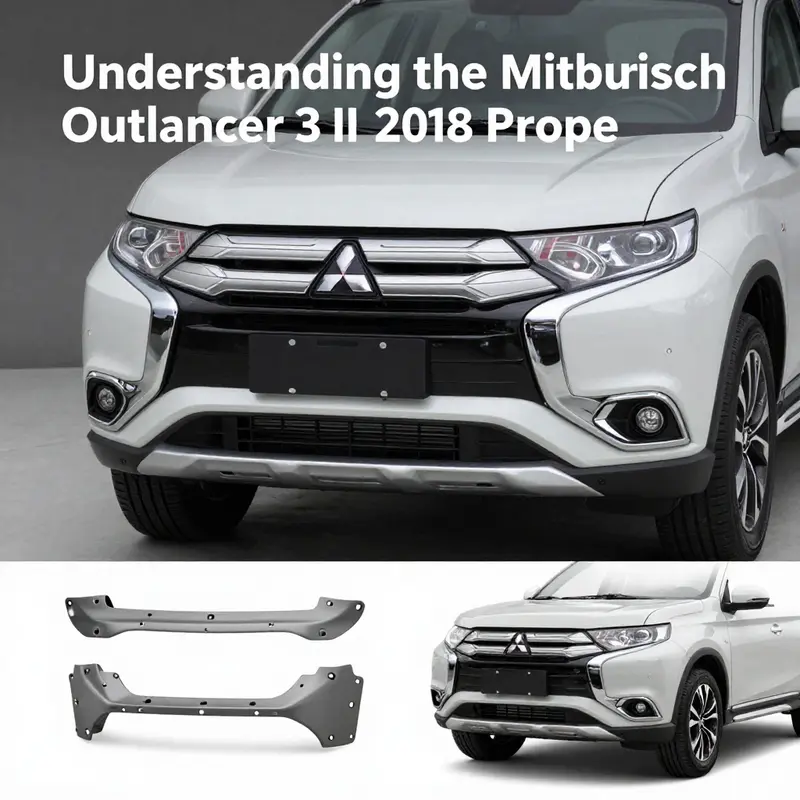
The front bumper of the 2018 Mitsubishi Outlander III is more than a cosmetic shell. It is a carefully engineered interface between the road and the vehicle’s safety architecture, a shield for the engine bay, and a component that defines the car’s first impression. In this chapter we explore replacement and customization as a coherent narrative of how the bumper system works, what parts are involved when it wears out or gets damaged, and how owners can pursue an appearance and performance that suit their needs without compromising the core functions that keep occupants safe. The bumper is built around a simple but critical idea: absorb and redirect energy in a way that minimizes intrusion into the passenger compartment while allowing the rest of the front end to continue operating as designed. The materials chosen for the bumper cover and its inner workings reflect this balance. High impact ABS plastic and thermoplastic polyolefin variants are common because they strike a balance between stiffness, impact resistance, and weight. These materials allow the bumper to withstand minor road hazards such as low speed bumps, parking lot scrapes, and incidental curb contact, while still remaining forgiving enough to deform in a collision and protect more vulnerable components behind it. In practice this means the bumper cover is backed by an energy absorbing reinforcement beam, typically fashioned from steel or lightweight aluminum, which provides the primary line of defense in low to moderate speed impacts and keeps critical components like the radiator and condenser shielded from direct damage. The reinforcement beam also anchors the bumper to the vehicle structure through brackets and mounts that help preserve alignment and sensor calibration, which is essential for vehicles that rely on forward looking assistance systems. The fit of the bumper is not merely cosmetic. It must align precisely with the hood line, fenders, the grille, and the integrated fog light assemblies, if present. The geometry must accommodate sensors, radar or camera modules, and the front-end airflow channels that feed the cooling system. A misaligned bumper can ripple through the vehicle’s performance, causing hood misalignment, disturbed grille fit, or even sensor misreads that affect active safety features. Replacement parts for the Outlander III front bumper are therefore more than a single piece. They represent a small ecosystem of components that must work in concert to restore the vehicle to its original protective envelope. The bumper cover or outer shell is the visible face of the system. It can be procured in OEM specifications to preserve the factory look or in compatible aftermarket versions that may offer visual contrasts or added performance features. Some owners seek chrome accents, left lower trim pieces, or decorative panels as part of a factory style restoration, while others pursue a more aggressive tone with sportier lines or rugged textures. In both cases the replacement must respect the exact mounting points and the geometry that keeps the bumper flush with the rest of the front end. The bumper brackets, which connect the outer shell to the reinforcement and to the vehicle chassis, perform another essential role. These brackets are more than fasteners; they are precise alignment tools that maintain the correct offset between the bumper cover and adjacent panels. Damaged brackets can lead to rattles, door seal interference, and subtle shifts in wheel alignment that degrade steering response during low speed maneuvers. Replacing damaged brackets is a task that benefits from careful measurement and sometimes professional finesse, especially when the goal is to preserve the integrity of the sensor corridors and the aerodynamics of the lower air dam. Certain models of the Outlander III facet a dedicated lower air dam or valance, which can be integral to cooling performance and underbody protection. The bumper cover itself can be upgraded or replaced with an OEM style piece to preserve a stock appearance, or with aftermarket variants that emphasize a sportier silhouette. When considering customization, the options extend beyond the outer shell to the face of the front end. A front bumper lip spoiler, for example, is a popular accessory that adds a subtle downward extension and a more planted appearance. Aside from aesthetics, the lip spoiler can provide minor aerodynamic benefits by directing air toward the radiator and reducing the underbody lift at highway speeds. The best known benefit, though, is cosmetic timing realism; it lets the car look more aggressive or refined to match a particular personal style. The bumper lip is typically made from ABS plastic or a similar durable yet lightweight material. It is designed to clip onto the lower edge of the bumper cover with hardware that can be installed by a competent DIY enthusiast or a professional technician. The lip spoiler is not a load bearing element, but it must be secured well enough to resist wheel splash, stone chips, and occasional contact with road debris. Beyond the lip, the overall appearance of the front end can be altered with different grille configurations. Grilles are a focal point that influence both airflow and personality. Factory OEM grilles offer a precise fit that preserves sensor alignment and the intended cooling performance of the engine bay. Mesh grilles, made from aluminum or stainless steel, can enhance engine cooling and give the front end a modern, aggressive presence. Billet grilles, crafted from solid metal and machined for a high-end finish, present a premium look that suits show cars or owners seeking a distinctive statement. The choice among grille types should consider airflow, sensor compatibility, and the potential for debris intrusion. While mesh and billet designs can improve cooling and aesthetics, they may affect how sensors and radar modules read the environment if not properly integrated. The balance between appearance and function is delicate. Compatibility is another vital thread in this narrative. The Outlander III facelift that began in 2018 brought forward changes in front-end geometry and trim detailing. Replacement parts must match the model year and the specific trim configuration to ensure a proper fit. Some parts are year specific or variant specific, such as those tailored for the PHEV versions or for particular markets where certain bumper features or trim pieces differ. This is why precise part numbers and verified fitment information matter. For owners seeking genuine OEM replacements, there is a marketplace that collates verified original front bumpers compatible with the 2016 to 2018 range, including ABS material variants with lower decorative panels and trim pieces. The appeal of OEM parts lies in their predictable fit, established tolerances, and compatibility with other front-end components such as fog lights and fog light bezels, grilles, and hood alignment. For those who want to maintain a factory look without the price of a factory purchase, aftermarket options can offer a close match in color and contour while delivering a distinct styling edge. Installation considerations reflect both the safety core and the aesthetic intention. Structural components like the reinforcement beam require precise alignment, often with the vehicle under professional supervision, to ensure proper crash energy management. If the bumper reinforcement is replaced, the alignment of the bumper cover to the fenders and hood becomes more critical; a misalignment can induce drag, noise, or misfit with the hood seal and sensor housings. Replacement of bumper brackets follows a parallel logic. The brackets must align with mounting studs and tie-ins to the reinforcement, so the bumper remains flush and quiet in operation. Cosmetic upgrades such as lip spoilers and grille changes are typically more forgiving. They can be installed with basic tools following manufacturer guidelines, although it is still wise to verify that the chosen parts do not interfere with sensor lines, radar beams, or camera fields of view. The topic of warranty and returns also enters the conversation. When shopping for front bumper components, many retailers provide generous return policies, sometimes up to 90 days. This reduces the risk when pursuing new or aftermarket parts, especially for those who are updating the look or restoring a vehicle after a minor collision. A thoughtful approach to warranties includes confirming whether the replacement pieces carry a manufacturer warranty, what coverage applies to labor in case of misalignment, and whether color-matching paint or refinishing is included in the price. In practice, a careful buyer navigates a few core questions. Is the part compatible with the exact year and trim of the Outlander being repaired or customized? Are the reinforcement and brackets included or sold separately? Is the bumper cover designed to mesh with the vehicle’s fog lights, sensors, and hood line? And crucially, does the chosen customization maintain the integrity of the bumper system while allowing for the driver’s personal aesthetic? The chapter so far lays out a map of the essential components and the main customization routes. It also points to practical steps for decision making. When a bumper is involved, the first step is an honest assessment of damage and a determination of whether replacement is necessary or whether a repair is possible. If the reinforcement beam or brackets have sustained bending or corrosion, replacement is usually the prudent path. If the damage is superficial, a repair or a cosmetic refresh may suffice, possibly including a new bumper cover or trim pieces. The next step is to decide between OEM and aftermarket routes. OEM parts offer the safest guarantee of fit and sensor compatibility, while aftermarket components can deliver cost savings and styling variety. Regardless of the path chosen, professional installation is highly recommended for structural elements and any parts that interface with driver assistance systems. The integrated nature of the Outlander’s front end means that a professional approach helps protect not only the aesthetics but also the underlying safety architecture that makes the car reliable in daily use. For owners who want to explore options beyond stock appearance, a curated combination of parts can achieve a cohesive result. A replacement bumper cover paired with a matched lower lip spoiler, a set of OEM or mesh grilles, and careful color matching can transform the front end while preserving the integrity of the front-end cooling path and sensor zones. It is worth noting that the Outlander’s front end has evolved across model years, and certain parts may be specific to facelift I variants produced from 2018 through 2021. This makes it prudent to verify compatibility through part numbers and cross-reference both the purchase source and the installation guide. The practical cadence of maintenance, replacement, and customization is not a solitary act. It is a dialogue between the vehicle’s engineering, the owner’s tastes, and the shop’s craft. When approached with awareness of the inner workings of the bumper system, the owner gains a clearer sense of what each option contributes in safety, durability, and curb appeal. A front bumper is not merely a cover; it is a carefully integrated component that supports energy management, airflow, and sensor function, while providing the personality that makes a car feel like a personal statement. For readers who want to see how the different pieces come together in a real-world context, a representative example of a customization path can be found in focused listings that address the 2018–2021 Outlander III Facelift I. These sources illustrate how a lip spoiler can augment the front end’s silhouette without compromising the protective role of the bumper system, how grille choices influence airflow and aesthetics, and how proper installation preserves the alignment that keeps the hood and fenders flush and functional. To connect these ideas with practical navigation, one can explore the dedicated front bumper category for the Outlander and examine the compatibility notes that accompany any replacement option. For readers who want to examine the direct pathway to a replacement that matches the Outlander’s front end as it left the factory, the following internal reference offers a concise entry point to the bumper assembly for Outlander models and can help anchor a DIY or professional project. front bumper for Mitsubishi Outlander This link provides a clear route to part numbers and fitment specifics relevant to the Outlander, ensuring that a replacement or upgrade aligns with the vehicle design. In the larger landscape of front-end upgrades, the Outlander III approach demonstrates a broader pattern seen across modern SUVs: the bumper system is a modular assembly that invites careful, considered upgrades rather than reckless kit swapping. The result is a front end that can be restored with factory fidelity after a collision or reimagined with tasteful enhancements that emphasize style and efficiency. The combination of reinforcement, brackets, and cover is a reminder that safety engineering remains at the heart of every design choice. It is this cohesion that allows owners to pursue personalization without sacrificing the crash safety that protects them in real-world driving. For those who want to deepen their understanding of the customization spectrum, the available options illustrate a spectrum from subtle enhancements to bold transformations. The lip spoiler offers a discreet upgrade that preserves the integrity of the bumper while delivering a sharper profile. Grilles provide a means to recalibrate the character of the front face and can influence airflow patterns that benefit cooling at various operating conditions. The choice between OEM and aftermarket retains its importance, balancing trust in engineering with the appeal of cost-effective styling. All of these decisions benefit from a practical approach: verify compatibility, assess installation requirements, consider sensor and camera placement, and factor in the long-term maintenance implications. A well-executed replacement or upgrade can extend the life of the bumper system and refresh the vehicle’s appearance without compromising safety or performance. The discussion here synthesizes the core aspects of replacement and customization for the Outlander III 2018 model year, guiding readers through the essentials of what to replace, how to customize, and what to expect in terms of fit and function. In closing, the front bumper emerges as a focal point where engineering meets style, and where careful choice supports both the vehicle’s safety integrity and the owner’s personal expression. External reference for further context on aftermarket front-end enhancements is provided at the end of this chapter to encourage readers to explore a wider landscape of accessories and installations. External resource: https://www.amazon.com/dp/B0B5YJXZQG
Rough Armor, Sleek Lines: Materials, Fit, and Availability for the 2018 Mitsubishi Outlander Front Bumper
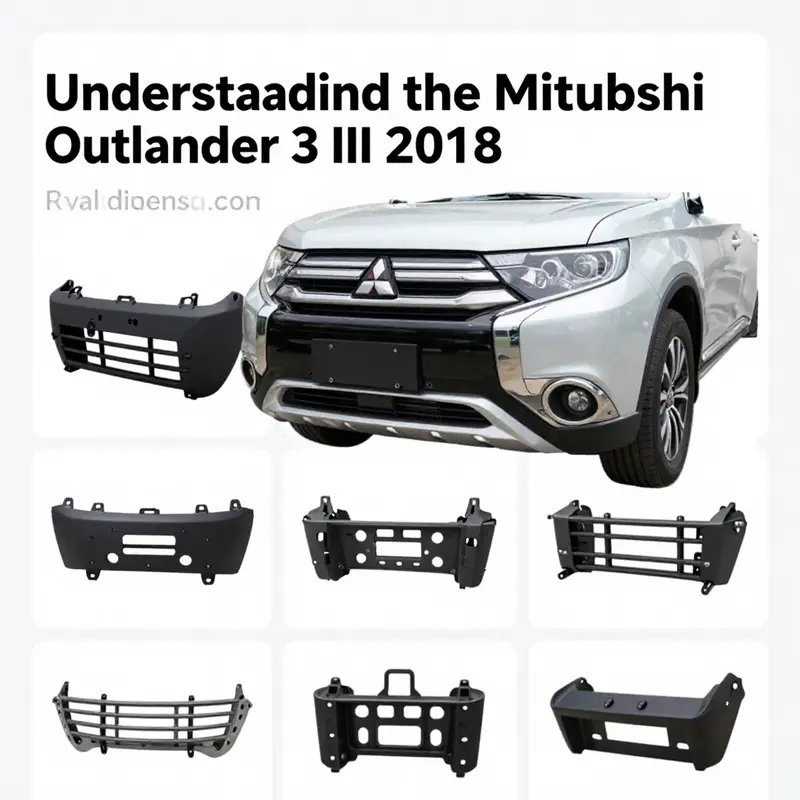
The front bumper on the 2018 Mitsubishi Outlander III is more than a decorative face. It is the first line of defense in minor bumps and a contributing factor to the aerodynamics that influence fuel efficiency and cabin quietness. For the 2018 Outlander, the bumper cover presents a sculpted surface that plays with reflections, but behind that surface lies a structured stack: the bumper cover itself, the energy-absorbing foam or foam-like layer, and the bumper reinforcement that bears the brunt of a direct impact. This arrangement is designed to maximize safety while preserving the sleek profile that the model family has cultivated. In this configuration, the bumper is not a single piece but a small ecosystem attached to the vehicle’s front end, with every layer chosen to translate a collision energy into controlled deformation without compromising the integrity of the passenger compartment. The visible face—the fascia or fascia-like piece—works in concert with the grille, the hood line, and the lower air dam to create a coherent front end that is both protective and expressive. The result is a component that needs to be robust in everyday uses, yet adaptable enough to accommodate a variety of accessories and trims, from fog-light housings to decorative panels that change the tone of the vehicle’s street presence.
Materials chosen for bumper covers are typically high-impact ABS plastic or thermoplastic polyolefin (TPO). ABS is known for stiffness and paint adhesion, producing a cosmetic finish that remains durable when well prepared for UV exposure. TPO offers greater flexibility, resisting cracking under small impacts and allowing more forgiveness if misaligned during installation. The choice between ABS and TPO affects not only the look but the longevity of the finish, the ease of color-matching with OEM schemes, and the ability to resist fading under sun exposure that is common in many markets. In practice, the typical Outlander front fascia uses materials that balance resilience with the aesthetic requirements of modern color palettes. The material choice also influences repair strategies after a scrape or a shallow collision: ABS can be repainted with a similar level of gloss and color fidelity, while TPO often requires compatible primers and undercoats that bond reliably to a flexible surface. For the owner who cares about the long horizon of the vehicle, these material traits translate into decisions about maintenance, repainting needs, and the potential for future upgrades that still respect the car’s original geometry.
Beyond material, fitment matters as much as the color. The Outlander’s front end integrates with multiple components—fog light housings, the main grille, hood seams, and the lower air dam. A good bumper cover must line up with the hood edge, align with the top edge of the bumper reinforcement behind it, and provide precise mounting points for decorative panels and trim pieces. In practice, this is where OEM parts shine: a genuine bumper cover or fascia from the same production batch as the original sees tighter tolerances that reduce the need for trimming or reworking; aftermarket options can come close, but the margin for error is larger, especially if the vehicle has seen a collision on one side that shifted mounting anchors. The gap geometry around the headlights and the alignment with the grille have direct consequences for water ingress, wind noise, and the visual balance of the front fascia. When fitment is precise, the finish appears seamless, the paint layers sit evenly, and the perceived quality of the repair or upgrade rises substantially. This is not simply about looks; it is about preserving the vehicle’s functional envelope and its ability to perform as designed under a variety of driving conditions.
For owners seeking to restore or customize the look, the aftermarket market now offers a broad spectrum of front bumper components compatible with the 2016–2018 Outlander family. These include ready-to-install bumper covers, fascias, and lower valances that can be painted to match or left in primer for a rugged, utilitarian appearance. The present listings demonstrate that the market supports both primered variants and painted finishes. A primered cover can be a cost-efficient base for a custom color, while a painted option speeds up the restoration process and ensures a seamless color integration with the rest of the front fascia. In addition, lower decorative panels and trim pieces are available to fine-tune the fascia’s aesthetics, from clean, conservative lines to sportier silhouettes that still respect the original geometry. The breadth of designs allows a motivated owner to craft a distinctive street presence without needing to resort to full-on aftermarket replicas that alter the vehicle’s fundamental dimensions. This is a practical advantage for those who want to maintain the integrity of the front-end crash structure while exploring a personal visual expression.
The scope of availability extends to OEM-grade options as well. Some advertised bumper covers claimed to be genuine OEM replacements carry warranties and are listed as compatible with the Outlander range, including closely related models such as the Outlander Sport. The appeal of OEM parts lies in proven fitment, paint compatibility, and the assurance of meeting safety and crash standards that have been validated in the factory. For many owners, the choice between OEM and aftermarket hinges on a balance between cost, intended use, and the value placed on exact color matching and mounting precision. The broader market confirms that there is steady demand for both paths, with a continuous influx of new stock that keeps the front-end repair cycle predictable. The 2018 Outlander’s front bumper components are, in short, widely available, enabling quick restoration or tasteful customization at a range of price points. This accessibility is particularly important for owners who use their vehicles in regions with variable weather and road conditions, where occasional fender-benders or stone impacts can leave the fascia scarred or cracked but still operable.
Among the specific offerings, it is common to encounter primered bumper covers described as directly applicable to the 2016–2018 Outlander. Such items are typically priced in the low three figures and include shipping in major markets. This reflects the ongoing demand for immediate replacement parts when a collision has altered the fascia and the owner desires a straightforward return to the vehicle’s original profile. Paintable versions, which come finished in neutral black or other common OEM hues, provide a more convenient route for color matching, especially when the rest of the front-end assembly has been preserved or repainted recently. In some cases, a full OEM replacement is sold as a single unit that includes the bumper cover plus pre-installed trim pieces or lower valances, streamlining the process for shop technicians and DIY enthusiasts alike. The broader implication is that the market remains robust for both cost-conscious and quality-focused buyers, with compatibility carefully maintained across model years to minimize the risk of misfit and the subsequent need for rework. The availability of complete fascia kits that integrate clips, mounting brackets, and optional decorative elements can further simplify the process for a first-time installer, ensuring that the front end retains its structural and aesthetic coherence.
When contemplating a bumper change, the alignment with the rest of the front-end architecture matters. The bumper cover houses the top mounting points that attach to the vehicle’s frame or bumper reinforcement behind the fascia. It may incorporate or align with cutouts for fog lights, sensors, and the central grille. Even small deviations in height or angle can create gaps that catch wind or collect debris, diminishing the overall appearance and potentially affecting aerodynamic efficiency. A correct install is not just about the visible surface; it is about preserving the seal between the hood and the fenders, keeping the grille and emblem alignment consistent, and ensuring the lower air dam integrates with the underbody panels to guide airflow cleanly around the engine bay. In this sense, choosing the right bumper for the Outlander is a decision that blends aesthetics, safety, and practicality. The idea is to select a component that mirrors the original geometry so that the front end remains predictable under load and over time, regardless of whether the vehicle is used mostly for city commutes or longer highway trips.
In practice, the decision between an aftermarket option and an OEM replacement often hinges on intended use. If the vehicle is a daily driver that benefits from the lowest possible ownership cost, an aftermarket cover that mirrors the original profile and has a good warranty can be a reasonable choice. For owners who value exact color matching, the impression of factory finish, and preservation of the vehicle’s resale value, OEM becomes more attractive even if it costs more upfront. The materials chosen—whether ABS or TPO—also influence long-term outcomes. ABS tends to perform well as a painted surface, but UV exposure can cause yellowing or brittleness if the surface is not properly protected. TPO generally offers enhanced impact resistance and weathering performance, but color matching may require more careful pigment layering to achieve a faithful OEM look over time. Regardless of the path chosen, the installation should be performed by someone who understands the bumper’s place in the front-end structure, how the energy absorber and reinforcement interact with the bumper cover, and how to preserve the integrity of nearby components like fog lights, grilles, and hood alignment. A careful installer will also verify that the bumper’s mounting points align with the vehicle’s frame rails and that the hydraulic hood latch and closing mechanism function correctly after reassembly. This is not only about the finished appearance but about the overall reliability of the opening and closing cycles that every driver relies on during daily use.
Another important facet is the potential for upgrades that fit within the same family of parts. Some owners opt to upgrade to a sportier avatar by selecting a lower lip or air dam that improves aerodynamics while keeping the core bumper structure intact. These modifications may involve a carbon-fiber-looking lip or a more aggressive lower valance. They are cosmetic choices, but they interact with the airflow around the engine bay, the radiator, and the corners of the vehicle near the wheels. They are also a reminder of how a bumper assembly, even when viewed as a single external piece, sits at the intersection of engineering and aesthetics. The 2018 Outlander, with its practical design, becomes a flexible platform for personal expression without compromising safety when the bumper is properly matched to the rest of the front-end geometry.
For readers navigating this market, a straightforward path to reliable information is essential. A well-curated parts page for the Outlander family often catalogues compatible bumpers across model years, making it easier to verify fitment before purchase. The page can guide buyers to options that preserve the vehicle’s safety standards and aesthetic, while also offering guidance on color-matching and paint readiness. If you want to see a direct catalog entry that aligns with the 2019- era refreshes of the Outlander family, you can follow a dedicated page for the Outlander front bumper that clearly differentiates between primered, painted, and OEM versions. The existence of such a catalog is a reminder that the market has matured to the point where visibility and accessibility of front-end components are no longer a hurdle for owners who need a quick restore or a purposeful upgrade. The catalog approach also reduces the guesswork involved in matching mounting hardware, trim pieces, and decorative accents to the exact vehicle configuration, which is particularly important for owners who depend on consistent aesthetics across service intervals or fleets.
What ties all these considerations together is the sense that the front bumper for the Outlander is not simply a cover. It is a discrete system that influences crash performance, aerodynamics, and the tactile experience of ownership. The bumper cover’s finish and its fit against the hood and fenders influence how light plays across the vehicle’s surface, how the color matches across adjacent panels, and how effectively air flows into or around the cooling system. In a longer view, the bumper’s presence supports the vehicle’s overall identity, which blends function with form. The 2018 Outlander deserves a front-end that respects its practical purpose while offering a pathway to personalization that does not gamble with safety or structural integrity. The right choice depends on a clear understanding of material performance, mounting accuracy, and the feasibility of color matching.
In short, the market for front bumper components for the 2018 Outlander III is active and diverse. There are primered, painted, OEM, and aftermarket variants designed to keep the car’s front end in good health and looking the way the owner intends. The decision on which path to take will depend on factors that extend beyond the initial sticker price—fitment precision, expected longevity, and how the bumper integrates with sensors, lights, and the overall front-end geometry. The broader story is one of a community of parts suppliers who maintain continuity across model years, ensuring that an Outlander can recover its original silhouette or step into a more assertive look without compromising safety or reliability. By understanding the role of materials and the practical realities of installation, buyers can approach the process with confidence. As you move from theory to practice, remember to consider the alignment with the road ahead. The bumper’s job is not isolated; it works with the rest of the front-end components to form a coherent, protective, and visually appealing package. The chapter that follows will examine the practical steps to assess damage and determine whether a bumper repair or replacement is the better course, including tips on selecting a quality part, estimating installation time, and coordinating with a repair shop.
To explore a direct catalog entry that aligns with Outlander front bumpers, see the dedicated page for the Front bumper for Mitsubishi Outlander. This internal resource keeps track of compatible variants across model years, helping you verify fitment and color matching at a glance. Front bumper for Mitsubishi Outlander.
External resource: for broader context on procurement channels and part-market dynamics, you can consult industry-standard platforms such as Alibaba at https://www.alibaba.com.
Final thoughts
The Mitsubishi Outlander III (2018) front bumper is more than just a protective component; it significantly influences vehicle performance, aesthetics, and safety. Understanding its construction materials, performance metrics, replacement options, and market availability equips business owners with the knowledge to better serve their customers. By recognizing the importance of quality bumpers, businesses can enhance their service offerings, driving customer satisfaction and loyalty.