

The Mitsubishi Outlander has gained a reputation as a reliable and versatile vehicle, which has made it a popular choice among business owners seeking to maximize their fleets’ efficiency. One of the often-overlooked aspects of vehicle performance, especially in SUVs like the Outlander, is the importance of choosing the right rims. This article delves into the critical facets of Mitsubishi Outlander rims, discussing the adaptability and specifications of OEM rims, the technical requirements for replacement, key considerations for rim changes, market options for purchasing, and various upgrading possibilities. Understanding these elements will empower business owners to make informed decisions, ensuring their vehicles operate optimally while maintaining safety and comfort.
OEM Wheels on the Mitsubishi Outlander: Precision, Fit, and Reliability
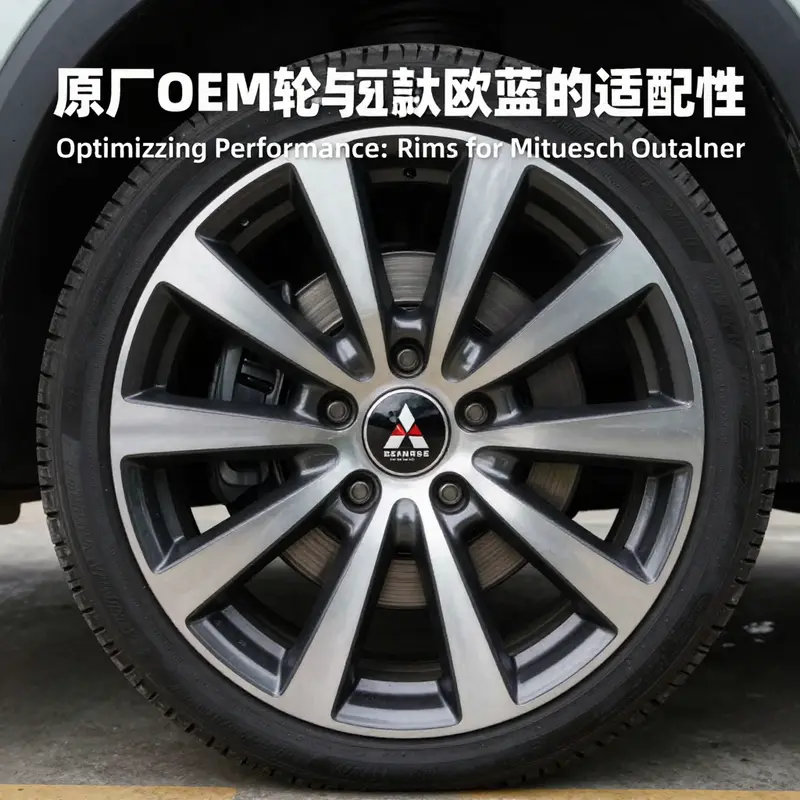
Rims are more than a visual flourish on the Mitsubishi Outlander. They are part of a highly engineered system that affects steering response, ride comfort, braking performance, and even fuel efficiency. When a car travels thousands of miles on a single set of wheels, the relationship between the wheel, the hub, and the suspension becomes a dialogue written in tolerances, not mere aesthetics. In the Outlander, this dialogue is especially precise. The factory teams that design and assemble these vehicles tune every rim dimension to harmonize with the car’s weight distribution, brake calipers, wheel wells, and even the tire selection that accompanies each trim. It is no accident that certain wheel sizes show up consistently in the literature of the model: the 18-inch diameter is a common standard for a broad swath of recent Outlander configurations, particularly the 2016 to 2019 lineup, where OEM aluminum alloy rims often appear as 18×7 inches. This size is not merely a choice for style; it is a calculated balance between ground clearance, tire contact patch, and the vehicle’s dynamic behavior on the road. The key takeaway is that OEM wheels in this family are designed with a precise wheel offset, bolt pattern, and center bore to fit the Outlander’s hub assembly, suspension geometry, and brake system in a way that aftermarket rims rarely replicate without careful verification.
When readers or owners start thinking about upgrading or replacing rims, the instinct to chase a trend—larger diameter, bolder finishes, or lighter material—can run into a hard ceiling: compatibility. Original equipment wheels on the Outlander are curated to preserve the balance already engineered into the vehicle. This is not merely a matter of width or diameter. The backplate geometry, the spoke design, and the load rating are tested in concert with the hub head, the wheel bearing unit, and the brake rotor. In practical terms, that means a wheel intended for a Mitsubishi Outlander must share a bolt pattern that matches the hub assembly and a center bore that fits snugly over the hub without the need for adapters. It must also maintain the original offset (ET) so the wheel sits in the correct position relative to the strut and fender. Deviations can subtly alter steering feel, camber, tire wear, and even brake clearance. The OEM approach minimizes these risks through tight specification control and rigorous quality checks throughout the wheel’s life cycle—from casting and machining to finishing and final balance verification. This is why the OEM route remains compelling for owners who value predictability and reliability in the long run.
For the 2016–2019 Outlander, a widely cited option in the OEM catalog is the 18-inch aluminum wheel with a seven-inch width, a size that slots easily into the car’s wheel arches, preserves ride comfort, and preserves the interplay with the vehicle’s suspension components. This wheel size has become a de facto standard in many service catalogs because it aligns with the Outlander’s overall chassis dynamics and load paths. In terms of compatibility, the OEM wheel’s center bore is sized to fit the hub precisely; the wheel bolt pattern lines up with the stud layout, typically a five-lug arrangement with a specific pitch circle diameter suited to the vehicle. The bolt pattern and center bore are crucial. If either is off, even a tiny mismatch can lead to vibration, uneven tire wear, and in extreme cases, interference with calipers or wheel arch components. The role of the wheel offset is just as critical. An offset that is too aggressive can push the wheel outward, changing scrub angles and possibly reducing braking efficiency. Alternatively, an offset that sits too deep can cause the tire to rub against the strut or the inner fender during compression. OEM rims thread into the car’s dynamic envelope as designed, ensuring the tires maintain the intended contact patch and the vehicle retains its established steering geometry.
The reliability and deliberate design of OEM wheels extend beyond the fit into wear life and performance. An important reason many owners prefer OEM or OEM-remanufactured wheels is the consistent balance and weight distribution they deliver. Wheels that are too heavy or too light for the hub assembly can alter the moment of inertia, which in turn can affect how the car responds to steering inputs or how quickly it returns to a straight-ahead path after a turn. Rims that are matched to the original wheel bearing assemblies and hub head components, such as those within the same part families, help ensure smoothness on the road and minimize unwanted noise or vibration during acceleration and deceleration. In some cases, the wheel and hub head work as a single built unit, so misalignment between the wheel and the hub can create symptoms that are mistaken for tire or suspension problems. The OEM route mitigates that risk by providing a wheel with calibrated weight distribution and proven compatibility with the Outlander’s braking hardware.
Within the broader ecosystem of wheel options, remanufactured OEM wheels also occupy a meaningful niche. When a consumer opts for replacement wheels through authorized remanufacturing channels, the process often involves reconditioning the rim to the factory’s original tolerances while preserving the bore and stud hole geometry. This ensures that a remanufactured wheel aligns with the same hub interfaces and brake clearances as a brand-new unit. The advantage is twofold: price competitiveness and a high degree of assurance about fitment. The remanufactured route underscores the principle that quality control matters as much as the basic dimensions. In the Outlander’s case, choosing a remanufactured wheel that mirrors the original specification—size, ET, bolt pattern, and bore—helps maintain the car’s established geometry, driving manners, and even fuel economy, since the rotating mass and dynamic balance play a role in rolling resistance. The emphasis on matching the OEM spec is underscored by automotive maintenance authorities who highlight the value of genuine or equivalent OEM configurations in preserving fit, reliability, and regulatory compliance. In practice, a shopper who sticks to OEM-specified sizes and finishes will typically sidestep the common headaches of misfit wheels: drivetrain noise, steering pull, and accelerated tire wear.
To navigate the practicalities of replacement, it is essential to verify a few core parameters before you place an order. First is the bolt pattern: the wheel must line up with the hub’s lugs. Second is the center bore diameter: the center hole should slip over the hub without the need for adapters or hub-centric rings unless the manufacturer explicitly recommends them. Third is the wheel offset (ET): the offset determines where the wheel sits in the wheel well and its effect on suspension geometry and fender clearance. Fourth is the wheel width and diameter: these two metrics determine tire options and how the tire will interact with the suspension and brake components. Finally, the number of lug holes must match the car’s bolt configuration. When these parameters align with the manufacturer’s specifications, the wheel will preserve the Outlander’s original handling characteristics, even as you replace worn or damaged rims with new or remanufactured units. The environmental and safety benefits of choosing OEM-compatible wheels are not incidental; they are recursion of the fundamental principle that the car’s subsystems are designed to work in concert, not as isolated assemblies.
For readers who want to broaden their horizons while staying close to the OEM ethos, consider exploring rims that align with the same fundamental compatibility principles. There are options labeled as rims designed for performance models or for cross-model compatibility that still honor the Outlander’s hub geometry and brake clearance. If you are curious about cross-model rim interchangeability, a resource that investigates wheel compatibility within Mitsubishi’s family can offer a useful perspective; see 17-rims-fit-mitsubishi-eclipse-wheels-2018-2019-2020-2021-2022-2023-17×7-5-new. This resource provides a catalog-like sense of how rim dimensions and bolt patterns interplay across closely related models, which can illuminate the care needed when swapping rims on the Outlander. 17-rims-fit-mitsubishi-eclipse-wheels-2018-2019-2020-2021-2022-2023-17×7-5-new
In the end, the central message remains consistent: OEM wheels are crafted to integrate with the Outlander’s chassis and systems in a way that aftermarket options often aspire to but do not always replicate. The path of least risk—whether you are restoring an Outlander to factory condition or upgrading within OEM-approved lines—reaffirms a principle that is simple and enduring: correct fit, verified measurements, and adherence to the manufacturer’s specifications are the cornerstones of safe, reliable, and economical wheel maintenance. As the Outlander travels, it does so with a wheel set that has been tested for the exacting demands of its driving dynamics, ensuring that every mile remains smooth, predictable, and aligned with the design intent of the model. External reference: https://auto.ifeng.com/a/20260213/143547552_0.shtml
Rims, Specs, and Safety: Navigating Mitsubishi Outlander Wheel Fitment Across Generations
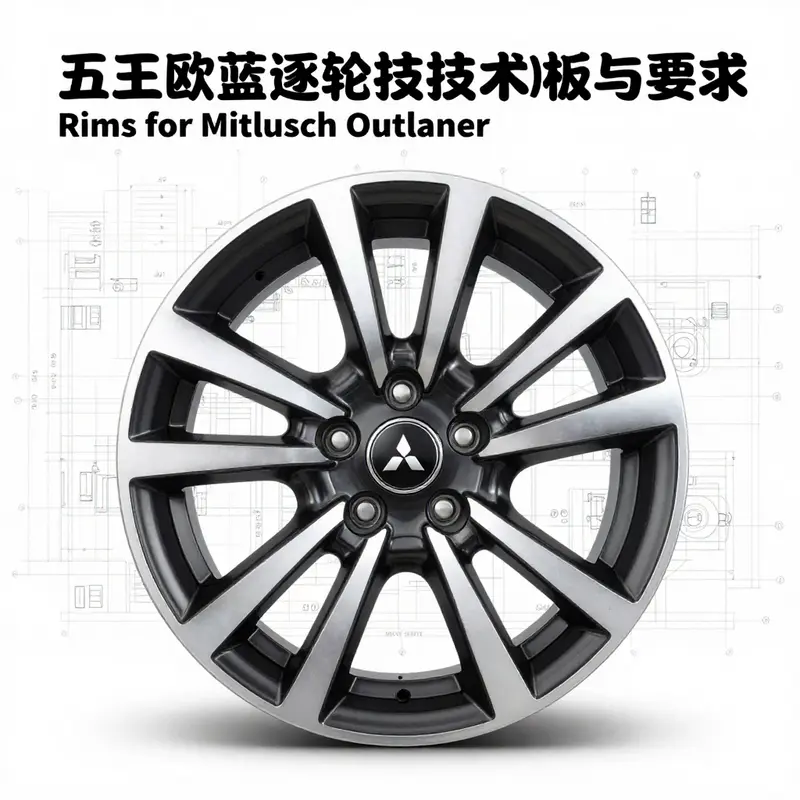
Rims are more than metal and spokes; they are a bridge between the road and the vehicle’s dynamic personality. For the Mitsubishi Outlander, the choice of wheel size, design, and fitment has followed a quiet evolution that tracks changes in engineering philosophy as much as it does consumer taste. The result is a layered story of compatibility, performance, and perception. A wheel’s imprint on a car begins with size, but it ends in how that size translates into ride quality, steering feel, and safety. In the Outlander’s case, this means recognizing that different years and configurations call for distinct rim-and-tire combinations. For a driver who is weighing a swap or a partial upgrade, the decision is less about chasing the newest look and more about preserving the harmony of suspension, braking, and overall geometry that defines the vehicle’s character on the road.
Historically, the entry points of Outlander wheel sizing reveal a straightforward pattern: smaller engines and earlier trims lean toward a compact, weight-conscious setup, while newer families move toward larger rims with a balance of comfort and sportier appeal. A 2.0-liter variant from an earlier generation typically rides on 16-inch rims, paired with 215/70 R16 tires. This combination is not merely a matter of aesthetics; it stabilizes the vehicle’s weight distribution and preserves a ride that remains friendly on rough pavement. The 16-inch configuration is practical, particularly for daily commuting where efficiency and predictable handling are prized. As the Outlander matured and engine options diversified, the wheel vocabulary expanded. In later years, 2.4-liter and 3.0-liter models—spanning some 2023 configurations—adopt an 18-inch wheel, with a common tire footprint of 225/55 R18. This shift signals a move toward a more composed ride and a broader contact patch, enhancing grip and steering response without sacrificing the comfort that family-oriented crossover buyers expect.
Beyond those mid-range steps, certain high-end or special-year models tilt even further toward a more aggressive stance, stepping up to 20-inch rims with 255/45 R20 tires. The rationale here is a blend of visual impact and a perceived improvement in road feedback, tempered by the reality that larger rims can alter ride quality and tire compliance. The Outlander’s design language—often described as having a flower-petal-inspired silhouette in the wheel hubs and spokes—appeals to buyers who value modern, two-tone finishes that catch light and movement in different ways. The standard wheel material remains aluminum alloy, chosen for its favorable balance of strength and weight, which helps minimize unsprung mass and preserve the dynamics created by suspension geometry. In practice, that means the original engineering intent is maintained when a wheel is replaced with a close match, ensuring predictable braking performance and consistent handling.
The spare tire configuration also matters in the wheel ecosystem of the Outlander. Across the range, the vehicle uses a non-full-size spare tire, sized at 215/70 R16. This is a pragmatic choice, ensuring space efficiency and adequate immediate-mile capability without encroaching on cargo space or increasing weight dramatically. When contemplating a rim upgrade, drivers should factor in the spare’s footprint. If a future replacement would necessitate a different spare, it can complicate on-the-road decisions during a tire puncture or other urgent tire issues. The interplay between wheel size, tire profile, and spare availability underscores a core principle: any change should be evaluated in the context of the full wheel-tire-spare system rather than as a stand-alone modification.
To illustrate how these numbers translate into a practical understanding of fitment, consider the case of 225/55 R18 as a representative example. The first three digits—225—describe the tire’s width in millimeters. The 55 is the aspect ratio, indicating the sidewall height is 55 percent of the tire’s width. The “R” denotes a radial construction, while the 18 reveals the rim diameter the tire is designed to seal against. This compact, yet precise, encoding explains why a seemingly simple swap is not a straightforward matter of choosing a larger or smaller wheel. The wrong combination can lead to rubbing, altered steering ratios, or brake clearance issues. The Outlander’s varied years and trims reinforce the message: fitment decisions must be grounded in the vehicle’s exact configuration rather than relying on a generic one-size-fits-all approach.
From a design and engineering perspective, the Outlander’s wheels are more than cosmetic. The offset, center bore, and bolt pattern—parameters that define how a wheel nests with the hub, brake calipers, and suspension components—are critical. The offset, in particular, affects the wheel’s position relative to the fender and suspension. If the offset is too aggressive, it can push the tire toward the brake caliper or the wheel arch, increasing the risk of contact during steering or suspension travel. If it’s too shallow, the wheel can alter steering feel and potentially compromise tire wear. Center bore compatibility ensures the wheel aligns perfectly with the hub’s locating surface, which is essential for balanced rotation and predictable handling. Bolt pattern compatibility ensures the wheel’s lug arrangement aligns with the vehicle’s studs, preserving the integrity of the clamping force that keeps the wheel in place under load. While the exact numbers are model- and year-dependent, the underlying principle remains universal: any rim upgrade must respect these three pillars to preserve safety, performance, and comfort.
For the majority of Outlander owners, the safest path is to choose a wheel that mirrors the original specifications for their particular year and trim. This approach minimizes risk and maintains the engineered suspension geometry. Certified remanufactured or factory-original-style wheels are common avenues for those seeking budget-conscious yet reliable alternatives. The emphasis is on compatibility and quality assurance, rather than flashy counterfeits or novelty finishes that may compromise safety or longevity. The practical takeaway is straightforward: when you confirm a match for wheel size and tire diameter, you still need to verify offset, center bore, and bolt pattern. Those checks may seem meticulous, but they protect the vehicle’s safety margins, braking performance, and the quiet confidence a smooth, predictable drive provides every day.
For readers who want to explore related components and broader implications of fitment, a related part-page resource can provide context on practical integration with other Outlander systems. You can explore a related part page here: front-bumper-mitsubishi-outlander-19.
As wheels become a visual shorthand for a vehicle’s character, it can be tempting to chase the latest design trend. Yet the Outlander’s wheel ecosystem teaches a more measured lesson: the most effective upgrade respects the engineering envelope first established by the manufacturer. A well-chosen rim harmonizes with the tire’s profile, the suspension’s damping and spring rates, and the braking system’s capacity. It preserves the ride’s balance, the steering’s precision, and the vehicle’s ability to absorb irregularities with composed quiet. In practice, that means prioritizing a wheel with the same diameter and compatible tire size when possible, or moving to the next appropriate option only if the vehicle’s load, powertrain, and chassis tuning align with the change. If a decision treads beyond the original parameters, consulting a professional with experience in crossover platforms becomes an indispensable step. The goal is not merely to change the look of the car; it is to maintain what the car’s engineers designed—the harmony of weight, inertia, grip, and comfort that defines the Outlander on every road.
In the broader landscape of wheel choices, the Outlander story reflects a principle that applies to many mainstream SUVs: the right rim is one that respects the vehicle’s engineering intent while offering room for thoughtful personalization. It invites a careful balance between aesthetics and safety, between a bolder stance and a stable ride. The wheel is a stage on which the vehicle performs, and the performance is most compelling when the audience—yourself behind the wheel—feels the seamless integration rather than conspicuous compromise. The journey from 16-inch to 18-inch or even 20-inch rims is not merely about size; it is about the ongoing conversation between a vehicle’s design constraints and a driver’s aspirations. The Outlander’s wheel choices underscore that dialogue, inviting owners to approach upgrades with curiosity, respect for specifications, and a steady commitment to road safety as the shared baseline.
External resources can offer broader context for those who want to deepen their understanding of wheel fitment and how it interfaces with vehicle dynamics. For reference on broader wheel replacement considerations, one external resource provides a practical overview of OEM and remanufactured wheel options that align with safety and performance expectations. https://www.amazon.com/dp/B0BZJXQYVW
精准匹配与安全并行:三菱欧蓝德轮毂更换的全流程考量
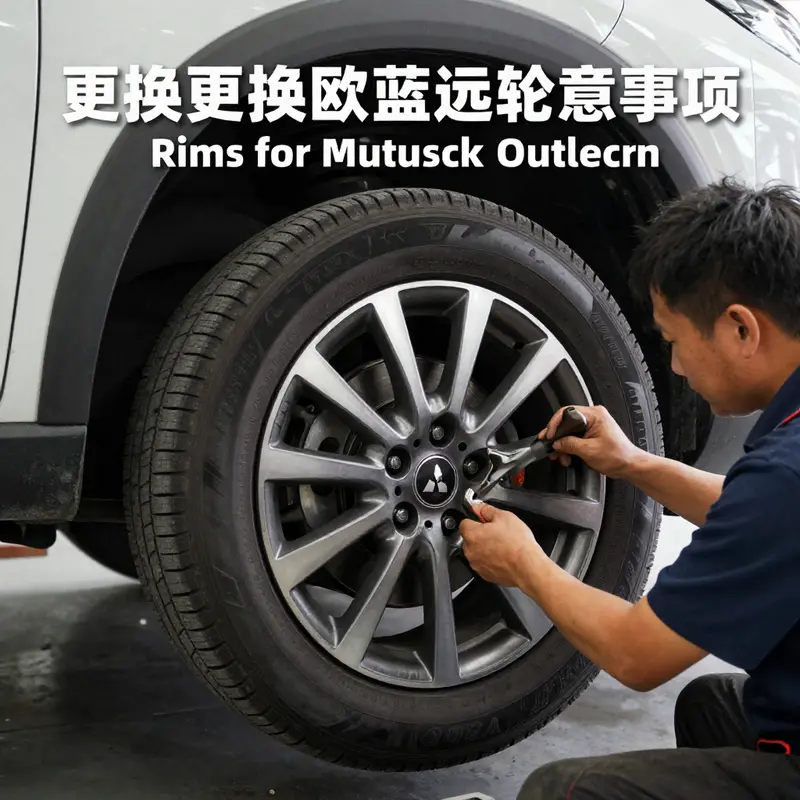
换轮毂并非简单的外观改动。对于三菱欧蓝德这样的家用SUV来说,轮毂的规格直接影响到操控、舒适与安全。不同年份与配置的Outlander在出厂时往往配备不同的OEM轮毂,常见的组合包括2016至2019款欧蓝德所使用的18英寸铝合金轮毂,规格标注为18×7英寸。这类轮毂通常由原厂或经过认证的再制造厂商提供,目的是确保与车辆的匹配性和长期耐用性。无论选择原厂新件还是再制造件,关键在于轮毂参数要与原车完全一致,尤其是直径、宽度、孔距以及偏距等核心指标。任何偏差都可能导致安装困难,甚至影响操控稳定性,带来潜在的安全隐患。对于正在考虑升级轮毂的车主而言,保持与原车的规格一致,是确保轮胎与悬挂系统协同工作的前提。
在实际选购时,轮毂尺寸之外的参数同样重要。轮毂的偏距(ET值)决定了轮胎与悬挂系统的相对位置,若ET与原车不符,可能引发轮胎与轮拱的摩擦、或改变转向几何,从而降低行驶安全性。中心孔径也不该忽视,若中心孔过小,需使用合适的套筒或改装件才能实现正确定位,避免轮毂在轮轴上产生微动。最关键的还是孔数与PCD(螺栓孔距)的匹配,错位的螺栓孔会让轮毂无法安装,或在行驶中产生应力集中,增加断裂风险。因此,在购买前应当对照车辆规格表,逐一核对这些参数。
轮毂只是第一步。更换轮毂后,轮胎的外径必须与原厂轮胎基本保持一致,否则会直接影响里程表、ABS/ESP等电子系统的工作逻辑,以及发动机与变速箱的协同运作。外径差异会引起仪表盘读数的偏差,甚至让某些驾驶辅助系统误判车辆状态。为此,换装新轮毂时应重新选择轮胎尺寸,确保新轮胎组合的总外径与原厂规格接近,通常差异需要控制在小幅范围内,以维持车辆的动力学比例与电子系统的稳定性。
安装过程同样不可忽视。任何一次轮毂更换都应在工具完备、环境平稳的条件下进行。使用千斤顶、套筒扳手、扭矩扳手等专业工具,按照车辆维修手册规定的扭矩值逐步收紧轮毂螺母,常见范围大致在80至100牛顿·米之间,具体数值以车型手册为准。扭矩的分布应采用对角线顺序,确保受力均匀,避免某一处受力过大导致轮毂松动或螺母因应力集中而损坏。完成初步紧固后,务必进行动平衡测试。新轮毂与轮胎的重量分布可能出现不均,未经动平衡的情况下在高速行驶时容易产生方向盘或车身抖动,进而加速轮胎磨损与悬挂部件的疲劳。
在动手操作前,安全措施同样重要。应选择平坦坚固的地面停车,拉紧手刹、开启双闪警示灯,并放置三角警示牌。升起车辆时,千斤顶应放在厂家规定的支点,操作时切勿让身体任何部位伸入车底。若没有足够的工具或经验,邀请专业技师进行安装,是对自身与他人安全的负责之举。安装完成后,对轮胎气压、螺栓松动情况、卡榫到位以及轮毂表面是否有刮伤等进行全面检查,随后进行短途试车,留意是否存在异常抖动、异响或方向盘偏移等迹象。
在选购阶段,优先考虑来自可靠渠道的轮毂产品,避免低质量铸件带来的安全隐患。质量不过关的轮毂在高速状态下更易出现断裂,后果不堪设想。若要扩展轮毂选择的范围,可以参考对等规格的轮毂选项,并结合自身偏好进行微调,例如通过合规的再制造件获得和原厂接近的重量与刚度特性。为了帮助读者理解在不同场景下的轮毂选择差异,某些可兼容的选项在公开渠道上也有相应的讨论与对比,但请始终回归车辆的实际参数与驾驶体验的需求。对于需要更具体参考的读者,下面这段内容可作为进一步阅读的入口:
17-rims-fit-mitsubishi-eclipse-wheels-2018-2019-2020-2021-2022-2023-17×7-5-new,它提供了对比不同车型在接近尺寸的轮毂选择与安装要点的参考,帮助理解在同一系列车型中轮毂参数如何影响安装与性能。最终,专业检查与试车是确保万无一失的关键步骤,确认螺栓紧固、轮毂与轮胎的接口没有异常,且车辆在常速和低速状态下都表现稳定。
在整个更换过程中,务必以安全为首要原则,结合车辆规格与驾驶需求,做出系统化、可验证的选择。这不仅是为了提升外观和个性,更是为了维护长期的操控稳定性和行驶安全。对于不具备专业工具或经验的车主,寻求专业维修店的帮助,是对自己与他人安全最直接的保障。
外部参考:
https://www.autohome.com.cn/repair/6934242.html
如何在市场中为三菱欧蓝德挑选合适轮毂:原厂、实用与个性化的权衡
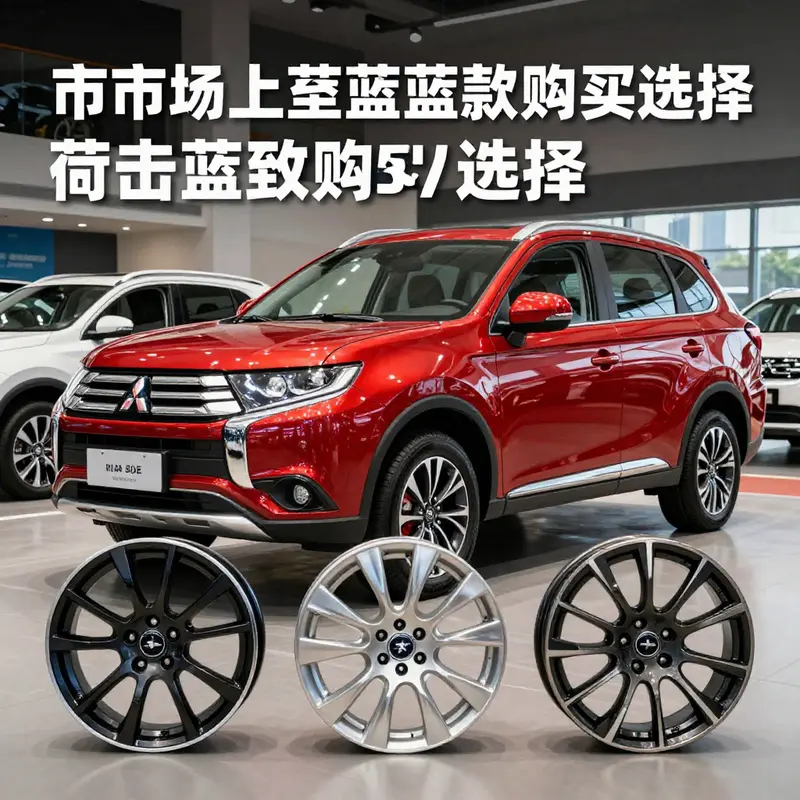
为三菱欧蓝德挑选轮毂时,车主面临的不仅是样式选择。轮毂直接影响操控、制动、乘坐舒适性和安全。市场上通常有三大类选择:原厂件、副厂/拆车件和改装定制件。每一种选择都带来不同的成本、风险与收益,需要从适配性、材质、关键参数和使用场景等维度综合判断。
原厂轮毂的最大优势在于匹配性与可靠性。原厂件是与车辆出厂时相同的设计,偏距(ET)、轮毂孔径、螺栓孔数等参数与欧蓝德出厂设定一致。这样的匹配可保证悬挂、转向与制动系统按设计工作,避免因偏距不合或中心孔不对中引起的刹车卡钳干涉、轮胎内外侧磨损或转向异响。对以日常通勤和家庭使用为主的车主,追求长期稳定与最小维护成本时,原厂件是最稳妥的选择。价格方面,原厂件通常较高,视尺寸与材质不同单只轮毂的市场价可有显著差别,但它带来的安心感与一致性往往能抵消初期成本。
副厂与拆车件为预算有限但仍注重质量的车主提供了实用路径。拆车件通常来源于大里程或低里程拆车,若来自信誉良好的供应商并经专业检测,往往能以更低价格获得接近原厂的性能。选择拆车件时要重点检查是否有弯曲、裂纹或修补痕迹,尤其是轮辋唇部与轮辋内侧,这些位置最易受冲击损伤。动平衡和径向跳动也需检测,必要时做校正。普通副厂轮毂款式更多,价格更低,但质量参差。购买副厂件前,应核对认证与材质说明,避免购买未经检测的低质铸造件。对预算敏感但需要可靠替换部件的车主,优先选择信誉好的副厂或经过整备的拆车件。
改装定制轮毂满足个性化与性能提升需求,但风险与成本也更高。常见改装方向包括尺寸升级、轻量化材质选择与风格定制。尺寸升级(例如从17英寸升至18或19英寸)能提升车辆的视觉效果和某些操控感受,但会带来更硬的路感、更高的轮胎成本以及可能对油耗的不利影响。更大尺寸通常需要匹配更低侧壁的轮胎,以保持总直径接近原厂,避免仪表显示误差与变速系统误判。
材质方面,钢制轮毂价格低、耐用,但较重,影响加速与油耗。铝合金轮毂是多数车主的首选,重量轻,散热性好,外观可塑性强。锻造轮毂则提供最佳的强度与最轻重量,但成本显著上升,通常用于追求极致性能的改装。无论选择哪种材质,务必关注轮毂是否通过相关强度和冲击测试,以及是否有质量保证。
在实际选购过程中,除了材质与样式外,有几个关键参数必须严格核对:偏距(ET值)、中心孔径(center bore)、螺栓孔数量与孔距(PCD)。偏距决定轮毂安装后轮胎的前后位置,不合适会导致车轮与车体或悬挂部件发生干涉,或改变车辆的转向回正特性。中心孔径需与车轴匹配,若孔径过大,应使用适配环以防止轮毂偏心。螺栓孔数与PCD必须一致,错误的孔距无法物理安装。更换轮毂后,同步更换或重新匹配轮胎也非常重要。建议将轮胎外径控制在原厂直径的±3%范围内,以免影响电子系统(如ABS、车速表)与底盘几何。
安装与调校环节同样关键。新轮毂上车后应做动平衡和四轮定位,以消除振动并保证行驶稳定。安装过程应检查轮毂与制动卡钳、悬挂部件的间隙,必要时调整偏距或选用合适的轮毂垫片,但应谨慎使用垫片,避免过度改变轮距导致轴承寿命受损。对于配备胎压监测系统(TPMS)的车辆,务必确认新轮毂能正确安装传感器或重新编码传感器数据。
安全角度还应关注轮毂的认证与检测信息。合格的轮毂通常通过强度测试并带有相关标识。购买时查看轮毂背面的规范刻印或出厂检测报告。若购买改装或副厂产品,优先选择通过行业认证的产品。二手拆车件则需有透明的检测步骤与质保方案。
购买渠道与售后也会影响决策。正规的渠道提供更完整的质保与退换政策,能在出现质量问题时提供支持。二手渠道和小型经销商在价格上更有优势,但要求买家更主动检查货品,或支付第三方检测费用。在预算有限的情况下,经过整备并带检测报告的拆车件往往性价比最高。对追求个性化的车主,可结合专业改装店的建议,选择与车辆悬挂、刹车匹配的规格,并留意后期维护成本。
最后,轮毂不仅是外观配件。它对车辆的整体表现有直接影响。选购前清楚自己的主要使用场景,是长期通勤、偶尔越野,还是注重赛道操控;明确预算与对舒适性的容忍度;并严格核对偏距、中心孔和螺栓孔参数。若需要参考实物或寻找可替换的成品轮毂样式,可参阅一些轮毂产品列表来核对规格和适配性,如下方的外部参考链接。
参考链接:
外部产品示例(用于规格校对):
- https://www.amazon.com/dp/B0BZJXQYVW
Beyond the Look: A Deep Dive into Mitsubishi Outlander Wheel Upgrades
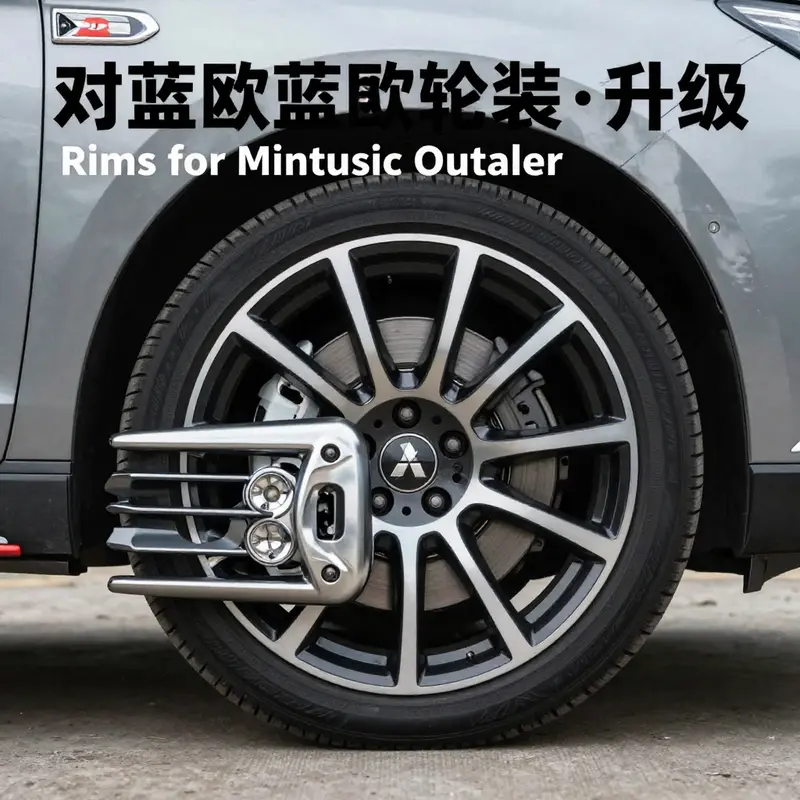
Rims are more than an aesthetic flourish on a Mitsubishi Outlander; they are a strategic component that intertwines with ride height, suspension tuning, braking performance, and even fuel economy. For many owners, the Outlander’s practical silhouette invites a deeper conversation about how wheels affect daily usability while offering room for personal expression. The journey from stock 17-inch wheels to larger, more assertive diameters is already a study in compromise: weight versus strength, comfort versus grip, and visual impact versus compatibility. Yet when approached as a coordinated upgrade—one that aligns wheel diameter, material choice, offset, center bore, and tire fitment—the wheel change can elevate safety and overall driving satisfaction as much as it can sharpen the vehicle’s stance. This is the core of the wheel upgrade philosophy for the Outlander: not simply to enlarge, but to harmonize the wheel and tire system with the vehicle’s suspension geometry, braking characteristics, and everyday duty cycle.
Size remains the most conspicuous variable. The factory baseline often centers around 17-inch rims, chosen to preserve ride comfort and broad tire availability for families and adventurers who rely on predictable performance in diverse weather. However, the aftermarket scene rewards larger diameters—18 inches as a common and practical step, with 19 and 20 inches appealing to drivers who seek a more aggressive curb presence or a sportier feel through enhanced lateral stiffness and sharper turn-in. The allure of 18-inch wheels is not only cosmetic. They strike a balance between cosmetic upgrade and functional improvement: the wider tire options, reduced sidewall flex, and a more planted stance can translate into confident cornering at moderate speeds while maintaining a comfortable ride. In some builds, a 20-inch forged wheel is chosen for its lightness and rigidity, delivering crisper feedback and quicker response, especially when paired with a suspension tuned to preserve a compliant ride. The underlying principle is simple: the diameter choice should serve the driver’s day-to-day needs while offering a coherent upgrade path that won’t demand a wholesale reconfiguration of the vehicle’s dynamics.
Yet the diameter is only a doorway. Fitment demands an exacting eye for bolt pattern, center bore, and offset. Outlander wheels are typically mounted using a 5-lug arrangement, with a consistent pitch that supports reliable alignment whenever wheels are swapped. The center bore is more than a hole—it’s the gateway to precise wheel seating. A bore that is too small requires precise machining or spacer devices; a bore that is too large risks imperfect centering and the subtle vibrations that undermine steering feel. The ET value, or offset, is the invisible ruler by which a wheel sits in the wheel well. A wheel that sits too far inward can collide with suspension components during full lock turns or compressions, while one that sticks outward risks rubbing against fender lips or disturbing outer wheel arch geometry. The width of the wheel, too, interacts with tire sidewall height to preserve rolling circumference and ride quality, which means a wrong combination can subtly alter speedometer accuracy and gear shifts if the sensors are sensitive to diameter changes. These parameters—bolt pattern, center bore, offset, and width—form a compact rulebook that governs the practical feasibility of any wheel upgrade.
If these geometric constraints are respected, the conversation naturally broadens to materials and construction methods. Wheels come in steel, aluminum alloy, and forged aluminum, each with its own identity in weight, cost, and performance. Steel wheels are durable and economical, but their heavier mass contributes more unsprung weight, which can blunt handling and reduce acceleration feel. Aluminum alloy wheels, a mainstream choice, deliver a notable reduction in unsprung mass and a favorable balance between cost and performance. Forged aluminum wheels, while the most expensive option, offer the lightest weight and the greatest strength-to-mass ratio. For Outlander owners who drive daily and also want weekend confidence when carrying a full crew or luggage, forged wheels can deliver a perceptible gain in steering responsiveness and braking modulation, particularly when paired with adequately rated tires and a suspension setup that can exploit the reduced inertia. Still, the choice is not purely about performance; perceived quality, heat dissipation during braking, and resilience to curb contact are equally influential in the final decision.
Style, while often the most visible aspect, should be evaluated through the lens of function. A wheel’s visual language—whether multi-spoke, split-spoke, or a clean, bold face—interacts with aerodynamics, braking ducting, and even tire wear patterns. An aggressive spoke design might contribute to a bold stance but could complicate cleaning or accumulate brake dust more readily. Conversely, a simpler, robust design may hide less under the dust and grime while offering straightforward maintenance. In some circles, bespoke or customized designs push toward a broader, more dramatic silhouette, sometimes incorporating a wider wheel track or a distinct finish that signals a tuned personality. The essential caveat remains the same: style should complement the Outlander’s everyday mission rather than overshadow it, ensuring that the wheels do not become a distraction or a source of noise and vibration under load or at speed.
The upgrade mosaic expands when one contemplates tires and how they must harmonize with new rims. A larger diameter often necessitates careful tire selection to preserve overall rolling diameter, which underpins speedometer accuracy, drivetrain load, and traction. A slightly taller tire profile can soften the ride and maintain acceptable ground clearance, while a lower profile, on larger rims, can sharpen steering and improve lateral stability but at the cost of rougher ride quality on imperfect roads. The daily reality for many Outlander owners—urban commutes, school runs, shopping trips, and family weekends—often points toward a balanced compromise: a wheel and tire package that offers respectable grip and predictable handling without making bumps feel like road indignities. When the wheel diameter increases, tire width should be considered in tandem to preserve contact patch and maintain grip without inviting excessive rolling resistance. In performance-focused scenarios, some drivers pair the upgraded rims with sport-oriented tires that excel in grip and heat dissipation, while others prioritize wear resistance for longer life and more uniform tread wear in family use. Either way, tire choice remains inseparable from wheel selection.
No upgrade conversation can ignore the safety and mechanical realities that accompany any modification. The ascent from stock to upgraded rims should be treated as a system overhaul rather than a cosmetic swap. The installation should ensure proper torque on all lug studs and attention to the torque sequence, with all fasteners torqued to the manufacturer’s spec. TPMS sensors often need relocation or recalibration when wheels are changed, to preserve accurate pressure monitoring and avoid spurious tire-light alerts on the instrument cluster. Balancing is non-negotiable; even minor runout on a high-performance wheel can generate humorous vibrations that degrade steering feel and passenger comfort. Wheel alignment, too, is a critical step after any significant wheel change to protect tire wear and preserve predictable handling across the speed range. In addition, the potential for rub—either with the inner fender or brake components—should be assessed at full steering lock and during suspension compression. The practical path is to partner with a shop that understands Outlander geometry and can verify clearance under typical load conditions, including full steering and cornering.
From the practical to the aspirational, the upgrade narrative moves toward a professional, measured approach. Enthusiasts who pursue a compelling aesthetic while maintaining practicality often begin with a precise measurement log: current wheel diameter, the stock tire size, offset, and center bore; the target diameter and width; the preferred tire type and performance characteristics for their typical climate and road conditions; and the anticipated load scenarios they most frequently encounter. This method yields a well-structured plan: select wheels that preserve the vehicle’s geometry and keep braking and suspension within safe operating envelopes; then choose tires that complement the wheel’s footprint while balancing ride comfort and grip. The end result is not a mere enhancement in looks; it is a harmonized upgrade that integrates seamlessly with the Outlander’s existing dynamics, preserving safety, reliability, and daily usability while delivering an elevated sense of ownership and a refreshed road presence.
For readers who want a practical reference point in this broader landscape, a dedicated Outlander accessory page demonstrates how fitment and compatibility considerations are framed in a real-world context. See here for an example of how upgrade conversations evolve in the Outlander ecosystem: front bumper mitsubishi outlander 19. This link reflects a broader approach to Outlander upgrades, underscoring the importance of cohesive design thinking that respects mounting geometry and vehicle dynamics, even when the focus shifts to a different component. External resource: https://www.amazon.com/dp/B0BZJXQYVW
Final thoughts
In conclusion, the choice of rims for the Mitsubishi Outlander plays a pivotal role in the vehicle’s performance and safety. Understanding the compatibility of OEM rims, the necessary technical specifications, and the careful considerations for replacement ensures that business owners make informed decisions for their fleets. With a variety of purchasing options available, including OEM and aftermarket choices, as well as opportunities for upgrades and customization, there’s a solution suited for every business’s needs. By prioritizing the right rims, owners can enhance their vehicles’ operational capabilities and overall driving experience.