
The automotive industry thrives on innovation and adaptability, with aftermarket auto parts playing a pivotal role in this ecosystem. Produced by manufacturers separate from original equipment manufacturers (OEM), these parts provide extensive opportunities for vehicle upgrades, repairs, and customizations. In this multifaceted exploration, we will discuss various types of aftermarket auto parts and their applications, delve into the economic aspects surrounding their production and sales, and examine essential considerations about their quality, compatibility, and installation. Through these discussions, business owners can gain a deeper understanding of the aftermarket auto parts sector, assisting them in making informed decisions that align with their operational goals.
How Aftermarket Auto Parts Transform a Vehicle: Types and Real-World Applications
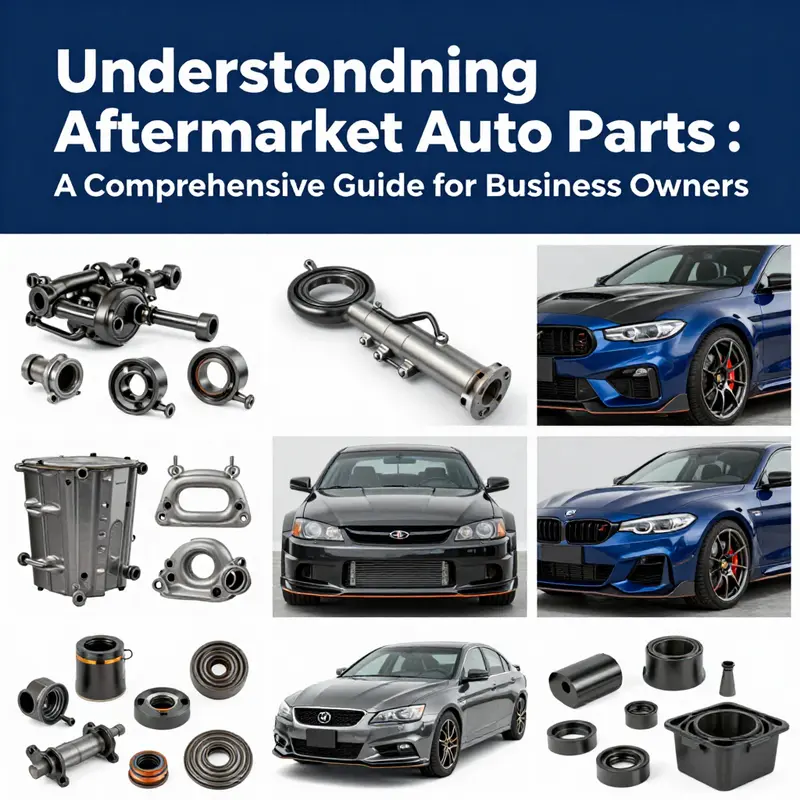
Aftermarket auto parts form a broad, living ecosystem that sits alongside original equipment. They range from simple replacement items to specialized components engineered to change how a vehicle performs, looks, or feels. Understanding the types of aftermarket parts and where they are used helps owners, technicians, and fleet managers make better choices. This chapter walks through the major categories, explains typical applications, and highlights practical trade-offs that dictate when and why each kind is chosen.
At the heart of the aftermarket are parts organized by purpose. Some are designed simply to restore function after wear or damage. Others are built to enhance performance, increase longevity, or personalize aesthetics. A simple way to think about these parts is by placing them on a spectrum that runs from like-for-like replacements to purpose-driven upgrades. Along that spectrum you will find replacement components, remanufactured units, mechanical and drivetrain upgrades, performance systems, and accessory parts. Each type has its own production standards, price points, and ideal use cases.
Replacement parts are the most familiar category. They act as stand-ins for OEM components when something breaks or wears out. These parts are made to fit and function like the originals, but they are produced by companies other than the vehicle manufacturer. For routine repairs, they offer a clear advantage: lower cost and wide availability. Repair shops, insurance claims, and DIY maintenance jobs rely heavily on generic aftermarkets because replacements arrive faster and cost less than OEM equivalents. The downside is variability. Quality varies by brand and supplier, and subtle differences in fit, finish, or materials can affect longevity or performance. For simple items — filters, brake pads, bulbs — the trade-off is often acceptable. For more complex systems, it is wise to vet the manufacturer and verify compatibility with the vehicle’s systems.
Remanufactured parts occupy a middle ground between new replacements and OEM parts. These units begin life as used components that are disassembled, cleaned, inspected, and rebuilt to meet or exceed original factory specifications. Engines, transmissions, and alternators are commonly remanufactured items. For fleet operators and repair facilities, remanufactured components provide a cost-effective solution where a complete new unit would be prohibitively expensive. The appeal is twofold: remanufactured parts often offer warranty-backed reliability at a lower price than new units, and their environmental footprint is smaller because they reuse materials. The caveat is that quality control depends on the remanufacturer’s processes. Reputable remanufacturers document testing protocols and supply warranties. When buying remanufactured units, look for detailed rebuild documentation and return policies.
Mechanical and drivetrain components are the backbone of vehicle function. These include transmissions, clutches, torque converters, gears, seals, and housings. In heavy-duty applications, such as agricultural or industrial equipment, drivetrain integrity is mission-critical. Aftermarket suppliers often target these areas with improved materials and designs that address weak points in older OEM parts. Reinforced seals, heat-resistant alloys, and improved tolerances extend service life and help vehicles handle heavier loads or higher duty cycles. For performance enthusiasts, upgraded clutches and strengthened gearbox internals allow increased power handling. In each case, the aftermarket brings options that OEMs may not offer in standard production runs. That flexibility is particularly valuable when dealing with aging vehicles whose factory parts are obsolete or out of production.
Performance parts form a distinct and highly visible segment. These are components engineered specifically to improve power, handling, braking, or aerodynamics. Examples include forced induction systems such as turbochargers, high-flow exhaust systems, upgraded suspension kits, and big-brake conversions. Performance parts are rarely one-size-fits-all. They are often developed for particular power ranges, chassis setups, or intended use cases such as street driving, track racing, or off-road competition. Installing a performance part can yield measurable improvements, but it also changes the vehicle’s operating envelope. That change may require complementary upgrades — fuel system upgrades for higher boost, cooling improvements for sustained track use, or re-tuned electronics to manage altered air and fuel flow. Professional tuning and careful component matching reduce risk and maximize benefit.
Accessory parts sit at the other end of the functional spectrum. They emphasize aesthetics, convenience, and lifestyle rather than raw mechanical performance. This category includes body kits, custom wheels, interior trim, roof racks, and upgraded audio systems. Accessories allow owners to personalize a vehicle and tailor it to specific needs. For example, a roof rack expands cargo capacity, while a tailored interior trim kit improves cabin comfort and appearance. Many accessories are bolt-on and require minimal vehicle modification. Because they are less critical to safety and core function, accessory parts are a common entry point for aftermarket customization. Still, fit and finish matter. Poorly manufactured accessories can rattle, corrode, or interfere with other systems. Choosing reputable suppliers and checking return policies helps avoid buyer’s remorse.
Materials and manufacturing techniques vary across all these categories. For parts intended for high stress or heat, manufacturers often use reinforced alloys, heat-resistant coatings, and precision machining. Carbon fiber and advanced composites show up in accessory and performance pieces where light weight and strength are priorities. In some cases, these materials improve performance directly — a lighter hood reduces front-end mass and improves handling. In others, they serve an aesthetic role while adding minor functional benefits. It is important to distinguish cosmetic uses of exotic materials from structural needs. Not every carbon-fiber component will meet the same standards; quality depends on manufacturing processes and layup techniques.
Safety, compatibility, and regulation shape how parts are used. Some components interact with vehicle safety systems or emissions equipment. Aftermarket catalytic converters, airbag components, and electronic control units must comply with local laws and standards. A replacement part that fails to match sensor inputs or calibration curves can trigger warning lights or reduce safety. Similarly, modifications that alter emissions characteristics can make a vehicle illegal for road use in some jurisdictions. Shops and owners must be aware of these constraints and consult certifications and local regulations before fitting certain parts.
Economics drives many aftermarket choices. Cost savings are a strong motivator for selecting non-OEM parts. The global supply chain produces many competitive offerings, and value-oriented brands can undercut OEM prices significantly. Yet cost alone should not be the only criterion. For critical systems such as brakes or steering, spending more on proven quality reduces risk. For cosmetic upgrades, cost sensitivity is greater, and lower-priced options serve a practical purpose. For business owners running fleets, lifecycle cost is the focus. A slightly more expensive component that doubles service intervals often reduces total cost of ownership.
Installation and expertise matter. Some aftermarket parts are simple swaps. Brake pads, filters, and many accessories are within the skill set of experienced DIYers. Other parts require specialized tools and knowledge. Turbochargers, transmission internals, and electronic modules often demand professional installation and calibration. Improper installation can nullify warranties and create liabilities. For this reason, many suppliers offer installation partners or recommend certified shops. When buying complex aftermarket systems, factor in installation time and cost, and insist on documented alignment and tuning steps.
Reliability and warranty landscapes differ between OEM, remanufactured, and aftermarket suppliers. Most OEM parts include a manufacturer warranty tied to the vehicle. Aftermarket warranties vary widely. Some high-quality aftermarket parts come with robust warranties and clear return policies. Others offer limited or no warranty. Remanufactured parts commonly include warranties that reflect the rebuild process. When comparing offers, look for clear terms, coverage duration, and the warranty provider’s reputation. A warranty that covers both labor and parts offers better protection for consumers and shops.
Applications across industries illustrate the aftermarket’s reach. Repair shops rely on replacement parts for maintenance and accident repair. Fleet managers use remanufactured and heavy-duty components to control costs and maximize uptime. Performance shops source specialized components for tuning and motorsport. Restoration projects often depend on aftermarket suppliers to reproduce hard-to-find pieces. Insurance companies use aftermarket options to settle claims cost-effectively. Each user group applies different decision rules based on budget, reliability needs, and regulatory constraints.
Choosing the right aftermarket solution requires a brief decision process. First, define the objective: repair, restore, improve, or personalize. Second, determine critical performance or safety requirements. Third, check compatibility with the vehicle and relevant systems. Fourth, evaluate supplier reputation and warranty coverage. Fifth, consider installation complexity and associated costs. Finally, weigh long-term lifecycle costs, not just purchase price. These steps reduce surprises and align expectations.
A few practical examples show how these categories appear in everyday life. A commuter with a worn alternator might choose a remanufactured unit to balance cost and reliability. A small business running delivery vans may invest in upgraded cooling and drivetrain components to handle increased load and mileage. An enthusiast building a track car may install a full performance braking system, reinforced transmission internals, and a tuned engine management system to achieve consistent lap times. A customization project might add a lightweight hood and aerodynamic diffuser purely for visual and minor handling improvements.
Quality control and brand selection are recurring themes. Because of variability, trusting established manufacturers and verified resellers reduces risk. Look for parts with clear specifications and test data. Independent reviews and community feedback are valuable for niche items. For systems that affect safety or emissions, insist on certification or laboratory test results. When a part comes with technical documentation, installation guides, and testing records, you gain confidence in its suitability.
The aftermarket also adapts quickly to changing vehicle platforms. As vehicles incorporate more electronics and integrated systems, aftermarket suppliers develop compatible modules and sensors. This trend increases the technical complexity of aftermarket offerings. It also widens the performance upside. But it raises the bar on installation expertise and system calibration. Modern upgrades often require software tuning and diagnostic tools that were unnecessary a decade ago.
In practice, the most successful aftermarket decisions blend technical understanding with practical constraints. A well-chosen part saves money, improves utility, and extends vehicle life. The wrong choice, even if inexpensive, can create cascading costs and safety issues. For anyone interacting with aftermarket parts — from do-it-yourselfers to professional technicians — the key is to treat each purchase as an engineering decision. Define the need, verify compatibility, choose reputable suppliers, and plan for proper installation and testing.
For a concrete illustration of accessory and performance crossover, consider a lightweight, cosmetic hood designed for both visual impact and weight reduction. Some aftermarket suppliers produce carbon-fiber hoods that reduce front mass and improve thermal management. These parts require careful selection to ensure proper fit and heat tolerance. An example product listing for a classic coupe highlights how a carbon-fiber hood is marketed to owners seeking both style and marginal performance gains: https://mitsubishiautopartsshop.com/1994-1999-mitsubishi-3000gt-pit-fighter-carbon-fiber-hood/.
The aftermarket industry is diverse and dynamic. Its parts answer many needs: affordability, customization, repairability, and performance. Understanding the categories described here helps users match parts to goals. Whether rebuilding a transmission, upgrading brakes for track safety, or adding an accessory for daily convenience, the right aftermarket component brings measurable value. For a structured overview of features and applications across the industry, see this detailed resource: https://www.autopartswholesale.com/aftermarket-auto-parts-overview/.
Markets in Motion: The Economic Engine Behind Aftermarket Auto Parts
The aftersales ecosystem of cars is animated by a sprawling class of parts made by firms other than the OEMs. These aftermarket parts fill a practical purpose: they replace worn components, extend performance, or let owners tailor their machines. They cover a remarkably broad range, from simple wear items to advanced performance upgrades and cosmetic components. While OEM parts focus on preserving factory specifications, aftermarket parts introduce choices that respond to drivers’ needs for reliability, affordability, or individuality. This broad spectrum is not just a catalog; it is an economic engine that shapes repair costs, vehicle lifecycles, and the speed at which technology reaches the street. The market’s core dynamic centers on supply and demand: more supply—more options, better pricing—and more demand—more willingness to repair, customize, or race. In this sense, aftermarket parts are as much about economic decisions as they are about mechanical compatibility. Consumers weigh price, performance, and prestige, while manufacturers and distributors balance scale, risk, and long-horizon investments in material science and process improvement. The result is a market that feels both practical and entrepreneurial, a place where a dented fender can become a canvas for value engineering and a set of upgrades can alter the way a vehicle handles, cools, or communicates with the road.
Market growth and economic dynamics frame the heartbeat of this industry. Industry analyses describe a market expanding from about 457.08 billion USD in 2026 to around 604.57 billion USD by 2034, a growth path that implies a steady CAGR in the 4 to 5 percent range. This sustained expansion mirrors consistent demand for reliable, affordable alternatives to OEM components amid aging fleets and a growing culture of performance tuning. In parallel, market valuations track a similar trajectory: a valuation of roughly 116.67 billion USD in 2026 is projected to reach about 146.23 billion USD by 2034. Taken together, these figures reflect not only consumer appetite for replacement parts but the maturing of a global network that can supply, test, and back new designs at scale. The numbers are more than abstractions; they signal a broad willingness to invest in parts, testing, and service infrastructure that keeps cars on the road longer and running more efficiently. They also illuminate the resilience of a sector that can endure economic cycles, supply-chain shifts, and evolving regulatory landscapes, all while delivering affordability and choice to millions of vehicle owners.
Cost considerations sit at the core of the aftermarket appeal. For many buyers, aftermarket parts offer a meaningful price delta compared with OEM equivalents, often delivering adequate quality at a lower price. This is especially true in routine maintenance items like gaskets, seals, or standard wear components, where mass production and competition drive downward pricing. For enthusiasts seeking performance or durability gains, there are reinforced materials, upgraded coatings, and designs that handle higher heat or stress. Yet the price advantage can be uneven: some brands chase performance by adopting premium materials or tighter tolerances, while others may cut costs in ways that affect longevity. Therefore, a shopper’s best plan is to assess brand reputation, warranty terms, material specs, and the engineering notes that accompany a part. The economic story here is simple: more options and lower upfront costs enable more repairs, more upgrades, and more opportunities for DIY maintenance, while also inviting professional shop services to upsell complementary components such as fluids, gaskets, or tuning modules. The result is a broader repair ecosystem that can adapt to both budget constraints and ambition. This dynamic helps explain why a bustling network of small manufacturers and large distributors can coexist with traditional retailers and modern e-commerce platforms, each carving out a niche based on reliability, speed, and the perceived value of their offerings.
One reason the aftermarket market can deliver such value is the global network of manufacturers and distributors. Many components come from large production hubs where skilled labor, scalable processes, and access to raw materials translate into lower unit costs. Across regions, competition helps drive prices down and speeds delivery. A consequence is a supply chain that can respond quickly to demand shocks, such as a surge in need for a specific engine part after a popular repair episode or during a period of new vehicle ownership turnover. The same global reach that lowers price also raises questions about consistency and quality. Consumers are often advised to vet brands for materials, tests, and fitment standards. Independent shops, online marketplaces, and local parts houses all play a role in quality control, offering inspections or warranties that help bridge gaps between price and performance. The broader lesson is that the aftermarket is not a single catalog, but a dynamic system where producers, sellers, and installers share risk, time, and opportunity. This ecosystem rewards those who invest in traceability, standardized testing, and clear documentation so customers can compare options with confidence rather than guesswork.
Direct replacements—parts designed to fit many vehicles without modification—have become a staple in the market. They present a practical bridge between affordability and reliability, reducing installation time and avoiding custom fabrication. For many owners, that compatibility is a key selling point, providing confidence that a part will slot into their car much like the original. Of course, not every part is a direct replacement, and the line between OEM mimicry and performance upgrades can blur. A careful buyer checks compatibility charts, considers any required software updates, and weighs the potential impact on warranties. In this context, the industry has developed standards and testing regimes that help ensure interchangeability without compromising safety. For readers who want a concrete sense of how these principles show up in catalogs, consider a representative product page such as [03-06 Mitsubishi Evolution 8-9 JDM rear bumper OEM](https:// mitsubishiautopartsshop.com/03-06-mitsubishi-evolution-8-9-jdm-rear-bumper-oem/). While this example is model-specific, it echoes a broader pattern: standardized mounting points, predictable fit, and a market built on expectations of reliability and return on investment. The anchor here is not to promote a single brand but to illustrate how the economics of fitment support affordability and speed of repair.
Beyond replacement, the aftermarket is a crucible for performance and aesthetics. Enthusiasts seek improvements in power, handling, braking, cooling, or exhaust acoustics, while many owners pursue styling cues that reflect personality or brand identity. In performance categories, aftermarket parts can offer upgraded internals, heat-resistant coatings, and tunable controls that adjust power curves or sensitivity. These choices often come with higher upfront costs, but they can also deliver better reliability under demanding use, provided they are well designed and correctly installed. The economic impact is subtle but significant: performance-focused products generate demand for specialized services, calibrations, and ongoing maintenance that can sustain a local shop’s revenue stream beyond routine repairs. The push toward performance has also spurred innovations in materials science, corrosion resistance, and ergonomic design, all participating in a broader pattern of cross-pollination between consumer demand and manufacturing capability. The market thus rewards ingenuity, competition, and the ability to translate technical prowess into tangible value on the road or track.
Distribution channels have diversified alongside products. Traditional parts stores, service shops, and independent retailers now compete with online marketplaces that offer wide catalogs and consumer reviews. This mix benefits buyers by expanding options and enabling price comparisons in real time. Yet the breadth of choice also requires a careful buyer’s eye: cheaper parts may entail longer lead times, incomplete documentation, or limited after-sales support. Here, professional installation often matters more with complex components such as engines, transmissions, or suspension systems where precision alignment and torque specifications can determine success or failure. The economics of installation—labor rates, warranty coverage, and the need for specialized tools—become a meaningful part of the total cost of ownership. As a consequence, the aftermarket ecosystem incentivizes skill development among technicians, who must stay current with new materials, coatings, and design philosophies. This evolving skill set, in turn, reinforces consumer confidence and expands the market’s reach to newer generations of vehicle owners who expect both value and customization.
An important implication of the aftermarket’s growth is its effect on vehicle longevity and sustainability. When repairs are affordable and accessible, more vehicles remain roadworthy beyond the period of factory support. This extends the usable life of cars and reduces premature disposal, aligning with broader sustainability narratives in transport. The aftermarket’s health also depends on ongoing certification programs, standardized tests, and transparent labeling that reassure buyers about what they are buying. The industry’s momentum—reflected in the steady market size and predicted growth—encourages suppliers to invest in durability, environmentally friendly materials, and end-of-life recycling programs for old parts. In this light, the aftermarket is not a fleeting trend but a structural feature of modern mobility, shaping how consumers and fleets manage maintenance, upgrades, and resale value over time. The economic appeal, in short, lies in spreading repair costs over longer horizons, letting owners plan, budget, and pursue incremental improvements rather than facing expensive, unplanned failures.
For readers seeking a tangible example of how fitment and aftermarket choices appear in real catalogs, a dedicated product page illustrates the practical side of alternatives that are designed to fit many generations of a model. 03-06 Mitsubishi Evolution 8-9 JDM rear bumper OEM. This kind of page helps buyers navigate the balance between cost, compatibility, and installation effort, and it mirrors the broader market’s emphasis on reliable fit and concise guidance for installers and enthusiasts alike.
Looking ahead, the economic trajectory of aftermarket auto parts will likely hinge on continued competition, technological maturation, and regulatory frameworks that encourage safety alongside innovation. Market leaders and smaller players alike will seek ways to differentiate through quality control, warranty commitments, and after-sales support, turning price competition into a platform for trust. As fleets age and new technologies emerge, the aftermarket will remain a resilient channel for repair, customization, and value creation. The story is not simply about parts; it is about the way a global consent to exchange, test, and improve a vehicle becomes an enduring feature of mobility’s economic fabric. For a broader market context, see this external resource: Global Automotive Aftermarket Market Report 2034.
Quality, Compatibility, and Installation: Navigating the World of Aftermarket Auto Parts for Safe, Satisfying Upgrades

In the vast ecosystem of modern motoring, aftermarket auto parts stand as a bridge between the stock baseline and the rider’s evolving needs. They are not merely afterthought replacements; they are deliberate choices that can extend a car’s life, sharpen its performance, or tailor its appearance to reflect a driver’s taste. The aftermarket world encompasses a wide array of components—from mechanical subsystems and electrical controls to body panels and cosmetic accessories. The practical reality is that parts made by third-party manufacturers often exist to replace worn or damaged OEM components, but they also provide avenues to improve durability, reduce heat buildup, or increase responsiveness in ways that the original equipment might not emphasize. This nuance matters because it reframes aftermarket parts from being second-best options to being purposeful design choices that interact with a vehicle’s existing systems in ways that can be predictable, measurable, and reversible if chosen well.
Quality, compatibility, and installation are the three pillars that determine whether an aftermarket part will perform as intended, support safety on the road, and stand up to the scrutiny of long-term use. Modern manufacturing standards have raised the bar for aftermarket suppliers. Where the stereotype once suggested that aftermarket parts were merely cheaper stand-ins, the current landscape features components that carry rigorous quality management systems. Certifications such as ISO 9001 and IATF 16949 signal a supplier’s commitment to material integrity, dimensional accuracy, and robust testing protocols. These levels of quality assurance are especially important for high-stress or safety-critical components like suspension systems, brake calipers, and engine control units. When a supplier can demonstrate consistent process control through these standards, it becomes easier for a buyer to trust that the part will fit, function, and endure in real-world conditions rather than merely appear correct on a parts diagram.
The role of quality is not merely about the part itself; it is about the entire workflow that brings that part from design to installation. In practice, quality manifests in traceable materials, consistent finishes, and documented testing that simulates the rigors of the road. It also shows up in the supplier’s ability to provide precise engineering data, manufacturing tolerances, and clear, actionable installation guidelines. A quality-centric approach helps prevent the common disappointment of mismatch or premature wear that can undermine the value proposition of aftermarket parts. For example, a component like a brake caliper or a control module must not only survive heat and vibration but also interface correctly with the vehicle’s diagnostic systems. When a part passes through a well-managed supply chain with rigorous validation, the likelihood of retrofit success increases, making the decision to pursue aftermarket options a more confident investment rather than a speculative risk.
Compatibility sits at the heart of a successful upgrade or replacement. Unlike generic or unverified products, parts sourced from reputable suppliers are subjected to engineering validation to ensure they align with specific makes, models, and years. Compatibility testing often goes beyond simple interchangeability; it involves verifying mounting points, electrical interfaces, bolt patterns, and software interactions. The risks of poor compatibility are tangible: misaligned mounting points can cause unintended stress, wiring harnesses may not connect without adapters, and software may flag a fault code or refuse to communicate with a non-OEM part. The most reliable aftermarket sources maintain access to OEM data, CAD files, or at least a deep catalog of fitment know-how—resources that help engineers design compatible parts and that technicians rely on during installation. The precision of compatibility has a direct bearing on installation efficiency, warranty claims, and the overall satisfaction a vehicle owner feels after a repair or upgrade. In a field where a tiny deviation can cascade into a diagnostic headache, the role of disciplined engineering validation becomes essential. Real-time metrics—such as on-time delivery rates, defect rates, and customer feedback—provide more reliable signals of a supplier’s true performance than certificates alone. These metrics help buyers move beyond the reassurance of a label to the evidence of practical outcomes.
The practical implications of compatibility extend to specific vehicles where fit can be unusually exacting. Take, for instance, a classic performance model where the mounting geometry and electrical interfaces are uniquely tuned. In such cases, even minor deviations in mounting brackets or connector shapes can compromise a system’s function or trigger diagnostic trouble codes. Suppliers that operate with a clear ownership of fitment data and access to engineering resources are better equipped to deliver precise results, reducing the risk of rework, warranty disputes, or safety concerns. For a shop or a DIY enthusiast, this means that the upfront diligence—checking fitment data, confirming model-year applicability, and reading installation notes—pays dividends after the purchase. When a part aligns with the vehicle’s architecture, it invites a smoother installation, a longer service life, and a higher probability that the upgrade will integrate harmoniously with existing systems rather than creating unintended conflicts.
The installation phase is where theory meets reality. Even the highest-grade component can fail or underperform if installed incorrectly. The installation process begins with reading the manufacturer’s instructions in full and ends with the final verification that the part functions as intended within the vehicle’s systems. In complex subsystems—such as braking, steering, or electronics—professional installation is often the safest option. This is not merely about tightening bolts to a specified torque; it is about understanding how the component interacts with the vehicle’s control logic and diagnostics. For DIY enthusiasts, a careful approach is essential: use the recommended torque values, align components per the specified tolerances, and ensure any calibration steps are completed. When detailed guidance is followed, the risk of misalignment, air leaks, or software faults diminishes, and the chance of a satisfying, long-lived upgrade increases. Good installation practice also includes verifying that ancillary components, such as sensors or adapters, are properly seated and that electrical connectors are secured and insulated against moisture and vibration.
The broader economic context of the aftermarket sector cannot be ignored. Parts are often more affordable than their OEM counterparts, thanks in part to global competition and the breadth of manufacturing networks that supply the industry. Manufacturing hubs in Asia and beyond leverage economies of scale, enabling a wide range of products at different price points. This diversity—while advantageous for consumers—also raises the imperative to choose wisely. Price should not be the sole determinant; durability, material quality, and the supplier’s reliability must weigh heavily in the decision. The availability of aftermarket parts contributes to more competitive pricing in the automotive repair market and expands consumer choice for customization and upgrades. A thoughtful buyer considers total cost of ownership, including potential savings from easier replacement, the impact on resale value, and the assurances that come with warranties or return policies. The wrong choice can invite repeated service, undermining the very value that an aftermarket upgrade is meant to deliver.
Quality, compatibility, and installation are not abstract ideals but practical anchors that guide every step of an aftermarket journey. A high-quality, compatible part installed with proper care can yield significant returns in performance, safety, and reliability. Conversely, when any one of these pillars falters, the benefits of upgrading can be eroded by maintenance headaches, diagnostic codes, or even safety risks on the road. The modern consumer benefits from a structured approach that emphasizes credible quality certifications, engineering-validated fitment, and installation discipline. This approach does not just protect the vehicle; it protects the owner’s time, investment, and confidence in the journey of customization.
For readers navigating this landscape, a pragmatic sequence can help translate these principles into tangible results. Begin with a clear intent for the upgrade: are you seeking reliability, improved handling, or a distinct aesthetic? Then identify reputable suppliers who publish quality data, test results, and fitment documentation. Check the compatibility for your exact vehicle year, make, and trim, and look for engineering validation or CAD references. Next, absorb the installation instructions in detail, and recognize when a professional touch is prudent—especially for components that affect safety-critical systems. Finally, assess the total cost and the long-term value, including warranty coverage and the potential for easy future replacements. When these steps are followed, aftermarket parts can be more than a temporary fix; they can be a durable component of a vehicle’s ongoing evolution.
As an illustration of the ongoing evolution in aftermarket resources, consider how a routine modification—such as replacing a stock hood with an aftermarket option—unfolds through these lenses. While the exact product page is just a link away, the underlying considerations remain universal: quality control, verified fit, and careful installation. The broader takeaway is that the aftermarket ecosystem is not a wild frontier but a disciplined arena where standards, data, and process discipline empower informed choices. A well-chosen part, installed correctly, can coexist with the vehicle’s original architecture, extending its life, sharpening its performance, and preserving its value for years to come. This is the core promise of aftermarket components when approached with diligence and care, a promise that aligns with the next layer of discussion about sourcing strategies, supplier relationships, and the ways in which modern manufacturers collaborate to deliver consistent, reliable parts across a global market. For readers who want a concrete starting point in the exploration of compatible upgrades, a practical entry path is available through a dedicated product page that demonstrates a straightforward, well-documented approach to fitment and installation: hood upgrade page. This example underscores how, even in a single component, the interplay of quality, compatibility, and installation can shape the overall experience of upgrading a vehicle.
External resources can provide additional context about how businesses manage quality and supply chain risk in the aftermarket space. In particular, industry analyses emphasize that strategic sourcing of genuine and aftermarket parts depends on verifiable quality benchmarks, transparent supplier performance metrics, and robust installation guidelines that translate into repeatable outcomes for technicians and enthusiasts alike. A widely cited external reference offers a comprehensive view of these dynamics, highlighting how suppliers align manufacturing practices with customer expectations and how buyers can assess risk and reliability when selecting parts for repair or upgrade. For readers seeking a broader, evidence-based perspective beyond individual brands or store pages, this resource provides a foundational framework for evaluating aftermarket options and understanding the strategic considerations that shape the market.
External resource: https://www.supplychaininsider.com/articles/strategic-sourcing-of-genuine-aftermarket-auto-parts-b2b-supplier-guide/
Final thoughts
In light of the explored facets of aftermarket auto parts, it is clear that these components serve as a crucial element within the automotive sector. They offer business owners opportunities to provide customized solutions that enhance vehicle performance and aesthetic appeal while simultaneously impacting the economic landscape favorably. By understanding the types of aftermarket parts, their economic dynamics, and the importance of quality and installation, businesses can leverage these insights to improve customer satisfaction and drive growth. A proactive approach in selecting reputable suppliers and ensuring part compatibility will further strengthen a company’s position in the competitive automotive market.