
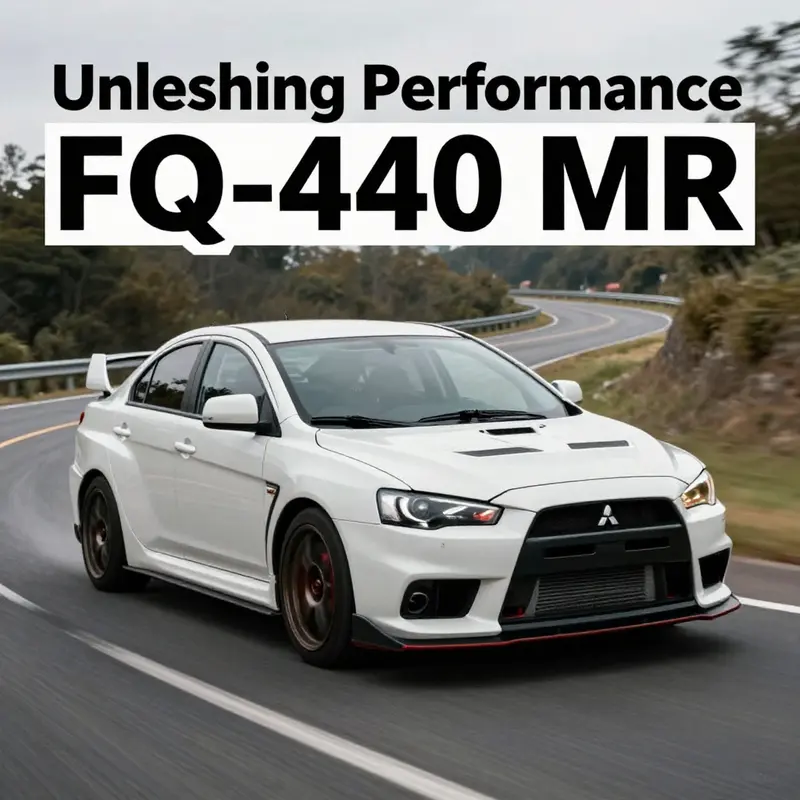
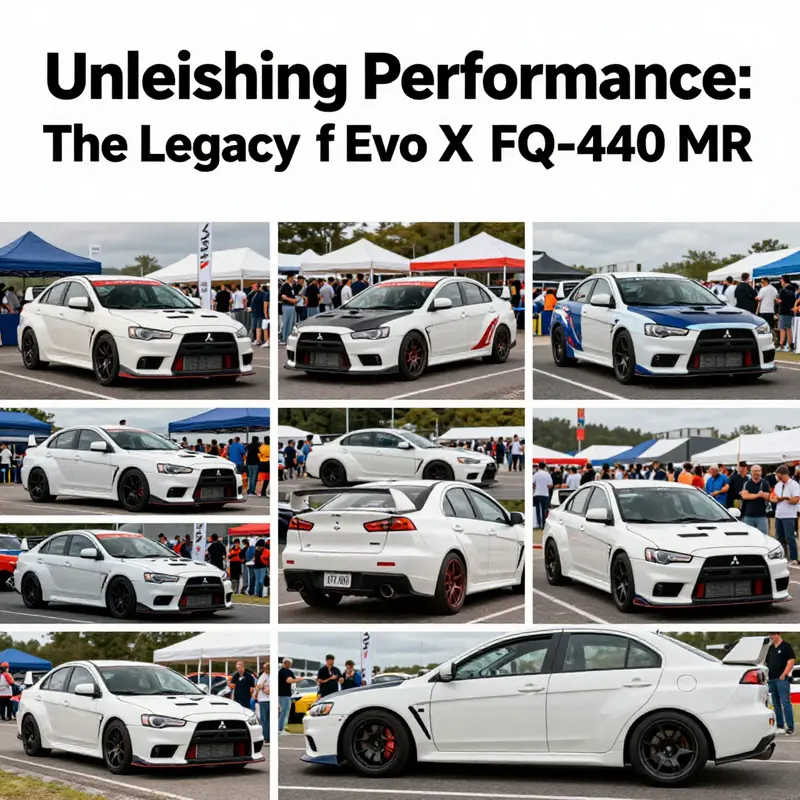
The Mitsubishi Evo X FQ-440 MR stands as a monumental testament to automotive engineering, representing a high-performance sedan tailored specifically for the UK market. Introduced in 2014 to celebrate Mitsubishi UK’s 40th anniversary, this limited-edition model packs an impressive 440 horsepower from its upgraded 2.0-liter turbocharged engine. With enhancements from HKS, it achieves an exhilarating driving experience, even without manual transmission options. As we delve into this article, we’ll explore the technical prowess behind its engine, its strategic market positioning, and far-reaching cultural implications, establishing the FQ-440 MR as a deservingly celebrated icon in automotive history.
UK-Exclusive Fury: Inside the Evo X FQ-440 MR, Mitsubishi’s Final Peak of Precision
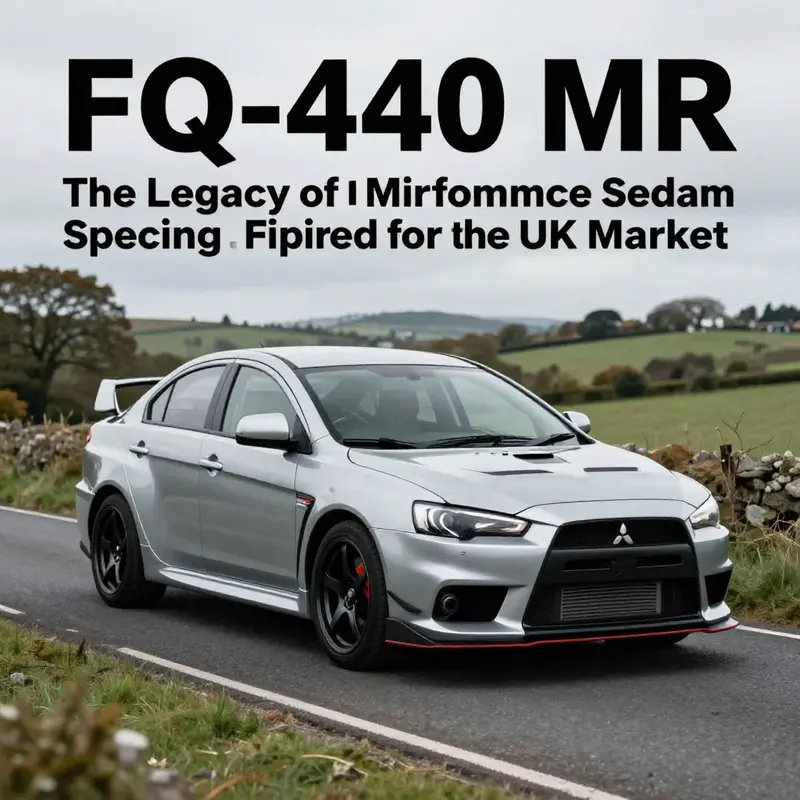
In the quiet hum of evolution, some chapters are written with a rare intensity that leaves a trace on the road long after the last page is turned. The UK-only Lancer Evolution X FQ-440 MR, minted to commemorate a milestone of Mitsubishi’s British arm, sits exactly in that category. It was not merely a special edition but a deliberate push to extract the last profound breaths from a small-displacement engine, a 2.0-liter turbocharged four that, when paired with a meticulous tuning program, crossed into performance territory usually reserved for engines with far larger displacements. As an object lesson in how to fuse horsepower with discipline, the FQ-440 MR sits at the intersection of engineering audacity, market exclusivity, and the driver’s intimate, almost tactile, sense of a car that speaks in rapid-fire torque and precise feedback. It is a product of its time, yet its essence feels timeless: a car engineered to be driven rather than admired from the showroom, and a rare instance where a limited run managed to feel like a culmination rather than a starting pistol for something new.
The genesis of the FQ-440 MR rests in a purposeful collaboration. Mitsubishi’s factory engineers, working closely with a renowned Japanese tuning house, set out to unlock the latent potential of the Evolution X platform without drifting away from the core ethos of the model line: balance, response, and a direct connection between the driver and the road. The heart of the machine is a 2.0-liter turbocharged inline-four, the 4B11T, whose stock form could already deliver a compelling blend of acceleration and tractable torque. But for this edition, the goal was not merely more power; it was more control at the edge of that power, more reliability when the throttle slammed into the midrange, and more confidence when the road opened into sweeping curves or tight, technical corners. The result was a production sedan that could lay down numbers with the efficacy of a much larger car but with the nimbleness and chassis feedback that made it feel almost surgical at speed.
Under the hood, the changes were substantial and meticulous. The FQ-440 MR made 440 horsepower at 6,800 rpm and 559 Newton-meters of torque at 3,100 rpm. This was not a peak-power artifact, but a carefully built torque curve that multiplied the car’s tractability in real-world driving—where you rarely spend time at the redline anyway. The engine’s transformation started with a new turbocharger provider, a higher-flow fuel-injection system, and a tuned intake path produced by Janspeed. The intercooler, upgraded to handle the added air and heat, worked in tandem with a bespoke exhaust system designed to reduce back pressure and preserve the engine’s torque delivery. The ECU was reprogrammed to harmonize the enhanced airflow, fuel delivery, and turbo response, ensuring the power was not simply higher numbers on a dyno chart but a consistent, usable surge across gears and speeds.
What those numbers translate to on the street is a vehicle capable of astonishing pace without sacrificing the everyday ease of use. The 223.2 horsepower per liter figure—an astonishing average for a two-liter turbo in that era—speaks to the engineering ambition that defined the edition. It sits in a lineage of hot, compact sedans that could embarrass more powerful rivals on a twisty back road, not merely on a straight strip. The FQ-440 MR’s power was not just about raw velocity; it was about the confidence that comes from a well-tuned powertrain, a sense that the hardware would respond with immediacy and predictability as soon as your right foot found the throttle. In that sense, the car functioned as a bridge between the Evo’s rally-bred roots and the refined expectations of a modern high-performance sedan.
Chassis and handling were equally essential to the package. The engineers did not rest on a larger engine alone; they pursued a chassis that could properly manage the surge. Front and rear suspension dropped by 35 millimeters and 30 millimeters respectively, a clearance reduction that lowered the center of gravity and sharpened the car’s in-corner behavior. This stance, paired with precise spring rates from a respected suspension specialist, resulted in a car that was responsive without feeling twitchy, a line that many high-power machines cross at their peril. The braking system received its own upgrades, with Alcon components offering the kind of fade resistance and stopping power that high-speed driving demands. The wheels—18-inch forged units from a famous performance-wocused brand—along with carefully chosen tires and a tuned suspension geometry, completed the package by delivering the right balance of mechanical grip and dynamic feedback to the driver’s hands and feet.
Aesthetics and creature comforts were not neglected, either. The FQ-440 MR bore the visual drama expected of a limited-edition performance model: a more aggressive stance, dual xenon headlights that sharpened the car’s presence, and a body that promised performance even before the engine came to life. Yet these enhancements were not mere showpieces. They were integrated into a broader strategy to maintain a livable daily driver while enabling the car to be pushed to its limits on a track day or a long, winding road where focus and precision matter most.
Manufacturing and market strategy mirrored the engineering discipline. Only 40 units were produced, all allocated to the United Kingdom, a deliberate choice to celebrate a milestone for Mitsubishi’s British division. The price tag—around £50,000 at the time—reflected the exclusivity and the engineering depth behind the build. The transmission choice underscored the philosophy of the edition: the six-speed Sports Shift Twin-clutch automatic was selected to guarantee near-rapid gear changes and consistent power delivery, a choice that reinforced the car’s performance character while preserving an accessible driving experience for enthusiastic buyers who may not have preferred a traditional manual gearbox. In a sense, the SST transmission was a modern tool that allowed the car to shine in both road and track contexts, the kind of device that translates raw horsepower into coherent, repeatable performance.
From a performance standpoint, real-world data remained scarce in official channels. Mitsubishi did not publish a formal 0–100 km/h time for the FQ-440 MR, which left room for industry estimation. Based on the dynamics of its immediate predecessor and the broader performance language of the Evolution X lineup, many observers suggested a sub-3.5-second sprint to 100 km/h was within reach. A top speed of around 250 km/h capped the car’s on-paper envelope, a boundary many contemporary hot sedans would admire but few would surpass in pure character and balanced delivery. In practice, the car’s engineering made sense of such figures by emphasizing torque in the mid-range, where real-world acceleration lives. The FQ-440 MR did not rely on a brutal top-end rush; it invited drivers to lean on torque and corner speed, to press through the midrange with confidence, and to enjoy a chassis that telegraphs steering inputs with a clarity that is rare in cars of this class.
The legacy of the FQ-440 MR extends beyond its remarkable power profile. In the broader arc of the Evolution line, it marks a moment when a small-displacement engine was coaxed into a high-output regime with a purist sense of balance. It precedes a broader industry shift that would see automakers turn to different powertrain configurations in subsequent generations, including collaborations with other brands and engine designs. The FQ-440 MR thus stands as one of the late, defining chapters of Mitsubishi’s era with the Lancer Evolution nameplate—the kind of model that enthusiasts later described as a “signal flare” to the series’ enduring appeal. In the cultural memory of performance cars, it represents a confluence of engineering bravado and disciplined craft: a car that could, in the right hands, deliver the sense of an intimate, almost telepathic, relationship between throttle, torque, and cornering rhythm.
For readers who want to glimpse the kind of scarcity and provenance that define the edition, a recent listing captures the market’s reverence for low-mile examples: a likely reference point for collectors and enthusiasts who seek a storied Evo X variant. The listing highlights the car’s low mileage and preserved condition, offering a tangible link to the limited run that captured fans’ imaginations in a way few production cars ever manage. low-mile Evo X FQ-440 MR for sale. This link, while modern in its presentation, underscores the era’s appetite for exclusivity and performance—a reminder that, even as the automotive landscape shifts toward electrification and new powertrain philosophies, the FQ-440 MR remains a high-water mark for those who measure performance by how a car communicates with the road in human-scale increments of time and space.
The story of this model is also a reminder of how the car world preserves its history through both official channels and enthusiast-focused channels. Official documentation from the period situates the FQ-440 MR as a disciplined, precision-tuned milestone—an artifact designed not to chase the fastest lap in the world, but to deliver a lived performance experience that felt purposeful and complete. The engineering emphasis on reliability and controllability—traits that encourage a broader range of drivers to engage with a car capable of formidable speed—speaks to a philosophy that values the driver’s feedback as much as the engine’s hustle. The UK market’s embrace of the model—its exclusivity, its price, and its channel for distribution—further indicates how regional strategy can amplify a vehicle’s mystique and desirability. In that sense, the Evo X FQ-440 MR offers a holistic view of what a performance sedan can be when every subsystem is aligned toward shared objectives: speed, balance, and a sense of driver empowerment that remains legible even as you push toward the car’s mechanical envelope.
External reading provides an authoritative frame for the model’s historical placement and reception. For a full, contemporary context of the model and its debut, readers can consult the original press materials from Mitsubishi Motors UK, which outline the intention, scope, and technical highlights of the FQ-440 MR. This context helps situate the car not only as a performance machine, but as a carefully curated cultural artifact of its time. Mitsubishi Motors UK press release (2014).
In summation, the Evo X FQ-440 MR stands as a late-blooming pinnacle of the Evolution’s on-road potency. It exploited a compact cylinder’s turbocharged appetite with an engineer’s insistence on balance and repeatability. The result was a sedan that could feel both brutish and refined, a paradox that often marks the most engaging performance cars. It remains a touchstone for enthusiasts who value a car capable of delivering driver-focused entertainment without sacrificing the kind of daily usability that makes a true performance machine a practical companion. Its existence is a reminder that speed, when engineered with restraint and precision, can be a form of artistry—an orchestration of torque, aerodynamics, chassis geometry, and intelligent transmission logic that speaks to a driver long after the engine cools.
External resource: https://www.mitsubishi-motors.co.uk/press/2014/03/28/mitsubishi-lancer-evolution-x-fq-440-mr
Turbocharged Precision: The Engine and Powertrain Mastery of the Evo X FQ-440 MR
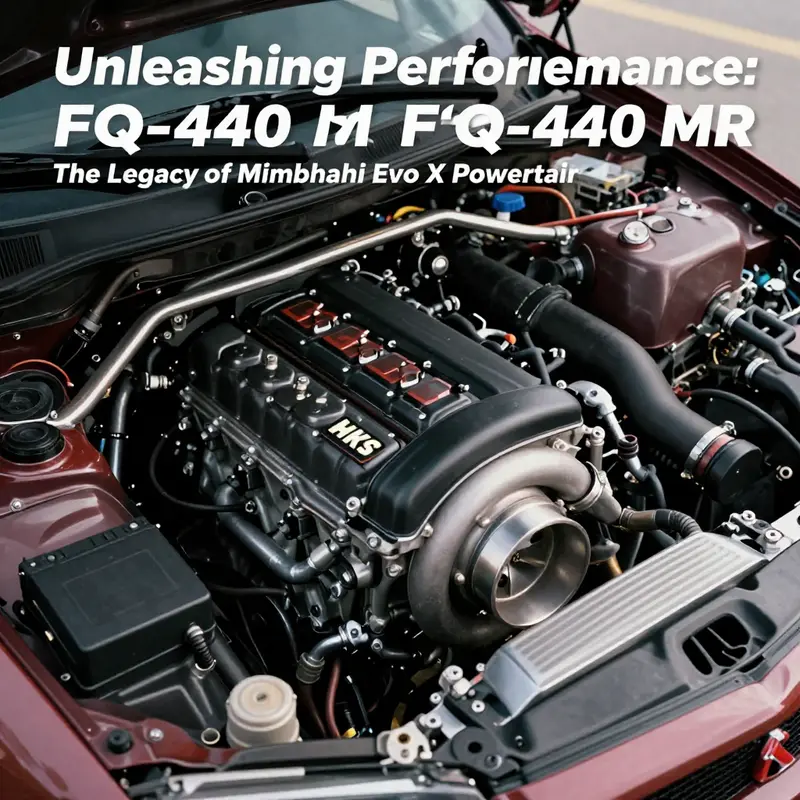
At its heart lay a 2.0-liter turbocharged four, the 4B11T, whose modest displacement was coaxed into a substantial performance leap through a high-efficiency turbo, a freer intake, a less obstructed exhaust path, and a carefully recalibrated ECU. The result was 440 horsepower at 6,800 rpm and 559 newton-meters of torque from as low as 3,100 rpm, delivered with a linear, controllable throttle map that remains approachable at the limit. The powertrain is paired with Mitsubishi’s SST dual-clutch transmission, optimized software, and an upgraded hydraulic system to provide rapid, repeatable shifts under high load. The drivetrain is connected to a reinforced all-wheel-drive system with a limited-slip differential that helps distribute torque between front and rear axles for balanced grip in corner exits. The chassis work includes a lowered ride height, more aggressive suspension tuning, and upgraded braking to match the increased straight-line speed and cornering capability. Taken together, these elements form a coherent, track-oriented package that emphasizes precision, predictability, and progression of power rather than raw, unpredictable shove. The FQ-440 MR thus embodies a philosophy of integration where breathing, fueling, cooling, and control strategies are developed as a single performance system rather than as disparate modules.
The Crowned Peak: Market Positioning and Economic Legacy of the Evo X FQ-440 MR
When the Mitsubishi Lancer Evolution X reached the pinnacle of its storied lineage, the FQ-440 MR stood not merely as a high-performance variant but as a ceremonial coronation of a decade of rally-bred engineering. Conceived to commemorate a milestone in the British division’s history, this tightly limited edition arrived in 2014 with a clear purpose: to fuse the Evo’s hard-edged performance DNA with a narrative of exclusivity and craftsmanship that could translate into lasting market value. Only forty units were produced for global audiences, and the vast majority of those found homes within the United Kingdom. The result was less a purchase of speed and more a bid for a rare artifact, a product that embodied both the feverish enthusiasm of JDM culture and the practical economics of scarcity. In this light the FQ-440 MR did not simply inhabit the fast-lane; it anchored a more complex conversation about value, provenance, and the economics of limited editions in a market where enthusiasts often prize stories as much as straight-line performance.
From the outset, the technical brief behind the FQ-440 MR reinforced its premium positioning. Beneath the distinctive bodywork lay a 2.0-liter turbocharged four-cylinder engine—an iteration of the 4B11T lineage that Mitsubishi and tuned partners pushed toward extraordinary output. The official headline figure was 440 horsepower, a number that sits at the upper edge of what a modern, small-displacement engine can sustain when pushed through the right combination of boost, fueling, and post-processing. Peak torque climbed to 559 Newton-meters, a figure that converts to savage mid-range shove and a willingness to pull hard from the lowest revs. Yet numbers alone do not tell the full story of a car designed to be driven on track days and meaningful back roads, not simply displayed on a showroom floor. The engine was not just stronger; it was integrated with an upgraded intake and exhaust system, a larger intercooler, and a recalibrated ECU. Over the course of development, Mitsubishi worked in collaboration with HKS, a name long associated with high-performance turbocharging, to deliver a package that could survive sustained high-velocity operation and still feel tractable on a public road.
One of the most telling choices in the FQ-440 MR’s engineering was how the power was managed and delivered to the drivetrain. The all-wheel-drive system, a cornerstone of the Evo’s performance philosophy, received strengthening attention to ensure that the additional torque could be harnessed without compromising grip or control. The result was a chassis that could translate the engine’s willingness to rev and surge into predictable, repeatable corner speeds. A track-focused suspension setup completed the equation, with geometry and damping tuned to deliver a balance of grip, feedback, and mid-corner stability. The front and rear suspension were dropped by measured amounts—roughly 35 millimeters at the front and 30 millimeters at the rear—an alteration that shaved off some of the inertia associated with a taller, more compliant road car. Lowering the center of gravity is a familiar tactic in performance tuning, yet in a car that already comes with a reputation for aggressive handling and precise steering, the impact is more than cosmetic. It changes the way the chassis communicates grip levels at the tire contact patch, allowing the driver to exploit a more neutral, forgiving understeer-to-oversteer transition, rather than chasing grip with abrupt inputs.
The aesthetic and functional shifts were accompanied by a calculated emphasis on driver experience. Inside, the cabin refinements reinforced the sense of purpose: a cockpit tuned for performance rather than comfort alone, with seating and trim choices aligned to a high-performance ethos. The transmission choice underlined the same narrative. While the majority of the Evolution X lineup would eventually be seen with manual gearboxes in other markets or in other variants, the FQ-440 MR eschewed a conventional stick entirely in favor of a six-speed automated dual-clutch system. This was not merely a nod to contemporary trends in rapid shift technology; it reflected a broader commitment to ensuring that the car could deliver exceedingly fast, repeatable acceleration without the vagaries of a traditional manual in high-stress track conditions.
Market positioning for such a package required more than a compelling engine and a capable chassis. The UK market, chosen as the model’s primary stage, carried a symbolic significance in the Evo’s global narrative. The 40-unit cap created a conversation about rarity as a financial variable, not merely a social or aesthetic one. In the trading and collecting communities, scarcity often operates as a self-fulfilling engine: fewer units available makes each example more desirable, and desirability tends to translate into a stronger market signal over time. The FQ-440 MR’s pricing reflected that logic. At launch, the car carried a price tag around fifty thousand pounds, a figure that placed it squarely in a premium tier among modern performance vehicles. The absence of a manual transmission, while disappointing to some purists who crave the tactile engagement of a clutch and gear lever, did not dampen its market allure for collectors who value the speed, precision, and consistency of dual-clutch technology in a high-performance coupe.
In the broader economic ecosystem of classic and modern performance cars, the FQ-440 MR represents a pivot point. It sits at a juncture where the traditional, engine-focused era of the Evo is drawing to a close, even as demand for late-model, high-performance iterations persists. The Evo X, once a symbol of the hand-built, engineering-led approach to delivering rally-derived performance, began to give way to collaborations and engine configurations that moved away from the 2.0-liter, four-cylinder turbo paradigm that had defined much of the EVO’s lineage. The FQ-440 MR captures a last, unequivocal moment where the Mitsubishi ethos—lightweight, high-revving, drive-focused—could still be packaged into a compelling, road-legal specification. In a historical context, the car marks the closing pages of a chapter in which a homogeneous approach to developing power—turbocharging, aggressive intake and exhaust tuning, and a measured restraint in electronic intervention—produced some of the most celebrated performance cars of the era.
Economic value in the used car market soon began to reflect this sense of ceremonial significance. Scarcity, provenance, and the aura of a milestone model all contribute to premium pricing that outstrips more ordinary variants. By the early 2020s, valuations for the FQ-440 MR had settled into an elevated tier within the Evo ecosystem. Estimates around £50,000 had become a reference point for collectors seeking a near-unstoppable blend of rarity and historical resonance. While many of these cars have aged gracefully, others have found themselves in the hands of enthusiasts who maintain them with the kind of meticulous care that only a limited-production, high-horsepower car justifies. In this context, the FQ-440 MR is less a straightforward investment in automotive hardware than a bet on a living narrative—the story of a rally-bred sedan that achieved a peak of performance and a peak of cultural significance at the same moment.
If one were to map the evolution of demand for rare Evo variants, the FQ-440 MR would occupy a central node. It is not simply the sum of its horsepower or its track-ready suspension; it is an embodiment of a particular moment in automotive culture when manufacturers used limited editions to create a bridge between enthusiasts and a company’s heritage. The car’s UK provenance and the anniversary initiative give it a location in the storytelling geography of car collecting that is hard to replicate. The result has been a durable premium that, in many cases, has persisted even as newer performance icons have emerged. The presence of 40 units on the world stage makes each surviving example a keystone in a broader arch: a reminder that performance engineering does not always scale with mass production, and that rarity can function as an economic instrument nearly as potent as raw speed.
For readers curious to situate the FQ-440 MR within the contemporary marketplace, consider the avenues by which buyers acquire these specimens. In the modern collector’s ecosystem, specialized outlets and community networks play a significant role. Listings of low-mile, well-preserved examples appear sporadically on niche platforms and in dealer stock that targets enthusiasts who value historical significance alongside mechanical capability. Among such listings, a representative example often features documented mileage, service history, and a provenance trail that traces back to the UK market, reflecting the car’s origins and its intended audience. This combination of provenance and mechanical refinement underpins the premium that collectors are prepared to pay. It also helps explain why the Evo X FQ-440 MR continues to command attention long after production ceased—and why its value remains a subject of active discussion among fans who remember the era when Mitsubishi’s rally heritage felt both contemporary and aspirational.
The market’s sustained interest is also a reminder of the broader cultural implications of limited-edition performance cars. The FQ-440 MR is more than a sum of its parts; it is a symbol of the era’s engineering bravado, a tangible link to the days when European roads and British track days were used as testing grounds for a car tuned to deliver adrenaline with every turn of the wheel. The exclusivity lends itself to conversations about authenticity and heritage—the kinds of conversations that turn a vehicle into a beacon of a brand’s identity. For a manufacturer whose rally credentials were earned on gravel and tarmac alike, the Evo X FQ-440 MR stands as a capstone that both honors the past and signals a shift in the future: a future in which performance legends become increasingly rare, their value appreciated not simply for speed but for the story they tell about a once-dominant era of hot hatch culture.
For readers who wish to explore actual opportunities to own a specimen without compromising the narrative of rarity, there are still avenues to consider. Listings for a low-mileage example surface from time to time, offering the prospect of a modern classic that remains very much at home on a track or a display shelf. One such listing, focused on a near-new condition car, remains a focal point for enthusiasts who want to preserve faith in the original engineering intent and the performance script that defined the Evo’s most celebrated generation. You can explore current availability through a dedicated marketplace entry titled low-mile Mitsubishi Evo X FQ-440 MR for sale, which serves as a practical gateway to a price and condition snapshot that aligns with collectors’ expectations. This streamlined path to ownership emphasizes not just the horsepower on the spec sheet, but the preservation of provenance that makes the FQ-440 MR a meaningful artifact rather than a mere performance snapshot.
In the broader conversation about the Evo X’s legacy, the FQ-440 MR occupies a special position as both a pinnacle of a well-known performance family and a transitional model that signals the end of a particular era in Mitsubishi’s engineering narrative. Its value—economic, cultural, and sentimental—reflects a confluence of factors that rarely align as neatly as they do here: a limited production run, a track-focused tuning ethos, a unique collaboration with a renowned aftermarket brand, and a market that values rarity as a signal of authenticity. The car’s economic footprint is just as compelling as its mechanical story. It is, in many ways, a case study in how a manufacturer can leverage heritage to create enduring demand for a vehicle that may never be produced again in such a form. The result is not only a car that enthusiasts admire for its speed and agility, but also a vehicle that operates as a collectible whose value and meaning extend beyond the asphalt and into the annals of automotive lore.
External links and additional research offer further context for readers drawn to the FQ-440 MR’s economic and cultural significance. For a detailed, contemporary appraisal of the model’s performance, handling, and ultimate market reception, the Autocar review provides a comprehensive contemporary perspective that captures the sentiment of enthusiasts and industry observers alike. This external resource complements the internal market narrative by situating the car within a broader critical framework that values engineering discipline, driving experience, and historical context. Autocar’s assessment helps anchor the chapter’s discussion in a recognizable reference point from the automotive press, reinforcing the sense of a model whose impact transcends the sum of its technical specifications.
The Evo X FQ-440 MR’s market position and economic footprint thus emerge as a tightly interwoven story. It is a narrative about scarcity driving value, about a UK anniversary model that resonated with a global audience, and about an engineering package that balanced extreme performance with the sort of track-ready reliability that high-horsepower cars demand. It is also a reminder that the automotive economy rewards not only natively powerful machines but also the stories, provenance, and cultural resonance that surround them. As the Evo lineage moved beyond the FQ-440 MR into subsequent configurations and collaborations, the memory of this limited-edition variant continued to inform collectors’ priorities. In that sense, its market position endures not merely because it delivered extraordinary horsepower, but because it captured a moment when a legendary performance car could be both a practical road car and a ceremonial artifact—an emblem of an era when the boundaries between rally hardware and road-going dream were still porous enough to invite reverence, speculation, and long-term investment.
Further reading and context can be found in external resources that chart the broader reception of this model in the press and among enthusiasts. For a historic perspective on the car’s place in the Evolution family and its reception in the market, consult the Autocar review linked above. It situates the FQ-440 MR within the Evo’s lineage and provides critical insights into how this rare edition was perceived when new and how that perception has aged with time. This kind of cross-referential reading helps illuminate why a limited-production car can remain relevant long after the final unit has rolled off the line, and why a narrative built on scarcity, performance, and heritage can outlive the immediate thrill of its speed.
Internal link for further exploration: one of the best sources for enthusiasts seeking to connect with a near-new or low-mile example is a dedicated listing that highlights the availability of low-mile Mitsubishi Evo X FQ-440 MR for sale. This link provides a practical bridge between the historical narrative and the reality of ownership today, allowing readers to trace the car’s journey from factory floor to collector’s showroom while preserving the chapter’s focus on market positioning and economic impact.
External resource: https://www.autocar.co.uk/car-review/mitsubishi/lancer-evolution-fq440-mr
null
null
Final thoughts
The Mitsubishi Evo X FQ-440 MR exemplifies the peak of performance engineering while carving its niche in automotive culture. Its enhanced features, crafted by skilled engineers, provide not only superior driving capabilities but also an emotional connection with car enthusiasts. As we reflect on its unique place in history, the FQ-440 MR serves as a reminder of the incredible engineering feats achievable through passion and innovation. Looking back, it is clear that this model stands as a testament to Mitsubishi’s commitment to high-performance sedans while also marking the end of an era for the brand.