
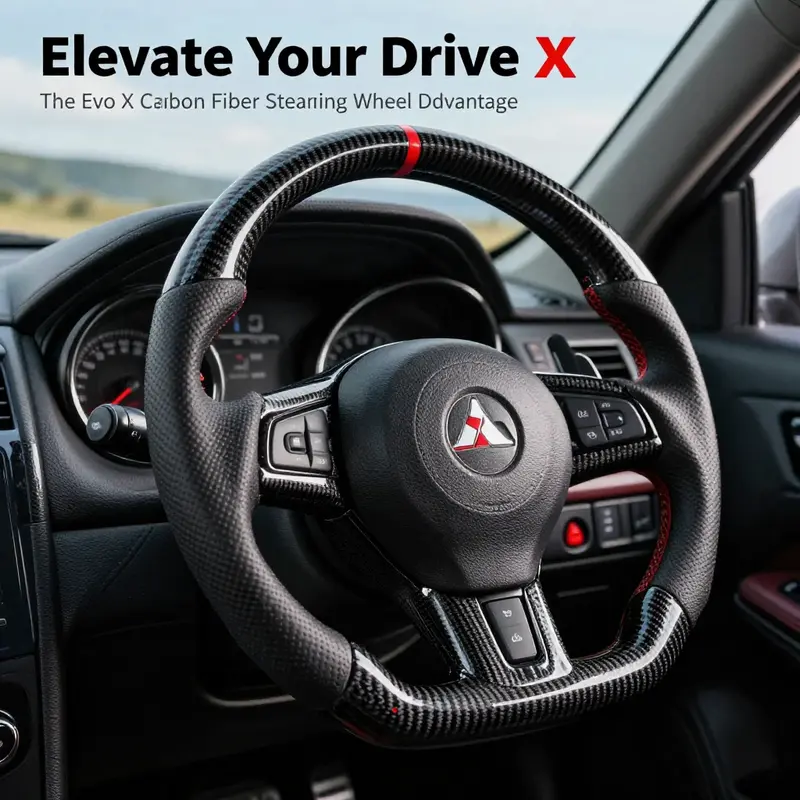
The Mitsubishi Evo X, renowned for its rally-inspired performance and engineering, has seen a notable rise in aftermarket enhancements, notably the carbon fiber steering wheel. This upgrade not only amplifies the driving experience but also transforms the vehicle’s interior aesthetics. This article dives deep into the comprehensive advantages of the Evo X carbon fiber steering wheel. We will explore its performance benefits, aesthetic enhancements, installation processes, material quality, and market trends. Understanding these facets is crucial for business owners in the automotive space, as they position themselves to meet the evolving demands of driving enthusiasts, ensuring they capitalize on this popular aftermarket trend.
Lightweight Precision: How the Evo X Carbon Fiber Steering Wheel Rewrites Drive Feel
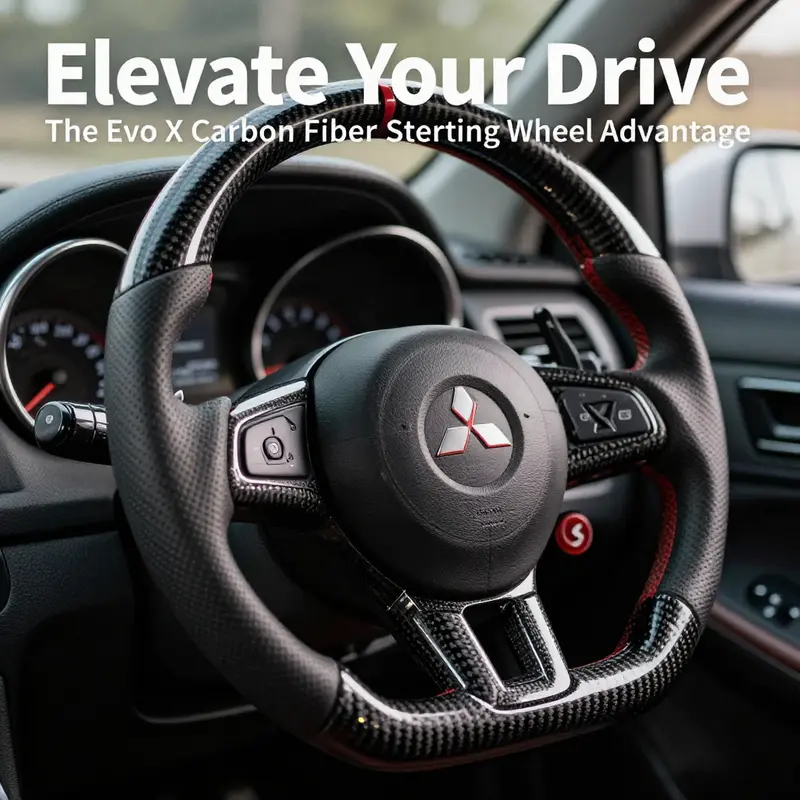
When you climb into a cockpit that has shed weight where it matters most, the driving experience changes in a way that feels almost magnetic. The Evo X carbon fiber steering wheel is not just a cosmetic upgrade; it is a deliberate reengineering of the steering system’s physical relationship to the road. In the modern Evo X interior, where every control can become a contact point with the machine, reducing the steering assembly’s inertia translates into a more immediate, tactile dialogue between driver and chassis. The wheel’s role expands beyond steering input; it becomes the primary conduit through which intent is expressed, refined, and felt by the road. This shift hinges on fundamental physics: when rotational mass is lighter, the wheel accelerates and decelerates more readily. The result is a cockpit that responds with greater immediacy to even subtle hand movements, a quality that transforms both daily commutes and high-speed corner work into an integrated, confident experience rather than a sequence of commands to a slightly lagging vehicle.
The material at the heart of this transformation is real carbon fiber, typically presented in a 3K weave that balances strength, stiffness, and visual appeal. The tactile surface is more than a texture; it is a deliberate choice to elevate grip while maintaining a light touch. The premium feel contributes to a driver’s sense of control, especially during long sessions or on track days when fatigue can dull feedback. A wheel built from carbon fiber resists deforming under load, so even when the car is pushed toward the limit, the driver experiences consistent responsiveness. This rigidity helps preserve a direct connection to the vehicle’s dynamics, meaning that subtle steering cues—tiny changes in line, micro-adjustments in posture, or the faintest tremor of the hands—translate into precise, predictable motion at the tires. In a scenario where every tenth of a second counts, that consistent feedback loop is not a luxury, but a foundation for speed and control.
From a design standpoint, the upgrade is about optimizing the balance between weight, stiffness, and the hand’s interface with the rim. OEM wheels often attune to comfort and broad usability, which can lead to a wheel that feels compliant but less eager to translate tiny inputs into immediate tire response. A carbon fiber wheel preserves grip integrity and edge feel while trimming away excess mass in the rotating assembly. The weight reduction is substantial, with a 30–50% drop in the steering assembly’s mass compared with stock components. This isn’t just a number on a spec sheet; it manifests as lighter spin-up when you initiate a turn, crisper centering after a correction, and a more linear progression of steering effort as speed increases. The result is a more engaging, more predictable steering experience at both the entry to a corner and the apex itself, where precision compounds into faster lap times and more confident handling.
This performance uplift rests on a strong engineering principle: the strength-to-weight ratio of carbon fiber enables a wheel that remains rigid under load without carrying the bulk of heavier materials. When a chassis experiences lateral forces through a turn, a rigid steering wheel maintains its shape and alignment, minimizing unwanted flex that can dilute feedback. For the driver, that means the road’s texture, camber shifts, and tire feedback are communicated with greater fidelity. There is a notable clarity to steering input, especially during high-speed maneuvers where even small deviations can produce large changes in trajectory. The driver can trust that the wheel will not yield in the face of dynamic loads, which translates into more confident steering, quicker corrections, and a clearer sense of the car’s instantaneous behavior. This kind of directness is especially valued by those who chase track days and spirited back-road sessions, where the sensation of connection becomes a performance instrument in its own right.
The overall driving experience benefits not only from the wheel’s lightness and stiffness but also from the improved relationship between the driver’s hands and the handle’s geometry. The ergonomics of a carbon fiber rim can be tuned to deliver a more responsive feel without sacrificing comfort. A lighter rim reduces the torque that must be managed by the arms during quick direction changes, making even aggressive steering feel more controllable rather than fatiguing. At higher speeds, the wheel’s inertia is easier to manage, enabling rapid, precise lines through corners with less effort. The effect compounds over a session: quicker recovery after a mid-corner correction, steadier line maintenance as fatigue grows, and more consistent lap times as the driver stays in a harmonious rhythm with the car. In this way, the wheel becomes a performance amplifier, translating driver input into refined vehicle behavior with less perceived effort.
While performance gains dominate the discussion, installation practicality matters just as much to enthusiasts who want a reliable upgrade without a pro shop timeline. An Evo X-specific carbon fiber steering wheel is designed to drop into the existing steering column with a plug-and-play approach. The compatibility is not merely a matter of bolt patterns; it concerns the seamless integration of airbag sequencing, steering wheel controls, and the overall cockpit geometry. The best options are engineered to preserve the factory airbag position and electrical connections, reducing the risk of mismatches or warning light interruptions. For a driver who uses the car both on weekends and on occasions when performance matters most, that reliable fit is a crucial part of the upgrade package. A well-suited wheel minimizes downtime, and it ensures that the car remains compliant with safety and control systems while offering the kind of tactile feedback that performance driving demands.
The aesthetic dimension of carbon fiber upgrades cannot be ignored. The weave, the gloss, and the disciplined integration with the rest of the cockpit environment contribute to a modern, purposeful vibe. In a car designed to feel like a precision instrument, the wheel’s look can sharpen the sense of identity a driver develops with the vehicle. The carbon fiber finish complements other high-performance components within the Evo X cockpit, creating a cohesive visual language that signals intent even before the driver presses the start button. This alignment between form and function matters because it reinforces the driver’s mindset: the car is built to perform, and the driver’s tools reflect that priority. In this sense, the carbon fiber steering wheel functions as both a functional upgrade and an aura booster, elevating the entire driving experience beyond mere acceleration and braking into the realm of engaged driving artistry.
For those who value a holistic upgrade package, the fit and finish extend beyond the wheel to the broader ecosystem of carbon components that often accompanies a focused Evo X build. The engineering mindset that yields a lighter, stiffer wheel also informs other carbon accessories, and it helps create a cockpit where every touchpoint resonates with the same design language. When a driver hops into the car after a few sessions of spirited driving, the contrast between an OEM setup and a purpose-built carbon wheel becomes undeniable. The hands feel a more deliberate connection, a more immediate sense of response, and a cockpit—often replete with performance-oriented panels and accents—that communicates a single, unambiguous message: this machine is tuned for precision. The wheel is not an isolated improvement; it is a key piece of a broader philosophy that pairs material science with driving technique to elevate the Evo X experience from participation to engagement. As a capstone to this transformation, consider how other carbon upgrades in the same ecosystem reinforce the same goals—lighter weight, stiffer structure, and a cockpit that speaks the driver’s language with greater clarity. In that context, the carbon fiber wheel becomes a crucial conduit through which performance, aesthetics, and driver confidence converge.
To illustrate the broader trend, one can look at related carbon components that share the same design ethos. While each piece serves its own function, the underlying advantages—reduced mass, enhanced rigidity, and a refined tactile interface—pull the entire car closer to a race-ready feeling. The Evo X remains a platform that rewards deliberate upgrades, where a carefully chosen carbon wheel pairs with complementary carbon accents to create a cohesive, high-performance environment. The hands-on, tactile nature of driving a car that has embraced carbon fiber in multiple touchpoints invites a more intentional approach to cornering and lane discipline. It turns routine laps into an exercise in precision, where every input from the wheel is met with a proportional, predictable reaction from the chassis. In this light, the carbon wheel becomes more than a performance accessory; it is a signal of the owner’s commitment to a higher standard of driving experience.
For readers curious about how such upgrades fit into a balanced, well-considered build, an exploration of carbon-fiber bonnet upgrades can illustrate the broader philosophy at work. These components share a common thread with the steering wheel: a strategic reduction of mass, combined with a steadfast focus on rigidity and interface quality. The carbon bonnet, like the wheel, embodies an approach that treats weight not as a mere statistic but as a lever that improves control, feedback, and the sense of connection between driver, car, and road. You can see this philosophy echoed in related upgrades available through reputable specialists, where the emphasis is on precise fitment, high-grade materials, and careful engineering that preserves safety, reliability, and performance. The shared thread is clear: carbon fiber upgrades in the Evo X ecosystem are not about chasing the latest trend; they are about pursuing a coherent, performance-oriented vision for how a modern performance car communicates with its driver.
In this context, selecting a carbon fiber steering wheel becomes part of a disciplined approach to improving the driving experience. It is about embracing a material and a design philosophy that prioritize directness, consistency, and control. The upgrade invites a driver to engage more deeply with the car’s dynamics, to learn a new timing of inputs, and to extract more from each turn. The result is not merely faster lap times, though that is a natural outcome; it is a more rewarding, confident, and immersive driving experience. For enthusiasts who view the Evo X as a platform for personal expression through performance engineering, a carbon fiber steering wheel stands out as a milestone upgrade. It marks a shift from passive operation to active dialogue, where every rotation of the wheel communicates a clear intention and every change in direction is met with immediate, proportional feedback. This is the essence of the Evo X’s carbon-driven evolution—a refined tool that sharpens the driver’s senses and transforms a routine drive into a focused, exhilarating engagement.
External resource for deeper guidance on choosing a carbon fiber steering wheel can be found here: https://www.carinterior.com/how-to-choose-an-evo-x-carbon-fiber-steering-wheel/
Within the broader ecosystem of Evo X carbon upgrades, the concept of a lighter, stiffer wheel resonates with related components that emphasize aerodynamics, weight reduction, and structural rigidity. The synergy across parts matters because it creates a more cohesive performance personality: one that speaks the same language of precision and driver focus across the entire cockpit. This is why many builders consider the wheel not in isolation but as a keystone in a chain of improvements that collectively enhance steering accuracy, control at the limit, and the sense of immediacy between command and consequence. In practice, that means weeks of patience, careful shopping, and a clear understanding of how weight, grip, and feedback interact with the car’s balance, tires, and suspension settings. The payoff is a cockpit where the driver is less conscious of the tool and more aware of the road, where each input feels deliberate, tuned, and perfectly matched to the car’s dynamic personality. For anyone who has ever chased the sensation of a car that feels part of the driver’s own body, the Evo X carbon fiber steering wheel offers a compelling route, a tangible step toward that refined, race-inspired connection.
Race-Lined Refinement: How a Carbon Fiber Steering Wheel Elevates the Evo X Interior

A transformation that starts at the hands
Swapping the standard wheel for a carbon fiber unit is one of the most immediate ways to change how the Evo X feels and looks. The moment your palms meet the tightly woven pattern, the cabin reads differently. The weave catches light in complex ways. The finish—matte or gloss—sets a tone. Together they turn a familiar cockpit into something sharply purposeful.
Carbon fiber’s visual language is honest and unmistakable. Its ordered lattice suggests engineering intent. That texture signals performance without shouting. In the Evo X, where aerodynamic cues and mechanical purpose already shape the exterior, a carbon fiber steering wheel brings the interior into alignment. It becomes a focal point that links what the car does with how it presents itself.
Beyond the pattern, the wheel’s silhouette changes the driver’s visual field. Many carbon units are sculpted with flattened bottoms or thumb wells. Those subtle shapes shorten perceived steering-span. They frame the instrument cluster more aggressively. When paired with a matching center stripe or contrasting stitching, the wheel guides the eye to the tachometer and controls. This creates a cockpit that feels organized for speed.
Material contrast is key. The pairing of carbon fiber with other premium surfaces elevates the entire cabin. A matte weave next to Alcantara or leather produces a layered, tactile environment. Gloss finishes sit well against brushed metal accents and carbon trim. Satin or stitched spokes pair naturally with purposeful race-inspired seats. This contrast makes each material read stronger. The cabin becomes curated, not just upgraded.
Tactile cues matter as much as look. Carbon fiber has a distinct mouthfeel. The surface feels firmer than soft leather. Grip improves where the wheel is shaped to encourage a planted hand. That helps with control during spirited driving. It also reduces fatigue on long runs. Drivers notice this quickly. The surface transmits feedback with more immediacy. That connection enhances the perception of performance, even before lap times change.
A steering wheel is a statement piece. On an Evo X, it should reflect the owner’s intent. For those focused on track functionality, a wheel with ergonomic cutouts and a visible center marker signals readiness. For street-focused builds, a full-wrap carbon wheel with refined stitching projects sophistication. Either direction communicates discipline and a deliberate design choice.
Color coordination pulls the entire cabin together. Accent stitching, stripe colors, and trim finishes can echo the weave or contrast for emphasis. Red stitching against black carbon adds race-car energy. Subtle gray or silver threads produce a cohesive, understated look. Even small details like button bezels and horn caps can echo the wheel, creating a sense of thoughtful design continuity.
The wheel also plays a role in perceived value. A high-quality carbon fiber wheel suggests investment and care. It shows an owner who thinks about detail. That impression matters at shows, meets, or when selling the car. A cohesive interior with matching carbon pieces, seats, and trim reads as a deliberate, high-caliber build. Buyers and fellow enthusiasts often interpret that as a sign the rest of the car has been similarly maintained.
Balance between function and show is important. A purely aesthetic wheel can look great but feel hollow. Conversely, a wheel optimized only for weight savings may lack refinement. The best designs reconcile both. They use real 3K weave for authenticity and hand-laid construction for strength. They maintain proper diameter and thickness for comfortable grip. This balance preserves usability while delivering a dramatic visual upgrade.
Compatibility ensures the upgrade feels integrated rather than tacked on. Fitment engineered for the Evo X retains steering controls and airbag systems when required. A wheel that aligns with factory bolt patterns and hub adapters preserves the cockpit’s ergonomics. It avoids awkward offsets that make the driving position feel foreign. When the wheel sits naturally, it enhances aesthetic cohesion without compromising safety or function.
Pairing a carbon wheel with other carbon elements amplifies its presence. A bonnet or hood in similar carbon weave extends the visual theme outward. When exterior and interior match, the car reads as a single design statement. This coordinated approach reinforces the race-inspired aesthetic and highlights the workmanship behind each component. For owners pursuing a unified finish, matching exterior carbon pieces focus attention and create continuity.
Maintenance affects both appearance and longevity. Carbon fiber surfaces resist many forms of wear, but finishes require gentle care. A light wipe with a microfibre cloth preserves the weave’s depth. Avoid harsh chemicals that dull lacquered layers. For matte finishes, use cleaners formulated for matte surfaces to avoid unwanted gloss. This upkeep keeps the wheel looking fresh and preserves the texture that defines its appeal.
Lighting amplifies the wheel’s visual impact. The weave plays with cabin light differently across finishes. Gloss catches highlights and creates vivid reflections. Matte absorbs light, producing a muted, purposeful mood. Ambient or task lighting around the dash and center stack can highlight the wheel’s center stripe or weave, emphasizing its position as the cockpit’s centerpiece. Thoughtful lighting choices boost the wheel’s visual presence at night.
Customization offers a personal touch. Owners can choose center markers, colored spokes, and stitch patterns to reflect their design language. Even small changes influence how the wheel integrates visually. A subtle center stripe clarifies hand placement. Colored stitching ties the wheel into seat piping or shift boot colors. These choices let owners express personal style while keeping the car’s aesthetic coherent.
Perception among peers carries weight. At meets, a carbon wheel signals a level of seriousness about the build. It marks the owner as someone who considers both performance and presentation. This subtle cultural cachet matters in enthusiast communities. It can lead to deeper conversations about setup, suspension, and driving style. In that sense, the wheel is not just an object; it is a communicator.
Finally, the psychological shift is real. Sitting in a cockpit with race-inspired elements changes driving behavior. The wheel’s tactile feedback and purposeful look encourage engagement. Hands find their place more naturally. Shifts and inputs feel deliberate. That mental nudge increases focus and can help extract more from the chassis.
A carbon fiber steering wheel is therefore more than a cosmetic update. It is an integrative element that aligns feel, sight, and intent. On an Evo X, it bridges the gap between street and track. It creates a cockpit that looks ready and drives that way. For owners seeking an interior that matches their car’s performance DNA, this upgrade provides a clear and lasting statement.
For more on carbon fiber steering upgrades tailored for the Evo X, see this detailed reference: https://www.performanceplus.com.au/mitsubishi-evo-x-custom-carbon-fiber-steering-wheel
For those interested in matching exterior carbon pieces, consider exploring a carbon fiber bonnet designed for the Evo X to achieve cohesive styling: https://mitsubishiautopartsshop.com/brand-new-original-carbon-fiber-bonnet-hood-for-mitsubishi-lancer-evo-x/
Precision in Hand: Installing a Carbon Fiber Steering Wheel on the Evo X for Sharp Feedback and a Sleek, Modern Cockpit
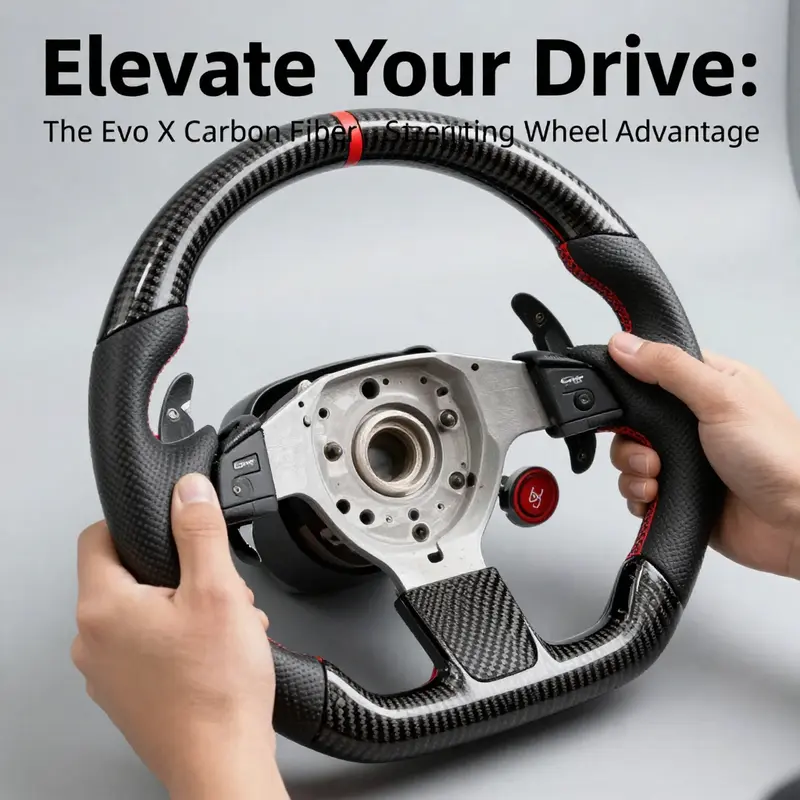
A steering wheel is more than a contact point between driver and machine; it is the interface that communicates intent, balance, and rhythm. When the goal is to heighten both performance and presence, a carbon fiber wheel designed for the Evo X offers a compelling convergence of weight savings, rigidity, and tactile appeal. The upgrade speaks to a guiding principle in modern performance interiors: a lighter, stiffer control surface translates to more immediate feedback, quicker steering response, and a cockpit that feels engineered around the driver rather than around the car’s mass. The installation journey itself becomes part of that philosophy, turning a routine maintenance task into a careful reassembly of a driver’s nerve center. The material at the heart of the upgrade—real carbon fiber woven in a 3K pattern—offers a premium texture that not only looks the part but also resists deformation under spirited driving. It is a surface that invites assertive hand positions while maintaining comfort during long sessions on track days or backroad sprints. The resulting cockpit atmosphere is both modern and purposeful, a subtle cue that the vehicle has been tuned for the drive rather than simply maintained as a factory offering.
Before the first tool is laid on the workbench, the philosophy of safe, precise installation must be anchored in process. The Evo X’s airbag system demands respect, and the empowerment of the driver interface should never come at the cost of safety. The installation path begins with a decisive safety pause: disconnect the battery, center the mind on the task, and respect the airbag system’s stored energy. The recommended practice—disconnect the negative terminal and allow the system to fully discharge for a period, typically around 15 minutes—reduces the risk of accidental deployment. This waiting interval is not wasted time but a deliberate pause that aligns the body with a safety-minded mindset. Only with the airbag’s stored energy settled should hands approach the wheel, trims, and wiring. The careful handling of each clip, bolt, and connector follows, as if one is reconstructing the first handshake between the driver and the vehicle in a more transparent, accurate way.
The removal of the original wheel and its trim is more than a mechanical step; it is a reminder of the wheel’s complex integration with the vehicle’s interior. The Evo X cockpit is a mosaic of control surfaces, and the wheel sits at the center of that mosaic. The task requires precision tools and a light touch to avoid marring trim finishes or bending clips. As the old wheel begins to part from the steering column, the next checkpoint emerges: confirming airbag connector compatibility for the new wheel. If the aftermarket wheel is a direct replacement, it should align with the OEM connectors and clock spring. In some cases, a non-OEM unit requires an adapter or additional mounting plate to ensure the airbag module remains synchronized with the vehicle’s safety system. This is not merely a matter of plug-and-play; it is a compatibility conversation between an entirely new grip surface and the steering system that interprets every micro-movement of the driver. The guidance from safety and installation standards is clear: if there is any doubt about the connector configuration or the clock spring integrity, enlist a professional technician. A trained technician will verify the airbag circuit continuity and confirm that no false alarms haunt the safety system after reassembly.
Direct replacement designs in carbon fiber wheels for the Evo X are crafted to mimic the OEM’s form and function. This approach reduces the need for remake or reprogramming of steering-wheel-mounted controls. When a wheel is designed for direct replacement, its connectors and button layouts are configured to align with the vehicle’s existing electronics, including audio controls and cruise control. The benefit is twofold: it preserves the familiar control surface that the driver has learned to rely on, and it minimizes the risk of miswired functions that could complicate daily driving. Yet even with a direct replacement design, a thorough compatibility check remains essential. The part number must be cross-verified, and any premium features—such as LED lighting or integrated electronics—should be scrutinized for proper integration with the Evo X’s electrical architecture. Wiring routes, power management, and the potential need for a reprogrammed or recalibrated system all demand a careful, measured approach.
When the fitment is confirmed, the direct installation proceeds with the same careful, almost surgical precision that defined the earlier steps. The replacement wheel is designed to slip into place with minimal intrusion into the airbag module’s safety envelope, preserving the quick, clean reassembly that keeps the environment free of stray components and misaligned trim. As the new wheel settles against the column and the mounting hardware draws tight, one feels the tangible difference that carbon fiber brings to the cockpit. The weight savings, often a few hundred grams, contribute to a lighter steering moment. The response to tiny steering inputs becomes more immediate, and the sense of the vehicle’s poise—a direct result of reduced inertia in the front-end geometry—becomes palpable. The grip texture, carefully engineered into the wheel’s rim, offers a tactile richness that reduces fatigue during spirited driving, particularly on long sessions. The weave’s appearance, whether finished in gloss or a more subdued matte, is an aesthetic cue that the cabin has been upgraded to reflect a track-focused sensibility without losing the refined feel of the original interior.
Even with the wheel properly mated, attention to electrical integration remains essential. The Evo X’s steering wheel may include features such as mode buttons, audio controls, or cruise control toggles. The professional install path emphasizes the correct wiring and the correct mapping of these functions so that the driver’s muscle memory does not have to relearn. The clock spring, a critical component allowing the steering wheel to rotate freely while maintaining electrical continuity, must be reassembled with care. Any misalignment or damage to the clock spring can lead to intermittent function or even airbag faults. If the wheel is not a pure OEM replacement, then a compatible mounting plate or adapter may bridge the gap between the new wheel’s interface and the column’s connectors. In all cases, the aim remains consistent: a seamless integration where the new wheel firmly supports the driver’s inputs without compromising safety or reliability.
The installation’s final phase centers on verification and calibration. A learner driver’s instincts tell us to test the wheel’s feel before starting the engine, but modern safety systems require a reset and verification cycle that only occurs with the ignition on and proper fault checks. A careful post-installation inspection includes confirming the wheel’s mechanical tightness, ensuring there are no loose fitments, and inspecting for any binding in the steering range. A professional can perform a brief test drive focused on steering response, pedal balance, and the behavior of any wheel-mounted controls. Any abnormal noise, resistance, or misalignment should prompt a re-check of the connectors, the clock spring’s seating, and the mounting hardware’s torque specifications. Beyond the mechanics, the driver discovers a cockpit that communicates with more immediacy, a sense that every subtle input translates into sharper steering feedback. In spirited driving, the carbon fiber wheel’s rigidity helps in transmitting tire contact and road texture more directly to the hands, reducing the sensation of impedance and promoting a confident, precise line through corners.
The convergence of performance and aesthetics in this upgrade is not merely about lighter materials or a sportier look. It’s about a disciplined approach to interior customization that respects the Evo X’s engineering while elevating the driver’s relationship with the car. Carbon fiber’s clean lines, its high-tech sheen, and the wheel’s careful geometry contribute to a cockpit that feels contemporary yet intentionally connected to the fundamentals of handling. The result is a more coherent driving experience: the steering wheel, the chassis, and the tires communicate in a single, fluent language. The rider’s posture, the angle of the hand, and the cadence of input all become more predictable, enabling a driver to test the vehicle’s limits with greater assurance. For those who pursue track days or demanding backroad sessions, such a wheel reduces fatigue and increases confidence, creating a mental space where performance decisions are made with clarity and precision.
For readers who want to explore related interior upgrade options or interior component compatibility, there are resources that discuss the broader framework of Evo X interior modifications and how they integrate with essential safety systems. A practical pathway is to examine design guides that emphasize compatibility, measurement, and the importance of professional installation when airbag or electronic features are involved. The takeaway is simple: upgrades should enhance driving control and cockpit ergonomics without compromising safety or the car’s systems. Any installation should be approached with a measured plan, a respect for the safety architecture, and a willingness to engage skilled technicians for complex steps. This mindset ensures that the cockpit remains a precise instrument, ready to respond to the driver’s intentions with the same reliability and reliability that the vehicle’s original design promised, but now with a more refined, modern edge.
To connect this discussion with practical pathways for further customization, consider how a direct replacement wheel can work in harmony with other Evo X interior improvements. The following resource offers a deeper look at structural options and installation considerations for Evo X carbon fiber steering wheels, including the nuances of compatibility and safety. evo-x-halfcut
External reading
Those who want a broader context on selecting a carbon fiber steering wheel for the Evo X can benefit from professional guidance that explores balance between weight, grip, and control. For an in-depth look at the decision-making process, including safety considerations and fitment details, refer to external expert coverage at CarInterior. Their guide provides actionable insights on choosing an Evo X carbon fiber steering wheel that aligns with both performance goals and interior ergonomics: https://www.carinterior.com/how-to-choose-an-evo-x-carbon-fiber-steering-wheel
Threads of Power: How a 3K Carbon Fiber Steering Wheel Transforms the Evo X Cockpit
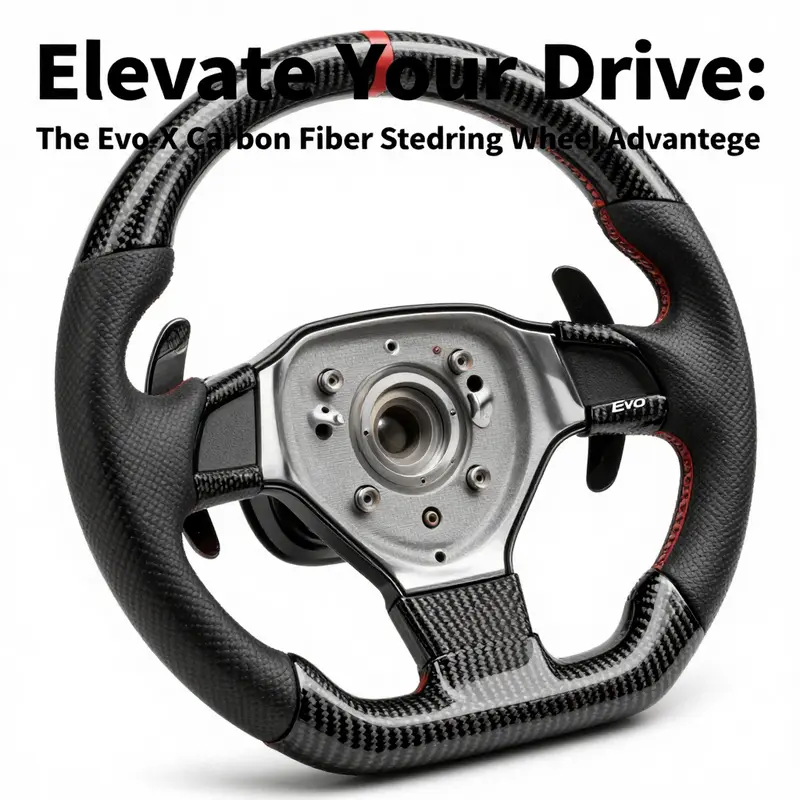
In the moment between turning the wheel and reading the road, a driver’s hand meets a surface that is more than an interface—it is a tactile translator for intent. For a car like the Evo X, the cockpit is a precision instrument, a compact arena where response time, grip, and weight balance converge to shape the driving experience. Upgrading to a carbon fiber steering wheel, especially one built around 3K real carbon fiber with carefully chosen grip materials, redefines that interface. It is not merely an aesthetic upgrade; it is a deliberate shift in how the driver communicates with the machine. The wheel becomes lighter, literally reducing rotational inertia, so every turn of the wheel demands less physical effort while delivering crisper, more immediate feedback. When the road opens up and the surface texture changes from smooth to gritty, the sensation at the rim changes as well. The weave of the carbon fiber under a hand protected by perforated leather or Alcantara offers a clarity of touch that translates into confidence. The carbon shell is not just a shell; it is a structural contributor to steering precision. Real carbon fiber like 3K provides a high strength-to-weight ratio that resists deformation under the high strains of spirited driving, track days, or aggressive road use. The material’s rigidity helps preserve the wheel’s geometry, ensuring predictability with every subtle adjustment of the driver’s grip. In practice, the wheel feels immediate. The moment you apply torque, you sense that the chassis is responding with less delay. There is a sense that the wheel—light yet stiff—reduces the energy you expend fighting weight, letting your hands convey intention with cleaner, more direct signals to the steering rack. This, in turn, translates to quicker line changes and steadier mid-corner hold, especially when the Evo X is loaded with the kind of lateral grip that makes a road course feel like a small, personal arena. The interplay between material choice and driving behavior is where this upgrade proves its worth. The 3K real carbon fiber body is marketed for its durability under heat and wear, but the real-world benefit lies in its ability to maintain a consistent feel as the wheel heats up and cools down during a long session. The carbon weave—visible through a high-quality clear coat—introduces a distinctive, sporty texture that underscores the car’s modern, performance-oriented character. Yet the wheel does not exist in isolation. The Evo X cockpit is a curated space where control systems, climate controls, and the dashboard form a cohesive ergonomic triangle. A wheel that feels lighter and stiffer must also accommodate the grip profile of the hands. Here is where options such as perforated leather or Alcantara come into play. Perforated leather invites breathability and tactile bite, reducing hand fatigue when the driver presses for an aggressive exit or a precise mid-corner instruction. Alcantara, meanwhile, offers a grippy, slightly suede-like texture that remains forgiving in sweaty climates. The material pairing—a carbon fiber shell paired with a high-quality grip surface—strikes a balance between sportiness and luxury. The result is a cockpit that communicates with the driver through touch as clearly as it does through the gauge cluster. This is not simply about reducing weight; it is about preserving a sense of direct control. In the Evo X, where steering feel can influence lap times and tension in a corner, a wheel that maintains its geometry under load helps the driver trust the car. The degree of rigidity in the carbon shell minimizes any flutter or flex that might otherwise dampen feedback. That feedback is the currency of confidence: when the car steps lightly into a corner, you feel a crisp, linear response in the wheel that confirms you are on the right line. When the road surfaces vary, the texture of the grip helps communicate changes in the tire’s contact with the pavement. Even small shifts in grip translate into decisive, predictable inputs rather than hesitations. The wheel’s design also respects the Evo X’s interior architecture. It fits precisely with OEM mounting points, preserving the original steering column geometry and the alignment of any integrated controls. This means the driver does not contend with misalignment or offsetting hardware that could degrade steering accuracy. The clean fit is part of the reason installation remains straightforward, a practical virtue: no extensive fabrication, no major wiring rework, just a swap that preserves safety-critical systems and maintains the car’s original airbags and trim integrity. Of course, with any aftermarket steering wheel, safety remains paramount. While some products note environmental and packaging standards in their certifications, the core safety concern is airbag deployment and crash safety. It is essential to verify that the steering wheel or its mounting assembly is certified in a way that is compatible with the Evo X’s airbag system. The moment you replace an airbag-equipped component, you are entering a safety-critical domain where proper testing and adherence to regulatory expectations must guide the process. At the same time, the wheel’s performance characteristics should align with the vehicle’s overall safety approach. The design ethos here blends performance with refinement. The carbon fiber’s modern aesthetic—the tight, geometric weave and the high-gloss or satin finish—complements the Evo X’s cockpit contours, creating a visual that is as aggressive as it is sophisticated. The look communicates intent before you even press the start button: this car is tuned for spirited driving, with a driver-focused cockpit that rewards precision and consistency. The cockpit’s new centerpiece—the wheel—also supports the car’s evolving cadence. For some drivers, the upgraded wheel is part of a broader shift toward a more driver-centric interior, a logical step as enthusiasts seek to harmonize all cockpit surfaces around a shared rhythm of grip, weight, and feedback. The driver’s hands become more than receptors of input; they act as a translator for the machine’s dynamic language. In that sense, the Evo X’s steering wheel upgrade becomes a thread in a larger tapestry of performance, where every material choice, from the carbon fiber shell to the grip texture, weaves into a single, cohesive driving experience. Beyond the tactile and mechanical benefits, there is a meaningful ergonomic consideration. The wheel’s lighter mass reduces the moment of inertia that the driver must overcome to initiate and sustain steering actions. On a track or a twisty mountain road, this translates to lower fatigue and quicker steering authority. The driver can convey sharper cues with less effort, enabling faster l tactful responses, particularly when chasing precise lines through complex corners. In everyday driving, this translates to a cockpit that feels more responsive, a sense that the vehicle is more eager to respond to the driver’s subtle inputs. While the Evo X already offers a well-balanced steering system, the carbon fiber upgrade intensifies the driving dialogue by removing excess mass without compromising strength. The shift from a heavier, more forgiving wheel to a lighter, stiffer one creates a paradoxical clarity: less wheel weight can mean more precise control, especially during rapid direction changes or aggressive lane transitions. This clarity is not merely about speed; it is about the quality of the driver’s connection with the road, a connection built on feedback that is honest and actionable. For those who view the car as a platform for personal expression, the wheel also offers a palette for customization through grip material choice and finish. A perforated leather grip can emphasize sportiness and sport-road practicality, while Alcantara can deliver a premium tactile experience. The selection of materials becomes part of the overall character of the Evo X, aligning with the driver’s priorities—whether they are chasing track performance, road-going precision, or a refined, contemporary interior ambiance. When considering the broader ecosystem of Evo X upgrades, the wheel is best approached as a component that complements other interior modifications. Upgrading the dashboard or center console, for example, creates a cohesive, high-tech environment where instrumentation and controls feel integrated rather than disparate. For drivers who want to explore that direction, a dashboard-focused upgrade page serves as a natural companion to the wheel’s enhancement. See the dashboard-evo-9 page for more on interior integration within the Evo X cockpit. In evaluating this upgrade, one should also reflect on maintenance and care. Carbon fiber, when properly finished with a protective coating, resists UV damage and maintains its color and weave integrity over time. The grip surfaces, if made from perforated leather or Alcantara, require routine care to preserve grip and texture. Clean with appropriate products that do not degrade the material, and avoid harsh solvents that can compromise the leather or suede-like textures. Regular conditioning helps maintain suppleness and prevents surface wear from becoming pronounced after many cycles of steering and grip. With proper care, the wheel remains a centerpiece of the Evo X interior for years, retaining both its performance characteristics and its striking, modern look. For enthusiasts who seek deeper technical data or certification details, additional resources exist that document material properties and verification processes. An external data source provides a broader technical context for carbon fiber steering wheels and their real-world performance, including data on material composition and testing methods. External resource: https://www.alibaba.com/product-detail/Real-Carbon-Fiber-Steering-Wheel-for-Mitsubishi_1600846769895.html?spm=a2700.1.w1.1.5c3b5d3aRvCkXf. This reference offers a wider lens on real carbon fiber products and related specifications, bridging the gap between marketing claims and engineering realities. While navigating these details, it is essential to maintain a critical perspective: the best steering wheel upgrade is one that respects the Evo X’s safety systems, preserves proper fit, and delivers the driver-centered feel that enthusiasts crave. The payoff is a cockpit that feels as alive as the road it travels, where material science and human perception meet in a single, high-performance moment. In this sense, the Evo X carbon fiber wheel becomes more than a component; it becomes a conduit for a driver’s evolving relationship with the car, a tangible embodiment of how weight, texture, and geometry can shape the way a machine speaks to its operator.
Grip, Weight, and Prestige: The Evo X Carbon Fiber Steering Wheel in a Market of Choices
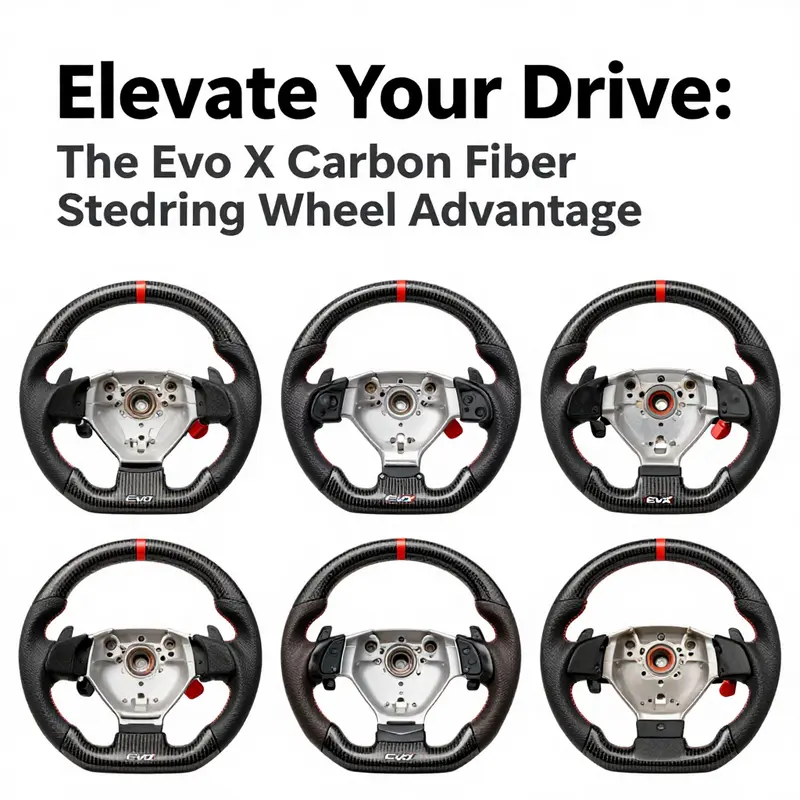
Upgrading the Evo X cockpit with a carbon fiber steering wheel is more than a style move; it is a reflection of how modern drivers value tactile feedback, weight distribution, and control during high-load driving. The wheel’s 3K real carbon fiber weave presents a visible reminder of performance as soon as you glance down. The material is lightweight yet remarkably rigid, resisting deformation under spirited cornering and braking. In practice, the reduced mass at the steering interface translates to quicker response and less unsprung inertia when the driver makes rapid corrections on a track or road course. The grip texture, engineered to bite into sweaty palms and gloves alike, can alleviate fatigue during long sessions, letting the driver maintain precise line and consistent hand position. The Evo X–specific fit ensures a flush, factory-like feel that does not require modifications to the steering column or airbag module, preserving safety as well as aesthetics. This combination of materials science and ergonomic design is central to why enthusiasts place such a premium on steering wheels in this segment.
Market data reveals a landscape with notable price stratification. In the Evo X carbon fiber steering wheel category labeled Sports Style 35mm Grip, about 78.57% of products fall within the $4.99 to $39.99 range, indicating a strong volume of entry-level and midrange options that appeal to budget-minded owners seeking a tangible upgrade without a substantial financial commitment. Meanwhile, roughly 21.43% occupy the higher tier, priced from $39.99 up to $199.99, usually delivering more refined materials, tighter tolerances, or distinctive design touches that resonate with buyers chasing both performance and prestige. This distribution mirrors a broader trend where the market accommodates a spectrum of buyers: those who want a straightforward upgrade with good grip and a modern look, and those who want to push the envelope with more sophisticated finishes, richer textures, or personalization options.
As personalization grows, brands are responding with choices beyond carbon fiber’s visual drama. Consumers increasingly expect coating colors, weave textures, and even Alcantara wraps that provide a softer, tactile contrast to the hard carbon face. This willingness to tailor the cockpit matches the wider interior customization wave, where steering wheels become a central piece rather than a mere control. The appeal goes beyond aesthetics. A well-chosen wrap or color accent can help with visibility of gauges, while a textured surface can improve wet weather grip. For performance-minded buyers, a careful balance is struck between the weight and feel of the wheel and the compatibility of the wheel with safety systems. The goal is to preserve or even improve the original safety integrity while giving the driver a bespoke instrument panel that reflects personality and driving intent.
Installation is presented as straightforward, tailored for the Evo X. The aim is a perfect fit that integrates with the car’s sensor layouts and airbag module without requiring structural modifications. This is critical because it means a home mechanic can upgrade without specialized tools or floor jacks, and it reduces the risk of moisture intrusion or misalignment that sometimes accompanies aftermarket components. The practical benefit is instant, tangible: a lighter, grippier wheel that sits at the same height and diameter as the stock unit, preserving driving position and control geometry. The payoff is not only the immediate feel but the long-term reliability: fewer adjustments needed, less risk of airbag triggering issues, and a cockpit that remains coherent with the rest of the interior’s lines and materials.
When a consumer begins to search for this upgrade, the landscape stretches across multiple channels. The most active marketplaces in this sphere are general e-commerce platforms that connect buyers with manufacturers directly. These platforms enable price competition and rapid shipping, which is attractive to hobbyists who want to test fit and feel quickly. For buyers seeking broader after-sales support, professional automotive parts retailers provide installation guidance, compatibility checks, and a catalog of related carbon fiber components that can pair with the steering wheel upgrade. For teams, fleets, or shops looking to outfit multiple vehicles, the supply chain often includes regional OEM suppliers with established production lines. Guangdong and Zhejiang, among other regions, are known for their manufacturing ecosystems, and many suppliers offer low minimum order quantities, enabling smaller outfits to pursue custom specifications without locking into large inventories. In short, whether a single user or a shop running a modular fleet, there are paths that align with budget, timing, and service expectations.
From a decision-making perspective, the price spectrum is not only about the sticker price but also about what the buyer expects for quality. Entry-level options deliver the essential combination of carbon fiber aesthetic and grip, at a price point that makes the upgrade accessible. Midrange and higher-end offerings promise tighter tolerances, richer finishes, and longer wear while retaining the essential lightness and stiffness of the carbon fiber framework. Buyers who pursue high-end details may seek customization like color and weave patterns or protective coatings that resist UV exposure and cleaning agents, extending the life of the finish in a cockpit that endures the sun, sweat, and occasional track debris. While this data is global, the same logic holds locally: drivers want a component that feels right in the hand, looks cohesive with the rest of the interior, and integrates with safety systems without requiring compromises. For those who want to explore related carbon fiber opportunities within the same ecosystem, a related offering can be found at the linked product page: brand-new-original-carbon-fiber-bonnet-hood-for-mitsubishi-lancer-evo-x.
As buyers move toward greater cockpit personalization, the carbon fiber steering wheel becomes a hinge between performance and identity. The wheel’s geometry, grip feel, and stiffness contribute to a sense of direct connection with the car’s chassis. In cornering, the lighter wheel reduces inertia that can hinder rapid turn-in and mid-corner corrections, allowing the driver to respond with minimal effort. On a track or in spirited driving, that intangible sensitivity compounds with the wheel’s tactile surface to encourage a more fluid line and fewer misreads, a subtle but meaningful advantage. Yet all of this rests on credible engineering: a 3K real carbon fiber construction that resists deformation under load, a careful weave that provides consistent grip, and a bond that withstands the cockpit’s humid and sometimes abrasive environment. It is this blend of material science, ergonomic design, and practical fitment that makes the Evo X cockpit upgrade a classic study in how form and function converge in automotive aftermarket culture.
Beyond the physics of grip and weight, these upgrades reflect a broader consumer behavior trend. Enthusiasts evaluate not just immediate performance but the long arc of engagement with their car. The Evo X carbon fiber steering wheel sits at the intersection of price sensitivity and aspirational design. The dominant market segment favors accessible upgrades, while the smaller segment pursues craftsmanship and customization. In that sense, the wheel is not just a control device; it is a statement about how a driver wants to interact with the car and how a cockpit can be a personal extension of the driver’s intent. The ecosystem around this upgrade—manufacturers, distributors, and service providers—responds to that mix, offering a spectrum that lets owners experiment, iterate, and refine their setup over time.
External reading for broader context on price dynamics and supplier diversity in carbon fiber steering wheel markets can be found at: https://www.alibaba.com/product-detail/Carbon-Fiber-Steering-Wheel-Evo-X-Sports_1600827988989.html
Final thoughts
The Evo X carbon fiber steering wheel stands as a testament to the harmonious blend of performance and aesthetic appeal within the automotive aftermarket space. Business owners should recognize the substantial market demand for this upgrade, as it provides a functional enhancement that is also visually striking. As customer preferences continue to evolve towards high-quality, unique modifications, capitalizing on the popularity of the Evo X carbon fiber steering wheel can yield significant returns. By understanding the performance benefits, installation processes, material specifications, and market trends discussed, businesses can better position themselves to meet customer needs and drive sales effectively in this niche market.